Edge Inference Startup OneGrid Closes Three Funding Rounds in Six Months, Raising Nearly 100 Million Yuan in Total | 5Y News

The most expensive model shouldn't be stuck doing the simplest tasks.


Recently, edge inference company OneGrid completed a new funding round. This marks three rounds completed within six months, bringing its total raised to nearly RMB 100 million. The latest round was led by Lingyi Venture Capital, CCV, Pine VC, and listed company Richinfo Technology, with existing investors 5Y Capital and FreeS Fund making additional investments.
OneGrid is an edge inference infrastructure company founded by a team of post-2000s graduates from Tsinghua University, Peking University, and the Chinese Academy of Sciences. The company doesn't make chips or models; it focuses on the inference system between models and hardware, freeing compute from GPUs and enabling large models to run on small memory.
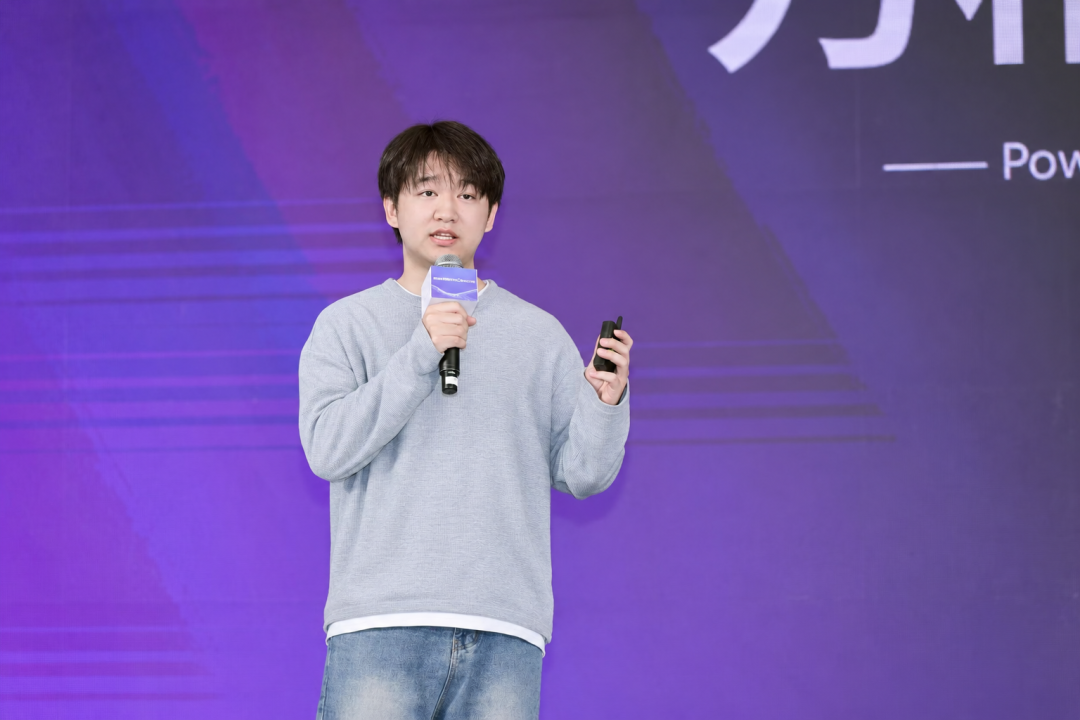
OneGrid CEO Guanbo Wang
On the commercial front, OneGrid secured a multimillion-yuan order from a top-tier client within one month, completed delivery and payment collection within three months, and serves leading PC and NAS manufacturers. The company turned profitable within its first year. Beyond its B2B business, OneGrid is expanding into consumer markets with two AI products: Token WiFi and the video generation workstation Vilot. Token WiFi is positioned as "the WiFi of Tokens," aiming to transform tokens from metered, pay-per-use data into a local resource like WiFi. Vilot aims to bring the cost of local video generation workstations down from the hundreds of thousands of yuan to the thousands. According to OneGrid's estimates, generating a 10-second video using the Minimax H3 model costs less than RMB 0.20.
Below is the full interview between Crossing and OneGrid CEO Guanbo Wang.

*Originally published on Crossing

Building "the WiFi of Tokens"
Crossing: You've coined the phrase "the WiFi of Tokens." How should we understand this? Why would users need a Token WiFi?
Guanbo Wang: "The WiFi of Tokens" is an analogy.
WiFi changed how people use the internet: from constantly watching data usage and costs to freer, more continuous connectivity. We want a similar transformation for how tokens are used.
At the physical level, WiFi bridges the "last mile" connecting networks to users. At the economic level, it changes how people perceive the cost of being online. It satisfies the need for unlimited, effectively free internet access.
Tokens today are still metered — we're still in the 3G era of Mobile Internet. We want to build "the WiFi of Tokens" to satisfy the demand for unlimited, free token usage.
Back when mobile data was expensive, people rationed their usage — picking lower video quality, counting every megabyte. Only after connecting to WiFi would they freely browse, download, and experiment with new things. Using AI today is the same: many users watch their quotas, and running a few more agent iterations or testing a few more versions triggers mental accounting.
Cloud costs are essentially rent: you're not just paying for electricity and chips, but also for data centers, operations, and middleman markups. WiFi is different — you buy the device once, the cost is sunk, and you own it, so you can keep using it.
Many new applications aren't designed into existence; they emerge when people can afford to experiment.
The significance of being cheap isn't just saving on the original bill — it truly changes whether you dare to try.
We want to move users from renting intelligence to owning it.
Crossing: Briefly introduce your AI product "the WiFi of Tokens." What's the most tangible benefit for users?
Guanbo Wang: We've always believed that tokens are the next generation of network infrastructure, and that in the future, data traffic and tokens will be one and the same.
Our product is called TokenWiFi. It takes the form of a dedicated device: models run on the device, and computers, phones, and compatible apps connect directly to it.
We want to change the current paradigm of AI usage. In the future, after connecting to the network, all AI applications should just work — like apps today.
Our design doesn't change tools users already have — whatever you used to write with or complete tasks with, keep using it. We just handle model execution and costs underneath.
For individuals, there are two most tangible benefits:
First, routine tasks no longer deduct cloud quotas per use; they become unlimited locally, changing the past token metering model.
Second, data stays local, doesn't go to the cloud, and security, privacy, and boundaries are clearer.
It will be priced far below what many people expect. Shipments are currently being prepared.
Crossing: Technically, what's your "secret weapon"? How far can performance go?
Guanbo Wang: OneGrid's core advantage lies not just in reducing hardware costs, but in redefining edge AI compute efficiency through fundamental technological innovation.
Traditional AI inference is heavily GPU-dependent, with high compute costs, substantial hardware resource consumption, and strong reliance on DRAM capacity. OneGrid solves both problems through two core technical breakthroughs:
First, a GPU-free edge inference architecture: Through self-developed compute scheduling and inference technology, ordinary low-cost SoC chips can deliver inference capabilities approaching high-end GPUs, achieving GPU-cluster-like compute services at low hardware cost.
Second, multi-level storage coordination technology: Breaking free from dependence on large-capacity DRAM, multi-level storage coordination enables small-memory devices to run larger-scale models, alleviating the memory bottleneck in edge AI.
Take current test data as an example. On one chip with several dozen TOPS costing roughly $300, OneGrid runs a 35B model, achieving prefill speed of approximately 3,000 tokens/s and decode speed of approximately 50-70 tokens/s — matching the performance of a ~$3,500 NVIDIA RTX consumer GPU on target inference tasks. Essentially, a few-hundred-dollar chip delivering the effect of a $3,500 GPU.
This means that at comparable performance, hardware procurement costs can be reduced by approximately 88.6%, achieving roughly an 8.75x hardware cost advantage.
In the long term, OneGrid believes that what the industry truly needs isn't more expensive GPUs and larger memory, but infrastructure that can efficiently scale compute and storage resources through software and system architecture innovation.
OneGrid is precisely building toward this direction, constructing a new type of edge compute infrastructure for the AI Scaling era.
Crossing: AI terminals are exploding. What does OneGrid truly want to build?
Guanbo Wang: What OneGrid wants to do is redefine how tokens are produced and supplied in the AI era, making the computers, phones, and other terminals around users into AI production nodes, building a low-cost, distributed inference network.
Currently, the core bottlenecks facing the AI industry are compute and memory: cloud inference depends heavily on expensive GPUs, while edge AI is limited by compute and memory constraints, leading to high token production costs and high barriers to adoption.
OneGrid solves this through two "core technical breakthroughs": first, de-GPU-fication, enabling ordinary SoC chips to deliver inference service capabilities approaching GPU clusters through multi-device compute coordination; second, de-large-memory-fication, enabling small-memory devices to run large models through multi-level storage coordination, reducing dependence on DRAM.
We believe that the edge will enter the SoC era, and AI will enter the era of large-scale Scaling.
OneGrid hopes to connect and unleash massive, dispersed terminal compute and storage resources, producing tokens at lower cost and higher efficiency, making AI capabilities as accessible as WiFi.
Crossing: Why the name "OneGrid"?
Guanbo Wang: OneGrid is our company name, derived from "investigating all things, enlightening new beginnings" (万物格致,启迪开元).
"Gezhi" (格致) means investigating things to extend knowledge, pursuing the essence of things: how models actually compute on chips, where data is stored, where time is spent.
"Zhiyuan" (智元) also has its origins. At the time, we liked using "zhiyuan" to understand tokens: they carry intelligence, not just fragments of text — that meaning stayed in the company name.
We've always believed users should just remember the product. The value of technology is letting users obtain needed capabilities at the lowest possible barrier.
Our current products, "Token WiFi" and "video generation workstation Vilot," serve daily AI agent use and video creation respectively.
While the two products have different application scenarios, both rely on our long-polished inference system underneath.

No Watered-Down Models: Vilot Aims to Obliterate Video Costs
Crossing: Introduce your video generation workstation — Vilot?
Guanbo Wang: Vilot is a local video generation workstation for short dramas, animated dramas, and other high-frequency video creation scenarios.
Simply put, it's a video generation device placed beside creators, allowing them to continuously generate video at lower cost with greater creative freedom.
Our goal is to reduce the barrier to using such devices from the previous hundreds of thousands of yuan level to the thousands.
Like TokenWiFi, Vilot's underlying logic is also letting users continuously produce tokens at lower cost. The difference is that we extend this capability from language models to multimodal, letting video creators also enjoy the cost advantages of local inference.
Video generation has a very prominent characteristic: it requires constant trial and error. The same shot may need a dozen generated versions, then selection, editing, and revision.
Pay-per-use models make creators more cautious about every attempt, even abandoning some ideas prematurely.
This is mentally exhausting. We often say, cheap and free are completely different things.
Edge local deployment changes this exact环节. What we want to do is move from metered billing to a pure productivity tool that's bought once.
Now, based on our local inference technology, users can run the complete Minimax H3 video generation model on a single RTX 4090 or below.
Crossing: For a video creator, what kind of improvement can Vilot deliver?
Guanbo Wang: The most typical usage pattern is: queue tasks before bed, pick clips when you wake up.
Because we're in this赛道, we've also researched many KOLs doing well in AI short dramas. One reality is that while AI video is one of the few thriving AI application赛道s, very few creators in it are actually making money. Simply put, generation is just too expensive, and very much a gacha game.
Now, with Vilot, creators write scripts and storyboards during the day, queue up shots and prompts that need repeated generation at night, and let the machine run overnight. The next morning, they receive dozens of new videos, pick usable ones for editing, and re-queue unsatisfactory ones.
Editing software, scripting tools — none of that needs to change. The Vilot workstation just takes over the most expensive and patience-grinding segment.
In terms of user feedback, some describe it as having the joy of "planting and harvesting vegetables."
By the original usage volume of high-frequency creators, it saves five or six hundred yuan per day; some users told us, "payback in one month, everything after is pure profit." This is the math for high-volume creators; lower-volume creators take longer to break even.
The bigger change is in creative approach.
Previously, every generation cost money, so creators would unconsciously settle; now one shot can have ten versions, and one idea can be tried with three camera movements.
Crossing: How did Vilot manage to obliterate video generation costs?
Guanbo Wang: We didn't use watered-down models to凑数. Instead, we optimized computation, storage, and hardware scheduling during full model execution, making it achieve usable performance on more economical devices.
Take our internal testing metrics as an example. Previously, running certain full video models might require four A100 GPUs, or calling cloud models, with estimated cost of roughly RMB 5 to generate 10 seconds of video; after adaptation, completing the corresponding task on a single RTX 4090, the estimated cost for 10 seconds of video can drop to roughly RMB 0.20.
The underlying principles have considerable commonality: whether language models or video generation models, both involve operator execution, memory scheduling, and chip adaptation.
What we've invested in long-term is this layer between models and hardware, so when new models emerge, we can do targeted adaptation on our existing system without building a new runtime from scratch each time.
Crossing: How has feedback been during Vilot's beta phase?
Guanbo Wang: Beta feedback has been excellent, with many people追着 asking when they can buy it. We've recently started promotional efforts.
Vilot video workstation's typical users fall into two categories:
One is teams doing short drama generation pipelines. They build their own workflows,调 cloud APIs, and upon seeing local results, their first reaction is wanting to hand the generation segment over to us — whether as a workstation or a more cost-effective API;
The other is individual creators, AI bloggers, and small studios, with high daily generation volumes and highest sensitivity to per-generation cost.
The demand is real. We've learned that comparable animated drama workstation all-in-ones have already sold several thousand units per month. For the same generation quality, we need far less compute, costs are substantially reduced, and generation speed is improved several-fold.

The "Kill Line" Can Be Hell, or Low-Hanging Fruit
Crossing: When did you start betting on the edge? What was the industry's temperature then?
Guanbo Wang: It was early 2025, more than half a year before the company was even registered.
At that time, edge was not hot at all. Many people thought that cloud model capabilities hadn't been fully unleashed yet, so the idea of edge wanting to share cloud's load sounded somewhat unrealistic.
When people thought of edge, they mostly thought "privacy" and "small models," defaulting to it as a dumber alternative.
I dared to bet because I've been on this line the whole time.
Back in undergrad, before "large model" was even a term, I was working on edge computing, edge intelligence; later at Moonshot AI doing Infra, connecting models and systems, also engaging with various model and hardware teams, I had very direct体感 for how inference demand was rising. This was my signal of certainty.
Based on this体感, we made two predictions:
First, "the cheaper tokens get, the more expensive they become" — the Jevons paradox. This year, lobster, agents引爆 tokens; next could be multi-agent, personal agent, AI apps, etc. Cloud compute will eventually be insufficient;
Second, once tokens explode, memory will be the first thing to blow.
Following this through: for edge to handle agents, it needs to run large models, because agents rely on generalization capabilities that small models can't provide; models will grow faster than hardware production capacity, and relying solely on stacking memory won't solve it — multi-level storage must participate in inference.
None of these steps were consensus at the time.
This year, after agents like "lobster" blew up, 4B and 7B edge models were rarely mentioned; 27B/35B became the default starting point.
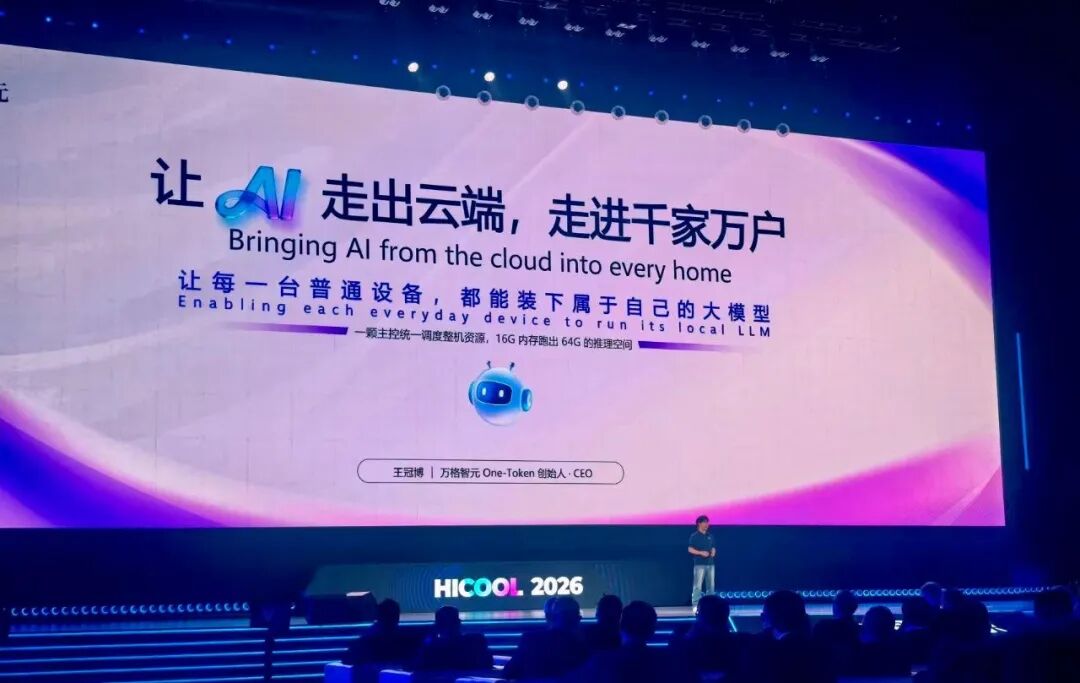
Crossing: In recent months, what external developments have excited you and strengthened your original conviction?
Guanbo Wang: Two things excited me most: the explosion of Kimi K3, and the first time we ran usable video locally some time ago.
Let's start with models.
Over the past year, model capability density has improved very rapidly. Tasks that previously required hundreds of billions of parameters can now be accomplished with models at the scale of several tens of billions.
The development of the open-source ecosystem has also made more high-capability models no longer confined to a few manufacturers.
Behind this lies a very important change: what users truly need isn't the model with the largest parameter count or highest price, but a model that can get the job done.
I've been thinking about one question: what capability threshold must a model cross to truly become a productivity tool that ordinary users are willing to use continuously?
Once it crosses this practicality "kill line," even if edge models lag cloud's cutting edge by one generation, they can fully satisfy a large volume of daily tasks. At this stage, users no longer consider just how powerful the model is, but whether it's cheap enough, convenient enough, and stable enough.
So I often say, the "kill line" may be a challenge for cloud model vendors, but for edge, it may be low-hanging fruit.
Video is another kind of excitement. Local agents still need user education; video results are understood at a glance.
That was the first time I saw edge truly substituting for cloud in real production scenarios — a bit of an aha moment.
Crossing: In terms of user experience, how does your inference engine perform?
Guanbo Wang: The most direct user feeling is that large models previously requiring GPUs and large memory to run now work without GPUs, respond quickly, and don't sacrifice original model precision.
These two sets of numbers can illustrate.
First, we run a 35B model with approximately 3-5GB memory footprint, maintaining inference speed and original model precision in corresponding tests.
35B is roughly the starting point for edge to do serious work; conventional deployment just to store weights requires十几 to dozens of GB of memory; compressed to around 3-5GB, an ordinary-configured device can run the model while doing other things.
Second, prefill reaches 3,000 tokens/s.
Prefill is the stage where the model reads the material you give it. At this speed, 20,000 tokens of material can be read and start answering in about seven seconds. Many people only look at how fast the model spits out words, but this initial waiting period affects experience more.
Crossing: Tell us about your team?
Guanbo Wang: We're a very young team, mostly post-2000s. But we've been working on fundamentals far longer than the company's age.
I started doing edge computing and edge-side systems in undergrad; later did Infra at Moonshot AI and Alibaba, connecting model training, inference, and systems; in between also did a stint of entrepreneurship in the embodied intelligence direction. The earlier period taught me how models run; the latter taught me to understand business logic.
Our team's core capabilities are in models, systems, operators, and chip adaptation, with related accumulation already spanning four to five years.
Many of our colleagues have been in so-called "big institutions/big companies," and after being disenchanted, became clearer about what they want.
Doing Infra at big companies, what I saw was that no matter how large the company, resources go to consensus first: bigger clusters, bigger models, projects that can be written into next quarter's targets.
Our CMO previously did investing, and saw the other side: money follows hotspots, consensus forms incredibly fast.
Looking at both sides, our conclusion was almost the same: big companies excel at scaling consensus, but rarely bet several years on a non-consensus. Edge inference is precisely such a non-consensus, so we'd bet on it ourselves.
Later, some companies first engaged with us on business, deepened cooperation, and as collaboration progressed, people gradually chose to jump over and join us, including some industry veterans.
What impressed me most: one day at 3:30 AM, I suddenly received a private message on Xiaohongshu from a technical backbone at a major company — very long and very sincere, hoping for a chance to start something together. I happened to not be asleep either, and upon chatting found we were very much on the same wavelength about edge. The next day I flew to where he was, and he later resigned裸辞 to join us.
Internally, we have a three-character mantra: "grind, dare, do" — willing to invest, daring to judge, seeing it through.
I don't particularly like the "little genius" narrative. Many PR pieces first build up a god. Of course there's variance in people's abilities, but not to the extent that one is a god and another can't do it.
I think the more critical question is: can you see something ahead of time, and does it happen to be what you're good at.

Post-2000s Student Team Lands Multimillion-Yuan Order in One Month
Crossing: Why did OneGrid shift from B2B to B2C?
Guanbo Wang: Actually, it wasn't a pivot. C2C was always the goal; B2B was our chosen starting point.
We've always believed that edge AI should ultimately serve every ordinary user, letting more people obtain continuously available intelligence at reasonable cost.
But for a startup, entering the consumer hardware market directly isn't easy. Whether user demand is real, whether supply chains can be established, whether cash flow can sustain continuous R&D — these are all problems that must be faced.
B2B business happened to help us gradually validate these three aspects. Large clients have clear equipment, budget, and acceptance standards; whether technology works becomes known quickly; cooperation opened supply chains, more ODMs saw us and were willing to build products together; delivery and payment collection brought cash flow and endorsement.
The TokenWiFi idea emerged from B2B deliveries.
We found that many people buying expensive AI PCs, AI NAS were essentially paying for the AI capability inside, paying for an entire device. At the time we wondered: can we extract this capability separately, letting users' existing devices connect directly.
Crossing: What's your current revenue situation?
Guanbo Wang: The company turned profitable within one year of founding.
We're a post-2000s student team; at startup we had no existing major client resources, mainly opened markets through technical capabilities.
Landed a multimillion-yuan order from a top-tier major client within one month, completed delivery and payment collection within three months, and continued receiving new orders over the following half year.
Clients cover top-tier PC manufacturers and NAS manufacturers, purchasing complete solutions from model deployment, inference optimization, to hardware adaptation.
Currently, we've already reached strategic partnerships with multiple listed companies.
Crossing: You mentioned that ecosystem matters more than performance. What ecosystem partners does OneGrid currently have?
Guanbo Wang: We've always believed that performance is the foundation for products entering the market, while ecosystem is the key to driving continuous technology落地 and scalable development.
Single performance metrics reflect technical performance at a certain point in a certain scenario, while ecosystem reflects whether an enterprise can continuously adapt to different chip platforms, keep pace with model iterations, and truly enter clients' product systems.
Currently, OneGrid has formed an ecosystem chain covering upstream, midstream, and downstream:
Upstream, establishing adaptation partnerships with top-tier chip manufacturers, accumulating cross-platform fundamental technical capabilities; midstream, continuously following mainstream model iterations, maintaining rapid adaptation capabilities for new models; downstream, deeply cooperating with top-tier PC, NAS, and other hardware manufacturers, driving technology into real products and user scenarios.
The value of this ecosystem lies in its not being one-time technical cooperation, but in its ability to continuously provide inference optimization and adaptation services as clients' hardware iterates, models upgrade, and application scenarios expand.
Crossing: When did the latest funding round close?
Guanbo Wang: This year we completed three consecutive funding rounds. This round's investors include top-tier funds and related listed companies' industrial capital, with cumulative amount nearing RMB 100 million.
When investors came to see us, they saw a business that already had orders and payment collection, not just a business plan.
Among industrial parties, there were also some partners who first cooperated on business, then became shareholders.
For a company that wants to do consumer hardware, the value of such capital isn't just in the money — hardware, supply chain, channels, every link needs someone to carry together. Funding is an accelerator, but it can't substitute for demand validation, nor for client acceptance.
Since founding one year ago, we've gradually felt the process of edge moving from lukewarm to gradually surfacing, seeing our judgments bit by bit become reality.

Slow Is Fast: Don't Let Your Dao Heart Be Disturbed
Crossing: You mentioned that "in the AI entrepreneurship process, increasingly feeling that slow is fast." What are things you chose to do slowly, yet ended up moving faster?
Guanbo Wang: The most typical thing: we didn't take the shortcut of quantization and distillation, spending two years on the layer beneath models.
Many teams' edge optimization works on model parameters — quantization, distillation, quick results, but strongly bound to specific models. A new model comes and they must re-quantize, re-distill from scratch.
We chose the slower path, putting effort into model architecture and chip operator ecosystems, for a long time unable to show off anything.
Later it became fast. Qwen 3.6, Kimi K3, DeepSeek V4 came out, and we could support them quickly.
This year as short dramas and video generation became hot, we did one migration and found it was almost naturally adaptable, achieving first-tier edge video generation results in two weeks.
What outsiders see is two weeks; what they don't see is the two years before.
I have a deep feeling: entrepreneurship is like cultivating immortality — you must not let your dao heart be disturbed.
Doing technology requires maintaining定力; you can't rush to overturn past accumulation just because some new direction suddenly becomes hot.
Every time new technology or new concepts emerge, we first ask ourselves: does it truly change the problem we're solving, or is it just saying the same thing differently?
Crossing: Over the past year, AI has gone through several waves of hype. How do you judge what to persist in and what to abandon?
Guanbo Wang: Persist in the main line of inference systems, doing what we're good at and what users need.
We're at the Wudaokou Origin Community, with embodied intelligence, agents, models surging wave after wave around us. There's always someone urging us to do a product that's easier to tell stories about, easier to get attention. We didn't switch.
On product, we're clear about not building the next Codex or WorkBuddy.
Users have already gotten comfortable with their tools; there's no need to rebuild entire workflows just to use our inference capabilities. We stand behind these tools, keeping complexity inside the product, leaving choice to users.
A startup's path to survival lies behind users, not in front of them.
In the long term, model layers and infrastructure layers will likely converge, with value peaks at the application layer — just as today the most profitable is ByteDance, not carriers. Whether AI has泡沫 is measured by whether value is at the application end or infrastructure end; currently too many are telling infrastructure stories.
We do fundamentals, with the goal of letting applications grow.
But worth mentioning: as hotspots changed several rounds, we've kept polishing our own technology; when the tide recedes, the real demand that remains — edge for agent, edge for embodied intelligence, edge for RSI — all have千丝万缕 connections with us, with some already using us as their base.
This also makes me increasingly feel that AI entrepreneurship particularly needs "cautious solitude" (慎独).
When external winds constantly shift, you must be clear about why you chose this path, and which things are worth long-term persistence.