AI Adoption is a Myth

AI models are getting stronger, but something's off inside companies: model capabilities are advancing by leaps and bounds, yet organizational productivity isn't keeping pace?

AI models are getting stronger, but inside companies, something isn't adding up: model capabilities are surging ahead, yet organizational productivity isn't keeping pace.
A while back, the article AI Adoption is a Myth sparked intense discussion on X. Box CEO Aaron Levie reposted it, saying anyone pushing AI inside an enterprise or building AI products for businesses should read it.
Addy Osmani, engineering lead for Google Chrome, offered an especially sharp observation: people who use AI daily feel like they're falling behind the cutting-edge players, yet they easily overlook how much further behind most of their colleagues still are.
The author, Vasuman Moza, is a former Meta engineer and founder of Varick Agents — a company that deploys AI agents for large enterprises with $500 million-plus in annual revenue. He's spent the past year doing hands-on AI implementation at major corporations, and the pattern he's seen is remarkably consistent.
Whether a team has 50 people or 5,000, handing out the best AI tools to everyone typically produces a "barbell" distribution:
5%–10% become power users, 20% use it occasionally but crudely, and the remaining 70% barely touch it at all.
One large enterprise that had just signed an eight-figure annual AI contract even discovered that 10% of employees consumed 90% of tokens.
And that's where the problems begin.
Over the past two years, model capabilities have leaped forward every few months, and companies have spent increasingly large sums on Claude, ChatGPT, and Copilot. But the growth in model capabilities hasn't automatically translated into growth in organizational productivity.
This is why two seemingly contradictory figures can both be true: a McKinsey & Company survey found that 88% of organizations are using AI in at least one business function, yet only 6% derive more than 5% of their EBIT from AI.
The issue may lie in the very word "adoption."
An employee who opened ChatGPT once this month counts as an AI user. So does another employee who has three agents running production workflows. Yet the value these two people create could differ by orders of magnitude.
"How many people are using AI" is increasingly a number without much meaning.
More strikingly, the author's diagnosis of this gap is far more radical than "the corporate training isn't working."
Many companies' AI strategies today rest on a shared assumption: the people who don't know how to use it yet just need time. Models will get smarter, products simpler, a few more training rounds will happen, and eventually everyone will catch up.
The author argues this will not happen. In his observation, the vast majority of people in enterprises will likely never become truly AI-native users.
Because using AI well is a craft.
You need to know when to clear context, when to crystallize repetitive work into skills; which tasks suit model-based judgment and which are better handled with deterministic code. These capabilities aren't learned in a single prompt engineering workshop, and this gap may only continue to widen.
AI vendors typically focus on their most active, most demanding frontier users. New features proliferate, and the bar for "using AI well" rises with them.
The AI power users inside companies, too, may not be eager to share what they know: if someone used to finish a day's work in eight hours and now does it in three, those extra five hours are their competitive edge.
So continuing to buy licenses for thousands of employees, running training sessions, and tracking monthly active users probably won't solve the problem.
If this assessment holds, then many companies' AI strategies have been asking the wrong question from the start.
The question shouldn't be: How do we get all employees to learn to use AI?
It should be: Since most people won't become AI-native, how do we still capture AI's productivity gains across the entire organization?
The author's proposed solution is intriguing: first, accept that most people won't become AI-native.
Let that 5%–10% of power users keep pushing ahead. What companies need to do is capture the skills, workflows, and agents they've developed — making one person's experience reusable by others.
For everyone else, stop trying to turn them into AI experts.
Move AI to the background. AI can enter the Salesforce, NetSuite, and Dynamics they already use every day, hiding behind the workflow. Invoices process automatically, data enters itself, workflows flow on their own; only when the machine isn't confident does it loop in a human for approval, rejection, or correction. Employees may not even need to realize several agents are running behind the scenes.
So AI's path to enterprise adoption may not require waiting for everyone to learn to use it. Many people may never realize they're "using AI" at all.
At this point, how companies measure AI will change too.
Rather than asking "how many employees used AI this month," the better question is: of all the work completed today, how much was done entirely by humans, how much through human-machine collaboration, and how much runs fully automatically?
Of course, this article deserves two caveats: the 5%–10% / 20% / 70% distribution comes from the author's own clients, not a large-sample validated industry benchmark; and his advocacy for deeply embedding agents into enterprise workflows is precisely what Varick Agents sells.
Even so, the article raises a question well worth pressing:
If most employees will never become AI-native, shouldn't the way we design enterprise AI products change too?
For the past two years, the focus has been on getting more people to learn AI.
The next phase may call for something different: figuring out how work can get done without people having to learn AI at all.
Full translation below:
AI Adoption is a Myth
Original title: AI Adoption is a Myth Author: vas (@vasuman), Founder & CEO of Varick Agents Originally published on X
You're already in the top 1% of AI users. Yes, there's still a gap between you and the absolute frontier — those running 20 terminals at once, automatically rewriting their knowledge base every iteration.
The bad news: you'll never catch them. The good news: you don't need to. Because the gap between you and them is far smaller than the chasm behind you.
You probably don't feel like a top 1% user. After all, X is full of geeks who can spin up an agent fleet at will. You likely use models daily, think about how to use them better, have probably tinkered with agents, maybe even deployed Hermes on your own machine.
But look at the average employee at a large enterprise. A massive gulf already separates you. Over the past two years, they've maybe opened ChatGPT four times total, used 3.5-turbo, and concluded: AI is pretty dumb. They don't know that GPT-5.6 Sol Ultra just proved a graph theory conjecture that had stood for 50 years.
Nearly every article and post about AI strategy assumes these average employees will eventually catch up.
I'm telling you: they won't.
Let me explain why I'm confident saying this. I'm CEO of Varick Agents (@varickagents). We help the world's largest companies implement AI agents and AI strategy inside their organizations, so we've seen a thing or two about how enterprises actually use AI.
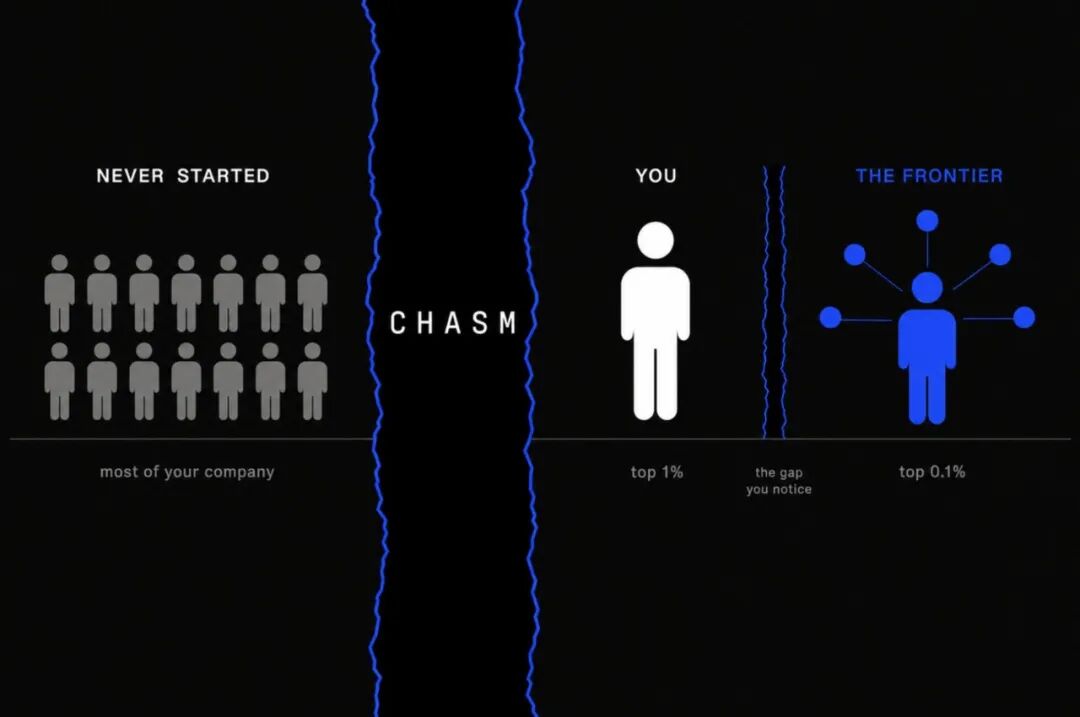
Figure 1: The Chasm
The Best AI Tools in the World Didn't Make Them Faster
Not long ago, I spoke with an operations lead at a non-technical company with several thousand people under him. He said before AI, the team worked at a decent clip with no major issues. Later, they rolled out Claude Cowork to the entire team. The result? Same efficiency as before. He asked me why.
And this wasn't an isolated case. Nearly every company I've worked with looks the same. Whether 50 people or 5,000, the same distribution emerges: a barbell.
5% to 10% become power users — they use Cowork daily, write skill files, connect Outlook connectors, go deep with the product. These were also the earliest champions who pushed to bring Claude Cowork into the company. They tinker with AI after work too; they've seen firsthand what this thing can really do.
What about the other 90%? About 20% use it once or twice a day, but crudely. They extract some value, just nothing comparable to the frontier users.
The other 70%? Barely touch it.
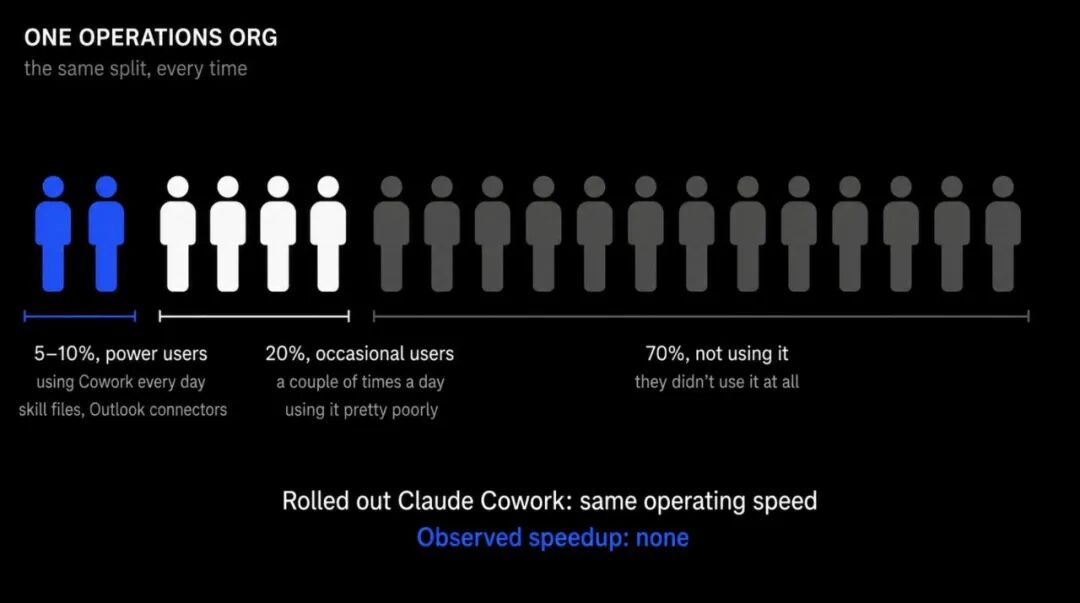
Figure 2: One in Ten Uses It Well
By the numbers, this rollout could already count as "successful adoption." Yet in this leader's eyes, team efficiency hadn't changed at all.
Both things can be true simultaneously.
"Can Use" and "Use Well" Are Two Different Skills
Even among people who actually use AI, the skill gap is staggering. Someone with absolutely no idea what they're doing can actually produce worse results with AI than without.
Installing Claude, pointing it at a code repository, tossing in a four-word prompt, and watching it go to work — right or wrong — anyone can do that.
The hard part is using it well. Knowing when to clear context, when to write something as a skill after doing it twice; knowing which parts of an automation project actually need model judgment and which are better handled with a few lines of deterministic code. Most importantly, reading the diff carefully before hitting "accept."
Give the same ticket to two engineers, and within five minutes you'll see the difference.
The first one copy-pastes text straight from Jira into Claude, hits submit. Claude modifies six files. He glances at it, sees tests are still green, merges the PR. Three weeks later, things start breaking in production, and everyone discovers this PR inexplicably changed a config value.
The second engineer starts similarly — copy-pasting from Jira. But then he tells Claude exactly where the code lives, which directories and files can be modified and which are off-limits. He's already written skill files so Claude submits the leanest possible PRs with all required tests. Then he reads the diff start to finish, spots an extraneous change, fixes it with one prompt. The final merged PR is half the size of the first engineer's.
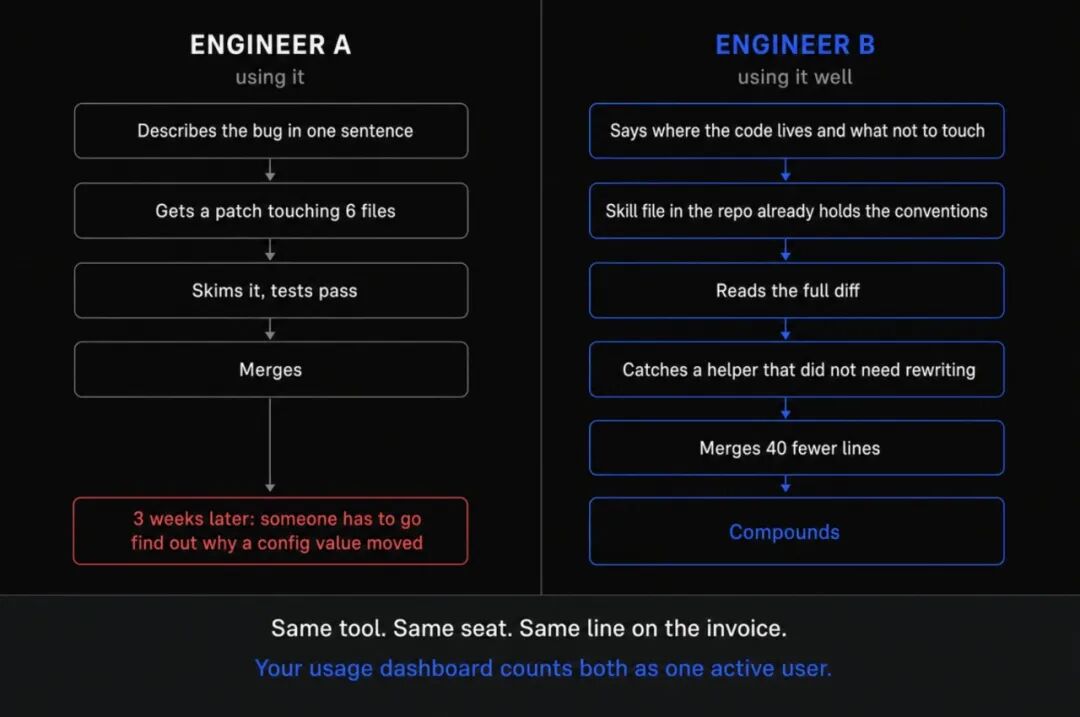
Figure 3: Same Tool, Same Role, Different Outcomes
In any organization, at least half the people will never reach the second state. Using AI well is a craft — you have to iterate many times before it really clicks.
For many people who haven't started using AI yet, simply changing their existing work habits is already hard enough. And turning someone who just has AI generating garbage at scale into a power user isn't exactly easy either.

No matter how good the rollout, you still get a barbell**
The easiest rebuttal: "These companies just did a terrible job. I'd do it differently."
No. Even with a flawless rollout, you'll probably still end up with a barbell.
We also spoke with another executive. He'd just bought enterprise licenses for the entire company — an eight-figure annual contract in USD. The result? About 10% of people burned through 90% of tokens.
Do the math on what that means. If the remaining 90% used it at the same intensity as the top 10%, costs would roughly multiply by ten. A $10 million contract becomes $100 million.
This means your best-case scenario is simultaneously your worst-case scenario.**
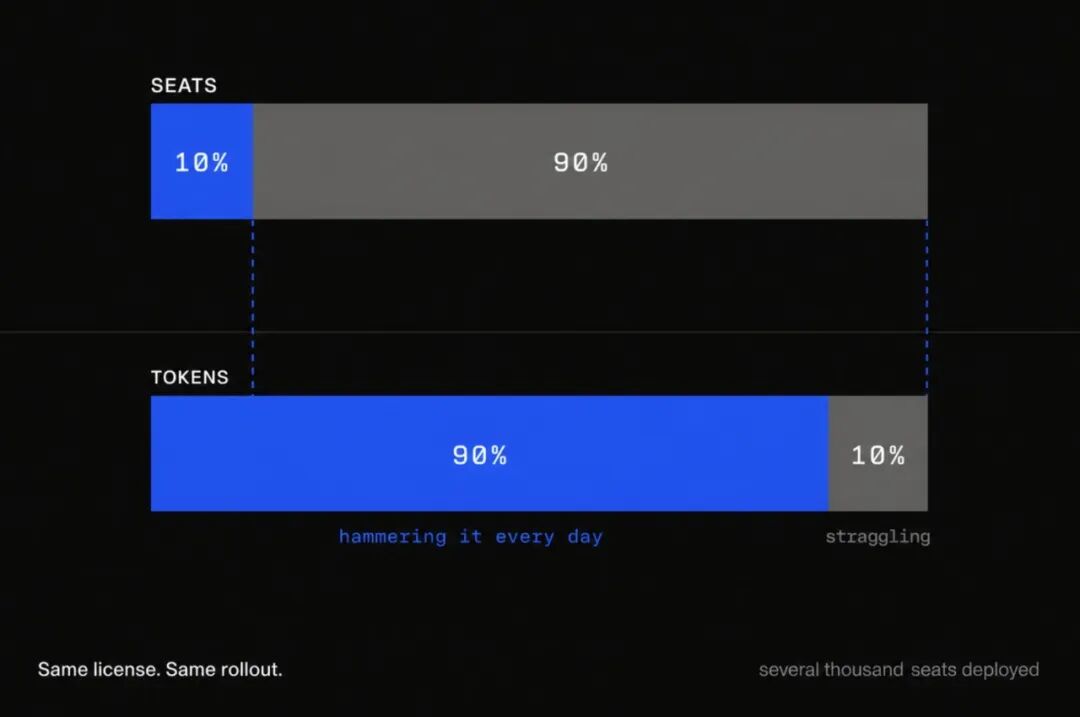
Figure 4: 10% of Seats Burn 90% of Tokens

"Used or not" has two answers; "how well" spans a vast range
McKinsey & Company's 2025 survey found that 88% of organizations are using AI in at least one business function. Yet only 6% derive more than 5% of EBIT from AI.
MIT NANDA's GenAI Divide report adds another set of figures: 5% of integrated pilot projects created millions of dollars in value, while the other 95% showed no measurable impact on the P&L.
If a company fixates on "adoption rate," what they're really tracking is a series of yes/no questions: "Logged in this month?" "Logged in this year?" "Sent five prompts a day?"
But what you actually need to distinguish are three completely different people: someone who never opened AI; someone who occasionally pastes in an email for reformatting; and someone who already has three agents operating the general ledger in production.
To tell these three apart, you need a new measurement approach. 99.9% of enterprise AI adoption dashboards can't do this. It's stupid, and the reason is obvious — look at that barbell above.
Of course, the adoption number itself isn't fake, and nobody's lying; it's just easy to measure. What companies should actually care about is far harder to quantify: how deeply are employees actually using AI? What return are we getting on tokens spent?**
This is why I say AI adoption is a myth. If you actually track these metrics, you'll quickly discover: the vast majority of people in enterprises have no hope of becoming AI-native users.
This of course doesn't mean these employees lack value — it just means enterprise AI implementation needs to accept this reality from the start.
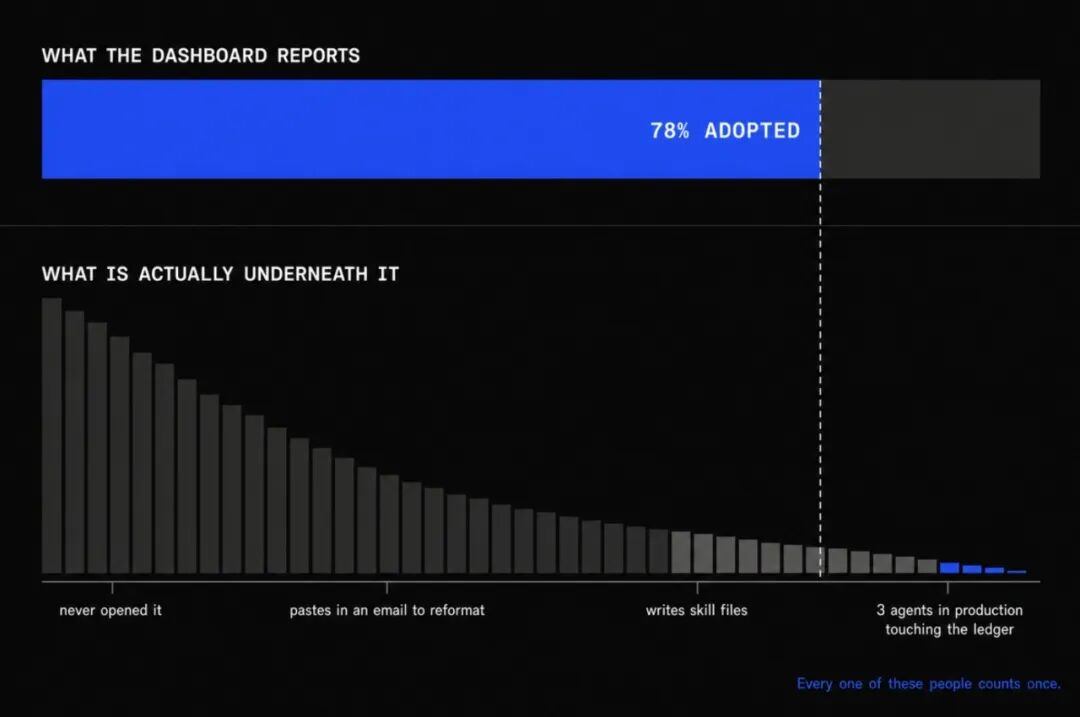
Figure 5: What Adoption Numbers Hide

Every layer of incentives preserves this gap**
Look at today's AI vendor product roadmaps — nearly all about how much more powerful agents will become next. Whether enterprise teams can actually use these features? Barely mentioned.
The result: the people who can actually use these products well remain the frontier users. They have the loudest voices, so they get the say. And building for this group is the easiest way to make products look impressive — vendors are happy to oblige.
More new features, higher bar for using the product well, and the gap between frontier users and everyone else only grows.
I've seen too many enterprises seduced by one phrase: "Train employees to write prompts!"
But that's only 10% of the whole picture. The other 90% is teaching employees to figure out: which workflows shouldn't touch models at all; which workflows should be fully automated.
This can't be packaged and sold like prompt training. Because every company's answer is different — you need to be on-site for weeks to really understand.
The people who use AI best inside companies also have little incentive to close the gap. Because that gap is their advantage. They work 70% faster; the remaining time can go to slacking off or doing three people's jobs alone. Once everyone can do it, that edge disappears.
Without extra incentives, why would they actively teach others? So what then?
Training still matters. Because without running it once, you can't tell who's in the top tier and who isn't.
So here's the thing: training's purpose is diagnosis, not remediation.
There are definitely people in the company interested in AI who just haven't had the time or conditions to go deeper. The point of training is to see who can actually pick it up and who can't.
For the top power users, give them somewhere to publish. Build a shared library where every skill they create can be uploaded, ranked, and installed directly by colleagues.
This is the only method I've seen where one person's approach spreads rapidly to others — the ranking itself is the reward. These power users will trade their proprietary tricks for recognition inside the company.
But the gap remains. Even if you push all these skills to the entire company, 50% still won't use a single one. As for the rest, don't expect them to change their work habits for AI's sake.
AI needs to retreat to the background itself.
Why wait for someone to prompt it? Identify the most repetitive processes and connect agents directly into the core business systems employees already use daily — Salesforce, NetSuite, Dynamics. Let most work run on its own; only when the machine isn't confident does it call in a human.
Example: say you have dozens of accounts payable analysts shuffling invoices between systems daily. About 90% of this work can be automated.
You can't expect dozens of analysts to each build their own agents and rely on prompt-by-prompt execution to keep them running stably every day without causing production incidents. Just build the agent, let it run daily.
Analysts now do only three things: approve, reject, modify.**
Remember this: people don't care about having another AI tool; they care about whether the work gets done.
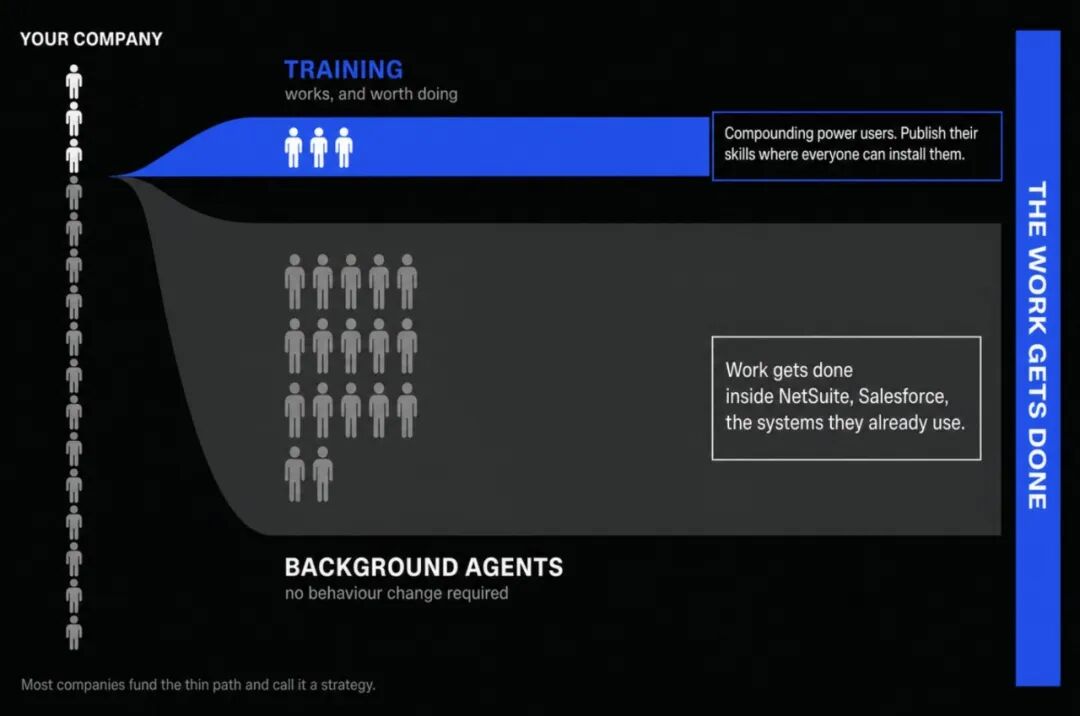
Figure 6: Two Paths, Staff According to Actual Headcount
So stop reporting "adoption rate" to the board. Tell them: of the work done today, how much is fully human, how much is human-machine collaboration, and how much runs fully automatically.
As for how these background agents are built and deployed — that's enough material for another article. These clients all have thousands of employees, but what we do is basically the same: first understand how work actually flows through the company, then connect agents into existing core systems.
Let work complete itself, without forcing five thousand people to learn a craft they never signed up for when they were hired.**
If you're also following AI — whether doing hands-on work at a major tech company, conducting research in academia, or mulling a startup idea — I'd love to connect. This industry moves too fast, too much remains unclear, and I hope to meet more people inside it who remain curious about what's ahead.