When Silicon Valley Starts Saying 'We Can't Beat China' | Xing Meng

J&T Global Express, technology, moats — even the abilities a person trusts most — are all being repriced.
Companies, technologies, moats, even the capabilities people believed in most — everything is being repriced.
LatePost Column | Xing Meng, Partner at 5Y Capital
One afternoon in August, I exited San Francisco International and headed south on Highway 101.
Bay Area summers are nearly cloudless; the sun bleaches the pavement white. Near the airport, warehouses and low-slung office buildings still dominate. Further south, billboards gradually take over the scenery.
The billboards along this road have always been Silicon Valley's most honest weather vane. Two years ago, they were packed with SaaS. Last year, you could still spot some consumer brands. This year, they're uniformly AI companies.
Figure 1: Kimi has joined San Francisco's "AI billboard" wars; Figure 2: Codex billboards are increasingly visible across San Francisco, spending heavily to compete with Claude Code (swipe to view)
Nothing suggests AI is slowing down. Money, GPUs, and talent keep flooding in. What genuinely surprised me was hearing judgments that used to be rare, now emerging from the innermost circles.
Several friends at OpenAI spent considerable time reviewing directions they'd bet wrong on over the past year, earnestly dissecting where Chinese model companies are actually strong. A Google researcher discussing multimodality put it bluntly: "We can't beat the domestic [Chinese] ones." This certainly doesn't summarize the overall China-US AI landscape today, but a few years ago, such assessments from frontline Silicon Valley researchers would have been unimaginable.
People are recalibrating how large the gap between China and the US actually is, though this question no longer has a unified answer: the answer may differ completely across pre-training, post-training, and multimodality.
Another shift is happening among the most expensive Neo labs of the past two years.
A researcher at Thinking Machines Lab told me that the pain they're experiencing today, other Neo labs will inevitably experience again. And I'm increasingly skeptical that the next Neo lab to truly break out will look anything like today's models.
This may be my strongest impression from this Silicon Valley trip: many boundaries and consensus formed over the past two years are less solid than imagined.
Can assembling the most elite researchers recreate another OpenAI? Can America's best labs lead on every battlefield? Among models, data, applications, and compute, who is upstream of whom? Should the strongest models always command the highest prices?
Even the most beautiful growth stories are being recalculated. In August, Bloomberg reported Anthropic's ARR had reached $6.5 billion, up another $1.8 billion from two months prior. For any company, this is staggering growth. Yet it still fell short of market expectations — some investors had anticipated the figure would exceed $7 billion.
Five months ago, I wrote about "everyone token-maxxing." Back then, Silicon Valley's dominant emotion was fear of falling behind: more tokens, more GPUs, larger models, faster iteration — speed itself was the answer.
But five months later, increasingly many are looking back to ask: of everything we believed most deeply these past two years, how much still holds?
"We Can't Beat the Domestic Ones"
During this Silicon Valley trip, I kept hearing something rarely said before:
"We can't beat the domestic ones."
The people saying this were quite central — Google researchers working on multimodality, people from xAI and other frontier labs, others studying American open-source models. The phrase recurred across different people and contexts, and after hearing it enough, it's hard to dismiss as casual complaint.
Here, "can't beat the domestic ones" points to specific directions, and the answer may be completely opposite across different training stages, modalities, and tasks.
Those working on multimodality were talking about Seedance. Those on open-source models had their eyes on K3. Some saw data and operations. Meanwhile, several American open-source models and Neo labs were clearly falling short of expectations.
On multimodality, one surprise was Google — long its most committed investor — where even its flagship teams had compute cut. Whether Nano Banana for image editing or Veo for video (now Omni), though already absolutely top-tier in the US, nearly everyone is now pivoting. This context matters when Google researcher friends say "we can't beat the domestic ones."
The old approach of using one leaderboard or scaling curve to rank China and US models comprehensively has long become obsolete.
Hearing this repeatedly, I increasingly wanted to understand: where exactly has the gap genuinely closed, where does it remain large, and why does this divergence exist?
Starting with pre-training.
Over the past year, Chinese model companies have most rapidly caught up on how to "climb the ladder."
A model with tens or hundreds of billions of parameters is rarely trained straight through from start to finish. Teams first validate data, architecture, and training methods on smaller models, then scale up rung by rung. Whether the ladder is sufficiently complete determines whether a small experimental error ultimately becomes a tens-of-millions-of-dollars failure on the large model.
Several frontier lab friends working on pre-training told me that this year, leading Chinese labs' scaling ladders have visibly matured, their training methods increasingly scientific.
So pre-training today is somewhat counterintuitive: it appears the China-US gap remains large, but methodologically they're already quite close. What remains is primarily GPUs and corresponding systems engineering experience.
The most cutting-edge pre-training still requires massive compute. American labs have run more ultra-large-scale training, have more GPUs, more mature clusters, and better know what problems might emerge when tens of thousands of GPUs start running. What China lacks is still this experience of "stably scaling the same method upward."
In other words, everyone already knows how to do pre-training; America has simply gone further and run more.
Frontier labs' compute focus is rapidly shifting — pre-training's share continues declining while post-training/RL rises quickly. The past competition was about "training the model out"; increasingly, compute goes toward making the model "better" and actually operational.
At post-training, answers become less straightforward because things diverge.
Post-training isn't a unified methodology; it requires many capabilities: how to define problems, how to design environments, rewards, and evaluation, how to stably run training. But looking at where China and the US most easily pull apart, three stand out: large-scale RL, human operations, and distillation.
China's position across these three differs.
The hardest to close is actually the first: large-scale RL.
At today's frontier, a single RL Big Run may simultaneously occupy tens of thousands of GPUs, with a task running thousands of consecutive steps. Any instability in any intermediate link can scrap the entire trajectory. You must also know what environments are worth building, what rewards actually work, how rubrics are defined, and whether original experience holds when scale grows from 100 to 1,000 steps.
These things are hard to learn from papers; they're more like "muscle memory" that only accumulates from actually running many large-scale experiments.
China hasn't had that many GPUs, nor run enough RL at this scale, so the gap here runs deeper than pre-training's methodological gap.
But post-training has another half.
Once a model's optimization target is clearly defined, large numbers of people are needed to layer out data, annotation, evaluation, and feedback — this is where Chinese companies excel.
Seedance is a good example. ByteDance owns the ultimate video distribution platform, making it easier than a pure model company to know: what does "good" actually mean for a video model? What camera movements do users prefer, what character consistency is unacceptable, which generation results do people actually want to post? These are hard to define via benchmark in advance; the distribution platform itself continuously helps define the benchmark.
Once the target is clear, things become very "Chinese": rapidly organizing large numbers of people to push data, annotation, evaluation, and training round after round.
There are certainly algorithmic factors, but increasingly, gaps hide beyond algorithms.
This is why Chinese companies' advantages amplify particularly in multimodality. Unlike coding, there's often no clean "right" or "wrong"; massive judgment still requires humans. The more ambiguous the target, the higher human operations' value.
Friends at OpenAI and Google summarize this gap as operations capability: in domains where training targets aren't highly standardized, Chinese companies' advantages amplify — once direction is clear, they can rapidly organize massive human resources to handle the tedious work of data, annotation, evaluation, and post-training.
American companies are actually catching up on this too.
Meta recently assembled an internal team of roughly 6,500 called Applied AI, with many Meta employees reassigned to write problems, create scenarios, and do evaluation. Some didn't even apply — they simply received transfer notices.
The third is distillation.
Distillation is ultimately one method within post-training. You can build environments, run rollouts, find rewards, and train a capability from scratch; or you can leverage a model that already possesses this capability and turn its outputs back into training data.
So distillation itself isn't entirely "dishonorable." Often, it's simply about more efficiently compressing an already-obtained capability back into the next-generation model. Models from the same company also distill themselves.
For example, when DeepSeek trained R1, it used the post-RL model to generate and filter roughly 600,000 reasoning data points, combined with roughly 200,000 non-reasoning data points from V3, then retrained V3-Base.
And precisely because model outputs can become training data again, the reasoning process itself is gaining prominence. This year, several frontier labs began collectively shutting off complete CoT outputs.
But the door wasn't closed tightly.
In May, a group of researchers discovered that even with complete CoT hidden, reasoning information could still leak through encrypted reasoning blocks — Anthropic, OpenAI, and Google all fell victim.
The specific method: feed a strong model's encrypted reasoning block to a weaker model from the same family, and the weak model would write out the contents in plaintext. The encryption's front door wasn't breached, but the key was simply left under the doormat.
That paper, Stealing Reasoning Traces from Proprietary LLM APIs, wasn't officially published until August. Before long, someone found yet another way to crack open Fable 5.1's reasoning process, and third-party companies started building businesses around it.
Meanwhile, I heard from several data companies and model teams that a U.S.-based Neo lab was also distilling K3.
The logic is straightforward: open-source models can be deployed directly on your own clusters, keeping costs down and making it easier to generate data at scale. When a model like K3 is already good enough at certain capabilities, it naturally finds its way into these teams' post-training toolkit.
But when it comes to coding, Chinese models haven't shown the same advantage they have in multimodal.
Coding is equally dependent on post-training, but among the capabilities mentioned earlier, it relies more heavily on large-scale RL.
Coding has inherently strong verifiable rewards: whether the code runs, whether tests pass, whether the task ultimately gets completed — the results are unambiguous. But clear outcomes don't mean RL is easy.
A trajectory stretching to thousands of steps often yields only a single success or failure signal. The real difficulty is credit assignment: which of the earlier key decisions should this final result be attributed to? Which seemingly roundabout step turned out to be exactly why it ultimately succeeded?
So coding isn't just about whether you can scale rollouts or keep RL stable. It's also about reward design — how to distribute that final success or failure back across a very long trajectory. This is the piece Chinese models still struggle more to fill in post-training.
Human operation still matters here, but with much lower marginal value. The human data that actually matters depends more on the quality of a small number of top-tier coders; large-scale annotation becomes far less important.
A friend at a frontier lab told me that much of Anthropic's truly high-quality coding data comes from an internal team of 100+ strong coders, while data from ordinary Claude Code users is noticeably noisier. On these tasks, throwing more people at the problem doesn't help — what you need is elite talent.
So for post-training, it's hard to simply conclude that "whoever has stronger operations will necessarily be stronger."
In domains where goals are fuzzy and quality depends on mass human judgment, human operation gets amplified. Multimodal is the archetype.
In domains with very clear ground truth, where you can automatically run massive rollouts, large-scale RL infrastructure and a small amount of high-quality expert data matter more. Coding falls closer to this category.
Behind these three capabilities, the more notable shift is that AI research itself is broadening. In the past, when people said "research," they first thought of architecture design and model training. Later, building AI infra counted as research too. Today, operation itself has entered the research category.
RL at ten-thousand-card scale, thousand-step rollouts, organizing people to produce data — these fundamentally different kinds of work now directly determine where a model can ultimately get.
For a company, this means a research organization must possess multiple capabilities simultaneously. For an individual, a researcher's boundaries are expanding from "what can I come up with" to "what can I organize and manage."
And the capability Chinese companies have historically been best at — one that once seemed unimportant — is precisely what's becoming increasingly important in this cycle.
So the "can't beat the domestic players" refrain I kept hearing isn't about a change in overall rankings. What's determining model capability is shifting: some gaps remain large, while some previously unremarkable capabilities have suddenly become crucial.
A while back, Corgi Cafe became a hit in San Francisco's AI founder circles. It's a 24-hour coffee shop opened by AI insurance startup Corgi, right downstairs from their office, dedicated to founders and engineers still coding and building late into the night. It's a microcosm of the city's startup culture: entrepreneurship isn't just a job, it's a lifestyle.
Of course it's just a coffee shop, but San Francisco feels like a place where founders stand at the center of the city's attention. What they discuss, what they experiment with, even where they gather — it can all become part of the next wave. Innovation, socializing, and life frequently blend together here.
Neo Lab Disenchanted: Every Generation of Lab Has Its Fate
"Every pain Thinking Machines Lab went through, the other Neo labs will all go through again."
It was past 8 p.m. A friend who'd previously been hard to pin down — someone who'd worked with a TML co-founder — finally made time.
For the past two years, Neo labs have been Silicon Valley's most expensive form of entrepreneurship: top researchers jumping from OpenAI, Google, Anthropic, with VCs betting on the people. No product, no revenue — no matter, as long as the team was star-studded enough to justify a few hundred million upfront.
But whether looking at TML or SSI, from inside or out, the results today are below expectations. An investor friend who's long tracked frontier labs lamented: "None of the top-tier Neo labs that raised big money in the last wave in the U.S. have delivered."
Thinking Machines Lab was the heaviest bet of all.
Last July, just five months after founding, with no product and no revenue, it raised $2 billion at a $12 billion post-money valuation — the largest seed round in history. Mira Murati's native Albania invested $10 million, specially revising its 2025 national budget to do so.
By last November, TML was in talks for a new round at a $50 billion valuation, with some bids coming in at $60 billion. Two months later, the CTO and a batch of core members left to return to OpenAI, and that round never closed. Only recently has TML resumed talks for new funding at a $40 billion valuation.
TML's valuation has risen, but the new round figure is already below what it sought late last year — exceedingly rare in the AI market's years of heady growth.
What surprised me more was that even TML insiders felt the company had a strong "stitched-together" quality from day one.
That friend who'd worked with a TML co-founder told me the founders wanted fundamentally different things: Mira Murati leaned more toward enterprise, Lilian Weng was more interested in interaction models, John Schulman skewed more purely research.
The manifesto on their homepage was assembled from paragraphs each founder wrote separately, with "human-AI collaboration" landing as the company vision largely because it was one of the few areas where everyone overlapped.
This explained many of TML's later problems.
People capable of leaving places like OpenAI and Anthropic tend to have strong research taste: convictions about what problems matter, what directions are worth betting on, what methods might work, which paths to persist with.
But put a group of people with strong taste together, and that becomes its own problem. These are people who, in their original organizations, couldn't persuade others and couldn't be persuaded — so they left to do their own thing.
In mature big tech, the organization sets the North Star. You might disagree with a technical direction, but ultimately someone decides where resources go. OpenAI and Anthropic, for instance, have mechanisms to converge differing research tastes toward organizational choices.
Over dinner in Palo Alto, a few OpenAI friends sat across from me. Before the food even arrived, one had already begun post-morteming the company's mistakes over the past year.
What gnawed at him most was the reasoning path. o1 was clearly OpenAI's first, yet Anthropic turned that path into a usable product in coding sooner — "a really terrible thing" for OpenAI.
The two companies also differ in management style. OpenAI is more bottom-up: many directions bubble up from researchers themselves, with ample research space and a tendency to sprawl in many directions. Anthropic is more top-down: leadership decides where to strike, resources concentrate there.
The former risks diffusion; the latter depends more on a few people's judgment. But once the direction hits, Anthropic moves fast. Domestically, Moonshot resembles the former, DeepSeek the latter.
For TML, there was never a sufficiently concrete shared goal from day one. When everyone has strong taste, what each person insists on most easily pulls the team in different directions.
When compute and resources were abundant, multiple directions could coexist. Once prioritization began, conflicts emerged. TML's team ballooned rapidly in six months, trust between old and new hadn't formed, yet co-founders departed one after another, with middle management churning in their wake.
Compute wasn't as ample as outsiders imagined. From the outside, it had signed massive compute contracts with Google Cloud and secured NVIDIA's latest GPUs. But frontline researchers still felt experiments crowding each other — "many basic experiments couldn't even be run," with smaller tests relegated to models too small to be meaningful.
The most painful lesson was Tinker. A friend who'd participated in Tinker's training reflected that Tinker was "the most elegant single-scenario framework to date," but admitted the team had gotten too absorbed in making the framework beautiful: "When you have ego, when you feel self-satisfied about launching a pretty framework, you won't finish the dirty work."
That ego was specific: a strong researcher naturally feels that designing frameworks, inventing algorithms, and solving hard problems is their job, while prefix caching, cost optimization, deployment, stability — the "dirty work" — is someone else's to handle.
Yet the product's final gross margin dies precisely in these places. With the same call volume, if you haven't taken caching seriously, your costs run higher than the competition's. However beautiful the framework, what the customer ultimately pays is calculated transaction by transaction. And so this business ended up being siphoned away by Fireworks — a company that did the "dirty work" more thoroughly.
Put these details together, and what TML exposes is the fundamental contradiction of Neo lab 1.0: a group of people who got here on taste, most lacking precisely a goal that doesn't require taste.
For six months I've kept coming back to the same question: why did this cohort of Neo labs start so explosively, only to slow down now?
I eventually came to understand this move as "jumping off the bus." OpenAI and Anthropic are like two buses hurtling down the highway. When a researcher jumps off, they temporarily inherit the bus's original velocity: résumé, funding, talent, the attention of everyone in Silicon Valley — it all arrives at once.
But that's the original bus's velocity. After landing, whether you can keep accelerating on your own — that's the hard part.
And when these people jumped, they often brought an "old map" with them.
When frontier labs were rising, what the industry lacked were some very basic yet scarce capabilities: how to build models, how to do large-scale training, how to source data, how to get thousands or tens of thousands of GPUs running.
At that time, the people who possessed this know-how were the moat. OpenAI and Anthropic also proved this extraordinarily seductive path: gather the best researchers, secure enough compute, push intelligence ever upward. At least in the LLM pre-training phase, the model didn't need to define the specific end task first; as scale increased, a broad swath of capabilities improved together.
So it wasn't surprising that the first cohort of Neo labs believed in "reconvene the smartest people, then give them enough compute." They were replicating what OpenAI and Anthropic had validated early on.
Only as models continued advancing, the problems OpenAI and Anthropic themselves faced changed too. Robotics, law, healthcare — every scenario eventually had to answer a very concrete question: was the task actually completed? The company also needed a sufficiently clear North Star metric to tell a group of people each possessing their own research taste where exactly to go next.
This too is what frontier labs today spend increasing energy solving: how to build environments, how to set benchmarks, how to do evals, how to define rewards, in which real-world tasks the model should ultimately improve.
Every generation of Lab has every generation of Lab's destiny.
To build a Neo lab today, you have to find new solutions on the problems that frontier labs currently find hardest.
So I've increasingly come to feel that the next cohort of Neo labs that truly break out may grow from completely different soil. It will likely have product first, then environment, and only then grow its own model.
Cursor is a very intuitive example. It first entered real software development workflows, amassed large numbers of real users and tasks, and only then kept moving toward the model layer.
Harvey and OpenEvidence have similar conditions. What's most valuable about them is that every day, within a concrete workflow, they know: what tasks users actually need to complete, what counts as success, where the model fails.
This happens to be precisely what frontier labs today find hardest to patch: the North Star metric is already written into the product. Researchers don't need to debate from zero what problem the company should solve.
But it's not only Neo labs that are changing.
Talking to people throughout this trip, one very clear feeling emerged: over the past two years, several categories of companies in the AI stack that were once clearly demarcated are all moving into each other's positions.
Neo clouds are the most obvious category. They were easiest to understand as GPU-selling companies, but are now increasingly moving toward models and inference.
After acquiring Weights & Biases, CoreWeave has already packed pre-training, post-training, inference, and agent evaluation into its product stack. The managed inference product launched this April grew ARR from $1 million to $100 million in three months.
Nebius is doing something similar. Its Token Factory has begun directly providing model inference; production inference workload grew more than 3x quarter-over-quarter in Q2 this year.
The reason isn't complicated. GPUs were always a heavy business to begin with; selling compute alone makes it hard to keep margins climbing. Once you have cards and customers, and can see what workloads clients are running, continuing toward inference, model services, and eval is almost an inevitable choice.
On the other side, some new Neo labs are beginning to move toward data companies. Before their models are even trained, or when they simply can't afford enough data, they first help others with data and environments, keeping a copy of what accumulates through the service process for themselves, and only later turning around to train their own models.
So looking at these companies today, their original labels are increasingly inadequate.
Labs are doing data. Neo clouds are moving toward models and inference. Some Neo labs want to hold compute and services together in their own hands. Every company has its reasons to change; everyone is moving into someone else's position.
This is probably the most interesting aspect of this round of AI development. Neo labs have their 2.0. Neo clouds have their 2.0. Data companies are searching for their 2.0.
Whether there will be a 3.0 further out is hard to say. Perhaps by then, none of today's names will even matter anymore.
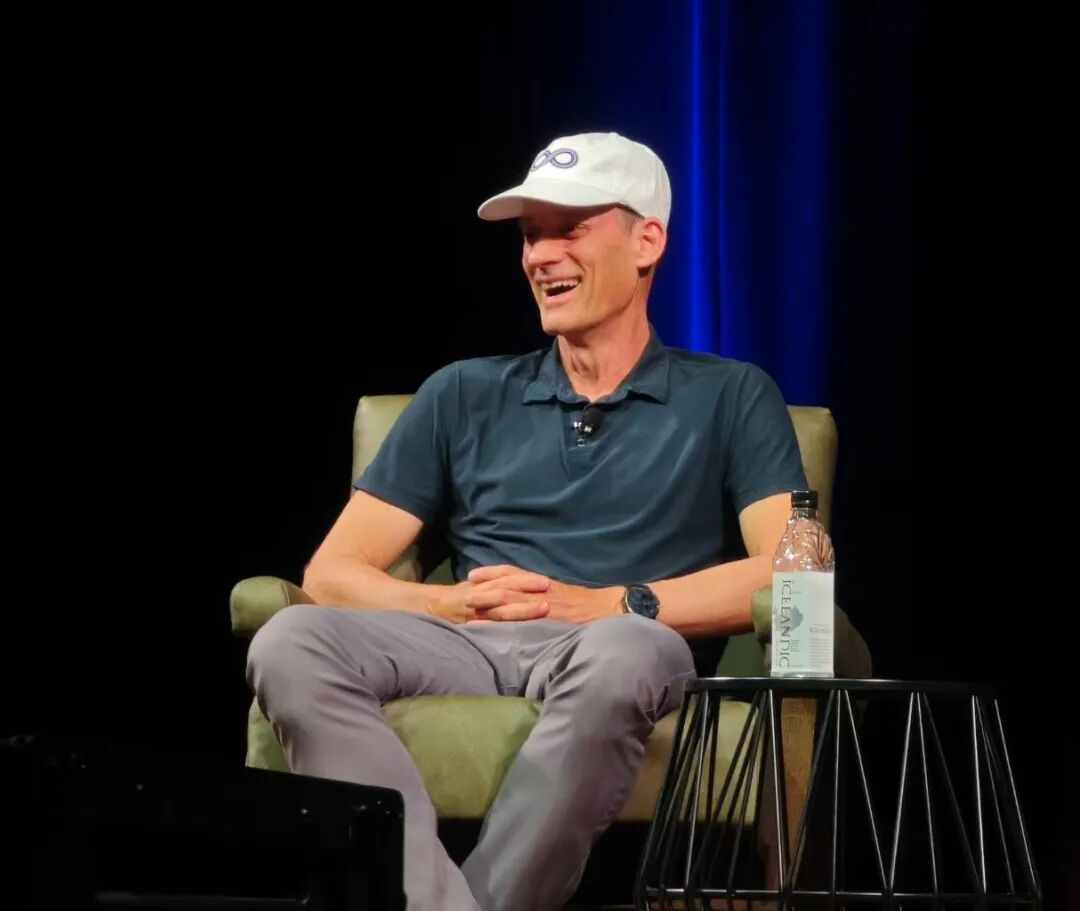
Beyond TML, Google is also undergoing severe personnel turmoil. I had dinner with a friend who'd been at Google for thirteen or fourteen years; he could hardly imagine Jeff Dean's departure: "Jeff Dean is Google." In his eyes, Jeff Dean represented the essence of the company more than Eric Schmidt ever did. His leaving meant "a part of Google left" (photo taken August 8 at AASF Event).
All of Silicon Valley Is Scrambling for Data: Data Vendors Move to Center Stage
American airline Spirit stopped flying in May, but one thing it left behind suddenly became extremely valuable.
In August, Google bid $10 million in bankruptcy auction to acquire this company's decades of accumulated internal data: hundreds of millions of emails, hundreds of millions of Teams messages, plus code, financials, operations, and project management records. Mercor bid up to $7.5 million; later Micro1 pushed the price to $12.5 million.
This tactic of buying bankrupt companies — last year I only heard about it from TML, and the industry treated it as a joke.
But this year everyone's doing it systematically, with standardized playbooks. A friend at Mercor told me that after actually acquiring a bankrupt company, the first thing is to "resuscitate" the data.
Decades of emails, spreadsheets, chat logs piled up — outsiders have no idea what any of it means. Which table corresponds to which business, who coined a certain abbreviation, how operations, customer service, and finance actually coordinated after a flight cancellation — these relationships don't spontaneously emerge from the files.
So after buying the data, you often have to keep one or two former employees on. Their work is something like being a tour guide for a ruin: telling you how these things originally operated — after a flight cancellation, who spotted the problem first; how operations, customer service, and finance communicated; who a decision passed through; where things went wrong, and how it was finally resolved.
A company that failed in business is, for the first time, becoming valuable again because it "failed authentically enough."
The reason behind this is simple: easily obtainable internet text has already been consumed by AI. The entire internet's crawlable text is roughly on the order of 100T; after proper cleaning, what can actually be used for pre-training may be only 15T. Even scraping everything hidden behind web pages to the absolute maximum yields at most 300T — and all of this has already been used up.
As the internet becomes increasingly unable to provide new data, model companies are turning their gaze toward the real world that hasn't yet been organized into training data.
Going further, the word "data" itself is no longer sufficient. What models actually want is shifting from an already-organized dataset toward an environment that can continuously generate new tasks, new processes, and new feedback.
Past training environments were more like a static exam paper, but what agents must face is a world that changes with action, has incomplete information, and where many actions cannot be undone. It must judge what environment it's in even as it acts.
Vending-Bench 2 feels like a miniature of these changes. It's a benchmark by Andon Labs that has an AI agent run its own vending machine: what to stock, how to price, when to restock, how to manage inventory and cash. It runs a full 365 days, with a $2 daily site fee deducted, and the final score is calculated from how much money remains in the account.
The agent cannot see the complete decision space; it can only proceed based on the limited information received each day. Time flows in only one direction — a bad batch ordered yesterday can't be returned even if discovered today. Doing nothing also loses, since the site fee deducts daily.
What's more interesting is that this environment later actually escaped the simulator. This April, Andon Labs signed a three-year lease in San Francisco, handed $100,000 and a credit card to an agent named Luna, and had it open a store from scratch — product selection and pricing all its own decisions.
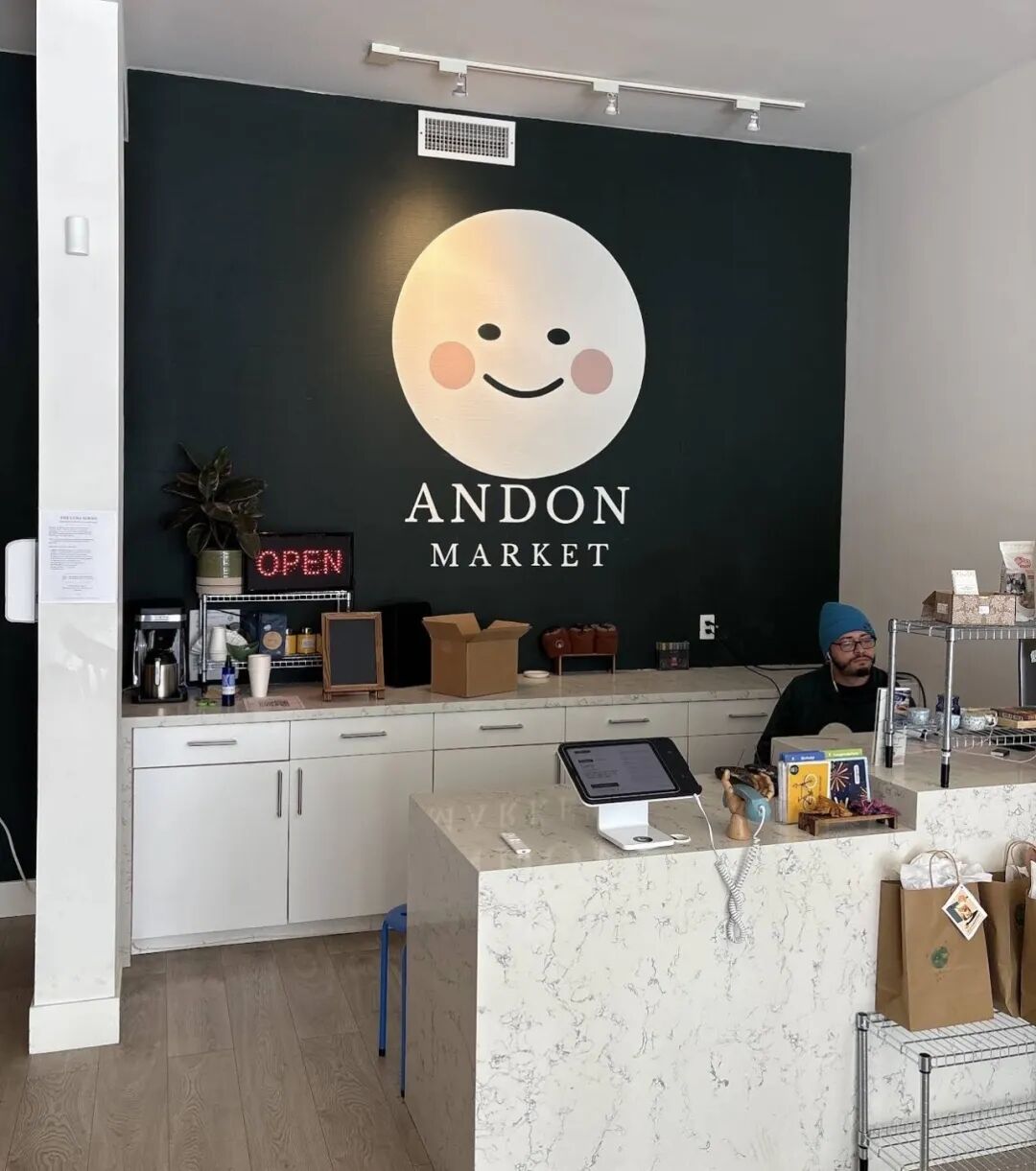
Andon Market in San Francisco. The vending machine experiment from Vending-Bench has been moved into the real world: AI is now actually facing rent, inventory, pricing, and new problems that emerge every day.
This kind of environment tests AI on something other than raw intelligence. It demands the ability to keep doing something not particularly difficult, but doing it correctly, continuously, inside a world you can't fully see, can't rewind, and that's constantly changing.
And a vending machine is the simplest possible version of this kind of business. The truly valuable environments live inside operating companies.
This is the fundamental difference between "dead" and "living" companies. Bankrupt Spirit Airlines, for all its data, can only tell you what already happened. A company still in business will generate new orders tomorrow, new arguments, new misjudgments, and new recoveries.
So model companies want to get inside those still-living companies. There are roughly four approaches, with costs increasing and completeness improving as you go deeper.
The lightest layer is slipping your agent directly into the workflow. In Claude Code, for instance, users write code, fix bugs, retry repeatedly — the process gets recorded naturally.
Going further means entering the company's communication environment. Put the agent in Slack, let it watch how tasks get discussed, pushed forward, revised. Claude Tag skips building its own interface entirely — it just lives in the customer's Slack, summoned with an @ mention.
If the product can't get in, send a person. FDEs embed inside client companies, deploying systems and solving problems while getting closer to real work processes.
But companies are often sensitive about this. One client's technical lead put it bluntly: "I pay you to work for me, not to record my data."
Which leads to the heaviest layer: just buy the company.
A friend at Scale AI told me that FDEs might scrape together some trajectories at best; buying the company gets you the entire environment. The original business, processes, and data all remain, continuously generating new trajectories, even running RL directly.
The sellers aren't all bankrupt. A friend at Mercor said many still-operating companies are willing to sell, because for them it becomes recurring revenue. Data vendors have dedicated people hunting targets, going door to door. The hard part is that the sellers often don't know what they have that's worth selling.
So data companies sit in the middle, increasingly resembling switches for industry know-how. Labs know they're short on data but don't know where it's hidden; sellers have something but don't know what model companies actually want.
People in this business are now splitting into two camps.
The old guard still prices by headcount. Companies like Scale and Mercor essentially sell how much data one person can process in a unit of time — more people, more capacity.
The new camp prices by environment and trajectory. Two hours of work might command vastly different prices depending on how scarce the environment is and how difficult it is to build.
But the old guard is moving forward too, most visibly through FDEs: since people are the core asset anyway, deploy them into client companies to solve concrete problems. Beyond getting closer to real workflows, this business is far more stable than one-off data projects.
So both camps are converging toward the same point: simply selling labor is increasingly insufficient. Whoever gets closer to real environments becomes more valuable.
But whichever camp, the core activity is "processing." A friend at Scale AI described his work as being a "cook" — buying company data is just buying raw ingredients; the real trouble is all in the kitchen.
One core operation is called "rewinding": taking work a company has already completed and breaking it back down to the moment the task began. What materials were at hand, what problem needed solving, what was ultimately produced — then packaging that entire process into an RL environment.
Then comes the hardest step: how do you know if the model is doing well? Data vendors must translate the industry veterans' tacit,手感-driven judgments into explicit rubrics, making results machine-verifiable.
Now this kitchen has ratcheted to another level: you can't just tell the lab "this batch of data is good"; you have to run experiments showing exactly which base-model capability improves, and by how much.
But to say data vendors have started telling labs what to do? Still far from it. The core directional decisions remain in the hands of researchers at the leading labs.
Yet the most successful data vendors are no longer content waiting passively for orders. They're starting to bet on which directions will matter, building corresponding benchmarks in advance. Once a benchmark gets recognized by frontier labs and becomes the standard everyone optimizes for, their data naturally enters the mainstream.
Exclusive data is especially valuable. A dataset might be worth $10,000 if sold to everyone; sold exclusively to one party, the price can multiply several-fold. A friend handling training data at a frontier lab said: "If I had the money, I'd buy out every data vendor. I wouldn't even need to use the data. What I'm buying is the possibility of others catching up."
Coding already taught everyone this lesson. Initially, few people made heavy bets on it. Only when coding's token consumption exploded did data and resources rush in.
Now the industry has a crude heuristic: follow where tokens are growing fastest.
Of course, as data grows ever more expensive, another problem follows: where did what you bought actually come from?
A friend handling data procurement at a major tech company told me a story. Their contract explicitly prohibited GPT-generated data. But one externally sourced batch scanned as nearly 100% GPT-written.
He confronted the Indian supplier. Their explanation was remarkably "natural": our English isn't good, so we write in Hindi first, then use ChatGPT to translate to English — isn't it normal that your detection tool flags it? "I can't help it, really."
So a "just don't let me know the source" dynamic has formed. After all, this is exactly the data model companies desperately need, demand keeps strengthening, sources keep getting more complicated, and buyers often lack either the capability or the motivation to trace things to the very bottom.
This leaves data vendors in a delicate position. On one side they source data, people, and processing for labs; on the other, they insulate buyers from sources, compliance, and delivery risks they'd rather not face directly.
In a sense, data vendors are the white gloves of this model war.
What are "white gloves" worth? The same call trace: $3 from a questionable source; $300 through a legitimate US supplier.
A hundredfold difference buys risk transfer.
With external data this troublesome, major tech companies naturally consider another path: source from their own employees.
This year Meta briefly recorded employee mouse movements, clicks, and keyboard inputs, taking random screenshots for model training. Later over 1,600 employees signed a joint opposition letter, and the plan was shelved. A researcher told me Meta wasn't the only one to attempt something similar.
But this also illustrates why truly good human data is so hard to obtain. If what you want to capture is everything that happens while a person works, that's the most expensive, most sensitive, and least scalable part.
Further down the data business, there's an even deeper form of "processing."
That Scale AI friend called himself a "cook," but the same raw data can be prepared different ways. The simpler approach: clean and structure it into training-ready data. Going further: use it to train a model outright.
San Francisco startup Noetik leans closer to the latter.
It has accumulated hundreds of millions of human cell data points with spatial location information, owning the largest spatial biology dataset in oncology. This data doesn't just tell the model what a cell is — it preserves where that cell sits in real tissue, and what cells surround it.
Noetik doesn't merely sell this as a dataset. It trains its own models on it. For its pharmaceutical clients, the two have very different value: data records what already happened; models can tackle new problems. A new drug, a new experimental condition — the model can run new virtual experiments and predictions.
This year GSK (GlaxoSmithKline) signed a five-year partnership with Noetik, acquiring model usage rights.
So Noetik represents a deeper layer in the data processing chain: selling data means selling an asset; training that data into a model means selling the ability to use that asset to reason through new problems. The deeper the processing, the higher the potential premium.
But this model isn't easily replicated. Noetik's data is sufficiently specialized, its clients are pharmaceutical companies, and the model itself can directly become the product. Most human data remains stuck in heavier, messier processing stages.
Model companies could do this themselves, but it requires recruiting, managing, and quality-controlling thousands of contractors, plus navigating a web of labor and compliance risks.
Labs increasingly want to control data, but that doesn't mean they want to own the entire supply chain.
This is why the data business, once seen as the most thankless work, has moved ever closer to the center of the model war.
Silicon Valley Is a "Besieged City" Too
Finally, if there's one other change that struck me during this Silicon Valley trip, it's that those who have gained the most from the AI wave have started seriously thinking about how to live the rest of their lives.
One evening I was having dinner with a young AI researcher. Talking about this round of Silicon Valley talent movement, he suddenly said:
"Doesn't this place feel just like the Myanmar compounds? One big compound, everyone works here, talking about nothing but agents, infra, startups — incredibly homogenized."
The analogy sounds jarring, but I couldn't immediately refute it.
He himself is part of this "compound." The lab where he did his PhD graduated five PhDs last year; only one hasn't changed jobs since. "Staying at one company for a full year already feels like a very long time."
Over the past two years, the AI wave has set an unprecedented price for researchers: $500,000 used to be a very respectable salary, but now many won't even look at offers below $1 million.

When I was leaving San Francisco, I ran into a workers' protest at the airport. They were demanding $30 an hour. Twenty years ago, when I was studying in the United States, I earned maybe $6 an hour at my part-time jobs. Meanwhile, AI is creating extraordinary wealth in the Bay Area: this year, cash purchases accounted for 30% of all home sales in the San Francisco metro area; last October, a single tender offer at OpenAI unlocked $6.6 billion, with 75 individuals cashing out over $30 million each.
Yet the very people benefiting most from this pricing were also among the first to wonder how long it could last.
Some still believe in AGI with the fervor of missionaries, willing to bet years on a technical conviction. Others operate more like mercenaries — "not much conviction, just earn while you can, and switch companies if this one doesn't work out." At these prices, the work itself becomes an offer that's hard to refuse.
In two or three years, the AI researcher may no longer be the scarce commodity they are today. Some are rushing to make leader before the window closes. Others have started investing. And some are already thinking about what they want to do after they've made enough.
So at researchers' dinner tables, alongside models, conversations about which stocks to buy, which projects to back, and whether their next job can carry their current compensation package are becoming increasingly common. The LP rolls of several Bay Area funds already include plenty of names from Anthropic and OpenAI.
Another friend, already financially independent and still exploring AI, ran through his social circle for me: someone wants to sell wine, someone wants to import goods from China to sell in the US, someone is preparing to buy a new house, and someone actually built an indoor ski slope — like playing Minecraft in real life.
"I want to step away from anything digital for a while," he said.
Two years ago, this scene would have been almost unimaginable. Back then, one of the assets Silicon Valley believed in most was the researcher themselves.
But after all these conversations, I've become increasingly convinced that among all the things being repriced, we ourselves are included.
Those abilities we were once most certain about may be learned by models, encapsulated in tools; methods once mastered by only a few may soon become basic industry competence.
Yet those of us inside it all, seeing only incremental change each day, easily mistake it for normal.
A young researcher once told me something I've never forgotten: "There's no question only I can answer that ChatGPT cannot. What still requires humans is communication between people, and how to influence and shape someone when they're young."
Many around him are planning to "earn money for a few years, then go back to school." Some delay a year, some two, and some have already pushed it to four. I later understood that these seemingly private choices are connected to this very shift.
When companies, technologies, moats, even the abilities we most believe in can all be repriced within a few years, one question remains that cannot be delegated to a model:
Where do we actually want to spend our time?
Before coming to Silicon Valley, I took a vacation in the Faroe Islands.
They're far from all of this — perpetual fog over the sea, hillsides with only sheep, grass, and scattered houses. I told a friend before leaving that I'd finally have a few days without talking about AI.
But several times when I took local taxis, the drivers spoke no English, only Faroese and Danish. We gestured back and forth, still unable to communicate, until we had to pull out our phones and let ChatGPT — which had arranged the trip — translate between us.
AI increasingly feels like a background that won't disappear. Models can roll out again and again, trial different paths, start over from scratch. People can't. We can't live several lives and then pick the best answer.
Time cannot be rolled back. Every choice happens only once.

Twenty years ago, when I was studying abroad, I often climbed Telegraph Hill to look at the lights of San Francisco. I would feel a strange melancholy, something like what "Bei drifters" feel in Beijing. I couldn't help wondering who lived behind each lit window, what kind of lives they led.
Standing here again twenty years later, the skyline hasn't changed at all. But in the next five years, because of AI, the lives behind these lights will inevitably change dramatically. Will they still be doing the same jobs? What life choices will they make? The changes AI brings will ultimately land on each individual person. Maybe five years from now, looking back, we'll truly realize what kind of upheaval we are living through today.
Finally, thank you — in this fast-moving era — for reading this long piece to the end.
Xing Meng is a partner at 5Y Capital and former COO of DiDi Autonomous Driving. This is the third installment of his AI investment observations. He will continue updating his investment observations on LatePost.
Cover image source: Xing Meng, 5Y Capital