Gen Z Built a "Chinese Product Hunt": Can Guancha Rebuild Trust in AI Products?

Too much hype, too many lies — can an AI review community that just wants to tell the truth actually work?

By Pippobei | Produced by AI NOW!
1
When Zhong Tai, the 23-year-old founder of Agent Universe, declared "every generation has its own community" at the Guancha launch event, it brought to mind 22-year-old Bob Dylan softly singing "Your old road is rapidly aging / Please get out of the new one if you can't lend your hand" (from the album The Times They Are a-Changin').
Everything old must make way for the new.
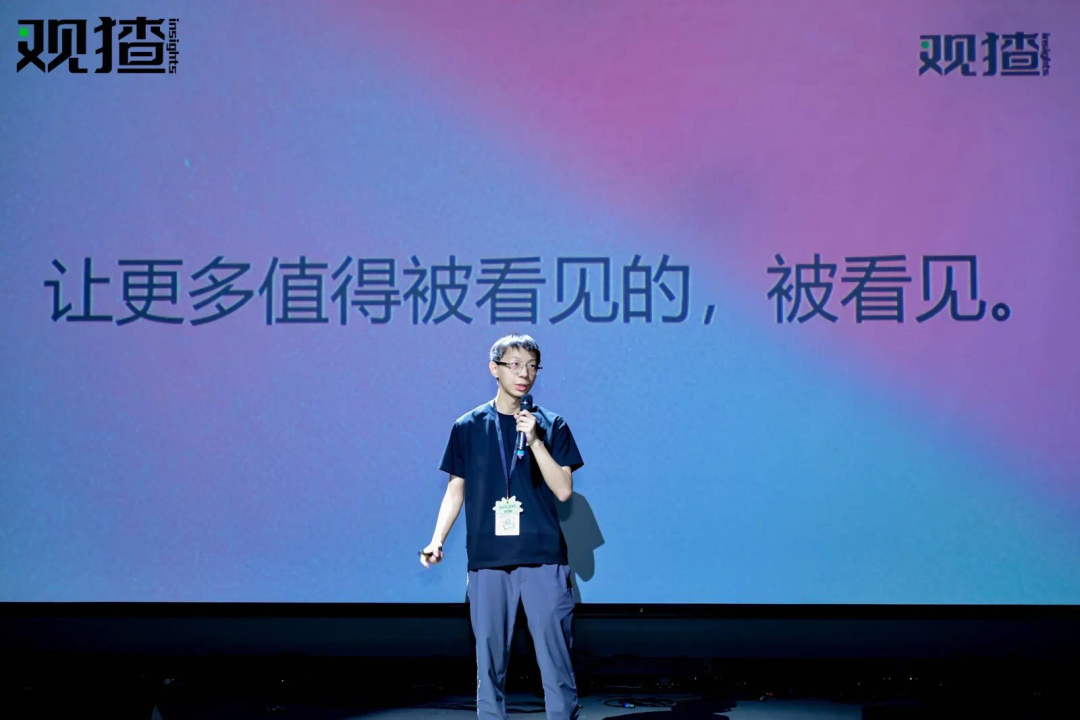
- Agent Universe founder Zhong Tai at the Guancha launch event
Guancha is precisely such a new presence.
It's an AI product review community recently launched by the Gen Z team "Agent Universe." Many have compared it to "China's Product Hunt," but unlike simply "discovering new products," Guancha emphasizes "seeing through the hype."
In Q2 2025 alone, over 1,000 new AI tools launched globally. Among this rapid proliferation, many are merely wrapper projects repackaging existing ideas, while some genuinely promising tools may quietly die from lack of resources and distribution.
Faced with this market reality, Guancha aims to solve a critical question: in an era of information overload, how can we provide real feedback and high-quality exposure for truly valuable AI products?
Zhong Tai's answer: build a community that only tells the truth.
Not serving rankings, traffic, or budgets — only speaking from firsthand user experience.
He wants Guancha to become a tool for "super individuals": a platform for independent developers, small teams, and early-stage projects to get validation and authentic user feedback, not a battleground for tech giants. If a new product is genuinely good, Guancha can help connect it with users, resources, markets, even investment.
Guancha's mechanism fundamentally differs from current AI product review approaches:
- Its review system isn't algorithmic rankings but subjective, practice-based feedback from community users — what works and what doesn't is determined by people, not scoring models or paid placement;
- Content access is by invitation only. Only certified "Product Guancha Scouts" can participate in scoring and publishing reviews. The first batch opens 1,000 spots, with members screened through questionnaires and manual review, targeting "long-term AI product users + tech-sensitive individuals";
- The data flywheel doesn't rely on ad revenue but on real data: producing authentic usage reports for VCs and AI companies, mining trend signals, catching promising products, and providing service tools for KOLs in an MCN-like model that feeds back into the content ecosystem.
AI Nao, as Guancha Scout No. 538, recently joined the daily discussion group for scouts. This group has the highest discussion density and content quality of any we've participated in: hundreds of messages daily, from product experiences to trend judgments, including in-depth long-form reviews spontaneously written by power users.
Just two weeks after launch, Guancha has already indexed 200 AI products. HSG is also deeply involved in this project.
Zhong Tai repeatedly emphasizes that Guancha isn't a ranking platform but a trust system — in an industry experiencing explosive growth and content bubble-ification, "authenticity" is precisely the scarcest asset.
For AI teams currently building products, Guancha's existence means: visibility isn't determined by "whether you have budget to spend," but by whether your product "deserves to be deeply used by users."
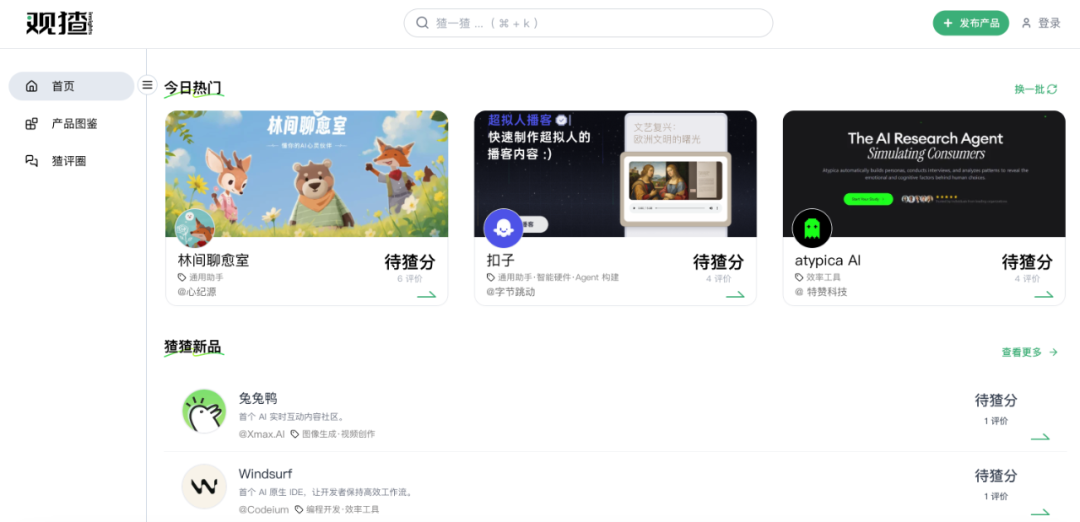
- Guancha community homepage; "猹" (cha) comes from Lu Xun's Hometown, a creature that furtively enjoys melons
2
Guancha isn't Agent Universe's first product.
Before Guancha, they had already built an "emoji translator" with Agent, an AI podcast generator called "Boboji," an invite-code snatcher called "Ma Dou Lai," and a series of other products.

The name "Agent Universe" draws inspiration from Agent, which in English also means "secret agent" — suggesting that future Agents will surpass ordinary human capabilities. "Also inspired by the Marvel Universe. Everyone who works at Agent Universe is a superhero."
To outside users, "Agent Universe" first appears as an AI-focused WeChat public account that has written many viral articles, such as the "Sneaky Series" (products quietly launched by major companies) and the "Fake Product Conference Series" (failed AI products).
But in Zhong Tai's view, content is merely a side hustle for him and his team. Agent Universe's main business is using Agent to explore all kinds of products.
The "universe" currently has seven full-time agents, all Gen Z, some not even graduated yet. Only two handle content; the rest focus on product development. They regard AI as "spiritual poison" — "you can quickly build demos and validate fun ideas. And it's always so novel."

- Zhong Tai's post on Jike — a uniquely Gen Z team dilemma
Founder Zhong Tai graduated from college just a year ago. His catchphrases are "not quite there" or "kinda interesting" — his standard for evaluating anything.
There are too many "kinda interesting" things in Zhong Tai's mind. Recently, he briefly suspected he had ADHD: "I unconsciously get distracted by things and go work on something else, then parallel-process several interesting things at once."
A recent interesting project is conceptualizing "a Toutiao for the Agent era."
"For example, if my younger brother in elementary school and I both need to learn economics, the Agent will perceive and judge our profiles. For a young kid, it might use multimodal generation to imitate the voice of his favorite cartoon character and create picture books. For me, it might produce a professional literature review." Agent Universe has used Agent to build a series of matrix accounts distributed across major platforms. But Zhong Tai thinks the efficiency is still too low; Guancha should incorporate news and information. "For one news story, AI could proactively generate 10,000 or even 100,000 pieces of content tailored to different users. In the mobile internet era, Yiming Zhang achieved 'information finds people' through recommendation algorithms. In the AI era, Agent + recommendation algorithms can achieve even more granular, truly personalized 'information finds people.'"
"Not quite there" describes things that make money but bring no happiness. During his junior year, he interned at a major tech company, at one point juggling three jobs simultaneously. He quickly discovered the people there lacked interest in new AI developments. "I'm not someone who can follow others just for money, so I chose entrepreneurship, hoping to realize my ideas with like-minded people."
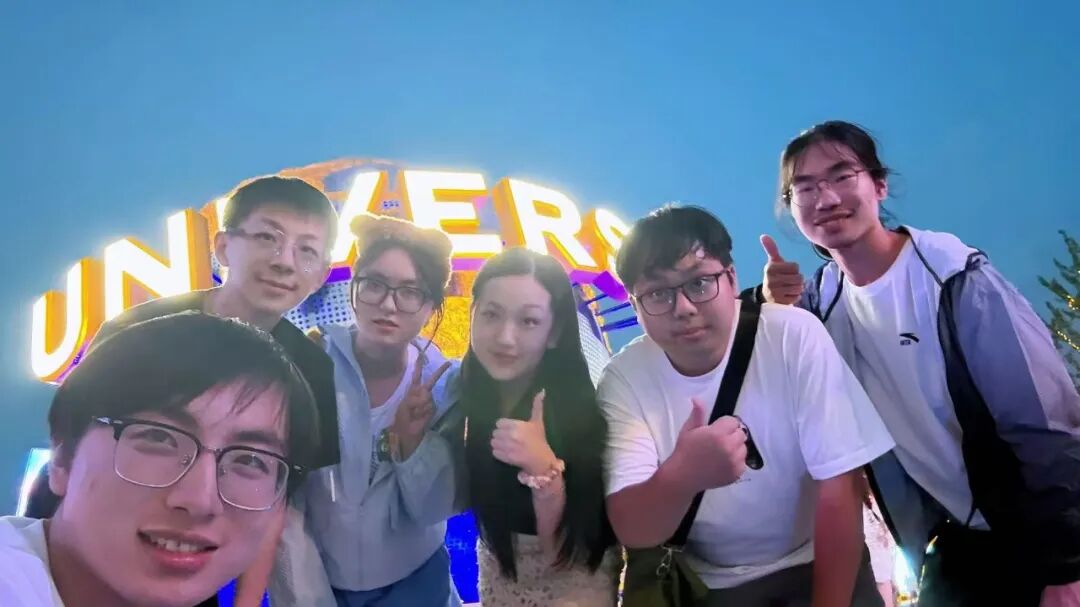
- After the Guancha launch, Agent Universe team-building at Universal Studios Beijing
3
When discussing content strategy with Zhong Tai, his focus is never on "traffic, exclusives, influence" — those traditional media metrics — but rather another question:
Where will the AI Native generation choose to speak?
This generation isn't attracted by content itself but by content mechanisms. They understand recommendation algorithms and see through traffic narratives. They're asking: "Does this platform have human feeling? Can I speak like a real person? Does anyone care what I say?"
Zhong Tai says Guancha hopes to attract precisely these people who grew up in the AI world (he emphasizes, not limited to Gen Z).
Just as smartphones made "shooting" effortless, giving rise to Xiaohongshu and Douyin; AI has dramatically lowered technical and knowledge barriers, and should logically give birth to a new platform that carries this generation's exploration of tools, expression of user experiences, and sense of participation in technological trends.
What Guancha aims to build is precisely such a new community — a trustworthy, expressive, consensus-building platform for product discussion, designed for AI Natives.
For Agent Universe, content was never the endgame but an interesting entry point.
"Entry point" leads to a more long-term mechanism design: giving expression proper barriers, making good content visible, and turning users' subjective experiences into drivers of product evolution.
Content is merely a fuse; behind it lies their ambition to build products, communities, and ecosystems. "We want to be the rule-makers of the ecosystem," Zhong Tai says.
Compared to millennials' obsession with "content authority" or "media methodology," these Gen Z agents believe more in "expression as validation": whether it can spark resonance, trigger action, activate secondary creation — these are how their generation measures content value.
From initially building AI circle recognition through WeChat public account content, to successively launching a series of small Agent projects, to now launching the product review platform "Guancha," Agent Universe's path is crystal clear: use content to find your people, use products to experiment, use community to build ecosystem.
Zhong Tai repeatedly emphasizes that whether creating content or community, what they care about most is "human feeling" and "authenticity."
In an era where everything can be delegated to AI, the most irreplaceable things are precisely human subjective judgment and taste, people's distinctive voices, and individual desires.
It's all about change, and about a certain ambition.
Like how this Guancha launch event was held at a particularly meaningful venue: Note Blue at No. 23 Qianmen Courtyard in Beijing, a jazz bar renowned for having the world's top live performance sound system and performances — Faye Wong and Cui Jian have both been spotted in the audience.
That day, partners from China's top VC institutions were all in attendance, standing below listening to Zhong Tai's speech. There was also a famously influential figure in the venture capital world, long unseen in public, concealed in the VIP section on the second floor.
At the After Party, the band from HSG fittingly chose the breakout hit by Hedgehog Band, "The Train Rushes Beyond the Clouds, Dreams Rest in the Ninth Heaven." One lyric goes: "One generation will eventually grow old, but there will always be someone young" — like a prelude to a new era, cutting through Beijing's stifling summer night.

Image sources | Courtesy of Agent Universe, Unsplash
The two songs mentioned in this article
—Easter Egg—
We have a podcast now. Search for "AI NOW" on the Xiaoyuzhou app to hear creators' original voices and more bonus content.