Never Went to College, Doesn't Write Code, Built a $2.5M ARR Business in Under a Year | Head AI Founder Kay Responds to All the Doubters

Can AI Replace an Entire Marketing Department? Is She Up to the Task?

By Pippobei | Produced by AI NOW!
01
"We're going to use AI to eliminate every marketing department."
That's Kay, founder of Head AI. Head is an AI marketing product positioned to help growth-hungry companies automate influencer marketing, social media ad placement, and the entire marketing workflow.
Kay was born in 2002. She dropped out of high school, can't code, and never studied marketing. Within two weeks of launch, she claimed to have landed a viral tea brand as a client and hit $2.5 million in annual revenue.
Meanwhile, serious skepticism followed:
- Inflated marketing case studies and data
- Aggressive ARR calculations that seemed designed purely for investor storytelling
- Poor influencer matching quality? Head AI's outreach to influencers was dismissed as "scammy"
- Massive promotional blitz on Xiaohongshu within a month of launch
- The whole project seemed as polished as a GMV fraud
Kay became the most controversial young founder in China's AI circle.
Yet many still adore her: before the product even launched, one investor connected her to a $400,000 order. Soon after, she secured funding from Jinqiu Fund and Allen Zhu. The latter has repeatedly mentioned and recommended Head AI on multiple occasions, his fondness for the product and for Kay unmistakable.

- Kay, born in 2002
02
Facing the skepticism, 22-year-old Kay remains remarkably composed. Her path also looks nothing like most of her peers.
While attending high school in the United States, Kay earned her first pot of gold doing growth for Web3 projects — "not just financial freedom, but mentally taking control." She quickly decided: no college. Sitting in classrooms being fed knowledge put her to sleep. "Couldn't find any sense of value. Most things aren't learned in school anyway." What drew her was tinkering, doing what she was genuinely interested in.
Her first job was at Dora AI, an AI-powered no-code website builder focused on 3D and interactive design. As head of marketing, she grew users from zero to 500,000 in three months — and discovered where her real talent lay: growth.
Soon, she quit. Better to be CEO than to convince a boss.
Kay describes herself as fiercely ambitious. Strong sense of purpose, absolutely unwilling to be subordinate. Plenty of flaws too — mercurial, impatient, and "very pushy" as a founder-CEO.
This time, AI NOW! decided to put all the controversy on the table and ask directly.
Can Head AI really eliminate marketing departments? Is Kay for real?
Kay said: bring it on.

- Kay doing Spartan Race
Conversation with Kay
Part 01
I Am Aggressive
If Some People Don't Like It, I Completely Understand
AI NOW!: Let's start with a core criticism: many marketing professionals say you simply can't move top-tier influencers, and that many influencers' first reaction to Head AI emails is "scam."
Kay: Creator skepticism about legitimacy is something we anticipated from day one. Especially with influencer fraud so rampant these past couple years — caution is normal.
Trust on any platform isn't won overnight. It has to come from scale and positive feedback loops. If you understand how DiDi, Meituan, and Airbnb went from "nobody trusts this" to "impossible to bypass," you'll understand where we stand today.
We already have tens of thousands of active creators on the platform, most earning stable income. As more creators keep getting paid and confirming receipt, they naturally become trust ambassadors for the platform. That's the two-sided network effect in action.
AI NOW!: Many veteran marketers still believe that moving influencers — or anything involving people — fundamentally depends on human trust-building, and AI can't replace that.
Kay: I disagree.
Traditional influencer marketing relies on relationships and favors — opaque pricing, low efficiency, hard to compound. We're using a different mechanism: AI directly matches brands with creators whose audiences align with the brand's target demographic, automatically reaches out, negotiates the lowest rates, standardizes the collaboration process, delivers results, and auto-optimizes — with transparent platform fees.
It's like shifting from a "relationship bank" to an "ATM" — unfamiliar at first, but in the long run, more inclusive, scalable trust infrastructure.
We're not trying to remove "people" either. We're systematizing human influence — creator leaderboards, experience sharing, AMAs, offline meetups. Head AI wants to make trust mechanisms "verifiable and compounding," breaking the inefficient, closed old order of the influencer industry.
AI NOW!: Some brands have complained online that Head AI won't even let them confirm the influencer list before outreach, essentially "blind-recommending" a batch of people. Is this a bug or a product mechanism?
Kay: We understand that when brands first use Head AI, their instinct is to ask: why can't I confirm the outreach list beforehand?
In traditional agency models, brands have never actually seen the complete list of people being contacted. A mature marketing team selects candidates based on the brief and objectives, sends outreach themselves, and only escalates to leadership for confirmation once creators show interest and respond.
Nobody shows their boss a pile of "hasn't replied yet" contacts — unless they're a complete rookie.
Head AI is indeed everyone's new colleague — except this "rookie" can already independently complete the full workflow of selection, communication, and delivery, with higher efficiency, faster response, no emotions, and no management overhead.
Of course, even the strongest capabilities require some trust-building. Our consistent principle is: between efficiency and user experience, we prioritize user peace of mind.
So we're about to launch two mechanisms:
- AI Onboarding: Before AI begins execution, you'll see a small sample of creators it plans to contact, to confirm alignment upfront — like a leader's first checkpoint before giving a new hire room to grow;
- List Confirmation: After AI outreach, it will compile a curated list of suitable creators for your one-click approval. You retain final decision-making authority.
But in the future, we don't want clients to have to personally confirm every single thing. We genuinely take responsibility for growth results, and we're willing to be accountable for those results.
AI NOW!: In a recent media interview, you calculated ARR by taking recent weeks' data and multiplying by 52. Many found this laughable — are you just painting a picture for investors?
Kay: I never expected ARR projections to persuade anyone. It's more of an internal pacing mechanism — weekly and monthly revenue trends, annual targets, a way to keep direction and execution on track. So when media asked how we calculated it, I was straightforward about it.
I won't deny it's aggressive, because our goals are aggressive. If that makes some people dislike me, I completely understand. At the end of the day, our current objective is driving real ARR or GMV growth. What actually matters is execution rhythm and delivery capability — nobody's still telling ARR stories to investors today.
AI NOW!: What's it feel like when you come across these posts attacking you?
Kay: Expected.
We're cutting into the core value chain of the marketing industry, so naturally we're touching some existing players' interests. Today we have nearly a million orders in scale — even a 1% bad case rate means 10,000 orders. The margin for error is genuinely low.
I also admit that as a general-purpose product, Head AI has many features still in rapid iteration. We just have to run as fast as we can.
We're genuinely approaching this with a learning mindset toward users, hoping to refine Head AI into an AI marketing team that users truly can't live without. I follow up on every negative comment seriously — no hiding, no deleting, no fear of being criticized. I treat every piece of skepticism as a signal that Head is being seen, being taken seriously.
AI NOW!: How do you respond to people online mocking you — saying growth products in this era are essentially just polished GMV frauds?
Kay: That kind of statement is itself a form of nihilism. Swap in any other word and it works the same: AI products, content products, SaaS products in this era are all more sophisticated narrative frauds — sounds clever, but just traps young people in empty cycles of "nothing matters."
I don't subscribe to this stance, not because growth is inherently correct, but because there was never a perfect value-transmission mechanism in this world to begin with.
For me, whether a growth product has value isn't about how polished it looks, but whether it genuinely creates value for users. If it does, it's not a fraud.
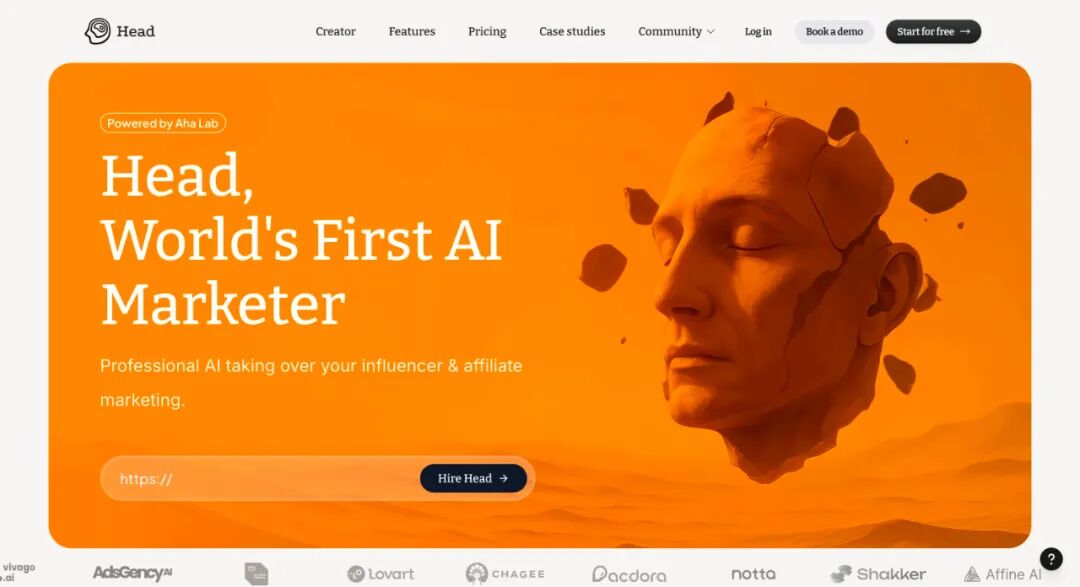
- Head AI product interface
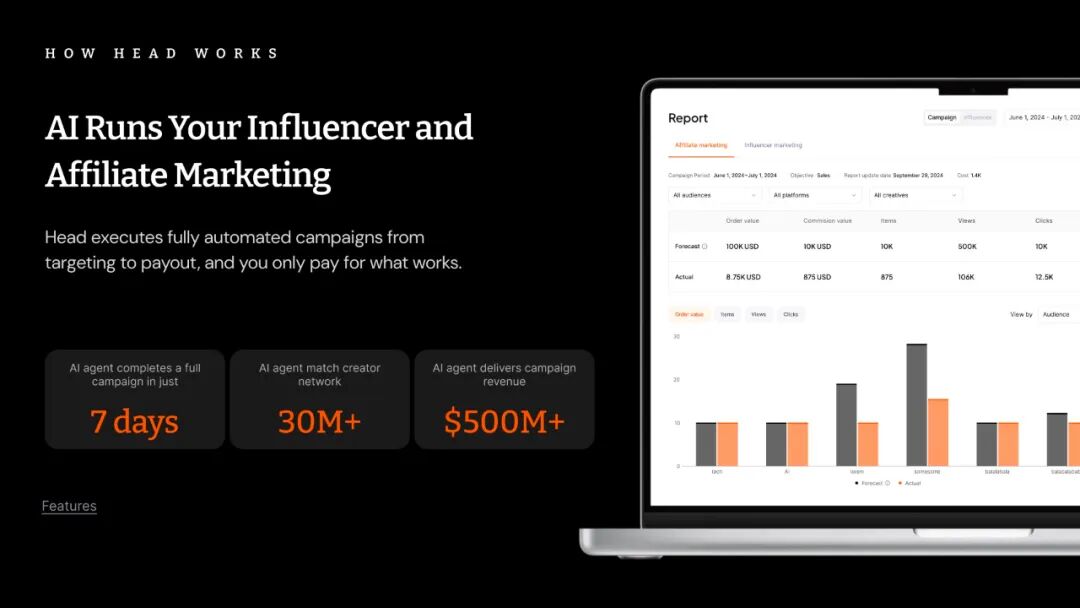
- Head AI presentation slide
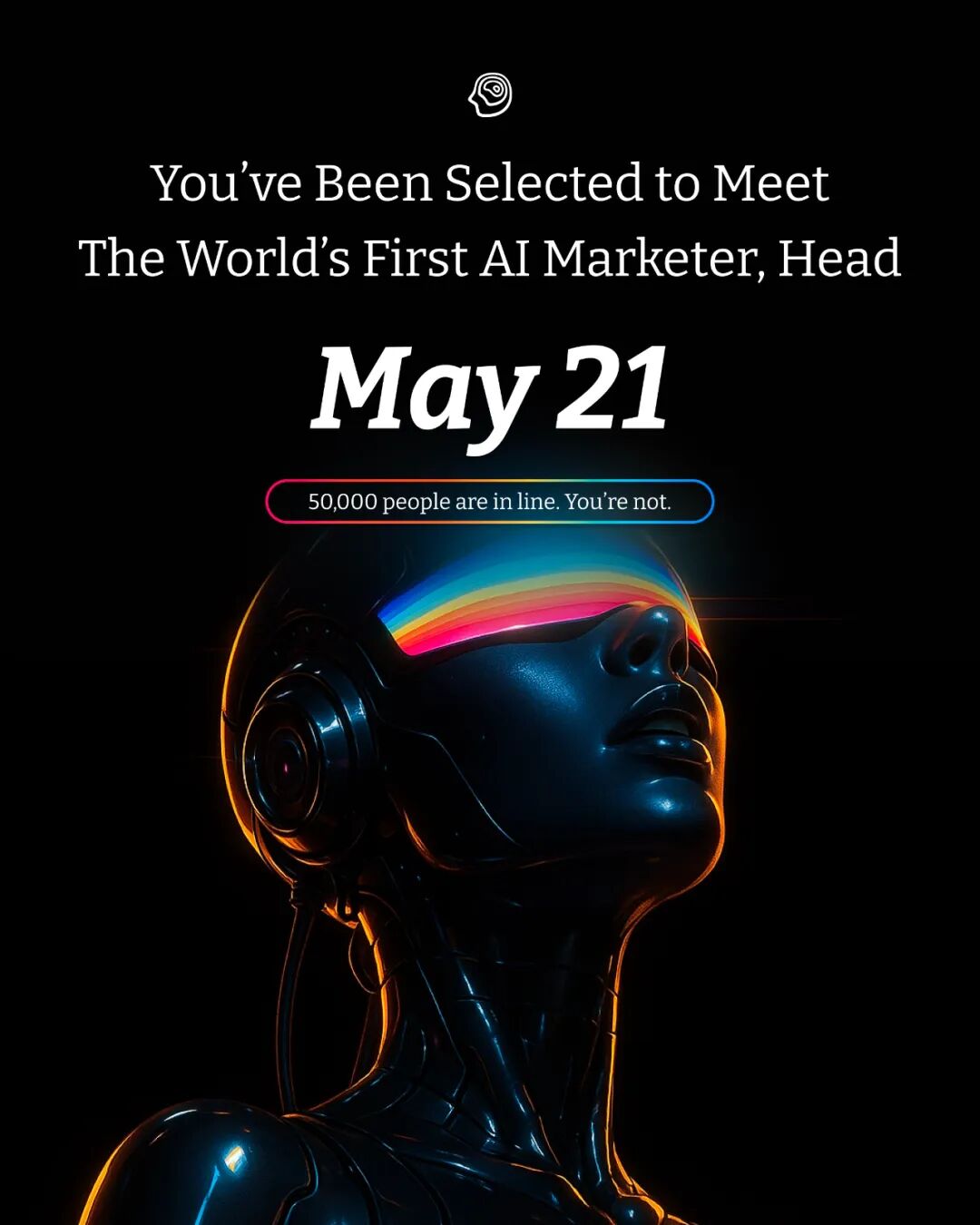
- Head AI's first invitation, published this May
Part 02
From Day One
We Wanted AI to Replace People
AI NOW!: Who are Head AI's main competitors right now?
Kay: I don't think we have any, product-wise.
Our biggest competitor is probably people — traditional organizational structures, conventional mindsets, whether people will let us replace their marketing departments.
AI NOW!: Traditional giants like BlueFocus and Ogilvy have been deploying AI for a while. What makes you think you can beat them?
Kay: Simple. Traditional marketing companies want to use AI to improve human efficiency. From day one, we wanted AI to directly replace humans.
Many very successful marketing companies would find it hard to revolutionize themselves today. But we're not in opposition — different social divisions of labor. We have less baggage, can move faster on innovation. Their historical accumulation is an advantage. I believe there's substantial room for cooperation with them in the future.
AI NOW!: They definitely have advantages in client relationships. How do you deal with that?
Kay: I don't touch what I'm not good at, and I'm not planning to hire a bunch of salespeople for relationship management. If some agencies can manage client relationships well, couldn't they try using Head for delivery? The math would show it's definitely 100x cheaper than hiring a bunch of people.
So I treat agencies as potential customers too.
AI NOW!: Why did Allen Zhu invest in you? Your assessment of him?
Kay: Allen Zhu is the most interesting investor I've met. Many fund partners at his level aren't on the front lines anymore — not that they don't look at deals, but they only see projects that have gone through multiple rounds with their deal team and finally reach them for investment committee approval.
But Allen Zhu is still on the front lines. I first met him at an LP conference. He stepped out mid-event, chatted with us for about ten minutes, asked a few simple questions, and directly said he'd send a term sheet — then left.
He understands AI marketing deeply. He keeps telling me: marketing must be results-oriented; clients are buying results. On this point, we're completely aligned.
Privately, he's a very simple, authentic person. Sometimes he shows up at our company quickly, asks about recent product and business developments, then quickly leaves — no need for anyone to host him.
AI NOW!: What about other investors? Any "older-generation investors" who just can't connect with you post-00s founders?
Kay: Jinqiu was our first-round investor. Honestly, they're more like co-founding friends. They really understand the post-00 rhythm and never treat us as outsiders — the kind of partner fund that both gets your ideas and is willing to tinker alongside you. Jinqiu is an ideal first investor for post-00 founders. For early-stage entrepreneurs, encountering investors like this is lucky and something to be grateful for.
There are definitely many investors I can't connect with. Some are anchored to past success models and can't see anything new. One investor told me: you have to co-found with classmates to succeed — look at Xing Wang, Yiming Zhang, they all co-founded with classmates. Then directly asked me: so what about someone like you who didn't go to college, who has no classmates?
I was stunned. What the hell (laughs). My partners from Dora AI, people I've worked and hung out with — if they're the right fit, they can all co-found with me.
AI NOW!: How do you convince people to co-found with a girl who's never been to college?
Kay: I don't try to convince anyone. Whether people can actually work together long-term depends on fit. I just provide a space for people to get things done.
I assembled the team in roughly a month. First found a former Dora classmate in R&D, who then introduced friends. We quickly built the first demo. After that, a friend from the investment circle joined and brought in the first wave of test users — essentially securing several hundred thousand dollars in orders before the product was even built. Very grateful to our early brave customers; one client tried us four times in a year. Without them, there would be no Head AI today.
AI NOW!: As a 22-year-old woman managing a team of men averaging 5-6 years older than you — is that a challenge? Or do you think that's a false premise?
Kay: False premise.
I've never encountered challenges in this regard. Maybe I'm just too dominant. Regardless of age or gender, everyone looks the same in my eyes. I'm a very pushy person. When I want to get something done, I don't really care about much else.
AI NOW!: How do you hire now?
Kay: I once hired a CMO with a million-yuan salary, hoping he'd bring industry know-how. But his successful experience turned out to be pure baggage for me. It was genuinely painful.
I don't have much attachment to experience now. I want people who can execute immediately. At this stage, the company can't afford to give people much time to grow; the pressure is extreme. At the same time, I want them to have potential. I know people who fit both criteria are very rare.
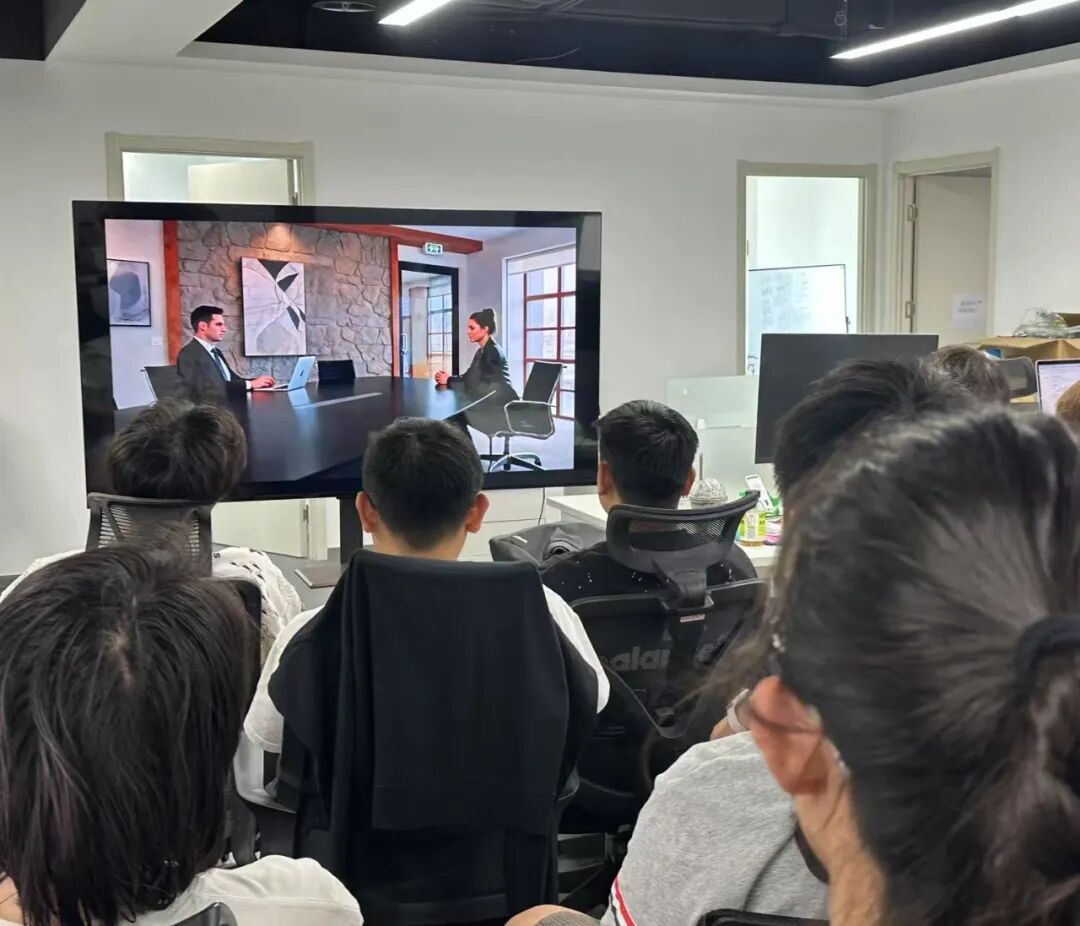
- The entire Head AI team watching a video of Head AI interviewing itself
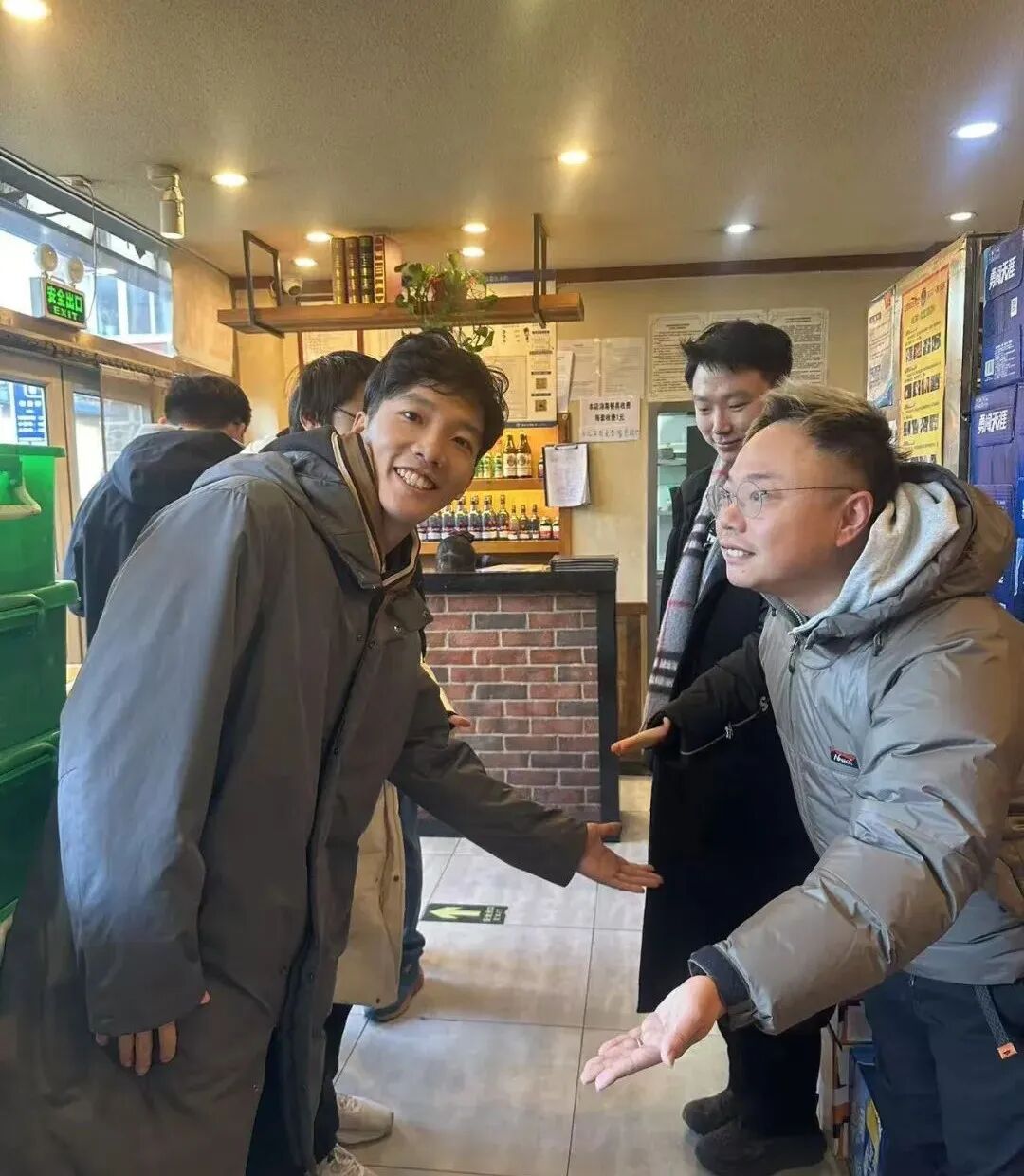
- Team building at Universal Studios

- Halloween team cosplay as toilet paper
Part 03
I Can Only Be CEO
I Could Never Be Subordinate
AI NOW!: Dropping out at 18, not going to college — was that a difficult decision? How did you convince yourself and your parents?
Kay: Not particularly difficult. I went to middle school in the US and started tinkering with Web3 in high school. Not going to college after graduation felt natural — I completely knew I wanted to start a business, to do my own thing.
I don't think I specifically discussed it with my parents. Our family is quite independent, each busy with our own things, not much communication. Honestly, I still don't know if they fully know about this. They just know I'm starting a business. Whether I'm doing it while in school or dropped out to do it — I blurred that line. They're all quite busy, pretty laid-back.
AI NOW!: You earned your first pot of gold in Web3 during high school. Was it the fast in-and-out that attracted you?
Kay: At the time, I just wanted independence. Studying overseas, I had a strong sense of insecurity, very worried whether my family could sustain this lifestyle.
Also, school was genuinely boring for me. I just couldn't sit in classrooms. The teacher would be teaching economics, I'd immediately pass out, then get energized only after getting home. I wanted to do something I was interested in. Web3 was pretty fun.
AI NOW!: You didn't like school from a young age?
Kay: Right, it felt painful. As a kid, I was on the edge of getting in trouble every day — standing punishment, parents called in, bombarded by different teachers' opinions. Teachers thought I was a very annoying child.
AI NOW!: Such negative feedback — did you ever doubt yourself?
Kay: No. I'd think the teachers had problems, the system had problems. My grades were still pretty good.
AI NOW!: Did your positive feedback mainly come from parents or yourself?
Kay: My parents didn't praise me much either. They didn't have specific expectations for me.
I don't think I'm someone who particularly needs positive feedback. From a young age, I had very clear judgment about whether I was doing things right. For example, when I suffered in domestic school, I proactively proposed to my parents to attend high school in the US. They originally didn't want me to go so early. But I judged that I didn't have much development space domestically.
AI NOW!: How did you discover your talent?
Kay: I've been trial-and-erroring actually. I once considered doing R&D, coding, but quickly realized I couldn't sit still, and that I genuinely wasn't as good at coding as others.
I'm the type of person who, once I discover I'm not the best in a field, won't choose to grind it out.
Later, doing marketing in Web3, I suddenly discovered I was good at growth. Others couldn't tell the difference between influencers, but I could immediately get it — my picks quickly hit millions of impressions. I just have that empathy.
AI NOW!: At Dora AI you were already running the company's entire growth. What pushed you to definitely start your own business?
Kay: At the time, Dora AI's two founders were 12 and 20+ years older than me. I had to constantly convince them to do things, easily clashing, and they were often driven crazy by me (laughs).
That process was quite suffocating. Since I had the capability myself, why be trapped like this?
Dora AI's CEO's assessment of me: someone who could never be subordinate. Right, I can only be CEO. I could never be someone's -1.
AI NOW!: Being CEO requires patience, but you self-assess as lacking patience?
Kay: I'm working very hard to overcome it. I understand many things faster than others. When communicating, if the other person hasn't caught on yet, I have trouble controlling my emotions. Sometimes I think I'm explaining something clearly, but the other person finds me aggressive.
I'm not a likable boss. I reflect every day: as CEO, have I changed some of my nature today?
AI NOW!: What else do you need to overcome?
Kay: I'm the type with tons of ideas that change very quickly — think of something and want everyone to immediately act on it. For example, I might have 100 new ideas a week, but now I restrain myself and only say 50.
AI NOW!: How far is Head AI from your ideal state?
Kay: Still far.
We've chosen the most pain-point-heavy scenario in current marketing, like how Salesforce started by切入 CRM to address sales. My ultimate vision is to build a system that can replace the entire marketing department's brain and limbs.
AI NOW!: If you weren't doing marketing, what career would you choose?
Kay: Two careers suit me well. One is marketing, the other is political campaigning.
Politicians are also products — selling a person to the masses, winning enough votes. Fundamentally no different from marketing. But this is just brainstorming — I'm definitely fully committed to entrepreneurship right now.
AI NOW!: As a 23-year-old CEO, how do you arrange work and weekends?
Kay: Weekdays are immersive work. I rarely even check WeChat. From 11 a.m. to midnight or 1 a.m. every day.
Weekends I might not work at all — do-not-disturb mode, don't even want to talk. I go ballet dancing, learn modern dance, see plays. Especially into plays recently. Immersing myself in theater, experiencing others' lives. Feels very happy, very blissful.
AI NOW!: Not dating?
Kay: I liked it a bit in middle school. Not so much now. Liked it too early, grew up and found it uninteresting. Since starting to work, work is more interesting, so I don't spend time thinking about this.
AI NOW!: Finally, recommend three of your favorite books?
Kay: Kazuo Inamori's The Mind — taught me the core of doing things: walk the right path. The Ride of a Lifetime is my reference book for how to be CEO. I used to quite enjoy Eileen Chang, and detective novels like Keigo Higashino's, and Murder on the Orient Express. But no time since starting a business.
Image sources | Provided by interview subject, Unsplash