From Witnessing Douyin's Growth from 30 Million to 600 Million Users, He Decided to Use AI to Reimagine "Finding People" | A Conversation with Beichuan Yu, Founder of Lessie AI, on the New Gateway to Social

For the first time, AI can map the dynamics between people. It will tell you who you most need to meet right now.
By Pippobei | Produced by AI Nao
01
In this wave of AI entrepreneurship, founders with a ByteDance background share some striking traits: product-oriented, problem-driven, relentlessly focused on solutions, and obsessed with speed.
Most of them emerged from a high-velocity organization — one that validates through data, drives through product, and iterates rapidly — until these habits became muscle memory.
Yu Beichuan, born in 1996, is a quintessential AI founder from the ByteDance ecosystem.
He was among Douyin's first campus hires for product roles, witnessing its growth miracle from tens of millions to 600 million users. After that, he struck out on his own. The early years brought some rough patches: he sold press-on nails, vacuum cleaners, even $20 drones. At the lowest point, he kept the company afloat by teaching others how to do traffic-driven e-commerce.
In 2023, he dove into the AI wave, targeting "AI influencer marketing" and quickly turned the company's cash flow positive, landing investment from HSG. This September, he launched a new product that quickly went viral in tech circles: Lessie AI, positioned as "business discovery" — finding the right people.
Open Lessie, and you immediately sense that ByteDance-style product DNA.
First, an extreme focus on scenario-specific entry points. While most agent applications are still in the "here's everything we can do"泛场景 stage, Lessie locked its functionality to one very specific, high-frequency scenario from day one: finding people for business purposes.
Clients, influencers, candidates, partners, experts — these are actions that happen daily in every industry. "It's a relationship chain with strong collaborative intent," Yu defines it.
Second, an obsessive pursuit of efficiency gains.
On the surface, Lessie looks like an intelligent search box. Behind it, the model is wired into a full toolchain: data sources, SaaS tools, scrapers, private databases, verification engines... The user inputs a "find people" request, and the product delivers a list of directly contactable individuals through deep research.
The entire process takes under 10 minutes.
Most critically, Lessie's development-to-launch speed was "extremely fast." The team started coding on June 20 and went global on September 26.
Yet Yu still felt it was too slow: "A friend recently said something that really struck me — if the product you're launching today isn't something you're embarrassed by, you shipped too late."
According to Lessie's latest disclosures, the platform has accumulated over 100,000 users. Commercialization began on Day 1, with solid revenue already coming in.
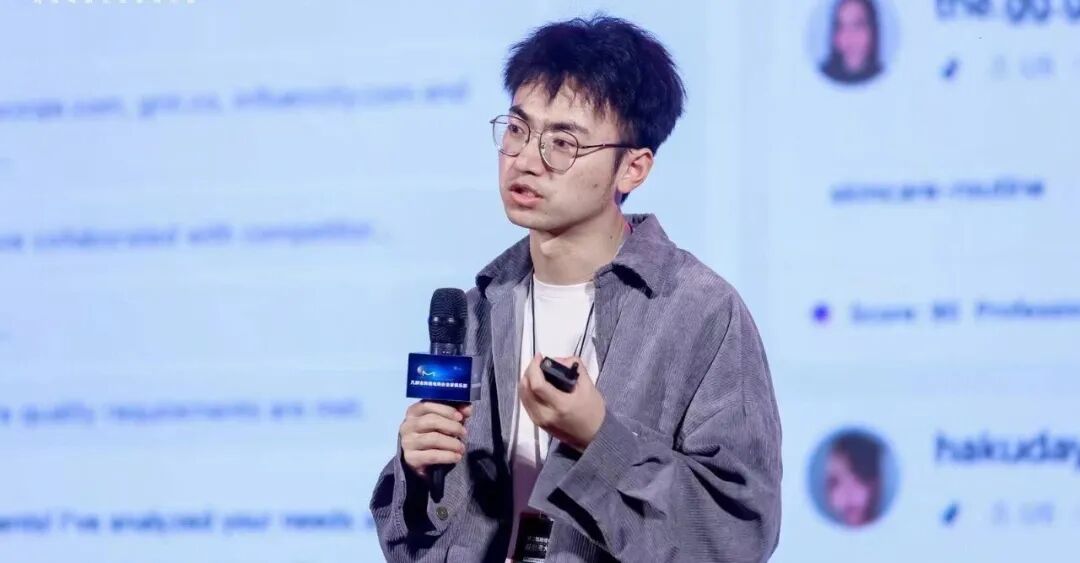
- Yu Beichuan speaking at an event
- Product demo
02
For the past two decades, internet social products have essentially been built around three things: who you know, who you contact, who you follow.
The key shift in the AI era: human relationships can now be inferred by AI for the first time. AI will tell you who you most need to know right now.
This is a massive paradigm shift in social networking:
- Finding clients doesn't start from a CRM, but from "which market do I want to enter"
- Finding partners doesn't start from your WeChat Moments, but from "who shares the same problem as me"
- Finding talent doesn't start from a job description, but from "who's been doing similar work recently and doing it well"
For the first time, AI transforms the "intent" behind people-finding into an "inferable" relationship chain. This means the distribution of opportunity gets rewritten, human connections become fairer, more efficient, faster — and the market size is no longer the digitization of existing relationships, but the digitization of potential ones.
That's why we believe products like Lessie aren't simply a supercharged LinkedIn, but an entirely new social market: intent-based social networking.
Yu Beichuan's ambitions are substantial, and so are his challenges. Around Lessie's launch, numerous similar AI products have already hit the market.
Can it become the first entry point for business social networks in the AI era? That depends heavily on the founder's deep understanding of "social relationship chains" and the tailwinds of timing.
Below is AI Nao's conversation with Yu Beichuan. We selected 10 simple, direct questions covering how he believes AI technology reconstructs social chains, his insights on opportunity, the critical leap from tool to social network, and the most important product lessons from his four years at Douyin.
Yu Beichuan's answers are candid and clear — probably another characteristic of ByteDance-trained founders.

- Lessie at its first US trade show in October
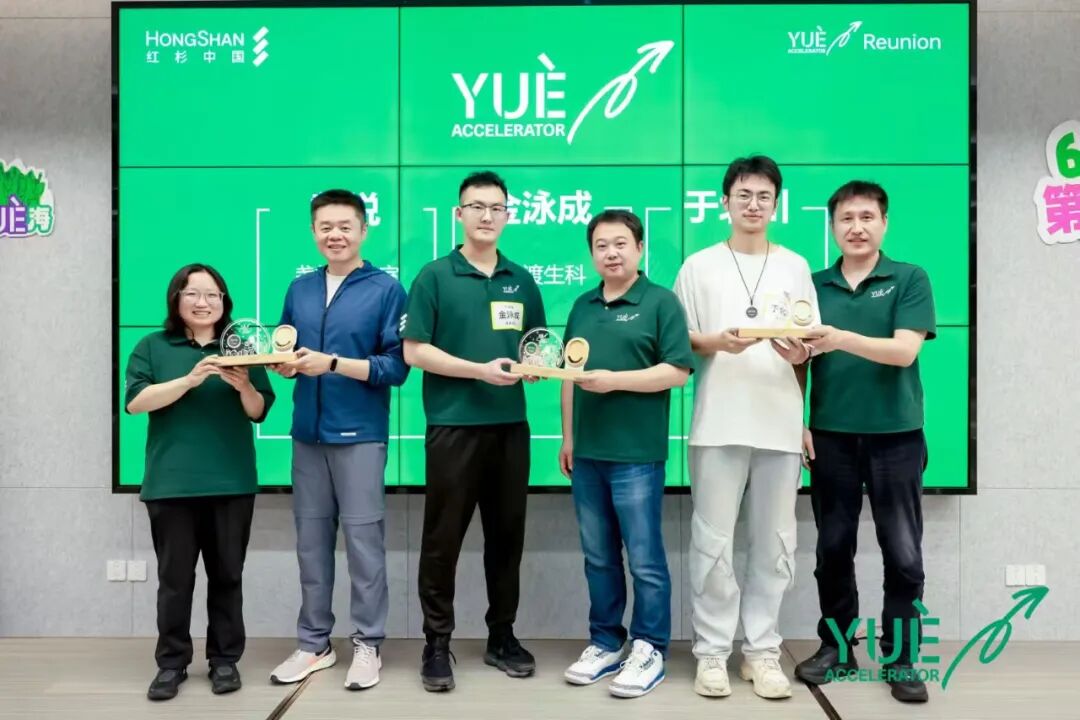
- Yu Beichuan at an HSG internal event (second from right)
Ten Questions NOW!
AI Nao: You explored social relationship chains inside Douyin without success, then pivoted to AI marketing for finding influencers, and now launched the broader "people discovery" scenario with Lessie. What new opportunity in AI-era social relationship chains do you actually see?
Yu Beichuan: Historically, "finding the right person" was served by SaaS products — already a large market in Europe and the US, with products like ZoomInfo, Apollo.io, and PitchBook. These companies collectively generate billions in revenue, including public companies and unicorns. But in the AI era, their solutions and infrastructure remain quite crude.
Analyzing user demand, I believe social chains fall into three categories. Douyin is熟人社交, and so is Facebook. The second is dating social — Momo, Tinder. The third is purpose-driven social, or what you might call the open network of business relationships, represented by LinkedIn.
We're targeting purpose-driven social. LinkedIn doesn't serve it well. It only solves second-degree social chains; third-to-fifth-degree connections are served by those SaaS products I mentioned. But the SaaS market is inherently fragmented — its core moat isn't data, but resources: whoever lands the big clients survives.
I think in the AI era, entrepreneurs will find it hard to shake that, but we can revolutionize the backend service chain.
For example, an engineer at a small or mid-sized company buys Cursor for $100–200 per month. He's not buying software — he's buying professional services that were previously only available at large companies. AI's greatest capability is productizing previously "relatively non-standard service experiences" at dramatically lower costs, making them accessible to SMBs.
The "finding people" scenario can be completely reconstructed by AI, abstracting what was previously human-delivered service into a product: users sign up and use it themselves, at an affordable monthly fee. Then we reach more SMBs and drive growth through PLG.
AI Nao: How do you ensure the people AI finds for users are the "right" people?
Yu Beichuan: The approach is equipping the model with tools, then giving it the world's address book. This address book is essentially building an app store for AI, or a toolbox containing the world's most professional — or most varied — human databases. This data previously lived in traditional SaaS software. So we've done deep integrations with many SaaS tools.
Once AI has these tools and databases, you can think of it as doing Deep Research for you. For example: I want to find a technical genius in a certain field. The AI will figure out how to search their GitHub, see how many stars they have, check if newsletters have covered this person, and so on.
The core metric for eliminating hallucinations is quickly establishing a scoring system for the model, leaving users with more actions to take. If they're particularly satisfied with someone we found, they'll unlock the contact information. That counts as a positive case, which we then use to train the model.
AI Nao: Which scenarios are best served now? Which ones surprised you?
Yu Beichuan: For "experts, founders, clients" — this category of people — we're already among the platforms with the most complete information and deepest understanding on the entire internet. Our results are usually the best.
Influencers are much harder, because it's not just text comprehension — it involves multimodal content like images and video. For instance, they might have reviewed a certain brand but didn't put it in the title, making it hard to hit through text alone. This requires us to continuously improve our AI's multimodal understanding while building native platform search capabilities, so we're still investing heavily here.
One day, a group of Russians suddenly came to the platform looking for exes. I found it bizarre. Later I discovered a Russian media outlet had reposted our news, translating it from English to Russian with exaggerated embellishments — the information got distorted. (Laughs)
AI Nao: This suggests people have broader "finding people" needs — ski buddies, paid cat-sitting neighbors during business trips. Do you serve these long-tail scenarios or not?
Yu Beichuan: At this stage, we won't enter through these scenarios.
At the 0-to-1 phase, what founders should most consider is which scenario establishes product positioning in users' minds. My experience is that the chosen scenario should dramatically improve on past experience, have sufficient market space, and high growth ceiling. Douyin initially established its positioning as young and trendy; short video came later.
When the product reaches maturity, scenarios like ski buddies would be areas we consider for expansion — because by then, the "finding people" positioning has already become user habit. Just as people were skeptical Douyin could sell products, once you have enough users, the product naturally gains entry mechanisms.
AI Nao: Will you later do "acquaintance social" or "dating social"?
Yu Beichuan: No, we don't have strong intent there.
WeChat and Facebook are too dominant, and dating already has strong products. But "purpose-driven social" still has opportunity.
Our social scenario is more precisely defined as "a certain kind of public relationship, driven by strong collaborative intent or strong collaborative ties."
AI Nao: You explored "social relationship chains" during your Douyin period without success. What was the most important lesson?
Yu Beichuan: Doing acquaintance social on Douyin was very difficult.
Douyin actually had the objective conditions for social: 600–800 million DAU, extremely high retention, next-day retention above 90% — meaning 9 out of 10 people would open it the next day.
This means if you DM an acquaintance on Douyin, they'll see it within 24 hours. The interaction frequency and relationship coverage have a foundation — one prerequisite for social to work.
But the real problem: users come to Douyin with a consumption mindset, not a social mindset.
You open Douyin, 90% of time goes to the main feed. Creators' core goal in posting is "to go viral." I summarize: Douyin is more like television. What you post there is mostly highly performative content — stuff you probably don't want parents, colleagues, real friends to see, maybe even feel embarrassed about — because it's a performed self, not your actual life.
This creates a paradox: we might painstakingly build social relationships, but those relationships actually inhibit user expression and reduce content.
Douyin's problem: these two expectations were misaligned from the start.
AI Nao: At this stage Lessie is a productivity tool. What's the critical leap to realize your ambition — reconstructing "social chains" in the AI era?
Yu Beichuan: First, serve one side well enough and accumulate sufficient users. Then use product needs and feature design to get users connecting with more people.
A user subscribes to someone — they changed jobs, their company raised a new round. As long as the user follows them, a lightweight subscription and following relationship already forms. Conversely, to motivate someone new to join a platform, I summarize a formula: "quality of people following you × quantity of people following you." The larger the product, the stronger the motivation to join.
When someone is searched and tagged frequently on the platform, we can alert them: many people are tagging you and viewing your profile here — want to claim your page?
AI Nao: What does the social relationship chain of an AI-native product look like?
Yu Beichuan: Right now, the relationship chain inside our product is direct email. We plan to launch chat later, and build our own DM.
My latest thinking: AI makes everything lighter, because it accelerates the speed and density of information production. In the mobile internet era, following someone then unfollowing — such features feel too heavy now. We'll need new containers to carry social chains.
For example, AI could completely auto-monitor "people you've locked onto" every day. I haven't fully figured out what to call such a relationship chain — "attention"? Or maybe "attention" is more accurate in English.
I have a vague sense the future looks like a more diffuse social network. ByteDance changed information distribution; what we might change is the distribution of "people."
AI Nao: In your entrepreneurial journey, which product or moment inspired you most?
Yu Beichuan: Manus. I'm a believer. (Laughs.) Its technology genuinely shocked me.
Compared to Manus, our previous AI marketing product was at best a workflow-stacked tool, poorly completing personalized tasks. Product ROI was low; the R&D iteration process wasn't different from the mobile internet era.
After Manus appeared, I realized how limited my understanding was. Anyone seeing Manus's performance should recognize the industry's inflection point had arrived.
More frankly, in 2024, I wasn't particularly AI-native. AI was developing, but did I really trust it everywhere? That distrust would inevitably reflect in my product.
That's why I named the product Lessie — hoping for less strategy, less code, less APIs, more model.
AI Nao: Manus founder Red Xiao is also your senior at HUST. What's the best advice he gave you?
Yu Beichuan: I once asked him how to combat anxiety in entrepreneurship. He said, don't combat it.
Use anxiety to sense what's wrong today. Your body will tell you where things are off — then fix it immediately.
Image sources | Interviewee, Unsplash

Recommended Reading
Join Our Community