"AI-Era LEGO" Sells 1.3 Million Units, Closes Multi-Million-Dollar Funding Round | A Chat with UNICUS Founder Hao Xu on AI Hardware and New Consumer Trends

"The Magic of Materializing 'Life Moments'"

AI Customization | Life in a Moment | Emotional Physicalization | Disruption of the Physical | Hand-Built
Produced by | AI Nao

01.
If the AI era is destined to give birth to a new generation of consumer goods companies — the UNIQLO of the AI age, the Pop Mart of the AI age, the Coca-Cola of the AI age —
What would it look like?
For the past two years, AI has almost entirely lived in the software world: writing code, generating copy. It has changed how information is produced, distributed, and consumed, but has yet to disrupt physical things. The integration with consumer goods and manufacturing will transform the underlying logic of production: consumer products will shift from a mass-hit, scaled-production model to an on-demand, personalized era.
UNICUS (formerly Fangzai Photo Studio) is exploring exactly this, using AI to reconstruct the supply chain and offer users "personalized custom brick figurines." They are building the LEGO of the AI age.
Today, UNICUS announced it has completed a new funding round of several million USD, led by Linear Capital with follow-on investment from Jiukun Venture Capital and FutureX Capital. The funds will primarily go toward training brick-generation models, R&D on AI agents, and overseas market expansion.
Users upload any photo. UNICUS first extracts the key information: facial contours, hairstyle, expression, habitual details. Then it "strips away" the patterns on clothing from light, shadow, wrinkles, and material, preserving only the most critical textures and identifiers, and automatically fills in what you didn't capture: the back of the shirt, the structure of accessories, making the photo hold up as a complete three-dimensional form.
After that, the photo is translated into "brick language," generating a ready-to-produce assembly plan that enters the factory and gets packaged into LEGO-like brick figurines.
From order to shipment: as fast as 18 hours, with an average price of RMB 200.
"Our product positioning is the physicalization of life's moments," said UNICUS founder Hao Xu. They have cumulatively sold 1.3 million custom products, consistently ranking as Tmall's top gift category seller (second place is Flyco electric shavers).
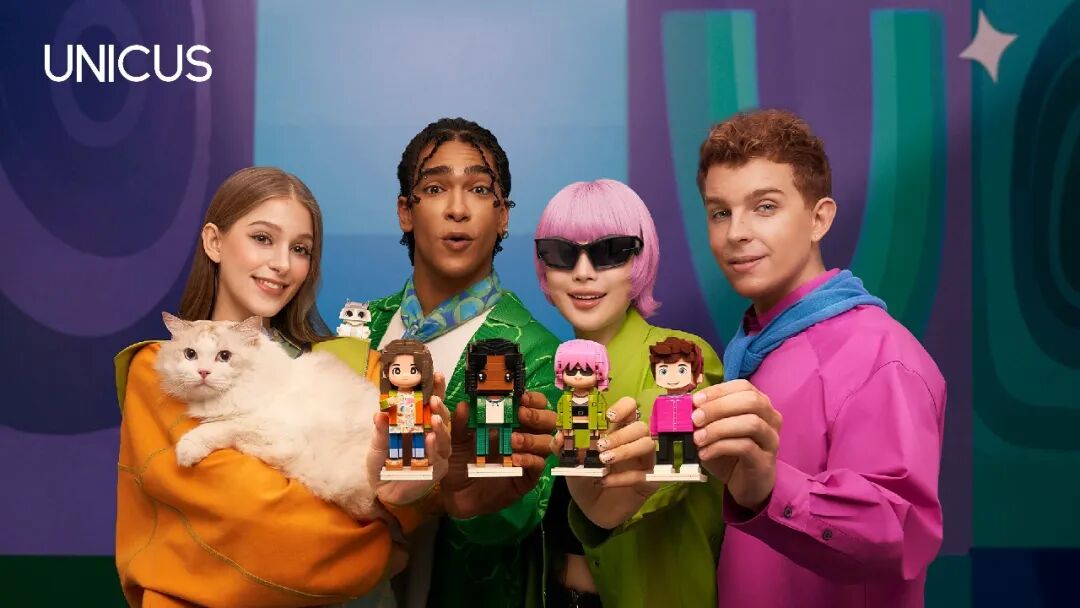
- As AI technology develops, UNICUS's expressiveness has improved rapidly
02.
Hao Xu holds a PhD in computer graphics from The Chinese University of Hong Kong, specializing in 3D generative design — or in plain terms, building algorithms for design, such as converting a 3D figure into machine-executable fabrication paths.
Entrepreneurship was an accident of fate.
In 2020, during the pandemic, Xu — who had offers from several major American companies — got stuck in Hong Kong. Bored, he entered a geek competition and met co-founder Cheng Li. Li holds a PhD in automation from HKUST, studied under professor Zexiang Li, and was formerly head of intelligent production line R&D at DJI's drone division.
Both were LEGO fanatics. "We got to talking — at the time, a custom LEGO set cost RMB 2,000 and took months. Could we make it cheaper and faster using automation?" They started working through the problem and realized "we only needed to optimize 6–7 production steps to bring pricing down to RMB 100–200 per set, and with China's logistics, we could ship within a day."
They did almost no market research. They started hand-building the production process in a civilian house in Shenzhen, and ended up "accidentally" building out a 5,000-square-meter automated flexible supply chain. "Honestly, no factory back then could handle our personalization requirements."
Xu is the archetypal engineering type — accustomed to data-driven decision-making, pragmatic in speech, rarely showing strong emotional leanings.
In the early days, AI technology had not yet deeply penetrated the production process. But over the past two years, UNICUS has run AI through the entire production pipeline — from stylized abstraction to structured generation to physical manufacturing. The results are so good "I wouldn't have dared imagine them when I was doing my PhD in the lab," Xu said.
"We are building the LEGO of the AI age."
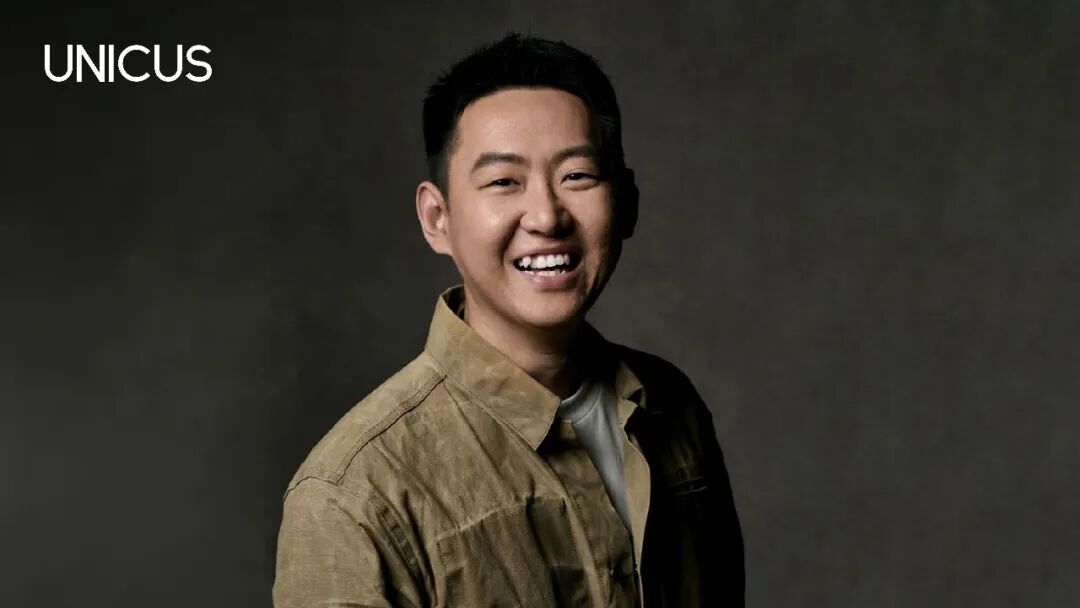
- Founder Hao Xu
03.
After the invention of the camera, humanity gained an entirely new emotional capacity for the first time: a vanished instant, transformed into film that could be revisited again and again. The meaning of life was physicalized for the first time.
UNICUS is more like an upgrade to the camera — turning important moments into physical objects that can sit on your desk.
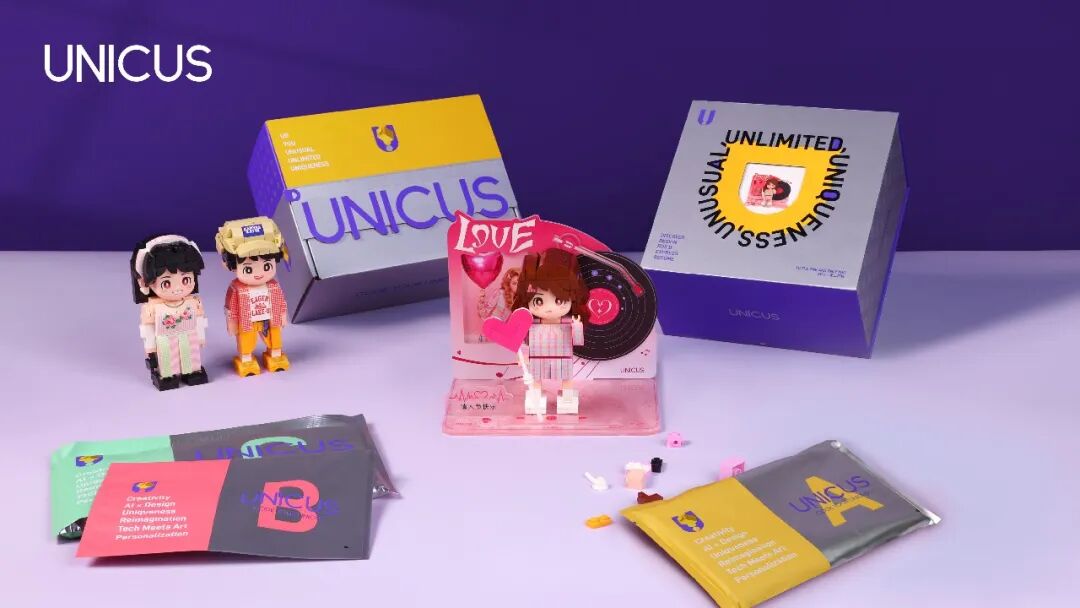
- 60% of UNICUS's use cases are gift-giving
This is a new consumer species that could only emerge in the AI age.
UNICUS's personalization capabilities, cost structure, and delivery model have been completely taken over by AI. Without AI, they could never have made "personalization" into a scalable, deliverable business.
AI rewrites the cost structure and delivery model of traditional consumer industries — remember, traditional consumer industries have historically been anti-personalization, because personalization means long tails, fragmentation, and inefficiency.
What should a new AI-era consumer goods company look like?
Xu believes it needs UNIQLO-level supply chain efficiency, Pop Mart or The Walt Disney Company-level emotional stickiness, and Coca-Cola-level scaled distribution capability.
But the risks are substantial: for instance, order volume needs to maintain a certain scale — UNICUS once faced a "breakthrough" risk on this front. Second, tolerance for error is low. Product expressiveness directly determines market size and user repurchase rates. "The pace of AI technology development is critical to us."
Regardless, the AI age will certainly give birth to entirely new consumer brands, with completely different faces and commercial logic from the industrial era.
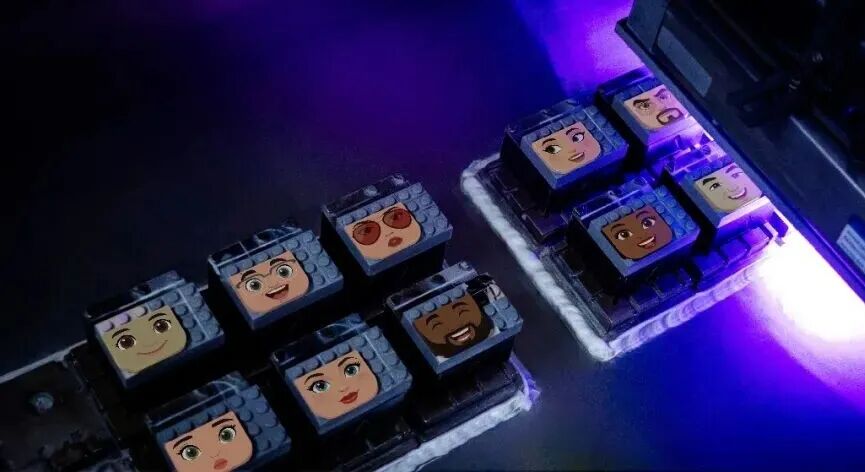
- Details of the self-developed flexible supply chain
"In Conversation with Hao Xu"
AI Nao How do you understand the idea that you're building the LEGO of the AI age?
Hao Xu At its core, LEGO meets users' emotional needs by physicalizing shared emotions — famous IPs, buildings, characters — and selling them at scale. But people also have vast numbers of personalized needs. We want to take personalized memories and scenes and produce them quickly, at low cost, so that everyone's "life in a moment" can be made physical.
As AI technology develops, if UNICUS can achieve something like photography — fully rendering the details and expressions of a person in that instant — it would be no less significant than the invention of the camera itself. Its market would only be larger than LEGO's.
AI Nao I'm very curious — how are you using AI to reconstruct the generation process?
Hao Xu The first step is character modeling, my old specialty: designing the 3D model, what the person actually looks like, where each brick should go. Crystal clear.
The second step is designing the surface patterns — the patterns on clothing, facial expressions, decorative details. Traditional standard product design takes three to four months. But we analyzed it: the core variables for a person are actually just a few — hair, hairstyle, clothing. These seem complex, but at sufficient scale, they can be classified and enumerated.
We prepared thousands of hairstyle templates, then trained a computer vision model that lets the system first judge: which hairstyle category is this person closest to, which clothing category, then automatically match them.
The hard part is how to combine them so they look alike but also have that "liveliness" — how the bangs curl, how the hair ends fall, how the clothing layers. These matter a lot. Early on, what users received was quite rough. It's much better now.
Then physical testing. Some models are fine in 3D software, but when actually assembled they might be loose, fall apart, or not actually connect in the back. I integrated the physics simulation algorithms from my PhD research into a system that预判 [predicts] in advance. If there are local issues, a small optimizer corrects the structure.
Finally, generating the assembly instructions. In the past, designers drew them page by page. I referenced foundational code from my PhD and automated this too. Now users just scan a code to see 3D assembly demonstrations directly on their phones. In plain terms, the tech in this step is somewhat like AlphaGo's reinforcement learning.
AI Nao Tell us about your 5,000-square-meter self-developed factory. I heard it started in a civilian house in Shenzhen, completely hand-built?
Hao Xu Yeah, I actually quite like working with my hands (laughs). Because it's personalized customization, every order is different. Even the most basic "sorting" step in a traditional factory was extremely difficult for us. That one step alone took a year or two to truly become personalized.
Next was printing. Because bricks aren't flat sheets of paper — different pieces might have flat, angled, or curved surfaces. Having workers figure out "what image goes on this brick" and "how to position the pattern" would be extremely inefficient and error-prone. So we built an entire control software system ourselves. Workers just place the parts as prompted, hit a button, and the machine prints 40–50 bricks in one go.
I think the fundamental reason traditional factories are inefficient is that humans are making too many judgments and choices at too many steps. We try to eliminate human subjectivity as much as possible.
Finally, quality inspection — also very difficult. Personalized products are most afraid of missing pieces, wrong pieces, incorrect colors. We built a visual inspection machine with five cameras that identifies the types and colors of scattered bricks and cross-checks them one by one against the BOM in the system.
Only after building all this did we realize — we've actually built an AI-powered flexible factory (laughs).
AI Nao Consumer companies are inherently anti-personalization. How do you balance personalization and scale?
Hao Xu That's a good question. And it's our challenge. Our current solution is to use standardized parts to underpin scale, then use AI, 3D printing, and printing to supply differentiation.
On one hand, products need enough standardized components to enable scaled production. On the other hand, they need sufficiently delicate personalized expression for users to feel "that's me." This balance permeates nearly every aspect of daily execution.
The most typical example is "molding" — you can't create a mold for every hairstyle. Say a person has 1,000 hairstyles. If you open 1,000 molds, the costs never pay back.
We strictly limit molding to universal parts — facial shapes and body torsos, which are highly reusable. For things with high personalization and low reuse rates — headwear, handheld objects, accessories — we turn to 3D printing and printing, or even realize them directly through brick structures. If a user is holding a book, that can be done with bricks + printing, no mold needed. If it's an openable laptop with complex structure, 3D printing is more suitable.
This is also why our upfront startup costs could be kept relatively low — there actually aren't that many parts that need molding.
AI Nao When you first started, you weren't sure whether you were building an AI company. When did you become certain that UNICUS is an AI company?
Hao Xu Early on, I honestly couldn't say so — AI capabilities weren't sufficient, and it wasn't deeply involved in production yet (laughs).
The first moment that struck me was in 2024, when we self-trained a diffusion model. It enabled us to take a very casual photo from a user, abstract and extract the pattern on their clothing, with very robust results. It could also remove light, shadow, wrinkles, and unimportant material textures from the clothing, preserving only the key pattern details and redrawing them in a brick-compatible style.
This capability showed that diffusion wasn't just "capable" of our task — it was genuinely practical. AI instantly became the core engine of our product capability.
The second thing was in 2024, we published a paper at SIGGRAPH (the top graphics conference). That was academic validation that our technical direction was sound.
The third thing was around April–May 2025, when we trained a "brick generation model." There were some details that still feel magical when I think about them now: for example, if someone's bangs lean to the right, the model will automatically use small fan-shaped bricks to restore that directional sense. If someone's hair is spiky, it will use more triangular bricks to express the texture.
I find it incredibly exciting. The model now has the capability to deeply understand visual features and then match appropriate bricks.
AI Nao As an AI-era new consumer company, what metrics do you care about most right now?
Hao Xu Gross margin. After all, we need to support ourselves. Gross margin is also a lagging indicator. If our technology creates strong moats, that will definitely show up in gross margin. Another key metric: user return rate directly reflects our product's expressiveness. Our current return rate is in the single-digit per mille.
AI Nao Many startups are also entering from AI generation, "3D generates everything." Are they competitors?
Hao Xu Our supply chain is simpler. Because we didn't think about fundraising in the early days, from day one of entrepreneurship we focused on profit, concentrating only on the single scenario of "life in a moment." Along the way, we standardized many components. The core problem for other companies may still be scale — the more categories you have, the more complex the supply chain, the higher the management costs.
AI Nao If LEGO or Pop Mart entered this space, would UNICUS still have advantages?
Hao Xu Their DNA is completely different from ours. It would be very difficult for them to quickly build out a system that integrates AI generation with flexible supply chain. Our core moat is the integrated chain of models + agents + software systems + factory.
They might study it for a while and discover that acquiring a company like ours is actually the fastest route (laughs).
Join the Community