Not AI-Native, Yet Living Like a Chosen One: 7 Lessons from Figma's IPO for AI Entrepreneurs

7 Takeaways from Figma's IPO

By Pippobei | Produced by AI NOW!
Intro
On July 31, 2025, Figma went public on the New York Stock Exchange under the ticker $FIG.
On its first day of trading — today — its market cap briefly hit $67.6 billion. The surge was so dramatic that trading was halted multiple times due to volatility. That level of first-day pop marked the largest debut for a US IPO over $1 billion in nearly 30 years.
Figma is a design collaboration tool founded in 2012. Compared to the "AI-native" companies that emerged after ChatGPT, it's neither young nor a case of "new wine in new bottles." Yet it has become one of the most concrete beneficiaries of the AI narrative — embraced not just by institutional investors, but by everyday users and retail investors alike.
How did a "pre-AI" product ride the AI wave to become one of the year's most consequential tech IPOs?
Through Figma, we try to map out how a non-AI product can thrive amid the AI boom — how it embedded itself deeply into the AI wave and fundamentally reshaped user workflows and product logic.
For China's AI entrepreneurs, Figma's success is more instructive than we might have assumed.

1. AI Must Be Core, Not Just a Nice-to-Have
One of Figma's most closely watched products is Figma Make, launched in 2025, regarded as "one of the most AI-native products" around.
Figma didn't simply bolt an AI button onto its software. It embedded AI deep into the workflow, achieving an "end-to-end" solution.
The design process is complex, requiring back-and-forth between stakeholders, product managers, and designers, with engineering changes layered on top. Figma uses AI to bridge the gap between design, code, and final output — compressing tasks that once required multiple people and rounds of communication into a smooth, automated end-to-end flow.
Plenty of products claim end-to-end capabilities, but we believe there's only one real metric: does it genuinely improve team collaboration and delivery speed?
Adobe's AI strategy, by contrast, uses generative AI to empower creators — AI functions more like a tool module. Figma's understanding of AI is different: it becomes an intelligent coordinator, orchestrating the entire product to complete delivery.
This divergence in how they understand AI explains the difference in direction between the two companies.
For founders, the question worth asking: how do you make AI a foundational capability of your product, rather than a rushed "patch"? The market is already flooded with projects that launched a bare-bones AI feature and declared themselves AI products.
2. Solve Real Pain Points, Even Small Ones
From the start, Figma identified a core pain point:
Traditional design tools involved tedious, repetitive communication around team collaboration, cross-platform adaptation, and design handoff.
So Figma positioned itself as a web-based, multi-user collaborative tool where anyone could edit and comment.
To enable real-time collaboration, Figma built on a cloud-native WebGL architecture. Users didn't need to install anything — they could collaborate in-browser, instantly and easily. Its main rival Adobe, long dependent on desktop applications, faced massive challenges pivoting to cloud-based collaboration, and came to be seen as an "old product."
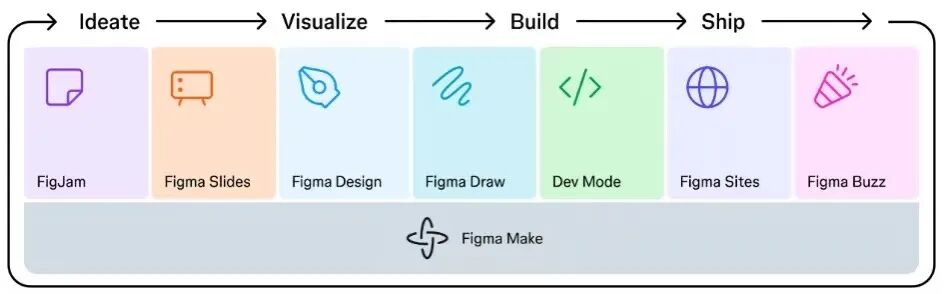
Having found this pain point, Figma executed it to the extreme. Once established, it used AI to expand — from designers' workflows into front-end development, then gradually launching FigJam (whiteboarding), Dev Mode, and Figma Make (code generation). This let it cover every stage of the product lifecycle, evolving from a single tool into a complete collaboration platform.
In the AI era, users have already developed a willingness to pay. Even the smallest pain point, addressed well with a small tool, can generate substantial revenue.
But if an AI product actually increases the user's learning curve without saving or making the company money — then admit it, you picked the wrong pain point entirely.
AI's power lies in automating inefficient, repetitive work, freeing people to be creative.
3. Products That Turn More People Into "Makers"
According to public data, Figma has 13 million monthly active users — but only one-third are professional designers. The other two-thirds are non-specialists: front-end engineers, product managers, marketers, even complete beginners.
Someone with zero coding ability and no vocabulary to describe design styles can still build a decent webpage through Figma.
A common vision in the AI era: if the iPhone made photography a mass behavior, then AI should push the boundaries of creation further — anyone can build an app, anyone can compose music, anyone can develop games...
The hard part is bridging the expertise gap so beginners actually enjoy using it. Does your product break down industry barriers and empower more people to become "makers"?
Figma offers a clear lesson: when a product is convenient and usable enough, a niche market can become a mass market.

4. Community Is the Most Valuable Intangible Asset
Early on, Figma built a vibrant community through livestreams, forums, plugin competitions, and more. Community members created and shared thousands of plugins, templates, and widgets.
This community-driven growth model built a powerful ecosystem moat and even helped set industry standards: Airbnb, for instance, shares brand design guidelines through the Figma community to ensure global design consistency.
Adobe couldn't replicate Figma's user ecosystem, which is why it turned to a $20 billion acquisition — blocked eventually by antitrust concerns, but enough to show the value of a high-stickiness community.
Building a community has become standard for most AI products. But community operations are tedious, detail-oriented, and rarely pay off in the short term.
Do you maintain a genuinely cool community culture? Do respected companies or KOLs participate? Do you consistently give community members positive feedback? And most importantly, can you persist long-term, as Figma has?
As Figma's prospectus put it: "Our community is not a marketing strategy. It is the heart of our product."
5. Start Freemium, Let Users Pay Naturally
Figma adopted the classic freemium model.
Individuals and small teams can use core features for free; as needs grow, they pay to upgrade.
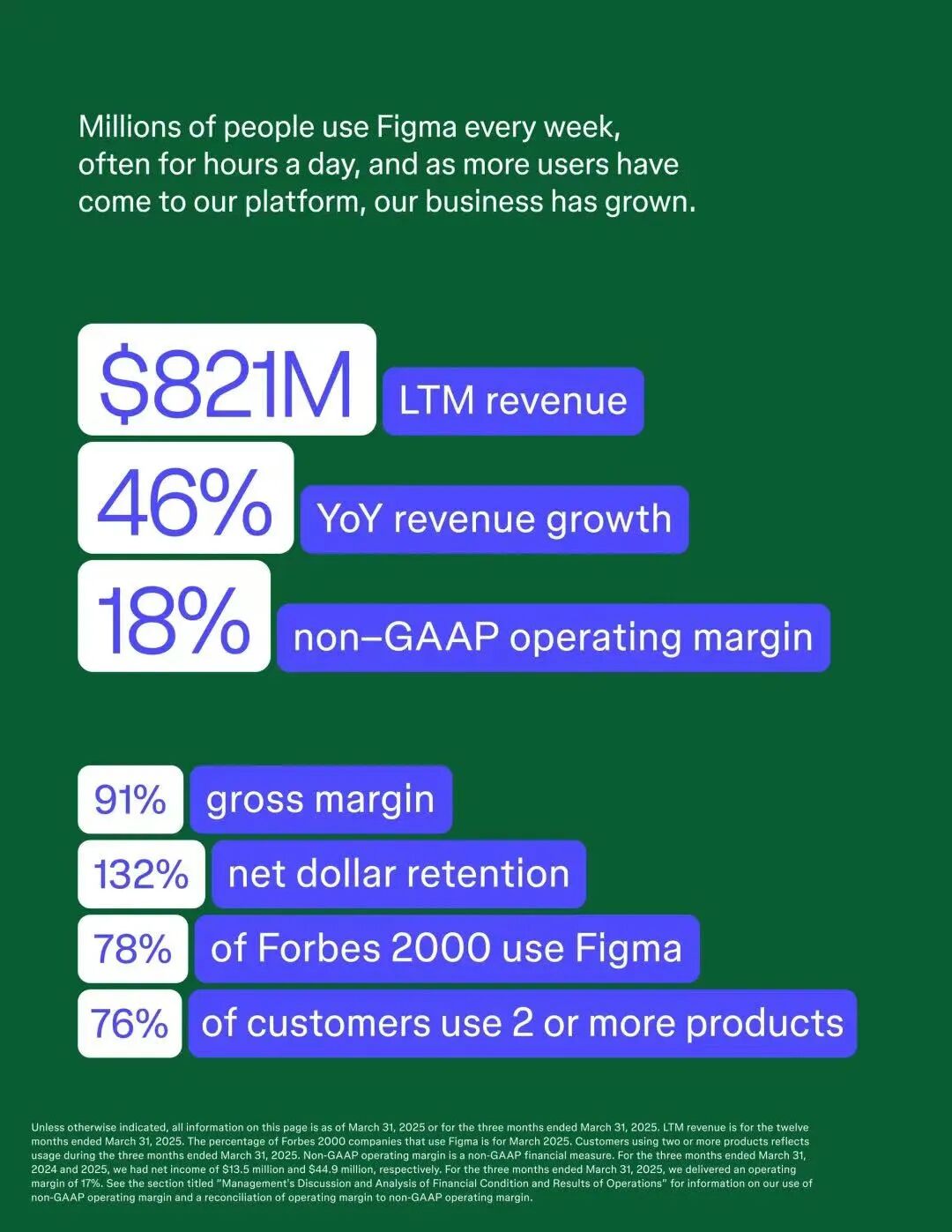
This bottom-up, product-led strategy let Figma grow over 45% for three consecutive years without a large sales team — well above the SaaS industry average of 20%-30%. Its customers range from giants like Microsoft and Netflix to SMBs paying $100,000 annually.
By contrast, many new AI products require payment upfront, sometimes annual subscriptions from day one. Others offer meager free tiers that don't let users experience enough before they abandon the product. Some even more bizarre offerings are free throughout the process, then demand payment at the export stage.
These user-hostile approaches reveal founders who lack confidence.
Shouldn't a good product be confident enough to let users experience core value for free — and still want to pay once they're hooked?
Maybe every AI founder should try this: let users experience your product's core value for free first. Once they can't live without you, paying becomes the natural next step.
6. Making Money From Existing Customers Matters More Than Finding New Ones
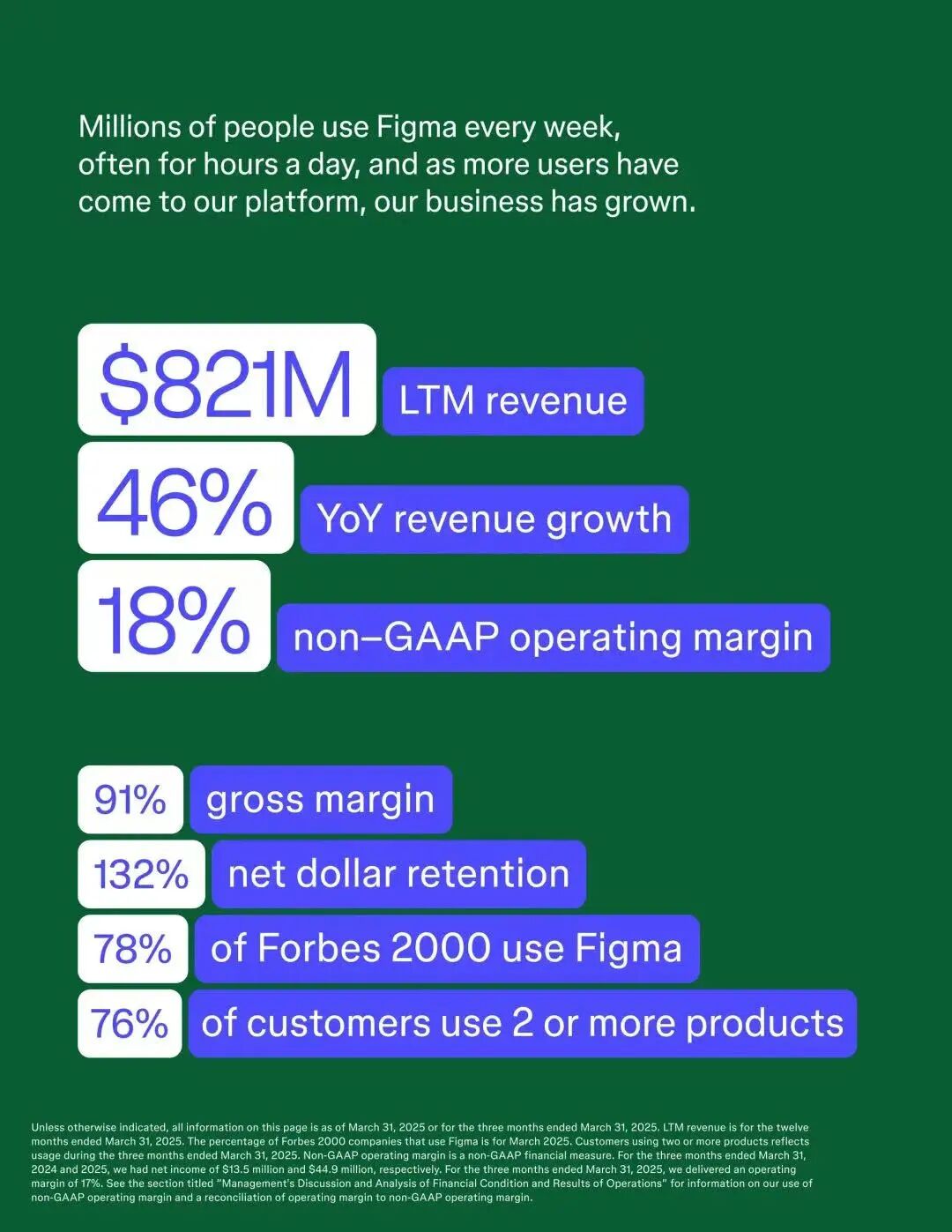
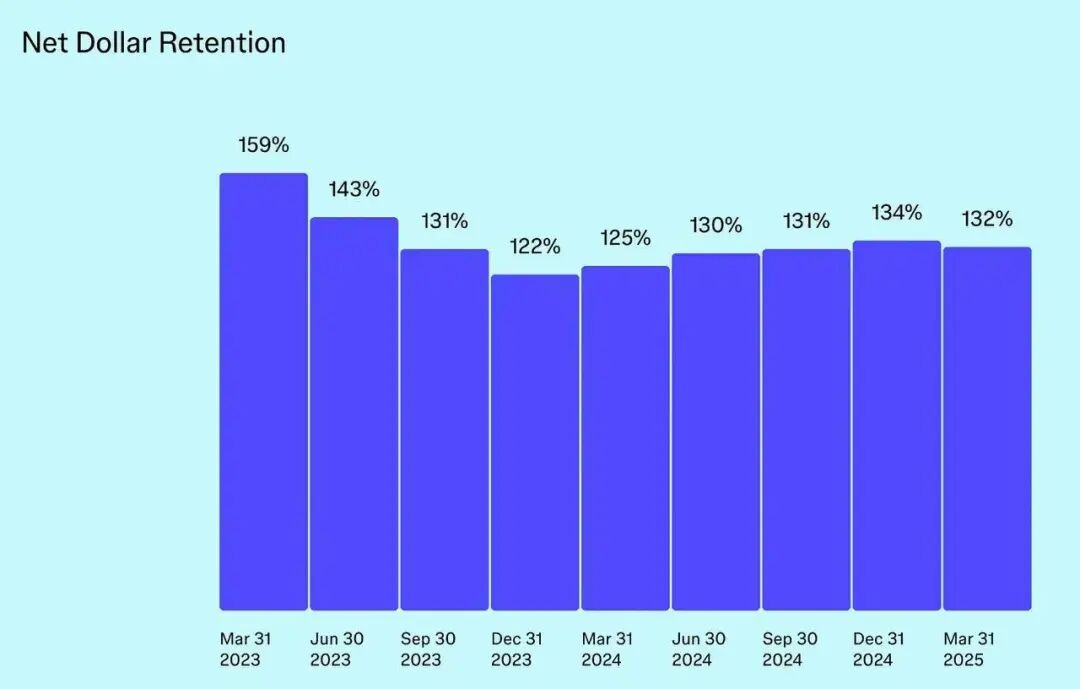
One of Figma's most striking metrics: a net revenue retention rate of 132%.
This means customers paying over $10,000 annually increased their spending by an average of 32% in year two. Customers don't want to lose Figma, and they're willing to pay more for additional capabilities.
In mobile internet, whoever got traffic won. In AI, whoever gets context wins — especially in complex work scenarios, where existing data is most valuable. As AI gets to know you better, both users and companies have low willingness to migrate. No one wants to retrain their AI.
If an AI product can't retain old users, that's a more serious problem: it means the experience is simply unbearable.
Moreover, while many investors evaluating AI projects focus on ARR, user count, and growth, by 2026 the core metric will be retention of existing users.
A product that keeps customers paying more over time — that's the real moat.
7. Don't Fear Challenging Giants — Their Baggage Is Your Opening
Figma's success proves again that even against an unassailable software giant like Adobe, a startup can disrupt the market through innovation.
Incumbents carry too much historical baggage to easily reinvent themselves.
This story has played out repeatedly: Netflix seized the internet wave, using mail-order rentals and then streaming to demolish Blockbuster. Nokia and BlackBerry, burdened by complex physical keyboards, aging operating systems, and stubborn attachment to "feature phones," were redefined by the iPhone.
Using AI to create an entirely new platform or ecosystem that overturns old work patterns — this is the greatest opportunity of the era for AI entrepreneurs. Don't fear big companies. When you tear open their flank with the most aggressive approach, you'll find the people inside are still aligning on OKRs.
Not long ago, two major tech companies released text-to-image models simultaneously. One was clearly better than the other. Analysts dug into why, and the conclusion:
The obviously better one — the boss wasn't involved.
The seemingly impregnable moats of giants are actually riddled with holes.
—Bonus—
We now have a podcast. Search for "AI NOW" on the Xiaoyuzhou app to hear more original interviews with creators.