Visual Perception Earbuds, AI OS, and a Chinese Company Beating Apple to the Punch | A Conversation with RayGF Co-Founder Kangda Chen

The battle for entry points in the AI era is spilling beyond devices, and vision is the most critical gateway.

Hardware Entry Point | Earbuds | AI OS | Radical Innovation
Produced by | AI Nao

01.
RayGF has beaten Apple to market with the world's first AI earbuds featuring "visual perception."
They envision a future where you simply say, "Book me a ride to Beijing South Station," and the earbuds — knowing your location, your usual pickup spot, whether you prefer express or premium rides — compare prices across platforms, confirm the booking with you, and minutes later announce the license plate number when your car arrives.
Never once do you pull out your phone.
"It's an AI assistant that sees what you see, hears what you hear, responds to you anytime, and gets things done for you," says Dr. Kangda Chen, RayGF's co-founder. At an event two months ago, he demoed this exact scenario — hailing a ride with a single voice command, then replying to a Lark work message through the earbuds.
RayGF calls its product line "AI Full-Sense Wearables," though internally the definition is more radical: not earbuds, but the "second main device" of the AI era.
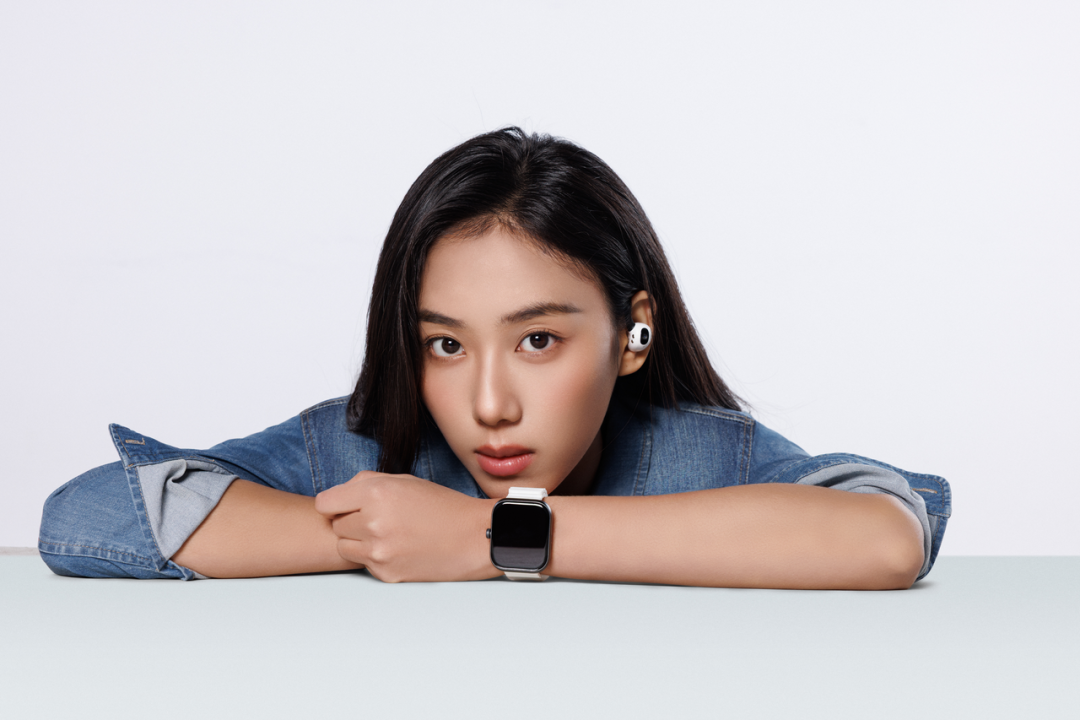
At its core is an AI earbud with visual perception, paired with an AI watch for dual-device, seamless interaction. The charging case packs GPS, 4G eSIM, a fingerprint sensor, and more — enabling standalone connectivity and identity verification.
This AI wearable system points to the central question in AI hardware competition: when large language models understand natural language and agents can execute complex tasks, will the next personal interaction entry point shift from phones to something lighter, more intimate, always responsive?
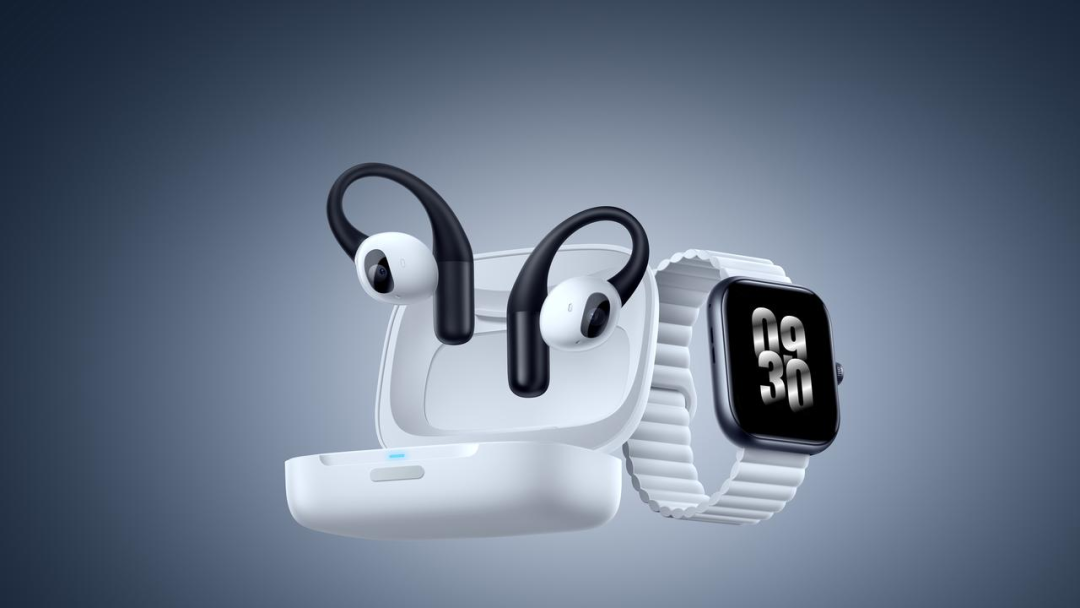
- The device officially launches on May 15
02.
Over the past year, RayGF completed four funding rounds totaling nearly RMB 300 million. Its investors include Lenovo Capital and Incubator Group, Xpeng Motors, Shokz, Goertek, CATL-affiliated entities, and GigaDevice-affiliated entities — signaling this is no ordinary hardware project.
One financial advisor told us that in Q1, many hardware investors were only looking at products cramming cameras into devices. "The battle for AI-era entry points has spilled over from models and apps to 'intimate terminals.' Vision is the most important entry point."
The industry is betting aggressively on the same direction: vision adds modalities to hardware, wearables are considered the right vehicle for visual capabilities, and the last mile for delivering Personal AI. That's why overseas giants are densely deploying in this space.
But why did RayGF choose earbuds first, rather than glasses?
Kangda Chen offers a firm judgment: over a longer time horizon, glasses are an excellent vehicle, but today's AI glasses lack sufficient technical maturity and user experience. Weight is a major problem, and — crucially — many people simply don't want to wear glasses.
Earbuds are different. They're a mature category with seamless wearability, massive volume, and no consumer education needed. Combined with more sensors for additional modalities, they represent the optimal form factor for AI deployment today.
But adding a camera to earbuds presents formidable challenges.
Fitting camera, battery, microphone, speaker, and communications modules into an extremely compact space — while achieving consumer-grade weight and comfort — demands near-extreme integration. Structure, volume, weight, power consumption, battery life, and algorithms all face extraordinarily high requirements.
Apple's rumored visually-aware AirPods, originally slated for H2 2026, have been delayed. OpenAI's first camera-equipped AI earbuds won't arrive before 2027.
03.
Kangda Chen holds a joint PhD from Tsinghua University and UC Berkeley. He was an early member of Xiaomi's automotive team, participating in Xiaomi's car-building journey from zero to one, with responsibilities spanning product, strategy, and supply chain.
His experience building cars at Xiaomi shaped two key insights for AI hardware.
First, the core of consumer products still lies in whether you can adhere to first principles — truly starting from consumer needs, empathizing with and understanding user requirements.
Second, all previously mechanical, offline, single-device hardware deserves to be rethought and rebuilt with AI, becoming intelligent, proactive AI hardware.
And that's still not enough. The large model era demands thinking about functionality from the ground up of human-computer interaction paradigms, then defining sensor combinations and software-hardware form factors based on interaction and function — that's how real competitive advantage forms.
Before RayGF's AI Full-Sense Wearables officially launched, AI Nao sat down with Dr. Kangda Chen for an interview about his thinking on AI-era entry points and AI hardware.

RayGF Co-founder Dr. Kangda Chen
"In Conversation with Kangda Chen"
The New AI Entry Point Lies in Wearables
Natural Language Takes Over Everything
AI Nao First question: Over the past two decades, personal computing entry points have kept shifting — from PC to phone, and now everyone's betting on wearables. Why do you believe the next generation entry point will first emerge at the ear?
Kangda Chen Our fundamental judgment is that today's AI is completely different. This new wave of AI, built on large language models, brings a truly foundational change: the paradigm of human-computer interaction is shifting from graphical interaction to AI multimodal interaction. This will drive changes in hardware form factors, the entire software system, and business models — and the real opportunities emerge from this.
Previously with phones, you'd have a need, mentally break it down into steps, then pull out your phone and tap through step by step. Today, AI can handle the task decomposition and execution — humans only need to express their needs. When humans only need to express needs, the hardware can be made very light, very small, always worn. The phone is no longer the optimal form factor, because it's passive and sits in your pocket. So wearable hardware in the AI era faces an unprecedented, massive opportunity. This is also why overseas giants are densely deploying in this space.
Over a longer time horizon, we categorize future AI wearables into two types: vertical hardware like rings, pendants, and watches that deliver one or two focused functions; and general-purpose hardware that serves as an entry point, carrying and enabling large numbers of functions. In the AI era, these devices need to be closer to the ears and eyes, truly achieving Always-on.
I break Always-on into two layers. First, you can reach it anytime anywhere — when you have a need, without any extra action, you simply speak and it hears and responds. Second, it can reach you anytime anywhere — when someone messages you, AI can immediately tell you the content. Neither layer is achievable with phones, nor with rings, pendants, or watches.
So in the AI era, earbuds and glasses belong to this general-purpose hardware category — better form factors for AI multimodal interaction. Between these two, we initially considered glasses, but the problem is insufficient technical maturity, they're still too heavy, and many people don't want to wear glasses.
Earbuds, meanwhile, are a mature category with seamless wearability, massive volume, and no consumer education needed. Combined with more sensors for additional modalities, they're the superior form factor for AI deployment today.
AI Nao Stuffing a camera into earbuds is harder than into glasses — earbuds are smaller. Why do users need camera-equipped earbuds, and how is the experience better than ordinary AI earbuds?
Kangda Chen Indeed, making AI earbuds with cameras was non-consensus just over a year ago.
Without cameras, we could still make AI earbuds, but with limited modalities, it would be difficult to unleash AI's full capabilities today.
Internally, we've always used an analogy to understand the camera's importance: it's like GPS in early smartphones. At first, people thought GPS was just for navigation, but later many core mobile internet services — ride-hailing, food delivery, bike-sharing, and other LBS and O2O applications — were built on location capabilities.
Today, cameras are the same. They let AI truly "see what you see, hear what you hear."
For example, dining out: five restaurants in front of you. Previously you'd pull out your phone, unlock it, open Dianping, type in each restaurant name, check ratings and reviews, spending ten minutes to decide. Our earbuds tell you quickly: this one leans spicy, that one has higher ratings.
Or shopping for clothes offline: the clerk says this costs RMB 2,000. You glance at it with earbuds on, and AI immediately tells you the same item is RMB 1,200 online, finishes price comparison, and can directly place the order for you. Scanning QR codes is also a hassle today — parking payment, bike-sharing — in the future, simplified to "just look."
The camera's introduction truly achieves online-offline integration, letting natural language take over more real-world actions.
AI Nao
What's the relationship between your AI device and PC/phone? Is it a replacement?
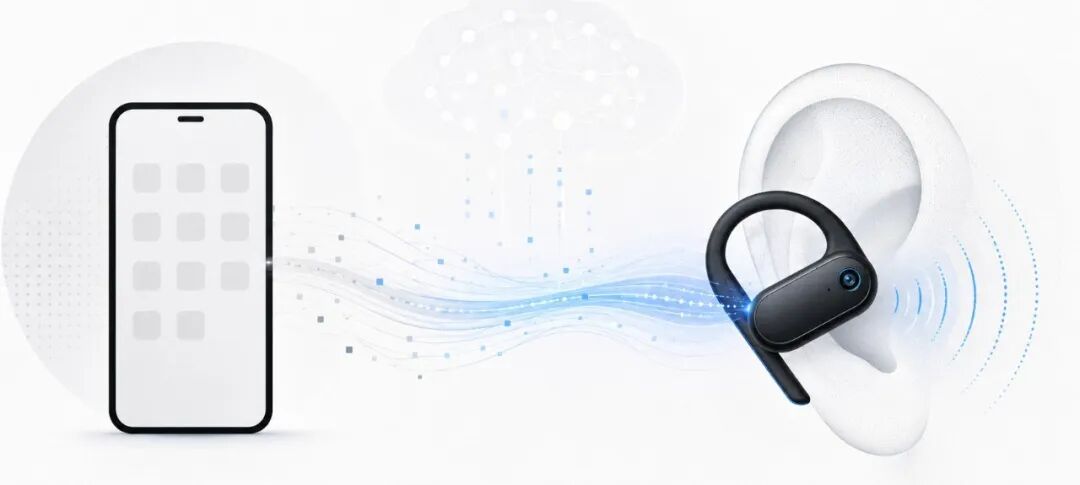
Kangda Chen **We've added GPS, eSIM, fingerprint sensor and other sensors to the earbud case. Users can treat it as a standalone device, completely independent of phone, with standalone connectivity. Take just the earbuds and you can directly dispatch AI to do many things, paired with the AI watch for display, replacing the vast majority of phone usage scenarios.
Looking back at consumer electronics history, in the PC era we did most work on computers. When smartphones emerged, many functions moved to smartphones, while touch and real-time location enabled new functions like ride-hailing, food delivery, and other LBS applications, plus games like Fruit Ninja.
The AI era follows the same logic. AI wearables will pull large numbers of functions and needs out of phones, freeing people from high-frequency, fragmented, tedious tasks. Meanwhile, due to Always-on characteristics, new functions and needs will emerge.
Most things in the future may simply require stating a need, and AI wearables will get it done.
But phones won't be completely replaced, just as phones didn't fully replace laptops — you still return to computers for PowerPoint. In the future, immersive activities needing larger screens — watching videos, gaming — will still return to phones.
AI wearables and phones will form a collaborative relationship, getting many things done without pulling out your phone.
Chinese Companies Have Massive Advantages in AI Hardware
New AI Interaction Requires a New System
AI Nao Apple, OpenAI, and Meta have all announced camera-equipped AI earbuds, yet all have been delayed this year. How did you manage to beat the giants to market? Where's the core moat?
Kangda Chen New tracks mean new opportunities for startups. Going forward, I believe Chinese companies will increasingly lead technological innovation. Our core moat exists at several levels: hardware, software-hardware integration, operating system, and application ecosystem — and the difficulty of this endeavor stems precisely from this.
First, hardware. Today Chinese manufacturers hold absolute advantage. China has the most mature hardware supply chain, the most scalable manufacturing capabilities, the most diligent engineers, and the most extreme execution power — hard for any country to match. For RayGF, on this foundation we also have the industry's most senior hardware team, with exploration on this device leading the industry by at least half a year to a year. Not just visual perception, but a series of AI, software-hardware capabilities, and complex sensors.
Second, software-hardware integration capability, which directly determines foundational experience. Especially after integrating different chips, various sensors, and multiple modalities, while also achieving cross-device linkage and collaboration — this is easily overlooked by entrepreneurs entering AI hardware from the AI field.
Third, AI and operating system. We've built an AI-native OS for multimodal interaction, natively supporting multimodality and designed for AI interaction from the ground up — unlike Android from the graphical era, which relied on graphical interfaces and touch interaction.
Fourth, application ecosystem. Based on our AI OS, many application developers are already building AI-native applications on it, doing direct A2A development integration in various forms. The ecosystem's continuous construction enriches our functions and expands service boundaries.
AI Nao Many peers are curious how you stuffed a camera into earbuds. This is a major engineering challenge.
Kangda Chen The difficulty is indeed tremendous. Integrating camera, battery, communications module, and more in an extremely compact space — while achieving consumer-grade weight and wearing comfort — is highly challenging. Additionally, camera angle, structure, appearance, materials, and light transmittance all affect final experience. We actually tried many solutions and stumbled through many pitfalls.
For example: ordinary phone camera cover lenses are typically flat, but our earbuds are curved. If we used a flat cover lens, it would look unattractive and make people immediately think "there's a camera here" — a strong sense of intrusion. Our current solution makes it curved, blending into the overall appearance as much as possible. The black ear hook also helps blend with hair, making the overall earbud shape look like a suspended water droplet.
But making the camera cover lens curved affects light transmittance and recognition performance, so we spent considerable time on materials, structural parameters, and algorithm tuning. Including how to recombine various components, reconstruct layout, communication links, adjust structure, and ensure imaging and recognition stability across environments — all requiring massive technical breakthroughs and debugging.
The final product weighs only about 2 grams more than ordinary over-ear earbuds, basically imperceptible when worn. And this builds the most important characteristic of AI wearables — extended wearing time.
AI Nao You propose an "AI-native operating system" — why not just add an AI layer on top of existing systems? Why develop a new OS?
Kangda Chen The core issue is that the human-computer interaction paradigm has changed. The old-generation Android and iOS, designed for graphical interaction, are poorly suited for today's AI multimodal interaction. Meanwhile, historically, each generation of OS has been difficult to modify from the previous one. There are massive changes here, and inherent architectures struggle to support this.
We've essentially built a new native OS for AI multimodal interaction. Native means freedom, accuracy, and compute efficiency.
One end connects to people. Interacting with people, continuously learning about them, understanding their needs. This requires a complete set of human-machine systems engineering to guarantee, with many new technical challenges to solve.
The other end connects to various agents. Our view is that we can't do everything ourselves — let professionals do professional things. You can't understand flight booking better than Trip.com Group, or ride-hailing better than DiDi. So what we do is build foundational infrastructure, letting application developers build their own AI applications faster and more efficiently on this basis, while accurately distributing needs to different service agents, doing business flow-to-business flow对接.
Going forward, the AI OS will become an open platform, similar to the App Store, where more developers can build AI-native applications.
Big Pond, Big Fish; Speed First
AI Nao Half-jokingly: Huaqiangbei is eagerly awaiting your launch. Once the product form is validated, knockoff versions will hit shelves in three months at one-third your price.
Kangda Chen We're completely unconcerned about this. As I mentioned, the hardware itself has very high barriers — getting the whole system working isn't easy. Moreover, hardware might someday be caught up to, but in software-hardware integration, operating system, and application ecosystem, ordinary manufacturers will struggle to compete. Software defines hardware; AI and software capabilities determine AI hardware's ceiling.
Historically, earbuds have functioned as phone accessories, capable only of connecting to phones for calls and music. Software-hardware solutions were relatively mature, technical barriers weren't that high, so the market remained highly fragmented.
But going forward, AI will push wearable hardware from a fragmented accessory market toward a more concentrated general-purpose hardware market, with previously unavailable capabilities. Competition shifts from "hardware" to "AI, software-hardware integration, and data" — no longer simple contract manufacturer-level competition.
We judge that the future AI earbud market, including the AI wearable market, may increasingly resemble the phone market, exhibiting a Pareto distribution and gradually forming a head effect.
AI Nao Many users worry about privacy — the earbuds know where you live, where you've gone, what you've seen, essentially a 24/7 surveillance device?
Kangda Chen Future AI is like your assistant — the more it understands you, the more it can do for you. This is the inexorable trend, just like the evolution of payment methods. Of course, we've implemented extremely strict privacy protection.
First, the camera parameters we chose for the earbuds are only 2 megapixels — mainly for object perception and recognition, not recording. It does take photos, but consumers can't see them; after recognizing objects and extracting parameters, the photos are "burn after reading."
Second, we've added a fingerprint sensor to the earbud case — AI functions only activate after fingerprint matching. Otherwise, if someone picks up your earbuds, they function only as ordinary Bluetooth earbuds, unable to summon AI or access any of your data. Concurrently, our voiceprint recognition technology will launch soon.
AI Nao
Apple is now betting on three smart terminals: glasses, AI pendant, and camera-equipped AirPods. Doesn't this suggest the next-generation hardware entry point likely won't be a single entry point but rather an ecosystem of devices?
Kangda Chen Apple is also exploring, but our overall judgment aligns with what you just said. Future wearables will carry massive functions and needs, yet it's hard to cram all functions into a single hardware device. So the future may be distributed: different form factors of edge devices,承担 different functions. In the cloud, the same "brain" understands and remembers human needs, scheduling different devices and services.
But as mentioned earlier, our judgment is that earbuds and glasses have potential as general-purpose devices, carrying more functions, needs, and data.
AI Nao If five years from now, users' first daily contact is no longer phones but various wearables. In this entry point migration process, what do you think startups most need to avoid?
Kangda Chen Mediocrity. In the AI era, big waters yield big fish; we aim to be the most cutting-edge technology company of this era. Not making mediocre products is a conviction. Non-consensus often means opportunity, even if it seems slightly radical early on. Meanwhile, iteration speed must be fast — "focus, reputation, extreme, fast" is never outdated in any entrepreneurial era.
Image Source | Interviewee
Graphic Design | Youmind
Join the Community