The Product Most Like Xiaohongshu in the AI Era: Visual Context, Extreme Distribution, One-Click Life Inspiration — A Conversation with Viba Founder Qianhui Liang on the Next Generation of Consumer Decision-Making

The Arrival of Intentional Consumption

Consumer Gateway | Visual Context | Disruptive Distribution | Extreme Personalization
Produced by | AI Nao

01.
Our thesis: The AI era will inevitably give birth to a new consumer decision gateway, with entirely new distribution methods, interaction models, and commercial value.
Today, AI Nao introduces Viba — the product we believe most closely resembles what Xiaohongshu could become in the AI era.
They recently launched beta testing in North America. Through "one-tap outfit inspiration generation," Viba builds deep user models and leverages "visual context" to grasp user intent. Without any paid promotion, they've achieved 100,000+ daily organic browsing sessions, 53% weekly retention, and 7% product view-to-click conversion.
A concrete Viba use case:
You're planning your outfit for a Saturday night date. Instead of starting with "search for a dress," you begin with a more specific scene-based prompt: How do I want to show up that evening?
Viba won't simply recommend a dress. It already understands this is your first date, you've booked a Spanish restaurant with Baroque decor and warm yellow ambient lighting, you're heading straight from work, and you want to look natural — attractive without trying too hard.
So it generates a complete look tailored to that evening, then places you directly into a photorealistic rendering of the restaurant. You can preview in advance: Will "me that night" be captivating enough?
Many styling fantasies become reality in seconds. "Right now brands accomplish this through KOL placements, and users still have to mentally translate. They see someone else wearing something and imagine how it would look on themselves — that mental substitution has friction. Viba essentially makes it explicit," says Liang Qianhui with conviction. She believes Viba represents a more AI-native path to product discovery. "Few people realize that every outfit choice conceals a person's life plans and deeper intentions."
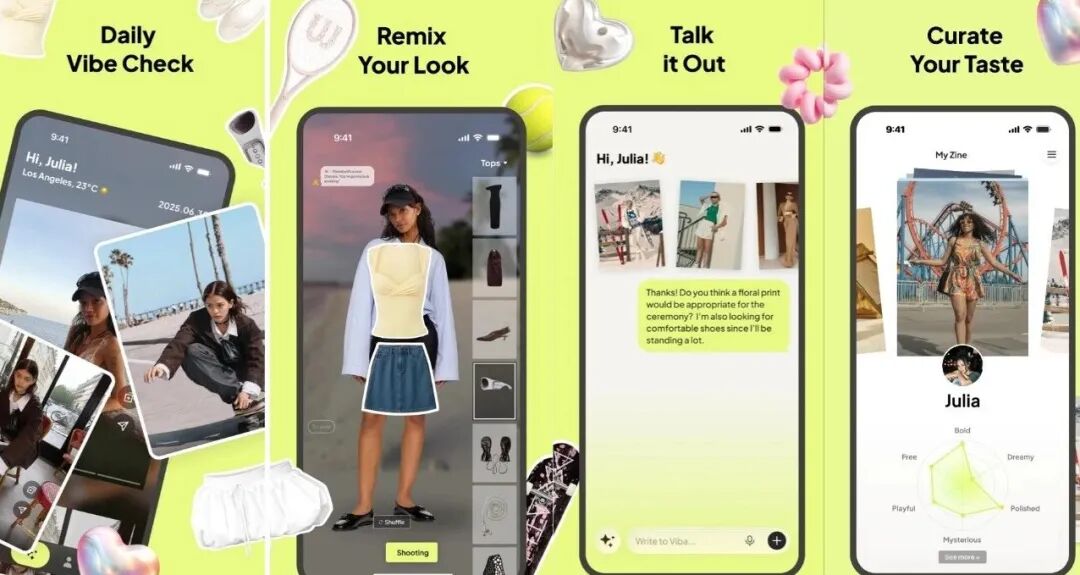
- Partial Viba interface
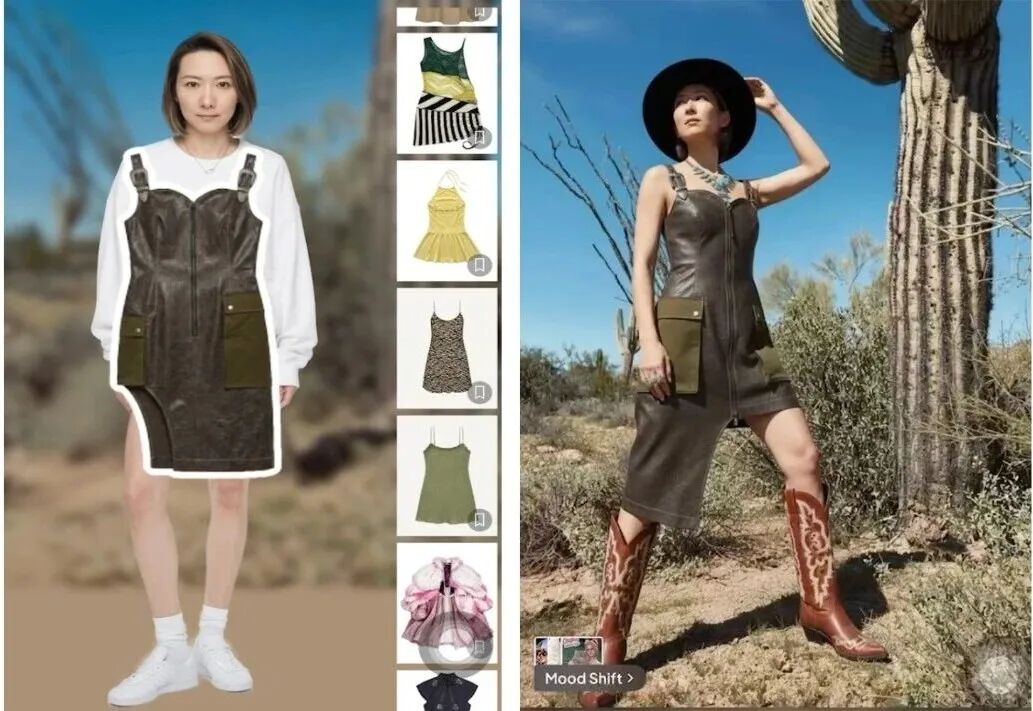
- One-tap inspiration try-on, generating real-world results
02.
Liang Qianhui has developed her own distinctive understanding of "style and lifestyle" — shaped by her unusual background.
She graduated from Tongji University's architecture program, then pursued design and computing at MIT — an interdisciplinary field focused on how visual signals in spatial design can enhance human pleasure. After graduating, she joined Huawei to work on camera and AR projects, again studying how technology could understand space, imagery, and human life scenarios.
"For example, why do Huawei phones capture the moon and flowers better than competitors? There's a core judgment behind it: In this scenario, what visual and emotional elements does the user actually want enhanced? Then from the underlying chip, image processing algorithms, to later AI algorithms, everything aligns to deliver that effect."
This explains why, when she set out to build a next-generation consumer decision gateway, she didn't start from content, traffic, or shelves — but from "visual context" as her foundational lens.
In her view, a simple photograph is a slice of someone's lifestyle. She offers an intriguing analogy: When a person takes a photo, it's much like hunting in primitive societies — the behavior itself encodes signals about "how to live, how to express oneself, what they want to do next."
And a photograph, to her, contains extraordinarily rich detail: garment silhouette, color, material; the user's body shape, ethnicity, physical characteristics; occasion, posture, lighting, emotional filter; whether the overall atmosphere reads as relaxed, sensual, cool, sweet, or distant — all answering one question:
What version of themselves does this person want to present right now? And behind that lies a wealth of signals.
Liang Qianhui is a Gemini, with both rigorous and wildly unconventional sides.
The rigorous side — no one is more obsessed with decoding user intent behind a single photograph, with understanding why certain visual signals in public spaces create greater pleasure. This stems from her architectural training: the habit of thinking from underlying mechanisms.
The unconventional side — she's passionate about extreme sports, like conquering snow-capped mountains. And while "visual context" remains industry non-consensus today, typically applied only in recognition and generation, she is unwavering that this is the next-generation consumer decision gateway.
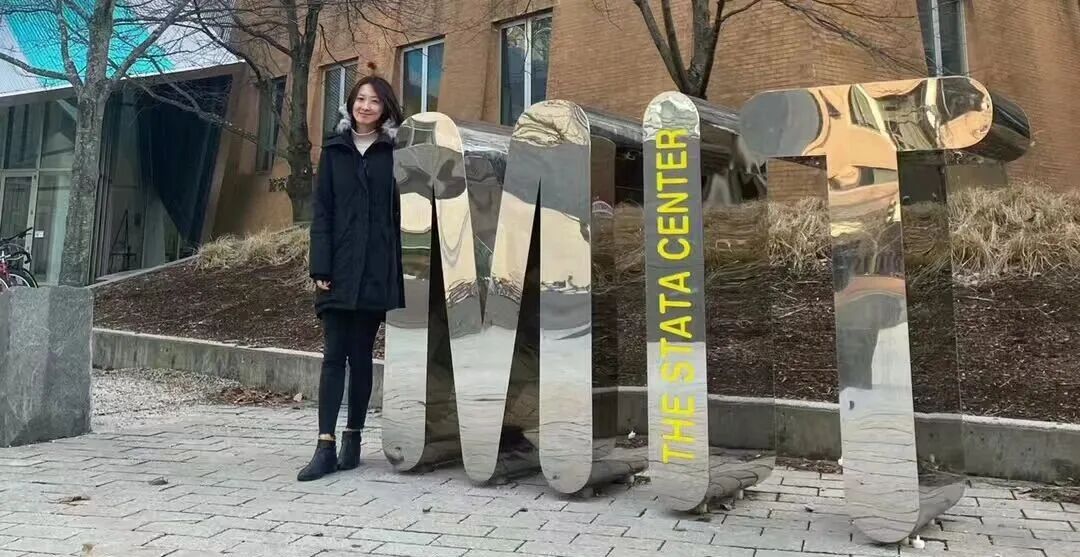
- Liang Qianhui at MIT; coincidentally, Xiaohongshu's first product manager was also an architect
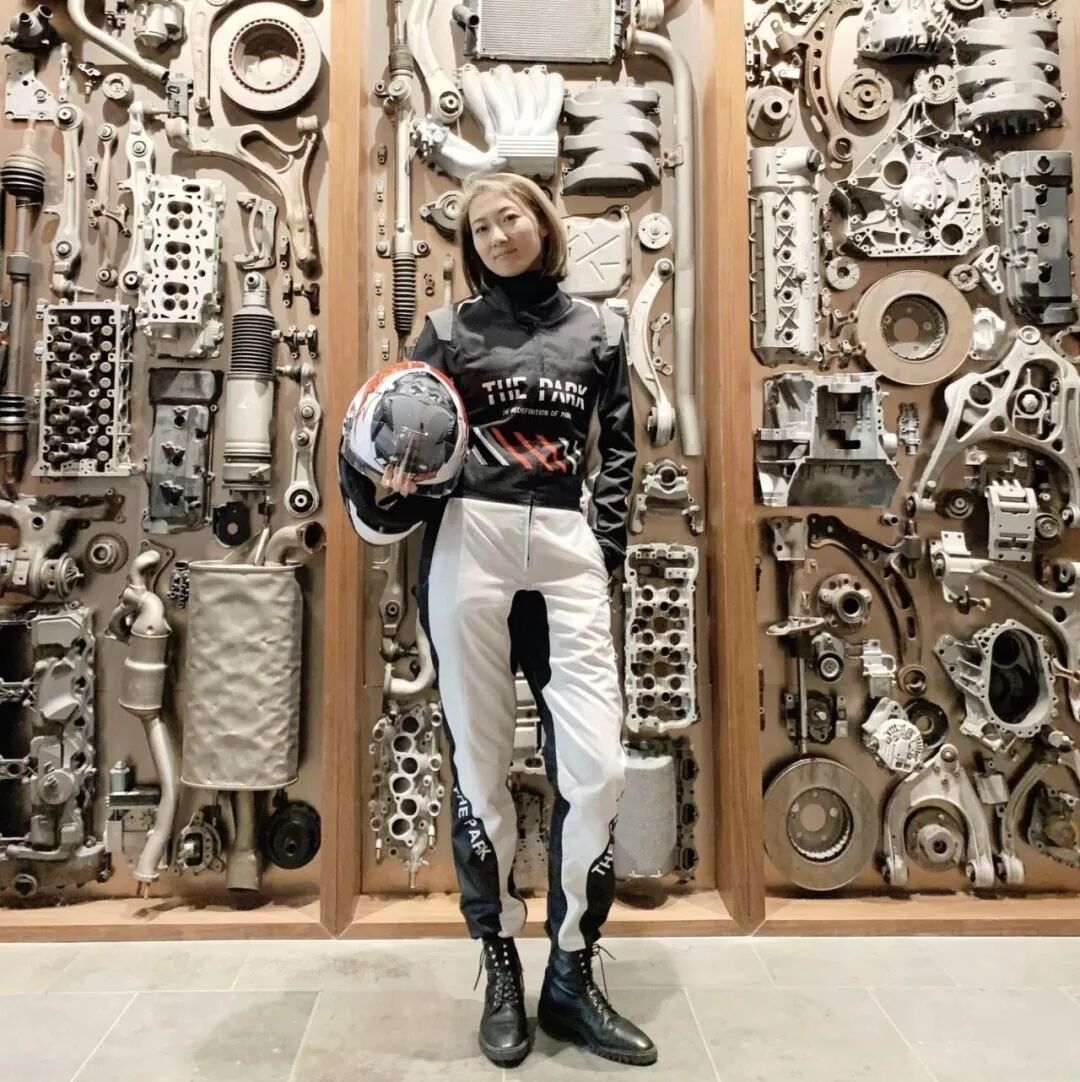
- Liang Qianhui go-karting; she's passionate about sports
03.
Consumer gateways keep evolving.
In the internet era, Taobao and Amazon were valuable because they sat close to transactions. Google and Baidu were valuable because they captured explicit search intent.
Mobile internet pushed "consumer intent" one step earlier. Xiaohongshu, TikTok, Instagram, and Pinterest stimulate users with content before they've even decided what to buy — the so-called "grass-planting" or product discovery phase. These platforms compress content, KOLs, KOCs, community interaction, and purchase decisions together.
Entering the AI era, consumer intent will inevitably advance further, because AI changes the unit of distribution.
Currently Xiaohongshu distributes a post, a video, a creator, a lifestyle — all still content distribution. Viba distributes an AI-generated, scene-embedded person. The unit of distribution becomes the person.
This shift matters: Content is no longer inventory — it becomes interface.
Viba doesn't need to stockpile massive content libraries or obsess over traffic. Its flow is inverted: understand who you are first, then generate content in real-time.
Viba has no inventory. Everything becomes interface.
So the consumer decision gateway will inevitably transform, from "seeing content" that sparks desire to "seeing myself in an upcoming life scenario" that sparks desire — akin to a more personal shopping agent.
Going forward, whoever masters user intent controls distribution.
Liang Qianhui's judgment is more radical: "AI will inevitably compress the consumer chain toward two extremes: on one end, brands, who may even begin on-demand production; on the other end, personalized user intent. Everything in between — KOCs, shopping guides, price comparison, content distribution channels — will be squeezed, even eliminated."
In the future, the moment we're inspired to buy may not be seeing how others live, nor seeing a beautiful product image, but falling in love with an AI-generated version of ourselves.
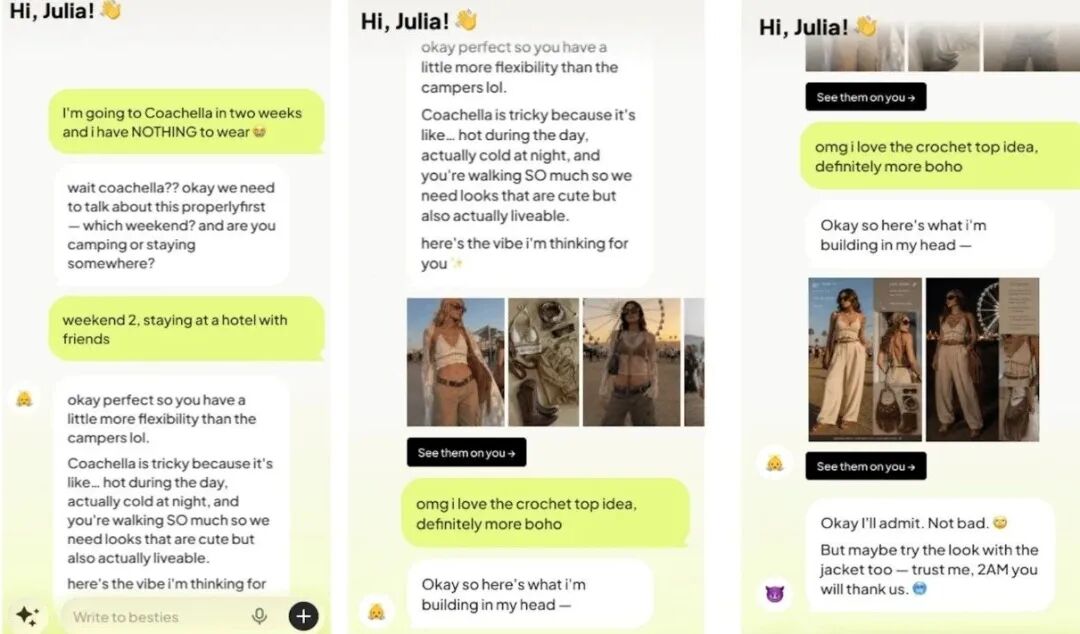
- Future consumption starts from "intent," a concrete scenario
"In Conversation with Liang Qianhui"
Non-intrusive, non-invasive
Building trust before building intent
AI Nao
Describe Viba in one sentence.
Liang Qianhui
An AI bestie who understands your lifestyle.
AI Nao
Why not "AI shopping assistant" or "AI stylist"?
Liang Qianhui
Because Viba isn't a chatbot, not a productivity tool. It offers inspiration and advice for real life. So over a longer time horizon, the most important thing is establishing trust with users first — "bestie" represents a trust relationship.
This is also what I believe is the most important commercial value in the AI era — no longer traffic and attention monetization, but per-user value.
For this we designed an interesting product mechanic called the "red-flag/green-flag bestie." Like when girls shop together. One bestie tells you: "Hey, this looks amazing on you." But another bestie also reminds you: "You already have three outfits like this, don't buy another." A true bestie knows everything about you, gives you advice, but stands beside you first — rather than selling to you.
AI Nao
Xiaohongshu has real people, comments, lived experience. No matter how beautiful AI-generated images are, users might wonder: Is this really right for me, or is this just a brand recommendation?
Liang Qianhui
As an architect by training, I naturally emphasize "flow" in product design. On one hand, functional layout; on the other, people's movement paths through space — translated to product, this becomes the user journey. So in designing this AI bestie, we try to make her intervention unobtrusive, naturally embedded in the user's life flow.
When a user enters Viba, it's just a few simple questions: your interests? Are you a party person, or more into sports? What styles have caught your attention lately?
With basic information, users first receive inspiration recommendations — partly from styles you like, partly trend content for cold start — ensuring the nine inspiration images you generate daily look good and hit your aesthetic.
When users find our taste credible, they'll start actively asking: Can I send you my party details, help me design a dress code? Only then do we proactively ask to understand intent. When users get positive feedback in the real world, they'll send back photos — which signals trust mechanism establishment.
In short: prove value first, then build trust, then embed user context acquisition into natural product mechanics — avoiding any sense of being extracted from or intruded upon.
AI Nao
A person dresses completely differently for seeing friends, seeing colleagues, attending parties, or business occasions. How does Viba understand these intents?
Liang Qianhui
The product currently breaks a person's memory into several layers.
First layer: long-term constants. Ethnicity, body shape, life stage, city.
Second layer: social roles. Student, someone's partner, member of certain communities — a person typically holds 2-3 social roles simultaneously.
Third layer: interests, hobbies, and typical life scenarios. Gallery-going, tennis, etc.
In current North American testing, we've found three high-frequency scenarios: dates, travel, and music festivals. Different scenarios have different interaction designs — for example, when a girl returns from a date, we won't proactively ask how it went (laughs).
Later we'll push daily inspiration each evening, building deeper profiles: what you saved, downloaded, remixed.
When a user is moved by a particular look, we proactively understand the intent behind it: Why do you like this? Where will you wear it? What state do you want to present in that scenario? If a user favorites a blue-and-white dress, we dig deeper: Beach trip, or concert? If the user buys based on our recommendation, wears it, and gets complimented by friends in person — most are willing to send back photos, giving us crucial signals.
AI Nao
What user data do you value most right now?
Liang Qianhui
Current North Star metric: saves of homepage-recommended content or user-remixed content. This represents high-intent consumption assets. Going forward, we'll layer scenario coverage rate on top of this.
Our most active users save 20+ assets weekly. Average weekly saves per user: 13.79%. Peak weekly save rate among active users: 28.52%. Weekly retention: 53%. Product view conversion: 7%.
AI Nao
Why start with the US market rather than China? And within the US, why target Latina and Korean-American users rather than white women and men?
Liang Qianhui
In the AI era, consumer products reaching 100M+ users will be determined by demographic shifts, not single features. Just as Xiaohongshu initially targeted international students — a high-potential consumer demographic emerging from China's economic boom.
We targeted these two groups based on extensive US demographic research. Latinos are the fastest-growing Gen Z demographic, reaching 30%.
They also have extremely strong expressive desire and individual identity — specifically shown through outsized cultural and sports influence. This year's Super Bowl featured numerous Spanish-language artists; K-pop has become an identity signifier.
For product cold start, you want to切入 through specific cultural scenarios rather than building something everyone can use but with no clear demographic anchor.
Let me use a simple analogy: targeting Korean-American and Latino users now is like targeting 500,000 Shanghai women in China — it will inevitably generalize to 2 million Jiangsu-Zhejiang-Shanghai only-daughters (laughs).
Visual Context = Personalized Modeling
Universal Aesthetic Guarantees Floor
AI Nao
Once Viba deeply understands me, how does it recommend outfits that both suit me and surprise me?
Liang Qianhui
70% based on your visual context and interests — things you'd like. 30% exploration, from local signals. If you live in LA, you're likely influenced by the city's cultural atmosphere and trends.
When exploration content is pushed, we focus on in-app interactions: Did you save it? View repeatedly, zoom in? Did you remix or create with it? Then we align exploration preferences.
For example, in March Viba recommended an avocado-green dress to me. I'm normally minimalist — this was a style I'd never touch. But I liked it, bought it, and it photographed well that weekend. Because Viba understood: March in Shanghai means spring, my interest is painting, I spend weekends at galleries — combining Shanghai's current exhibition styles and real venue environments, the recommendation became "surprise."
Viba's most commercially valuable scenario is exactly this: first understand the user's life scenarios and real intent, then recommend styles they'd never think of but that suit them.
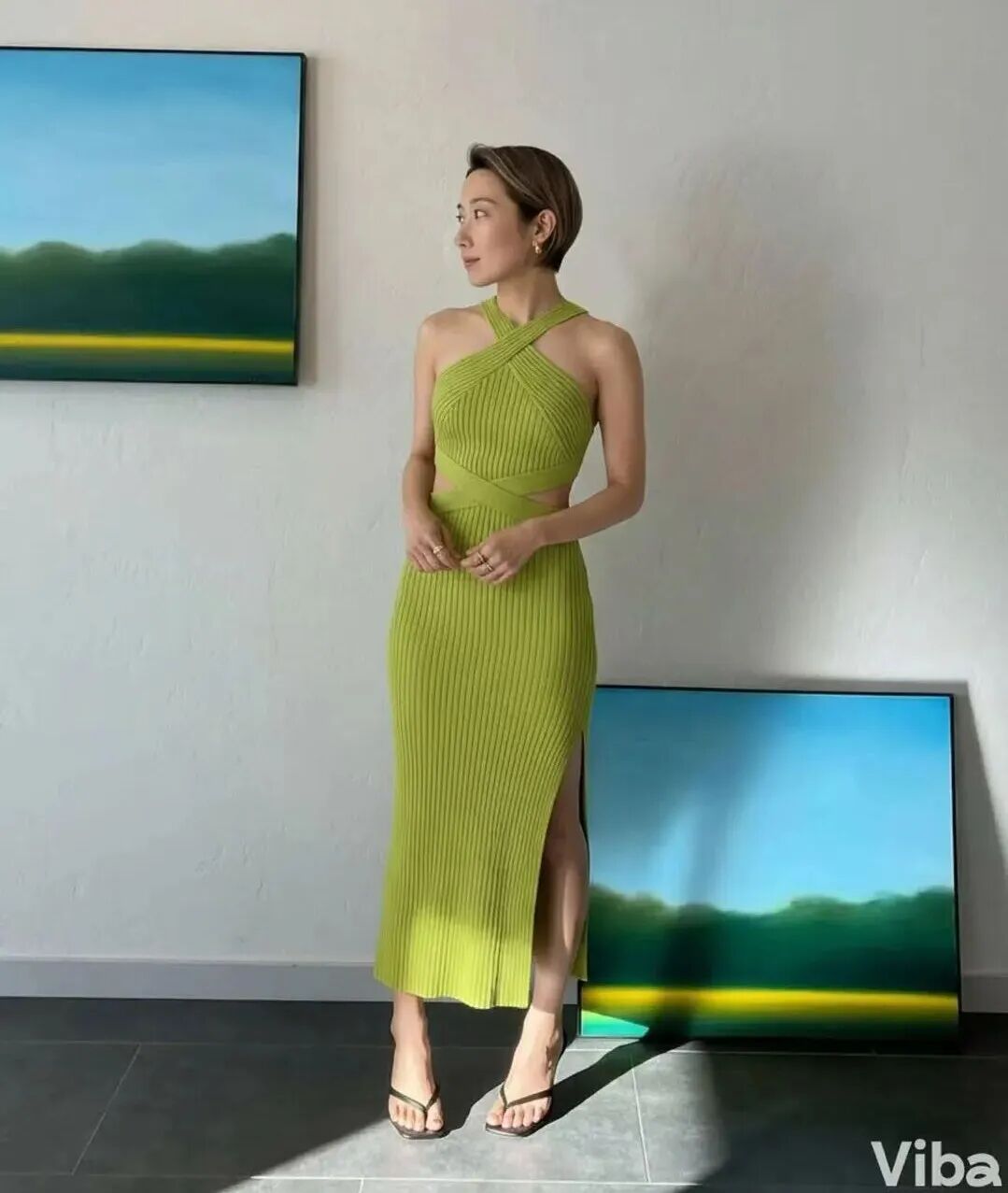
- Viba-generated avocado dress styling for Liang Qianhui, real-environment result
AI Nao
Any "surprise" recommendations that went wrong?
Liang Qianhui
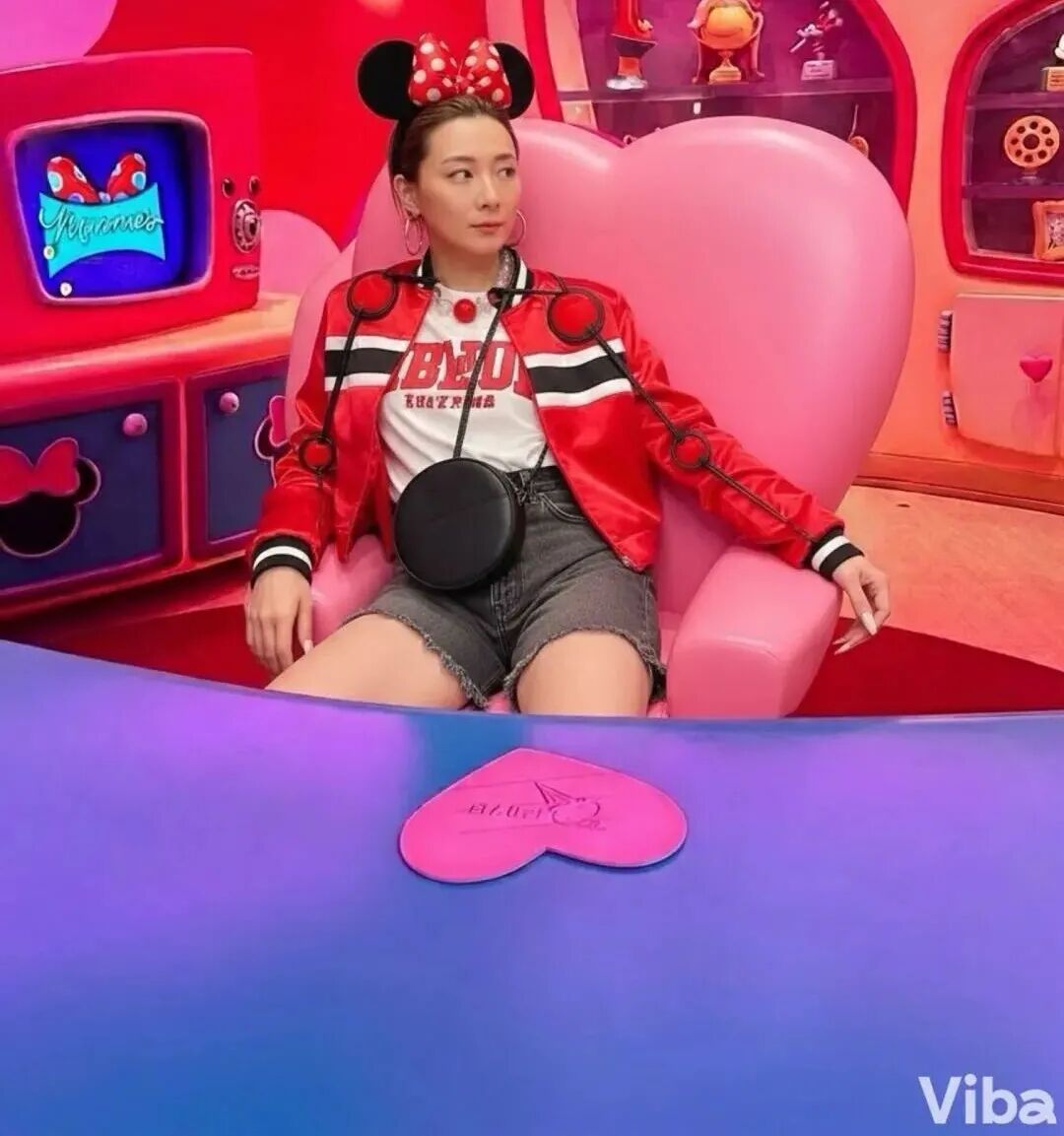
Yes, a recent set was definitely a shock (laughs) — it had me wearing Mickey accessories, very cute style. Terrified me, completely not my style. Viba probably knows my birthday is coming up, so it recommended this joyful, cute Disney style.
AI Nao
If today I want to dress "weird," how would Viba understand that?
Liang Qianhui
Our aesthetic model is a relatively universal, definable "beauty" that guarantees a floor for recommendations. Meaning, whatever "weird" Viba gives you will still be good-looking by general standards.
"Weird" is the personalization part. We build dynamic context around scenarios and the user memory mentioned above — your preferred styles for different activities and occasions, your visual preferences. It's like overlaying your own vector expression on top of a universal aesthetic model.
AI Nao
Explain simply: How is your universal aesthetic model built?
Liang Qianhui
Clothing, color, material, body shape, posture, lighting, scenario, emotion — these seemingly subjective visual elements are all converted by AI into a set of computable numerical coordinates.
These numbers mark positions in a vast aesthetic space: more formal or more casual? More sensual or more relaxed? Think of it as: AI creates an "aesthetic coordinate" for every visual element, and the model judges whether coordinates match — whether this garment and this scenario align with each other.
Extreme Personalized Distribution
AI Nao
Xiaohongshu, TikTok, and Instagram are already consumers' most habitual product discovery platforms. What new value can Viba provide?
Liang Qianhui
Often, people don't actually know what they want. For example, an LA user sees someone their age wearing Alo while running on Santa Monica Beach on TikTok — they do want to buy Alo.
But product discovery has deeper layers.
The first layer: today's discovery content is mostly brand-placed through KOLs, and users still mentally translate. They see someone else, then imagine how the clothing would look on themselves — that substitution has friction.
Viba essentially makes it explicit. Users can directly "check your fit" — see how the same scenario and styling actually looks on themselves. Much more direct.
The deeper layer is my insight into AI-era business models.
Mobile internet platforms' business essence revolves around traffic and attention. Platforms prioritize content rewarded by traffic and algorithm mechanisms — content that may not suit you. Distribution revolves around "content," not "people."
The AI era will inevitably transform distribution and recommendation logic, toward understanding people's lives, aesthetics, identity, and intent — then making finer-grained, more personalized distribution. This is "intent-based consumption."
Viba's commercial value lies here. It will certainly become the most important consumer decision gateway.
AI Nao
What new value can Viba offer brands?
Liang Qianhui
What platforms or channels offer brands is mostly cookies, browsing behavior, or relatively shallow data. But Viba brings deep, scenario-based user intent.
We bring brands a person's more concrete life scenarios, cultural contexts, and emotional motivations.
Take an LA tennis brand. Advertising with us looks like this: User A is a Latino living in Santa Monica, not a "tennis fanatic" — she wants to wear this outfit for a coastal boat party. User B lives in Pasadena, old-money style, wearing the same outfit to the tennis court for dignified socializing. One tennis brand, one product, completely different expressions for different people — and brands can dynamically match with this.
This is why many US brands want to work with us. This June we'll partner with a well-known fashion brand in LA for their new season's unreleased collection and city show.
AI Nao
This brings to mind a vision: If Nike advertises on Viba in the future, it could achieve "one person, thousand faces." I might receive thirty completely different Nike ads starring myself over thirty days.
Liang Qianhui
It will absolutely be like this. Even the same person might see different ads in the morning and afternoon. Advertising will move toward extreme personalization. Brands will no longer just sell a product, but translate the product into each person's desired life state at that moment, embedding it into their real life.
AI Nao
Human-product matching efficiency increases dramatically. Many intermediaries disappear.
Liang Qianhui
Yes, AI will compress the consumer chain toward two extremes: brands producing on demand on one end, platforms deeply understanding users on the other. Everything in between — KOCs, shopping guides, price comparison, content distribution channels — will be gradually weakened.
The core value is definitely deep modeling of a person's life scenarios and lifestyle through visual context.
AI Nao
If the AI era is destined to birth new consumer decision platforms, what data is most core on that platform?
Liang Qianhui
Traffic and DAU definitely won't be valuable. This is why I feel many peers don't understand one thing: AI won't increase demand for attention. Its essence is just cost reduction. Existing large platforms can reduce costs too — this isn't an opportunity for startups.
Human finiteness will be extremely valuable.
We need to deeply understand that each person has only 24 hours a day, limited social energy, limited opportunities to explore, experience, and build relationships in the real world, and a limited wallet.
So the future isn't about keeping users on screen to consume more content — this is why we don't want to be a "kill time" product, nor be misunderstood as a "content interaction" product. Viba hopes to help people make better choices by understanding their limited time, limited social scenarios, and limited consumption opportunities.
Therefore, at this stage only two things matter: first, building sufficient trust with users through styling; second, continuously modeling and understanding user intent through visual context.
After that, all commercial value will emerge naturally.
Image sources | Interviewee
Join Our Community