"Five Poisons in One," Using AI to Stoke Fights: He Says, Flaming Each Other Is Gen Alpha's New Social Entry Point | A Conversation with Cao Tong, Founder of Splat

Twenty Years of the Internet, and the Demand Still Waiting to Be Unlocked
Produced by | AI NOW!
01
At first glance, Splat comes across as an AI social product that feels "a little insane" in every respect. But once you've tried it, you can't help but recommend it to friends.
It's a social platform built on AI where "mutual roasting" serves as the connection point. While internet communities grow ever cleaner and more polished, Splat positions itself at the entrance to expressive chaos — letting users come here to argue to their heart's content, vent emotions, and deconstruct virtual warfare through entertainment.
The product is called Splat.
On Splat, users pick sides, form factions, enter roast rooms, and complete a "roasting game" with rhythm, matchmaking mechanics, and a reward-punishment system.
Here's how it works:
The home feed shows intensely polarizing topics: Mini World vs. Minecraft, Roblox vs. Minecraft, Messi fans vs. Ronaldo fans, "I'm a Curry fan — LeBron stans come at me," and so on...
Tap to enter, and the system assigns you to Team A or B, or you can choose yourself.
Each roast room is a time-limited emotional arena where you can speak, clap back, like, and team up.
Volume doesn't count for much — you score high by "landing the roast." AI judges whether your expression is high-quality: whether it hits the mark, whether it's sarcastic, whether it drives the momentum.
Sometimes your opponent is AI, because the platform has deployed hundreds of agents mixed among users to stir conflict, add fuel, and intensify the confrontational atmosphere.
During its beta, some users became so engrossed they'd join different topics and average over 100 roasts per day. Others would friend their opponents afterward, simply out of respect for their roasting skill — their ability to hit where it hurts most. Still others preferred spectating, watching people argue for up to 50 minutes straight.
Splat is home for keyboard warriors. On other platforms, insults get you banned. On Splat, insults earn you rewards. It channels the need to roast through an entertainment lens.
Splat's founder is Cao Tong, a '98-born graduate of Renmin University's business school. A serial entrepreneur and obsessive social product experimenter. He regularly challenges himself to spend only five yuan per week. A flip-flops enthusiast. He describes himself as a thoroughly "addicted internet youth" who spends over five hours daily on Douyin (he requested I add: definitely legitimate websites, nothing involving porn, gambling, or drugs). He often worries he's running out of interesting books to read; his latest physical purchase was the complete Ultraman collection.
He once quipped that war is an instinctive need in human development, and mutual roasting is precisely a daily manifestation of "low-intensity warfare." "Homo sapiens prevailed in natural competition thanks to two main traits: a passion for war and a love of socializing."
Splat combines "war" and socializing, aiming to build a next-generation social platform that replaces Snapchat. "We're building a social product for Generation Alpha."
-
Cao Tong taking selfies at a shared workspace near Tsinghua University when bored
-
Cao Tong started his first business at Renmin University's business school. He says he was still thin back then, somewhat handsome — this photo doesn't do his looks justice
-
June 2024: Splat's core team meets offline for the first time. From left: Cao Tong (half his face), Atom (CTO), Q (full-stack engineer), and Wanlin (UI), freshly back from Italy
02
Cao Tong began entrepreneurship in college — or more precisely, started buying and reselling bottled water in elementary school. His first project was a campus unmanned retail venture that raised millions in angel funding. In his junior year, witnessing an NBA fan argument left him profoundly shaken, leading him to discover a truth the internet had overlooked for two decades: "People build connections through clashing viewpoints far faster than through deliberate socializing. Whether it's celebrity fan wars or sports fan banter, these seemingly chaotic collisions are actually the shortest path for young people to construct identity."
Soon he built a product called "Shotgun." Lacking any technical background, he got burned by an outsourcing firm for 800,000 yuan, cycled through three teams in three years, then due to external circumstances, laid everyone off and shut down — losing 10 million yuan in total.
These "beatings" taught Cao Tong three lessons:
- The fastest way to validate demand for a consumer product is paid acquisition. If ads can't bring users or the cost is too high, the product-market fit isn't there. Don't deceive yourself — kill it quickly;
- What users think, what they say, and what they do are three different things. User research is unnecessary. Launch fast, let users in, and observe their behavior and data — that's the best user research;
- Don't hire employees unless absolutely necessary, because he didn't want to find himself another "daddy."
Splat, his latest launch, marks Cao Tong's third venture — still a "roasting" product. He believes that across twenty years of the internet, one need remains under-served: arguing. "Why not confront this suppressed desire for expression?" Those who don't understand him, he doesn't bother explaining to. "Roasting is absolutely the cornerstone of the next generation of social networks."
- Splat product demo video
AI NOW! recently met Cao Tong. He arrived 14 minutes late that day, having gone to the wrong location. An ENTP, he's logically self-consistent with an unorthodox yet remarkably complete worldview. This marks his first external telling of this AI-reconstructed social "roasting" product.
Conversation with Cao Tong
Part 01
Behind the Roasting
Lie Three Core AI Capabilities
AI NOW!: Splat continues the roasting logic of your previous social products — the main change being the addition of AI?
Cao Tong: Our previous products had three structural problems.
The first was fatal — matchmaking success rate was too low. Play Honor of Kings and fail to queue a few times, you'll want to quit. Our average matchmaking success was only 18%. In social, that's basically a death sentence. Splat now introduces agents, with the goal of having them use our product like real humans. Not NPCs with a few lines of dialogue, but digital personalities that can observe, choose, roast, and retreat. When I drop 200 agents in, users definitely get more fired up — retention is clearly climbing. When someone's willing to start roasting, their emotions are already intense. What the agent needs to do is detonate that emotion and form a social field.
The second was rampant cheating. Some Shotgun users would copy-paste frantically, use plugins to inflate word count, employ third-party input methods. We tried rule-based detection, but people always found workarounds. Anti-cheat is crucial for games — H1Z1's decline was partly due to failing at this. Yet heavy user cheating is also a positive signal: it shows they genuinely care about the product, genuinely want to win. Boring products don't inspire cheating efforts. Now Splat uses AI to identify cheating behavior. We feed AI effective roast messages and users' past cheating messages, letting AI distinguish cheating. The core goal: let users roast properly, filtering out invalid messages.
The third was content quality judgment. Previously we scored by word count, by likes — but these metrics can't judge whether someone roasted well. Someone might be shattered by a single meme, more than by 800 words of gibberish. We want AI to recognize high-quality roasting, assigning higher scores to higher-quality messages.
AI NOW!: How does AI identify high-quality roasting?
Cao Tong: Two dimensions. First, emotional detection — identifying whether it genuinely provokes response. Second, structural recognition — based on context, whether there's sarcasm, whether there's memes, whether it's interesting. Splat encourages roasting well, not roasting randomly, especially no slurs.
AI NOW!: Many communities use agents. How are your roasting agents trained? Are they just flow bots, or do they have personas?
Cao Tong: Both. I've scraped roasting data from global social platforms and found that regardless of country, roasting behavior is highly uniform and similar. Also, roasting is far more complex than imagined. Some people like watching from the sidelines, some fire one shot then hide, some flip-flop, some love infiltrating enemy camps as moles. We need agents with "personality models" for roasting.
They can't follow scripts. They must decide how and what to contribute based on topic heat, enemy-to-ally ratios, speaking rhythm — and dynamically adjust attack intensity and style based on user reactions. Beyond recognition and simulation, we're also experimenting with having agents provoke emotions — for instance, when the momentum's off, actively raising topics to ignite the battlefield.
Of course, we prominently mark "this is AI." We don't deceive users. Because I believe social products fundamentally exist to facilitate relationship formation between people.
AI NOW!: Which foundation models are you using?
Cao Tong: A mix — whichever is cheapest (laughs). Qwen, GPT have both been used. Haven't used DeepSeek; feels like it speaks too cultured, doesn't fit our product scenario.
AI NOW!: It seems your product could run without AI?
Cao Tong: AI is a flywheel for us, not a selling point.
AI solved the three core problems I mentioned — improving matchmaking success and shortening wait times, anti-cheat, identifying and filtering high-quality roast messages.
The hardest part of building products is getting users to adopt at scale. Tesla's first generation had many flaws, but selling it created the opportunity for rapid iteration.
For social products, the hardest part isn't how to stuff in AI — it's finding users' most fundamental needs, making them willing to waste time in your product, willing to stay. Simple, fun, not boring — that's the first lifeline of social products, not obsessing over how to use AI. We serve users, not AI and practitioners who get high on AI for its own sake.
AI NOW!: Has anyone questioned whether you're riding the AI hype wave — that the product isn't actually AI-native?
Cao Tong: Our AI weight is very high; I'm just downplaying it. The three problems I discussed all require AI to solve, and solving them has brought massive product gains.
I actually particularly despise entrepreneurs who "reach for AI whenever uncertain." They haven't even figured out what they want to do, yet start drawing AI pies. Someone like me with very specific problems requiring AI solutions — that's a real AI product. Just because it's too specific and sounds less sexy doesn't make it less AI.
In the AI era, I'm forever against carrying a hammer looking for nails.
Part 02
Roasting
Is Gen Z's Most Authentic Social Entry Point
AI NOW!: You've said 90% of Gen Z will use Splat in the future. Why do you believe "roasting" will become the new generation's social entry point?
Cao Tong: Wang Xiaobo said life is a process of slowly getting beaten. Adults, after being beaten, go numb — they don't care who they are or how the world is. But teenagers still have intense impulses to connect with the world.
Our typical user scenario: a 17-18-year-old (a Kobe fan) wandering the internet, suddenly sees someone say "I'm a LeBron fan, Kobe fans are all XX, come fight me on Splat" — they'll definitely come immediately, and drag friends along. Team up, roast each other, then after the fight, laugh it off and friend each other for private chats.
The underlying need for roasting is the hard demand for self-identity and group identity. Because most people lack high-quality expressive abilities — they can't gain feedback and identity through high-quality output. Instead, taking sides and roasting is the lowest-barrier, most universally accessible way for most people to find identity. This is also the fundamental reason why interest-based position conflicts have persisted since the internet's birth.
AI NOW!: Encouraging ordinary people to roast sounds "politically incorrect"?
Cao Tong: Maintain compassion, truly stand in equality and respect when looking at users, and you'll reach my conclusion above. I deeply dislike those who stand on high horses, constantly applying their narrow moral standards to judge others.
Fundamentally, the need for mutual roasting is completely legitimate. Having seen the vast world, yet pitying the grass and trees. Consumer products must especially get their relationship with users right.
Young people today don't need "socializing" — they want to construct personas. Splat uses roasting to define boundaries, confrontation to build selfhood, labels to recognize each other.
AI NOW!: You've made similar social products before — do you have any validation for this "roasting need"?
Cao Tong: This is the fun part. If we went to the street and randomly asked someone, "There's a roasting app for internet people, would you use it?" They'd definitely say, "Isn't insulting people kind of bad?" But they might register for Splat right after — appearing serene on other platforms, but roasting most fiercely on Splat.
What people think, what they say, and what they actually do are three different things. When validating in the domestic market previously, I ran off-platform ads with very high ROI — 1,000 impressions generated 2,000 comments. I knew then that roasting is a hard need with exceptionally high interaction intensity. The users we eventually acquired had a 60:40 male-female ratio — not the male-dominated roasting stereotype people imagine.
From a social development perspective, this is simply how humans operate: organizing around some banner to confront collectively. In the past it was bloodline, religion, class; now it's hobbies and interests. I'm just turning this need into an online virtual game. After venting, there's less dissatisfaction in real life.
- During domestic market validation, users spontaneously created "Minecraft vs. Mini World" roasting videos
AI NOW!: Weibo, Zhihu, Xiaohongshu also have arguments. Why would users download your product specifically to roast?
Cao Tong: Those platforms are houses without toilets. People argue and shit inside, and it stinks up others. We're equivalent to building a luxury mansion with deluxe toilets — however you argue, it won't stink up others, emotions get acknowledged, and after venting you can even friend each other.
To summarize: we're doing harmless processing of roasting behavior.
AI NOW!: How do you control the boundaries of roasting? What if two people on Splat get so heated they arrange to fight offline?
Cao Tong: Why control it? Based on my experience, offline fights simply won't happen. All the grievances get released in the roasting topics, so there's actually little emotion left in real life.
Splat is a hippie-ish thing. The world can't withstand deconstruction. Roasting online daily, dissatisfaction gets deconstructed into games and can never stay serious again.
AI NOW!: How do you avoid content risks?
Cao Tong: I don't believe I face more content risk than others. I'm channeling public emotions through gamification. And I only do broad interest topics — games, sports, etc. Other topics I don't touch.
Part 03
Wasting Time
Is the Highest Form of Creation in My Ideal
AI NOW!: Is Splat your values?
Cao Tong: My first value is nothing is taboo — as long as it doesn't harm others, needs should be met. The underlying need for roasting is the need for individual and group identity, a process for users to better know themselves and build stronger connections with the world.
My other value is "better to channel than to block." In the sexually repressed era, there were more perverts. When many things now seen as strange become as natural as eating, there will inevitably be less harm. Or take gaming addicts — they're definitely people long suppressed by parents. I loved games growing up too, but I never got addicted because no one controlled me. When it was time to study, I'd immediately put games down and study. Many parents locking up phones — unnecessary. Society needs to channel rather than block.
AI NOW!: Do you yourself love arguing online?
Cao Tong: No. I never got angry since childhood. But to build Splat, I'm immersed in it roasting people daily. I've also become good friends with many users through virtual identities in roasting. Lots of people roast me, beat my avatar black and blue, make my memes and spread them around — I'm genuinely happy.
My dad often teases me that I'm still mooching off parents at my age. I don't get angry either. I say yes, Liu Bang's father said the same about him back in the day.
AI NOW!: What's the most challenged question you face now?
Cao Tong: The product's values.
Most investors have elite mindsets and don't understand roasting is a massive need. I've been immersed in this product for so long, roasting with users daily — no one understands roasting better than me. Roasting is one of humanity's most essential needs.
The problem of this era isn't too much roasting — it's lack of channels.
I hate viewing the world through an elite lens. That's crushing human nature. Yiming Zhang previously called himself a "moral top scholar" — I don't think it's necessary. Neihan Duanzi was pretty good, I loved watching it, started in eighth grade.
So-called "political correctness" is actually using uniform values to suppress human diversity and complexity.
AI NOW!: Large numbers of users roasting and bickering on Splat is essentially wasting time. Is this the future you want to build?
Cao Tong: I really want to ask: in this world, are there more people who need to save time? Or more who need to waste time?
They always say technology can help humans save time. But what do people do with saved time? It still gets wasted.
Much of human development emerges from waste. The reason I built Splat is that huge portions of my life have been wasted, so I understand most users' anti-efficiency tendencies. The social entertainment industry itself has nothing to do with efficiency, elite-ness, or such words. It's inherently for users to kill time.
I'm the typical time-waster. The day before my college entrance exam, I was still at internet cafes playing League of Legends.
AI NOW!: Do you still waste time daily after becoming an entrepreneur?
Cao Tong: More at peace with it now. Scrolling Douyin is my work now. Douyin is my world classic literature.
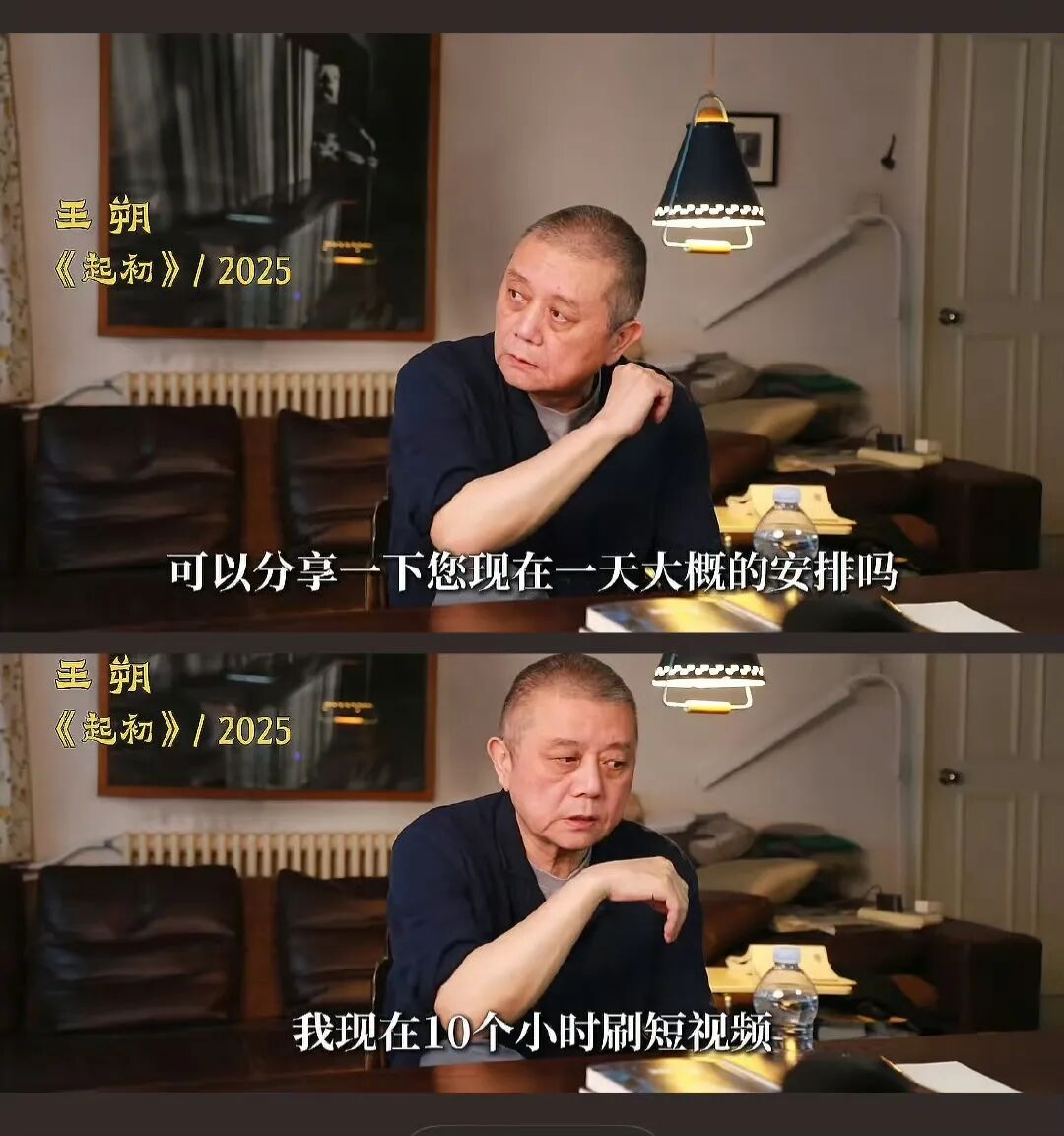
AI NOW!: Building a next-generation social product, what do you think is the most important metric?
Cao Tong: Long-term retention. Social products ultimately come down to long-term retention, and long-term retention ultimately comes down to relationship chains.
On traditional social platforms, it takes 10 actions to make a friend. On Splat, through roasting, three actions find you a friend. Why is Snapchat brilliant? On the surface it's the ephemeral messaging feature, but actually it simulates whispering, passing notes. Face-to-face, 10 sentences and strangers remain strangers. But passing three notes in class — same nonsense content, but the relationship changes.
Roasting is also a great icebreaking scenario — currently the highest-efficiency method I know for precipitating relationship chains.

• Biggest AI shock in 2025?
Cao Tong: Tesla's humanoid robot latest progress and FSD progress. Very close to the point of fully replacing humans.
• In this wave of AI entrepreneurship, what's overvalued and what's undervalued?
Cao Tong: Overvalued are efficiency tools. People pursuing efficiency in this world are maybe 1%. A thousand tools serving 1% of the market — who serves the remaining 99%? Human laziness is beyond imagination. We're all overestimating our own diligence.
Undervalued are definitely consumer products, especially entertainment products for wasting time.
• Entrepreneur who's influenced you most?
Cao Tong: Elon Musk. Taking so many beatings and still standing.
A couple days ago eating at McDonald's, Tesla stock happened to be down. Some people at the next table were roasting Musk — why does he always put himself in those situations, a gentleman doesn't stand under a crumbling wall, etc. I couldn't be bothered to argue. These people will never understand Musk. If you want to exert major influence on the world, don't worry about getting your feet dirty. If losing $1 trillion could make the world closer to Musk's dream, he'd do it without hesitation.
I'm the same kind of person. Since starting my business in college, I've never thought about GPA, making money, what if I fail? To this day, I've never taken a salary. At my hardest times, I put my crypto earnings into the project. My current office is a free shared space. Every noon I check if other companies have leftover boxed lunches — I take them.
When you truly want to do something, you don't weigh pros and cons. Put another way, if the world were steered by people who always weigh pros and cons and make the most rational decisions, it would never progress.
• Finally, recommend three favorite books?
Cao Tong: My favorite writer is Wang Xiaobo — recommend his The Silver Age; second is Zizhi Tongjian (Comprehensive Mirror for Aid in Government), looking back at Chinese history to know what's dross; third is The Story of the Romans, very readable. Readable is crucial for me.
Image sources | Provided by interview subject, Unsplash