AI Matchmaker: A Conversation with Zeng Xinxun, Founder of Liangpei, on AI-Powered Dating

Former Moonshot AI Search Tech Lead's Dimensionality-Reduction Overhaul of Dating Matchmaking

Dating|AI Search|1V1 Lock|Context Matching
Produced by | AI Nao
The Awful Blind Dates
Zeng Xinxun is a man who treats finding a partner as his top KPI.
That year, he was 25, fresh out of college, working at WeChat. On his first day, he ranked his annual performance goals: finding a girlfriend first, work second. "I wasn't in a rush to get married — I just felt it would be too much of a waste to have no one to share my youth with."
His approach as a science major was to exhaust every possible path: posting on the company friendship forum, signing up for every social event he could find — hiking, badminton, ultimate frisbee, murder mystery games. He also registered on dating apps, carefully writing a 2,000-word self-introduction. "I wrote about my personality, family, experiences, future, plans," he figured the more details he provided, the better he could pre-screen for people who'd actually be interested, avoiding mismatched expectations.
A year passed. He met over a dozen women in person. None worked out. The cycle repeated: mustering courage — anticipation — exhaustion — disappointment. "I spent enormous amounts of time, money, and emotional energy." Zeng felt desperate. He was convinced this was a feeling every dating app user knew. He even saw a therapist. "Is there something wrong with me?" His friends suggested making his profile shorter, posting fewer text-heavy updates on Moments, showing off travel and fitness photos instead. "Best to flaunt that WeChat employee badge."
"Matches that come from that are too superficial." Disheartened, he uninstalled the dating apps. His year-end work review was the lowest he'd ever received.
That New Year's Eve, on a whim to try once more, he reinstalled a dating app he'd used before. He found a private message from months ago. Clicking to her profile, he saw she had also written a 1,000-word introduction.
He messaged her. The two of them never put down their phones again.
January 4 — he remembers the date clearly. He traveled from Shenzhen to Guangzhou. She picked him up at the high-speed rail station. They had lunch, still not ready to part, went to walk in a park, reached the lakeside, and he summoned his courage: "How about we try dating?"
Today, that girl is Zeng's wife. They married in 2024. Their daughter is 15 months old.
This is of course an urban love legend. Zeng credits it to both sides' serious and intense desire for intimacy, plus extraordinary luck.
One detail is worth noting: the two of them shouldn't have been matchable by the system at all — she required someone born in 1992 or earlier with a master's degree. Zeng was born in 1994 with only a bachelor's. He later asked his wife why she messaged him first. She said she was moved by his 2,000-word self-introduction.
"So objective conditions aren't that important. Knowing what kind of person you're looking for matters more." The awful experience got Zeng thinking: young people's social circles are limited, especially in big cities, yet all the serious dating products on the market failed to deliver good experiences or efficient matching.
Some matchmaking sites devolved into offline matchmakers: "Charge 20,000 yuan, set you up with five people, no refunds regardless of success, with maybe a 1% success rate." Other dating apps emphasized external conditions — swipe left, swipe right, keeping each other as backup options. Still others provided limited user input, leaving most of the work to individual effort.
Poor trust, low efficiency, muddled needs — these problems were exactly the opportunity for Liangpei.

- Zeng Xinxun's family of three
Dating Seriously
Zeng's career path is remarkably straightforward: first job doing search at WeChat, then TikTok, and in 2024 joining Moonshot AI (Kimi) as technical lead for AI search.
He believes finding a partner with AI and using AI search are technically the same at their core — both analyze what needs matching, analyze requirements, then make the match.
Zeng remembers when he was leading search at Kimi, Zhilin Yang's requirement was that results must have "taste." When a user searched for vacation destinations, traditional search would surface highly upvoted marketing content. Kimi's search could personalize recommendations based on the user's specific needs, even if the recommended content wasn't the most upvoted.
This is also where "AI intelligence" surpasses the "recommendation paradigm," which is why he believes the AI era will inevitably produce a new generation of dating matching products.
Tantan' s left-right swipes, Tinder's ELO scoring — these essentially fit your intuitive judgment. What they push to you are people you'd like at first glance. But first impressions don't mean two people are actually compatible. AI starts from more comprehensive needs — personalized recommendations based on both parties' complete context.
But how do you get users to leave more context? Having everyone write 2,000 words like Zeng did isn't realistic — there are both willingness and ability barriers.
Liangpei's approach was to invest heavily in purchasing traditional matchmakers' offline conversation recordings, then design the Liangpei AI Matchmaker — users only need to talk with the matchmaker for 20-30 minutes to complete their context.
Before launch, everyone worried users wouldn't have that much patience. But after going live, 82% of first-batch users completed the process, averaging 30.3 rounds of conversation with the AI. Ultimately, user profiles on the platform averaged 463 words — more than four times traditional dating products.
One user feedback: because it was AI voice, there was no pressure of facing a real person, making it easier to speak freely. Instead, it helped them sort out their own partner requirements more clearly.
When two people just meet, there are many practical questions too awkward to ask directly — housing, dowry expectations, views on childbearing. Liangpei has an "AI avatar" that can ask the other person's AI avatar. Ask anonymously, the avatar answers truthfully. If the avatar can't answer, it asks the real person rather than making something up.
Zeng believes AI avatars are best suited for serious scenarios like dating and recruiting. For non-serious scenarios like casual socializing, "you need diversity and fun, which would allow hallucinations and make answers lose credibility. Once the novelty wears off, people stop playing."
The most controversial design in Liangpei's product mechanics is called 1V1 Lock — after two people like each other, they can no longer view other users, but can actively unlock.
Liangpei's angel investor Kathy Xu didn't understand this feature at all. She said as an investor she always had to look at many projects simultaneously to compare — that's human nature.
Zeng believes that's because Xu has never used dating apps. She's applying investment market logic to the dating market, but the two markets have completely different incentive structures.
In investing, the two parties are unequal — the investor has complete decision-making power. In dating, both parties are equal. If everyone wants to keep looking, the result is mutual backup options, divided attention. People who were actually suitable miss out due to insufficient investment.
The 1V1 Lock essentially uses platform mechanics to reduce suspicion and increase confidence in commitment. For building intimate relationships, this is especially important.
During testing, roughly 40% of 1V1 matches were activated — meaning half of those who locked chose not to unlock.
Liangpei also has an "AI Dating Coach," another pain point from Zeng's own dating experience.
During the mutual暧昧试探 period, it helps analyze the other person's interest and where you could converse better. Zeng saw one guy ask the coach "Based on the chat history, does she like me?" — and coincidentally, the girl was asking the exact same question. "We need to add an Easter egg immediately — if both sides ask the same question, unlock a 'surprise.'"
But the AI Dating Coach won't directly reply to messages for users. "Dating still needs to be done by humans. Without restrictions, both sides would have coaches messaging each other, and things would go completely wrong."
Compared to traditional apps, at minimum Liangpei raises the floor of matches. "Of ten recommended people, we can't guarantee they're all suitable, but you won't feel disappointed, weird, or disgusted when you meet."

The Chosen One
Zeng Xinxun is someone with extremely strong goal orientation — once he sets a target, he'll do whatever it takes to achieve it. In his second year of high school, seeing the news on CCTV that Southern University of Science and Technology had been established, he immediately decided to apply. He skipped class, traveled from Huizhou to Shenzhen, climbed over the wall into SUSTech, audited classes for three days, slept in classrooms for three days, and on his way out cornered President Zhu Qingshi in the cafeteria to beg for admission. When told his mock exam score of 400 was far from sufficient, he studied frantically for a year, ultimately scoring 626 and becoming one of SUSTech's first students.
This pattern repeats throughout his life choices.
In his second year of college, he took leave to start a food delivery platform — because he was a heavy user himself, ordering over 100 times a year, but phone ordering was too cumbersome. That year Meituan Waimai hadn't launched yet, and Ele.me was only active around Fudan University. Four years later, the food delivery wars began, and he'd lost his chance. "I wanted to restart my life," so he sold the company and returned to finish his degree.
At graduation he set two goals: first, still start a company, as only entrepreneurship could fully express himself; second, before that, go to good companies to see the world.
At every company he joined, he was frank with his bosses: I'll definitely start a company in the future, but while I'm working, I'll make sure you get your money's worth. "Before leaving each company, I was promoted, got raises, and received additional stock grants."
Zeng decided to leave Kimi in July 2025. He judged that open-source models had basically stabilized — regardless of how slowly models improved, conditions were right for him to start a company. "By then I'd already decided to build an AI dating platform."
Kimi co-founder Yutao Zhang's first reaction to hearing about the resignation was: "I'm not surprised at all. I knew from your interview day that you'd start a company. How about you take a week to meet investors? If you get funding, leave; if not, consider it a week of rest and come back to work."
The first ten investors rejected him. Some asked: you're coming from a star company like Kimi, why do something so small? At the time, the most famous Kimi-affiliated entrepreneur was Leon Ming, who raised tens of millions of dollars in just two months. "I'm a pragmatic person — I had to build something where I'd felt the pain and had been a superuser myself."
There are two small anecdotes about Leon Ming.
Zeng and Leon Ming were both based in Shenzhen and on good terms. "Later I went on a business trip to Beijing for two months, and when I came back, Xiao Ming was gone. I asked around — he'd gone to start a company, and several of our cycling buddies went with him."
After being rejected by investors one after another, Zeng sought out Leon Ming. His advice: don't quote such a high price in the first round — it seems arrogant. If the company is good, people will bid it up. So Zeng changed his initial offer to investors from 10 million RMB for 10% — a 100 million valuation — to 10 million for 15%.
The call from Capital Today came when Zeng had just walked out of a top Shenzhen investment firm's office. "That partner kept checking WeChat — I could tell he wasn't very interested." It was typhoon weather that day. Somewhat disheartened, he took an overnight sleeper train to Shanghai.
The meeting was in Kathy Xu's office. Around the second hour, Xu suddenly left. When she returned: "Guess what I just did — I called Yutao Zhang. He thinks very highly of you. I've asked my secretary to draft a term sheet. If you're willing, we can sign today."
Zeng thought at the time: fundraising is too hard. Xu is the investor who understands me most. Whatever terms she offers, I'll take.
Xu punched numbers into her calculator and finally said: 15 million, 20%, we want exclusivity. That night, both sides signed.
The next day after signing, Sequoia's Qingsheng Zheng specifically went to Hongqiao Airport to corner Zeng, offering double the valuation plus an additional round. "I said I don't understand this stuff — if Kathy Xu agrees, I'll agree." Later Xi Cao also wanted to add a round. "In the end I didn't take any of them, because Xu convinced me to focus on building the product first, and the next round definitely wouldn't be a problem."
He regrets it a bit now. AI applications cooled in 2026. "Should have taken that extra round back then."
He later heard that when Xu first met him, she had been about to leave for a European vacation and deliberately delayed her flight. "She was worried that if she came back in fifteen days, I'd have been snatched up by someone else."
But after Liangpei launched, skepticism was plentiful too: if Tantan or Momo also launched AI features, what's Liangpei's moat?
Zeng believes previous-generation products have no incentive to AI-ify — they face a classic "innovator's dilemma." Their revenue comes from user time spent and swipe counts; AI-powered precise matching would reduce user dwell time.
Zeng's designed business model — charge membership fees, deliver suitable people, get users to leave quickly — essentially flips the incentive structure. The full refund if not married within three years is an almost radical declaration: it contractually binds the company's interests with the user's interests. "No one stays young forever, but there are always young people. We just serve those who need to find a partner right now."
When AI Nao met Zeng, he had just spent another five hours with Xu in Shanghai. Xu had her team conduct ten user interviews, and brought her husband (Xu's husband is the founder of Zhenai) to brainstorm product ideas together. The focus for the past three months has been user growth — only with sufficient user volume can better matching results be achieved.
Liangpei's mini-program just launched. It urgently needs to prove that AI matching quality is sufficient to solve real dating pain points, giving users enough motivation to overcome switching costs. Though considering how few people in this赛道 truly understand search and have personally experienced dating pain, Zeng has at least secured a decent starting position.
Finally, we asked Zeng one question —
"If you could go back six years, and both you and your wife were using Liangpei, roughly how long until you'd match?"
"Two months at most."
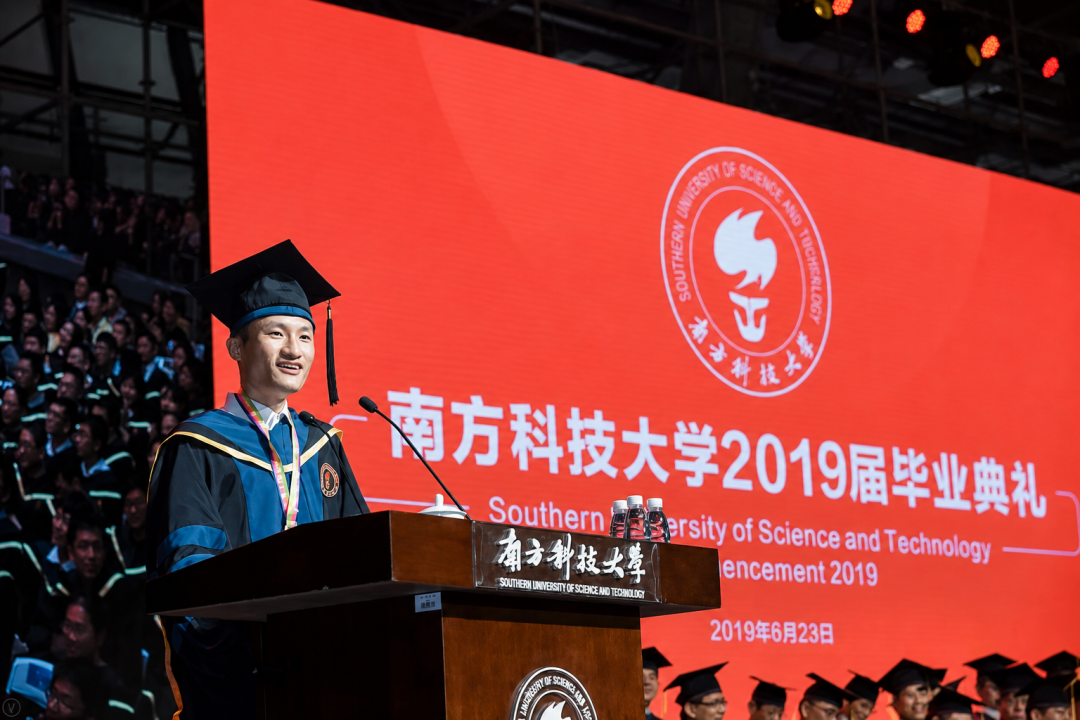
Graduated from SUSTech at 25
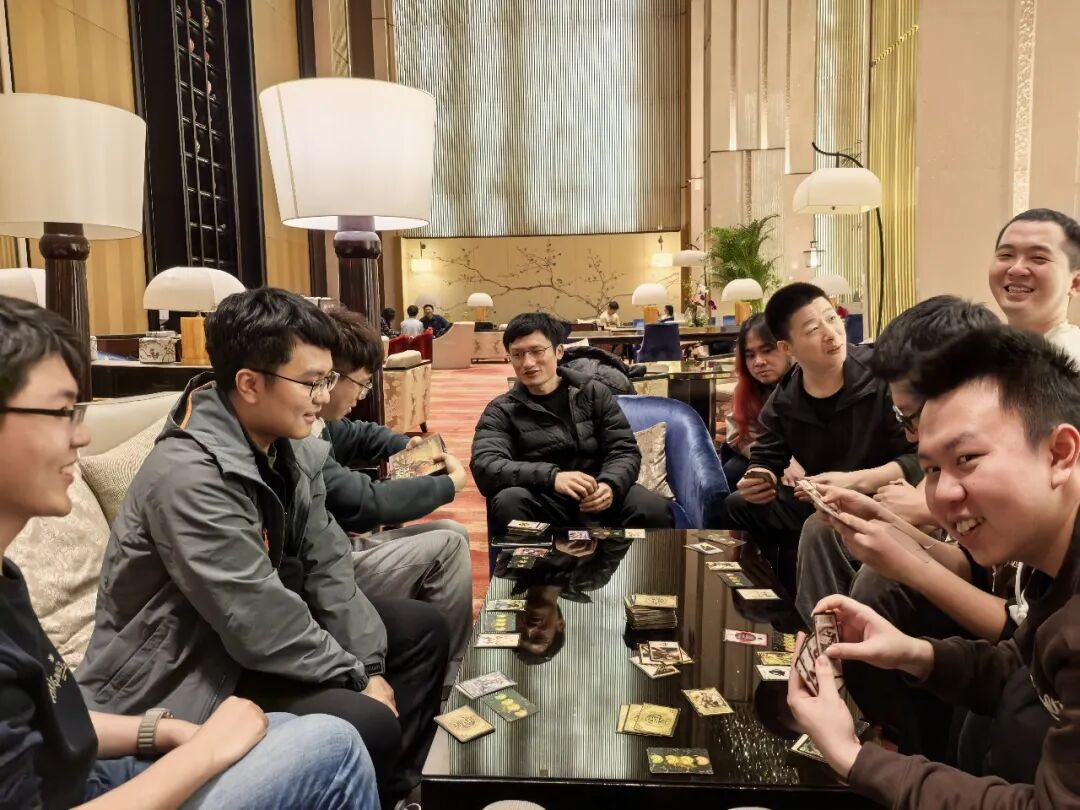
Kimi annual party essential — Three Kingdoms Kill
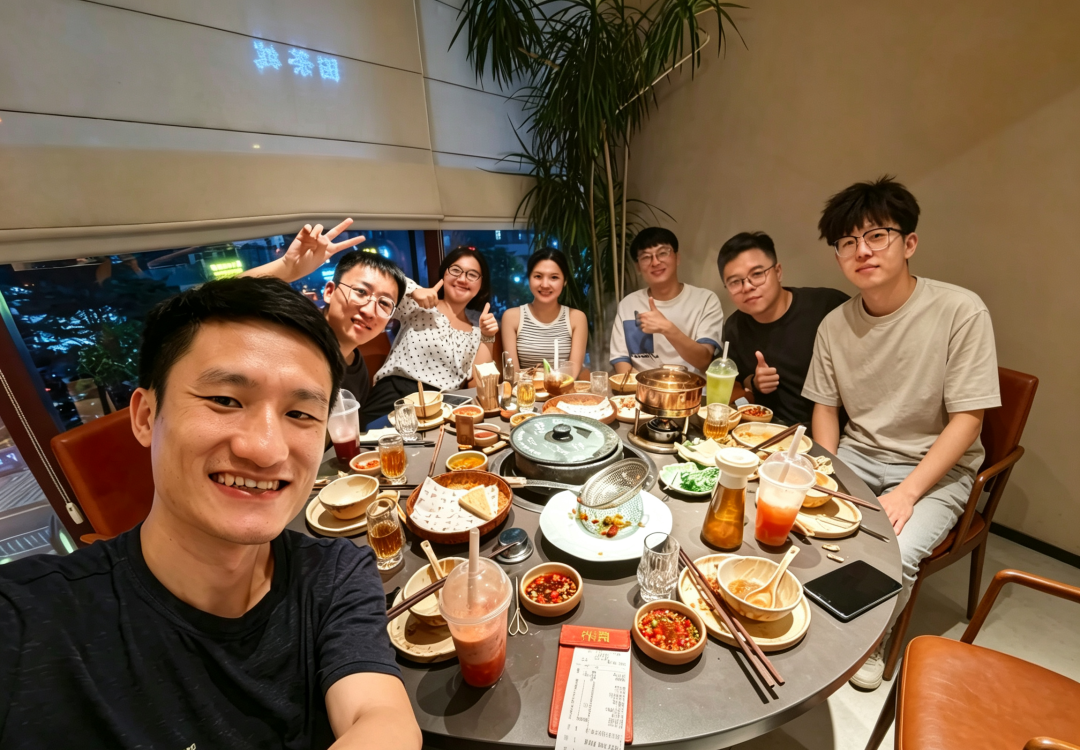
Liangpei's initial 7 people, 5 moved to Shenzhen from elsewhere
Image source | Interviewee
AI Nao is looking for independent writers If you like our articles, are curious about people and stories in the AI wave, and are good at writing
Please contact shizao1123@hotmail.com
Email should include: 1. Personal introduction; 2. Related articles; 3. Your favorite AI Nao article We offer competitive compensation and professional editorial guidance
Looking forward to making noise with you 🎉
Join the community