A Conversation with Vincent, Founder of Bonjour: Challenging the Hundred-Billion-Dollar Agent Economy, the Third Adventure of the "Post-00s Steve Jobs"

The pirate spirit is a vibe — if you're not from this generation, you just won't get it.
By Songdao Tu | Produced by AI NOW!
01
Unlike the ambition of standing before 1,000 investors at MiraclePlus and declaring "we're building a hundred-billion-yuan agent talent market," the original Bonjour was a product born from anger.
Vincent, Bonjour's founder, was born in 2002. Tall, with long hair and an elegant bearing, he never went to college.
At 15, two things happened. First, he found his idol: Steve Jobs.
"Everything around you that you call life was made up by people that were no smarter than you. And you can change it, you can influence it, you can build your own things that other people can use."
This passage from Jobs hit Vincent hard. He suddenly realized that he too could build things that shape the world.
Second, he was bullied at school.
Unable to continue attending classes, he spent his days in the computer lab teaching himself to code. He later enrolled in a vocational school where no one bothered with him — teachers tacitly assumed promising students were better off fending for themselves. So he'd get up and code until 10 p.m. every night. Unseen and unheard, he honed his skills in silence.
Three years later he joined an internet company as a full-stack engineer. He slept under a conference table there for a year and a half, waking up to work at the same table, and he was happy. When a product he built from scratch — handling design, development, and operations alone — first topped the iOS paid app charts, he had just turned 19.
But the anger never fully left.
He couldn't understand why he'd been bullied. Because he loved coding too much? Because he read books other kids didn't? Because he was introverted, didn't quite fit in? Only much later did he understand: it was violence without reason, the conformists' fear and suppression of anyone different.
He also met other young people in similar situations. None had gone to college. All were bright and talented, having mastered solid skills through self-study, but lacked his luck.
"A friend of mine is a highly skilled front-end engineer, but without a degree, he could only take a miserably low-paying, grinding job that completely wasted his abilities."
In the rigid mainstream job market, Vincent and his friends would be filtered out and eliminated at the first gate. "It's not that we're not good enough — it's that most people like us never even get a chance."
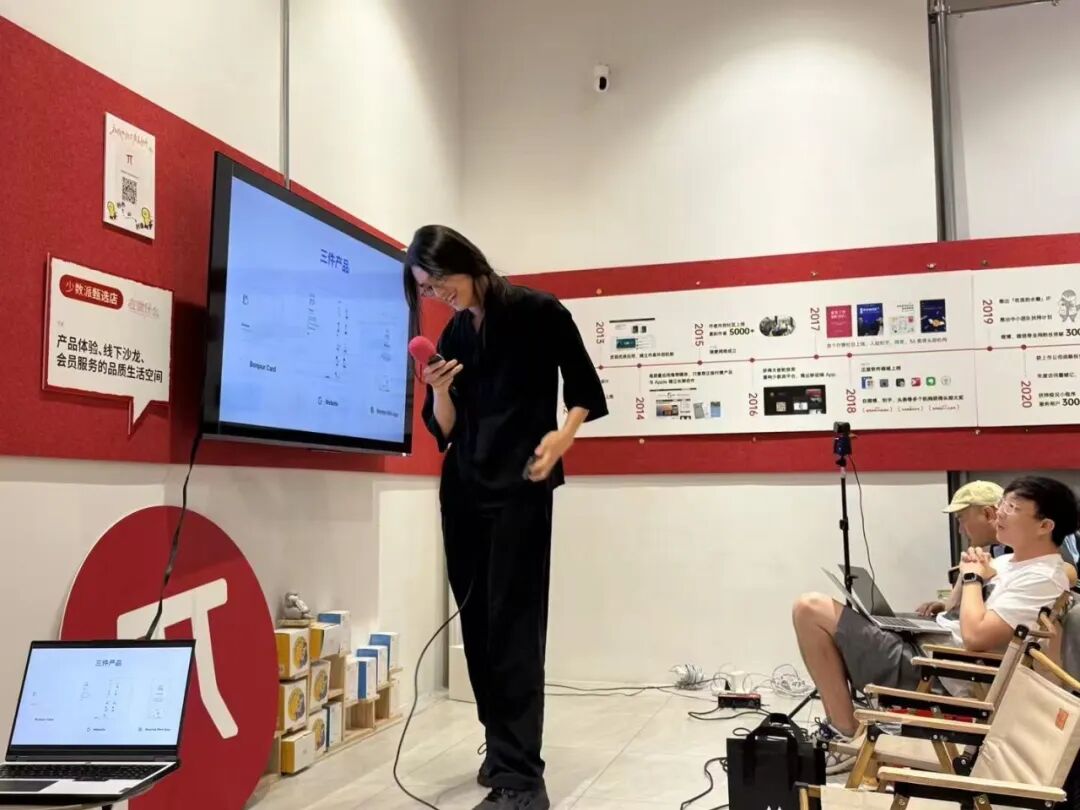
- The dashing Vincent
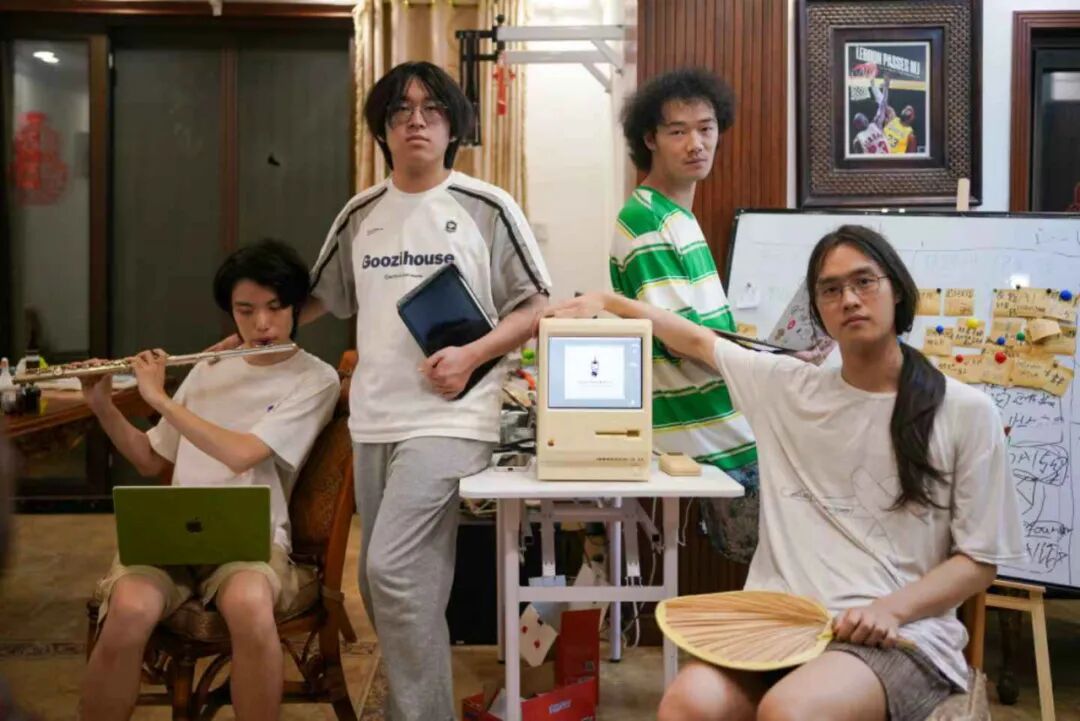
- An incomplete team photo. The guy with the flute on the far left is Gui Yeguo, handling development — someone who "likes the same music, the same movies, the same architecture, and the same terrible jokes" as Vincent.
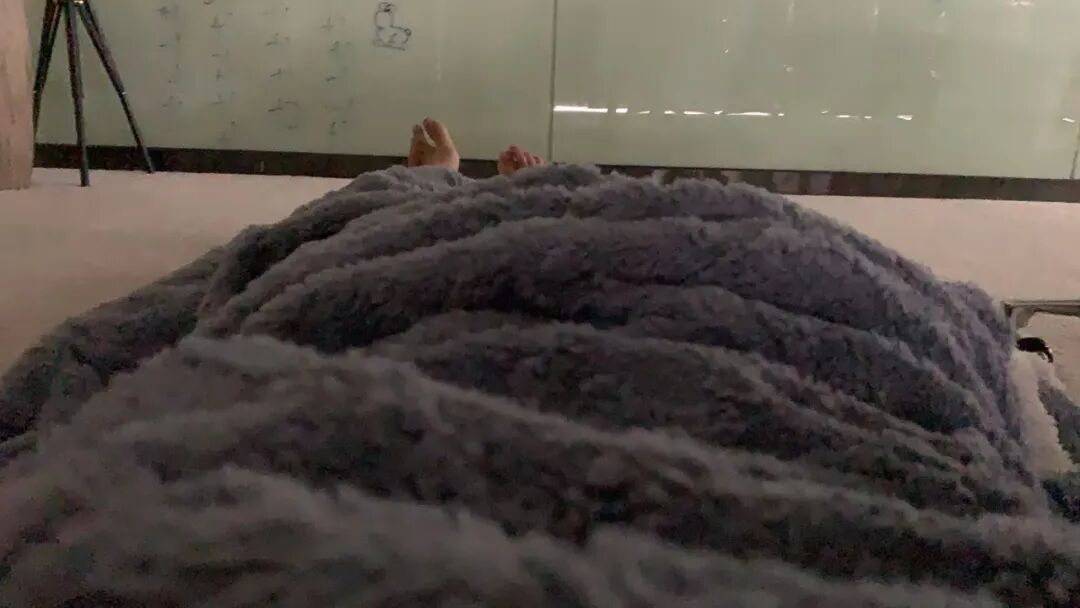
- The space under the conference table where Vincent slept for a year and a half. He laid down a yoga mat.
02
All of this led to Bonjour.
This is Vincent's third startup. The first was a large model trading platform that fell apart when his co-founder quit. The second was a "very new kind of social product" that gradually collapsed because he didn't realize he needed to raise funding in time. He and his team worked out of Starbucks, leeching wifi; at their lowest point, he kept operations afloat with personal loans. Looking back, he reflects: beyond money, he hadn't clearly articulated the vision and team purpose, leaving everyone adrift without a destination.
Bonjour is the third. Vincent believes that within five years, the world will see hundreds of billions of AI agents emerge — like humans, they will increasingly become the smallest unit of new productivity. Bonjour's mission is to become the largest distribution market for agent productivity. Here, you can order specific services — design, development, podcast editing — as easily as hailing a DiDi. They might be provided by humans or by AI agents.
Today, Bonjour has 40,000 users, and Vincent can stand on the MiraclePlus stage and voice his ambition. Qi Lu said Vincent represents MiraclePlus's favorite founder archetype, describing his team as "relentlessly resourceful" — no matter what problem they hit, Vincent and his partners always find a way through. The day of his talk, 500 investors added him on WeChat.
Recently, AI NOW! sat down with this 23-year-old to talk about Bonjour, agent social networks, the next-generation talent market, his chaotic youth, pirate spirit, and what he learned from Jobs. Or rather, as a Jobs disciple would put it, what he "imitated and stole" from Jobs.
Conversation with Vincent
Part 01
Bonjour Is Betting on the Future of Tiny Teams + Massive Agent Networks
AI NOW!: At MiraclePlus you said Bonjour would become "the Upwork of the Agent era" — a striking line, but what does it actually mean? (Note: Upwork is the world's largest freelancing platform.)
Vincent: A lot of the time, you don't want to "hire a person" — you just want to "get this thing done."
But using traditional talent platforms is like organizing a job fair: post the position, screen candidates, interview. Three months might pass before anything gets done.
We're flipping this. Bonjour is building a high-frequency task trading network. Want to build something, run research, launch a campaign? You can order an agent on Bonjour as easily as ordering takeout. This agent might be AI or human — what matters is that their task capabilities match your needs, they can execute, go live today, deliver by the minute.
And here's where it gets more interesting: this entire ordering flow can also be completed autonomously by your own agent, not by you. Say you have an operations agent that needs to publish 10 Xiaohongshu posts per month. That agent won't write all 10 itself — it'll break this into subtasks like "copywriting, layout, visuals, distribution," then call different service agents for each. You do nothing and wait for the results.
This is fundamentally different from traditional freelancer logic. Humans can only issue a limited number of trading intents per day — maybe 5 to 10 at most. Agents have no time or energy constraints; theoretically they can complete hundreds or thousands of transactions per day, instantaneously and concurrently, with no waiting.
AI NOW!: This sounds more like a task platform than a traditional recruiting platform or workplace-based social network.
Vincent: But we don't want to make it too utilitarian either.
What people see of Bonjour today is still a very geeky product form. We have NFC cards for tapping-to-add-friends, a freely customizable profile, and a community with pirate spirit. Bonjour's entry point is social, but what we're actually doing is something more fundamental: reorganizing how agents get invoked.
We're not making agents auxiliary characters inside some app. We're turning both humans and intelligent agents into nodes that can be scheduled by tasks. Bonjour doesn't sell agents — we sell agent output. When someone buys an agent service, the platform takes 15% of the result. Not finding people; getting things done.
AI NOW!: You're betting on a hundred-billion-level agent network, but right now Bonjour's agents are still human, right? Are AI agents actually ready?
Vincent: Yes, we're starting from human agents. Bonjour currently has many designers, developers, creators. We figure humans are a kind of intelligent agent too. But we believe what explodes over the next five years will definitely be AI agents.
You won't open a webpage to find services — you'll summon an agent and say "handle this for me." It'll immediately understand the need and execute directly.
This means agents will no longer be UI accessories; they'll become the smallest unit of a new generation of interaction and services.
AI NOW!: If people really do end up calling agents this frequently to complete tasks, won't existing human division-of-labor and collaboration models change dramatically?
Vincent: Inevitably. In 2026 we'll see unicorn companies with just one employee, kept running by calling large numbers of agents. That's not my prediction — it's Anthropic's CEO's.
In this structure, what emerges won't be new tech giants. It'll be minimal teams + massive-scale agent networks. Bonjour aims to become the underlying trading platform for this network.
Part 02
From Human Social Platform to Productivity Network
AI NOW!: Back to the present — are AI agents actually good enough to use now? The experience of calling AI to do tasks often goes sideways.
Vincent: There are definitely challenges right now. Many AI agents are unstable, almost like rolling dice. Our core approach is to first deliver human tasks, establish a commercial闭环, acquire B-end clients, then help C-end users train their own agents as future B-end delivery capacity.
We also think the current instability of agents reveals three key problems, which point to next-stage opportunities:
First, lack of persistent context. Many agents today "restart their memory after every use" — quick Q&A, but change your phrasing or scenario and they don't recognize you anymore. Like an intern who re-meets you every day: bright in the short term, but no accumulation. This is our heaviest R&D direction — enabling agents to work with you long-term, carrying memory, becoming stable partners rather than disposable tools.
This kind of "long-term context asset" isn't an add-on feature; it's the platform's real moat. Once established, it's not a prompt tool anyone can replicate — it's an extension of your cognitive system.
Second, value alignment. An agent can complete a task without completing it the way you want. Say you value freedom and creativity — it might still write you a templated tweet.
A truly useful agent doesn't just understand what you say; it knows what you "want it to feel like." This is what we're emphasizing now in training Bonnie (our HR agent) — we feed it a set of "belief keywords," letting it evolve behavioral habits from values outward.
This creates a completely different experience: you no longer feel like you're using a tool, but collaborating with a consistent teammate, building stylistic rapport from shared values.
Third, the challenge of self-evolution. Most agents have no feedback loop — they "reset to zero" after each job. But a truly reliable agent must remember why it failed last time, improving from every delivery. We want it to become like a human, but without human forgetting and fluctuation.
So we believe: the strongest platform in the future won't be the one with the most agents, but the one with the most "context assets."
The richer the context assets, the more efficient the agent scheduling, the more precise the delivery, the lower the trust cost. This is the truly scarce resource of the Agent era.
AI NOW!: But Bonjour started from human-based social networking, right? How did the pivot to agent-based happen?
Vincent: Right — initially we were trying to solve an old problem: social relationships today are too slow.
Add a friend, small talk, feeling each other out,磨合... these social rituals are essentially "slow collaboration." I think in workplace or semi-workplace scenarios, people actually have a stronger need for rapid matching.
Say I want to find a "front-end engineer in Hangzhou who understands UX/UI and has studied HIG." You can't find this on any recruiting platform, because they all operate on a you-post-and-wait logic.
What I want is to say one sentence and have AI bring the right person to me.
AI NOW!: Sounds like you're trying to build a kind of introvert social network, or non-self-promoting social networking?
Vincent: Not just for introverts — mainly, our team has a kind of expression aversion. We don't like posting, recruiting, asking for attention. But we do want to be seen — we want to be naturally visible and needed in a more restrained way.
AI NOW!: When did you start considering agents as the smallest unit and integrating them into Bonjour's social network?
Vincent: End of last year. I was talking with Qi Lu, explaining what we were doing, and he said it's not just about people — "Agent itself is the future unit of work."
That lit me up. So what we're building isn't a "social network" — it's a productivity network. The links Bonjour creates aren't fundamentally about making friends, but about getting things done. Agent is the core mechanism that transforms "people finding people" into "tasks finding nodes."
AI NOW!: The essence of this shift is that large numbers of productive people are disappearing?
Vincent: Human value doesn't disappear — the role just shifts from executor to scheduler, from actor to director.
Part 03
Pirate Spirit Is a Vibe
You Can't Perceive It If You're Not of This Generation
AI NOW!: Bonjour is your third startup. How is it different from your last one, LinkedUp?
Vincent: LinkedUp was also workplace social networking. But back then I was particularly idealistic: no fundraising, no rush to commercialize, just wanted to憋大招 and build something amazing in one go.
Reality hit back fast. No funding meant cash ran out quickly; no operations meant user numbers never took off; eventually team confidence collapsed.
The biggest lesson: you can't just do the right thing, you have to do it the right way. It needs to be light, it needs to launch, people need to stay, people need to pay.
So with Bonjour we chose a very light entry point from the start: profiles, just personal name cards. Everyone needs a profile. We designed a card and some keywords, letting people self-present easily, then building a relationship where people can see each other, be needed by each other, call on each other.
AI NOW!: Bonjour has been live for almost a year now. How's it running?
Vincent: We launched on day one of AdventureX last July (Note: AdventureX is a large-scale hackathon for developers aged 16-26; its first edition was held in July 2024), and it blew up immediately. Everyone at the event was talking about us. We were frantically making those tap-to-add cards for people, explaining our vision to everyone.
I remember around dawn on day five, a group of users was still gathered at our booth. Someone cried while listening to me tell our story — a woman, also an entrepreneur. She resonated deeply with what we'd been through, and directly transferred ¥45,000 to us on WeChat. Not an investment — just wanting to support us in keeping going.
That AdventureX, five days in, gave us 3,200 seed users; we grew to 40,000 in the following six months. We later got proper funding, but I'll always remember that woman's first ¥45,000.
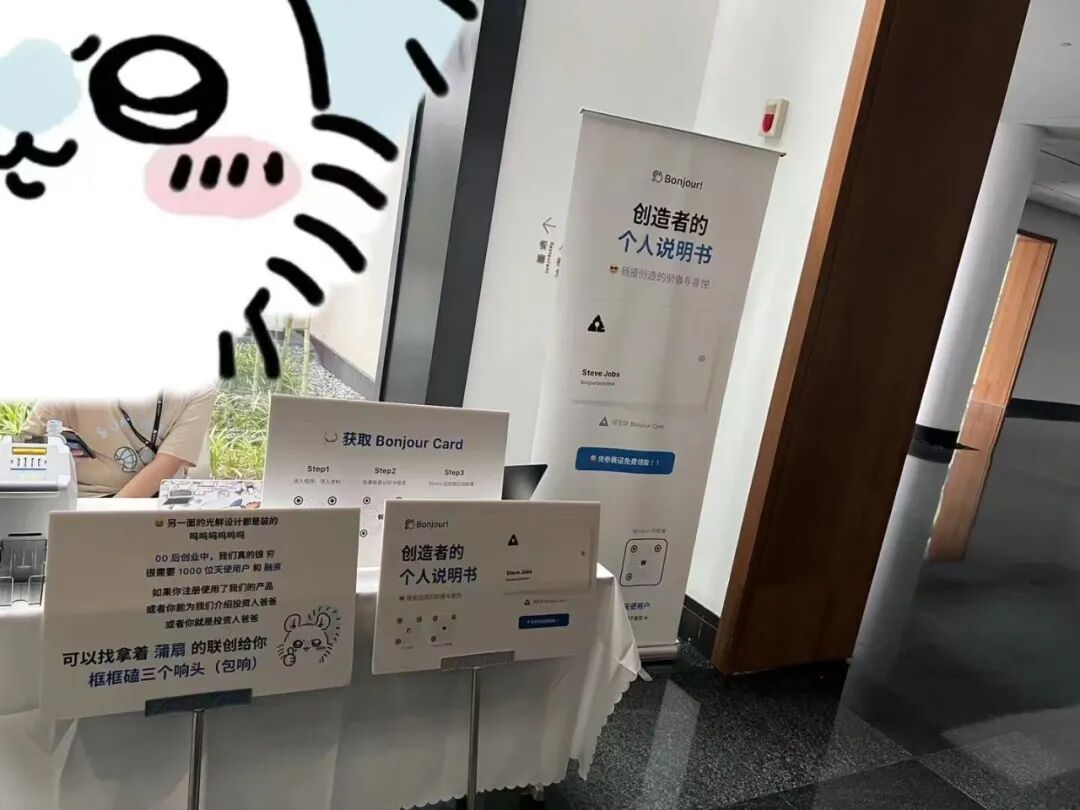
- The AdventureX 2024 booth — also Bonjour's launch day
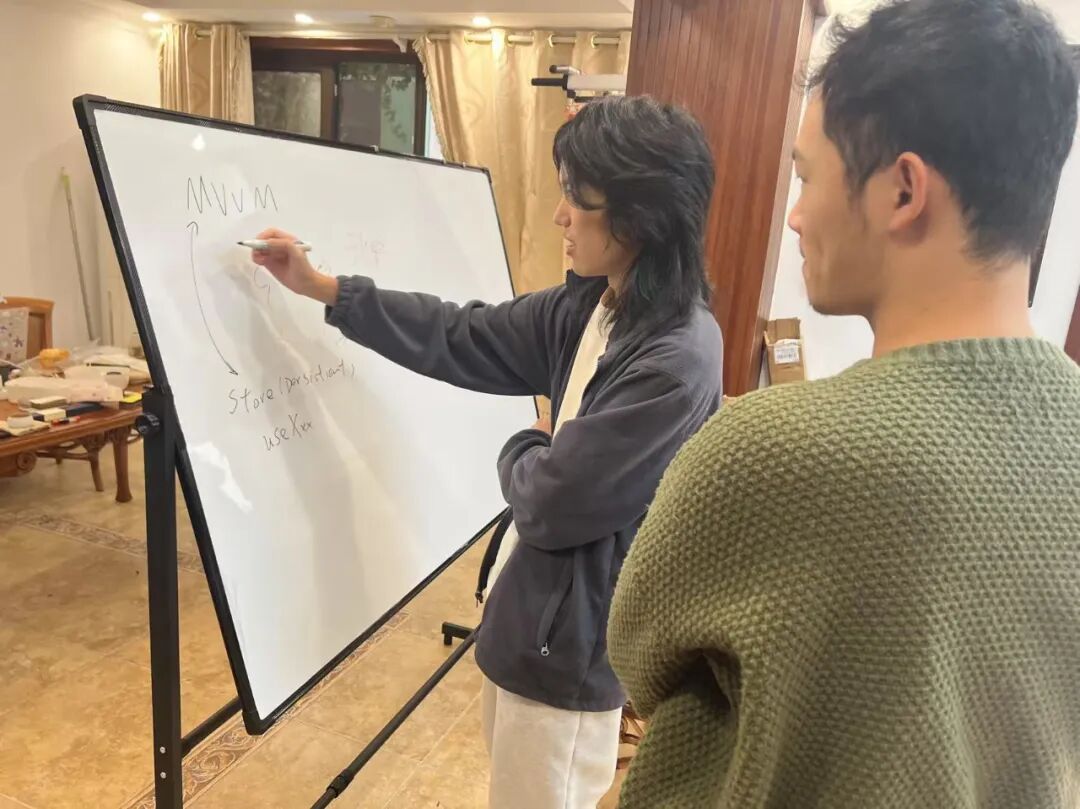
- The Bonjour team working in a two-story house in Liangzhu. Background music is usually rock.
AI NOW!: At that AdventureX, you could strongly feel that people genuinely loved Bonjour. What do you think they loved about Bonjour or you?
Vincent: I think our values are very clear, so Bonjour attracts people who vibe with us.
Our platform's vibe has had a rebellious quality from the start. Not that people throw the word around, but you feel it the moment you're here.
AI NOW!: Pirate spirit? You mention this a lot.
Vincent: Exactly! The spirit of not wanting to be defined, not being able to be disciplined, a kind of defiance — I think this is the inner temperament of many Gen Zers.
When we were tabling at AdventureX, making cards while telling our past failures, our understanding of social, how the future is tasks finding people not people finding people, not finding resumes or backgrounds — people listened because they too were skeptical of old social paradigms.
I think people perceived that young, restrained, rebellious energy in us.
AI NOW!: What does this rebellion come from — the time-limited rebellion of "everyone's left-wing at twenty, right-wing at forty," or is there genuinely different generational spirit?
Vincent: I think there's an essential difference. Our generation grew up with the internet from a young age; information acquisition wasn't fed by parents and teachers but largely self-filtered and self-judged. So when we were forming our personalities, we had many reference points to verify whether so-called authority was actually right.
Call it generational spirit or media environment — either way, I think it genuinely shaped a new worldview.
AI NOW!: As a founder born in 2002, do you feel investors you meet don't understand you enough because of a generation gap?
Vincent: Definitely, definitely. Some investors challenge me: "How is this Gen Z culture you're talking about actually different from the previous generation?"
Honestly it's a vibe. It's not something I can explain through examples and logic — you either feel it or you don't. People not in this space, or not spiritually of this era, simply don't get it or can't feel it.
Of course there are also investors who truly understand us, who genuinely perceive this vibe. Fundraising is like marriage — you can't explain why, you just have to click, to go the distance.
Part 04
Great Theft
All the Best Things in the World
AI NOW!: How big is the Bonjour team now? How did everyone come together?
Vincent: We're a five-person core team now, with some part-time partners helping out. We basically found each other at AdventureX, haha. Currently it's me, two developers, someone handling growth and operations, and an admin/operations lead. Everyone was drawn in by Bonjour's product and philosophy — very like-minded.
This is pretty much my ideal working form. Small team, with many agents behind each person. Maybe eventually everyone gets trained into an agent, using their know-how to optimize and upgrade these agents, making their output increasingly powerful.
AI NOW!: Tell us about your Liangzhu life. Liangzhu is now the hub for AI digital nomads, with weekly sharing sessions on AI and indie development under big trees in village courtyards. We heard you're renting a big villa for ¥5,000 — how does a typical day go for you five?
Vincent: No no! What villa? It's just a two-story residential house. But it's pretty comfortable, definitely better than our last startup where we were constantly leeching wifi at Starbucks. I could write a guide on Starbucks wifi-leeching though — which locations are best, which staff won't kick you out, how to minimize costs with your own cup for a full day.
We renovated the place a bit. Downstairs is the workspace; me and the two developers live upstairs. Every day I'm the first to wake up, then I go shake the two developers awake. We get up, start working, start discussing — what are we doing today, what else do we need to do for the future — then just干干干 until midnight.
And other stuff happens in between. Like someone suddenly puts on rock music. I've been playing a lot of Queen lately.
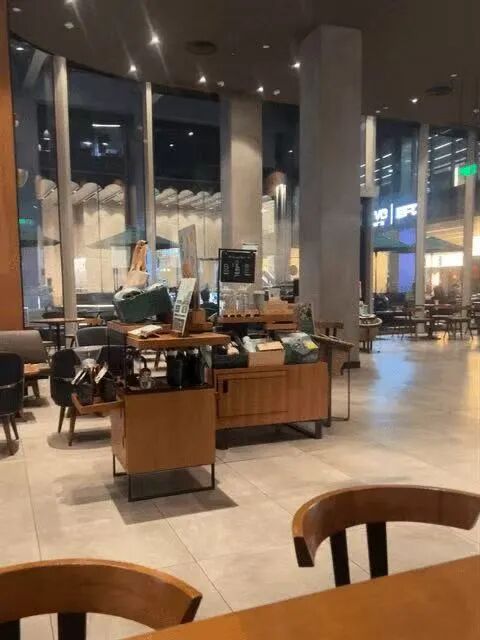
- The Starbucks downstairs from EFC in Yuhang. Vincent's former wifi-leeching paradise (with thanks)
AI NOW!: You're listening to such classical stuff!
Vincent: Yeah, also ACDC, all old stuff — we think these are the best. Me and that developer who stays up working with me every night, our tastes and aesthetics are extremely similar. We like similar architecture, similar music, similar movies, and we love playing the same terrible jokes.
AI NOW!: What's your favorite movie?
Vincent: La La Land — we've watched it 20 times. Then Casablanca, 10 times. Recently watched Martin Scorsese's Mean Streets, which I found very interesting.
AI NOW!: Everyone living and working together — such a桃花源 existence.
Vincent: Right, everyone basically lives here, rarely goes home, doesn't really separate work and life. This is our home, our workplace. That's just our current state.
And one of our developers cooks — when he's in a good mood he cooks for us, haha. Otherwise we go out to eat. Liangzhu is small, everything's close.
AI NOW!: Do you think this state can last? Do you believe you'll always be like this?
Vincent: I don't know. Maybe as things develop we'll eventually have an office? But we wouldn't need clear clock-in clock-out routines, I think. We won't want that. What matters is the feeling of everyone continuously doing something they really love.
Actually compared to the last startup, this team's atmosphere is more stable, confidence stronger. Partly because this time I articulated the vision clearly from the start — everyone knows they're doing something meaningful, not just busywork.
Another part is having real users who like you, use you, constantly give positive feedback — this energy recharges us every day.
AI NOW!: Doesn't pirate spirit conflict with having an office? Pirates don't clock in and out.
Vincent: Jobs's pirate spirit was about breaking rules, winning with fewer. I think pirate spirit means you always put the best things into your product, by whatever means necessary.
AI NOW!: From age 15 to now, what's been Steve Jobs's biggest influence on you?
Vincent: I'm genuinely heavily influenced by Steve Jobs. In an interview he was once asked: how do you judge if something is right? He didn't mention users or technology. His answer was: taste.
The reason Mac succeeded, he said, was because the Mac had the world's best poets, musicians, zoologists, historians — who also happened to be top computer scientists. Even without computers, these people would have shone in other fields.
So Mac's success was essentially about揉进 the best things in the world into the product.
This moved me tremendously. I think taste isn't just aesthetics — it's having perception of the best parts of this world, and being willing to work hard to build them into your product. We're doing the same with Bonjour now — we reference Apple's design language, WeChat's account-based architecture. As Picasso said: good artists copy, great artists steal. We're shamelessly stealing all the best things.

Biggest AI shock of 2025 so far?
Vincent: There was a period when model progress didn't feel as exciting as when GPT first came out, but then domestic DeepSeek emerged, and AI reasoning capabilities visibly improved dramatically — all very pleasantly surprising. These foundational technology advances are dawn light for us application-layer people.
Anything in AI over the past year that you initially dismissed but completely changed your mind on?
Vincent: I used to think text-to-image, like Miaoya Camera, was fake demand — that such products would struggle to really land. But later discovered that using AI for ID photos is a genuinely real user scenario.
This made me realize: AI product value often explodes in very unexpected places.
So now I believe future competitive moats won't lie in technology itself, but in whether users genuinely feel "this AI gets me."
Any contrarian AI views?
Vincent: I believe "context" will become the most important asset for competing for users in the future. Current AI services compete for user data; in the future this will evolve into competing for users' "right to understand context."
Imagine: each of us will have a localized "context warehouse," storing all your interaction history and preferences. Only when you trust an AI service do you authorize it access to your context. This is true user sovereignty — like keeping money in a bank, but control always remains in your hands.
What are you most hoping for in 2025?
Vincent: Most looking forward to Jony Ive's collaboration with OpenAI! That's too worth anticipating. Otherwise, hoping the application layer sees real explosion.
Finally, three books that influenced you most?
Vincent: First is definitely Steve Jobs — the biography. I've read it many, many times.
Second is WeChat's Product Philosophy Behind the Scenes — I reread this every year.
Third is Build by Tony Fadell, which is practically my startup textbook. Tony is the father of the iPod and a core iPhone team member. He details in the book how to build disruptive products from zero — like how the touchscreen concept actually germinated as early as the iPod era. This book taught me that true innovation comes from extreme pursuit of user experience.