Robot Confucius, robot dog-walking, robot folding laundry... The robots haven't found good jobs yet, but they're approaching their ChatGPT moment.

Is the tidying robot gently stepping into the "ChatGPT moment" on the eve of its arrival?
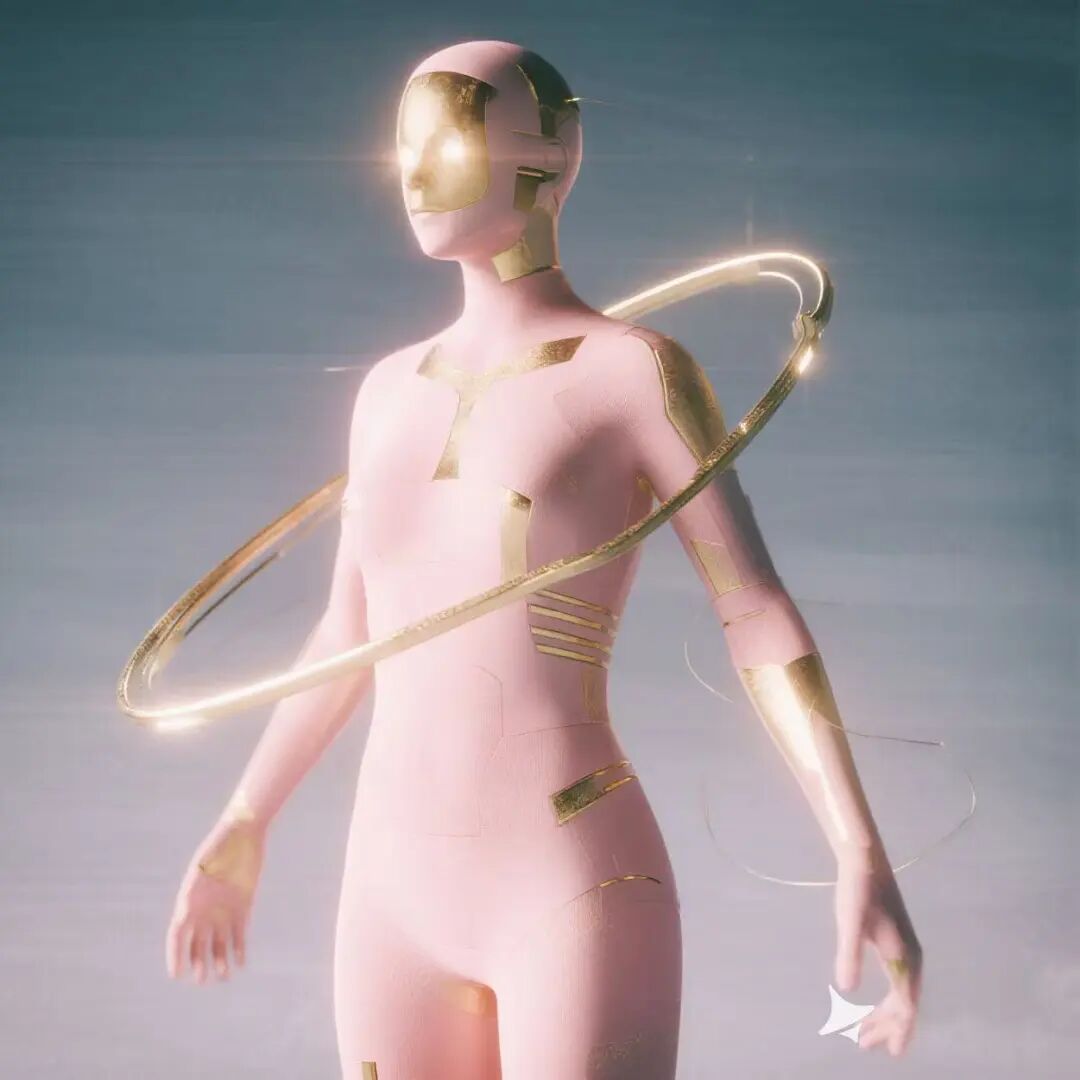
Produced by | AI NOW
1
The World Robot Conference is here.
Did any of you human friends go check it out?
If you only looked at the corporate press releases and those carefully edited highlight reels, you might think the AI future has already arrived.
Over 200 companies brought more than 1,500 robots, nearly 100 of them fresh "new hires" making their debut. Boxing bots. Breakdancing bots. Bots zipping along assembly lines doing high-speed sorting, and bots claiming they can handle all your household chores. A utopian sci-fi spectacle.
But after wandering the floor for a few hours, while we certainly felt the robots' swagger, we were also enveloped by a strange, hard-to-place sense of dissonance.
Here's one undeniable fact: if the coffee and tea赛道 is already saturated in the real world, then the robots now crowding into this赛道 should be just as fiercely competitive.
The Jiubing Jianbing robot stall was swarming with people: a griddle at 207 degrees, precise to the point of commanding reverence.
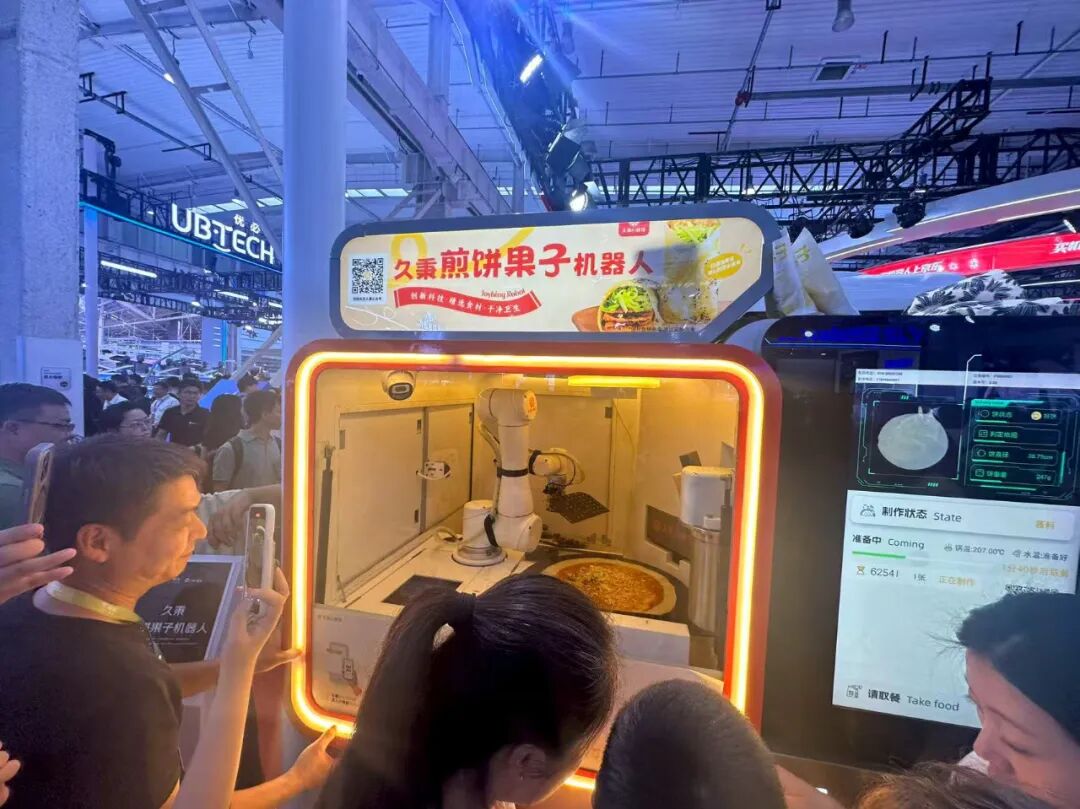
But could jianbing possibly be the last sanctuary where humans still insist on handcraftsmanship?
Anno Robot 👇
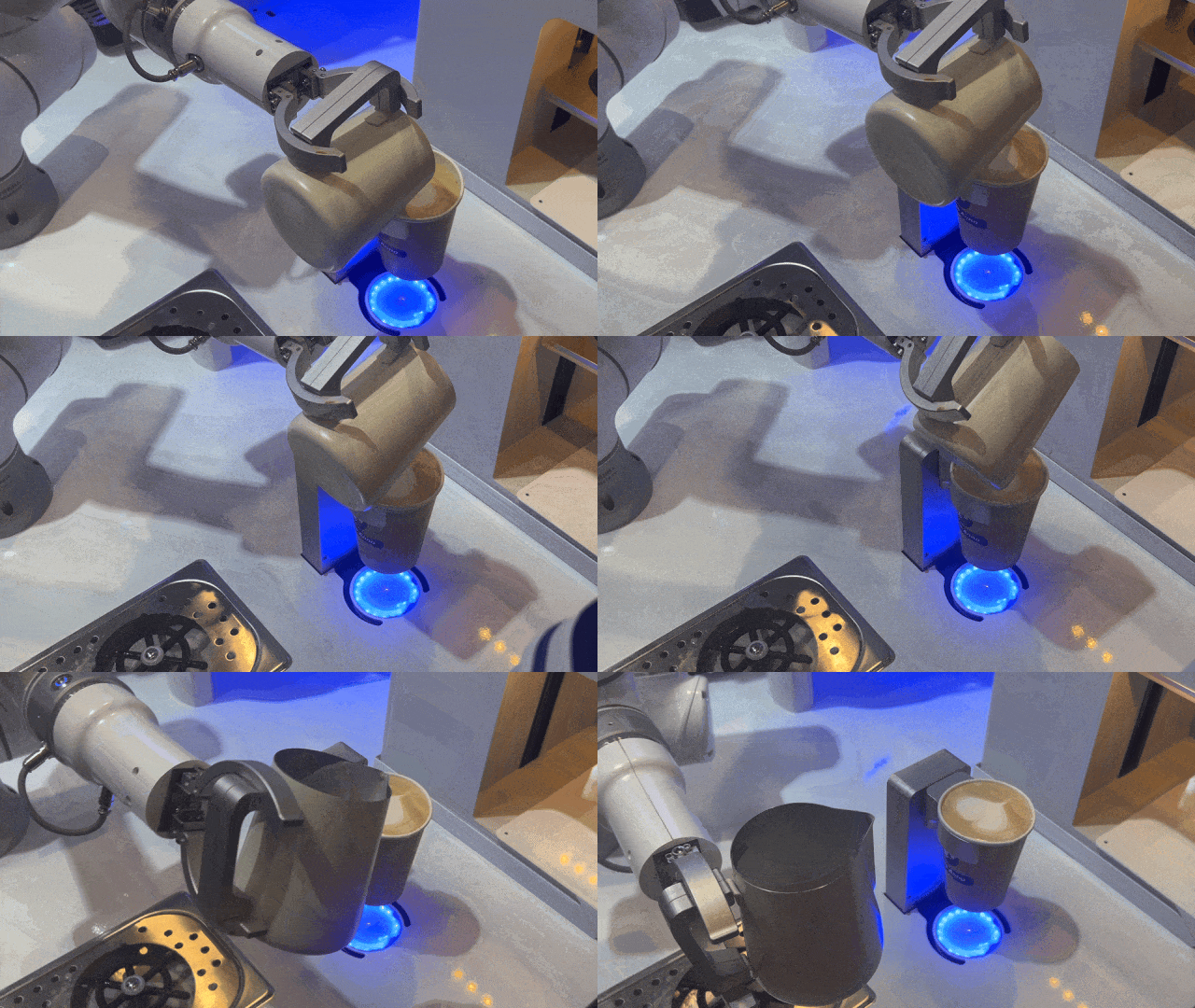
Its specialty is pouring a cup of Chinese AI latte art, awakening your summer energy. It also has a day-coffee-night-alcohol version, with a robotic arm mixing cocktails for you — can we officially call it Anno the proprietor?
AI2Robotics' Aibao is also a mainstay in the proprietor world.
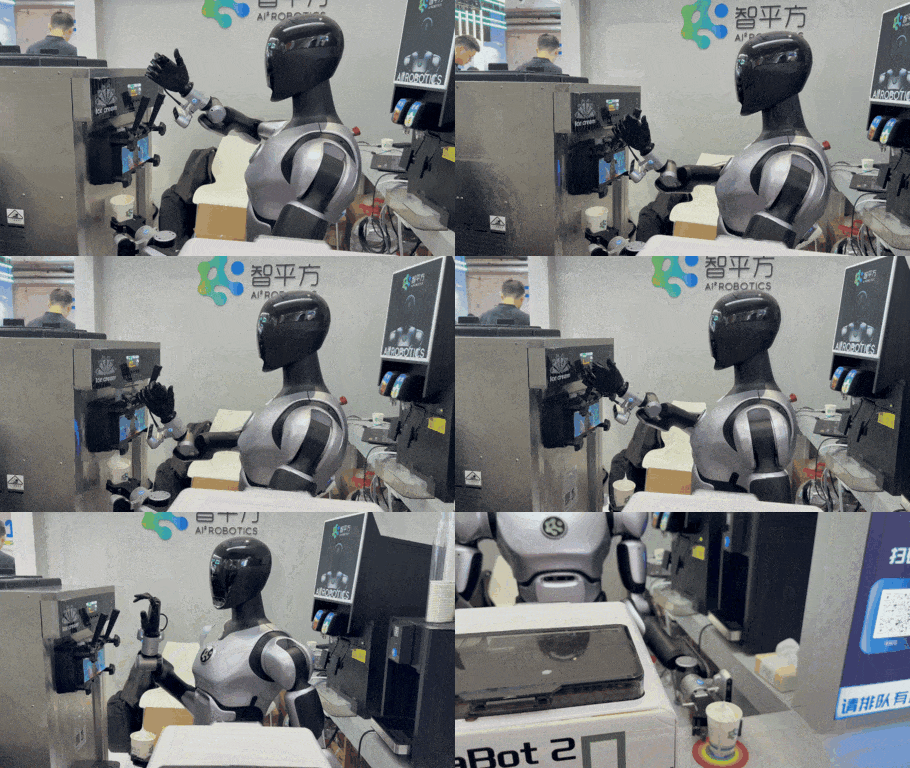
The official pitch: "Making a cup of coffee or ice cream takes just 90 seconds, with the entire process from cup retrieval, grinding, extraction, latte art, to lid placement and handoff completed in one smooth flow."
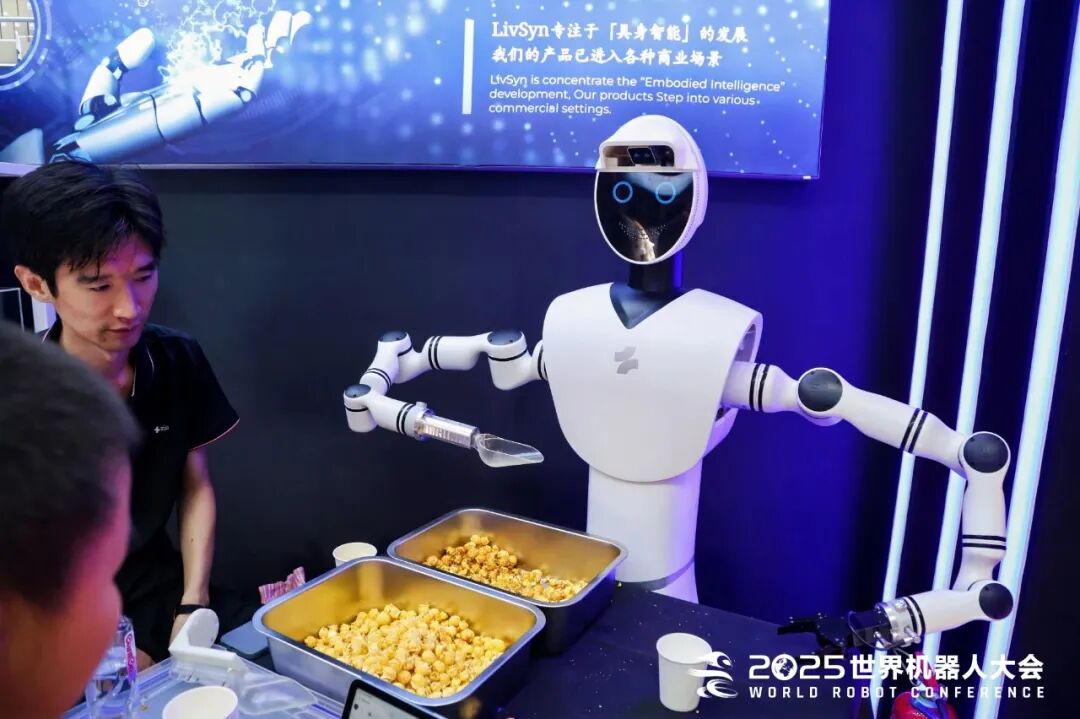
Lingsheng Robot making popcorn 👇
Keenon dual-arm robot XMAN-R customizing snacks to your taste 👇
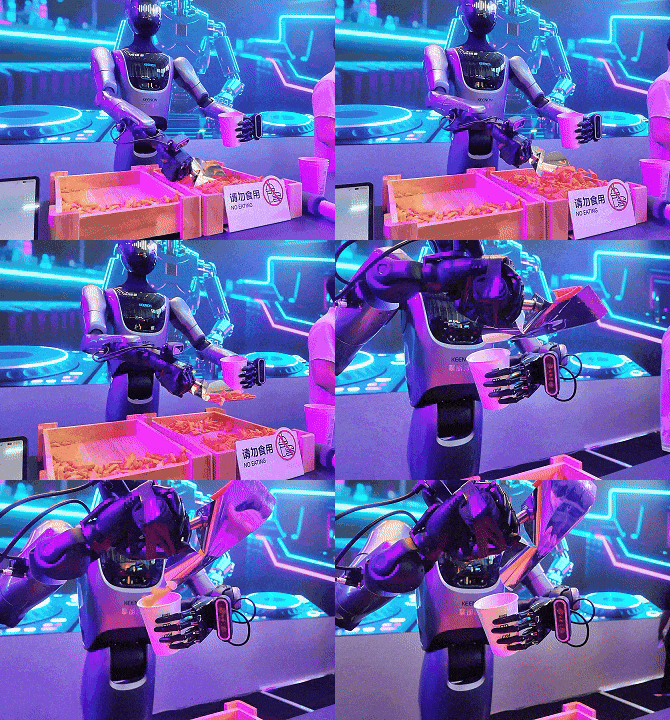
This one excels at all kinds of delicate operations — mixing drinks, hand-scooping potato chips.
Now let's enter the jock robot赛道.
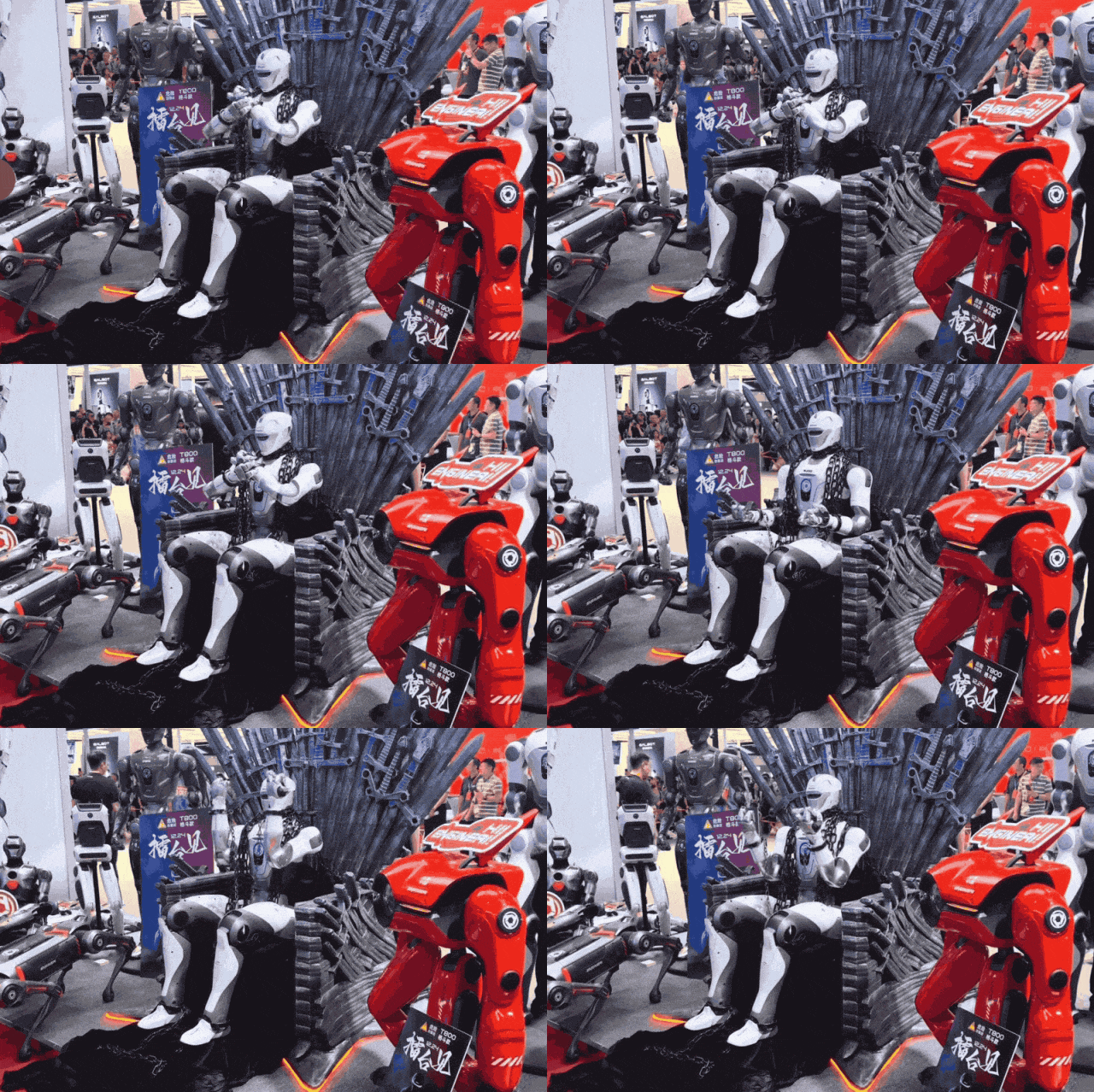
First up: EngineAI's fighting robot. ENGINEAI T800, iron chains wrapped around its fists, sitting pretty on its throne.
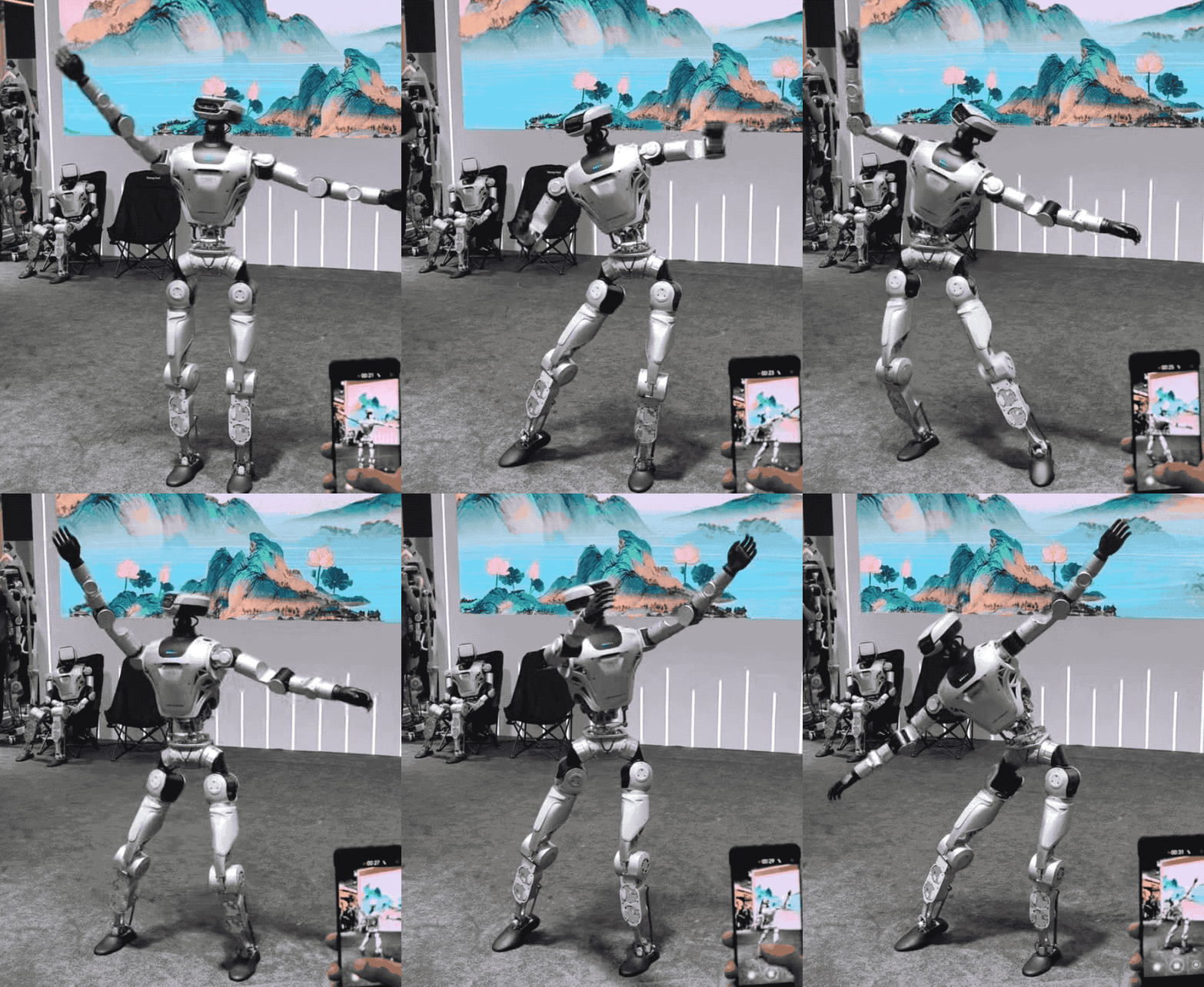
LimX Dynamics' LimX Oli, 165cm tall, 31 degrees of body freedom. King of awkward dancing.
Arts and sports aren't so different. This Zhejiang Haichuang one put together a band.
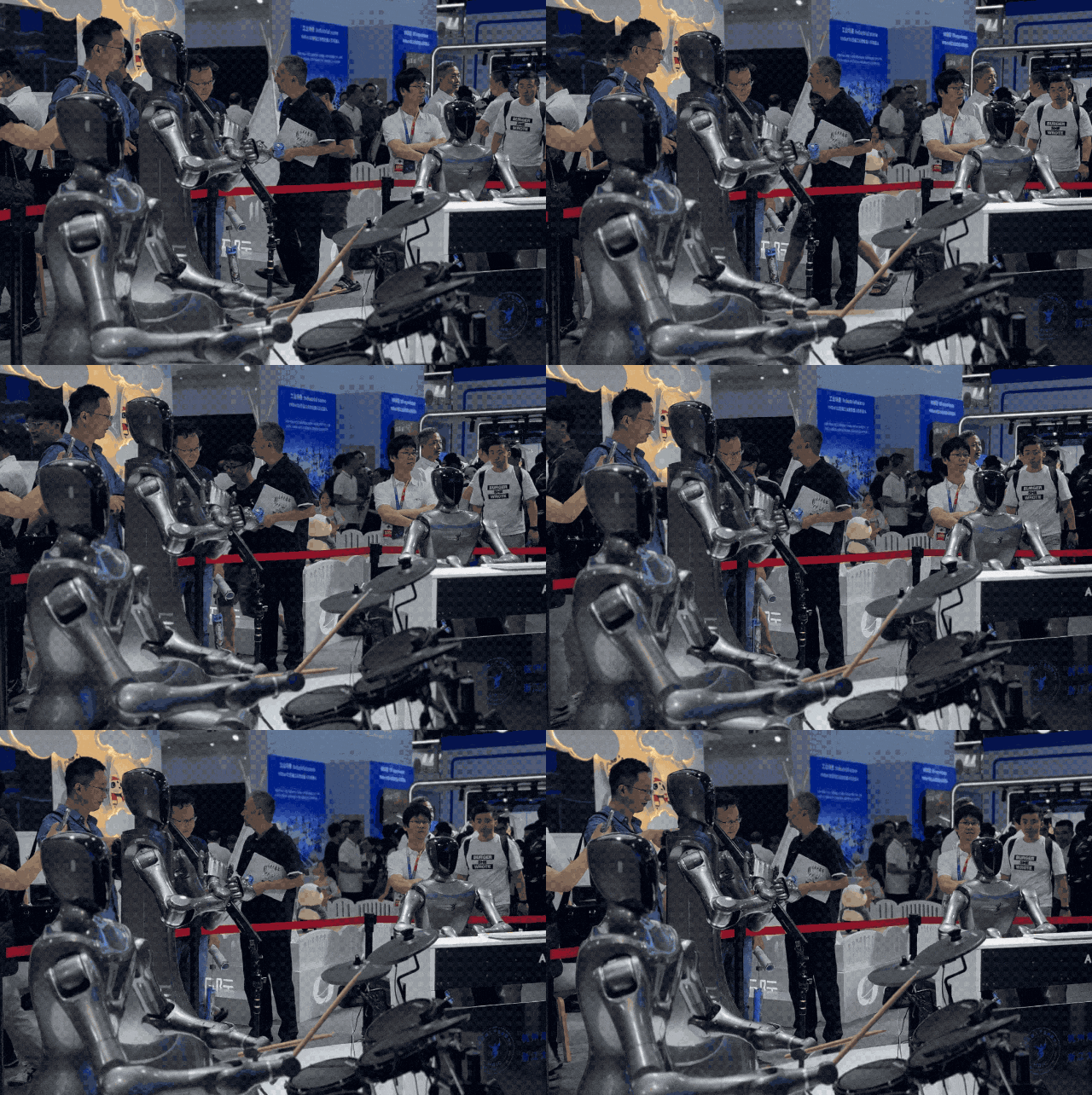
Selling "highly coordinated performance from lightweight robotic arms, high-speed dexterous hands, to instruments." Can play 60 songs — just like you the summer after fourth grade, fresh off passing your level 6 drum exam.
Finally we arrive at the hottest booth: Unitree's fighting robots.
Little Red beating up Little Blue:
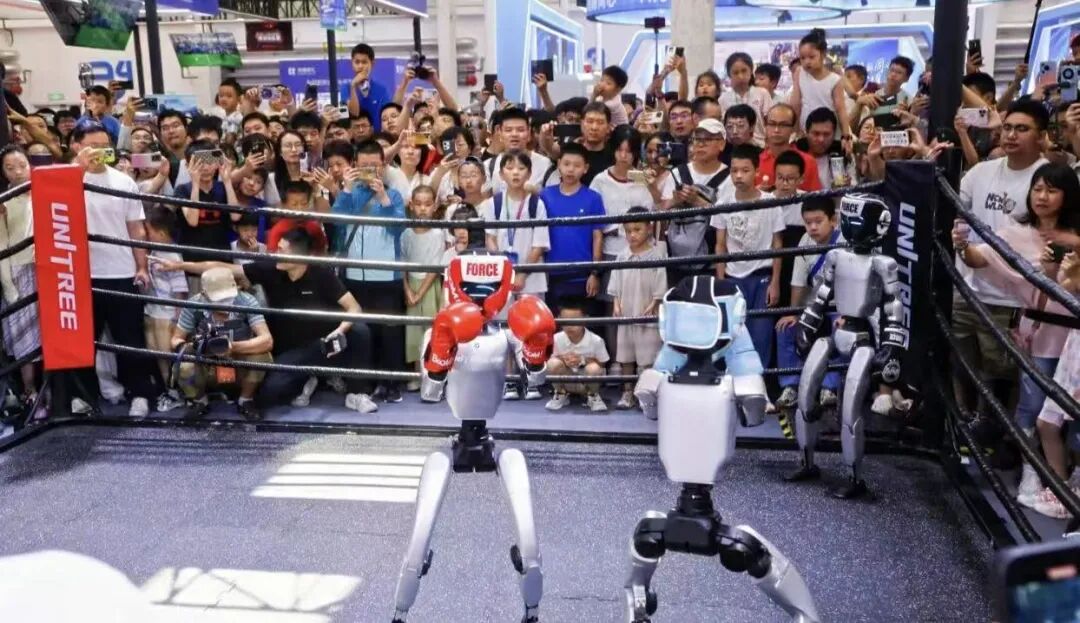
Then Little Green beating up Little Black. Every match was packed three layers deep.
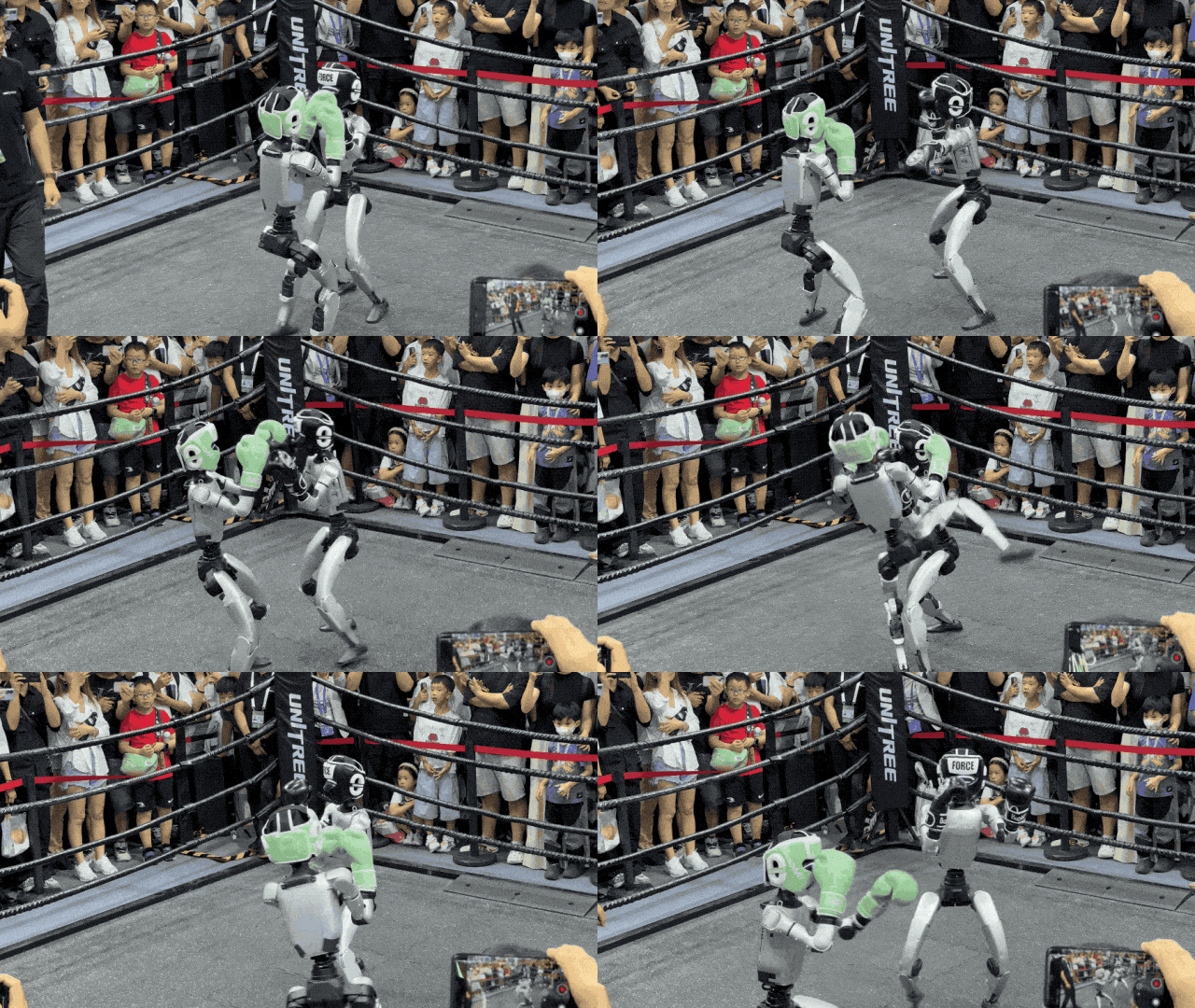
I have to say, whether it's the Liu Laogen Grand Stage-style yangko robots or these fighting robots on display, Unitree really knows how to work the "showbot" angle.
Humanoid robots are another major赛道.
This Martian beauty robot from Daxing Antai, named An'an, works as a greeter and guide, selling points being "lifelike appearance, reasonable price (under 80,000 RMB)."
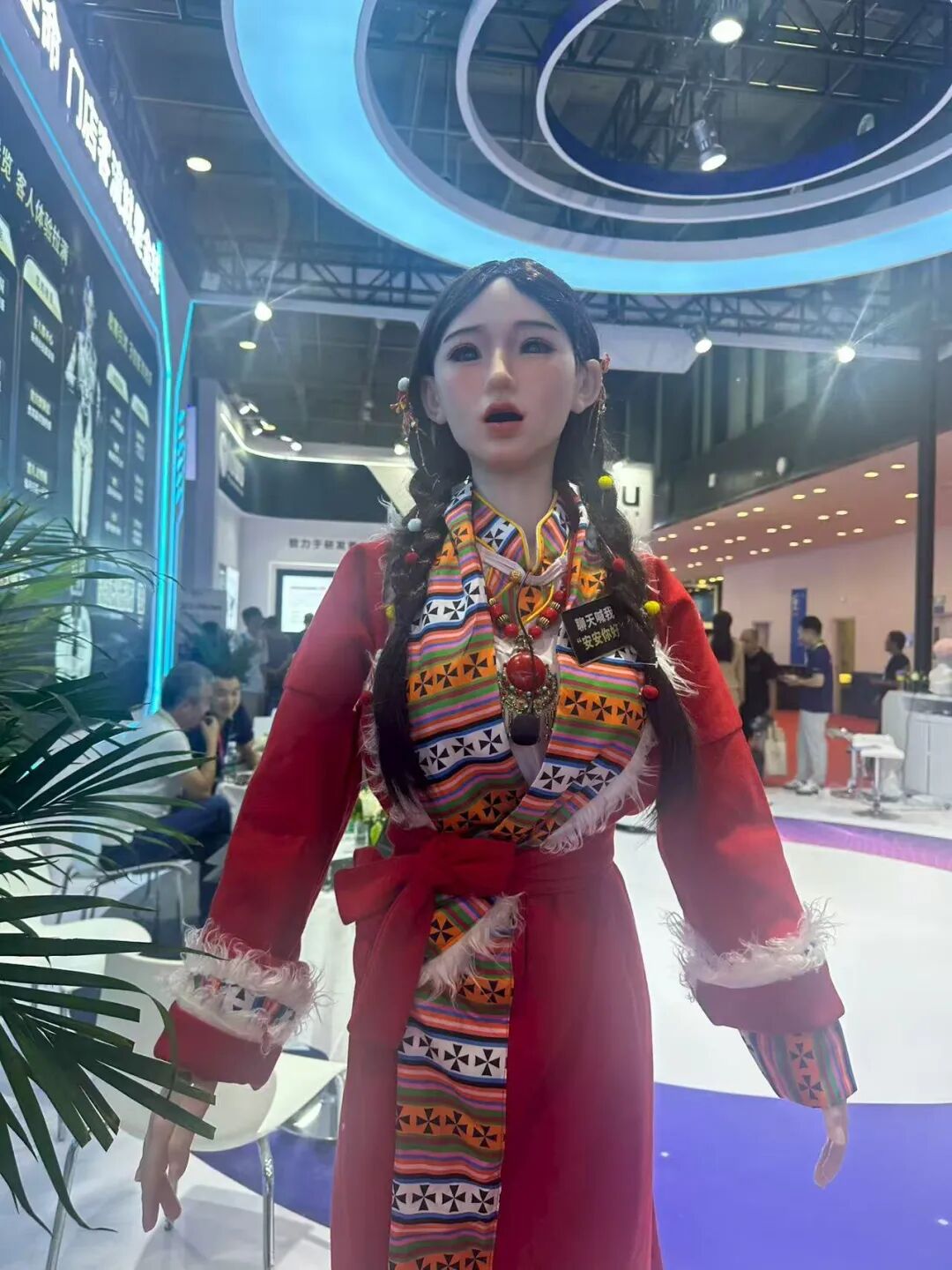
This booth attracted extensive lingering from all the uncles and grandpas.
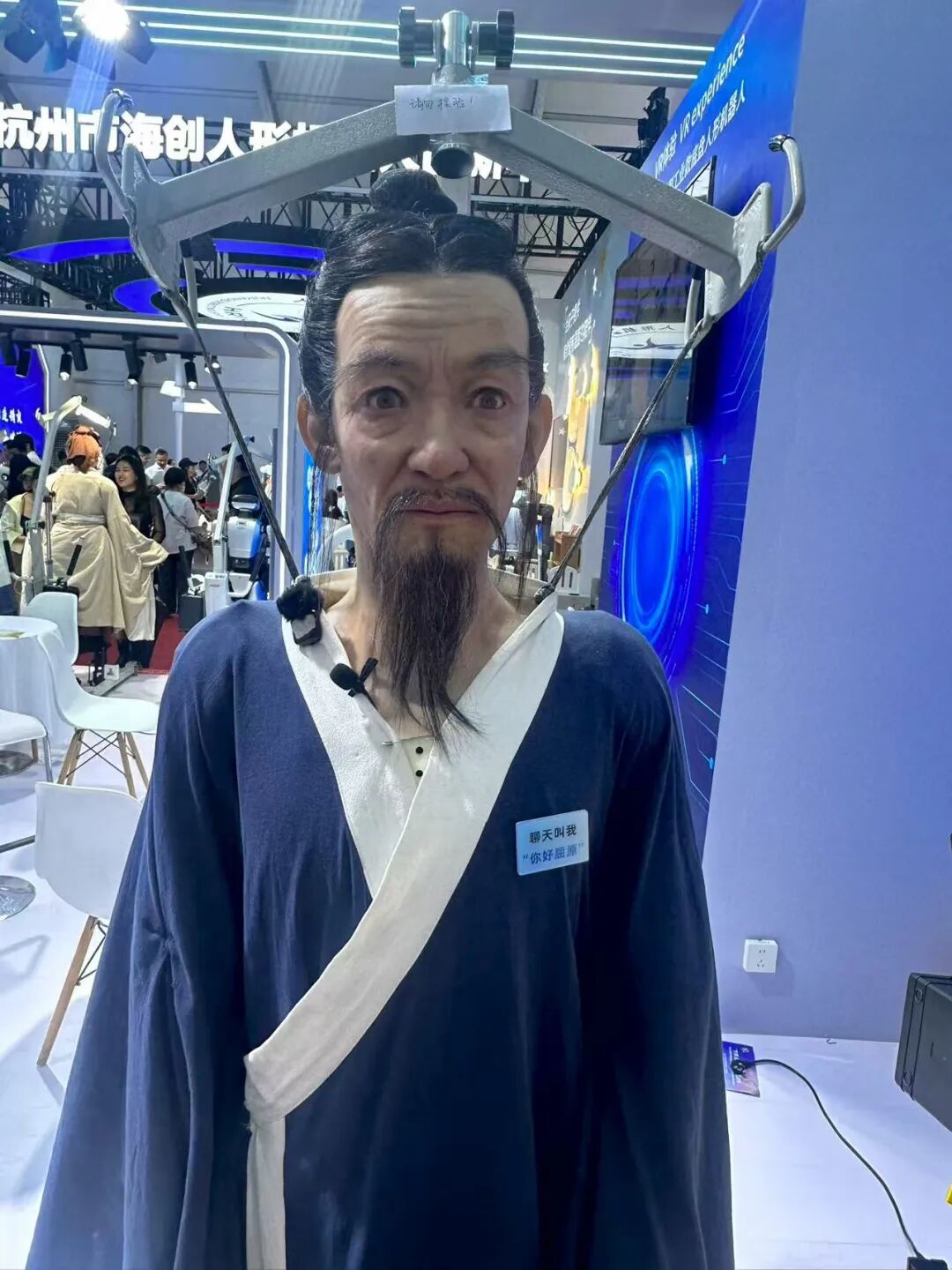
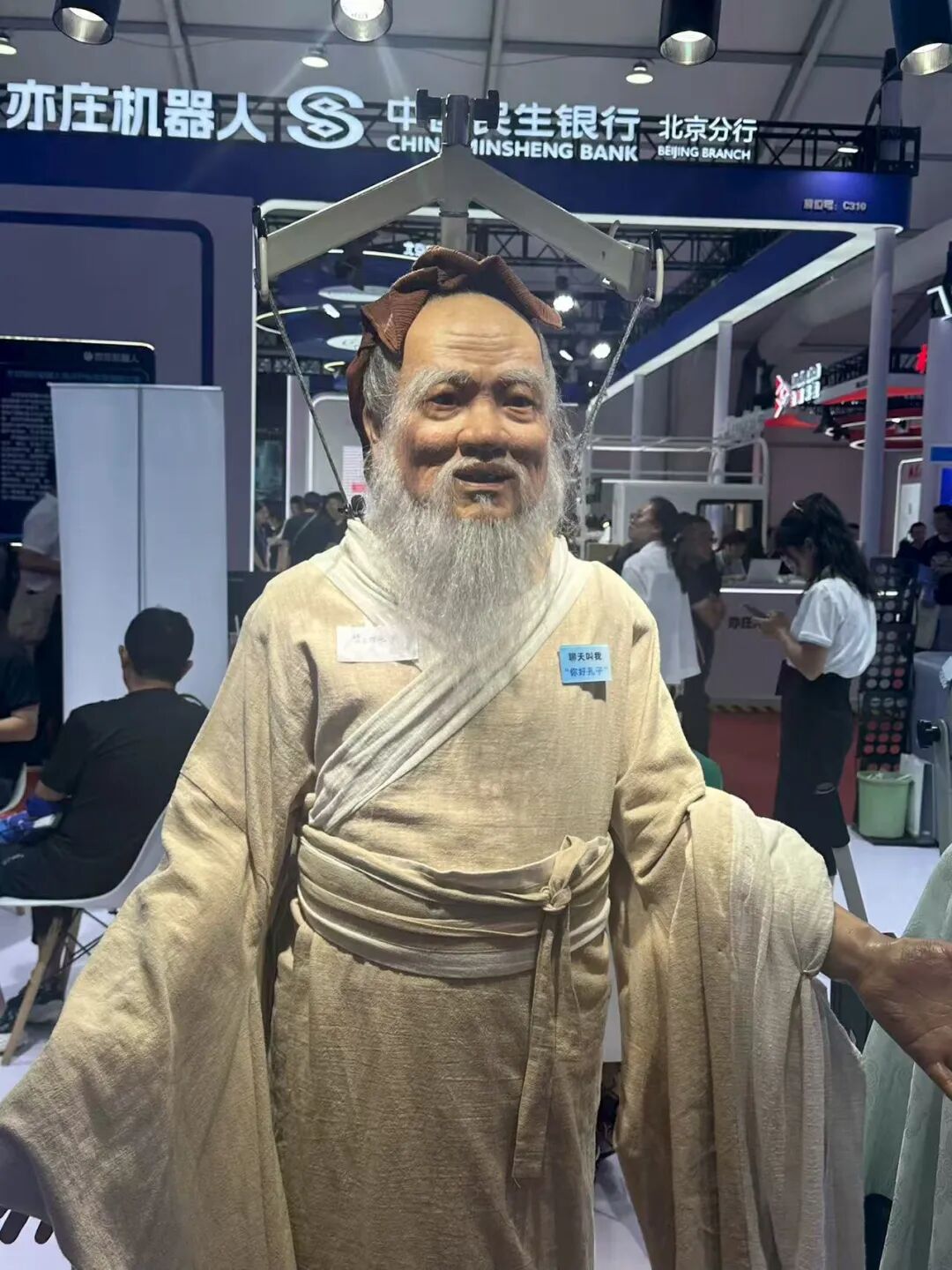
Then there's Yunmu Intelligent Manufacturing. Dedicated to making every historical site sprout humanoid ancients to keep you company.
Humanoid Qu Yuan 👇
Humanoid Confucius 👇
And a humanoid Sun Wukong head (too ugly, no picture).
Then there are Songyan Dynamics' humanoid friends.
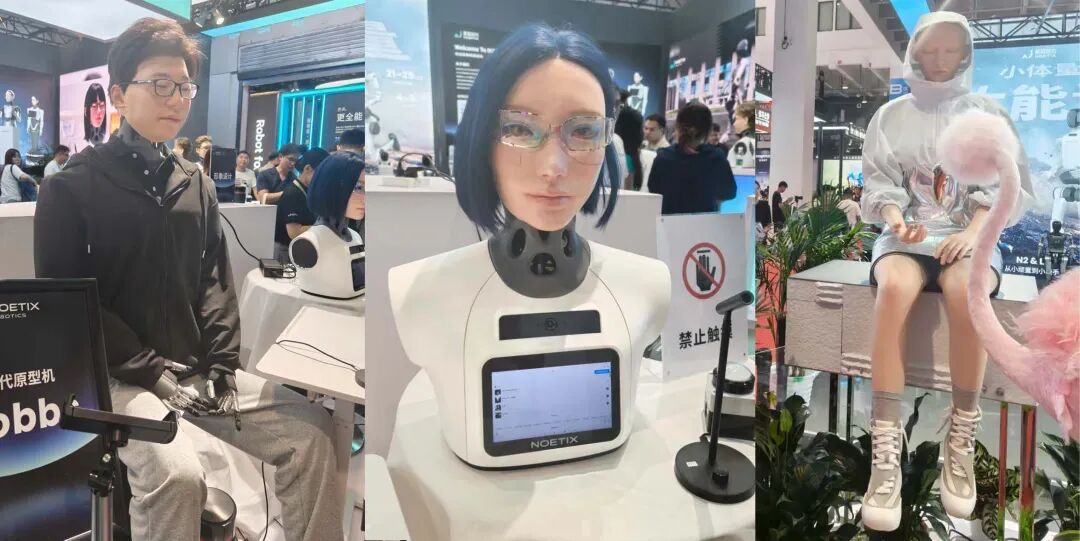
They say in the cyberpunk era, each of us will have our own Her.
Which one would you pick?
This gentleman, this lady, or this cyber girl?
Of course, just like the human world, there are plenty of honest robots doing actual work.
Kepler K2 Bumblebee.
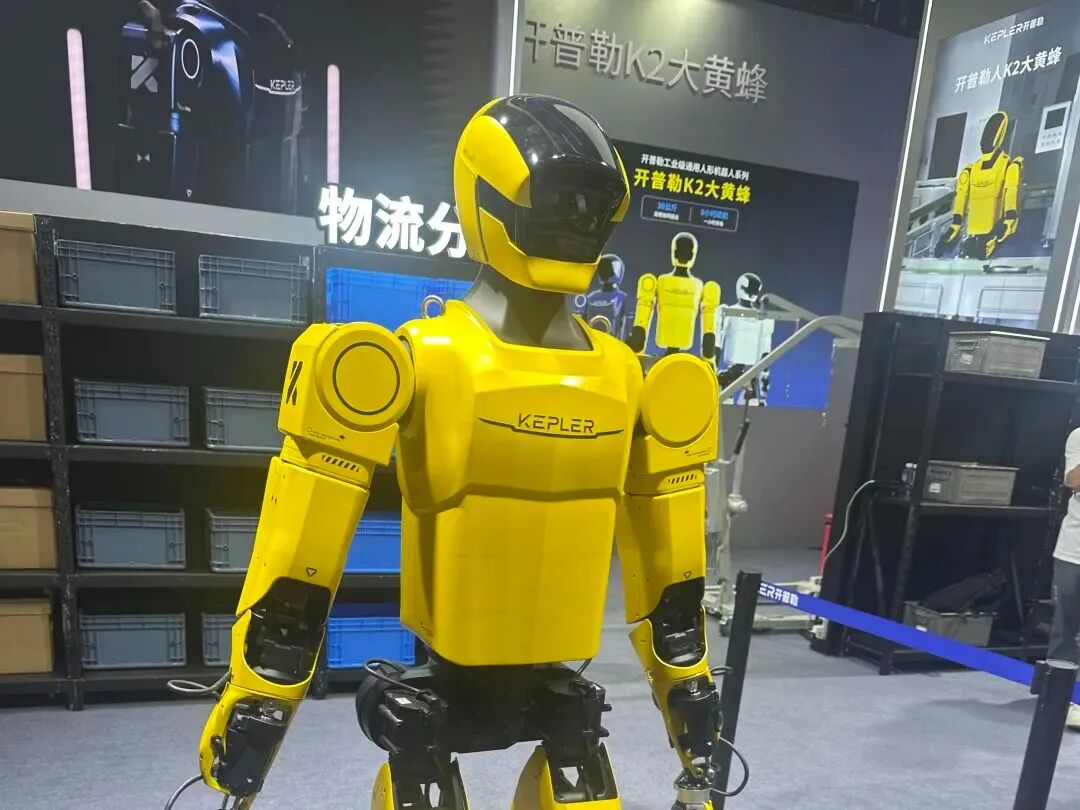
👆 175cm tall, 135kg, 8-hour battery life. Can carry 30kg loads. A 1:1 custom replica of your hardworking colleague.
(Hardworking colleague says: NO, I can go at least 11 hours.)
Fourier GR-3. Rehabilitation robot, kind of cute-looking.
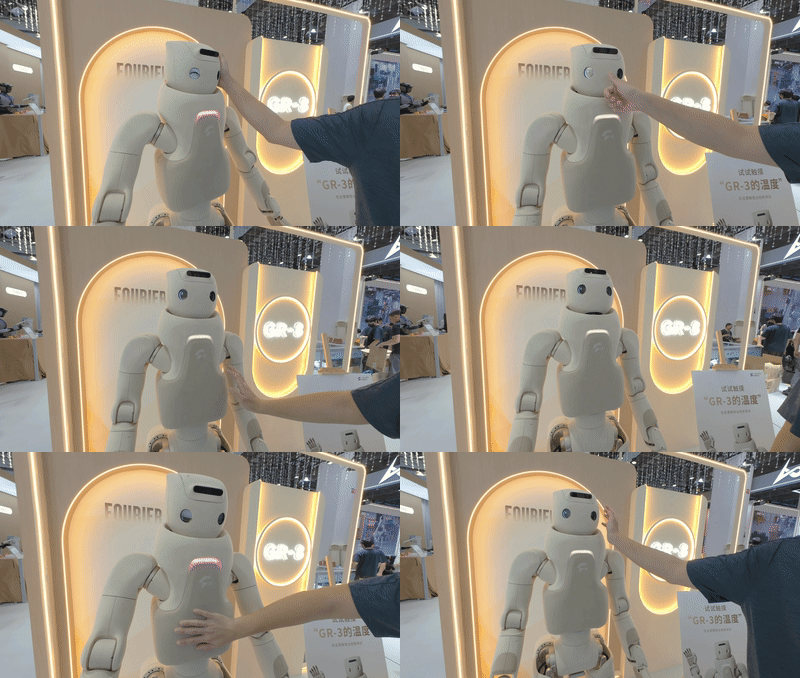
Also dispensing glue, sorting, logistics. Covering every blue-collar position out there.
This part looks too much like the daily grind itself, so we'll skip the details.
2
After walking through it all, apparently many people, like me, felt a vague sense of disorientation.
Like stumbling into a massive robot job fair.
Baristas, mixologists, jianbing proprietors. Sorters, movers, greeters and guides.
Every robot was desperately showing off "what job I can do."
But the problem is, the stage for most of these roles clearly hasn't been built yet. Some are just temporary gigs for attention; others have flashy resumes but are still a ways from being competent workers.
Not to mention humanity's eternal question number one:
If making jianbing is something we need robots for, what can we humans still do?
And eternal question number two:
Creating you robots and bringing you to Earth — it really wasn't for making jianbing, was it?
Then I went to listen to Xingxing Wang's speech.
He gave a decidedly absolute "essential answer."
First, domestic robot industry growth in the first half of this year has been staggering. Complete machine manufacturers and component suppliers averaged 50%-100% growth, with surging demand accelerating the entire supply chain.
Xingxing Wang believes China's engineer dividend is fully erupting. Even if to us the robots' dancing still looks awkward, and they still trip playing soccer, hardware is completely no longer an obstacle.
The real inflection point is what's called embodied intelligence — it requires robots to be more than obedient tools that simply follow pre-programmed fixed routines.
It has to become an "intelligent agent" that can truly think, adapt flexibly, and interact with the real world.
Or like a toddler learning to walk, stumbling through unfamiliar environments, yet learning and growing autonomously through every attempt.
When a robot walks into a room it's never seen, and you simply tell it "give that bottle of water to that audience member" or "tidy up this room," and it can complete the task smoothly and autonomously.
That will be the ChatGPT moment for robots.
3
Beyond the flashy moves, there are indeed some robots quietly probing that real threshold.
For example, one robotics company is working on that "tidy up this room" task. Xinghai Tu 👇
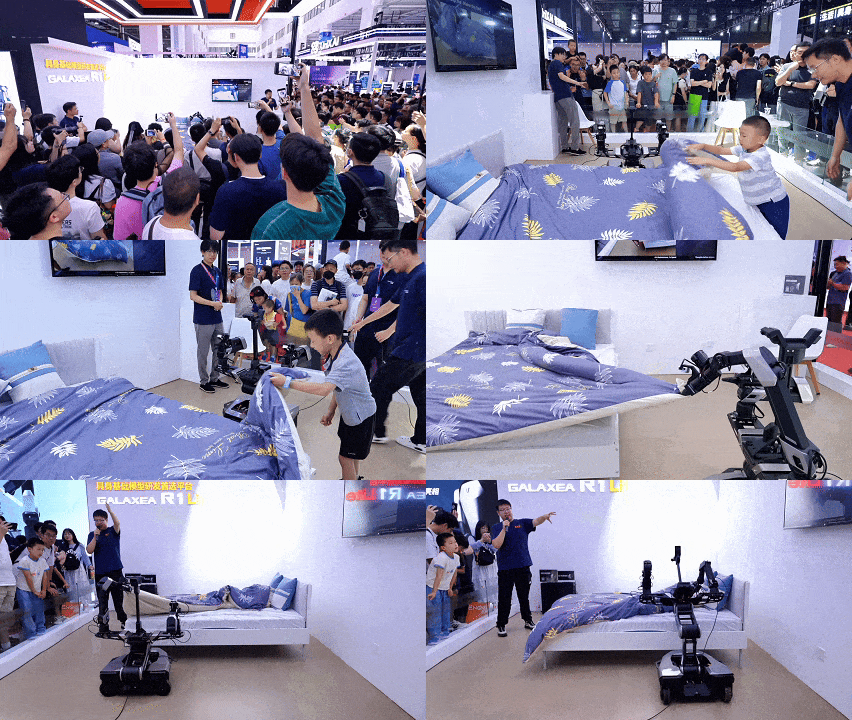
If I hadn't heard Xingxing Wang's speech, this scene would have been pretty puzzling.
A robot making the bed? How hard is that?
After all, JD.com's clothes-folding robot has been folding just fine for a while now.
But Xinghai Tu says tidying a room is a task that looks simple on the surface but hides the core challenges of embodied intelligence underneath. It requires the robot to understand the request ("help me tidy up the room"), identify problems (the messy blanket needs its corners smoothed), do long-horizon planning, coordinate its whole body, and handle soft fabrics (difficulty level explodes compared to picking or grasping rigid materials).
Xinghai Tu's newly released G0 dual-system model draws on the human brain's "slow thinking, fast execution" mechanism. The former handles planning — like a clever brain receiving your command (say, tidy the room), then breaking it down into a sequence of concrete action steps; the latter handles execution — like a well-trained cerebellum controlling every movement of the robot, ensuring precision and stability.
To help everyone understand, this tidying robot's step-by-step thinking process was displayed on screens above the exhibition hall.
Then there's Proto-Sentient Intelligence's mahjong-playing robot.
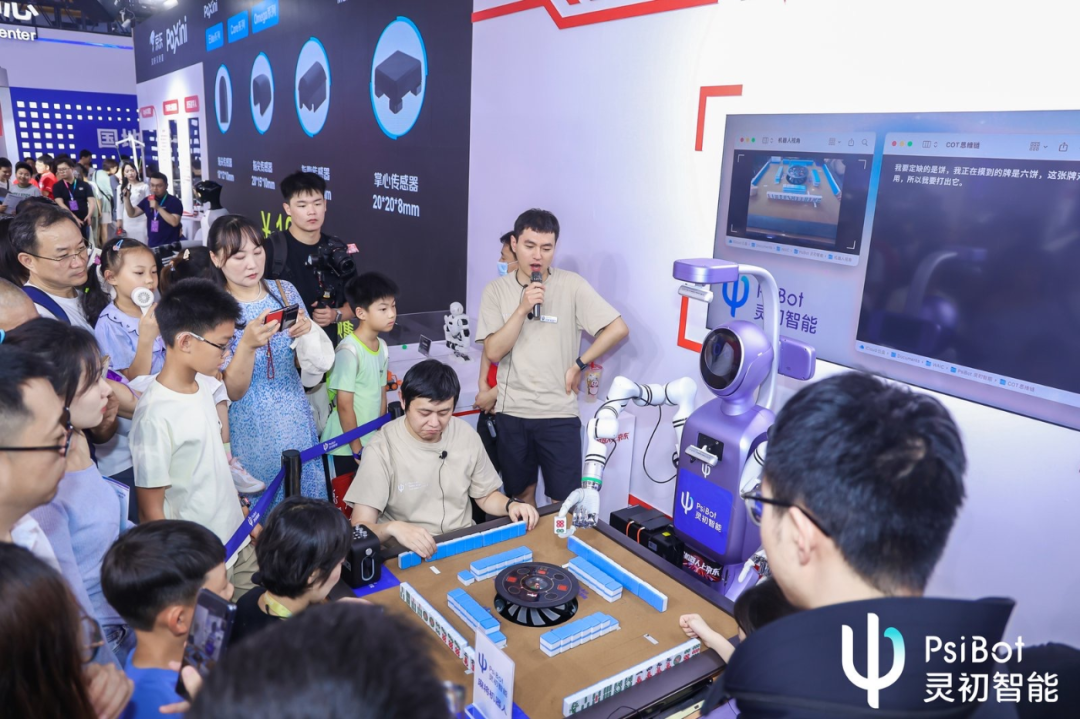
Mahjong isn't a fixed workflow. It requires the robot to perceive real-time changes at the table, understand rules, make instant decisions based on opponents' plays, and maintain stable movements through multiple rounds of interaction.
DOBOT's painting robot.
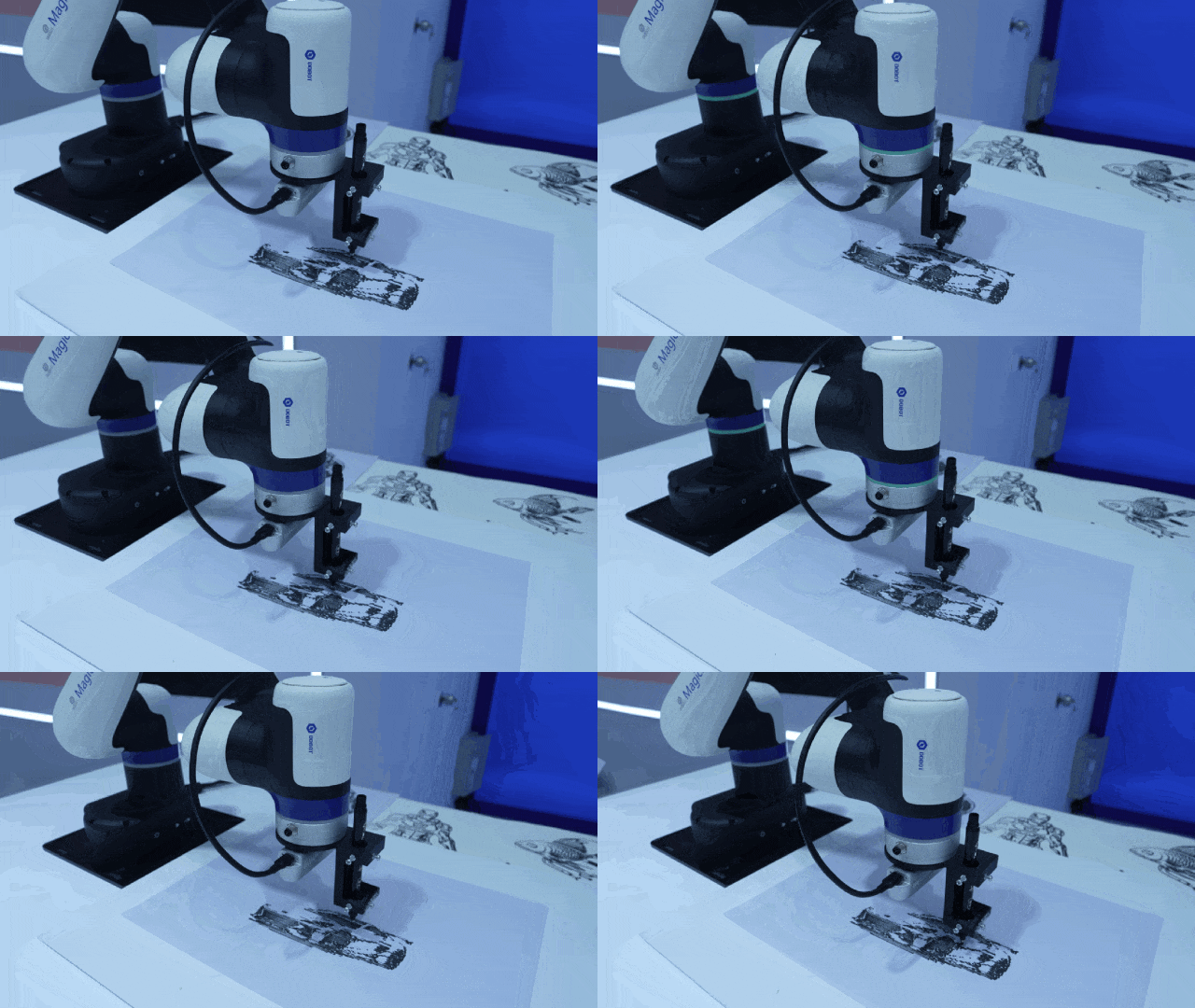
Though it looks like embroidery stitch by stitch, compared to a robotic arm repetitively copying, this robot can "continue" a painting. It must understand human natural language instructions, imagine scenes, and translate them into concrete creative physical actions.
The language understanding, high-level planning, and fine execution embedded here are important steps toward embodied intelligence.
Vita Dynamics' intelligent companion robot.
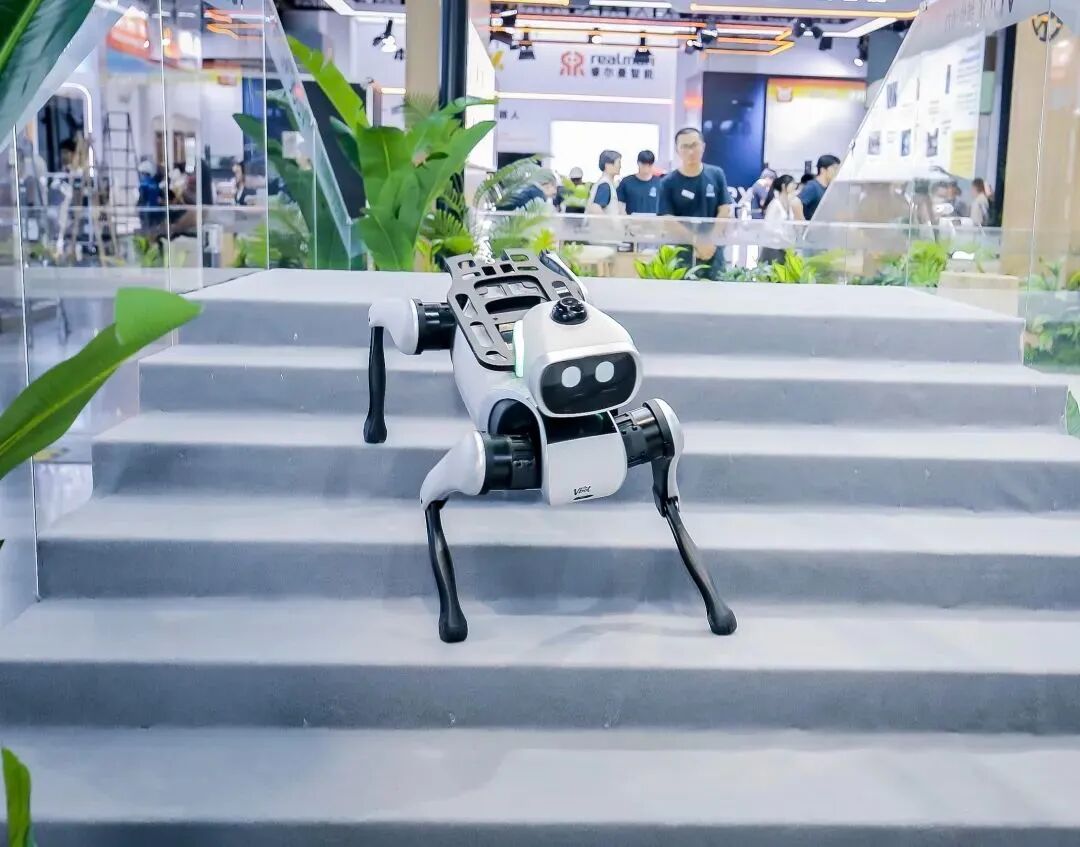
Can walk down stairs by itself.
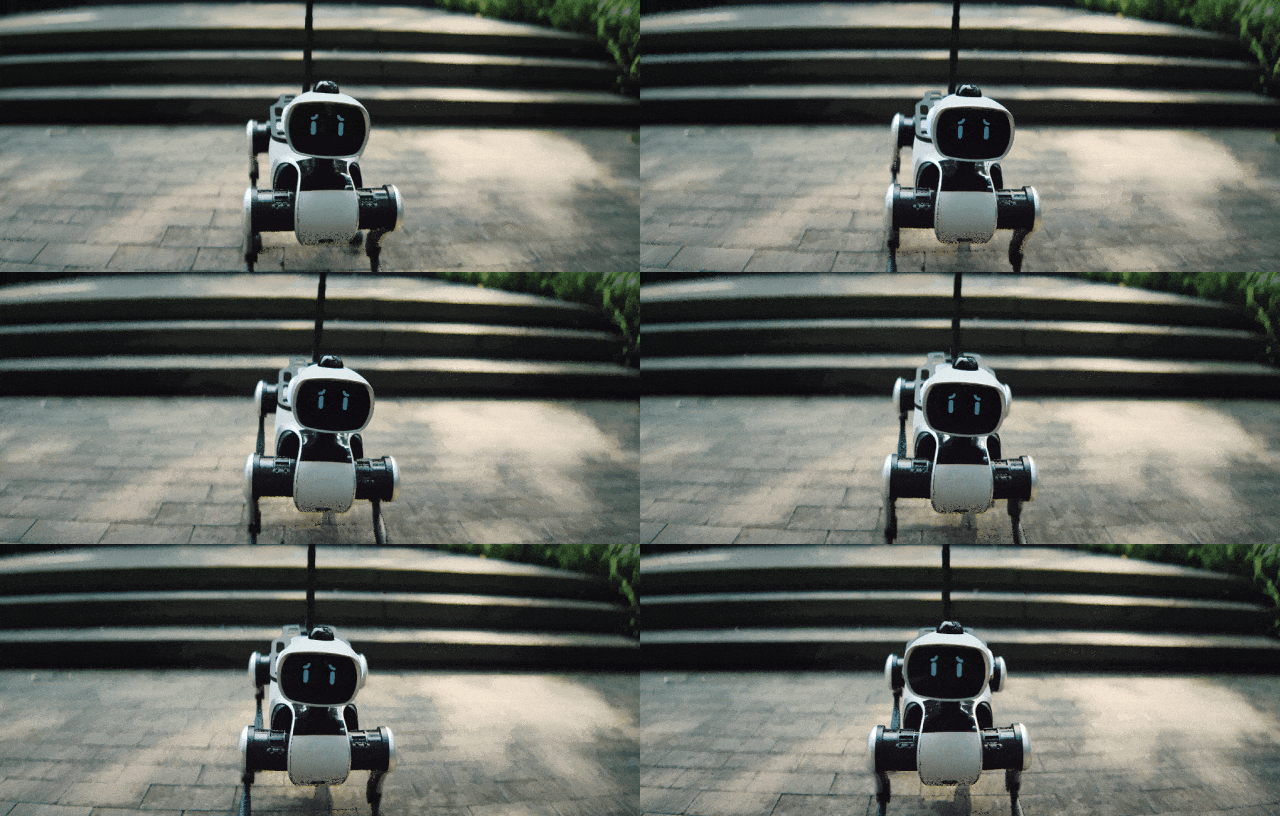
Too many people on site to get a good GIF, so here's one from the official website.
This harmless-looking robodog is an early attempt at embodied intelligence in the consumer market.
The company's marketing is refreshingly down-to-earth: "can be your little follower, little cameraman, little guardian" — helping carry bags, taking photos and videos, looking after elderly and children.
Behind it is VLA + Agent architecture. This lets it understand your intent when you say "take a photo for me," autonomously plan its path, then execute the shot.
Looking back at this robot conference.
Those soccer-playing jocks, the robodog trailing behind you, the seemingly bored housekeeper — they may not have been just showing off.
What the manufacturers are probing behind the scenes is the same threshold: how to make robots evolve from single-purpose execution tools into intelligent agents that can autonomously perceive, understand, and act in complex environments.
Just like 20 years ago, when AI was also doing all kinds of things that seemed silly to people at the time.
Fei-Fei Li and her team spent enormous amounts of money and years building the massive ImageNet dataset. 15 million photos, 22,000 categories, just to teach computers to recognize everyday objects — starting from the simplest: cat or dog.
Maybe in a few years, we'll buy a steaming hot jianbing from a robot vendor and forget it was made by a robot. Or walk into a tidy room without remembering it was a robot that tidied it.
— Bonus —
We have a podcast now.
Search for "AI NOW" on the Xiaoyuzhou app to listen