From DeepMind to Embodied Intelligence: Why She's Convinced Robots Will Enter Millions of Homes in Just 3–5 Years | AI Women on Point

The Reflections, Decisions, and Trade-offs of a Woman on the Front Lines of Embodied Artificial Intelligence

By Zhang Zhuo | Produced by AI NOW!
Intro
Our first post of 2026 marks the launch of a new column: "AI Women on Point."
"On Point" comes from military terminology — it refers to the person who walks at the very front of a unit. "AI Women on Point," then, speaks for itself: women at the AI frontier who hold decision-making power.
In this column, we won't ask: What difficulties do you face as a woman? How do you balance work and life? As a gender minority in the industry, how do you get along with men?
We'll focus instead on how they make decisions and trade-offs in a rapidly changing industry, what unique perspectives they bring, what leadership styles they advocate, and how they understand their own strengths.
Ideally, "AI on Point" would suffice as a name — but right now, emphasizing "Women" isn't a political stance; it's a methodological choice.
For too long, society's default image of a "decision-maker" has been male. In other words, our emphasis on Women here isn't about highlighting "women" per se — it's about underscoring a long-ignored fact.
Make no mistake: while AI remains a male-majority industry, it is absolutely no longer male-dominated. The proportion of women in key positions far exceeds public perception, and they are actively shaping how frontier technology enters the world.
Someday this column will return to its original name, with no need to emphasize "women."
For our inaugural issue, we feature Jianan Wang — a prodigy, Vice President at Astribot (the world's first company to achieve mass production of cable-driven AI robots), and a frontline driver in embodied intelligence.
She earned her bachelor's degree in information engineering from The Chinese University of Hong Kong and her master's in computer science from Oxford University, then joined DeepMind to work on fundamental theoretical research. In this "extremely hardcore" department, she led research on online learning and compositional knowledge transfer for continuously changing real-world scenarios, and built large-scale AI training framework tools.
But after three years at DeepMind, Wang gradually realized she was more drawn to concrete problems than abstract theory. She returned to China in late 2021 to join IDEA Research Institute, where she continued frontier AI research while tracking technological inflection points and industrial application — eventually choosing to throw herself into the embodied intelligence wave.
In early 2024, she joined Astribot as Vice President, and with her team built a full-stack technical system of "top-tier hardware × high-quality data collection × intelligent model learning."
Unlike those who hold pessimistic views on embodied intelligence commercialization, Wang's stance is radical: she believes it will take just 3-5 years for embodied intelligence to enter real household scenarios. "When it comes to concrete landing problems, we're fairly confident — we can absolutely solve them."
She is pushing toward this goal with a clear methodology: first, aim for generality. Step one is getting embodied robots safely and persistently into real environments, then failing repeatedly, learning from each failure, converting every interaction into recyclable data assets, and finally transforming that into generalizable capabilities.
"It has to truly be like a human — capable of mastering more skills through learning." Under this technical approach, the robot's physical body is no longer mere hardware, but the switch that determines data quality, learning speed, and operational capability.
Wang is optimistic and outgoing, speaking with a smile, rapidly but always clearly and concisely. She looks far younger than her age: high ponytail, oversized sweater, a restrained designer brooch on her chest. The day she met AI NOW!, she appeared at the conference room door precisely on time, relaxed yet focused — like a college student who'd just rolled out of bed and walked straight into class.
Her daily hobby is watching anime. Her WeChat profile picture is an anime character: Frieren from Frieren: Beyond Journey's End, her current favorite.
Frieren is an elf over a thousand years old with immensely powerful magic. Most of her time isn't spent obsessing over power itself, but rather collecting spellbooks — and she'll use her strongest magic on seemingly trivial things. Even while traveling with the hero's party to defeat the Demon King, she remains absorbed in many "boring" small pleasures — like turning a meadow into a beautiful flower field, or making shaved ice for her companions. "But these little things always make the people around her happy," Wang said with a smile.
This fits Wang's persona quite well.
A colleague described her: very capable, very opinionated, but not deliberately seeking presence, not drawn to grand narratives. Instead, she prefers to direct her energy toward things that genuinely affect the world over the long term — while maintaining a rare composure and patience. "She lives extremely simply, extremely peacefully."
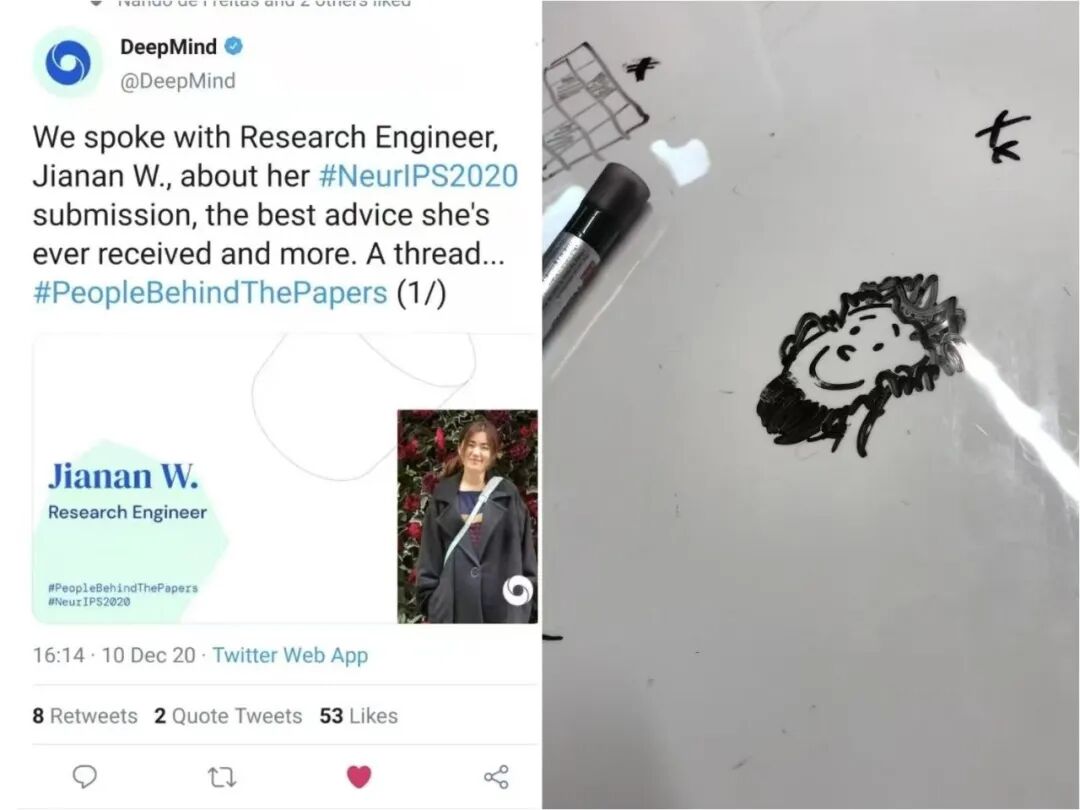
- Wang's work at DeepMind and casual office doodles
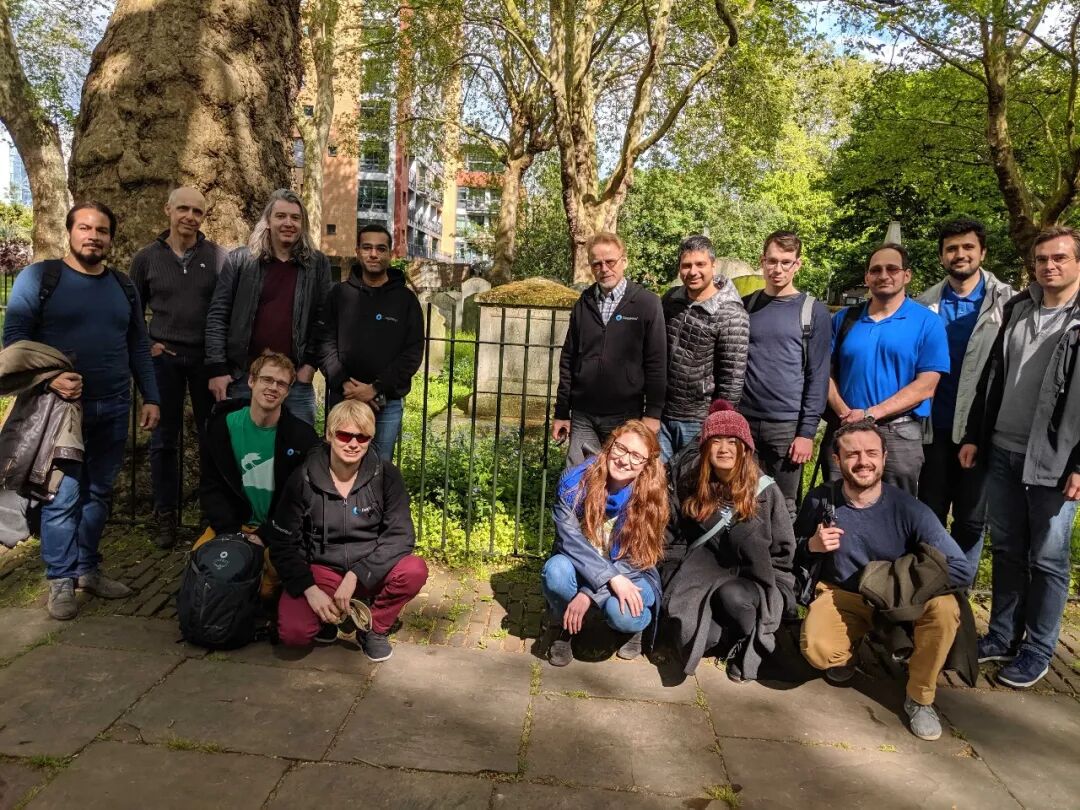
- Wang (front row, red knit hat) with colleagues at DeepMind
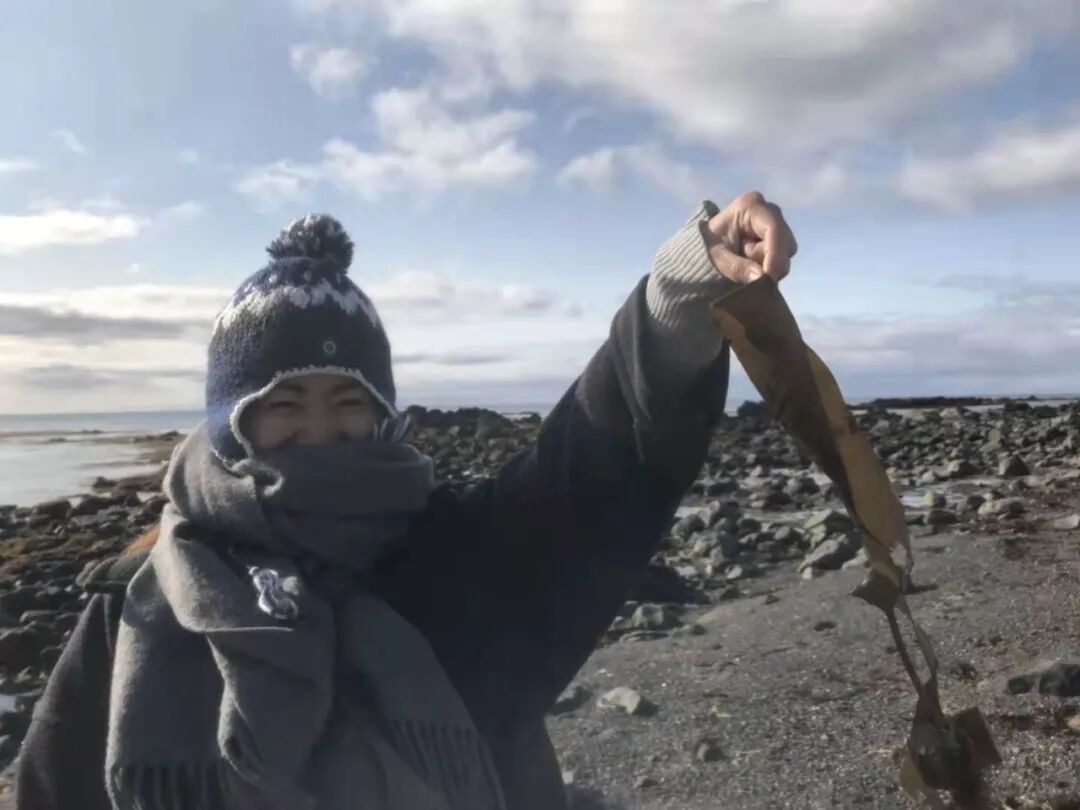
- Traveling in Iceland
In Conversation with Jianan Wang
Part 01
AGI Is Coming
Embodied Intelligence Must Also Aim for Generality
AI NOW!: Jianan, great to chat with you. Your most important career decision to date was leaving DeepMind to return to China and join the embodied intelligence wave. Could you share the reasoning behind that decision?
Wang: In summary, my career decisions have consistently followed one direction: how to bring AI closer to the real world and solve real problems.
I remember when I finished my master's at Oxford, my advisor asked me to continue for a PhD. The main reason I didn't was that I didn't have a direction I truly believed in. I thought AI was cool, but to do it for a lifetime? That was a big question mark.
After graduating, I joined DeepMind and encountered AGI. Compared to other AI companies, DeepMind's focus was extremely pure: how to achieve AGI. Even though AGI was still a very abstract concept at the time, based on this conviction, the company encouraged everyone to tackle the most fundamental problems, with no performance reviews or KPIs. I remember the company was systematically exploring and validating different directions. I mainly did theoretical research and was in a fairly open state — just vaguely feeling that I might be more interested in real-world application scenarios and problems.
After returning to China, I briefly worked on AI-generated content (images, video, 3D generation, etc.). Then around 2024, I first saw Astribot's cable-driven hardware. At the time they were still in a very small office. In that instant, I thought: this is so cool. I finally have the opportunity to explore AI on mature hardware. There was no agonizing process — I just joined.
I've always made decisions quickly. I'm intuition-driven.
AI NOW!: There must be underlying thinking and judgment about realizing embodied intelligence behind that decision?
Wang: Astribot's philosophy is a general solution of model plus hardware, which aligns with my judgment about AGI.
First, generality matters. This is something I learned at DeepMind — you could call it taste in problems. Taste doesn't mean choosing one technical path over another; it means having clear judgment about what problems are worth long-term investment.
I remember at DeepMind, I often heard Demis Hassabis (DeepMind's founder) communicating and sharing with the AlphaFold team, which benefited me tremendously. He always thinks from a long-term perspective, never shies away from the essence of problems or underlying difficulties, and never presupposes that any one party necessarily has the more correct answer.
I firmly believe AGI is inevitable. So in embodied intelligence, the goal of generality must be clear.
Additionally, compared to some embodied companies that only build models, Astribot has mature, high-performance hardware that lets AI actually run on a robot. This is crucial.
I recently saw a technical report from Physical Intelligence (a US-based startup focused on bringing general AI into the real physical world). When their model attempted gold-difficulty tasks, the only two cases it failed to solve were due to hardware limitations — the hardware wasn't good enough, so it couldn't do many things.
So Astribot's embodied approach provides excellent soil for me to tackle harder problems.
AI NOW!: Specifically on "generality," there's分歧 in the industry — some believe specialization should come first?
Wang: Robotics is a very old discipline, and many specialized scenarios already have automation solutions. So why is our generation throwing ourselves into embodied intelligence? The goal is to solve for generality. This is the premise of how I think about problems, and it's indeed influenced by DeepMind: if you're going to solve something, solve the big problem.
Moreover, with the new paradigm brought by ChatGPT and large models, if robots still do specialization, new capabilities won't emerge, and new problems won't be solved.
From the product side, many factories that have done machine automation for years are also looking for general solutions, because environments change and production lines change — today they're selling this, tomorrow they might be selling something else. Customers want general solutions; otherwise costs are too high.
Most importantly, general models have a clear advantage: they can continuously expand capabilities using the same training paradigm, and are inherently scalable — so their potential is enormous.
For example, a shop assistant robot faces customers, hands things over, scans codes, stocks shelves, removes stock — these are all completely different tasks. If each thing relies on a separate small model, the entire system is almost impossible to run seamlessly and smoothly.
We need to understand that some actions very easy for humans — opening doors, selling goods, picking up cups — are extremely complex for robots.
AI NOW!: You came from theoretical research. Can you give an example of a practical problem that excited you far more than doing theory?
Wang: I have a colleague working on unmanned forklifts, applying perception algorithms. They'd accumulated massive amounts of data with very high accuracy — no issues for months. Then one day, suddenly all the vehicles couldn't recognize anything.
Later analysis concluded: because after the season change, the sun's angle was different, causing two iron pillars in the factory to cast shadows that looked very much like the two poles in front of a forklift. Data was collected in spring; the problem occurred in winter. This wasn't the algorithm failing — it's a problem you only discover when you land in real scenarios.
In machine learning, this is called data distribution mismatch: the world seen during training and the world encountered during actual operation aren't the same. Solving such problems absolutely cannot be done by continuing to supplement data in the lab. If you only train in ideal environments, capabilities robots learn easily "fail" in the real world.
Many key insights don't come from algorithms themselves, but from the moment the robot truly enters a scenario. This excites me tremendously.
Part 02
Industry Hype
What's Overestimated and What's Underestimated
AI NOW!: How do you define a real embodied intelligence scenario — being able to help your mom cook and wash dishes? How far are we from that?
Wang: I'm radical: 3-5 years.
There will certainly be new modules or architectures, but I don't think these are big problems. The biggest problem is how to iterate data for better learning. On this, our team is also fairly confident — we can absolutely solve it.
AI NOW!: Why so optimistic? Because you've thought it through clearly enough?
Wang: Yes. But I think before that, we need a transition phase where some frontier users are willing to coexist with machines and teach them to do things.
For example, say we build a model with 85% success rate. What about the remaining 15%? That's when humans need to take over. You can step in when it fails and teach it how to complete the task. This process itself becomes new data that flows back into the system to retrain the model. Next time, it might improve from 85% to 90%.
This process has a prerequisite: first getting users willing to interact with it, willing to teach it. Say you initially buy a robot to do housework, then later discover it can also help you feed fish or do other things — these new demands are all taught to it step by step.
Our previously released Astribot Suite platform is essentially a complete system prepared for this process: how to collect data, how the robot is used — all made very intuitive, very simple. We want it simple enough that my mom can use it to collect new data. Training can be handed off to the cloud and our system. Once trained, new capabilities are deployed back to the robot.
Gradually, people get used to having robots around, accepting that they sometimes fail. The key is: when it fails at a task, is it still safe? When it only has 90% success rate, can you teach it to get better? It's actually a bit like teaching a child. If this process is natural and smooth enough, robots truly entering homes isn't a very distant thing.
AI NOW!: Specifically for 2025, what key trade-offs have you made? Especially on the "giving up" side?
Wang: In general model training, we've abandoned some non-general tricks and data modalities that don't scale well.
AI NOW!: What capabilities in embodied intelligence have been overestimated these past two years?
Wang: Not exactly overestimated, but there's a phenomenon. At robotics expos, companies often only demonstrate single tasks — like having a robot fold clothes.
Honestly, for those of us who do algorithms, excessively pursuing success on a single task, even reaching 100% success rate, isn't difficult — you can absolutely iterate that up through reinforcement learning.
I don't think this is the industry's core problem. The core problem remains robots' general capabilities.
AI NOW!: What's been underestimated or overlooked?
Wang: A company's philosophy, or what I mentioned earlier as taste in defining problems — whether there's ambition to build a truly product-grade robot.
Actually, I care about product tremendously. I want the embodied robot I build to not be a static display piece, but a product that continuously interacts with users and thereby generates value.
So to get robots into daily life to do things, we need to consider an enormous amount and ensure safety. Additionally, for such a product: how does the model intervene? To what degree? How does data flow back? All of this needs thinking.
This entire set of product thinking is actually underestimated in current industry narratives.
AI NOW!: Your 2025 aha moment?
Wang: We officially launched Lumo-1, a strong reasoning model that lets robots not only remember what to do, but understand why they're doing it.
For this model, we did very meticulous experiments. For example, when training robots, we didn't start with real robot data. Instead, we first used similar scenarios and experiences from the internet to decompose a task: in this situation, how should you judge? What's the critical step? What needs attention next?
Then we organized this thinking process and put it into the model, letting the model learn how to think. In other words, even without large amounts of robot manipulation data, we can first teach it ways of thinking.
This way, later it only needs very little data — maybe 10, at most 100 — and it can get the task done.
This was an incredibly happy moment, because for the first time I saw: knowledge can directly transform into real robotic operational capability.
Part 03
I Never Doubt My Own Judgment
AI NOW!: When leading a team, how do you think about leadership?
Wang: The characteristic of our research field is a culture of admiring strength. As long as you're strong and right, people will naturally follow you.
AI NOW!: In frontier fields facing much uncertainty, how do you make decisions?
Wang: Indeed, for many things, I'm not certain the direction I give is necessarily right. If there's 60% hope and everyone is willing to try, then iterate and verify quickly — I'll jump in with everyone, don't overthink it.
AI NOW!: What if you're wrong?
Wang: Turn around quickly, because not making a decision is the worst thing.
AI NOW!: Do you care about external evaluation?
Wang: Not really. I trust my own judgment and decisions very much.
AI NOW!: Have you had moments of self-doubt?
Wang: Yes — my first year at DeepMind.
Before that, my academic path had been very smooth. I was proud, and young and arrogant. After joining DeepMind to do fundamental theoretical research, I felt like I'd fallen into a nest of geniuses — the people around me were too brilliant. I realized at the time that no matter how hard I worked, I was only learning what they already knew.
This was a huge psychological blow. I was extremely, extremely depressed for a while.
Later I learned to make peace with myself. I began to realize that many things can't be rushed, including embodied intelligence now — I absolutely can't solve all problems this year, I can only work bit by bit.
But with firm conviction, and accumulating good companions along the way, it's a good journey.
Life, after all, is nothing but a journey.
AI NOW!: Is embodied robotics the destination of this journey?
Wang: Yes, it's my lifelong goal. I can completely imagine a future where humans and robots coexist.
This is absolutely not delusion — it's the result of pragmatic thinking. Of course, it's possible this wave of embodied intelligence won't succeed with us. But even then, I want to be among those who push this furthest forward, exploring one more step ahead, paving the way for the next generation.
Image sources | Unsplash, provided by interviewee