Interview with Nooka's Kai Tang: A Post-'95 Generation Rewriting Kant with AI, How New Platforms Will Redefine Creators | 100 AI Creators

Whoever can define the new creator will build the next-generation content platform.
Produced by|AI NOW!
01
99.9% of people will never read Kant's Critique of Pure Reason in their lifetime, but Kaixin Tang still wanted to try.
Now, an app called Nooka exists. You can spend 20 minutes suddenly dropping into Kant's universe of "how humans construct the objective world through subjective experience." For this 800-page tome, Nooka doesn't summarize or overview it—it uses AI to turn it into a slick podcast episode.
A guy who sounds a lot like Joe Rogan (America's most popular talk show host) explains the transcendental dialectic's warning to theology Matrix-style, then invites another voice to push back:
"So Kant was actually the original metaverse believer?"
And if you ask a question, the AI takes over creating. Under The Elon Musk Biography, one user suggested that Musk and an Eastern leader share common ground in leadership style. The AI jumped right in. Handling this kind of seemingly distant but intrinsically similar knowledge is child's play for large models, and the user felt inspired, excitedly continuing the conversation with AI.
After a few back-and-forths, a new episode was generated: "Musk and Stalin: Mirrors of Techno-Utopia and the Mass Line." If your chat with AI is compelling enough, Nooka will push your conversation straight to the homepage.
Kaixin Tang, born in 1995, is using AI to build a new-generation content platform. He believes each new content platform is a redefinition of "who gets to be a creator."
Kuaishou turned county-town youth into livestreamers. Douyin unearthed performers. Bilibili empowered editing obsessives.
What Tang is doing is reinventing the identity of "the questioner."
In Nooka, you don't need to write scripts, record audio, edit clips, or think through topics and complete storylines. You just need to ask sufficiently interesting questions, and AI will engage with you in sufficiently interesting ways.
That's the origin point of an episode. New creators are born not from skills, but from curiosity.
Tang believes that to build a new-generation content platform, rather than continuing to expand the creator toolkit, it's better to redefine the starting point of creation.
02
Tang doesn't fit the typical profile of a Big Tech founder.
Though he's worked at ByteDance and Kuaishou—among China's most AI-competitive companies—and participated in early startup efforts with one of the "Six Little Tigers" of large model ventures, he doesn't carry the obvious growth-hacker or platform-product-manager vibe.
His first job after graduation was at Kuaishou. When he joined in 2017, the company had fewer than 1,000 employees and DAU was approaching 100 million. The engineering culture ran strong internally; colleagues mostly held top-tier research backgrounds from Tsinghua, Peking University, or other elite institutions. But the people they served inhabited an entirely different expression universe.
"What you saw in the office was a group of very Silicon Valley-ized engineers with strong system architecture skills. But the most explosive content in the feeds they optimized overwhelmingly came from county towns, construction sites, and rural villages."
Tang, like many colleagues then, "honestly didn't understand this content at all." It was the algorithms that learned their language and made them the most heard.
At ByteDance, he led a project with an unusual temperament—ancient text digitization. The origin was simple: the founder liked reading classical texts. But many canonical texts were only available on foreign resource sites, long missing from domestic public archives. Tang drove the digitization and online publication of ancient texts, making 20,000 classic volumes openly accessible online.
"This didn't make money for ByteDance, and nobody treated it as a strategic project." But he still saw it through, completing something "unnecessary but worthwhile" inside an algorithm-driven platform.
In college he studied architecture at Tongji University, then spent over half a year doing NGO work in one of China's least developed rural areas. In the mountains of western Hunan, there were no blueprints, no recommendation systems—only extremely slow feedback: a house takes three months to build, a water pipe half a year to bury.
These seemingly scattered experiences convinced him that where data and algorithms don't reach first, there's still something worth building.
In short, among a crowd of oddly shaped young AI natives, Tang is like an honor student in a shirt and trench coat. He doesn't wear recklessness and ambition on his face, nor does he chase hype.
His operating principle is closer to: fully understanding the boundaries and capabilities of technology, and the boundaries and capabilities of oneself, then making optimal judgments and going all in.
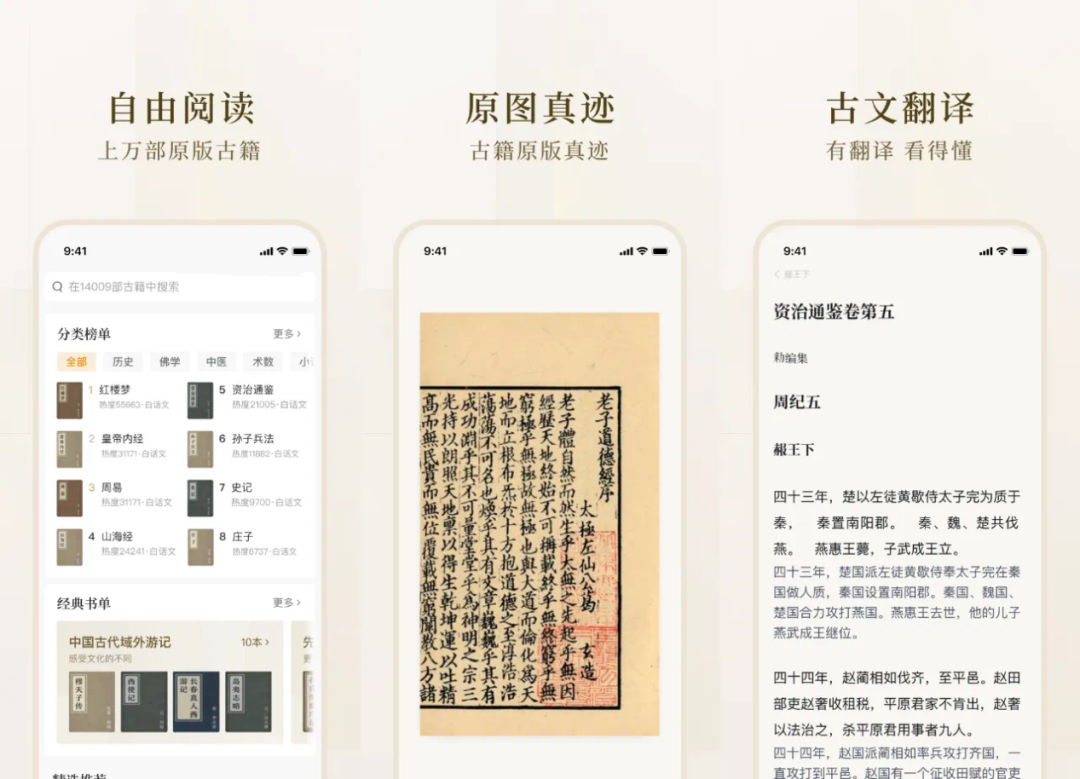
- One of Tang's projects at ByteDance: completing digitization of 20,000 ancient Chinese texts
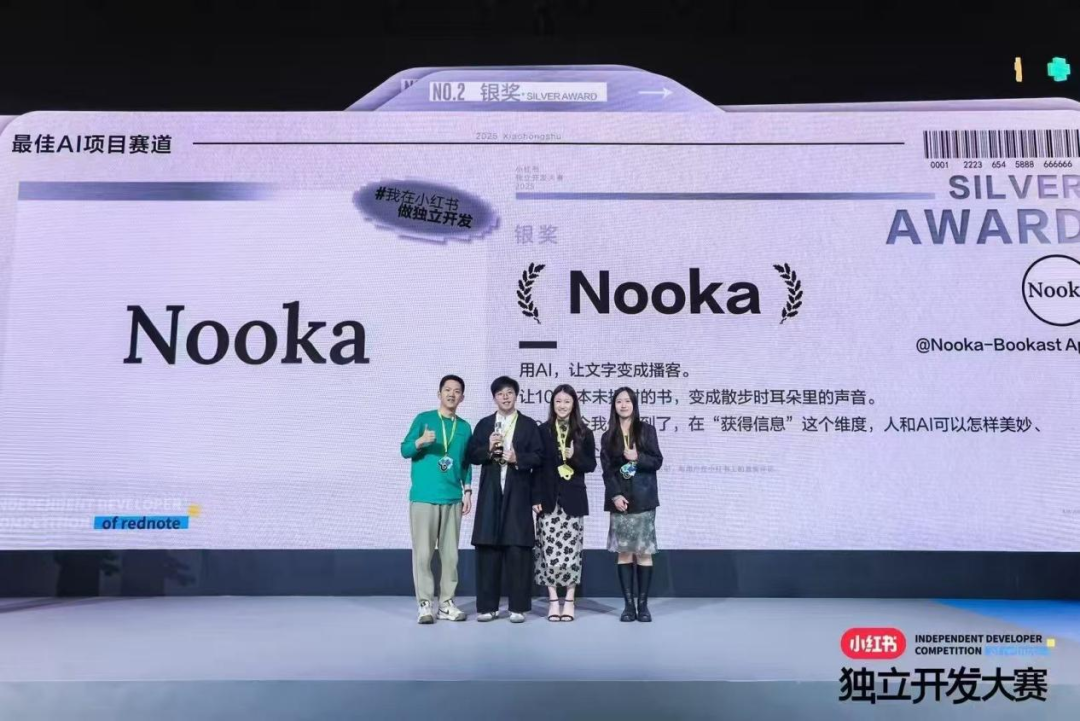
- April 2025: Nooka won "Best AI Project" at the Xiaohongshu Independent Developer Competition. Tang with the Nooka team

- 2024: Kaixin Tang at 28
Conversation with Kaixin
Part 01
AI Entrepreneurship Ignoring Model Capabilities Is Like Marking the Boat to Find the Sword
AI NOW!: Nooka is your first startup. Why did you want to do a content platform, and why audio rather than text or video?
Kaixin: I started seriously considering startup directions in late 2024, and formally left in February this year. I noticed two shifts at the time.
One was the leap in TTS (Text-to-Speech) technology. The leading SOTA models on the market had for the first time reached a quality level of "listenable, actually pleasant to hear"—no longer sounding obviously robotic and jarring like in the past. In other words, the consumability of AI audio content was established.
The other was the major development in language models' conceptual abilities. As thinking models became more affordable (Gemini 2.0 Thinking), language models could engage in deeper contemplation of content and ideas, introducing appropriate external information and clues rather than just shallow summarization.
These two judgments together made me feel audio was viable. It wasn't "AI can generate content now," but "AI can generate high-quality content that people will actually listen to."
AI NOW!: That's interesting. Because many people start from "what do I want to create," while you first mapped the boundaries of model capabilities, then found opportunity within those boundaries.
Kaixin: Because I learned this lesson the hard way.
Before starting up, I was at SenseTime last year, leading a team responsible for a consumer-facing AI product. We wanted to build something like a design agent, similar to Lovart that came out recently. Even then, SOTA models like Claude 3.5 couldn't deliver usable results. We bet our self-developed model could break through in this vertical direction, but progress kept getting delayed. To launch quickly, we had no choice but to compensate for the model's capability gaps through product strategy, using tactics to patch AI's weaknesses. But that's marking the boat to find the sword. When Claude 3.7 or Gemini 2.5 Pro came out, all that effort would be swallowed whole. Only product architectures that can resonate with model capability evolution are elegant—when Claude 3.7 or Gemini 2.5 Pro arrived, everything would have to be torn down and rebuilt.
You can see this clearly in Devin versus Cursor. Devin raised more funding early on, with a more advanced architecture—it aimed for "fully AI programmer" from day one. But the problem was being too far ahead; model capabilities couldn't support it, resulting in very low task completion rates. Cursor's approach was pragmatic. This code tool was clear from the start: only build features that current models could 100% handle. As models evolved, they didn't simply stack new features but rethought "what new experiences can models now stably deliver?" So you see, while other AI coding tools are still struggling, Cursor has formed a moat through user experience precisely matching model capabilities.
So our lesson is: don't build products detached from model capabilities, or you'll become a martyr. You need product architectures that resonate with both current model capabilities and future evolution.
AI NOW!: Back to Nooka—there are many audio content formats. Why did you choose book breakdowns?
Kaixin: To be precise, we reconstruct books, not summarize or simply compress them.
For audio content sourcing, our AI Agents can already handle content production very well. The more critical question is what the "content seed" input will be. Compared to news or trending topics, books—especially "human classics"—provide longer-lasting informational and knowledge value as content seeds. Books come with built-in IP, clear structure, high information density, and "dialogically reconstructing" a book's content through AI can avoid most copyright restrictions.
At bottom, books guarantee a baseline of content quality. Because we've done so much architecture work on the model side, later you could give it a single character and it would spin out 8 minutes of content, throwing in jokes and bits. But I think that's essentially without consumable value. Since we want to complete the consumption loop, we need to guarantee output quality from the origin point.
AI NOW!: If users want to learn about a book, why not just read it directly?
Kaixin: I think formal innovation in knowledge transmission and deep reading are parallel paths. A 20-minute Kant audio definitely can't replace an 800-page original; truly understanding Kant still requires reading the source. But people who can finish Critique of Pure Reason are extremely, extremely few.
Today, people's attention spans, information reception patterns, even brains have been reshaped by short video and fragmented information—an irreversible trend brought by technological development. If knowledge compression is indeed a major trend, then a 20-minute version helping Kant's ideas spread more widely—isn't that also a good thing?
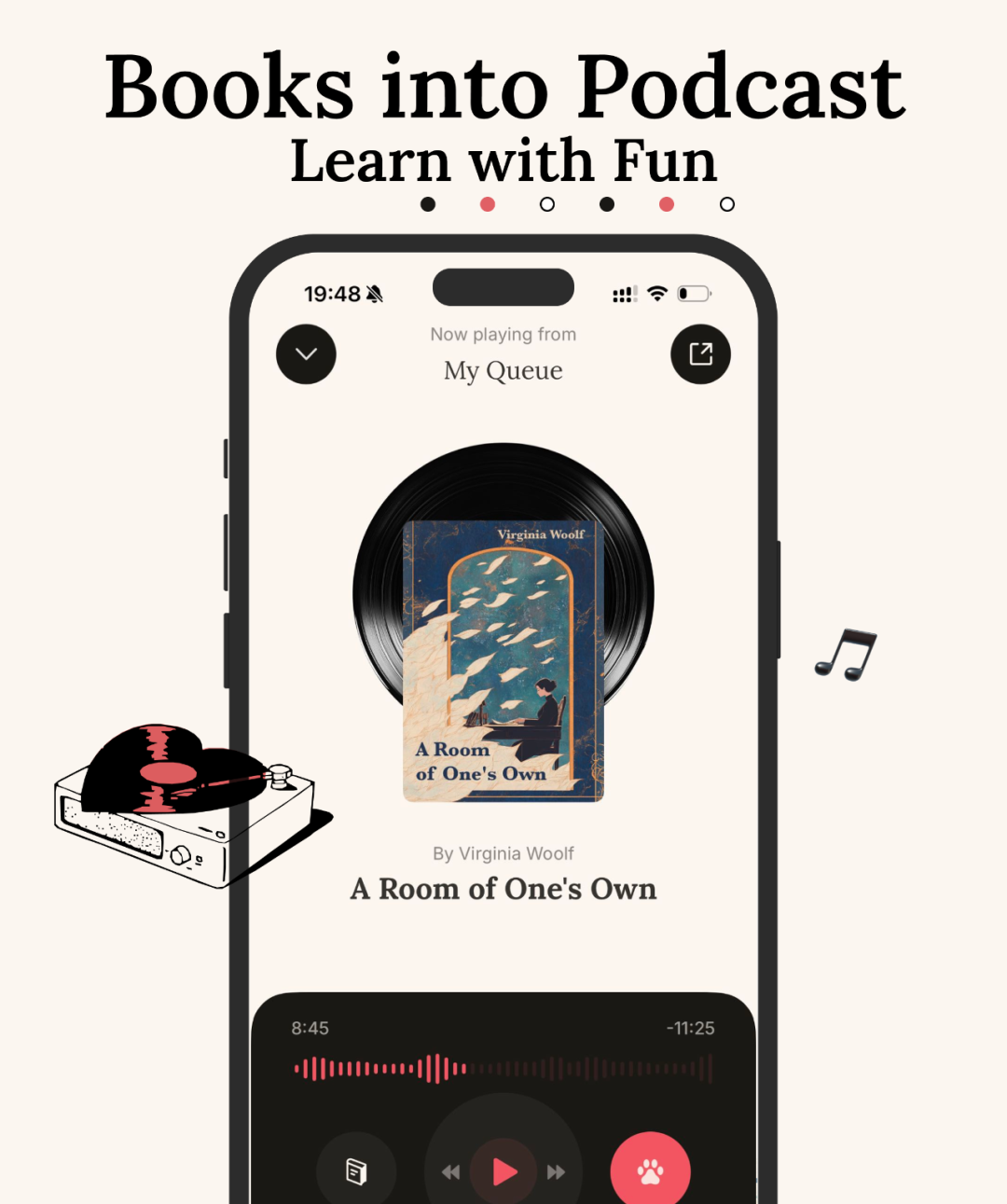
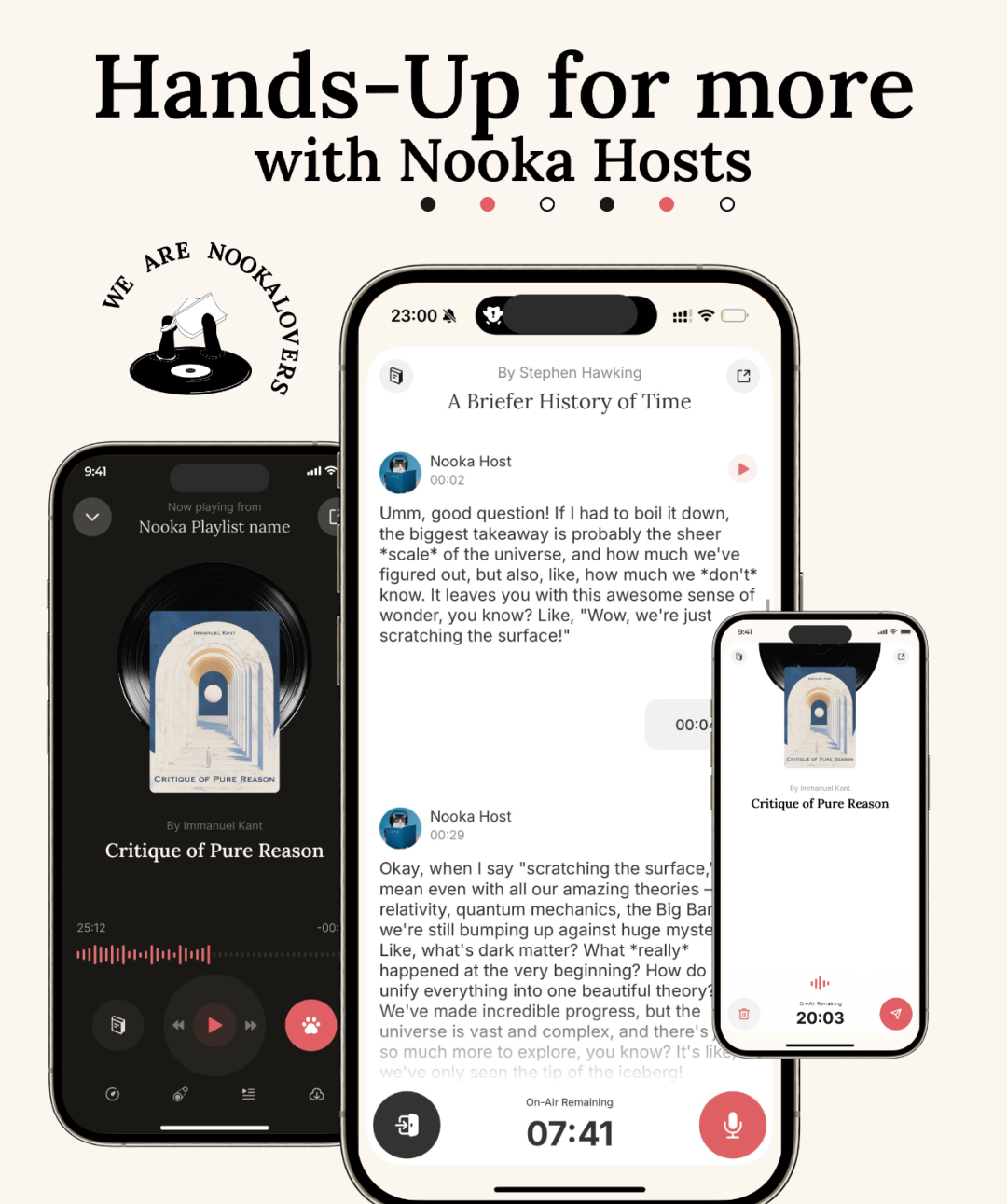
- The Nooka App: users can question and debate with AI
Part 02
AI Doesn't Summarize
AI Makes Books Come Alive
AI NOW!: So you're not pessimistic about this. To return—what specifically does Nooka's reconstruction of books look like?
Kaixin: We're not summarizing, nor simply reading books aloud. True reconstruction is making knowledge come alive.
Take Kant's "transcendental idealism." If you just copy philosophical terminology, 99% of people will immediately close the app. But if you say: imagine you're wearing a VR headset you can never take off—everything you see as "reality" is actually rendered by your brain. That's the core idea Kant proposed 200 years ago.
Then users immediately get it: oh, isn't that the premise of The Matrix?
This is how the English version handles it. For Japanese users, we might swap in a Mamoru Oshii Ghost in the Shell example, making it easier to understand across different language backgrounds.
AI NOW!: How do you train the model to achieve this dynamic interpretation? Because this is a very non-standardized approach—in reconstructing Kant, AI would obviously be more likely to compare Descartes and Schopenhauer rather than The Matrix.
Kaixin: The secret is "persona-ification" rather than generic information analogy and association.
I've listened to some AI-generated podcasts, and you can clearly see they've been scripted: first segment covers this, second introduces discussion, final section wraps up—a structured eight-legged essay pattern with beginning, development, transition, and conclusion. But we give Nooka different host personas: one like Lex Fridman, erudite and skilled at deep exploration; another like Joe Rogan, the open, quippy talk show type.
AI NOW!: So users aren't hearing an AI straining to force connections, but these two personality models chatting in their own temperamental styles, even drawing on their knowledge reserves.
Kaixin: Exactly. We feed all their corpus to AI, plus post-hoc tuning, and that's it. They've already covered 1,000 books; that number will soon hit 10,000. We're currently resetting content.
AI NOW!: Is scaling from 1,000 to 10,000 difficult? What's your book selection criteria?
Kaixin: Doing 1,000 first was actually to get user feedback before further optimizing content generation. The current 1,000 are bestseller lists—Steve Jobs, Elon Musk, The NVIDIA Way, plus a large portion of human classics like Kant. Actually, these books people assume nobody reads are also in the top 1,000 bestselling titles.
AI NOW!: I'm very curious—on Xiaohongshu and other social media, why did you choose Critique of Pure Reason, choose Kant rather than say Musk to "drive traffic"?
Kaixin: Haha, that's purely personal preference. Our team has a philosophy PhD who's now our full-stack developer. She studied computer science undergrad, then did her PhD at Tsinghua in a philosophy-AI interdisciplinary program.
I believe something very important and unavoidable in building consumer products is that you'll inevitably carry your own values and aesthetics. Critique of Pure Reason is indeed also one of the books that influenced me most.
Part 03
Internet Product Managers Won't Survive the AI Era
AI NOW!: Before starting up, you hopped between big tech, startups, and leading AI companies. Why did you leave ByteDance? To many people, being a second-level department head at 28 was a great career opportunity.
Kaixin: I did rise pretty fast those years, but working at ByteDance until retirement definitely wasn't what I wanted. In my final year there, I was also working on AI-related products. That was 2023, and I could already viscerally feel large models' rapid advancement. This excited me tremendously, and I also hoped to get closer to the technology's foundations. So after leaving ByteDance, after talking to various people, I went to 01.AI.
AI NOW!: Wasn't working on AI-related products at ByteDance close enough to the technology?
Kaixin: Honestly, it wasn't until doing AI product building at a model company that I truly understood the essential difference between doing AI product at a big tech firm versus hands-on building AI products.
At ByteDance, our working model was clear: product managers defined problems, like "can this feature improve retention by 1%," then planned a rough implementation path, leaving the rest to the development team. Back then I thought I understood technology—after all, I'd studied computer science and could write some code. But essentially we were still working with mobile internet-era product thinking: technical implementation was a relatively deterministic black box, and we only needed to focus on inputs and outputs.
After going to a model company to do AI, I found my understanding completely insufficient. The technical boundaries of large model products are dynamic and highly uncertain. Building the same conversational feature—whether you connect GPT-4o, Claude 3.7, or Gemini behind it, what prompt engineering strategy you adopt, what fault-tolerance mechanisms you design—every choice makes the final implementation completely different.
These aren't things you can figure out in a few conference room meetings. You have to personally build benchmarks and test applications to truly grasp each model's "temperament." At big tech, we'd meet two or three times a week discussing product plans, but rarely truly dove into technical implementation details. Now, I might spend an entire day just finding the most suitable temperature parameter—something no amount of paper-reading can substitute for.
AI NOW!: Do you think product managers still exist in the AI era?
Kaixin: I think the product manager role will fundamentally change in the AI era.
You can't just be someone who writes requirements. You must simultaneously be a technical practitioner who understands model characteristics and can roughly anticipate their dynamic evolution, and a product designer who can anticipate user experience. The AI era definitely needs this all-around perspective. The product manager as an independent role of the internet era won't exist, because it's impossible to build products detached from technology—there will definitely be major problems.
Now building Nooka, I personally write a lot of code. Probably half my time is spent coding.
AI NOW!: Returning to your starting point for Nooka. The dual advances in TTS and text capabilities led you to choose AI book reconstruction—what role can humans still play in this creative system?
Kaixin: Indeed, AI can already cover much of content production—structure, style, conversational rhythm, it can generate these quite naturally. But it can't do two things: one is judgment, what's "good"; the other is generating seeds, where the original idea comes from.
The mechanism of large models determines they can only output high-probability token sequences. Their essence is "induction," not "creativity." Without external input, they can't themselves decide "whether to discuss a weird angle" or "whether this leap is worth making." But as long as you continuously input new ideas, they can develop them very well, even constructing very complete content.
So what we're doing now isn't actually "letting AI create," but "building a system that continuously discovers humans' micro-questions and interest points," then AI takes responsibility for extrapolating them.
AI NOW!: You want to build this system to inspire new creators.
Kaixin: Exactly. In this structure, you don't write scripts, don't edit, don't host—you just need to propose a special perspective, and that becomes the starting point of an episode. Creation happens during consumption, meaning as you listen, you're already participating in the next round of generation.
AI NOW!: Bilibili's bullet comments are also often excellent. How does your thinking differ from theirs?
Kaixin: Many Bilibili bullet comments are high quality. The problem is they're not re-consumed—therefore they can't enter a creative closed loop. They remain at the level of expression, without forming productivity.
Douyin comments are the same. There are thousands of comments under Douyin works, but they're completely unorganized, with no distribution mechanism. So are they content creation? Sometimes, but they can't support a platform.
What we're trying to do is see if it's possible to have these light expressions—a comment, an idea—be caught by AI, developed, and turned into a new consumable content unit. If this works, users actually transform from "audience" to creative starting point.
This isn't "creation with lower barriers," but a different starting point. AI captures the spark in every person's thinking, mapping and expanding it into content that inspires more people.
AI NOW!: You believe new content productivity can emerge purely from triggers?
Kaixin: Kuaishou and Douyin both started as tools, then became massive content and social platforms. I believe whoever can define new creators will form the next-generation content platform.

• Biggest AI shock of 2025?
Kaixin: What shocked me most this year is that Agents have actually become viable.
It's not just "the product form works," but it will change how startup teams are built. I'm currently testing this with Nooka—can we maintain a 5 to 10 person team, plus 100 Agents, and be more efficient than a team of dozens or even nearly 100 people?
For example, we now have editor Agents, integration Agents, and various small tool-type AIs running. These Agents are like contract workers—we don't permanently employ them. As long as they're cost-effective and perform well, they get the gig.
• In the past year, what in AI did you initially dismiss but completely changed your mind about?
Kaixin: I initially wasn't optimistic about general-purpose Agents, especially things like MindOS and ChatDev. My judgment then was: only when task completion rate reaches 90%+ does this kind of thing have real value; otherwise it's just a toy.
But later I realized I misjudged user tolerance. For things like auto-generating PPTs or web page generation, even with only 50-60% success rates, users already find it sufficient. Many people will themselves find suitable ways to use these agents, willing to accept their instability.
So my thinking shifted from "high completion rates are needed for value" to "for certain tasks, as long as you can nail one segment, you can survive."
• What are you most looking forward to in 2025?
Kaixin: Looking forward to my own wedding in the works!
And hoping to see self-improving AI systems realized. I recently saw Sakana AI's new research proposing the Darwin-Gödel Machine, and DeepMind's AlphaEvolve release—AI systems are learning to self-learn and self-evolve. The next stage of intelligence improvement may no longer depend on pre-training data, achieving AI efficiency improving AI.
It's interesting to think about, and also a bit scary, hhh—like the opening of an apocalyptic sci-fi novel.
• Finally, recommend three of your favorite books?
Kaixin: First is definitely Kant's Critique of Pure Reason. Though I still haven't finished it. But I've been reading it for many years, finished most of it. Different stages of reading yield different understandings.
The other two, for me, would be Steve Jobs and Zhuangzi.
Image sources|Courtesy of interviewee, Unsplash