The Next Billion-Dollar Track After Short Dramas: This AI Company Is Already the Market Leader | A Conversation with Miao Zhuang, Founder of Jellyfish Intelligence

After raising 100 million RMB from top-tier investors, it abruptly abandoned its core business and went all-in on "AI manhua dramas" — an atypical pivot for an AI startup.
By Pippobei | Produced by AI NOW!
1
Today's story is about how a startup pivoted: two years ago, they abandoned their stable "intelligent design" business model and bet everything on the next content trend — "AI manga dramas." In 2025, they finally hit the technology inflection point and became the segment leader that Douyin, Tencent, and Bilibili are all fighting over.
The lesson: in the massive wave of AI transformation, the biggest risk isn't failure — it's standing still.
Jellyfish Intelligence was founded in 2020, initially gaining traction in the SME market with AI design generation tools and securing 100 million RMB in funding from top investors including HSG and Hillhouse. But in 2022, founder Miao Zhuang abruptly shut down all operations and pivoted to a field almost no one believed in: AI manga dramas.
The move seemed absurd — industrial design and anime short dramas are entirely different worlds. But Miao's judgment was that the original model had reached a dead end. The international landscape shifted dramatically in 2022: Russia invaded Ukraine, global trade was severely disrupted, and Jellyfish Intelligence's customers were mostly SMEs.
What direction next? It had to stay within AIGC generation, but how to choose? Miao's logic had three parts:
First, pick non-serious scenarios: large models hallucinate frequently, and serious contexts have low tolerance for error. Design tool clients would nitpick over a single pixel, and supply chain feasibility had to be considered.
Second, the entire value chain must be online: minimal dependence on complex offline or non-digital processes, with AI penetration pushed to the maximum.
Third, avoid red oceans dominated by tech giants.
Ultimately, Miao chose "manga drama" — an extremely niche track.
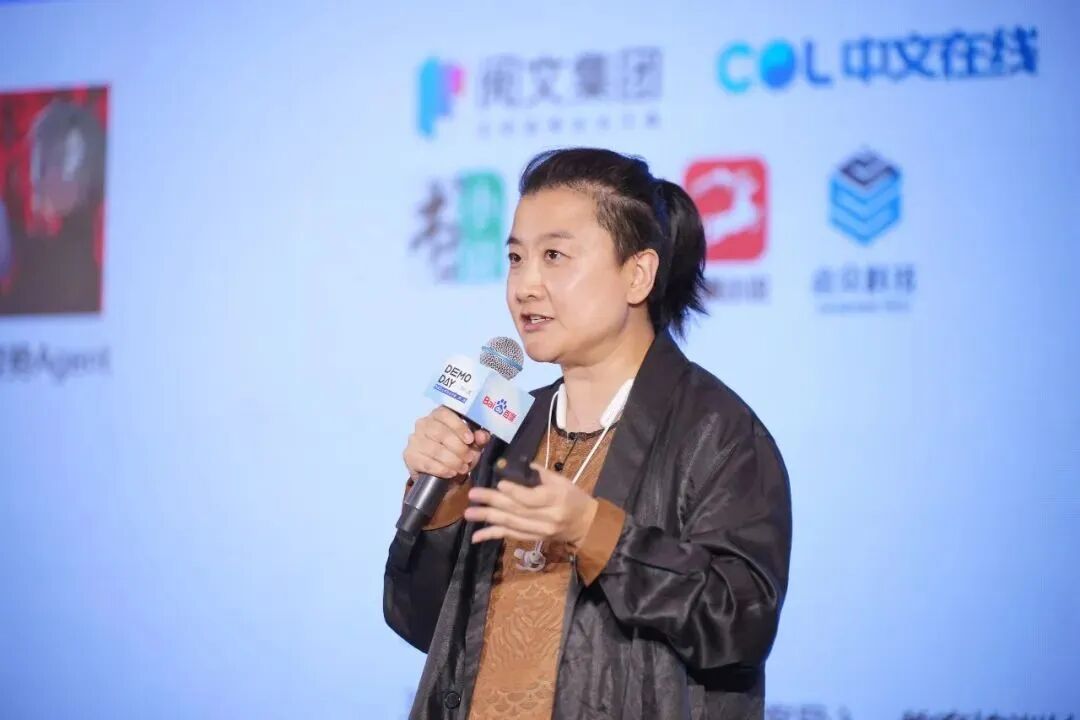
- Founder Miao Zhuang at a Demo Day event
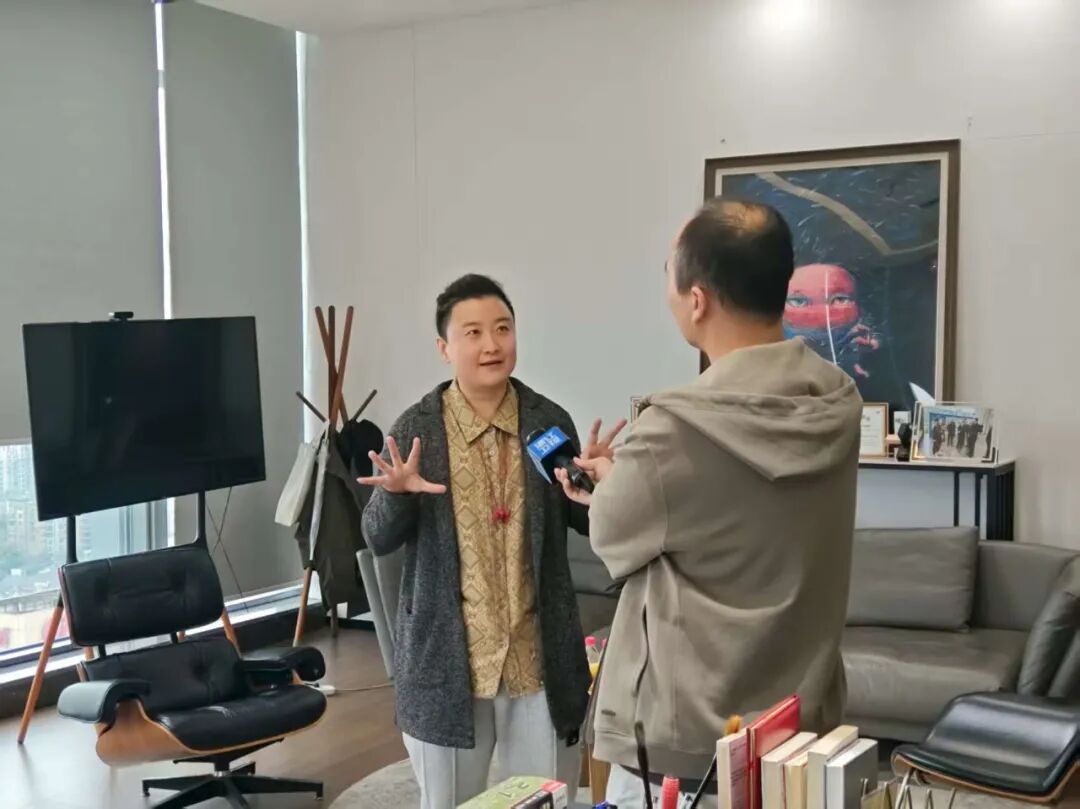
- Miao Zhuang being interviewed at the Hangzhou office
2
In 2025, two years after the pivot, Jellyfish Intelligence finally reached a critical technology milestone.
As large model capabilities evolved from "image-to-image" to "image-to-video," AI video models could finally scale into application layers. Jellyfish Intelligence's Tentacle AI became a genuine manga short drama production tool.
From script generation, storyboard design, character design, and camera movement, to post-production compositing and even titles — nearly every step was taken over by AI agents. "In two years of R&D, we developed roughly 50 post-production capabilities and 400 effects."
What once took a team a full year to produce, now takes about 30 days.
Founder Miao Zhuang holds dual master's degrees — one in Innovation Management from Central Saint Martins, University of the Arts London, and another from Beijing Institute of Technology. She previously held several senior roles at LKK Design Group. Compared to younger founders, her advantage is clear and pragmatic strategic thinking. After pivoting to anime dramas, she didn't pursue traditional long-form anime, but rather two-minute-per-episode anime short dramas — because the short drama model had already been market-validated. "I named this format 'manga short drama' — it's the anime extension of short dramas."
Meanwhile, as the short drama market heated up, manga short dramas became one of the fastest-growing content formats in 2025. Major video platforms have prioritized manga dramas as a key supported category, especially Douyin. In the first half of 2025, Douyin's manga short drama output and metrics grew 12x, with related content views reaching tens or even hundreds of billions.
Market forecasts project manga short dramas are rapidly approaching a ten-billion-RMB market scale.
Jellyfish Intelligence is the segment leader in AI manga short dramas. Under its umbrella, five AI-produced works have surpassed 100 million views, two have entered the million-RMB GMV club, one has made Douyin's hit list, and three have made Tencent's hit list. It is China's only startup whose AI tools are available online and whose works are clickable and viewable.
"When we pivoted two years ago, I told the team that in two years, we must return to being number one in a new field," Miao says. After two years of grinding, "happiness" has finally arrived. "Two years ago when we pivoted, everyone believed AI could improve efficiency and cut costs, but no one believed AI manga short dramas as a content format would see this kind of growth."
New players are flooding into the track too — not just Jellyfish Intelligence, but also game companies, short drama production teams, traditional animation studios, and new forces with AIGC technical backgrounds. Most don't want to miss this wave.
Jellyfish Intelligence's latest plans include raising a new funding round and expanding overseas to Japan and North America, seeking platform-level opportunities abroad. "My expectation is to build a company with ten billion RMB in annual revenue."
External skepticism persists: How large is the AI anime user base, really? Will overseas platform cold starts succeed when the difficulty is so high? For Miao, everything is uncertain. "Iterate as we go."
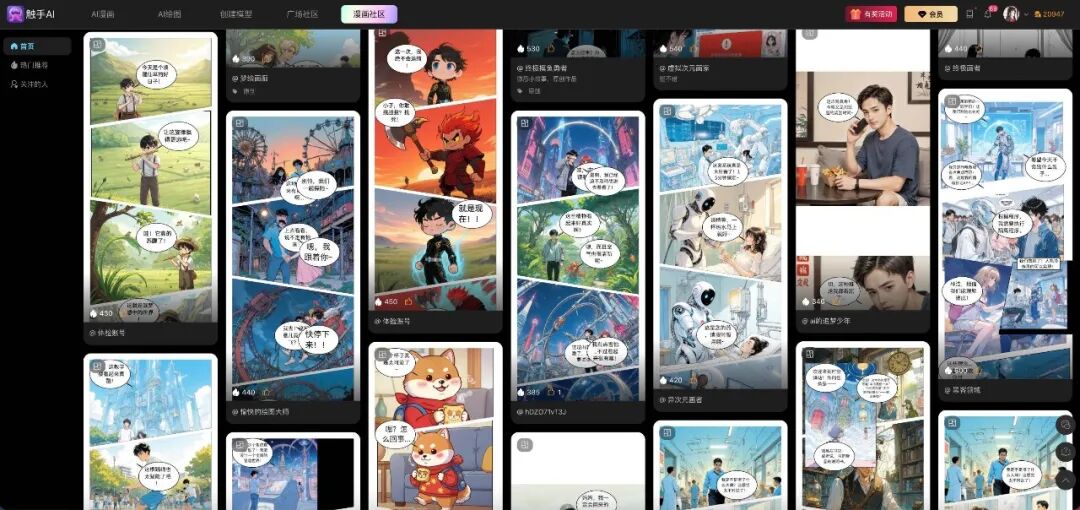
- Tentacle AI product showcase
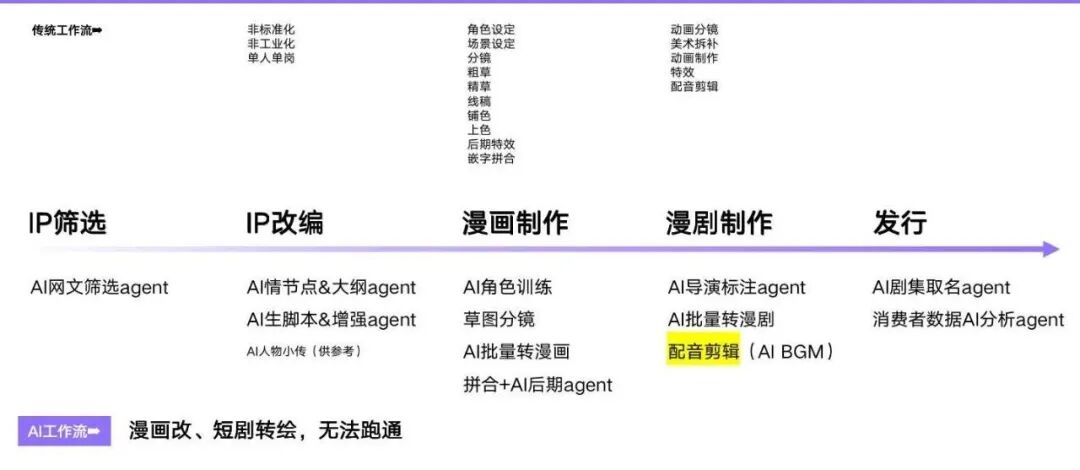
- Tentacle AI agent workflow demonstration
Conversation with Miao Zhuang
Part 01
Not pivoting?
The original business was doomed to collapse
AI NOW!: After the Russia-Ukraine war broke out in 2022, your judgment was that intelligent design had no future and a pivot was mandatory. Why so certain?
Miao Zhuang: Let me start from the beginning. From day one, we were doing AIGC. Back then it was based on neural networks, algorithms hand-built by ourselves. Four or five years ago, large model technology was still immature — from infrastructure to application, we had to do everything ourselves. The R&D cycle was extremely long, extremely grueling. Looking back, doing AIGC in 2022 was a bit early.
Then the Russia-Ukraine war started in 2022. I immediately felt something was very wrong. Our main customer base was SME owners, mostly in foreign trade — they would definitely be affected. Plus, US-China relations deteriorated, and capital markets would certainly be impacted too. How could we sustain such heavy R&D investment and such long R&D cycles?
AI NOW!: Was your sense that you couldn't survive more of an "intuition"? Did you analyze where that intuition came from — experience or something else?
Miao Zhuang: My father and family have been in business for years, with many ups and downs. I have a kind of bodily memory, a natural sensitivity to international situations and policy shifts. Later, sure enough, US-China relations worsened too.
When I first decided to pivot but hadn't fully committed yet, I actually suffered for two to three months. Every day felt wrong somehow. It was just intuition.
AI NOW!: From consumer packaging to AI manga dramas — an enormous leap. How did you finally reason your way to "manga dramas"?
Miao Zhuang: First, avoid the battlegrounds where giants fight to the death — no e-commerce, no office suites, no AI PowerPoint. Startups die doing those. Do non-serious scenarios instead, entertainment-oriented ones. I counted roughly five categories: small [content], manga, animation, games, film. These don't demand high precision from AI generation.
Also, it had to be an online-based business. This came from my experience with intelligent packaging — supply chains are offline. Even a tiny order, from communicating requirements to offline fulfillment, is incredibly troublesome. I'm a startup. If upstream and downstream are too complex, I'll die before I can use AI to transform them.
Based on these constraints, I narrowed things down step by step. When I got to anime, it felt right. If AI generates hair one centimeter longer or shorter, users don't care that much. Very suitable for early-stage technology deployment.
AI NOW!: You chose to make manga drama creator tools. Two years ago, this was almost an entirely new ecosystem. What was your read on the future?
Miao Zhuang: When I first derived this direction, I had doubts too. Was this really the macro trend?
Then I put myself back in the shoes of a pure consumer and started binge-watching various anime on platforms. It felt off — the content was too long. New-generation consumers are already accustomed to short videos and short dramas, watching while eating. In the anime field, users' latent needs weren't being met.
I bet that anime would definitely see new content formats and vertical platforms emerge, just like short dramas. It was only a matter of timing. So we'd build while waiting for the industry to explode.
AI NOW!: When you entered manga dramas, the traffic and GMV of industry leaders were declining. One platform-level company pivoted to betting on S-tier hit content. Why did you go the opposite direction?
Miao Zhuang: Strategy must choose what's most suitable for yourself. I'm a startup, barefoot. My judgment was that doing tools and then cutting into platforms had more market prospect than doing single S-tier hits. If my entrepreneurial expectation was just to build a 200-300 million RMB revenue company, then doing content alone would definitely work. But my expectation is to build a ten-billion-RMB revenue company. You can't get there without a platform.
Also, that leading company at the time was already a 10-billion-RMB valuation company. They had more considerations.
AI NOW!: Sounds like you're very ambitious and have a heavy gambling streak?
Miao Zhuang: I'm someone who enjoys risk. I judge things first by intuition, then verify with rational reasoning, and form a decision. Once the decision is made, just go do it. Time will tell.
AI NOW!: Did you think about the worst-case scenario?
Miao Zhuang: I did. Maybe the track wouldn't take off before we died. Or maybe the track would be great but we'd execute poorly. If that happened, I'd accept being an ordinary person.
AI NOW!: When you actually pushed through the pivot, what was the hardest part?
Miao Zhuang: The greatest pain was constant skepticism from outsiders saying I'd chosen wrong. I had to tirelessly explain to people that manga dramas would definitely grow in the future, that it's a new content format, that the industry's technology inflection point hadn't arrived yet and we needed to wait. But no one got it. I could only stay patient.
I officially announced it to the core team at a dinner. I said: first, we're terminating our past direction — if you have grievances, curse me out now; tomorrow we go all-in on the new direction. Second, the new direction's path isn't clear, so there will be no democracy from now on. Either you tell me the solution, or you do what I say.
Quickly, I cut the team from 100 people to just over 30, establishing emergency wartime logic.
AI NOW!: Never doubted that maybe manga drama was the wrong track?
Miao Zhuang: No. I have a gift for judging macro directions. I'm 40 years old. I know what I'm good at and what I'm not.
AI NOW!: Why not maintain the old business while exploring the new one?
Miao Zhuang: We're a startup. What qualification do we have to do that?
Part 02
Must go overseas
Seeking platform-level opportunities
AI NOW!: When manga dramas still have enormous growth room domestically, why decide to go overseas in 2025?
Miao Zhuang: Domestically, we're now only doing production and distribution, because there's no platform-level opportunity left in China. But overseas markets still have it, so we must go out as soon as possible. My entrepreneurial expectation is to build a platform. For Japan, we'll first enter with creator tools, then launch the platform — the model is analogous to CapCut + Douyin for manga short dramas.
AI NOW!: The logic for choosing Japan as the first stop is obvious — strong anime foundation. But how smooth has actual execution been?
Miao Zhuang: Heavy resistance. Most Japanese peers, upon hearing we use AI to generate anime, their first reaction is fear, then rejection. Japanese anime has too much historical depth — it's not worth offending the most loyal fans for AI's sake. We tried some accounts on certain platforms, but they got banned quickly.
Then we shifted strategy, entering from the creator side. We contacted a batch of senior Japanese anime KOLs — they also refused to use AI tools. Fortunately, some younger creators really liked using them, and their fans didn't reject it either. Slowly, some volume built up.
Until a very senior Japanese anime blogger, Kato Fura-fu-ku [果兎フラフ一ク], published a ten-thousand-word article saying China's AI applications have already far surpassed Japan's, that a company called Jellyfish Intelligence is secretly cultivating AI anime artists, and that if Japan continues resisting AI, where will the anime industry's future go?
This article actually moved some Japanese people to start accepting AI. So we顺势 began doing hundred-order validation in Japan, and just recently completed 100 users willing to pay $10 per month for Tentacle AI. Next step is scaling up.
AI NOW!: If Japan's traditional forces are so stubborn, where is your opportunity? If traditional forces stop rejecting AI and embrace it, what is your core competitiveness then?
Miao Zhuang: In traditional anime, Japan is definitely globally leading. But in webtoons and online content over the past decade, Korea has actually surpassed Japan. So entering the AI era, China definitely has huge opportunities too.
When local traditional forces are too powerful, transformation is actually harder to achieve.
Our overseas advantage is speed. We already have short dramas as a reference point. Short dramas and manga short dramas are both content formats invented by Chinese that don't exist overseas. We can completely study and learn from short dramas' overseas expansion playbook.
Recently, we've completed our manga drama APP for Japan, estimated to launch by year-end. The initial content will be translations of 50 A-tier works from China.
AI NOW!: How do manga creators using AI tools in Japan differ from those in China?
Miao Zhuang: Japanese creators are more patient, more meticulous. For a single image, they'll tirelessly try different placements of certain elements — more craftsman-like.
Also, Japanese creators are more willing to turn their lives into manga. On our overseas platform, there's a 70-plus-year-old Japanese grandfather drawing the story of his entire life, already serialized dozens of chapters. Quite moving.
Compared to shooting video or writing articles, Japanese users are naturally adapted to manga as a medium.
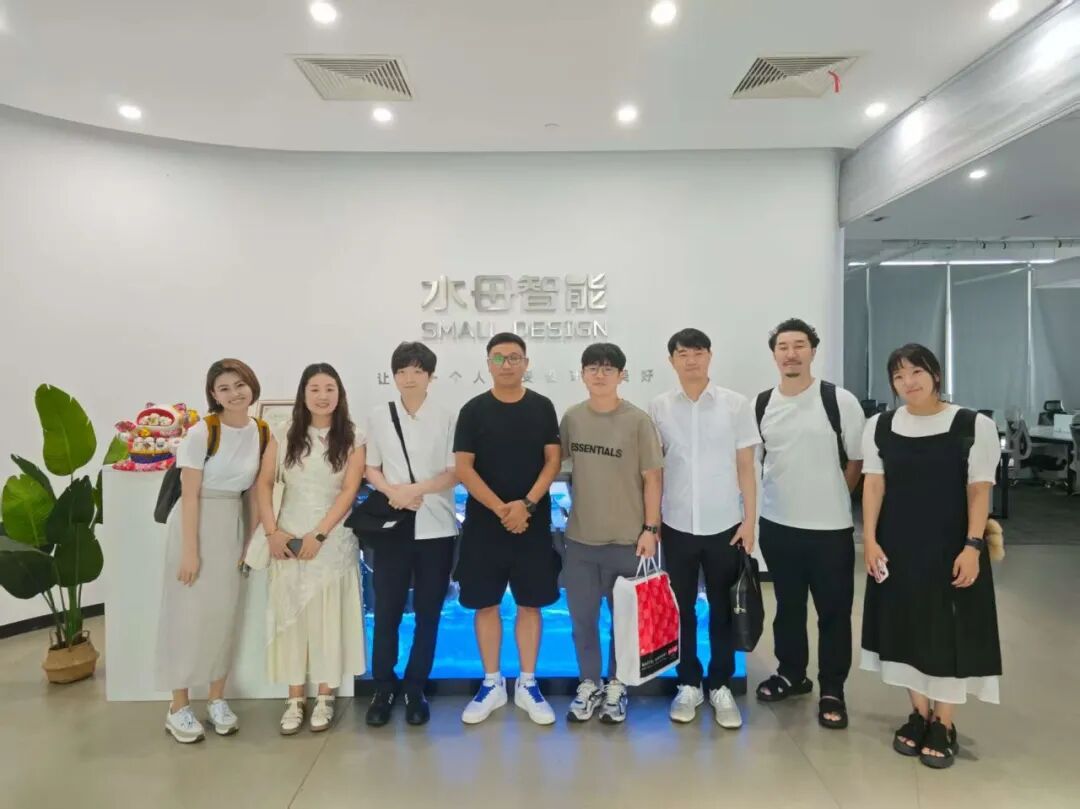
- Korean "Kidari Studio" visiting Jellyfish Intelligence
Part 03
Two years of grinding
Finally hitting the technology inflection point
AI NOW!: What is your current business model?
Miao Zhuang: Domestically, we've confirmed we'll only do A-tier content distribution and production. Pure content margins are 40%, but with investment in agent R&D, we're still losing money.
Over two years we've signed 200-plus creators, with dozens of web dramas launched. These creators are organized by us to produce A-tier content — essentially, we're taking them along to make money.
AI NOW!: Why only A-tier, not S-tier?
Miao Zhuang: First, below A-tier doesn't make money. Second, S-tier content is a hit-driven logic with very high uncertainty. Something like Ne Zha — ten years of grinding, a beacon of human wisdom — but that's not a good model for startups.
AI NOW!: Many people believe AI-generated content is still at the "watchable" level. Can your tools stably output A-tier content?
Miao Zhuang: Basically yes. We try to model all intuition and experience based on data.
For example, this month I want to make 8 works. At the screening stage, 100 web novels are submitted externally. Agents filter them down to 10, then experts pick 8 from those. Entering IP adaptation, a full set of agents assists production. Then into manga adaptation — AI-trained characters, batch manga conversion, compositing, image-to-video. Actually, except for voice acting and editing where technology isn't fully ready, nearly the entire production chain can be AI-generated, including titles.
For each individual drama, there's also a complete training logic where the agent plans itself: open with a hook, build conflict in the middle, pack 10 emotional beats into 2 minutes — it can basically stably generate a very addictive manga short drama.
AI NOW!: Your core premise for pivoting was AIGC. Has actual model iteration been faster or slower than you expected?
Miao Zhuang: Faster than I estimated by about half a year. In 2023, I estimated that by end of 2025, manga short drama quality would basically pass muster and be watchable for users. But it actually happened at the beginning of this year.
Early on, image generation models like Stable Diffusion helped us reduce costs by about 10-20%. Subsequent LoRA and ControlNet customization fine-tuning and control mechanisms further optimized generation efficiency and costs by nearly 50%. The most decisive factor was definitely this year's leap in large language models and video generation models, improving efficiency by a hundredfold.
These technology inflection points together drove the feasibility of migration-based production, and they're also the main reason manga short dramas are so hot this year.
AI NOW!: Are manga short drama users diverted from short dramas, or from the anime/ACG crowd?
Miao Zhuang: Neither. I call them pan-ACG users. From the backend, paying users range from teenagers to people in their forties and fifties, geographically from tier-1 and tier-2 cities down to tier-4 and tier-5 cities. The proportion of elementary and middle school students was smaller than I expected. Unlike short dramas which are predominantly female, manga short dramas have male users at 70%.
I've analyzed this: short dramas are mostly reality-based, while manga short dramas are mostly fantasy, cultivation, beast-taming... Manga short drama viewers have very high openness — as long as the content premise is interesting, they'll keep paying. Most watch during commutes, breaks, and other fragmented time — like digital pickles.
Actually, under current fragmented scenarios, manga short drama market supply is far from sufficient.
Image source | Unsplash, interviewee provided
—Bonus—
We have a podcast now
Search for "AI NOW" on Xiaoyuzhou APP for irregular updates