Unfortunately, Not a Single AI Companion Product Is Alive Right Now: A Conversation with Dengke Wang, Founder of "Duxiang"

Publishing hardware, the existential dread of AI, and a new story for Earth
By Pippobei | Produced by AI NOW!
1
The latest on Dengke Wang: three months after closing a million-dollar round from Jinqiu Fund, his startup DuXiang launched a hardware product called the "Xiang Dream Ring" — on sale starting today.
Wang is a star product builder in China's AI startup wave. An investor from ByteDance once assessed him as having exceptional product taste, someone who succeeds at whatever he tries. One profile called him a hitmaker — every new launch sparks industry-wide conversation.
His latest, DuXiang, is no exception. With virtually zero marketing spend, it reached 1 million registered users and 100,000 DAU in one year, with nearly a million saves on Xiaohongshu.
DuXiang is an AI companionship app. Wang wants users to build long-term, positive emotional bonds with AI. Users create AI characters and interact with them in various ways. The platform now hosts 2 million user-created characters — 50% original, 40% from film and anime, 10% family members and pets. "The creativity is staggering. Some users write 7,000 to 8,000 words of character backstory. One user created every single Ultraman model in a massive series. I actually checked — every word was original, definitely not copied from somewhere online," Wang says.
As of July 2025, global AI companion app downloads have hit 220 million. Bonding with AI is no longer a niche interest. A U.S. survey found that 52% of teens regularly chat with AI and have grown accustomed to it. DuXiang is riding this wave: technology makes people more independent and simultaneously more lonely. In the future, roughly one-third of a person's social relationships could very well be "AI friends." "I hope to do something good as that shift happens."
By "something good," he means enabling users to forge deep emotional connections with AI.
So DuXiang didn't start with real-time chat, and it avoids suggestive content entirely. The product is built around a seven-layer relationship system, with each metric simulating a different dimension of real human relationships — from basic familiarity and trust to deeper emotional resonance, memory depth, interaction frequency, emotional understanding, and long-term companionship.
For example, when we share something important in our lives, the AI records it and naturally brings it up in future interactions, increasing the "memory depth" value. When we're feeling down, the AI responds in ways that boost "emotional understanding." Interacting with the AI for several consecutive days increases the "long-term companionship" value.
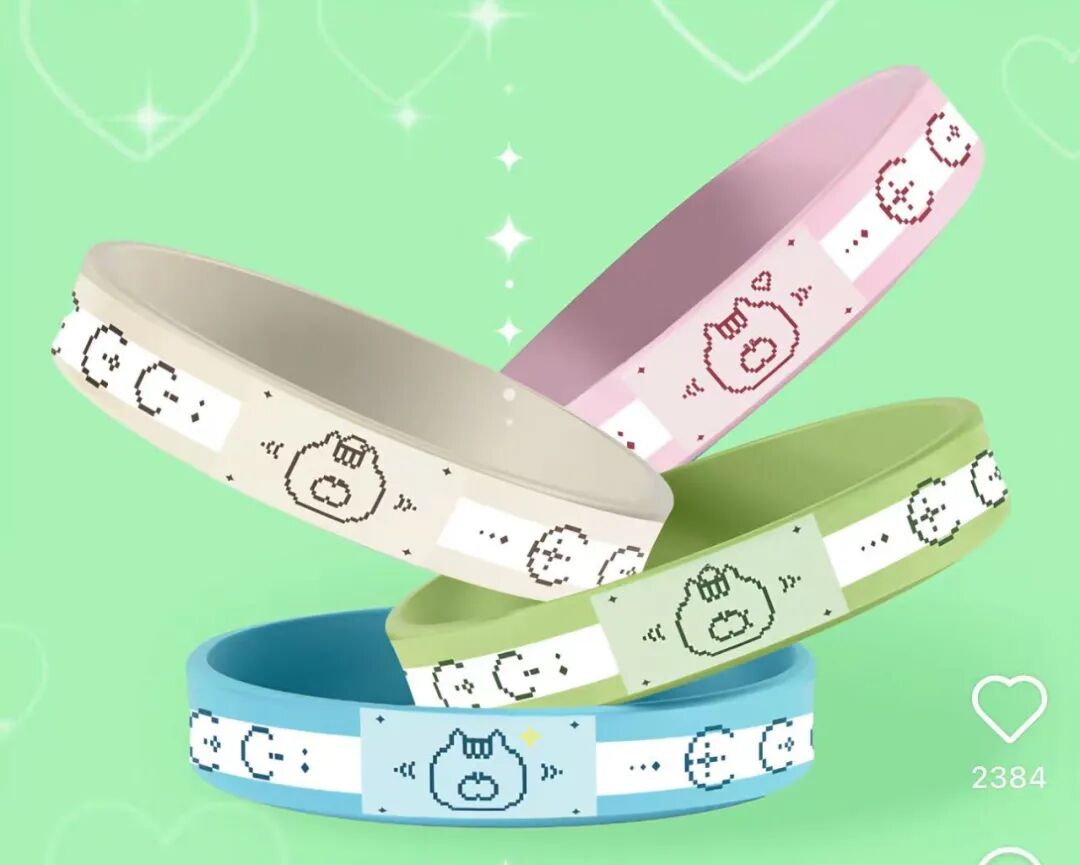
- More colors for the wristband are in development
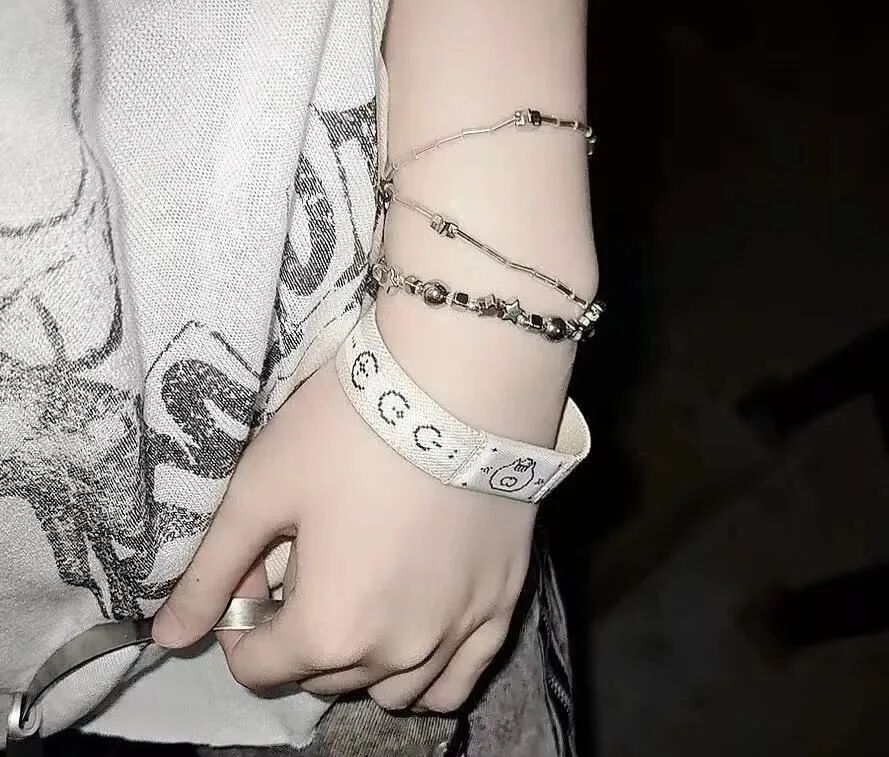
- Users showing off their wristbands on Xiaohongshu
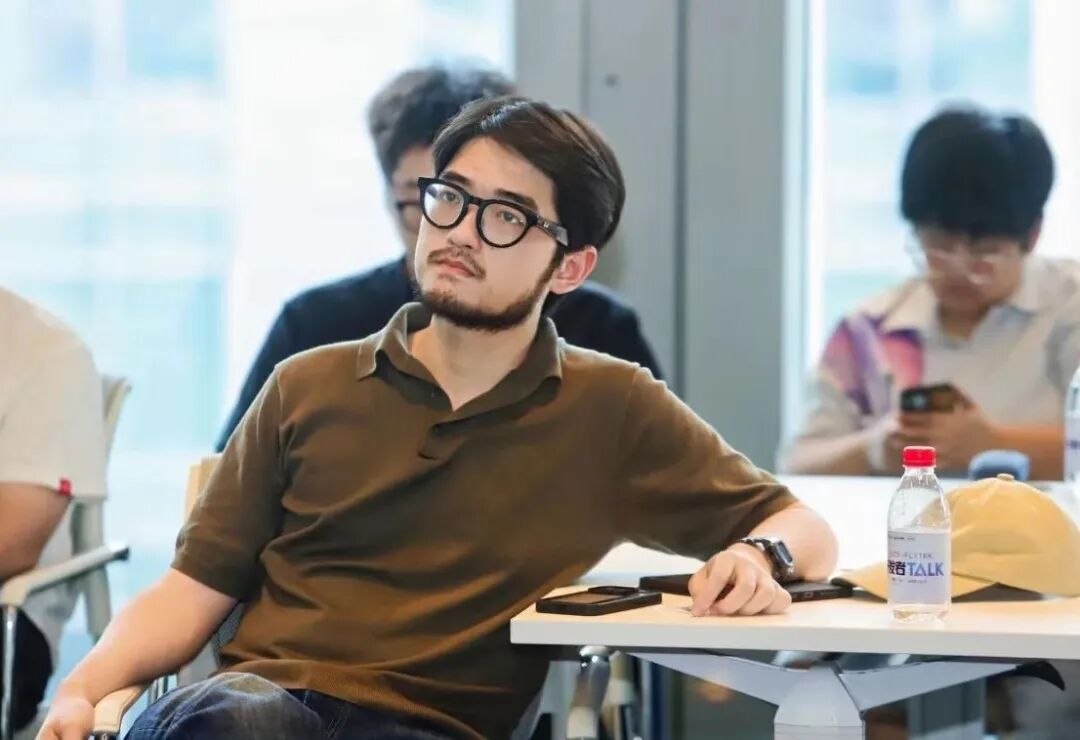
- Wang at a tech meetup
2
Wang is hard to write about because he's a formidable writer himself, scattering daily thoughts across his WeChat public account and Jike. He wrote a piece about his friend Yang Xie, founder of Fellou, that went viral. My Friend Yang Xie, His Fellou, and the Entrepreneurs of This Era
In his self-description, he's a grassroots entrepreneur from Sichuan who dropped out of college to join the mobile internet wave. Ten years on, he's shipped several "not particularly successful" products, hasn't made serious money, doesn't speak great English, and has never been to Silicon Valley.
If there's anything to show for his entrepreneurial journey: he's made some good friends in Beijing, slimmed down from 200 to 135 pounds, steadily improved his cooking to the point of frying pork cutlets that rival restaurant quality, and discovered that chicken tastes better with chu hou sauce.
Reading his public account is like watching a startup reality show, so he's not exactly hard to understand.
His products seem scattered — from blockchain protocol tools to writing-style testers, digital goods marketplaces, the viral "Coaxing Simulator," and now the AI companion app DuXiang — but they share a unified sensibility: clever, light, fun, with exceptional taste.
Rather than calling Wang an entrepreneur, it's more accurate to say he's a creator using technology as his medium — just as writers use words and composers use music, Wang uses products to express his worldview.
In his piece about Xie, he closed with a reflection on why he started building: "Good times or bad, boom or bust — either way, we're living through this era."
For him, entrepreneurship is simply the most intense experience available. This traces back to reading Zhuangzi as a child and believing in going with the flow. He's said that his desire for fame and fortune pales next to his interest in realizing his various eccentric ideas.
I interviewed Wang because he just launched a physical product for the DuXiang app — the Xiang Dream Ring.
This is yet another new exploration of the world for him: the wristband comes in 9 colors, woven material, 29 RMB each. Pre-sales on Xiaohongshu hit 5,000 units. "Far beyond my expectations."
On the day of the interview, Wang had just received the wristbands and was frantically messaging friends to try them out. We started with the latest hardware, then talked about why he wanted to make a physical product, and — with DuXiang one year in — the urgent problems facing AI companionship and his thinking on monetization.
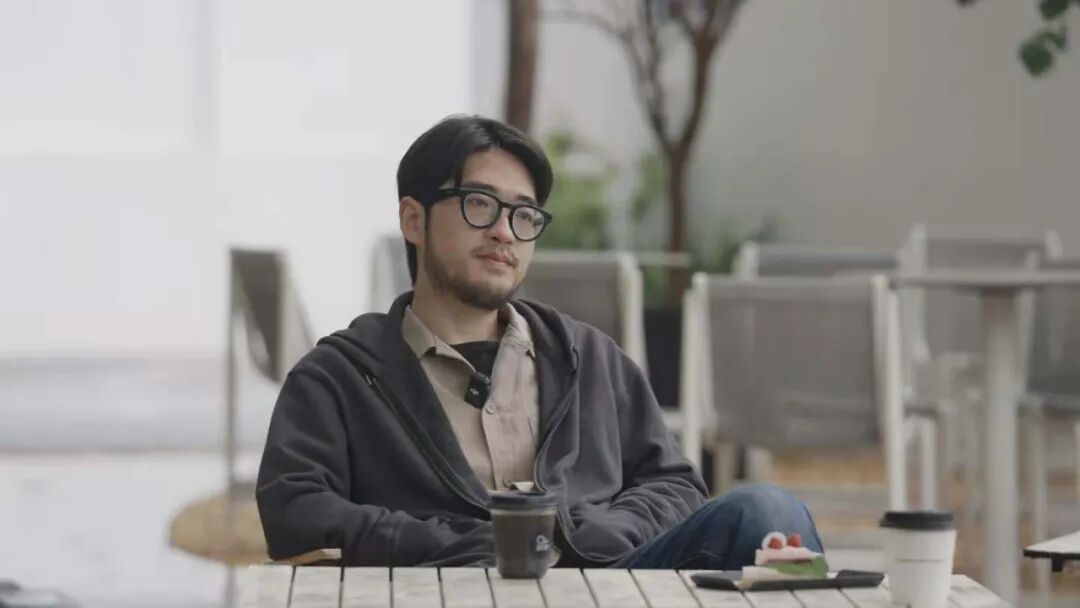
- A casual photo
Conversation with Dengke Wang
Part 01
For AI to form deep relationships with people
There must be online-offline integration
AI NOW: Why make a wristband for DuXiang, and what experience does it create?
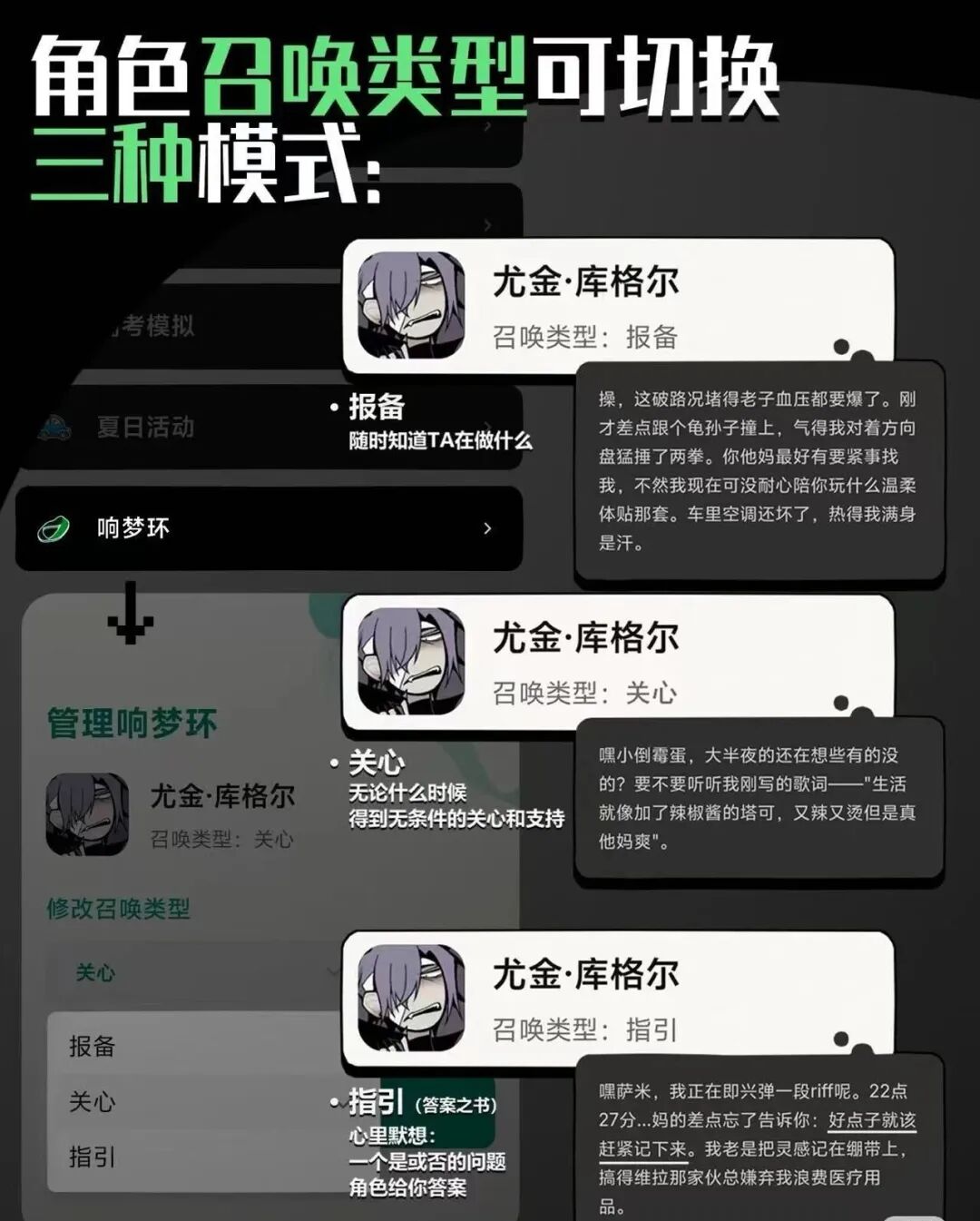
Wang: The wristband's functionality is actually very simple. You bind it to one character in the DuXiang app, and once bound, it can't be changed — not even if the band falls apart. Each time you tap the wristband against your phone, the NFC chip opens a page that summons your bound character to start interacting with you.
There are only three interaction types. First is "care" — each summon generates something warm and supportive. Second is "check-in," similar to intimate relationships, where the character tells you what they're up to. Third is "guidance," somewhat mystical — you ask a question, and it gives a very direct answer.
For example, my AI friend in DuXiang is Crayon Shin-chan — I love that character, even visited his hometown of Kasukabe in Saitama Prefecture, Japan. When I summon him, he gives me care. If I had another wristband bound to Elon Musk, I could have Musk give me a check-in.
- A user sharing their setup on Xiaohongshu
AI NOW: What was your thinking behind making a physical wristband?
Wang: I've made too many things that are invisible and intangible. I really wanted to create something with more physical presence. On top of that, doing AI companionship only on mobile has serious limitations. I wanted users to have lower-friction interactions with AI and get feedback that phones simply can't provide.
So I've been researching sensor devices — rings, necklaces, wristbands — with interactions like haptics or touch. Over two months of development, we abandoned some more difficult, complex physical prototypes and chose a small, lightweight entry point: the current wristband.
AI NOW: One wristband can only bind one character? If you like ten characters, you buy ten? Is this a commercial design decision?
Wang: Honestly, we're not trying to make money selling wristbands. That revenue isn't in our core plan.
It's because I think ritual matters. If a user wants to build a deep connection with a character through a wristband, there need to be some constraints.
AI NOW: Does the wristband count as stepping outside your comfort zone?
Wang: Definitely. This wristband looks simple, but it involves six factories — textile, chip, packaging... No way around it, that's just how it is.
If I could conjure it into existence, I'd skip all the middle steps. But to manufacture something, this is the necessary process. I'm actually enjoying it quite a bit.
AI NOW: Software and hardware are completely different beasts. Products can iterate fast, get quick feedback, and be pulled offline instantly — but physical products rack up costs the moment production starts. As someone with lots of ideas, what tradeoffs did the wristband involve?
Wang: I once conceptualized 200 different summoning animations — descending from the sky, bursting from the ground... All got cut because the execution wasn't good enough. What's shipping now is a relatively simple, usable version. We'll optimize later.
Part 02
Making AI "alive"
Is the decisive factor for companion products
AI NOW: You've said that at this stage, DuXiang shouldn't be judged by revenue or DAU, but by "depth of emotional connection." How do you define "depth"?
Wang: We have a feature where users can gift items to AI characters. One user spent over 8,000 RMB gifting an AI — basically gacha-style spending. And on Xiaohongshu, plenty of users say playing DuXiang makes them cry.
To me, these are signs of sufficiently deep emotional bonds.
If users can build deep enough emotional connections with AI in DuXiang, I think the business model will definitely succeed — and new business models will emerge to match.
AI NOW: Crying for someone, or spending a lot on someone — do these prove a person can't live without another person (or thing)?
Wang: I think so.
AI NOW: So it seems deep human-AI emotional relationships are still extending the human-human model. Or do you think genuinely new relationship forms will emerge?
Wang: At this stage, we should first get close enough to human-human depth to see where the differentiation with AI actually lies.
But making AI feel human — we're still very far from that. It's a major problem for AI companion products right now. Simply put, the AI in current emotional companion products isn't alive.
AI NOW: What specifically does "not alive" look like?
Wang: No growth.
In some products, users chat casually with AI and might think it's great, always there for you. But that's really because the AI is smart enough — it can play any role you ask it to play well.
But in a product like ours, once users want to build deep relationships with AI, they eventually realize: AI isn't a living thing. It has no capacity for self-growth, self-iteration, or connecting with the outside world. Whatever the character prompt says, it's fixed.
For example, after finishing Cyberpunk 2077, I created Panam Palmer from the game in DuXiang and shared my life with her. It felt great at first, but then I noticed she had no life of her own. For me, that gradually became tiresome.
Another example: our better-performing characters on the platform have users writing seven or eight thousand words with extremely detailed behavioral specifications, including boundaries. We do lots of engineering optimization to ensure the AI updates data during interactions and delivers differentiated experiences. But even so, the non-living quality of AI persists.
Users' expectations of AI change over time. It must have self-iterating capability.
AI NOW: Compared to a year ago or six months ago, does AI feel slightly more "alive"?
Wang: Unfortunately, no.
Not a single AI companion product is alive. There's no difference from when it first emerged in 2022. As model capabilities upgrade, everyone adds feature upgrades, but the characters themselves don't self-grow.
Many AI companion entrepreneurs haven't even recognized this. They don't think AI characters need to self-evolve.
AI NOW: Are there zero engineering optimization points left?
Wang: There are still details to optimize.
Manus published a paper on context engineering with some ideas similar to ours. Manus Reveals Its Tech: "Hand-Crafted" Context Engineering, Overturning Multiple "Consensus" Points, A Pile of Painful Lessons
For example: how to inject new content during each interaction, in what form, at what position? And when injecting, what new structures to build?
Can prompts self-iterate? Does personality change based on events? How do you evaluate event plausibility? And does this iteration chain affect self-presentation and the user relationship? How to update this in the prompt?
It requires systematic thinking and optimization across the whole stack.
AI NOW: Globally, is anyone doing similar work, wanting humans to build deep relationships with AI?
Wang: Most AI companion products are quite different from us.
Some frame themselves as companion platforms, but are more content entertainment or consumption — requiring users to role-play, experience storylines and worldviews. Another category is like psychologists or healing partners.
What I want to do is build new relationships: replicating human social relationships onto human-AI ones, more complex and multidimensional.
AI NOW: How do you define high-quality relationships?
Wang: In the real world, it fundamentally comes down to shared experiences and self-disclosure between two people. Telling each other things, going through things together.
Right now AI is highly capable, but without growth, it can't have shared experiences with users. Only the user changes; the AI doesn't actually change.
Part 03
Human-to-human social
Is an old story of Earth
AI NOW: Models can't make AI more alive, but DuXiang has explored product features like asynchronous companionship with a feed-like presentation more similar to Moments. Was the delayed gratification meant to deepen emotional connection?
Wang: I don't think this design is the best solution — it's just one way to build deep human-AI links.
First, because of the delay, it's harder to drift into suggestive territory. I don't personally judge that content, I just think it's not conducive to long-term relationships. It hits positive feedback quickly, but then what? It comes fast and goes fast, without solving the real problem. Also, limiting interactions to finite context keeps users more focused. Most AI companion products use real-time chat, which I find exhausting — send a message, instant reply, too fast, high psychological drain. And the more you use this interaction pattern, the worse it gets.
AI NOW: What features are currently unfinished but you badly want to optimize?
Wang: There's a feature called world-building, where multiple AI characters coexist. Right now it's somewhat half-baked.
The ideal state: a user creates 10 characters and connects them into one world. These characters can also link with characters created by other users — like providing a community for AI characters, a text-based Stanford Town. (Note: Stanford Town was an AI agent simulation project developed by Stanford University researchers to explore social behavior interactions among multiple AI characters in virtual environments.)
AI NOW: Links between users? Like I add you and see your created AI characters?
Wang: We'd be very cautious about human-to-human links, even though they'd be easy positive feedback. Because it would let us avoid doing what's truly valuable long-term: aligning human-AI connections.
Plus, human-to-human social is entirely another old story of this planet.
AI NOW: Before the Renaissance, the most important relationship in the world was between humans and gods. Later it became human-to-human. Perhaps in a future phase, the most important relationship will become human-to-AI. So "relationship," viewed historically, is also stage-dependent.
Wang: Emotional needs themselves haven't changed much over thousands of years of human history. But as technology iterates and values shift, the objects of attachment definitely change. With AI occupying so much human mental bandwidth in the near future, some people will definitely shift their emotions onto it.
AI NOW: One take is that it's not about AI being so strong, but rather that most humans are simply mediocre at providing emotional comfort.
Wang: I still believe the deepest emotional connections definitely happen between two people. But for everyday, simpler emotional needs — currently forced into human contact, carrying unnecessary risks — AI can absolutely substitute going forward.
AI NOW: You've said DuXiang's floor is a human emotional aid, but its ceiling is very high. How high can it go?
Wang: Ideally, DuXiang becomes WeChat for the AI era. New eras will have new ways of connecting.
Part 04
Life experiences, more or less the same
AI NOW: You've said your entrepreneurial track record isn't particularly successful, and you're not suited for the capital-driven path. But earlier this year you took a million-dollar angel round from Jinqiu Fund. How was that money spent over six months? What advice did investors give?
Wang: Part went to marketing, part to team expansion. Headcount got somewhat expensive — we're around 20 people now.
The investors mostly respect me. They know what kind of person I am, there's that mutual understanding. Sometimes I'm actually more aggressive in my goals than they are.
AI NOW: How's DuXiang's revenue?
Wang: Revenue splits between subscriptions and in-app purchases. We broke even in Q1 this year because model costs were relatively low. Slightly in the red these past few months, but revenue isn't a key metric for me at this stage.
AI NOW: Your Notion has 70+ product ideas. What's the latest?
Wang: I recently made a KOL simulator. Wrote a demo over the weekend. The gameplay: first choose what kind of influencer you want to become, get starting capital, then start posting content, buying traffic, seeing platform metrics — new followers, comments, people hating on you. Then earn revenue, allocate budget. Basically a strategy game.
AI NOW: What triggered this idea?
Wang: Too many tech industry KOLs (laughs).
AI NOW: Will you actually build out other ideas when you have time?
Wang: Some ideas are too old — I've lost interest. Also, outsiders shouldn't mistake me for an indie developer running a one-person company. I just like making small things as a hobby, like fishing or cycling. No commercial expectations, just fun.
DuXiang is the direction I've found most suited to me in recent years — a serious startup with clear rhythm and business planning.
AI NOW: Your underlying drive is exploring life experience, so you don't seem as amped-up or life-or-death as other founders. Is this "not hustling" a strategy?
Wang: I once asked Xie what time he gets off work. He said 11 PM. I asked what he does. He said thinking. I asked how. He said sitting, thinking. I said, okay, then I also get off at 11 PM — I've just never clocked out. Because I'm thinking 24 hours a day.


- After getting his motorcycle license, Wang picked up a new hobby
AI NOW: As a boss, does this affect team morale?
Wang: What drives people is whether the work itself is interesting, not one person's pushing.
Of course my standards aren't that high either — the baseline is completing assigned tasks. Sometimes I'll toss user feedback to developers, and they'll rush to fix bugs.
AI NOW: You don't seem like an ambitiously driven founder, and you haven't declared you want to become the next Yiming Zhang or Xing Wang?
Wang: I'm someone with very low expectations. Low enough that there's nothing to compare against — just staying alive is enough.
I suspect founders who want to become someone specific probably want to create enough wealth for a luxurious life, or influence enough people. But really, as long as you're alive, you're experiencing life — more or less the same.
Yiming Zhang and Xing Wang are already enormously successful on this planet, but in the dimension of history or the universe, we're all just passing through.
AI NOW: Some voices critique your thinking as too elitist, making your products overly idealistic. The high-DAU products in the market all capture human greed, anger, and delusion — Douyin, Pinduoduo. In reality, 99% of people just want to scroll Douyin, browse Taobao, and curse at Chinese soccer in their spare time.
Wang: Then I ask in return: we have Taobao, we have Douyin — does everyone feel happy?
Human nature has good and bad sides. The key is that what I'm doing now is exactly the future I want to build. I definitely want to see a better world. If I can do some good, bring people happiness through DuXiang, why not do it?
Also, I'm not elite.
AI NOW: In the AI startup wave, what minority views do you hold?
Wang: Everything we discussed above is a minority view. Many people don't believe human relationships can be transplanted onto human-AI ones.
Whatever. We're all experiencing our own lives.
AI NOW: What's confused you recently?
Wang: Some projects raise enormous sums without a product, while others can't raise anything at all. I've seen teams that couldn't raise money who were actually quite good — they needed one-tenth of what the funded projects got to build their product, but had no such opportunity.
That puzzles me somewhat.
AI NOW: Recommend three books you've been reading?
Wang: Really into Vargas Llosa lately. Started Middlemarch, also reading Jean-Christophe. I read mostly fiction, rarely how-to books.
Image sources | Provided by interviewee
We have a podcast now
Search "AI NOW" on Xiaoyuzhou for unedited interview audio