The 21 Months That Shattered a Star Founder | WAVES
Good Game.
By Jiabao Shi
Edited by Jing Liu

Like every revolution in history, ChatGPT's arrival opened up infinite possibilities — and instantly destroyed others.
Mindverse, founded by Fangbo Tao, fell into the latter category.
When Tao went out to raise funding in late 2021, investors asked how long until AGI. His team believed AI was still at the L1 stage of autonomous driving, so they estimated 20 years, but "told investors the fastest timeline was around 5 years to paint a rosy picture."
A year later, ChatGPT exploded onto the scene. It had been barely a month since Mindverse released its first product, MindOS. The former founder of Alibaba's Neuro-Symbolic Lab was stunned to discover that his customized MindOS, built on the previous generation of large models, couldn't even match raw ChatGPT.
Committed customers abandoned contracts. The planned funding rhythm fell apart. Some team members left. What had been a marathon suddenly compressed into a hundred-meter sprint. Tao said Mindverse nearly died. To keep the company running, he once had to sign a personal guarantee with put-back provisions and relocate the company from Hangzhou — until an overseas institution threw them a $5 million lifeline.
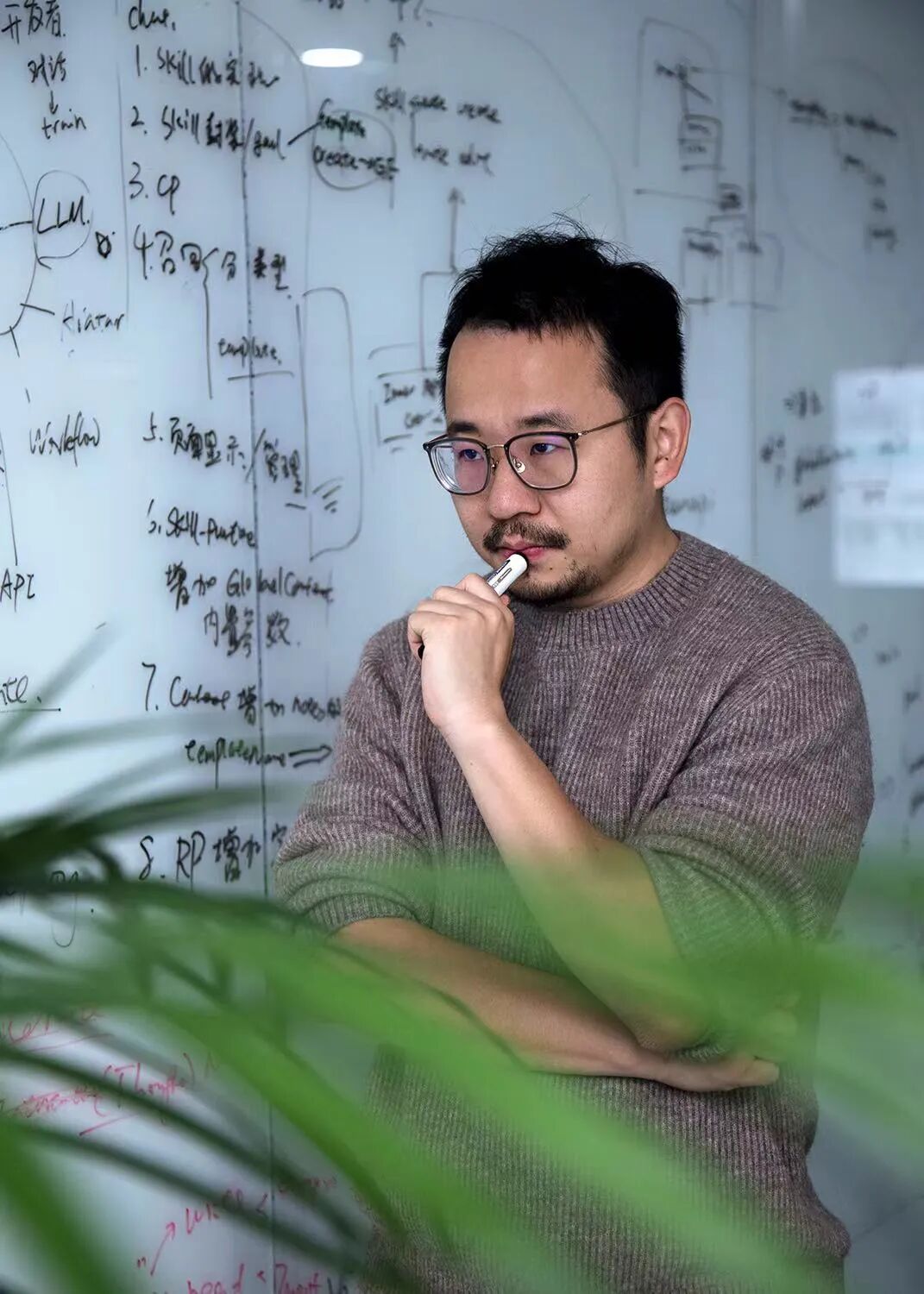
Fangbo Tao
"WAVES" is a new column from Anyong (Waves). Here, we bring you the stories and spirit of a new generation of entrepreneurs and investors.
The following is a first-person account from Fangbo Tao, founder of Mindverse, edited by Anyong Waves —

When I first started my company, the choice felt absolutely right.
The product I wanted to build was MindOS. Simply put, it's an AI Agent tool where users can create various types of assistants and digital characters around their life and work needs.
This was still the tail end of China's peak VC market. I met an investor at a café downstairs. After I finished the first page of my deck covering my background, he said stop — let's not continue. Instead he asked why I was starting a company, what was my original intention, what was my underlying motivation. I told him I was 32 and wanted to do something beyond promotions and raises.
When I tried to flip to the second page, he said just tell me how much you need. The rest doesn't matter — you can go through it if you want.
ChatGPT didn't exist yet. The idea of different people having different AIs seemed like pure fantasy to them. He was blunt: this probably won't work, but I'm willing to back you. One condition — next time you start something, you come to us. That goes in the term sheet.
Before the first round of funding hit, we rented our first office in Hangzhou. One afternoon we set up a whiteboard on the balcony. Four of us, business model still unclear, started discussing the company vision in the spring sunlight. We landed on: let creativity and beauty be everywhere. Nothing to do with technology at all.
Hui Wang at Linear Capital was also one of our angel investors. We had both worked at Facebook. Before officially starting up, I talked with him about Pinduoduo. I was curious — Colin Huang had worked at Google, so why did he build a company in such an intense, grind-heavy way, and actually succeed. Hui said you have to adapt to local conditions. I said if I start a company, I definitely want to try giving employees a real sense of freedom while outperforming the grinders — later I discovered, this is harder than imagined.
Six months later, we launched our first product, MindOS. Simply understood, this was an Agent building engine platform, somewhat like Coze that came later, except we were a full year ahead.
Nothing like it existed worldwide. So within a month we landed many deals, with a few million in revenue, projecting 20 million for the next year.
Everything looked great — until ChatGPT appeared.

When I first started out, many people asked me how many years until something like general AI would emerge. None of them believed they'd see it in their lifetime. I was the most optimistic, thinking 3-5 years. It turned out to be 1.
So we had known about OpenAI for a long time. In our 2021 deck we predicted that through the large model route, AI could gain common sense and conversational ability. But GPT-3.5 still surprised me — I didn't expect it to be this good. At the time, large models still had to be hand-taught with prompts. Even when you carefully told it every detail, its responses were still clumsy, often missing one thing while catching another.
MindOS was using the previous generation model, very dumb, with poor reasoning and language capabilities. So our earliest positioning was helping brands build AI personas. As a result, customized MindOS Agents couldn't even match raw ChatGPT's performance. Most brands withdrew their orders. Everyone was anxious, constantly comparing in the company group chat: this is our answer, this is ChatGPT's answer.
To motivate everyone, I wrote an internal memo titled War, War, War! I said in the letter that ChatGPT was fundamentally different from all the "flash in the pan" technologies of recent years. In this situation, we made two shifts: first, use OpenAI as the product foundation and pivot overseas; second, shift from B2B to B2C.
Product Hunt had a 2023 AI Product of the Year list, and MindOS was on it. But unfortunately, it was critically acclaimed without commercial success — daily active users hovered around a few thousand.
The reason was simple. The most successful AI products of 2023 followed the theme: wrapper + SaaS Copilot. This also fit the opportunity when a major trend first begins: simple reuse and capability add-ons are the easiest way to capture upside. Our final judgment was that Agent is the mega-trend, but PMF hasn't arrived yet.
ChatGPT's explosion also disrupted our funding rhythm. In the first half of 2023, the only bets investors dared to make were on models and compute — the whole market was telling large model stories.
But I didn't believe we should do large model entrepreneurship, or that I could do it better than OpenAI. We needed to find a route more suitable for us — like making AI more diverse.
But no one would believe that kind of story at that time.
We got up early — but would we miss the bus? I asked my team that too.
Think about it, entrepreneurship is fueled by a certain drive. Though we still had runway, the internal and external pressure was immense. Employees watched large model companies boom boom boom — of course there was a sense of落差.
Human nature, right? You always feel like you figured out AGI earlier, started working on it earlier, yet those large model companies raised so much money while you didn't get recognition. It was pretty crushing.

Before the new funding round came in, we were almost dead.
Last year I met with over 100 domestic investors. Actually meeting that many investors was fine — it was repeating the same story over and over that wore on you.
Most frustrating was that several dollar-denominated institutions gave me term sheets. In my previous understanding, a TS was a commitment. But these several all went silent. You kept telling the team we were close to closing, then weeks later slunk back to say they dropped out.
It was also during this process that some colleagues left the team.
Initially I hadn't engaged much with RMB investors, but later I talked to anyone and everyone. Starting in early June, we began discussions with an RMB fund. They needed us to relocate to their city. We negotiated landing terms, government risk requirements. I accepted everything I could, including put-back provisions. In today's investment environment, everyone has to talk about these things.
To reduce risk, investors also needed to find someone to run alongside. I also spent enormous energy assembling the round — the more we talked, the more it felt a bit like selling myself (laughs).
Later we also started looking for money overseas. There's a fund called Square Peg Capital, based in Australia. Talking with them felt very much like my first conversation with an investor — I chatted with their partner for an hour, 45 minutes of which was about my personal background. I asked if they wanted my existing shareholders to invest more. He said I hope this round is just us. They ended up investing $5 million.
Maybe last year there was still some FOMO around AI, but this year everyone is looking at whether you can actually land, whether you can commercialize.
We've been extremely fortunate — investors kept supporting us before commercialization took off, letting us explore year by year. Internally we're quite resolute now: for these two years the team is fully committed to the product Me.bot. Either this product realizes our vision, or we didn't figure it out, and I'll accept failure and say Good Game to everyone.
If this company doesn't make it, I'll find a way to start another one, find another angle to keep trying, and "sweet-talk" some more investors into supporting me. (laughs)

What's it like when entrepreneurship meets a hype cycle? Our whole team was like emotions constantly being provoked. Was there excitement? Definitely — wow, you see, our direction is right, the world is developing according to our vision. Later when OpenAI itself started doing Agents, everything we did was being validated by bigger players. That actually felt pretty good.
But realistically, when large companies start doing something, they can throw at least 50 people at it and subsidize. We only had 10 developers — did we really need to keep doing MindOS? When giants target your business while you're still tiny, you can only dodge.
We also realized that a general Agent platform is something where giants can more easily enter, because it's platform-shaped. We're not qualified to do this at our current stage. This was the inflection point when we truly decided to abandon the Agent platform.
Starting last December, we pivoted to a product called Me.bot. It's a product centered on "personal memory," shaping an AI companion that coexists with you through memory training and model transformation.
Its essential difference from products like Notion AI is that we want to create an AI-native new form. First, notes are just a tiny part of life — we hope to record your life through an integrated hardware-software solution: what you see, the conversations we're having right now.
Second, we'll do extensive data understanding to find the connections between memories. Other note-taking AI mostly uses RAG methods to retrieve data. But our approach is to train a separate model for each person, trying to compress all your lifetime data into that model.
You can analogize this to the human brain — daytime memories are stored in temporary locations, and during rest these memories collide with past ones, generating a new brain. Like the philosophical debate: the river you stepped into yesterday is not the same river today. The personal large model is the same.
If you asked me a year ago whether we're doing this too early, I would have strongly agreed. But now large model evolution has slowed — its cycle might be one major version every two to three years. This gives the whole ecosystem better breathing room, like Moore's Law in the chip era: one new version every 18 months, that's acceptable.
Before starting up, I made a 50-year life plan. Sounds completely unreliable (laughs). From age 32 to 82, the first 10 years developing AGI technology, then another 10 years turning that technology into a product for everyone. OpenAI's emergence compressed at least 20 years of that into 5. Maybe that's a good thing. I can see more in this lifetime, see further.
But personally I'm quite at peace with myself. From returning to China to build a lab, trying AGI when no one knew what AGI was, trying Agents when no one knew what Agents were. What I wanted was exactly this opportunity — to take a shot at something we'd thought about for a long time. I remember three months after joining Alibaba, the larger department wanted me to do traditional AI commercialization. I told them either give me a team to do frontier exploration, or I'll resign.
Now iterating to Me.bot — is it definitely right? A year from now my answer might be different. But I believe in self-iteration. As long as we're given this opportunity, we can iterate to the correct form earlier than others. Once it's right, the situation opens up instantly.
Once in a meeting, a new co-founder we brought on said: look, people are born equal, yet everyone wants to become different. In the era of AI, why can't we preserve this difference in AI itself? That moment moved many people — what we're doing is so meaningful. Me.bot is also getting closer and closer to what I had in mind when I first started this company.
A few months ago, I celebrated my 35th birthday at the company and said some words of gratitude, roughly: grateful for everything along the way.
A lab colleague used 1,100 memories from my past two months to train an internal version of Me.bot, including not just text and images but also my conversations with others. He asked Me.bot: who are you?
Me.bot said: I am Fangbo Tao, founder of Mindverse. Today is my 35th birthday. I am reflecting on the beautiful moments in my life, including when I decided to leave Facebook and found Mindverse on my 30th birthday — five years have passed. In these five years, I led the team to create MindOS and Me.bot, dedicated to using these technologies to help people live better. Today my family and friends celebrate my birthday with me, let us share this beautiful moment. For the future, I am full of anticipation, and excited for the new challenges ahead.
Almost exactly what I had just said.
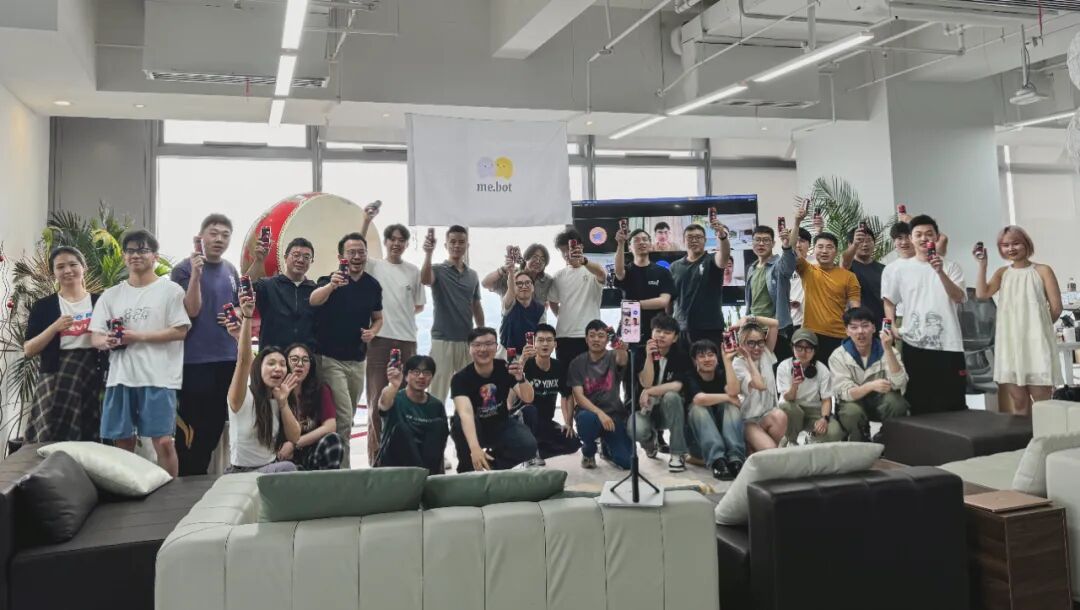
Tao's team celebrates the successful launch of Me.bot
Image source: IC Photo / courtesy of interviewee
Layout: Nan Yao