He Yu: Eating a 5-Yuan Bowl of Beef Noodles Again After Three Years — You Have to Go Deep Into County Towns to Keep Your Fingertip Feel | End of 2025
It's not just about consumption or investment.

"It's not just about consumption or investing." By He Yu, BA Capital

One-twelfth of 2026 is nearly gone, yet "Waves" "End of 2025" series continues. For Chinese people, the lunar new year hasn't arrived, so the real year never quite feels over. The long yisi Snake Year, with its 384 days, still has more than two weeks to wind down its lengthy tail. At this moment of transition, someone wants to bring the authentic pulse from the long tail of Chinese society into plain view.
He Yu, founding partner of BA Capital, chose to participate in "End of 2025" through a set of "field notes."
Among the contributors to this year-end special, He Yu is a rather unusual presence. While the "mainstream" investors of the primary market are immersed in the investment frenzy around AI agents and embodied intelligence, he and the BA Capital team walked the streets of county towns like Fogang in Guangdong, Miluo in Hunan, and Anguo in Hebei — discovering stories that exist outside the mainstream narrative.
This isn't BA Capital's first time "scanning the streets" in county towns either. From 2021 to 2022, the team went deep into 495 counties, producing a county-level research report that generated considerable buzz in the venture capital circle.
So why return after three years?
He Yu told "Waves" that his motivation is quite simple: that market is too far from first-tier cities, and without putting in serious effort to dig in, you lose your "physical sense" of China's lower-tier consumer markets. The insights required for consumer investing are often extremely subtle — they need to sink into the investor's subconscious.
This "physical sense" has brought enormous professional returns to He Yu and BA Capital in recent years — the most vivid stroke being the soon-to-list Mingming Henmang (Busy Busy).
Looking back, this investment is almost a textbook case of "research-driven investing." In 2022, the BA team spotted Zhao Yiming Snacks on county streets. It was a company that grew entirely within county towns; founder Zhao Ding himself lived in that market and understood its users best. At the time, based on logical extrapolation from their county research, BA calculated that snack collection stores represented a massive 300 billion RMB industry capable of transforming the entire leisure food supply chain. This conviction underpinned BA's subsequent bet on Zhao Yiming and Mingming Henmang. He Yu demanded the team "use every possible means" to get involved.
The most dramatic moment came with the merger of Snacks Busy and Zhao Yiming Snacks. He Yu witnessed that industry-shocking强强联合 (strong alliance) in late 2023, executed with absurd efficiency: under the two founders' leadership, the entire merger was completed within two weeks. Existing shareholders including BA Capital had no due diligence reports, no third-party audits — they supported the decision entirely based on their understanding of industry data and deep trust in the founders.
In He Yu's view, BA's confidence in "daring to pay for ambiguity" comes not only from trust in management but fundamentally from BA's recognition that Mingming Henmang possessed unique capabilities to stimulate and satisfy county-level market demand — and that demand is massive. He believes county towns aren't simple replicas of first-tier cities; they have their own commercial logic: a market with high homeownership rates, low loan ratios, tight social networks, and the resilience of a "familiar society." This stability forms the most solid buffer layer of Chinese consumption.
What's particularly notable is that whether in this return to county towns or the research three years ago, the main participants were BA Capital's frontline investors themselves. He Yu told "Waves" that investment institutions should absolutely not establish dedicated research teams. "Once you divide labor, you weaken the investment team's research capabilities. Research must be internalized as part of the investor's intuition."
What follows is the 5,000-word field note that He Yu and his team wrote for "Waves" readers, based on the "2025 Return to County Towns Research Report." It records how a consumer-focused investment institution, in China's vast foundational market, cuts through the fog of macro narratives to capture the efforts and aspirations of every micro-level life. This note is not just about consumption or investing, but about this ever-changing era, and how we should understand the Chinese society and people we inhabit and love.
"End of 2025" is still accepting submissions. Thinkers from the business world and capital markets are welcome to reach out through our backend or at chenzhiyan@36kr.com. Believe that while times change, only genuine thinking endures.
Part 01
Preface Before launching systematic research, we first visited places like Fogang in Guangdong and Miluo in Hunan, wanting to "scan the streets" and get a feel for how county markets had changed over four years.
After conducting random resident interviews in both places, one clear impression emerged — "housing" didn't feature prominently in everyday conversation. Self-built homes are common, and while actual home prices have declined, residents don't feel it strongly. If their profession is more tied to the macro economy — logistics or downstream real estate industries, for instance — their income has indeed been affected in recent years.
But county life also has its pressure-relieving aspects. In Fogang, walk less than 500 meters from the county seat and you can find a bowl of noodles for under 5 RMB. A husband-and-wife milk tea shop competes with chain brands like Mixue Ice Cream & Tea by selling "Coke plus ice, 50 cents a cup."
We'd eaten 8-9 RMB rice noodles in Changsha, but seeing 4-5 RMB noodles with meat in a county town still delivered a more visceral shock and reflection: on one hand, you instinctively calculate how the owner makes money — customer flow, ticket size, kitchen staff; on the other, you recall how years ago we internally modeled "how to get a bowl of noodles below 18 RMB to open the market ceiling," but after eating Changsha's noodles and county towns' 4-5 RMB noodles (roughly Shanghai prices 25 years ago), our understanding of chains deepened.
In Miluo, the main street supermarket had rich product variety but high prices, with lagging displays and curation. Local commercial formats remain relatively monolithic. From these details, scaled, standardized chain formats — whether more efficient supermarkets or formats specific to prefecture-level cities — still show clear room for penetration and upgrade in county towns.
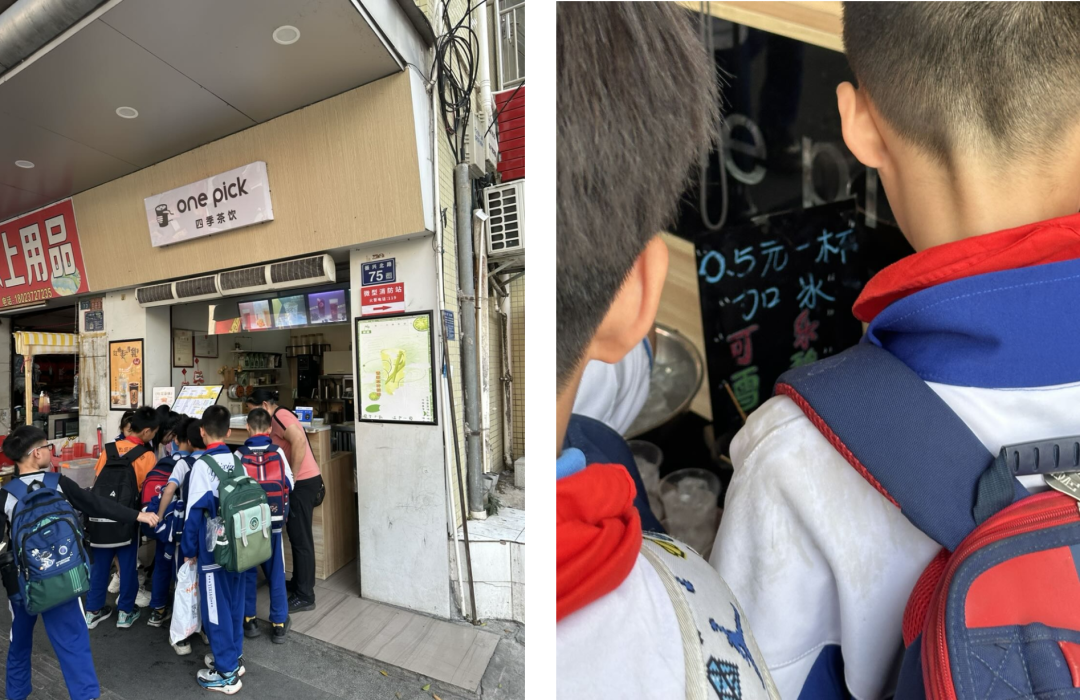
"Coke plus ice," 50 cents a cup. Photo taken in Fogang, Guangdong
These fragmented observations, like touchpoints, reconfirmed for us: county markets have their own rhythm of life, and county commerce does too.
Over the following six months, we began systematic research. We revisited 6 respondents from our previous study, walking through their county towns again. To more comprehensively understand grassroots markets, we added 3 new respondents living in townships. Similarly, among the 1,000 quantitative survey responses, we deliberately covered 30% township samples. We wanted to see more grassroots markets and understand their values and consumption views.
This field research divided into three routes — South China, Central China, and North China — covering Zhao'an in Fujian, Sihui in Guangdong, Sankeng Town in Qingyuan, Guangdong; Shishou in Hubei, Xiangtan in Hunan; Anguo in Hebei, Qikou Town in Lin County, Shanxi, and Baibi Town in Anyang, Henan.
To ensure data comparability, we used consistent core questions and scales with the 2022 survey in our quantitative research, and calibrated the sample structures of both surveys.
Part 02
First, let's talk about changes
Satisfaction:
Individual fluctuation and overall stability
Among the 6 revisited residents, some had become mothers in the past three years, others had welcomed their second child, and they all gave their life satisfaction lower scores than three years ago. This relates partly to life stage transitions — in county society, people generally enter periods of family responsibility and child-rearing earlier, possibly sitting in the pressure zone of the "U-shaped happiness curve."
From broader quantitative data, county residents' overall life satisfaction hasn't significantly declined, maintaining basically stable.
Felt pressure:
"Economic pressure" mentioned more frequently
In field interviews, the phrase "economic pressure" was proactively mentioned by respondents more often than three years ago. This feeling also directly reflected in their spending choices.
Though total household spending is increasing, they're compressing personal non-essential expenditures, especially consumption carrying "middle-class identity label" attributes. A married couple in Zhao'an, Fujian — in 2021 the wife had shared with us the轻奢 (light luxury) bag her husband gave her; this time she showed us the milk tea bag she carries when taking the kids out. The premium on "status symbols" is weakening.
Spending shift:
Compressing identity consumption, preserving self-pleasure experiences
But they're not simply tightening belts — they've preserved budget for categories that make them happy and healthy. For example, a respondent in Sankeng Town, Guangdong, lives in an unpainted red-brick self-built house while also being a user of 400 RMB/session瘦脸针 (face-slimming injections). The only revisited family with decreased income, from Xiangtan, Hunan, does yoga 4-5 times weekly on a 1,000+ RMB annual card, which she considers highly cost-effective and mood-boosting.
A paradox:
Felt contraction vs. actual income
Counter to more frequent mentions of "economic pressure": among 6 revisited families, 5 had stable or even increased total actual income. Quantitative data also shows county residents' household annual income hasn't significantly fluctuated over three years. Moreover, their income expectations for the next 2-3 years remain cautiously optimistic — 60% believe future income will grow at least 5% or more.
Core change:
It's expectations, not income, changing consumption
We believe county residents' expressed "economic pressure" is more of a "felt contraction" — a "felt contraction" rendered by macro narratives, local enterprise fluctuations, and surrounding atmosphere together.
This feeling stems more from changed expectations about the macro environment and future uncertainty, not actual current income decline. It's these lowered expectations, not shrunken wallets, guiding them to spend more cautiously — reducing consumption for "face" and "symbols," while still willing to pay for concrete experiences that enhance daily happiness.
Part 03
Several concrete slices of life
Work pace:
Getting busier
One clear change: county people feel work pace has accelerated. Compared to 2022, the proportion feeling they're in busy work status rose significantly, approaching half, versus just over 30% in 2022. The past rhythm of "busy and idle periods" is shifting toward more sustained, regular daily busyness.
Urban migration:
Weakening desire for big cities
The proportion of county residents considering moving to big cities has declined. Over the past three years, among county residents who "considered it," attitudes diverged — from "considering but undecided" to either "completely not considering" or "considering but not acting."
The marginal attraction of big cities is decreasing; people no longer blindly aspire, instead comprehensively weighing income, costs, and family realities. A Zhao'an, Fujian respondent family discussed hoping their child could attend high school in Xiamen, but distance and reality prevent a decision. However, because scarce resources determine population flows — education, healthcare, industries, etc. — this doesn't change the long-term trend of population moving toward larger cities.
Housing:
Important, but limited impact on mindset and consumption
County residents' housing is mainly for self-use, with relatively low loan ratios — little changed from three years ago. Overall, over half purchased property before 2020; nearly 90% conducted no property transactions in the past three years.
Interviews also revealed that though most know prices are falling, they don't feel it strongly. If you open their Xiaohongshu homepage and compare with ours, the recommendation rate for housing topics is completely different.
Marriage attitudes:
Economic security is an important prerequisite
County residents' attitudes toward marriage are pragmatic and rational, but not mandatory. Economic foundation is an important precondition; "can marry, but need solid finances first" is the second mainstream attitude (35%), reflecting economic security's key role in marriage decisions.
This is clearer in differences between county-town and township men. Township men show deeper economic anxiety, with the strongest demand for "needing economic foundation" (37.7%). County-town men lean more toward "let nature take its course" (41.6%), higher than county-town women and the highest among all comparison groups.
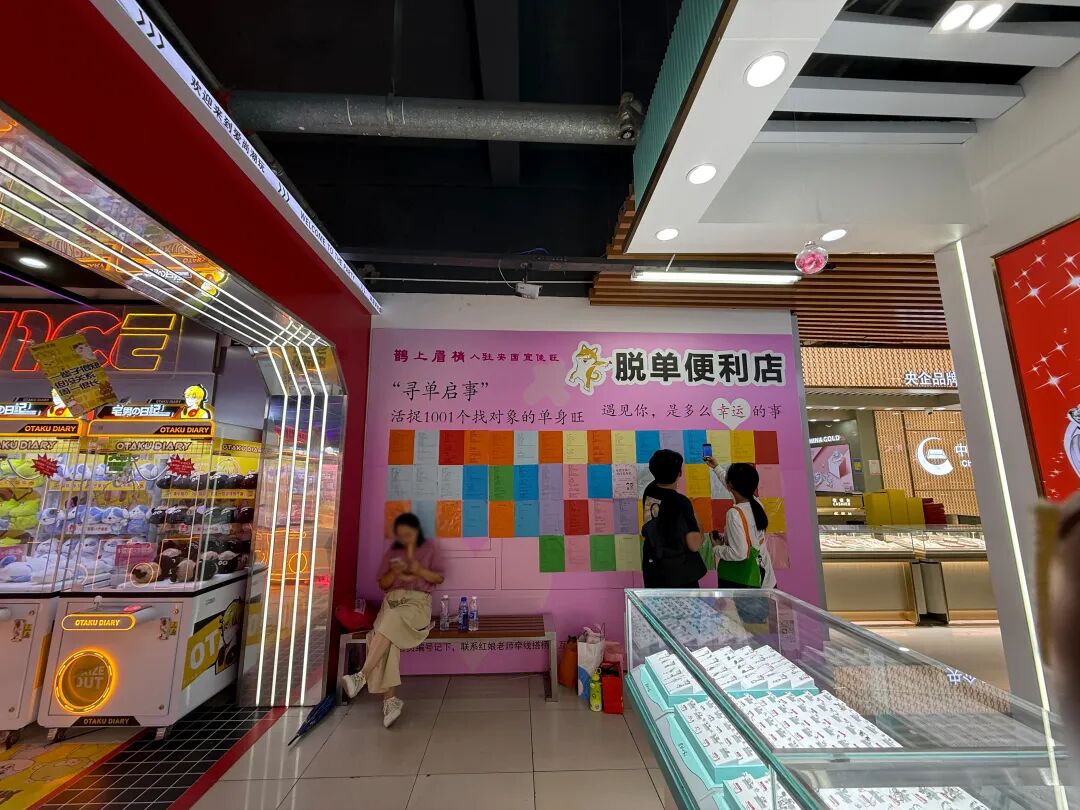
"Singles convenience store" in a corner of the first floor of the largest local mall. Photo taken in Anguo, Hebei
Part 04
How we judge opportunities
The budding of experience-driven consumption
In BA's investment model, we categorize all consumption into efficiency-driven and experience-driven types.
- Efficiency-driven consumption pursues obtaining more abundant goods with less (money, time) cost, achieving refined control of survival resources through quantified standards (cost-performance, timeliness).
- Experience-driven consumption pursues genuine uniqueness, involving consumption behavior (products or services) in the process of exploring the world and self-discovery.
From county consumers' leisure choices, we see some changes. Post-pandemic, they've reduced TV watching and reading at home, going more to cinemas and棋牌室 (card/chess rooms). Though the base is still small, more people are trying personal hobbies and short trips. This reveals growing interest in personalized, experiential leisure.
Income remains the main constraint for county consumers trying experience-driven consumption. But if we only see their ultimate choice of low-priced goods/services and conclude they "just want cheap," we ignore a crucial fact: supply in county markets is often limited not just in quantity, but in quality and variety.
In a newly opened Miniso in a county town, a girl looked again and again at a colorful thermos on the shelf, her delight utterly genuine — as if encountering a精致 (refined) boutique in a first-tier city. Then we understood: sometimes due to insufficient format supply, product categories taken for granted in first-tier cities can genuinely bring heartfelt joy to consumers in different tier markets.
The pursuit of a better life is human instinct. Often, county consumers don't face "choose expensive or cheap" but "only low-price, and experiences are all similar" options. When all choices cluster at the low-quality, low-price end, price becomes the most visible label — this is essentially a passive result of quality supply absence.
When we talk about explosive growth of a format, we always think "exploding demand stimulates supply growth," but the reality is "innovative supply awakens budding demand." Whether a category can truly penetrate county markets hinges on whether supply can clearly define value and lower access barriers.
County consumers with average monthly income around 3,300 RMB may not need extremely unique "boutique experiences," but price-acceptable, directly felt "light experiences." A few-dozen-RMB movie ticket, a few-hundred-RMB short trip, a reasonably priced IP peripheral, a freshly made ice cream on-site — these consumption forms that can elevate daily texture and bring small joys at low barriers may best fit their current state of "seeking pleasure within pragmatism."
We believe the so-called "inflection point of explosion" for a category in county markets is essentially: a small number of consumers in a specific county made a choice, which then synchronously occurs and widely replicates across 1,813 counties. This is also the value of county markets — relying on scale effects, the aggregation of widely distributed, budding demand can potentially form a market of considerable potential.
Continuous efficiency upgrade
At 30 RMB per capita ticket in a county town, we ate freshly sliced beef hot pot, made to order in-store — seemingly shabby storefront, but open kitchen. This formed stark contrast with the 120 RMB per capita fresh beef hot pot we'd just eaten in Guangzhou.
Current supply patterns in county markets remain differentiated. Chain models are accelerating下沉 (sinking/downward expansion), but in categories like breakfast and fresh produce that rely on flexibility and local networks, their efficiency often falls short of individual vendors, mainly due to three structural differences:
1. Rent: Individual vendors can achieve near-zero rent through stalls or self-built housing.
2. Labor: Individual vendors are "self-employed," with labor not counted as explicit cost.
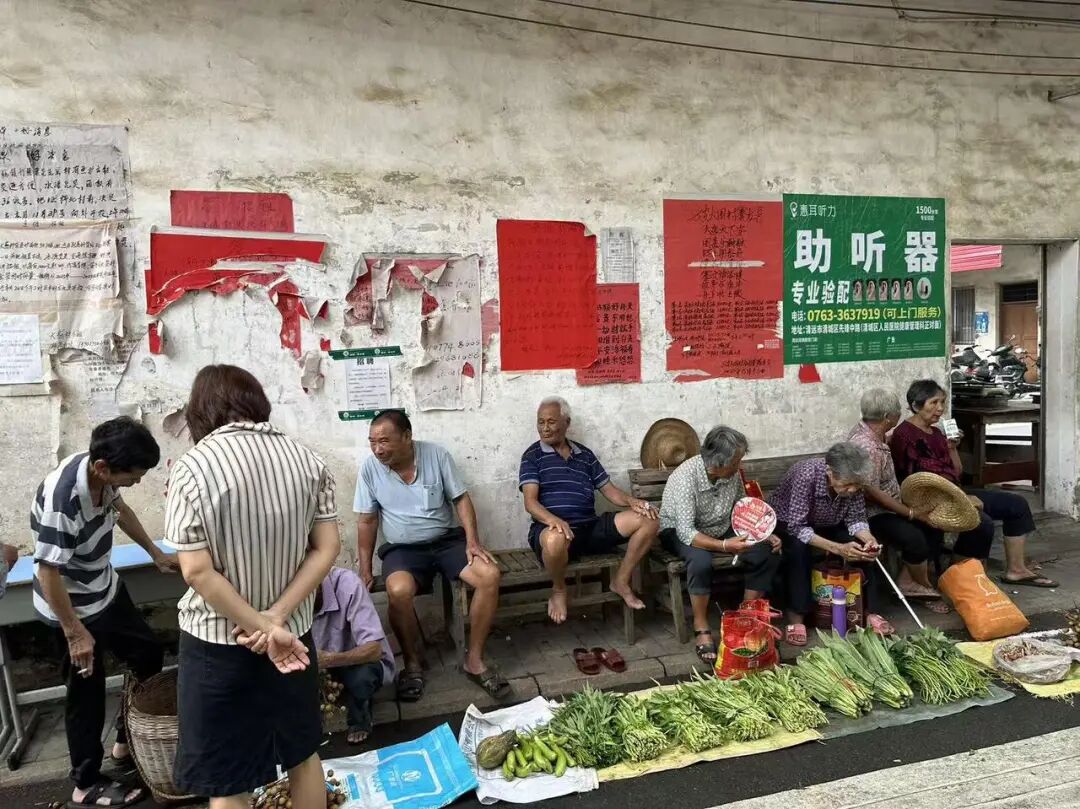
3. Supply chain: For vegetables and fresh meat, county towns' short-chain circulation of "morning harvest, morning stall" beats chains' national warehouse-distribution in freshness.
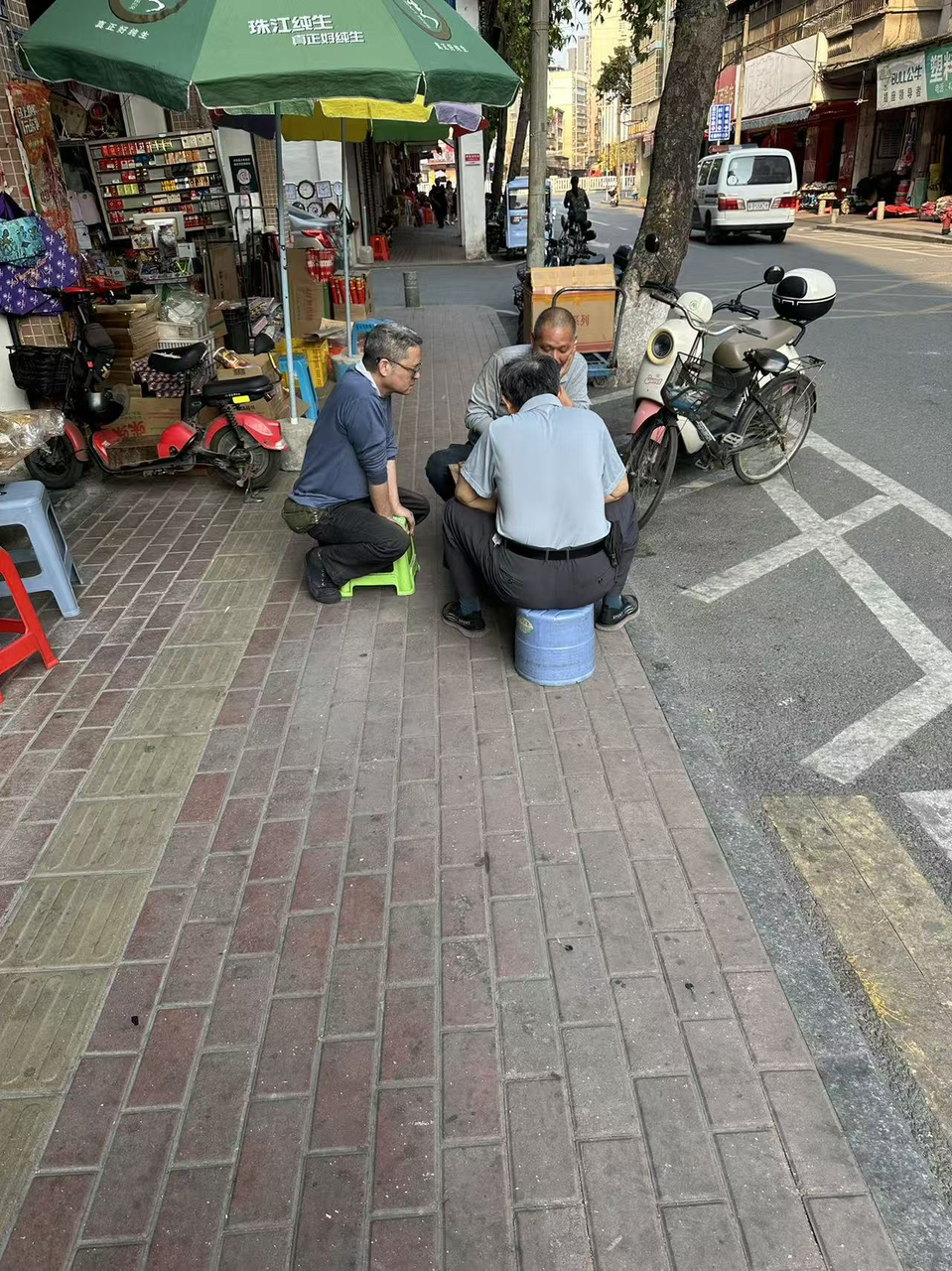
Self-built housing in county towns — build 3-4 floors if you want, can rent out too — provides居住成本 (housing costs) unimaginably cheap for first-tier cities. If you model unit economics, from ticket size to revenue to gross margin to labor and rent, these elements are all abstracted in county towns; rent and labor cost reductions can be this direct.
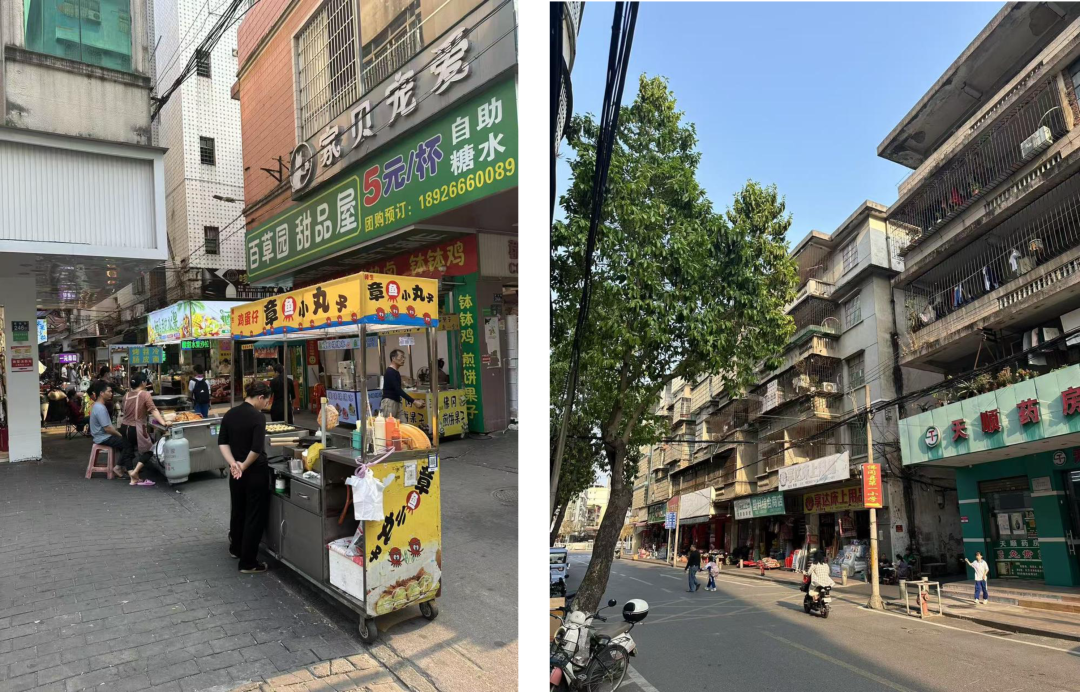
No caption needed. Photo taken in Fogang, Qingyuan, Guangdong
No caption needed
No caption needed
Therefore, efficiency-driven supply opportunities lie in categories that can find the "greatest common denominator of taste" and reconstruct cost-performance through scale effects.
For example, milk tea, fried chicken, snack collection stores and similar categories have highly standardized products, mass-market flavors. Ten-thousand-store scale purchasing lets chain brands integrate supply chains upward, reduce中间环节 (intermediate links), gaining significant procurement cost advantages, ultimately forming "good yet affordable" competitiveness at the terminal.
This explains why Mixue Ice Cream & Tea, snack collection stores can rapidly penetrate county towns — through extreme efficiency, they provide "good yet not expensive" choices that didn't exist before.
In 2025, 11.5% of respondents said their shopping frequency at snack collection stores increased in the past year; in 2022, this proportion was 6.7%.
Part 05
One topic: County women
In the final section, we want to go beyond short-term behavioral changes and explore a topic that may have more long-term value — the awakening of self-awareness among county women. Bringing this topic into business observation isn't about simply converting "women's self-awareness" into a consumption label, but about paying attention to social ideological shifts, which are often the harbinger of structural change in consumer markets.
From gender-disaggregated income data, we see county men's income distribution skews more toward higher brackets, while 64% of county women's personal annual income concentrates below 35,000 RMB (under 3,000 RMB monthly) — significantly higher than men (43%). And as income tiers rise, the gender gap widens. In the 60,000+ RMB annual income bracket, men's proportion (29%) is more than double women's (12%); in the 100,000+ RMB high-income tier, men's proportion (11%) is nearly triple women's (4%).
But the "income ceiling" isn't an isolated economic phenomenon; it's essentially constraints on women's development opportunities and compensation returns in the labor market, shaped by specific family division of labor facts and固化 (solidified) gender role concepts.
One township girl we interviewed this time — from Henan, a province with massive gaokao competition, she stood out from over 1 million test-takers to get into a 211 university. Due to family reasons, needing to care for grandparents and serve as the rear base for her younger brother's future外出打拼 (going out to strive), she returned to her township. When talking about her online自媒体 (self-media) work, doing it for a few years could potentially earn 7,000-8,000 RMB monthly in Hangzhou, she thought maybe possible, but still felt her income wouldn't exceed her father's (100,000 RMB/year). In county towns, individuals constrained by the society of human relations — especially young people — feel greater impact.
But from field research and market visits, we see budding self-awareness in county women. This self-expectation and self-care takes diverse forms: plans to return to work after childbirth, expanding side businesses, maintaining learning and exercise, self-pleasure consumption, etc. Our observation angle isn't limited to spending conversion.
Unlike women in first-tier cities, county women's budding self-awareness isn't a "self-actualization narrative" of breaking from family roles or pursuing sharp independence. Therefore, in consumer psychology insights, catering to county women needs to stay closer to "self-settling" — helping them better settle themselves within established roles, rather than breaking through tradition.
Part 06
Final words
From this field research, there are some conversations that left deep impressions, which we'd like to record here.
Respondent in Shishou County, Hubei (revisit): "My father now works in Shanghai. He used to drive locally; a younger relative settled in Shanghai, so my father went there as a security guard these past two years, 5-6,000 RMB/month, saving more for his own pension."
Respondent in Xiangtan County, Hunan (revisit): "My mother and mother-in-law both mainly care for family; my father-in-law went to Guangdong to work, my father still labors in our rural hometown. My father was once ill; treatment costs were basically covered by medical insurance. I hope he won't work anymore, but he can't stop, and tells us, 'If I don't even do this bit of work, I'll have no income at all.'"
These micro-level efforts often exist outside our field of vision. China's market is so vast, but we live in first-tier cities, our social circles are in first-tier cities, and social media content is also an information cocoon. The echo chamber built by social circles and information flows makes it hard to see the full picture of stories. Precisely for this reason, two deep dives into county towns over four years seem especially necessary.
This return coincided with a macroeconomic transition period. We think: whatever market fluctuations, whatever cycle rotations, this micro-level effort rooted in hundreds of millions of ordinary families has never changed. Precisely because of this, we always maintain confidence in the Chinese market — confidence not only from data and trends, but from each person's most sincere, most朴素 (simple/unadorned) pursuit and effort toward a better life when facing life choices.
Layout | Yao Nan Image sources | IC Photo
Recommended reading

The flow of money, the rise and fall of people