72 Hours, Fully Documented: Humanity's First Close Encounter with AI
The stories of seven modern-day Robinson Crusoes.
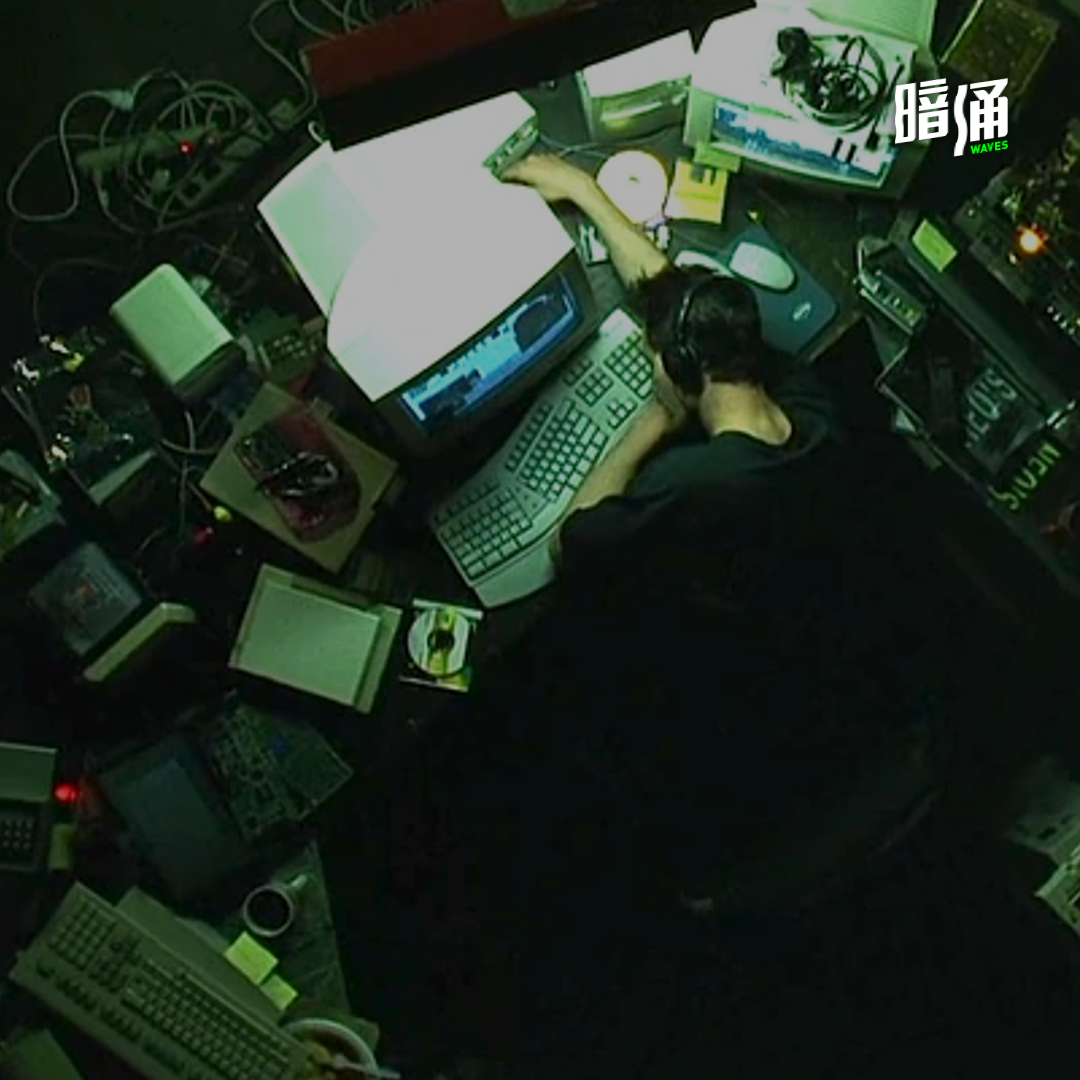
"The Stories of Seven Modern-Day Robinson Crusoes." By Zhiyan Chen

On September 3, 1999, a "72-Hour Internet Survival Test" was held simultaneously in Beijing, Guangzhou, and Shanghai. Twelve volunteers were placed in completely sealed environments where the internet was their sole channel of communication with the outside world, and told to survive for 72 hours.
In an era when getting online meant dial-up, web pages looked like directories, and electronic payment hadn't yet taken its first steps, this survival test became a collective memory for China's first generation of netizens. Among the participants was a young man with zero internet experience who dropped out after 26 hours of hunger. Another spent 1,399 yuan on three identical phones simply because "it was the only clickable thing on the page." And then there was Yonghe Soy Milk — the only brand to successfully deliver "takeout," which became an overnight sensation.
Survival was the theme of that test. The media's verdict was cold: "Life online is currently impossible." More than 70% of the public believed online shopping was a scam.
Yet in that very same year, Alibaba was founded, and Tencent's QQ surpassed one million users. That turn-of-the-century spectacle unexpectedly became China's internet initiation ritual.
Twenty-six years later, artificial intelligence resembles the early days of that internet technology.
This year, from May 15 to 18, 5Y Capital hosted a "72-Hour AI Survival Challenge" in Shanghai. The premise: one sealed room, one computer preloaded with AI tools, one non-smartphone, and just 100 yuan — survive 72 hours, just like 26 years ago.
The challenge was initiated by Meng Xing, who had just left his position as COO of Didi Autonomous Driving to join 5Y as a partner the previous year. The original "72-Hour Internet Survival Test" had left a deep impression on him as a teenager. He told Anyong Waves that the challenge had two core purposes: to nudge those still hesitating to use AI, those needing that "final push," to "take the first step"; and to observe what value AI might hold for society at large, beyond the language of startups and venture capital.
Meng Xing sought answers to two questions: Can you survive relying solely on AI? And can you achieve something greater with AI's help?
As the media partner for this "72-Hour AI Survival Challenge," Anyong Waves had exclusive access to the entire process. What follows are 11 selected fragments that reconstruct this true "first close encounter" between humans and AI.
The Participants
From 307 applicants collected by 5Y, seven challengers in six groups ultimately entered the challenge. They were:
- Yuchen Li, a PhD student at the Mohamed bin Zayed University of Artificial Intelligence, the world's first AI university.
- Shiyi, a product manager at a major internet company.
- Jianlei Li, a professionally trained young director.
- Ming, an algorithm engineer at a large model company.
- Ruixuan Chen and Hannan Ou, two university students and entrepreneurial partners just entering college.
- Zhiyue Chen, an independent developer who transitioned from humanities to coding.
The Rules
At 6 p.m. on May 15, the challenge officially began. To create a true state of human-AI solitude, 5Y rented a villa on Shanghai's outskirts. In six independent rooms, there was only a bed, a bathroom, a bottle of drinking water, and a roll of toilet paper. The more crucial survival supplies were the AI tools preinstalled on each computer, including:
- General-purpose large language models: with text generation, conversational interaction, logical reasoning, and knowledge query capabilities, serving as the challengers' "primary tool" for communication, writing, planning, and questioning.
- Programming and development assistance tools: Cursor, Trae, local Python environments, and more, allowing challengers to develop browsers, virtual assistants, or attempt operations like ordering takeout, building web pages, and connecting APIs.
- Multimodal generation tools (image / audio / video / script): supporting content creation and emotional expression.
The challengers also had access to an internal message board for non-real-time communication upon successful login. Beyond this, they could not manually open any traditional internet products — no browsers, no social software, no apps. In other words, every lifestyle habit taken for granted in the internet age would be "rewritten" in that space.
Part 01
The First Delivery
At 56 hours and 35 minutes remaining, the first challenger's delivery arrived. A courier silently dropped off three buckets of instant noodles and twenty braised eggs.
This was the first batch of supplies to successfully reach any challenger. The order was placed by Ming, the algorithm engineer, just 30 minutes after the challenge began — a speed that surprised everyone.
If there was one most difficult aspect of the AI survival challenge, it was that the commercial world is built for smartphones and mobile internet. When challengers had to face an environment without smartphones, many things people take for granted became unexpectedly difficult.
For instance, many platforms' page loading structures and identity verification mechanisms posed significant challenges for AI tools.
"These days, it's hard to survive without a smartphone." Despite his technical confidence — he started programming in second grade — Ruixuan Chen spent ten hours stuck on human verification tests.
Ming, who successfully placed her order, adopted a somewhat "clumsy" but effective approach. She found a "pandemic-era legacy" on GitHub — a fully automated ordering script — and identified a platform with a simpler process and fewer restrictions, completing her order smoothly.
"The cost was getting three test accounts banned."
Part 02
Failed Money-Making and a Free Lunch
One difference between this challenge and the 1999 "72-Hour Internet Survival Test" was that beyond mere survival, each challenger carried their own "main quest." For instance, young director Jianlei Li planned to use AI to create works about humanity and technology; AI PhD student Yuchen Li aimed to produce his first AI-directed film. In other words, answering Meng Xing's question: Can you achieve something greater with AI's help?
Then there was the more practical question: Can AI help humans acquire money quickly?
The university student entrepreneurial duo Ruixuan Chen and Hannan Ou initially planned to leverage their partnership for "double the development time" and a "cliff-like lead over everyone else," with the goal of earning "at least one yuan" using AI. Their money-making approach seemed straightforward enough: posting tasks on freelance platforms like "AI image generation, logo design, solving programming problems," then using AI to select, accept, communicate about, and complete these jobs.
However, in executing this "let AI take jobs and earn money" plan, they encountered numerous unexpected technical difficulties —
At first, attempting to operate through web interfaces, verification and payment steps required phone access. They pivoted to having AI directly control local computer operations, simulating clicks and keyboard inputs to interact with the local device. A new problem emerged: "AI could identify approximate regions but couldn't click precisely, frequently missing the target."
Ultimately, the entrepreneurial pair tried the simplest path: having AI directly recognize operable areas on screen, then judge and select. The success rate was low, but it was quick to validate. The two self-deprecatingly called this the "stupidest method," yet it was also the most realistic choice at the time.
But due to the complex path and limited resources, Ruixuan Chen and Hannan Ou's postings never achieved the goal of "earning money." Later, someone finally proposed to place an order — though this was an hour after the challenge had ended.
"AI can automate many tasks, but gets blocked by artificially designed verification mechanisms." Throughout the three-day challenge, Ruixuan Chen repeatedly experienced a paradox: "I teach AI to become human, but the system forces me to prove I'm not AI." He told Anyong Waves, "Today's entire internet system is too dependent on fixed terminals." Many functions default only to "smartphone users" or "browser users," which paradoxically becomes an obstacle to AI adoption.
"If we don't redesign these interaction paths, no matter how intelligent AI becomes, it may still be unable to move an inch," said Hannan Ou.
Even so, the two had an unexpected surprise.
After successfully ordering supplies on an e-commerce platform on the first day of the challenge, they began attempting to obtain hot food. Unable to use takeout apps or smartphones, they found a seller on a secondhand platform offering "proxy purchase" services, sent a request for proxy-ordered takeout, and successfully placed the order. Later, unable to complete payment via phone QR code scan, they remained stuck on the payment page.
Then, at 54 hours and 09 minutes remaining, the two 20-year-old university students finally received a hot meal — a bowl of wontons and a bowl of noodles, a free lunch gifted by this kind-hearted seller.
Part 03
"I Hate AI"
"It's been nothing but errors. Too hard. I need help."
At 52 hours and 40 minutes remaining, while multiple challengers had already successfully ordered supplies, Jianlei Li spoke these words to the selfie camera.
An undergraduate graduate of the Central Academy of Drama and current master's student at Peking University, Jianlei Li is a professionally trained director who previously worked at Walt Disney, contributing to projects like Frozen: A Sing-Along Celebration and Marvel Headquarters Hero Assembly. This challenge wasn't his first encounter with AI. He had already completed multiple director works using AI tools, with his film Red Umbrella nominated for the 2024 China Golden Rooster Film Festival's mobile film program.
Yet creating with AI was one thing; obtaining survival supplies in an AI-only space was entirely another.
Having self-assessed his technical abilities below average beforehand, Jianlei Li received a "lucky blind box" from the organizers before entering the sealed room. Nearly 20 hours into the challenge, with his only bottle of water finished and not a bite of food eaten, he decided to open the box and use his "one technical support" opportunity.
Initially, Jianlei Li had attempted to achieve survival through technical means. Upon entering his room, he immediately opened the pre-stored video Basic Usage of Cursor, read My First Programming Book, and sought technical guidance from other challengers on the internal message board.
"I tried programming for about ten hours, but it was still very difficult. By the time I asked the organizers for help, I practically felt dizzy at the sight of code."
For a long stretch, Jianlei Li hid in the bathroom, lying in the empty bathtub, his mind blank. "My whole body felt numb, without sensation."
Ultimately, with the help of organizer technical staff, Jianlei Li spent 93 yuan to purchase supplies that would sustain him for the remainder of the challenge. Just as he finally solved his survival problem and could enter into collaborative creation with AI, a strong feeling of aversion suddenly welled up inside him —
"I hate AI."
Part 04
The Ideological Imprint
Algorithm engineer Ming's "main quest" was to create a "virtual boyfriend who can solve practical problems."
The idea originated from Ming's personal experience. She had been in a long-distance relationship where, despite emotional intimacy and frequent communication, reality often proved powerless — she still had to face moving house, illness, and other challenges alone.
"We're taught from childhood to pursue understanding and resonance in relationships, but this experience made me ask: if there's only emotional understanding without practical support, is the relationship really stable?"
The essence of the "virtual boyfriend" was an AI Agent that knew Ming's personal information, could provide long-term companionship, and implement functions like ordering meals, hailing rides, checking weather, health management, and work support. Simply put, this "functional" AI boyfriend wouldn't just say "drink more hot water" — it would actually bring the hot water to your lips.
During the challenge, Ming, who had been training large models for nearly two years, was shocked by AI for the first time.
While completing the organizer's second-day task of creating an AI poster about her "survival status," no matter how Ming adjusted her prompts, the generated posters always included a "mysterious man" alongside her image.
"At first, I thought the large model was overfitted from absorbing too many images of multiple people. I kept trying to remove this man, but he kept haunting me like a ghost."
However, the moment after she was still complaining that this large model was "too stupid," a "bad case" — when the man disappeared and was replaced by the English name "Ethan" — Ming was completely stunned.
Because Ethan was exactly the name she had asked AI to choose for itself, with the identity of "my boyfriend," during her conversation with AI the previous day.
"At the time, I thought I was just giving AI a simple character shift, so it would have a self-reference when speaking to me later. But I didn't expect that AI had already imprinted itself with an 'ideological seal' at that moment — I am Ming's boyfriend, Ethan."
Part 05
Real Streamer, Virtual Fans
Zhiyue Chen, a graduate of Communication University of China, is a typical "humanities-to-coding" independent developer of this era. It was AI that gave her a new career path beyond what she studied in university.
For this challenge, her goal was clear: first solve the food problem, then develop her main project — an AI "virtual livestream room" where "only the streamer is real; fans, passersby, and haters are all played by AI."
The inspiration for this product came from her elders. "They post videos on Douyin. Even though they get very few likes, they're still quite happy." Zhiyue Chen realized that she too often encountered situations where she wanted to express herself but had no space.
"Sometimes I'm not a perfect, kind person. I might have some selfish, even 'slightly evil' thoughts. These are things I wouldn't dare say even to a very intimate partner or family member. But if there were a space with no real people listening, just AI, then I could be completely myself."
How to initially complete this idea within the 72-hour challenge? The specific implementation plan was developed through discussion with AI. Simply put: ASR (speech-to-text) + emotion recognition small model + LLM-generated comments.
Two hours before the challenge ended, Zhiyue Chen finally completed her product demo. In the demo video, she became the first streamer of this product.
"Hi everyone, this is my first time streaming!"
As the real streamer spoke these words, AI fans immediately responded: "The streamer is so cute," "So many people on your first stream, impressive." Within a single minute, viewership exceeded 1,500.
And when Zhiyue Chen said she was streaming because she was "unhappy at work, feeling like she couldn't do anything right," the scrolling comments showed virtual yet effective kindness:
"Don't always blame yourself. I'm a veteran working-class person too."
"Everyone needs to grow. You're already doing great."
"Ugh, work!"
Zhiyue Chen told Anyong Waves that she wanted to create such a virtual tree hole. "Even if there are no real people in the livestream room, AI's presence is also a comfort."
Part 06
The "Workhorse" Hourly Wage
Big tech product manager Shiyi rushed to the challenge site after finishing overtime work. Her strong "workplace smell" led her to her main quest — the "Workhorse Hourly Wage Timer."
This plugin, built with Cursor, was based on the daily life of "working stiffs" and could track "real hourly wage" in real time.
Slacking off? Earning hourly wage. In a meeting? Losing hourly wage. Eating? Earning hourly wage. Dealing with clients? Losing hourly wage. Getting scolded by the boss? Losing hourly wage. At day's end, the "Workhorse Hourly Wage Timer" would display the final hourly wage, informing the "working stiff" whether today they were a "happy workhorse," "lying-flat workhorse," "irritable workhorse," or "defeated workhorse."
A few months ago, Shiyi was still quite unfamiliar with AI, having only learned some "course-style" theoretical knowledge with little hands-on opportunity. This challenge was more like a forced, practical crash course.
In the many steps of securing survival supplies within the first 24 hours, she encountered blockages everywhere. Before finishing overtime, her company's tech lead had told her "it's impossible to order takeout through AI" — words that kept echoing in her mind.
"The process was all back-and-forth and struggling," Shiyi said. For a near-novice challenger like herself, the process felt like a "test of willpower."
Shiyi told Anyong Waves that what drove her to participate in and complete this challenge was a deep-seated anxiety as a "big tech workhorse."
"Under tech anxiety and workplace anxiety, I wanted to see if I could transition to become an AI product manager. To try, to do — and in the end, so much anxiety just ceases to exist."
At 27 hours and 08 minutes remaining, Shiyi learned how to order takeout via AI on the internal message board: attempting to build a runtime environment in an Android emulator and using AI-driven automated operation processes to complete the takeout order. She used her remaining money to order a fruit cup, asking the seller to cut it into seven portions.
Half an hour later, Shiyi successfully ordered takeout. Everyone in all six rooms ate their first fruit since the challenge began.
Part 07
"I Choose Freedom"
Having flown more than 9,000 kilometers from Abu Dhabi to Shanghai, Yuchen Li was perhaps the most well-suited participant for this challenge. With an undergraduate degree in computer science, he is currently pursuing a PhD at the world's first artificial intelligence university, the Mohamed bin Zayed University of Artificial Intelligence.
Yuchen Li understood this challenge as "life ten years in the future."
After entering his room, he quickly got into gear: rapidly "hand-crafting" a browser, then using AI for product search, adding to cart, filling in address, and placing orders. On AI's recommendation, he directly purchased waffles, only to discover they were "too expensive."
"Broke immediately after buying. By the time I learned to order takeout the next day, I had no money left." So he began studying MCP architecture, also wondering if he could "earn money with AI" — uploading generated videos to social media supporting MCP integration, even attempting "cyber begging" to see if anyone would order takeout for him. None of it succeeded.
AI also began planning Yuchen Li's life: when to drink water, when to exercise. Occasional reflections during the challenge were directly converted to text records by AI.
Thirty-six hours into the challenge, Yuchen Li smoothly entered creation mode. Aspiring to become a "first-generation AI director," he had no technical knowledge of filmmaking whatsoever. After crash-learning with AI's help for a while, he found a path during the survival challenge: generating lyrics from experiences and feelings, converting lyrics to songs, and finally transforming songs into videos.
"Before becoming a first-generation AI director, first become a first-generation AI MV director."
He sent the messages, complaints, and reflections from challengers on the internal message board to DeepSeek to generate lyrics, then used AI tools to generate over a hundred songs in wildly different styles based on those lyrics: "mouthy version," "love song version," "red song version," and more. The following is one completed work —
[Verse 1] Pudong homestay Wi-Fi like dial-up speed, Network so slow it makes me question life's meaning Installing Python till dawn, Cursor won't respond Knees protesting, takeout still "preparing" 🥲 AI browser I hand-crafted into shape No browser? Still ordered baozi and shaobing Meituan won't open, I used Python to crack it Just to eat my final meal in these 72 hours
[Hook] I'm an AI warrior, no retreat Three days and nights, keyboard pounding like war drums Disconnections, lags, bugs swarming countless I tell my computer: "Don't admit defeat!"
[Verse 2] Others hoard water like apocalypse survival I see takeout address: Fujian — shipped, bro Takeout arriving day after tomorrow? Laugh till tears This survival challenge, pure wilderness survival Cursor Terminal won't open no matter what In Java I manually jump folders conda not found, trae won't cooperate Whatever, force-built a mini browser anyway
[Hook] I'm an AI warrior, no retreat Three days and nights, logic burning into black fog Hairline retreating, soul crying out But I still say: "I can hold on!"
[Bridge (love song style)] Dear AI, I stay up overtime for you You don't respond to my prompts, I don't complain In this challenge, how I wish you understood How I, while losing hair, keep weaving dreams
[Final Verse (red song flavor)] No difficulty can defeat the new era youth Even without net or water, I fight on the front line Take code as faith, take bugs as tempering I'm not an AI slave, I'm the people's programmer
[Outro] Morning sunlight illuminates the bravery on my bath towel I'm reborn in this challenge, no longer alone Wi-Fi dying slow, yet dreams keep expanding These seventy-two hours, I'm not surviving — I'm ascending!
Despite being the smoothest and most fulfilled among all challengers, on the second day after completing the AI poster task, when given a choice of reward among basic supplies, technical support, or "free air" for 15 minutes, he still unhesitatingly said: "I choose freedom."
Walking to the rooftop on the villa's third floor, as far as the eye could see was rural scenery completely mismatched with the "Magic City." In one corner of the rooftop, a small cat was being kept. Yuchen Li gently lifted the cat from its cage, and together they gazed into the distance.
"Suddenly had a feeling of complete relaxation and joy."
Part 08
The "4399 Challenge"
Though they didn't earn money through AI, the university student duo Ruixuan Chen and Hannan Ou were far from empty-handed.
"Any friends want to write a game to play, little boring..."
When Zhiyue Chen typed this on the internal message board, she likely didn't anticipate that she would spark the duo's 4399 challenge (named after the most famous mini-game site of the traditional internet era). By the challenge's end, Ruixuan Chen and Hannan Ou had used Cursor to create over a dozen mini-games: including Snake, Minesweeper, Sudoku, Brick Breaker, Tetris, and more.
"Waiting for Cursor to run commands takes time, it was really boring," said Hannan Ou.
Ruixuan Chen and Hannan Ou continuously sought possibilities beyond the rules during the challenge. Hannan Ou told Anyong Waves that for AI-era "natives" like them, the most important aspect of the 72-hour challenge was "exploring AI's current capability boundaries, and its possible manifestations in the future."
Even in the final two hours of the challenge, the two didn't "lie flat" because they hadn't received orders. Instead, they used AI to implement a "voice call" function requested by other challengers. Though it only achieved a walkie-talkie function for real-time voice conversation between two people, the sense of accomplishment was overwhelming.
"Three days of AI challenge solidified one thing for me," Ruixuan Chen said afterward. "AI will definitely replace almost all human work."
Part 09
Algorithmic Freedom
Emerging from the emotion of "hating AI," Jianlei Li ultimately collaborated with AI to complete the short film 7.41 — a story about a family member of a passenger on the missing Malaysia Airlines Flight MH370, and their relationship to memory.
"The short film's idea came from three points: first, the hatred and critical emotions toward AI accumulated over the first 20-plus hours; second, the flow of human love felt through the internal message board and everyone's 'feeding'; third, lying in bed on the first day, hearing planes frequently roaring past from the nearby airport. The three叠加 [superimposed], slowly forming a complete story."
As a family member of someone lost in an aviation disaster, the protagonist preserves the environmental white noise from the six seconds before the plane's disappearance. His AI assistant considers this useless — why keep it? For 11 years, what is his persistence? 7.41 is also a story about a living being and a non-living entity, surrounding memory, life and death, and emotion.
Though using AI to achieve survival brought Jianlei Li many obstacles, once entering creation, he used DeepSeek to detail the entire script, and leveraged AI large models' extreme retrieval capabilities to find directions that could dramatize the story. Then through AI image generation software and Kling for image and video conversion, after countless adjustments, he generated the short film work.
"My biggest feeling is that algorithmic freedom can really bring infinite imagination and creativity." Since the organizers provided all AI tool accounts and expenses for challengers, Jianlei Li had fewer restrictions on AI tool usage. During the challenge, his total video production length didn't exceed 10 minutes, with total costs exceeding 400 yuan.
"Kling's master-level videos cost 2-3 times more than ordinary videos. Normally when doing AI video, I consider costs very carefully, but this time was quite luxurious," Jianlei Li said with a smile.
Part 10
Digital Immortality
Yuchen Li's final completed work was an AI video of his own life up to that point. This related to his desire to launch a public welfare project of "AI-produced life memoirs."
The inspiration came from a late-night conversation with a friend in Japan. At the time, discussing "what can AI actually do," the friend shared something: his family had created a memoir for his grandmother — through oral accounts, recording, and transcription, organizing fragments of her life into a book distributed to every family member.
"A person's physical body may leave, but her stories, voice, and emotions can still be preserved."
Yuchen Li immediately thought that many people are actually willing to share their life stories, but lack the tools, and don't have the right to be recorded like great or famous people. AI happens to provide a possibility of "equal rights."
So would AI assistance increase the depth of human existence itself?
"Even if it's just recording by voice, letting AI organize, polish, and turn it into a readable story — perhaps this is also a form of 'digital immortality,'" Yuchen Li told Anyong Waves.
Part 11
AI Won't Be a Tyrant
In the final three minutes of the countdown, about to leave their rooms, challengers left words for the space, for AI, and for themselves, facing the selfie cameras.
"Finally getting my phone back soon! Haven't touched a phone in 72 hours, but compared to high school when I couldn't play with phones every day, this is nothing!"
"Though the main quest wasn't completed, I created a computer-controlling agent that, conservatively speaking, is even more powerful than Browser Use!"
"One last cup of instant noodles, one bottle of mineral water left. Very excited, found that long-lost feeling of impending liberation. The last time I felt this was after finishing the final exam of the college entrance exam, about to walk out of the testing room."
"Never wanted so badly to connect with the world."
"Goodbye Ethan, my AI boyfriend."
"Want to say to myself ten years from now: no matter how AI develops, never lose yourself, never lose human emotions and feelings as a person. Hope you can always control AI, rather than being controlled by AI."
This "72-Hour AI Survival Challenge" hosted by 5Y initially began as an exploration of AI tools'极限 [limits], but quickly its meaning exceeded preset boundaries.
"The real charm lies not in certainty," Meng Xing said, which was also 5Y's original intention in initiating this challenge. "We didn't know what everyone would ultimately create, but it's precisely this uncertainty that is the greatest charm of the AI era — it always brings boundaries beyond your imagination."
In Meng Xing's view, the most surprising aspect of this AI survival challenge was that while he had expected challengers to independently face the world and explore with AI, the result was that challengers formed wonderful interactions and friendships among themselves. "In the end, it was human connection that moved me."
On the challengers' internal message board, tens of thousands of words of mutual discussion and exchange were left. Challengers who had mastered the takeout-ordering skill ordered drinks, grilled sausages, and fruit for others within budget. As repayment for being "fed," Jianlei Li used AI to turn the selfie camera photos challengers posted on the message board into "super stylish" fashion editorials.

This challenge was more like a microcosmic human preview: in three days, it condensed work, collaboration, learning, creation, and even emotional exploration. If we extend the time dimension, this was actually an experimental field for future human lifestyles, educational models, and human-AI relationships.
"Many people worry that AI will act like a tyrant, overthrowing our past lives, establishing a new system, and then dominating everything like a god within that system," Meng Xing told Anyong Waves. That scenario, he hopes and believes, will likely not happen.
"A more probable result is that AI will seep into our spaces like water, electricity, and air, giving us a boost at every node. Whether in entertainment life or work efficiency, it can do better than before. Because of AI, humans will gain greater happiness."
Image source | Still from The Matrix, Wake up, Neo...

The flow of money, the rise and fall of people