A Conversation with Zongteng's Li Cong: Beneath the Drifting Pontoon, Become the Concrete Pillar | Waves Worldview
Behind each heart-stopping leap.
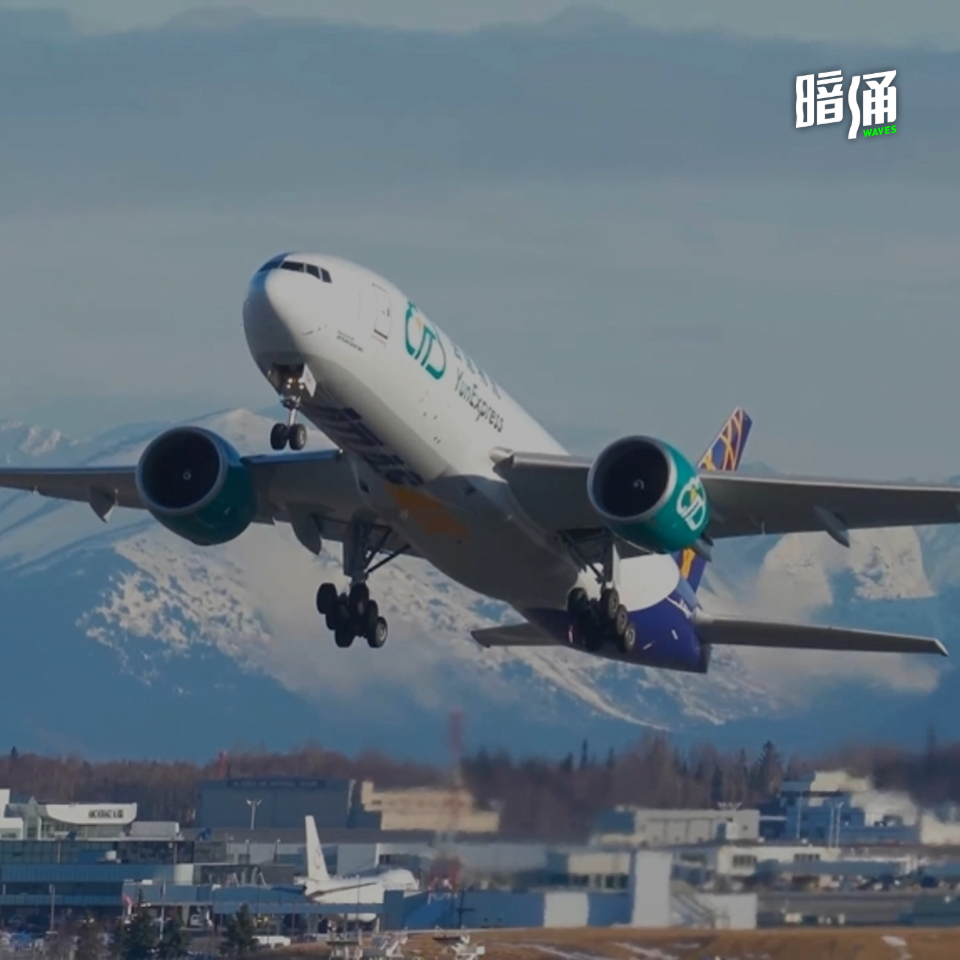
"Behind the perilous leaps toward becoming a cross-border e-commerce third-party logistics giant."
By Qian Ren

When will Chinese founders build truly multinational companies?
We posed this question of our era in "The Shadow World of Globalization", attempting to sketch out the key players hidden behind the grand narrative of Chinese enterprises' new voyage — logistics, marketing, finance, talent, and more. The people and stories within these sectors together built the bridge between Chinese business and the world.
By 2026, many have perhaps sensed signals that this "pontoon bridge" could drift or even break at any moment. Localized conflicts, swinging tariffs, regionalized supply chain restructuring, the movement and return of overseas frontline talent — the once "nomadic" cross-border红利, living off the land, has rapidly dissipated. In its place comes a more fragmented era, one that places greater emphasis on "roots."
What筹码 does Chinese enterprises need to continue sailing? When one path meets obstacles, when should you consider switching lanes, and how do you权衡取舍? For many companies going global, Zongteng Group may be an exceptionally valuable case study.
Its value extends far beyond how a hundred-billion-yuan logistics giant rose to prominence. It lies in understanding the底层逻辑 of globalization's "weight" — something that gives many Chinese founders pause when making the decision to go global.
Over the past decade, Zongteng completed a series of perilous leaps: from being among the earliest cross-border e-commerce mega-sellers with leading annual sales, it pivoted in 2014 when the industry was at its hottest, plunging into the most asset-heavy business of logistics infrastructure. After racing multiple business models against each other, two businesses emerged victorious. Today it commands over 3.6 million square meters of global overseas warehousing. And at a moment of severe industry volatility, it bet everything on purchasing Boeing B777F freighters (now operating five), transforming from a "renter" into a "landlord."
Before 2014, Zongteng had already performed impressively in cross-border e-commerce. Its core advantage at the time stemmed from a decision that, in retrospect, seems somewhat accidental: it was one of the极少数 sellers in the industry with overseas warehouses. While the vast majority of peers still relied on postal packets slowly crossing oceans, Zongteng had already achieved local shipping. This hidden supply chain advantage was mistaken by management at the time as a sign of extraordinary operational prowess, even engendering a sense of pride.
Yet arrogance was shattered by reality in 2014. That year, Amazon began大规模招商 in China, and its accompanying FBA service rapidly entered the market. Through its massive global logistics network, Amazon overnight granted overseas warehouse capabilities to thousands upon thousands of Chinese sellers. This dimensional reduction strike meant that the "operational excellence" Zongteng had been enamored with suddenly lost all meaning.
This pain was indescribable at the time. Facing inventory backlogs and successive Amazon store closures, Zongteng made an extraordinarily bold and painful decision: transform, and build the infrastructure for cross-border e-commerce. Zongteng cast a wide net, experimenting with Tmall Global, overseas warehouses, and dedicated logistics lines, among other directions. The latter two unexpectedly worked out. Only then did Zongteng realize that infrastructure represented the future industrial trend.
The story that followed was acceleration. Zongteng spent a decade completing its transformation from "seller" to "road-builder." In November 2025, Zongteng announced the completion of a seven-month reverse merger transaction — the transfer of 29.99% of ST Lükang shares — marking Zongteng's entry into capital markets through a backdoor listing.
In a recent in-depth conversation with Zongteng Vice President Cong Li, we sought to clarify the methodology behind this company's multiple perilous leaps. He compared Zongteng's role in global logistics to "cement pillars" — on a river where pontoon bridges may drift at any moment, only by driving down enough deep, numerous cement pillars do you earn the right to stay at the table.
In most narratives, cross-border e-commerce remains a story of traffic and price. What Zongteng is telling is another story: the weight of logistics infrastructure is the hardest thing to replicate in this game.
The following conversation has been edited for clarity —
Part 01
The Long March of Confusion
"Undercurrent": Zongteng's cross-border e-commerce business was quite strong before 2014, and many media outlets have covered this history. But I'm more curious how you yourselves view that experience — was it competence, or the luck of the era?
Cong Li: I think it carried a certain accidental quality of "stumbling into success." At that time everyone was using postal packets, while we already had overseas warehouses enabling local shipping. But we didn't know to call this a "supply chain advantage" — we just thought we were operationally strong, that we could handle anything.
When Amazon entered China to recruit sellers in 2014, it brought FBA services and a complete suite of infrastructure support. Overnight, overseas warehouse capabilities became an industry standard. Competitors now had the same weapons, and our advantage归零. What we had been proud of was simply something others didn't yet have.
"Undercurrent": What was your first reaction after Amazon came in?
Cong Li: The team thought, if Amazon can do it, so can we. The result was severe inventory backlogs that peak season, and newly opened stores were shut down one after another. Because our product assortment simply didn't match Amazon's rules and standards. We'd been doing C2C where quality control requirements were low; switching to B2C competitive mode, our products had no competitiveness.
After doing it for a while, the team began to realize: we don't have the genes to win at Amazon. This judgment was crucial. Many business owners wouldn't say this out loud, because admitting it equals negating yourself. But once the boss (Zongteng Group founder Zuan Wang) thought it through, he decisively cast a wide net to find a way out.
"Undercurrent": Casting a wide net — how many paths did you pursue?
Cong Li: At least three or four, including import business Tmall Global, while simultaneously experimenting with GoodCang overseas warehouses and YunExpress logistics, with cross-border e-commerce entering dormancy, contraction, and transformation to contribute development space for new businesses. At the time we truly didn't know which would work out. Tmall Global took over two years, with considerable resources invested. Just as we started seeing results, the platform opened its own stores and connected directly with brands — our path was cut off. But more and more people were asking whether they could store goods in our overseas warehouses; the growing number of allies meant market demand for infrastructure was real. This gave us the critical signal for decision-making.
The state at the time I describe as "the long march of confusion" — when leaving the base area, we had no idea which path of breakthrough was correct. But several failed attempts did make us realize that businesses completely依附于 platforms were unstable; a change in platform policy could instantly eliminate your foothold. Building infrastructure, though heavy, exhausting, and capital-intensive, was more stable than retail and represented the future industrial trend.
"Undercurrent": I heard that when bringing in external capital in 2017–2018, investors insisted on merging GoodCang and YunExpress before they would invest. Was this also to support the "heavy asset" transformation?
Cong Li: After 2017–2018, our business development basically proceeded in parallel with capitalization. Investors wanted certainty. From an e-commerce perspective, however you do cross-border, there are only two play styles: either direct shipping or overseas warehouses. Once this "twin star" closed loop formed, whichever cross-border customers chose, they'd end up in our pocket either way.
GoodCang's business volume was still small at the time, YunExpress was larger, but our internal judgment was that overseas warehouses had greater upside long-term — cross-border logistics was just a transitional solution when volume wasn't large enough; localization was the终点. The eventual business trajectory proved this judgment correct, though it took longer than expected.
"Undercurrent": Going from "seller" to "road-paver," what did this complete pivot mean?
Cong Li: It meant we had to shatter old ways of thinking and build something harder, more long-term. Logistics and retail are eternal industries, but you must pursue long-termism, gradually accumulating and沉淀 your advantages, to remain at this table.
Part 02
The Lifesaving Trump Card
"Undercurrent": The dual engines of GoodCang and YunExpress are already understood externally. But I think Zongteng's most difficult-to-grasp decision was buying airplanes. When did you first seriously start considering this?
Cong Li: February 2020, when the pandemic broke out, was the true trigger. Cargo planes couldn't fly in, ocean shipping ground to a halt, goods could only be rerouted through Hong Kong for转运, and时效 was a mess. One of our local government-backed shareholders felt the risk was too great and chose to divest. That was the darkest moment. This made everyone realize that if we wanted to survive in extreme environments, control over core运力 was a matter of life and death.
"Undercurrent": But from idea to actual action, there was a lot of back-and-forth?
Cong Li: Internally we wavered several times. Today we'd think we should buy, tomorrow we'd think we're in the cross-border express专线 business where flexibility matters, airplanes are too "heavy" and don't fit, so we shouldn't buy. Some time later a new reason would emerge, and we'd want to buy again. The decision-making process in enterprises is actually反复横跳 amid enormous uncertainty.
The actual落地 was 2021. We learned that two Boeing B777s in Beijing were being prepared for resale. The sales window for aircraft is short — from announcement to transaction just a few months. Because we had maintained industry contacts and never given up, we got this opportunity.
"Undercurrent": Did you do financial calculations at the time, whether buying planes would lose money?
Cong Li: We did. But in retrospect, those calculations were off, and by quite a bit. But the core logic was right. As early as 2018, we proposed that Zongteng would become a cross-border e-commerce infrastructure service provider. The light-asset path wouldn't go far — light assets are just the cream on top of the cake, the easiest part to scrape off.
We don't treat airplanes as an independent profit center. Buying planes isn't to earn aviation profits, but to secure the future stability of our运力 base and the certainty and主导权 of network (hub) construction.
If you rely on others' planes to build bridges, once the bridge disappears, the bridgehead you've established on the other side also loses effect, and our network vanishes entirely. Our own运力 accounts for only 1/3 of total procurement needs, but this 1/3 is our lifesaving trump card, covering the core regional needs of our main business. It ensures that no matter how turbulent the external environment, our core base never collapses. Meanwhile, this 1/3 self-owned运力保障, paired with the bargaining power and supply stability of the other 2/3 externally procured运力, respectively addresses core, long-tail, and elastic needs.
"Undercurrent": You've mentioned an interesting "house" theory. Looking back, what did buying planes change?
Cong Li: I compare the aviation industry to a large house. Those truly seated at the table are the Big Three airlines and some major foreign carriers. Small airlines stand against the wall. Most freight forwarders watch from outside, scrambling for scraps thrown from the house. We used to be the kind outside, occasionally getting a piece of meat through the door crack. Owning planes gave us the qualification to enter this room, and potentially even sit at the table in the future.
This means we transformed from "renter" to "landlord," from passively choosing commercial flights to being able to customize routes. This identity shift is a qualitative leap. It transformed us from passive price-takers to active运力 organizers and participants, enormously helping elevate our overall business quality and opening up space for business development.
"Undercurrent": Buying a plane is like buying an expensive luxury bag — it represents your status and IP.
Cong Li: The logistics industry values your ambition, but values your strength more. The most direct result was Atlas Air主动 coming to discuss strategic cooperation, and long-term leasing us two more planes. Recently our fifth plane has also come online, operated by YunSong International, departing from Shanghai Pudong and flying direct to Chicago O'Hare International Airport, further加码 North American运力. Paris Airport also agreed to hand over their airside cargo terminal to us because they saw we had self-owned运力 and cargo volume. This kind of resource tilt is tangible, opening cooperative spaces we previously couldn't touch at all.
Part 03
Magic Forged in the Storm
"Undercurrent": 2025 is widely acknowledged as a brutally difficult year for the industry. But Zongteng's data seems counter-consensus — your market share actually increased significantly that year. What happened?
Cong Li: The gut reaction to tariffs is negative, but for overseas warehouses, the logic is precisely inverted. When Trump launched tariffs during his first term in 2017, we'd already seen this magic — the higher the tariffs, the more panicked sellers became,反而 accelerating shipments and stockpiling in warehouses. In January and February 2025, our inbound volume grew explosively year-over-year. Sellers didn't know when tariff policies would actually take effect, so they shipped goods ahead of time. Once goods arrived, they needed somewhere to store them, and overseas warehouse demand surged. Looking longer-term, tariff wars make traditional retail even more struggling, creating more room for online retail growth.
"Undercurrent": The elimination of the de minimis exemption for small packets — is this negative or positive for your business?
Cong Li: Short-term it's chaos; long-term it's at least neutral, if not positive. After the de minimis exemption was canceled, Chinese e-commerce platforms cut resources previously used for direct-shipping customer acquisition to cover tariff costs, or shifted to semi-consignment business. What does semi-consignment mean? Sellers need to stock goods in overseas warehouses, and platforms handle last-mile delivery — this happens to be our business.
There's also a structural change: historically Chinese overseas warehouses focused on medium-to-large items, mainly承接 Amazon FBA's overflow inventory. The large volume of small-to-medium items brought in by cross-border platforms this time created incremental structural demand for overseas warehouses.
Meanwhile YunExpress's market share in the direct-shipping small packet US route rose significantly.
Tariffs in 2025 did分散 much of our energy and made operational uncertainty higher. But amid the pain, we also discovered some node-like conclusions. The core one: only头部 infrastructure can provide certainty to the market, and a siphon effect will form in the market.
"Undercurrent": But the uncertainty of direct shipping was real — many service providers suspended operations at the time. What did Zongteng do?
Cong Li: We didn't stop. We couldn't give up. At the time many platforms themselves had no solutions. Sellers pressed them asking whether they could still operate, and they didn't know how to respond. YunExpress had been researching new customs clearance models, cooperating with overseas local institutions to find solutions. So at the moment of greatest uncertainty, YunExpress became the preferred choice for many platforms. At such times, persistence itself is a competitive advantage. Market concentration rapidly increased, and YunExpress's market share rose by nearly double digits on top of its already double-digit base.
"Undercurrent": Over the course of this year, how much did the gap with competitors widen?
Cong Li: The direct-shipping industry market overall contracted, but after contraction came greater concentration. Like an engine cylinder being compressed, what survives the pressure are companies with real resources and capabilities. Those that couldn't withstand it naturally exited. In the direct-shipping US route, the number two player's market share is roughly half of ours; number three is single digits.
By 2026, GoodCang's global overseas warehouse area has surpassed 3.6 million square meters. The nominal area of the second and third place players in the market is less than one-third of ours — roughly equivalent to the combined total of players ranked second through fifth in the industry.
"Undercurrent": Why couldn't they withstand it?
Cong Li: Belly cargo capacity on passenger flights from China to the US is now less than 30% of pre-pandemic levels. Small service providers dependent on passenger belly cargo — normally shipping a few tons daily — once belly cargo decreased, either had to charter large cargo planes (insufficient strength, no price competitiveness) or exit. Additionally, tariffs required advance funding, tying up significant cash that small companies couldn't sustain, and customer trust was low.
Another category had resources but reacted slowly. Some platforms, due to观望 and hesitation, didn't quickly adapt, losing customers in the first wave of分流, and growth slowed. We reacted fast — this matters more than resources.
"Undercurrent": You mentioned that inbound overseas warehouse goods in the US already far exceed customs statistics. What does this imply?
Cong Li: Based on GoodCang's inbound volume and GoodCang's share of total US overseas warehouse area, we can reverse-calculate that roughly 17–18% of total Chinese exports to the US are actually fulfilled through overseas warehouses — this高度吻合 the 17% e-commerce penetration rate in the US. It's just been overlooked because it's dispersed across various export indicators.
Because their future investments are very cautious, foreign logistics supply growth is slow, and structural business adjustments are even slower, giving Chinese enterprises enormous space. We spent 10 years rising to the forefront of global third-party warehousing service providers precisely because we're running on this trend.
Part 04
Dam Theory
"Undercurrent": Let's talk about a topic causing anxiety for all overseas warehouse service providers — the "warehouse-delivery separation" being pushed by Temu and SHEIN. How much damage does this model do to your original revenue structure?
Cong Li: Warehouse-delivery separation is a real threat to companies with only warehouse capabilities — delivery revenue accounts for a high proportion of overseas warehouse income. With that portion separated out, warehouse revenue is left with only storage and handling fees, and the pressure to become self-sustaining becomes intense.
But this is simultaneously a process of disintermediation. Platforms want warehouse segments to find service providers with real operational capabilities and efficiency competitiveness, and delivery to find companies with real delivery networks. Middle layers of agents without value will all be squeezed out. This is a normal industry development process that will ultimately eliminate inefficient warehousing capacity.
"Undercurrent": What's Zongteng's position in this warehouse-delivery separation?
Cong Li: We benefit, but not because of warehouse-delivery separation itself — rather because we're accelerating capability building in each segment to adapt to market changes. We've made aviation an independent business unit, specifically承接 aviation segment business while also competing with freight forwarders for volume from other peers; we've also made last-mile delivery arrangements. When platforms separate out delivery, it may still be awarded to us, while our aviation segment business has also grown many times over.
I compare this to "dam theory." In the past, packages and logistics were like a stream — you just needed to build one dam (full-chain agency) to intercept all package flow. Now platforms want to split packages (flow streams) into several segments for subcontracting. If you only have capability in one segment, you'll starve. Platforms want to intercept flow by segments; you build a dam at each segment, and you can still capture revenue from other segments of a single package, maintaining growth and competitiveness.
Zongteng's strategy is establishing independent business units at different critical nodes — for example, we specifically established an aviation business unit, and invested in GOFO (a last-mile delivery company). Looking at GoodCang as a standalone business, delivery revenue has relatively declined, but from the group-wide perspective, it hasn't declined — it's actually grown.
"Undercurrent": For overseas warehouse companies without your full-chain capabilities, this presents a choice.
Cong Li: Exactly. Following Amazon means you must master delivery capabilities yourself, because Amazon's sellers remain the main body of regional network delivery; following Temu means accepting warehouse-delivery separation, but delivery revenue goes to the platform, and you only collect warehousing handling fees — effectively turning yourself into a storage node.
The two paths have essential differences: the former has greater competitive pressure but deeper moats; the latter brings customers quickly but narrows business boundaries, though长期坚持 helps inefficient capacity exit. Those large enough can兼顾 both; mid-sized players must choose differentiation.
"Undercurrent": Will the necessity of third-party logistics diminish in the platform era? Will Amazon, Temu and others eventually build logistics entirely in-house?
Cong Li: Platform development cannot do without third-party logistics — this is a commercial reality. Amazon, Walmart — even with their own first-party logistics facilities — all have third-party warehouse needs, because platform business fluctuates greatly. Platforms themselves only do the most core business, and to maximize returns, need third parties to provide supplementation and elasticity. But warehouse-delivery separation does have significant medium-term impact on overseas warehouses; after revenue structure changes, warehouses must reposition.
We believe future third-party logistics will no longer be simple "setters." Survivors will fall into two categories: First, companies with their own physical service capabilities at critical nodes, able to withstand risks — this is the path we're taking, building our own cement pillars at aviation, warehousing, and last-mile nodes, not pontoon bridges. Second, companies with extremely deep differentiation in细分领域 — for example, warehouses specialized in lithium batteries, cold chain, or serving specific industry customers, so differentiated as to be irreplaceable. As long as their customer base doesn't disappear, they'll do fine.
"Undercurrent": Zongteng is taking the first path, but the first path requires capital support. Can your cash flow sustain this continuous expansion?
Cong Li: The logistics industry's scale and investment needs rolling cycles. We were fortunate to be among the industry's pioneers, using the traffic红利 of previous years to lay down a relatively solid infrastructure base at lower costs than today. Various investments and team costs were amortized across past traffic, and market share has significantly increased, helping consolidate our future industry position. Having experienced several fluctuations, we attach great importance to cash and debt management. Our debt ratio is low and controllable, leverage hasn't been fully透支, and cash flow is healthy. We invest within our means, without overreaching. During rising inventory cycles, we boldly accelerate investment to expand capacity and business, while expanding our customer base to分散 and hedge against major client risks. This is the result of deliberate control. And now our greater market share helps form a siphon effect, absorbing more market增量, with incremental performance gains in turn helping further expand investment. A flywheel effect is forming.
Part 05
Will Cross-Border E-Commerce Disappear?
"Undercurrent": Zongteng's business network is now so vast. In terms of overseas identity positioning, how do you handle the delicate balance between "Chinese company" and "global company"?
Cong Li: A global company must first become a local company. When operating overseas, we have independent brands. Facing overseas clients, we emphasize these brands rather than deliberately highlighting our Chinese background. This isn't evasion. The core logic of business is: what differentiated value can you provide clients — that's what matters. If you always maintain a mentality of "I'm a Chinese company going overseas to make a quick buck," you won't go far.
We hire large numbers of overseas professionals in various positions, because they understand overseas markets better — their professional capabilities and networks are more readily accepted by local markets. Currently Zongteng has over 10,000 people working daily across the globe. We emphasize cultural respect and inclusiveness, including communication styles, contract terms, service standards — every detail fully compliant with overseas customs. Relying on this large overseas team, we can sustainably integrate into local societies.
"Undercurrent": You've mentioned a judgment before: cross-border is a historical product; local retail is the终点. What's the logic behind this?
Cong Li: The essence of retail is altruism, truly being consumer-centric. To achieve this, you must understand local consumers' life scenarios, income levels, and consumption habits. Sitting in front of a computer looking at data to select products, rushing volume with the lowest prices — this model only works when there's traffic红利 and scarce product supply. As product supply gradually becomes过剩, what gets tested is understanding and适配 capabilities for local retail.
Meanwhile, once scale reaches an inflection point triggering qualitative change, local competitors, governments, and media will wake up. If you haven't paid taxes locally, have no employees, and bear no social responsibility, backlash is inevitable. Tariffs, compliance restrictions, platform rule tightening — these are all different forms of backlash.
So cross-border is just a departure stage before localization. As overall industry scale rises, local shipping, local service, and local compliance are what's sustainable.
"Undercurrent": Does that mean the term "cross-border e-commerce" will disappear in the future?
Cong Li: It will become increasingly blurred. Cross-border will become a segment of supply chain, not an independent business model. Goods coming from Chinese factories, to overseas warehouses, to local consumers — this entire chain is the starting point of local retail for consumers. Although retail markets will always exist, cross-border connections are now more vulnerable to various uncertain shocks than at any point in the past two decades, so you must accelerate落地 to be more competitive.
Look at current trends: Temu, Shein are vigorously pushing local warehouses in major global markets; Amazon has over 50% of products from Chinese sellers, yet consumers primarily perceive Amazon. This is proof that localization is happening. As China's domestic tax reforms and US customs 5H inspections intensify, sellers need to invest more in localization and global corporate governance to cope with even more violent changes and shocks in the future.
"Undercurrent": How do you view traditional US retailers in this transformation? Where do they stand in this round of change?
Cong Li: They're chasing online, but struggling. The predicament of US retailers now is that every store is压ing inventory; delivery looks fast, but the cost is inventory costs several times higher than Amazon's zoned network, insufficiently集约化, also reflected in store rent per坪效, labor, and other aspects. They've reached consensus on attempting transformation, but supply chain digitization isn't something you solve by hiring a few IT-background people — many CEOs have failed at this.
Transformation is a life-or-death process, but someone will eventually succeed. What we must do is become the new底层服务商 for these retailers' transformation. The core logic of supply chain transformation — both fast and low-cost — this is why we exist.
"Undercurrent": Throughout this conversation, you've used many words like long-term and trend. But I want to push further: getting the trend right guarantees winning?
Cong Li: Not necessarily winning, but getting it wrong likely means losing. Trend judgment is necessary but not sufficient. Resources, capabilities, execution, and culture matter equally. What excites us is not just getting the direction right, but提前卡位 at critical nodes — airplanes, warehouse networks, delivery, compliance systems — these things aren't built overnight. Direction坚定, operations flexible. These two aren't contradictory, but doing both right simultaneously is difficult. And if you miss a certain stage's traffic, your infrastructure investment window may be gone.
"Undercurrent": If there's one judgment in the industry that hasn't been fully recognized, which is it?
Cong Li: People don't yet have clear understanding of the scale and new characteristics of new-type supply chains. The industry still frequently applies old logic and experience to new supply chain construction; understanding, demands, and characteristics of new supply chains remain in a process of exploration, debate, and accumulation. Will hub-and-spoke aviation networks become marginalized in new international retail supply chain networks? When will the impact of warehouse-delivery separation policies reach an inflection point? Where is the demand ceiling for overseas warehouses? How large is the gap, and what industry structure will form? What supply chain innovations does content e-commerce's脉冲型 sales require?
So we're at the eve of a watershed, at a stage where the landscape is becoming clear.
Layout by Nan Yao | Images courtesy of the company

Recommended Reading

The flow of money, the rise and fall of people