We invested in large language models, AI applications, and embodied intelligence, but BlueRun Ventures still feels it hasn't FOMO'd hard enough.
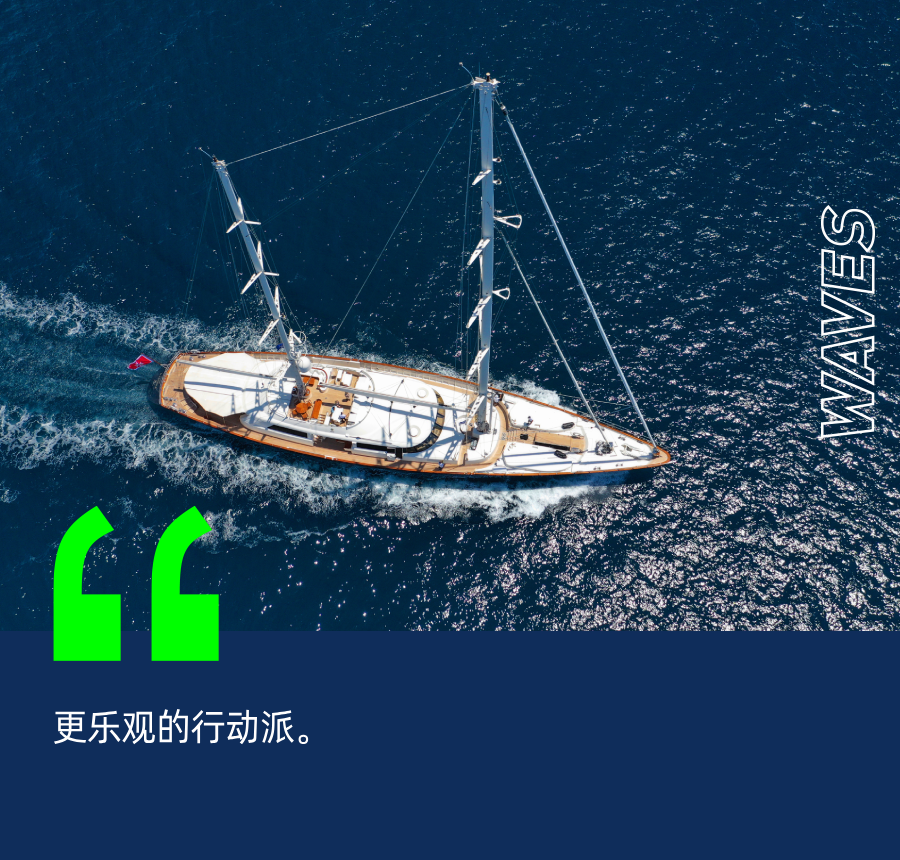
The more optimistic doers.
By Jiaxiang Shi

It's hard to say there's any real "non-consensus" in AI investing right now, but on virtually every AI deal, Lanchi Ventures (蓝驰创投) has one internally.
Take Moonshot AI, for instance. The investment thesis fit on a single page — the rationale, the risks. But Lanchi's partners never fully aligned on the team's profile or which technical approach would ultimately win. Some partners argued against it, noting that Yang Zhilin "wasn't a serial founder, and his technical and industry credentials were still relatively thin."
What ultimately led Lanchi to be "the first to issue a term sheet in the Series A1" was Yang himself. The early-stage fund's DNA of betting on people proved decisive. "He has that gravitational pull, the ability to draw talented people around him — just like OpenAI, where breakthroughs ultimately come down to that small core group," one Lanchi partner said.
Shortly after signing, Kimi Chat launched. Wenxin Yiyan was the only comparable product on the market.
A year later, Moonshot AI's valuation has surged to $3 billion. Due diligence fees for top-tier large language models have climbed to millions of dollars per look. Some funds have folded, driven out by fear or shallow pockets. Those who remain are not only deep-pocketed but unambiguously optimistic.
Over the past six months, even among the optimists, Lanchi has clearly been the more bullish:
In April, Lanchi backed "Yu Ai Wei Wu," an AI education startup founded by Zhang Huaiting, former co-founder of GSX Techedu — a notable project amid the wave of Big Tech executive founders;
In May, Zhang Yueguang's new company "Muyan Zhiyu," barely six months old, completed its third funding round, with Lanchi as the sole investor in that round. Other backers include Hillhouse Capital, Gaorong Capital, and LiSi Capital;
In June, Jing Kun — "father of Xiaoice" and former CEO of Xiaodu Technology — announced a $60 million seed round, led by Lanchi;
That same month, GalaxyBot closed the largest angel round in robotics this year (RMB 700 million). Lanchi was its earliest investor and has now invested across three consecutive rounds. Last year, they also got into Zhiyuan Robotics, the hottest embodied intelligence project around.
As one of the first dollar-denominated VC firms to enter China alongside Sequoia and GGV, Lanchi has never been the most visible.
This owes partly to its founders' low-key temperament, partly to its playbook: maintaining a relatively lean team size (while keeping enough capital to support portfolio companies through later stages), and getting into tech earlier than peers. Today, Lanchi's urgent deal-making reveals, to some degree, its ambition to swim against the current and come out ahead.
The cracks in the red ocean have nearly vanished. Old incumbents have monopolized new possibilities. Pinduoduo was probably the last train out of the mobile internet era.
For a long stretch, VCs faced a drought of investable projects — until ChatGPT arrived. Lanchi's choice was to place itself inside the new narrative, because blue oceans are born from tectonic shifts.
「WAVES」is a column by Dark Tide (暗涌). Here, we bring you the stories and spirit of a new generation of entrepreneurs and investors.

"Emergency Assembly"
"Reveille at 4 a.m. for emergency assembly" — that's how Zhu Tianyu, Managing Partner at Lanchi Ventures, described the urgency of Lanchi's decision to go all-in after ChatGPT's emergence.
One investor told Dark Tide WAVES that unlike more vertical sectors, AI remains stubbornly broad as a concept. You need to cast a "wide enough net" to catch quality deals.
So Lanchi mandated that everyone internally start using ChatGPT. Whatever sector they'd previously covered, making AI a daily focus became compulsory — last year, over half the investment team was looking at AI-related deals.
The winning formula for early-stage funds is network-building, especially when an industry is just taking off.
Though Lanchi was initially involved in Wang Huiwen's Lightyear AI, it wasn't the fastest mover in this wave. Some top founders sat outside their network. The internal reckoning: "If we don't get in now, it'll be too late." The firm shifted to a stance of not missing top-tier projects regardless of price.
Zhu Tianyu acknowledged to Dark Tide WAVES that current valuations are inflated. But if you always measure decisions by your comfort zone, "it's hard to land truly impactful deals." VCs need to hold the absolute top assets, not "invest in a pile of mediocre companies at lower valuations."
"If you look at these questions from an ultimate perspective, the gaps don't seem that large. You saw this pattern constantly in the last cycle," Zhu said. Like the flood of capital into mobile internet, truly great firms admit past mistakes and reload immediately.
Moonshot AI's cap table is remarkably complex, even including strategic investors like Jiu'an Medical and FunPlus that seem tangentially related at best. Lanchi partner Shi Jianping sees this as evidence of a high barrier to entry: "Without sufficient capital, don't bother playing this game." "Shareholder relevance may not matter — first, the money has to be there."
AGI may indeed be, as Yang Zhilin described it, climbing an endless snow-covered mountain. "This struggle is expensive, and it could get brutal," Zhu said. They've deployed over $30 million in several individual projects. In Lanchi's history, this will generate plenty of headlines, "but for us, what matters more is the why, not the dollar amount."

The Hardest Part Is Timing
In a sense, consensus is泡沫. Feng Rui Capital founding partner Li Feng recalls that AI-related investment themes cycled through autonomous driving in 2014–2015, reinforcement learning and neural networks around 2017–2018 driven by data middle-platforms, AI applications around 2020, and now large language models — "this is already the fourth AI bubble or consensus."
Lanchi, meanwhile, seems to have been traveling alongside AI all along. In 2012, while peer funds were betting on internet model innovation, Lanchi began laying groundwork in artificial intelligence, cloud computing, and big data; around 2016, when O2O was white-hot, Lanchi turned toward new energy and robotics; in 2017, Cao Wei — then an executive director at Lanchi Ventures — was "firmly and explicitly convinced that this was AI's spring." In retrospect, that spring proved painfully long.
Some investors have told us that "AI investors are too FOMO-driven." Chen Weiguang has also said that external competition doesn't pressure Lanchi — their greatest challenge is overcoming FOMO while preserving the independent judgment required for early-stage investing.
Historically, Lanchi stuck to Pre-A and Series A rounds; it emulated Benchmark's lean model with an investment team of roughly ten.
Now, with AUM expansion, growth-stage investing has entered range. The firm broke its historical pace of ~20 deals annually, making over 50 investments in 2023 with nearly 20 follow-ons — yet they still feel "not FOMO enough." They even invested in Energy Singularity, a controlled nuclear fusion company (which recently achieved plasma discharge).
This partly explains Lanchi's willingness to simultaneously bet on application-layer companies and embodied intelligence. Using "model as application" to blanket-valuate all AI applications is obviously crude. But over the past year, many AI applications remained simple wrappers, partly due to inherent limitations in model capabilities.
So while foundation models haven't reached their critical inflection point, people become the most important filter — especially serial entrepreneurs like Jing Kun, "father of Xiaoice" and former CEO of Xiaodu Technology, and Zhang Yueguang, former head of "Miaoya Camera."
As for embodied intelligence, ZhenFund partner Yusen Dai has taken a clear stance: general-purpose humanoid robots are premature, so they've passed on every one. Notable hedge fund Coatue also noted in a report that embodied intelligence may never have its ChatGPT moment.
But Lanchi believes the path to AGI requires spatial data — precisely what embodied intelligence can provide. "The brain is the foundation model; you need more sensors and physical space to interact."
Timing is unarguably the hardest step in investing. "Everyone paid tuition on AR. We need to do better now, but it's impossible not to pay tuition — that's just what VC is," Zhu said. Some money needs to be defensible for LPs. "Some money just needs to go toward risk — decisively, unambiguously."
"People always overestimate three years and underestimate ten." Zhu cites this old adage to guard against inertia. "The danger is thinking you're riding a trend when you're actually just in a cycle," he adds.
This is the watershed moment for funds. Some are low on ammunition. Some lack conviction. Some harbor pointless anxiety; others, pointless optimism. "How much you believe in AGI, and how much risk you're willing to take given current market conditions and your ammo supply — that will determine a firm's standing in the next five to ten years," Zhu said.
Yet venture success depends more than anything on being in the right place at the right time. Is this the best era for tech investing, or the greatest capital bubble? Most likely, both.
"After three rounds of cards, if you don't know who the fool at the table is — you're the fool." This widely circulated Buffett aphorism may capture Lanchi's current mindset: excitement, anxiety, and contradiction all intertwined. So before leaving their Huamao office, Lanchi Ventures Managing Partner Chen Weiguang told us: "Let's hope we're not that fool."
Image source: IC Photo
Layout: Yao Nan