Leaving the Tsai Family Office, Going All-In on Web3: A Year In | Entering the Game
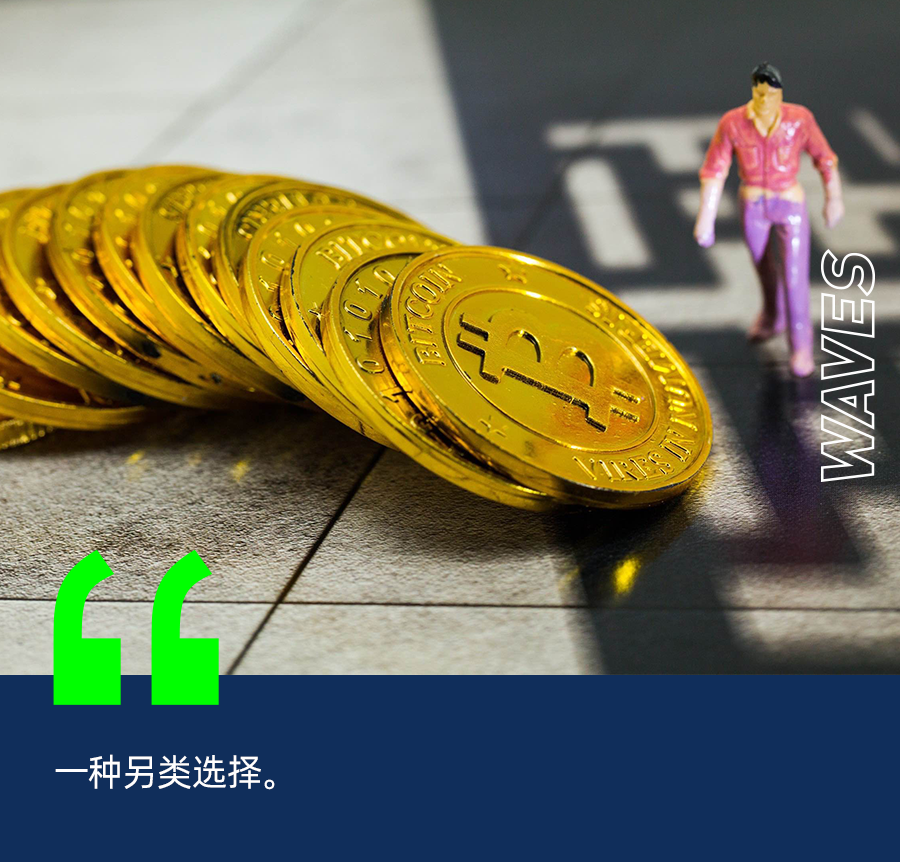
An alternative choice.
"Entering the Game" is a regular column of Waves. It stems from our observation that once-effective operating models are facing new challenges, and industry rules inherited from west to east have been disrupted. People urgently need a new map and new order for innovation and capital. "Entering the game" is the most precious posture in this context. "Entering the Game" was born amid transformation.** To summarize the column's focus in one sentence: we hope to find new players and new strategies better adapted to a changing environment. This is the column's seventh article.
By Zhiyan Chen

When you believe opportunity in a place has dried up, leaving the table doesn't necessarily mean "being a deserter."
I met Huang Yu in mid-April, after he returned to Shanghai from Hong Kong's Web3 conference. He described a long-missed, vibrant scene — a schedule packed from 9 a.m. to 11 p.m. every day; running into acquaintances while walking around, sitting down for an hour's conversation; never worrying about empty time, "the previous person would naturally arrange your next appointment." "The atmosphere was incredibly intense," Huang said. Like China's VC golden age, "or rather, this is what any booming industry looks like."
A year ago, Huang was still head of China investments at Blue Pool Capital — the family office co-founded by Joe Tsai, Jack Ma, and others. Now, at 36, he is a founding partner of NextGen Digital Venture (NDV), an investment firm focused on giving investors a compliant way to invest in cryptocurrency.
In April 2023, NDV launched its first fund. The fund was established in partnership with crypto wealth management company Metalpha Technology Holding Ltd (NASDAQ: MATH). Waves has learned that, to date, this fund has raised $100 million from global investors, with limited partners including institutional investors and top-tier family offices. Since its founding over a year ago, the fund has achieved returns of +170%, outperforming Bitcoin by over 50% and Ethereum by 100%.
His experience standing on the capital-provider side has led Huang to make some distinctive arrangements at NDV. For instance, addressing wealthy individuals' concerns about compliance and security in crypto, NDV chose a Hong Kong "Type 9" asset management license structure, placing assets under regulatory oversight. They use DBS as custodian bank, with daily trading records filed with Hong Kong's Securities and Futures Commission, while professional third-party fund administration provides investors with corresponding NAV updates. These designs allow investors to capture crypto-related returns without actually holding virtual currencies.
"This is the most investor-friendly structure on the market — investors gain exposure to this industry's returns within a compliant, mature custody system," Huang said.
Despite achieving an impressive track record in just one year, in Huang's eyes, crypto is far from constituting a new world. He hopes this new market can grow larger, but as an asset manager, he also hopes for more rational, long-term investors. "Crypto is an alternative asset with potential but also extreme risk. We are operating in the highest-risk industry in the most compliant manner possible."
The following is our conversation —

The Middle Ground of Crypto
Waves: NDV's first-year performance outpaced surging Bitcoin. What does this mean to you?
Huang Yu: I studied history at Peking University. In my view, individual power is insignificant before larger historical forces. What we've done is simply go with the flow of the times and make choices. Looking back at China's reform and opening up, the country has experienced multiple industry waves — from manufacturing's global expansion, to real estate's vigorous growth amid urbanization, to e-commerce prosperity brought by the internet revolution. Each wave represented a major opportunity lasting over a decade.
Today, against the so-called "deglobalization" backdrop, cryptocurrency represents an entirely new asset allocation approach, and an essential component of future mainstream portfolios. It's not merely a technological innovation; in my view, it's the optimal solution for global allocation. Any阶段性 success NDV has achieved is not worth complacency. The true功臣 behind it is the transformation of the times, providing unprecedented new opportunities.
Waves: Crypto has indeed just surged, but is this sustainable?
Huang Yu: Crypto itself is a 10-year-plus new opportunity. I continuously communicate with the world's largest institutional investors — sovereign wealth funds, pension funds, endowment funds. The current consensus is that global geopolitics will remain unstable. As the issuer of the reserve currency, America's abuse of its power has led to excessive liquidity, rising inflation, and further dollar uncertainty. The current high-interest-rate environment is hard to sustain long-term. To maintain the dollar's dominant position, war becomes a natural choice for the U.S. All these factors drive investors to seek diversified asset allocation across regions and categories. This is a long-term positive for crypto. In fact, Bitcoin was invented as a response to America's excessive money printing in 2008.
The remaining question is simply: what percentage are you willing to allocate to asset security?
Waves: If investing in your so-called "great era" is the big decision done right, what were the small decisions NDV got right in generating returns?
Huang Yu: We actually use many quantitative indicators for decision-making. Much data in the crypto world is publicly transparent. For example, on June 15 last year, we monitored that the world's top 10 Bitcoin addresses added 7,500 Bitcoin in a single day (worth $500 million today). Thirteen days later, the world's largest asset manager BlackRock filed for a spot Bitcoin ETF. Although crypto is anonymous, major holders' chip movements can be monitored. At the博弈 level, we heavily rely on data. Although NDV is a fund investing in crypto-related equities, we use blockchain tools combined with traditional financial market methods to invest.
Waves: Compared to attitudes of either "don't believe" or "all in" toward crypto, you've chosen a middle ground.
Huang Yu: In public perception, crypto is seen as gambling. Objectively speaking, the unregulated parts of this field do indeed breed many problems and scams.
For digital currency natives, crypto is the new "gold rush." Early on, when markets are hot, many crypto practitioners can阶段性 make a lot of money in this industry, but that doesn't mean everyone can preserve those gains.
Because of my previous professional experience, I have a richer toolkit than others. Simply put, family office experience helps me better understand LP needs and know how macro trends affect single asset classes, while my VC background makes it easier to use long-cycle thinking to understand technological change. Crypto's prospects are good, but because leverage is extremely high, there are 70%-plus corrections every few years. Being able to make money阶段性 is not the most important thing; what's important is exiting safely.
Waves: Why choose to leave the family office in 2023 to start a crypto fund?
Huang Yu: From the outside, the shift from family office to crypto seems dramatic; for me, the difference isn't that great, because investing itself is about pursuing major structural changes: After the pandemic, global economic instability increased, which gave crypto asset-side innovation opportunities. In long-term diversified asset allocation, for capital providers, compliance is more important than returns. After spending half a year researching all types of Asian institutions in crypto — primary, secondary, quantitative, arbitrage — I found that compliant channels for allocating to crypto asset classes were lacking in the market, so I decided to pivot to crypto investing.
There was also a more emotional reason. I've been an NBA fan for nearly 30 years. In 2022, I went through a rather despairing period in Shanghai. At that time, my favorite NBA star Steph Curry led his team to the championship essentially alone — he was 34, same as me. I watched him transform from a pure perimeter shooter into a player who could physically compete on the court. In a year when everyone counted him out, he led his team to the title. This gave me tremendous entrepreneurial courage. Even in the middle-to-late stages of a career, Curry never gave up on changing. This made me realize: it's never too late to change.
Waves: Before founding NDV, did you anticipate Bitcoin's major surge in 2023?
Huang Yu: 2022 was a brutal down year for Bitcoin, and many people had already left crypto by then. Having the courage to do this at that time reflected clear conviction about this specific asset's future direction.
Actually, Bitcoin shows clear cyclicality, with most drawdowns occurring 1-2 years after reaching new all-time highs. For example, from $1,163 in 2013 to $152 in 2015, then to $19,666 in 2017, then to $3,100 by end-2018, then up to $69,000 in 2021. After each peak, Bitcoin's price would retrace 80%-85%. This volatility mainly stems from Bitcoin's issuance and mining mechanism, dollar tides, and high leverage effects from lack of regulation.
So, I started my business when Bitcoin was at the bottom of this cycle. If investors can also take a long-term view of Bitcoin, understanding and accepting its cyclicality, then its long-term returns remain quite attractive.
Waves: In 2023, we could barely find any successfully raised new funds in the primary market. From your experience, is crypto the only solution for new funds going forward?
Huang Yu: I don't like making choices by elimination. And markets are rich and dynamic; every stage will certainly have its阶段性 optimal solution.
Currently, NDV's positioning suits me best. Due to my previous career experience, I can directly sense Bitcoin becoming an asset class overseas, which positively impacts the entire crypto market. I believe the market is currently in a stage where traditional finance is gradually accepting crypto.
Waves: Indeed, this year both the U.S. SEC and Hong Kong approved spot Bitcoin ETFs. What does this mean for crypto investing?
Huang Yu: After U.S. Bitcoin ETF approval at the start of the year, prices rose from $40,000 to $70,000, with over $15 billion in net inflows through ETFs. This means these ten ETFs collectively manage $22 trillion — their clients allocated less than one-thousandth of their funds into this market and nearly doubled Bitcoin's price. If future allocation reaches 1% — and this isn't difficult — what does that mean for this asset class? Going forward, it's hard to estimate what magnitude crypto will reach. But one thing is certain: we're nowhere near the top yet.
Those who previously participated in crypto investing were actually much like China VC practitioners before 2006. They were pioneers, many coming from other industries to do investing. They were sharp, but had little to do with professional finance. But going forward, as a major asset class, crypto will certainly absorb more capital and needs correspondingly more professional people to manage it.

More Conservative and More Adventurous
Waves: In this transformation, capital providers tend toward conservative, stability-seeking attitudes toward assets, which seems contradictory with crypto's risk reputation.
Huang Yu: I don't see it that way. We consistently recommend investors allocate 1%-5% of assets to Bitcoin as a hedge against global uncertainty. High asset volatility should be managed through position sizing, not complete non-participation.
In the short term, Bitcoin is a risk asset, but long-term it's more of a safe-haven asset. Short-term, as a new asset, violent ups and downs are normal due to insufficient understanding among new entrants — this relates to market cap and stage. Early tech stocks were the same. But long-term, Bitcoin as a tool against dollar money printing has enduring value.
In fact, colonialism has never disappeared from the world. The first-generation colonial empire was the British Empire; their method of world domination was opening "direct stores," sending governors worldwide to collect taxes. The second-generation colonial empire is America; their approach is more advanced, essentially a "POS machine + franchise" model to collect seigniorage — specifically, printing money.
As America continues printing money, more countries will be unwilling to continue being harvested and will decouple from the dollar, gradually forming a Bitcoin consensus network. El Salvador and other countries/regions have already made Bitcoin reserve currency — this is a good start.
Waves: How do you view regulatory risk?
Huang Yu: Broadly speaking, China's prohibition on using RMB to buy crypto is clear, but some rulings indicate courts recognize Bitcoin as an asset whose ownership is protected. From NDV's angle, we focus on Hong Kong, serving overseas asset allocation. Currently, Hong Kong has legislatively confirmed digital assets' legality, so specific operations are based there.
Regarding crypto itself, America's attitude matters more. After Bitcoin ETF approval, America has treated it as a new asset. From a policy perspective, both current U.S. presidential candidates — Biden and Trump — support crypto, so the major-country regulatory landscape is largely set. Long-term, whether American public companies or small-country central banks, there will be incentives to purchase Bitcoin. Future capital inflows into this asset class won't be below the trillion-dollar level.
Waves: Although NDV's performance looks good currently, how many drawdowns occurred in the past year?
Huang Yu: 20% drawdowns in crypto are very normal. Over the past 13 months, there were two relatively large drawdowns — one 8%, another 15% — but even accounting for these, overall unrealized gains are around 170%, with a relatively appropriate risk-return ratio.
From an overall risk control perspective, the fund has a lock-up period, mainly because this asset class differs from others — volatility and cyclicality are both pronounced. The lock-up is designed to hope LPs maintain a relatively long-term attitude toward this asset. Over the past 11 years, Bitcoin has consistently shown bull-long, bear-short characteristics, but even within bull markets, single-month 10-20% drawdowns are normal. However, any participant seeing 20% declines in a new category will panic. But from our perspective, if you're convinced a major trend is unfolding, you shouldn't actually exit. We advocate LPs make allocations, putting 1-5% of assets into crypto-related products.
Waves: We've previously studied some family offices in the China market; a common challenge practitioners face is earning trust. How does setting a lock-up period solve the trust problem?
Huang Yu: The core of all asset management is making money from trends; it's just under trends, how to use reasonable incentive mechanisms to align your interests with those of capital providers — this is very important.
On one hand, NDV's partners put $6 million in from day one, creating very strong alignment with all capital providers. On the other hand, aside from a one-time subscription fee for fund operations, NDV currently charges no management fees. This means as managers, we only collect performance fees upon exit. Because in our startup phase, we didn't want to give ourselves too much risk-free income.
Waves: What's the value of your experience working at a top wealthy family office?
Huang Yu: Beyond having a larger financial toolkit than ordinary investors, I look at global capital flows, the movement of large capital. I like examining issues from historical trend perspectives. Compared to before, today's world主旋律 leans more toward confrontation, so capital flows will be very unstable. In uncertain times, relatively neutral third-party ownerless assets like Bitcoin are easily preferred.
Waves: What do you hope people's understanding of crypto will be?
Huang Yu: It's still a new alternative asset. Going forward in global asset allocation, crypto is a nationality-less asset by country, and by returns it's a category that can partially replace dollar-denominated VC. Because a qualified portfolio always needs high-risk, high-return allocations.
Waves: Is crypto the only choice for future high-risk, high-return?
Huang Yu: AI certainly is too. But in primary and secondary markets, opportunities to directly participate with capital in AI are still too few. Long-term, I believe AI will at some point converge with crypto. AI itself is advanced productive force, but any country or individual that can control AI would be very dangerous and would harm AI's adoption. Crypto is a production relationship that no one can control, and can organically integrate with AI.
Disclaimer: The information and views provided in this article are for reference only and do not constitute any investment advice.
Image source: IC Photo
Layout: Nan Yao