Before Pop Mart's IPO, an unpublished interview with Wang Ning
Only human nature never changes.
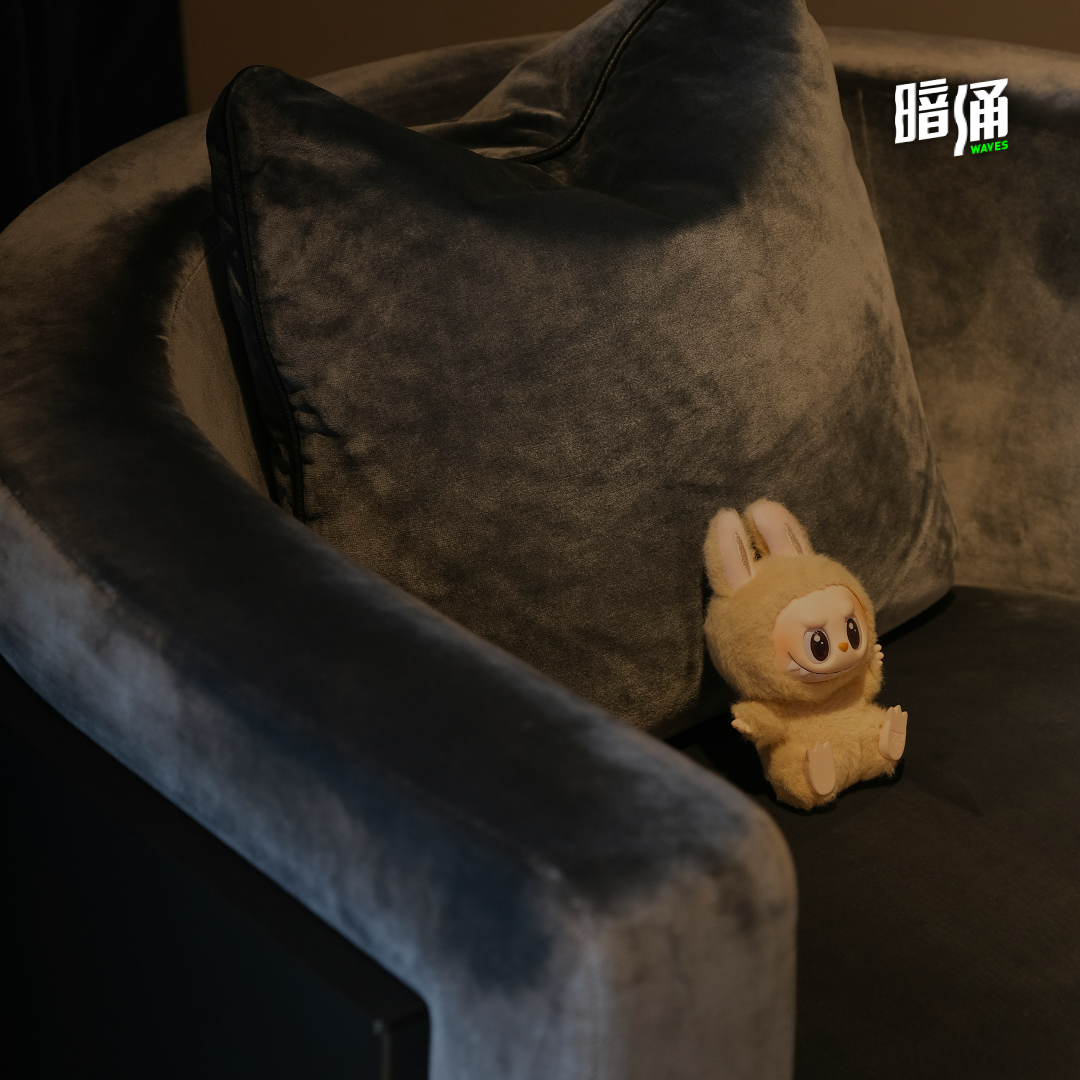
"Only human nature never changes." By Jing Liu

Nearly five years after its IPO, Pop Mart's market cap once surpassed HK$370 billion — more than triple its valuation at listing. The debates about how investors missed it, underestimated it, and exited too early have resurfaced once again.
In early December 2020, we sat down with Wang Ning for an interview.
At the time, Pop Mart's IPO was imminent. Wang Ning, seated in his office at Beijing's Wangjing POSCO Center, appeared unflappably calm.
Before meeting Wang Ning, we had already interviewed several of Pop Mart's most important investors: Mai Gang (Venture Works), Tu Zheng (Borchid Capital), He Yu (Black Ant Capital), and Su Kai (Hongshan), among others. Wang Ning was the final piece of the puzzle.
The legends of capital captivate us precisely because they are so deeply human. Between Wang Ning and his investors, there were stories of a Bole discovering his thousand-li horse, brotherhood forged in obscurity, the bitterness of being abandoned by all, the regret of missed opportunities, and of course, the happy endings.
There are no more vivid stories of human nature than these.
Today, these stories are history. Most of the investors mentioned in that article exited at various stages. Early investor Tu Zheng, for instance, announced in early last month that his firm had liquidated its entire position within a week, holding no more Pop Mart shares.
Our 2020 interview with Wang Ning focused primarily on the company's fundraising story. We published the most critical parts on the day of Pop Mart's IPO. You'll find that stock prices change, companies change, industries change, philosophies change — only human nature never changes.
Today, Undercurrents (An Yong Waves) is republishing this five-year-old article. Before that, we've also excerpted some unpublished material from that interview with Wang Ning.
"Undercurrents": How do you view the shifting attitudes of investors toward you and Pop Mart?
Wang Ning: Here's an analogy. At first, everyone was raising pigs. Then suddenly someone started raising cattle, which could sell at a much higher price, and everyone rushed to raise cattle. Cattle here refers to TMT — everyone used to think it had promise, high growth, room for imagination, and was rather sexy. But now suddenly they can't invest in cattle anymore. Some companies that were looked down upon ten years ago, many people now see their value.
"Undercurrents": How disappointed were you when so many investors rejected you?
Wang Ning: I wasn't really disappointed. I don't think it was a bad thing. If everyone had been deeply involved, it might have been more troublesome.
Once, an investor dragged me to study Huang Taiji. Back then, Huang Taiji was riding high — companies heavy on marketing were especially hot. But fortunately, we persisted and didn't go down that road.
"Undercurrents": What would you like to say to investors who looked at you but didn't invest?
Wang Ning: There's one I particularly regret. They could have gotten a fairly large allocation at a fairly low price. But in our last conversation, they asked me a terrible question: After I finished explaining what we wanted to do, they suddenly said, "If this is such a good thing, why did it fall to you? Why not Alpha Group? Why not these big companies? Why would a once-in-a-lifetime opportunity go to a small company like yours?"
After they asked that, I didn't want them to invest anymore.
There were too many times of being stood up like this. But now, it seems everything worked out for the best.
"Undercurrents": A year before the IPO, Golden Eagle Retail Group cleared out all its shares — a massive loss.
Wang Ning: We were quite surprised when they sold. I think perhaps they felt that was already a historical high, or by their logic — maybe a P/E of around ten-something was already quite good. It's a bit like Richard Li with Tencent back in the day.
"Undercurrents": What kind of investor do you think is the best investor?
Wang Ning: Understanding the business is definitely important. Choosing an investor is like going on a blind date: first, you have to click, you recognize me and I recognize you. But sometimes love at first sight isn't necessarily reliable, because maybe I'm not as pretty as an internet celebrity. So time is also important — we need to go through many stories together before I can fall in love with you.
"Undercurrents": When did more people realize that Pop Mart wasn't just a designer toy store, but a platform, a culture?
Wang Ning: One year we held a designer toy exhibition, and I invited investors to come. Tu Zheng was especially excited. He ran to the entrance and his first question to me was: "Where's your booth?" I said, "This entire place is our booth."
After every exhibition, we have an afterparty where we take the international artists to experience Chinese culture. The first year was at the top floor of Beijing's Pangu Plaza, where they saw the Bird's Nest. The second year was at the bar on top of Shanghai's Pudong Ritz-Carlton, where they saw the glittering Lujiazui skyline. In 2019, we chartered a boat to take them on the Huangpu River, letting them feel China's growth.
Many people told me they used to think Hong Kong's Victoria Harbour was the most beautiful, and only now discovered Shanghai's Huangpu River is beautiful too.
"Undercurrents": You started your company almost right after graduating. What was your original intention?
Wang Ning: Very simple — I wanted my life to have more stories. I rather enjoy this uncertainty.
When I was still a college student, in a meeting with classmates, I said the first pot of gold in life isn't money, but our experiences. In my sophomore year, I asked everyone if we could start a company someday.
Back then it was simple — I hoped that when we're old, at 80, I could tell my grandson: your grandpa is someone with stories.
The original article, first published December 11, 2020:
Behind Pop Mart's $100 Billion Market Cap:
A Collective Miss by China's Major Funds By Ruirui Wu, Jing Liu, Rui Ba
Edited by Jing Liu
By late 2019, few realized that Pop Mart's door to primary market fundraising would close forever. Tencent was just one step away from entering the deal. A "highly influential" senior executive personally came to meet Pop Mart founder Wang Ning — such appearances typically signal Tencent's level of commitment to an investment. But after Tencent completed due diligence on the designer toy company, negotiated valuation, and advanced to the final step of executing the investment — signing the SPA (Share Purchase Agreement) — the talks collapsed. "Mainly over corporate governance structure: Tencent wanted veto power, which Wang Ning certainly wouldn't agree to," an investor close to Wang Ning told 36Kr. Pop Mart didn't need the money — in 2019 its total revenue was RMB 1.683 billion, and the company had maintained over 200% annual growth for the past three years. While Tencent hesitated, Loyal Valley Capital and China Renaissance Capital Partners moved swiftly: at a $2.5 billion valuation, they invested approximately $100 million in succession. Even Fan Bao, the famously well-connected dealmaker at China Renaissance, remarked to 36Kr how difficult this investment was. "Wang Ning is pretty hard to get a meeting with." In the end, it was the decisiveness of "from decision to investment in less than 20 days" that proved decisive. Loyal Valley had prior history with Pop Mart: partner Ye Chunyan admitted to 36Kr that they had looked at Pop Mart as early as early 2018, but had concerns about the company's dependence on several IPs and continued observing. Even so, by this point only Loyal Valley received a small allocation of new shares; the rest came from existing shareholder transfers. But this was the last chance for VC and PE investors to get on board.
According to 36Kr, "virtually all large mid-to-late stage funds, Alibaba, and even Richard Li's family office" had sought opportunities to invest in Pop Mart over the past six months, all ultimately unsuccessful. A Pop Mart investor told 36Kr, "You agree to any one person, you're offending everyone (existing shareholders)."
In fact, over the past nearly three years, Wang Ning had hardly issued any new shares to investors. Instead, he had been gradually buying back shares from earlier investors. This created a rather spectacular phenomenon: according to Pop Mart's prospectus, Wang Ning still maintains controlling ownership of the company — 56.33%.
This stands in sharp contrast to typical new economy companies, where founding teams often undergo multiple rounds of dilution, leaving them with pitifully small stakes by IPO.
Indeed, Pop Mart is an atypical — even diametrically opposite — Chinese business story.
Over the past one to two decades, alongside the development of China's VC/PE industry, the primary market formed a somewhat closed landscape: only several dozen institutions were truly "in the game," capable of instantly building a company with massive capital, taking founders from rags to the ringing of the opening bell.
But Wang Ning was always an "outsider." For a long time, Pop Mart and the venture capital world seemed destined to miss each other: even after finding its two growth flywheels in Molly and blind boxes, during the height of shared economy, internet finance, and O2O wars, offline retail projects were simply too "unsexy." This meant that before 2017, Pop Mart's single largest financing round was merely RMB 30 million (pieced together by multiple institutions), with the smallest at just RMB 2 million. And Wang Ning's more important early investors — Borchid Capital's Tu Zheng, angel investor Mai Gang, Black Ant Capital, Golden Eagle Retail Group, Huaqiang Capital, and others — were either local capital focused on amusement parks, wine, and shopping malls, obscure or newly established funds, or not even "institutions" in the formal sense.
It was this group of former "nobodies" that created 2020's most spectacular IPO story. After oversubscription of 356x in frenzied retail bidding, Pop Mart listed today (December 11) with an opening market cap of HK$100 billion — meaning that just one year after the $2.5 billion valuation round, Pop Mart's valuation had risen 5x.
A key Pop Mart investor lamented to 36Kr: "This is a collective miss by China's (major) funds."
Part 01
The Long Dawn Three months would pass before angel investor Mai Gang saw that email.
It was from Wang Ning's team, seeking startup capital. It was summer 2012. Mai Gang had founded Venture Works seven years prior, with a preference for investing in "excellent young people" — regardless of their backgrounds, he generally maintained a RMB 2 million investment size.
Days later, in a residential building in Beijing's Shuangyushu, Mai Gang met this 25-year-old entrepreneur. "It was like a window opening," Wang Ning would tell 36Kr years later — he hadn't even realized offline stores could raise funding.
Mai Gang and Wang Ning met for three consecutive days. The glasses-wearing boy in the light blue shirt told him he wanted to create something like "Hong Kong's LOG-ON buyer's store." Mai Gang listened carefully to the product pitch without being fully convinced, though he felt the general direction was right.
But by the fifth day, Mai Gang decided to invest. His reasoning: Wang Ning possessed a rare "composure, calmness, integrity, and lack of BS," and he was willing to back this young man with RMB 2 million.
After signing the investment agreement, the two went to a bar in Wudaokou. Amid the noise, the ever-"serene" Wang Ning suddenly raised his voice slightly: "Brother Mai, your investment in me today — if I'm Jay Chou, you're Jacky Wu." (Jacky Wu was the talent scout who discovered Jay Chou) Wang Ning is a Jay Chou superfan; to this day his office displays cartoon figurines of Jay Chou and a drum set. The middle-aged Mai Gang was baffled: "What's their relationship?"
Being Jacky Wu is no easy role. Mai Gang's most important post-investment service was helping Pop Mart find its next round of funding. In 2013, Mai Gang introduced Tu Zheng, then at Qifu Capital, who invested RMB 6 million. Tu Zheng recalled to 36Kr that at the time he "didn't even know (Wang Ning) was doing designer toys," having only conviction about one thing: "offline retail definitely had opportunity."
Even Golden Eagle Retail Group, which came in at Series A, didn't anticipate Pop Mart's subsequent growth rate. The former's thinking was simply to "create some differentiation, some highlights, with strategic significance" in their malls, not particularly concerned about short-term returns on this investment.
But it's no wonder investors "didn't get" this project. In the years when Wang Ning desperately needed funding, e-commerce was being wildly celebrated — JD.com, Vipshop and others raised financing in the hundreds of millions of dollars. Pop Mart, as an offline store, was seen by investors as a "grid shop selling rag dolls and mini billiards," "not losing money but not getting big either."
The team itself wasn't impressive. Wang Ning had mediocre credentials, had never properly worked a job, spoke with a calm expression, "lacked charisma," and the team had "no elites."
"Met virtually every investor and FA out there." An early Pop Mart investor recalled that besides financial institutions, Wang Ning even met with strategic investors like Enlight Media and Alpha Group. Back then, Wang Ning always brought lengthy PPTs, saying he wanted to become China's Bandai and Mattel (Japanese and American toy giants), but each time left excited and returned defeated.
A particularly representative story: a fund under Hunan TV also looked at Pop Mart, conducting lengthy due diligence before ultimately passing. An investor close to Wang Ning told 36Kr that at the final meeting, after listening to Wang Ning's grand vision, the other side said something that still rankles him to this day, to the effect of: "How could such a once-in-a-lifetime opportunity fall to you?"
Repeated fundraising failures left Pop Mart hanging by a thread for a long period. Both Tu Zheng and Hongshan investment partner Su Kai told 36Kr that virtually every dollar they gave was "lifesaving money." By Tu Zheng's account, after his initial investment, he made three follow-on investments; Golden Eagle later put in another RMB 20 million, "the company had no money for salaries, with less than RMB 1 million in the account."
The funding crisis peaked in mid-2016. Wang Ning decided to take Pop Mart public on the NEEQ (New Third Board) — though in retrospect this move had limited significance, as the NEEQ had virtually no liquidity in subsequent years — he needed RMB 30 million, which was ultimately "broken into three pieces" to assemble.
"Really stripped down to the last pair of pants," Tu Zheng sighed to 36Kr. At the time, Qifu Capital's first fund totaled only around RMB 100 million, "already invested to the absolute limit." Later investor Huaqiang Capital was also his LP, and he even mobilized "resources from his hometown in Zhejiang" to introduce Wang Ning to individual investors.
Every investor interviewed by 36Kr mentioned that Wang Ning is emotionally stable, rarely showing turbulence. Even at the most difficult fundraising moments, he displayed no unusual emotions.
Until September of that year, when Pop Mart finally completed this arduous financing. At this point, Wang Ning likely couldn't have imagined that dawn was approaching.
Part 02
A Regrettable Exit
September 8, 2017. The exhibition hall at Beijing's National Convention Center was packed to capacity. Here, Pop Mart held its first "International Designer Toy Exhibition."
"Insane!" All investors described it this way. The queue at the entrance stretched "hundreds of meters," scalped tickets reached "unbelievable prices," and at one point the event was nearly warned for cancellation due to overcrowding. At the second exhibition in Shanghai, Tu Zheng initially didn't grasp the situation, arriving on site and loudly asking Wang Ning, "Where's our booth?" Wang Ning shouted back, "This entire place is our booth!"
This was a pivotal moment. Su Kai emphasized to 36Kr that these two exhibitions instantly made Wang Ning realize "how big the designer toy market was." Thereafter he became more resolute in betting on the designer toy赛道, accelerating the transformation from lifestyle concept store to trendy IP service provider.
The exhibitions' other significance: Pop Mart was no longer just an ordinary player in designer toys, but in some sense an ecosystem builder. Wang Ning told 36Kr that after each exhibition, Pop Mart would host an afterparty — the first year he booked the top floor of Beijing's Pangu Plaza, where they saw the Bird's Nest; the next time was the top floor bar of Shanghai's Pudong Ritz-Carlton, where they saw the glittering Lujiazui skyline; another time he chartered a boat for all the artists to cruise the Huangpu River, "wanting to take them to understand Chinese culture, to feel China's growth." Several foreign artists told him they used to think Hong Kong's Victoria Harbour was the most beautiful, but now discovered Shanghai was beautiful too.
The introduction of Molly was Pop Mart's other key variable. If Pop Mart's first six years were spent setting up dominoes, then Molly was the first tile: at one point, 70-80% of Pop Mart's revenue came from this "pouty little girl" character.
Finding Molly was itself a winding story. Initially Wang Ning introduced Sonny Angel, a character from Japan — Su Kai even accompanied him to Japan to negotiate the deal. Perhaps to increase his odds, Wang Ning told the elderly founder that Su Kai "was a big shot from China," and the other side later gave Su Kai "a limited edition of which only 20 existed worldwide." But good times didn't last: after discovering Sonny Angel was selling well at Pop Mart, the other side "kept suppressing and restricting him (Wang Ning)," which forced Wang Ning to seek new IPs.
In 2016, Wang Ning asked designer toy enthusiasts on Weibo what they liked lately, "seven or eight out of ten mentioned Molly." Learning from previous lessons, Wang Ning signed an exclusive operating agreement with Molly from the start. "So without Sonny Angel, there would be no Molly," Su Kai said.
It's hard to pinpoint Pop Mart's exact inflection point — this was a gradual process. Su Kai identified three core variables: first, the emergence of Molly (and the subsequent popularity of blind boxes); second, the designer toy exhibitions; third, Wang Ning poached the merchandise director from Nike's northern China region, who helped Wang Ning boldly implement a "narrower but deeper" strategy, reducing Pop Mart store SKUs "from one to two thousand to just over a hundred in three months."
By the numbers, from 2017 Pop Mart showed a steep growth curve: 2017 total revenue RMB 158 million; 2018 revenue RMB 514 million.
Neither too early nor too late, stepping right on the "eve of explosion," another key Pop Mart investor emerged: He Yu, Managing Partner of Black Ant Capital.
Over a year prior, He Yu had been responsible for consumer investments at ByteDance and had met Wang Ning then, initially with reservations about Pop Mart. But after studying Disney and Japan's Bandai, he discovered both rose "by capturing channels first, after which upstream IP and content naturally aggregated toward them, platforms achieved scale and loyalty accumulation, ultimately building entertainment empires." Right after the designer toy exhibition concluded, Black Ant's first fund was also nearing final close — the timing was right.
At the end of 2017, Black Ant made its first investment in Pop Mart, followed by three more rounds — including the $2.5 billion valuation round.
However, by late 2017, Wang Ning was no longer planning to issue new shares to investors. During this period, Su Kai and Wang Ning had a hot pot meal together. Wang Ning has astonishing alcohol tolerance, especially for Moutai. As the liquor flowed, Su Kai asked him: still raising money? Wang Ning shook his head. Wang Ning had already realized the company was past its cash-strapped period.
By 2018, Pop Mart was clearly a high-growth company, but some shareholders still didn't wait until the end.
Golden Eagle had been Pop Mart's second-largest shareholder, holding 18.23% before its 2017 NEEQ listing. But according to public filings, in February 2019, Golden Eagle liquidated all its shares. According to 36Kr, this transaction was completed at a RMB 1.5 billion valuation, when Pop Mart's profit was roughly RMB 100 million. A consumer investor told 36Kr that by traditional offline consumer company standards, a 15x P/E valuation model wasn't high, and for Golden Eagle, "couldn't really be considered a huge loss."
But considering Pop Mart's current market cap, this was clearly a deeply regrettable exit.
Part 03
"Everything Happens for the Best"
In fact, until 2018, Pop Mart still wasn't a star project in venture capital circles.
He Yu told 36Kr that across Black Ant's four rounds of investment in Pop Mart, before 2019, "you could say there was never any competition."
This also related to investment community trends. Mu Mian Capital (FA) founding partner Ying Jinfeng had told 36Kr that before 2019, "the range of institutions available for brand cases was very limited," and "many institutions simply didn't look at brands." After 2019, with mobile dividends thoroughly exhausted, consumer and B2B finally entered investors' field of vision.
In He Yu's view, the investment community's "cognition inflection point" for Pop Mart came in the first half of 2019. That May, Wang Ning spoke at a Black Ant LP summit, "the on-site response was excellent."
Thereafter, primary market institutions began circling Pop Mart. Multiple investors told 36Kr they received numerous WeChat connection requests daily, "no need to ask, wanting to pull strings to get in." At 36Kr's China Future Investor Summit that summer, Starquest Capital founding managing partner Fang Yuan began to say something before catching himself: "The capital story behind Pop Mart could fill a book." According to 36Kr, as an LP in Black Ant Capital, Starquest followed into one round of Pop Mart financing in 2019.
Even someone as well-connected as Su Kai found the investment process quite tortuous. To push the project forward, Su Kai arranged a lunch in 2018 between Wang Ning and Neil Shen. After chatting for over an hour, Neil Shen told Su Kai: "This is a good company. After the first round, invest in the second round too." Meaning: invest heavily and continuously.
But this investment moved quite slowly. By the time Hongshan formally completed investment closing, it was nearly summer. "50% business purpose, 50% sentiment," Su Kai said. Wang Ning was after all a "sentimental person."
Fan Bao told 36Kr that when China Renaissance invested in Pop Mart, by general market consensus, the $2.5 billion valuation was indeed not low. But they had conducted a "targeted survey of over 5,000 people," receiving clear feedback that "Gen Z" had four labels: "lazy," appearance-focused, embracing domestic brands, and pursuing niche appeal. "Pop Mart fits all four." Meaning: short-term premium was entirely acceptable.
Loyal Valley Capital consumer partner Ye Chunyan told 36Kr that Pop Mart's advantage lay not only in having formed a commercial closed loop from IP incubation, design, production to online and offline sales, but also in being an open linking system — essentially all top domestic and international IPs could be produced through the Pop Mart model, and it would become a new monetization channel for these IPs, which was highly imaginative.
By 2020, Pop Mart's equity structure had also largely stabilized. According to 36Kr's analysis, Hongshan at 4.87% was its largest external institutional investor, while Pre-IPO investors Loyal Valley Innovation Capital and China Renaissance Capital Partners held 3.5% and 1.98% respectively.
Before listing, Wang Ning gave an interview to 36Kr. Discussing his past fundraising journey, he didn't elaborate much, only saying meaningfully: "Everything happens for the best."
Part 04
Victory from "Outside the Camp"
Once, an investor went to see Wang Ning, who told him a story. The gist: suppose you're a billionaire, rushing out with urgent business when you discover the kitchen faucet is running — you'd likely feel anxious. But if there's a fountain in your garden spraying water 24 hours a day, you wouldn't feel anxious at all, instead finding the fountain quite beautiful.
What he meant was: in rational consumption people calculate carefully, but emotional consumption is another matter entirely. Though Wang Ning indicated this was a psychological test he saw online, this investor remembered these words vividly long afterward, "proving he has very unique thinking."
In 36Kr's interviews, every investor mentioned: "Wang Ning has a steady personality, doesn't talk much, doesn't show emotions — possessing many excellent qualities of a 'consumer entrepreneur.'" For instance, in Fan Bao's view, most Chinese enterprises don't sufficiently revere time, habitually emphasizing "the only martial art in the world is speed," but Wang Ning "has great patience." Once, discussing business development speed with him, Fan Bao said, "With such a hot market, opening 500 or even 3,000 stores would be no problem, why only 100?" Wang Ning's response: "My capabilities today can only handle this many."
"Also a kind of purity — just wanting to succeed." Su Kai recalled that when he first met Wang Ning, he heard a story: just after starting university, Wang Ning entered a street dance competition and was eliminated in the first round. Then he practiced relentlessly until winning the championship by the end of his sophomore year. In some ways, this foreshadowed Pop Mart's difficult journey in subsequent years.
In 2018, Wang Ning opened Pop Mart's first Shanghai offline store at Plaza 66. Coincidentally, Tu Zheng's office was also there. Once Tu Zheng asked why he chose this location. Wang Ning explained: before graduating, when job-hunting at Shanghai Stadium, he had wanted to buy a suit at nearby Plaza 66, only to find each cost over RMB 10,000. Spotting a business opportunity, he instead wholesale-bought a pile of suits from Hangzhou's Sijiqing market to resell, but was stopped at a subway entrance and didn't sell a single one. Later Wang Ning shipped these suits back to Beijing, reportedly still stored at his home today. Subsequently Wang Ning opened two stores at Plaza 66 — Pop Mart rarely deploys so densely.
"We were all originally people outside the mainstream. Wang Ning was, and most early investors were too." An unnamed Pop Mart investor told 36Kr.
Over the past two decades, China's VC/PE industry grew from nothing to the so-called "one-nine division" era, with funds to some degree exhibiting the "winner takes all" phenomenon seen in the internet industry. Behind most star projects, you always find those familiar fund names.
But Pop Mart is an exception. To this day, among all Pop Mart's investors, only He Yu and Tu Zheng hold board seats.
Tu Zheng feels this deeply, "We weren't in that 'camp.'" In fact, almost around the same time he invested in Pop Mart in 2013, Tu Zheng also met the Kuaidi team, having even negotiated valuation, but missed his last investment window due to internal institutional decision-making processes. "(Investing or not) is completely different — not just this deal, but missing an entire era."
For Tu Zheng, Pop Mart was a "bloody path carved out from nowhere." In 2019, after leaving Qifu, he established his own fund: Borchid Capital, focused on consumer.
Black Ant Capital's He Yu also once called himself "an entrepreneur without background." But after Pop Mart, Black Ant — which also invested in Jiangxiaobai, Hey Tea, HARMAY and others — became arguably the most attention-grabbing new consumer institution from 2019 to present. In September this year, it successively closed new funds of $100 million and RMB 1 billion.
The earliest investor Mai Gang marveled to 36Kr, "The investment world has too many circles, pulling each other to invest together. But Pop Mart had no circle." He had a formulation close to Wang Ning's: "Not raising money was a good thing — for Wang Ning it meant steadily thinking about which things were most worth doing, most valuable."
Returning to the night of August 10, 2012. Halfway through drinking with Mai Gang, Wang Ning stepped out of the bar to make a phone call, telling his father in an excited tone: "Your son is a multimillionaire today!"
That year, he was 25.
Image source | Unsplash

Recommended Reading

Where Money Flows, People Rise and Fall