China's USD Funds Won't Disappear
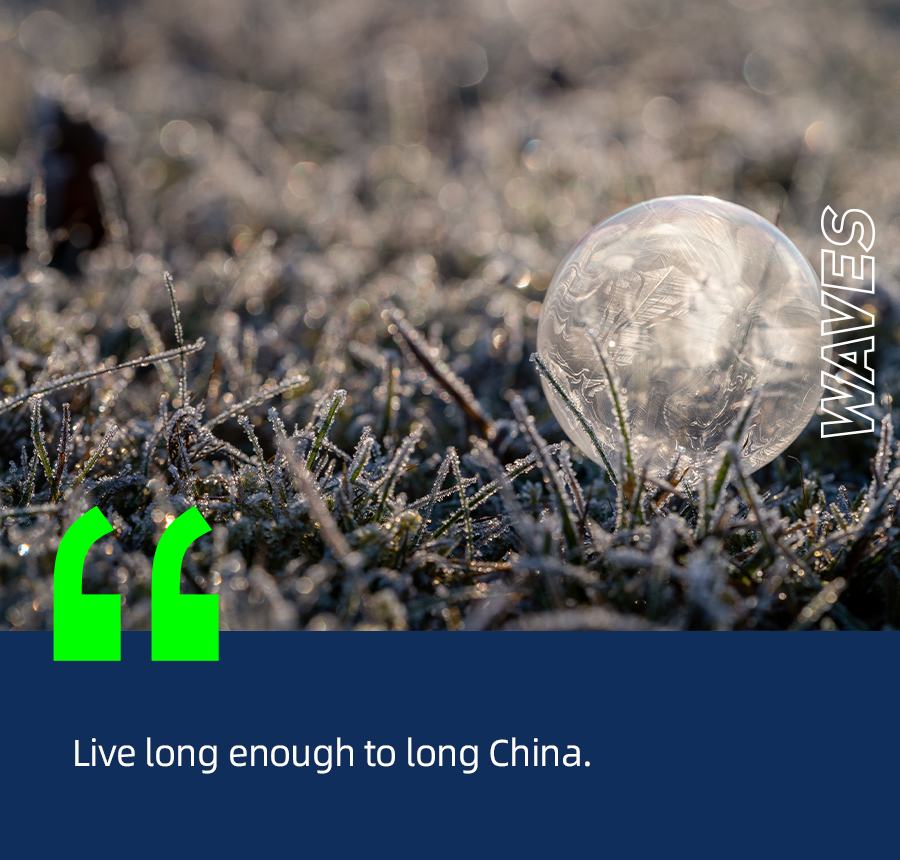
Live long enough to long China.
By Zhiyan Chen
Edited by Jing Liu

It's AGM season again in China's primary market.
AGM, short for Annual General Meeting, refers to the once-a-year occasion when GPs gather face-to-face to deliver their "year-end reports" to LPs. For China's USD funds, since overseas LPs often overlap, IR teams typically coordinate schedules in advance to cluster these meetings together for LP convenience — giving rise to what insiders call "AGM season." According to incomplete statistics from Waves, from late September through mid-December, Linear Capital, 5Y Capital, Yunqi Capital, Zhongding Capital, Qiming Venture Partners, Glory Ventures, Hillhouse Capital, Hongshan, ZhenFund, Monolith Management, XiangHe Capital, Gaorong Capital, INCE Capital, Oasis Capital, Lanchi Ventures, Blue Lake Capital, and CMC Capital, among others, held USD LP AGMs across Hangzhou, Shenzhen, Shanghai, Hong Kong, and other cities.
Multiple LPs and GPs who attended these meetings told Waves that compared to 2023, the number of foreign LPs visiting China this year has noticeably increased. "Everyone knows the worst is behind us. What LPs urgently want to know is: what's happening in China's underground? What can actually be invested in going forward?"
These overseas investors, who deployed capital intensively in this market over the past decade, are now staying for over a month, traveling between cities to hear multiple GPs' "performance reviews." Some are setting foot here for the first time since 2020. In the interim, their understanding of China has likely been pieced together from Nth-hand information, forming a "hazy, intimidating, hesitation-inducing picture."
This time around, China's USD fund GPs have issued a collective invitation: come see for yourself.
For a USD fund industry that has taken root in China over two decades, this AGM season is somewhat extraordinary. On one hand, it comes after five to six years of turbulent international relations, on the eve of American politics re-entering "Trump time." On the other, domestic markets have had two full years of adjustment and advancement since the comprehensive reopening in late 2022 — signals have gradually emerged, opportunities and challenges have become relatively clearer.
After China's USD funds were written off for two to three consecutive years, the moment of reckoning seems to have arrived.
Is there still a need for USD-denominated institutions in China? How will the players who once shaped China's equity investment industry stay at the table? And how do their capital providers view a future that holds both opportunity and risk?
Waves spoke with nearly ten GPs, LPs, and IR professionals during this AGM season.

No One Has the Stomach to Abandon China
Based on our interviews, even today, for the vast majority of USD LPs targeting financial returns, allocating to China remains a must-have option.
Multiple investors noted that in recent years, Western LPs have searched globally for investment destinations comparable to China — India, Vietnam, Japan, and others. Yet whether measured by infrastructure, commercial maturity, population base, or market scale, China remains irreplaceable.
Worth noting: US-China relations cannot be simplistically read as "an obstacle for LPs investing in China USD funds." One fund IR explained to Waves that from an asset allocation perspective, LPs need sufficiently diversified portfolios to minimize wealth management risk. And globally, China is undeniably the best option with the lowest correlation to the US.

"American Dollars" Aren't a Monolith Either
At the center of LP discussions around USD funds sits the "American USD LP." One GP told Waves that even among US LPs, different fund types yield markedly different attitudes toward China investment —
- (1) Family offices and similar purely return-driven LPs, after navigating direct investment risks, retain substantial appetite for consumer and down-market plays.
- (2) Some US university endowments and long-established institutional LPs occupy a more ambivalent position. "From a returns standpoint, they want to invest in China, but they do face considerable domestic reputational risk."
- (3) The most resistant cohort comprises pension funds and state-level funds. These LPs are characterized by large ticket sizes that smaller USD funds struggle to absorb. In this sense, USD PE and flagship USD funds face greater fundraising challenges.

"Non-American Dollar" Proportions Have Grown Significantly
Great-power competition is widely seen as a key factor in the decline of China USD funds. Yet our interviews revealed that leading domestic USD funds have been "actively or passively" adjusting LP structures over the past two to three years, with US LP shares dropping notably. Primary capital sources now come from the Middle East, Europe, Southeast Asia, and Hong Kong.
For instance, Hongshan's announced $9 billion fundraise included substantial commitments from Middle Eastern, Southeast Asian, and Hong Kong-based investors. One USD VC's newly raised fund saw US LP share drop from 30% to 15%. Another fund CFO told Waves their US LP share sits below 50%, with the next fundraise set to reduce this further and deprioritize US LPs in their targeting.

"Asset Scarcity" Is Also a Critical Issue
For the substantial cohort of overseas LPs hoping to continue investing in China, "where to deploy" remains their top AGM priority. Nearly every institution arranged LP visits to portfolio companies and exchanges with Chinese founders. AI-related, embodied intelligence, and companies showcasing China's supply chain and tech distinctiveness were the highlights GPs emphasized.
Linear Capital showcased Swiss-Mile, an embodied intelligence startup it led at Pre-seed. Glory Ventures invited portfolio company Lintian Intelligence, a PV energy intelligent robot manufacturer. Zhongding Capital took LPs to visit Laifen Technology, among others.
Of course, the biggest star was Kimi. According to Waves, Kimi founder Zhilin Yang participated to varying degrees in several institutions' AGMs, including Hongshan, Monolith Management, and XiangHe Capital.
Yet the above also reveals the asset scarcity dilemma now facing USD funds in China — a problem that exists to varying degrees across global markets.
Then there's the unavoidable exit question.
One LP told Waves that over the past two decades, USD funds harvested the most internet giants in China's primary market and created several home-run legendary investments. Yet simultaneously, massive USD LP capital remains trapped in ByteDance, Didi, Ant Group, and collapsed sectors like edtech, fintech, and SaaS.
Can LPs still trust Chinese GPs' ability to generate returns?
Against this backdrop, Horizon Robotics — which went public during AGM season and held its share price — became the belle of the ball. Founder Kai Yu appeared at both Linear Capital's and 5Y Capital's conferences. The move seemed to demonstrate that China's USD fund GPs wanted to show LPs: exits can still sparkle with hope.

But the Shakeout Continues
As widely shared as "can't not allocate to China" is the consensus that "allocation will be increasingly selective." Conversely, USD funds in China will continue to be winnowed out.
The reasons are multifold:
- (1) The capital swell that began around 2014 spawned numerous new investment institutions; the de-foaming of that bubble is still underway.
- (2) Sectors and projects suitable for USD fund investment are contracting. Venture capital has transitioned from an "everything can be internet" era to one where numerous projects prefer government funds and industrial capital for their multi-resource empowerment. USD funds' capital and commercial experience advantages have been progressively marginalized in this shift.
- (3) Based on the above, "story homogenization" among domestic USD funds has become pronounced. Global Chinese founders, AI, embodied intelligence, and supply chain globalization are investment directions nearly every GP mentions. When everyone starts telling the same story, the elimination round begins.
"What's abnormal isn't now — it's the past decade," one IR head told Waves. The past decade's prosperity and hyper-developed capital environment for domestic USD funds was "a historical anomaly."
How to survive?
LPs have only two criteria: first, you actually made them money; second, you demonstrate extreme specialization in the limited investable directions available.
MingShi Partners held its USD fund AGM in Shanghai last year; this year's was moved online. MingShi believes the industry has developed a clear "barbell effect," with capital increasingly concentrating at two extremes — one end being mega asset management platforms, though even these are shrinking in scale, no longer raising tens of billions of dollars but rather several billion or less; the other being relatively smaller, specialized early-stage tech VCs.
"And the middle layer — growth-stage investors — will now become extremely difficult, with some LPs directly calling it the 'death zone.'"

China Still Needs USD Funds
In recent years, some China USD funds have tried going out to invest in purely foreign projects, placing themselves in global institutional competition. But from overseas LPs' perspective of investing in China USD funds, this remains an unproven experiment. The China element remains core to their investment thesis.
If a decade ago their bets were based on China's market scale and demographic dividend, now it's China's supply chain advantages, engineering talent dividend, and commercial potential of new technologies in China's massive market.
So inversely, does China still need USD funds?
Yunqi Capital partner Yu Chen told Waves the answer is "absolutely." From the perspective of accessible capital sources for VC institutions, USD LPs remain the capital most willing to wait and bet on future explosive growth sectors. In other words, while RMB patient capital remains in development and domestic capital markets slowly mature, Chinese entrepreneurs entering global competition from day one — especially emerging enterprises in AI, embodied intelligence, and other fields — still need USD fund support. From a broader, longer-term perspective, diversity of capital and plurality of objectives in the market are hardly bad things for Chinese enterprises, commercial society, or overall economic development.

Good Vintage, Live Long
Multiple interviewees told Waves that many LPs recognize the present as a good vintage for USD funds. This is because the overall economic environment has left numerous startups at valuation lows, with even acquisition opportunities available — a classic USD PE specialty.
One GP observed: "When risk is particularly high, asset values are low, and investors' potential returns increase." From a fund returns perspective, this isn't bad news. Oasis Capital founding partner JinJian Zhang believes founders who choose to start businesses during downturns tend to have stronger conviction, more experience handling complexity, and greater likelihood of success — "Always believe in young people, believe in vitality."
One USD fund IR told Waves: "Things can't get worse. So find a way to survive."
This sentiment permeated the entire AGM season, visible in conference themes. Lanchi Ventures chose "Break Out of the Quadrant, Take the Undefined Path." Glory Ventures went with "Finding a Certain New Course Through the Fog." 5Y Capital's was "Seeking Entrepreneurs in the Era of Tech Innovation 2.0." Linear Capital's theme was "Taking Gems from Fire."
On the morning of October 25, Linear Capital founder & CEO Huai Wang led his team and LPs on a 10.64-kilometer morning run around Hangzhou's West Lake. Wang later told us his message was simple: Live long to long China.
Image source |IC Photo
Layout|Hongyu Liu