CODE27 Raises Over $10 Million in Funding; Hongshan and Qiming Bet on New Human-Computer Interaction Direction
A new generation of AI desktop companions.
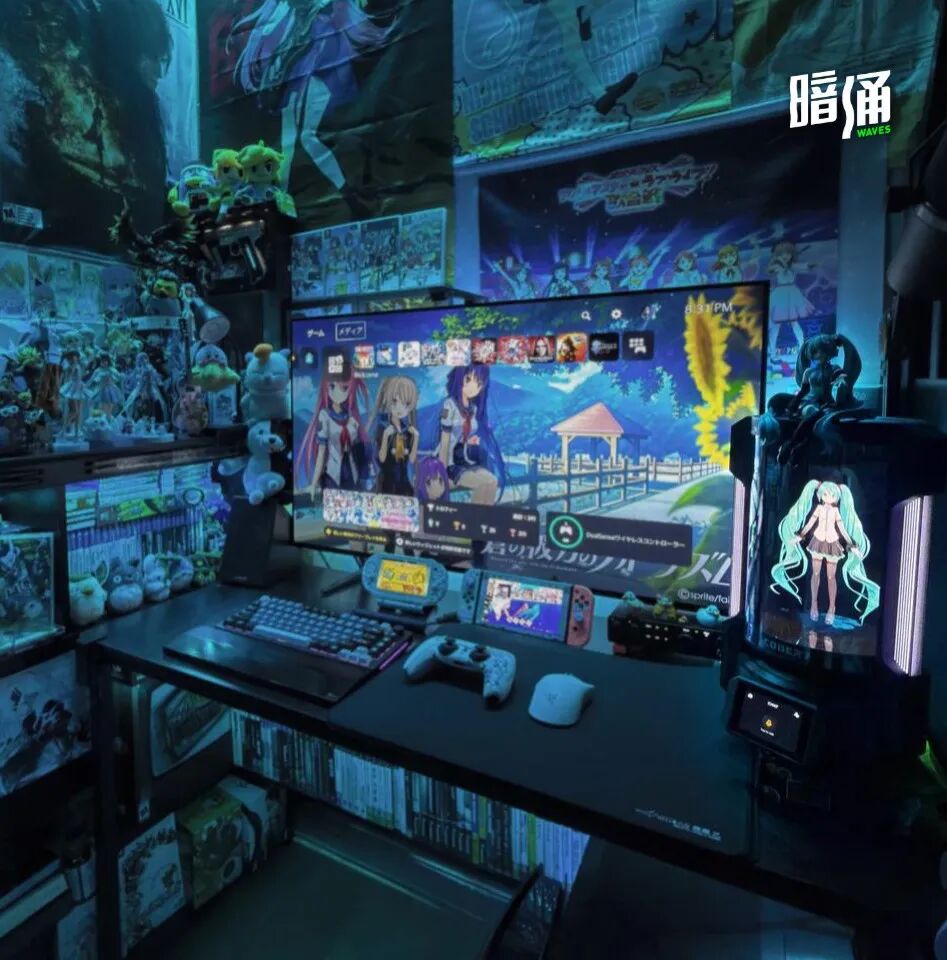
"The next-generation AI desktop companion." By Jiaxiang Shi

"AnYong Waves" has learned exclusively that AI virtual character interaction team CODE27 has completed consecutive angel and angel+ funding rounds, with total financing exceeding $10 million. Investors include Qiming Venture Partners, Hongshan, Plug and Play China, Cornerstone Capital, and other leading market-oriented funds, with Gaohu Capital serving as exclusive financial advisor.
CODE27 is built by a globalized team whose hardware core members hail from DJI and EcoFlow, bringing hands-on experience shipping multiple hardware products with million-unit sales globally. The company is dedicated to building an immersive interaction platform for personalized AI characters.
Over the past two years, AI companionship has evolved from wild growth to crowded saturation. From Character.ai and Talkie to Grok, tech giants, model labs, and star startups have pushed character supply toward near-infinity, accelerating content updates while making conversational experiences increasingly homogenous.
Yet the kind of genuine relational depth that keeps users coming back long-term remains stubbornly elusive for AI. Content can be industrially produced; relationships cannot.
In CODE27's view, user demand for AI interaction will likely develop across three layers:
First, constrained by cost, users still primarily access AI through apps or websites on traditional hardware;
Second, users begin seeking ritual and ceremony, feeling that phone and computer screens are insufficient vessels for their digital companions, and wanting dedicated hardware;
Third, users want deeper fusion with their characters, so that companions don't merely exist in the digital realm but can further participate in physical life.
CODE27 chose to enter at the second layer, with the third as its north star. Their bet is that AI characters with embodied form and multimodal interaction capabilities will become one of the endgame forms of human-computer interaction.
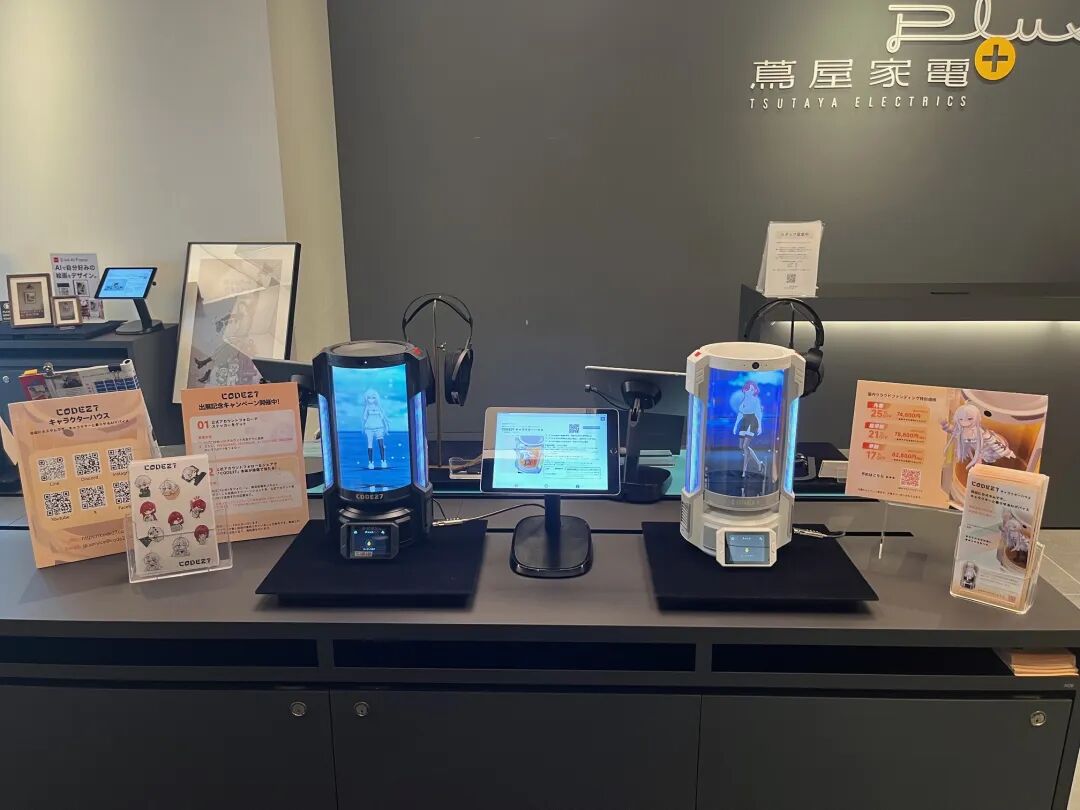
CODE27 enters Japanese offline retail channels | Image source: CODE27 community
CODE27's more specific inspiration came from a Bilibili user craze for DIY "holographic mini-TVs" — projects that made screen images appear to float in transparent space, bringing characters out from deep within the screen and onto the desktop for the first time.
Following this direction, CODE27 launched its AI character interaction device. Users can upload custom virtual character models and engage in real-time dialogue and interaction through multimodal interaction. The product emphasizes bidirectional immersive multimodal interaction built on "hear, see, respond, remember," aiming to create virtual character experiences with greater vitality and better suited for long-term companionship.
In their view, hardware's value lies in providing ritual and physical anchor points for relationships.
From badges and acrylic stands to figurines and dakimakura, users have always used physical objects to anchor relationships. Desktop devices let abstract companionship become concrete: breathing lights, sound emanating from space, touch and feedback.
On the software side, CODE27 refines AI capabilities into systems that approximate genuine companion relationships. Multimodal understanding lets it contextualize conversations within situations. Manageable retrieval with decay-based long-term memory preserves the details that truly matter in a relationship. Behavioral strategy and boundary constraints stabilize tone and interaction rhythm. Hardware makes it present in space; software makes it continuous through time.
Notably, CODE27 launched on Kickstarter in April 2025, raising over $1.9 million. More recently, it went live in the Japanese market, with first-day sales exceeding 85 million yen and cumulative sales surpassing 140 million yen.
Compared to earlier products in the category, CODE27 has hit a more favorable window: hardware costs have declined, model capabilities have advanced, and hardware design and aesthetic expression have been able to move beyond geek gadget territory into broader consumer view.
"AnYong Waves" learned from the CODE27 community that future product iteration will proceed on two tracks: in the near term, continuously optimizing AI interaction capabilities, launching more IP collaborations and interactive experiences, while gradually adding practical functions like smart home control and schedule management, and exploring more open capability extension frameworks and external task execution.
Looking further ahead, CODE27 aims to build a platform organized around character creation and co-creation. The team plans to open a plugin marketplace where users can customize and share AI character appearances, capabilities, even create exclusive storylines — much as Bambu Lab turned 3D printing enthusiasts into content creators, the team hopes CODE27 users can become creators of their own virtual companions, serving as both audience and participant.
The ideal ecosystem would have some people handling daily vignettes, others refining personality boundaries, others designing movements and outfits, others maintaining the pacing of relationship progression. Characters grow continuously through shared memories and everyday details.
Past IP relied on continuous updates; audiences had to keep returning to the same story. But today, characters can run persistently, driven by relationship progression and shared memory to form personalized, private relational threads.
In an era when character supply approaches infinity, what grows scarcer is who you choose to keep by your side. As CODE27's vision puts it: "Create Your Character, Live Your Fantasy."
Layout | Nan Yao Image source | CODE27 community

Recommended Reading

The flow of money, the rise and fall of people