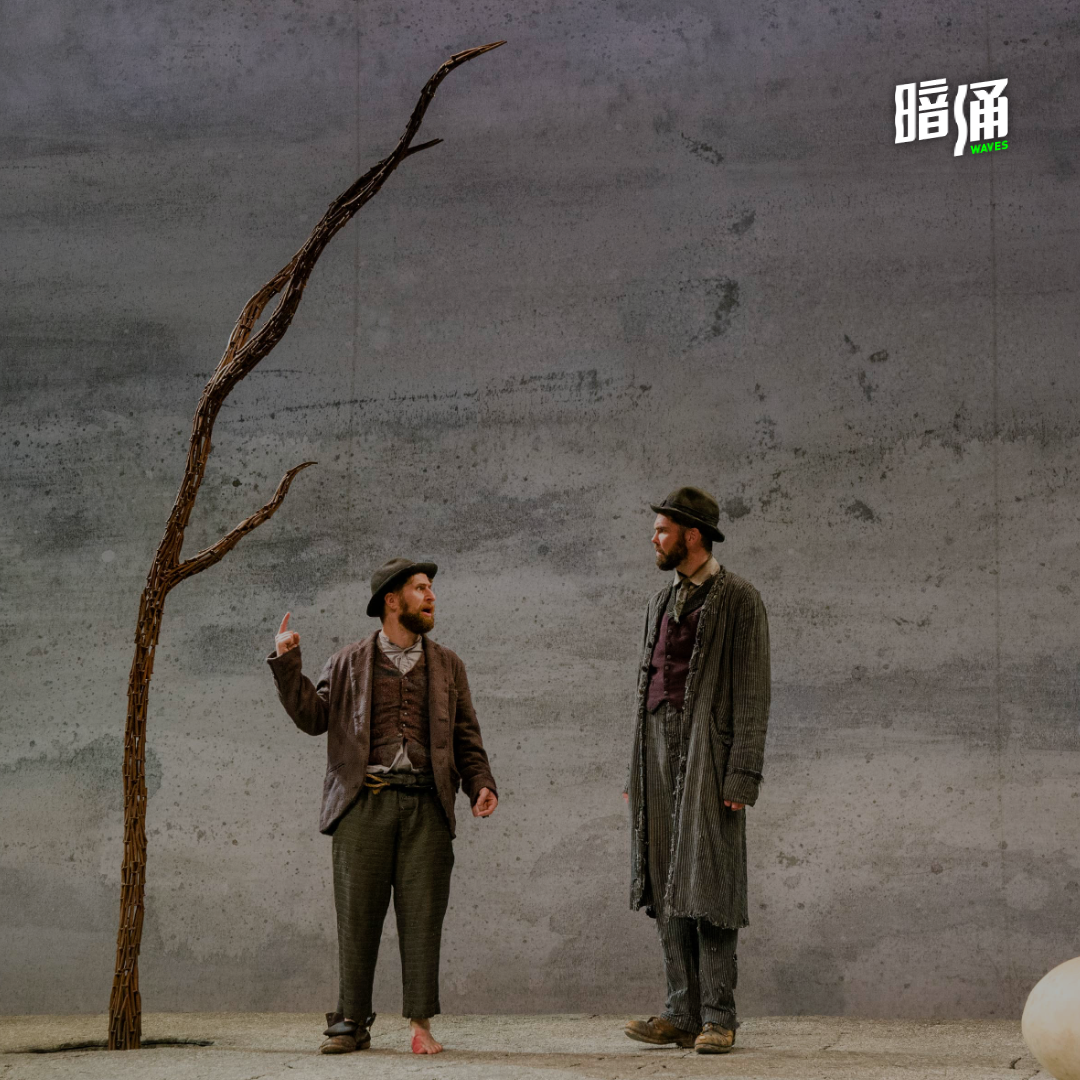
Consumer investor Yu He waited for two big fish like he was waiting for Godot.
I've stumbled through pitfalls and detours, celebrated victories, and felt the sting of regret.
"We've stumbled through pitfalls, taken wrong turns, celebrated victories, and felt the sting of regret." By Jing Liu

Talking about new consumer brands now seems almost anachronistic.
The last round of heated discussion was already three or four years ago, followed by a long silence. In this arc from boom to bust, Black Ant Capital stands as perhaps the most representative fund — maybe without equal.
At the end of 2020, riding the wave of Pop Mart's blockbuster IPO that hit a hundred-billion-yuan market cap on debut, Black Ant made a stunning entrance. Shortly after, the firm raised a new RMB fund and a new USD fund, totaling roughly 4 billion yuan. This was also the largest capital raise in the consumer sector that year.
But the consumer industry quickly fell into a slump, and consumer investing was gradually forgotten. Until June 2024, when Laopu Gold listed on the Hong Kong Stock Exchange, its stock price surging more than 20-fold, its market cap at one point approaching 150 billion HKD. Six months before Laopu's IPO, in the company's only fundraising round in its 15-year history, Black Ant was the lead investor.
For Black Ant, the four years between these two IPOs were bittersweet.
They stumbled through pitfalls, took wrong turns, celebrated victories, and felt the sting of regret. "But we never thought about leaving," said He Yu, managing partner of Black Ant Capital. Fortunately, they eventually found their way back to the right path.
Recently, Anyong Waves sat down with He Yu. Our conversation started with Laopu, but we spent considerable time tracing back through the fund's four quiet years, and even further into older stories. In this, you can rarely see so complete a picture of a fund's entrepreneurial journey.
Perhaps because he has experienced several reversals, He Yu has given more thought to the boundaries of an investor's capabilities. On a day when everyone is shouting about AI and technology, he says he wants to be an investor farther from AI. Even though he recognizes that technology's momentum has long since eclipsed consumer and consumer investing.
This certainly contains an element of self-preservation as a consumer investor, but it is not without its own kind of conviction.
Part 01
Laopu Gold's Customers Are People Who Buy Cartier,
Not Those Who Buy Traditional Gold Shops
Anyong: There are many stories circulating in the market about your investment in Laopu Gold. What's the real version?
He Yu: I first heard about the company in 2019. Michael (Zhang Peiyuan, Black Ant's other managing partner) visited founder Xu Gaoming, and we actually submitted a term sheet, but there was no opening for investment.
It wasn't until the second half of 2023 that an intermediary was introducing investors to the company — but we didn't come through an intermediary. We reached out internally to reconnect with the founder (Xu Gaoming), discovered they were planning to go to Hong Kong, and then we led that round.
Anyong: You make it sound so easy. That was the only financing round before Laopu's IPO. Why did they choose you as the lead?
He Yu: It's fate, I suppose. What you persistently seek, you will eventually find.
We considered Laopu a rare, exceptional brand and always kept them in mind. So even though there was no investment opportunity in 2019, we maintained contact and conversations. Mr. Xu appreciated our early visits and research.
Also, at that point in 2023, while some investors were looking, not many were genuinely interested. The market environment was still quite poor, and there was genuine disagreement about the company: one layer was understanding of Laopu itself, another was its future potential.
Anyong: There's still disagreement today. Some see Laopu as a mass-market alternative to luxury jewelry; others think it's not so different from traditional gold shops.
He Yu: When I first heard about the company, I went to their Beijing SKP store. It was still a mid-island location, but my first impression was that its color wasn't ordinary gold — it was darker, appearing heavier, more historical, like something you'd see in the Forbidden City or a museum. That was my intuitive feeling.
As I learned more about the company, I found that Laopu's products, stores, and service planning had a cultural system. If you walk into a store, you can clearly sense a complete, recognizable design. They've integrated traditional Chinese culture into every aspect of the brand. This is a brand built around traditional Chinese culture.
Anyong: But is culture alone enough? Some joke that Chinese people can make anything except luxury goods.
He Yu: Building a high-end brand requires systematically constructing product, content, channels, and services targeted at high-net-worth individuals. This kind of culture-centered system building is extremely difficult, and there have been few precedents domestically. Polishing such a system requires restraint and conviction. In our investing, we have an efficiency-experience dichotomy: efficiency-oriented companies need to charge ahead early to achieve scale advantages, while experience-oriented companies need more restraint in their early stages.
Take Laopu: they initially only chose the best channels, avoiding mid-to-low-end malls. For example, in a market as large as Shanghai, Laopu had only one store at Yuyuan for the longest time. They insisted on not opening without the right location, and waited over a decade for it. That's conviction.
Also, I believe culture-driven brands will become increasingly common.
Anyong: Looking at the birth of other luxury brands, it often takes a long time to build the brand. Hasn't Laopu's speed been too fast?
He Yu: Today's media environment simply makes breaking out happen faster, continuously amplifying brand effects: the hotter Laopu sells — the more media writes about it — the higher the attention.
Anyong: Has a P/E ratio that at one point exceeded 130x been too high? Hermès's historical peak P/E was only around 60x.
He Yu: I believe the company's long-term fundamentals are sound; in the short term, it's about delivering on earnings.
Anyong: Many red-hot consumer brands can't escape the fashion risk problem.
He Yu: I don't think Laopu will. What stays popular — what doesn't change? First, it must align with underlying human consumption needs — those Maslow mentioned. Second, gold never goes out of style, ancient craftsmanship never goes out of style; these are things passed down through thousands of years of Chinese traditional culture.
Moreover, this is a company centered on cultural creativity and interpretation, which is very different from the product — especially standardized product — centered brand companies we've encountered in the past. Everything we see at Laopu today is this brand's value proposition, all built by the founder's own hand.
I've visited many luxury stores. When you enter, the staff size you up: are you here to actually buy? What's your spending power? Even if you're wealthy, it feels uncomfortable. But when you browse Laopu, you're more at ease, experiencing genuine service and equal treatment. Their staff receive no sales commissions whatsoever. The difference in service reflects brand culture.
Anyong: You repeatedly mention Laopu's product and brand building. Do these inspirations all come from founder Xu Gaoming himself?
He Yu: I believe so. Mr. Xu has been working with gold products for decades, and he has deep research into Buddhism and art. So when people criticize their low R&D expenses, the key really lies in the founder.
Anyong: Over the past year, gold prices have surged, and many people buying Laopu are partly motivated by value preservation and appreciation. If gold prices fall, can Laopu's growth continue?
He Yu: Laopu has indeed replaced some consumption demand that previously went to luxury jewelry. When the economy is under pressure, spending the same amount, people feel this (pure gold) is more tangible, and they identify more with its culture and craftsmanship.
But I believe the value-preservation mentality isn't the core reason for target users' purchases, just an added rationale that lowers the psychological barrier to buying.
Anyong: You call Laopu a luxury brand, but luxury brands aren't having an easy time either. Cartier and Van Cleef & Arpels, for example, have seen sales decline in Asia for three consecutive quarters.
He Yu: Chinese people's confidence has risen now. Many traditional Chinese things are being viewed more objectively and understood with more care, as long as the brand is done well enough.
Especially in China, the playbook of overseas luxury brands will become increasingly ineffective. Traditional marketing mainly relied on monopolizing media resources — this was one way luxury brands built barriers. In the past, media was limited, people's access to information was limited, so they only needed to control a few core resources: high-end magazines, fashion shows, airport out-of-home, and so on. These all require enormous capital and social resources.
Anyong: So fashion is also a form of power.
He Yu: Exactly. Have you noticed how many luxury brand ads used to be deliberately vague? Because they needed to maintain mystery; they were selling a feeling, making you worship them.
But now media has been democratized. Does anyone still read Vogue? Do biannual runway shows still draw audiences? Some may watch, but certainly not like before. Between power and creativity, creativity has become more important, cultural vision has become more important.
I believe the vast majority of Chinese people cannot actually resonate with the culture of Western luxury brands. When the looking-up disappears, their competitiveness naturally declines.
Anyong: So what special marketing moves does Laopu have?
He Yu: Quite the opposite — this company doesn't actively do marketing. They believe good products and content will spread on their own.
Anyong: China has many gold brands, like the "Four Major Hong Kong Gold Brands" and so on. Why didn't Laopu's story happen with them?
He Yu: For many years, the vast majority of gold purchases were either based on traditional rituals or value preservation and appreciation. Of course, this market will remain large enough in the future, and I don't think Laopu will erode their market share. But most gold brands' competitiveness actually lies in supply chain and trust endorsement, not brand premium.
Anyong: They never considered that gold could be sold not by the gram.
He Yu: Yes, that's the counterintuitive part. But when something unusual happens, there must be a reason — as investors, we're sensitive to that.
Anyong: How much did you invest in Laopu total?
He Yu: USD plus RMB, roughly 170 million yuan — a mid-to-upper-sized investment for Black Ant.
Anyong: One consumer investor said the sense of achievement from hitting on Laopu, or Mixue, is limited: these are all pre-IPO financings. It doesn't reflect an investor's vision, and post-investment value-add is limited.
He Yu: From an investment perspective, we certainly wish we could have participated in Laopu Gold earlier. But consumer doesn't exist only as a VC concept, and Black Ant has never been a VC fund.
We invest according to the characteristics of the consumer industry — sometimes earlier, sometimes slightly later. But one principle is that we only invest in companies that truly create substantial value and founders with long-term conviction.
Part 02
Fundraising Difficulties and Obscurity
Actually Made Early Black Ant What It Was
Anyong: Laopu is arguably your second Pop Mart — many people came to know Black Ant through Pop Mart. How did you find Wang Ning back then?
He Yu: It was quite serendipitous. I had just left ByteDance and hadn't moved back to Shanghai yet. One day I saw CBNweekly with a cover story on Pop Mart.
Later I rode a shared bike from the subway station to Pop Mart's Beijing Financial Street Mall store. It was February, bitterly cold, my hands went numb. When I reached the mall, since it had just opened, there weren't many people inside, but there was already a line outside Pop Mart — all young women. I watched their energy for a while and found the brand interesting.
Anyong: Some early investors who met Wang Ning described him as: speaking with a calm expression, not very charismatic. How did you feel about him as a person?
He Yu: He wasn't like that when I met him. He liked using analogies for everything — Jay Chou, Wong Kar-wai. Later we even said internally that people who like analogies often demonstrate thinking ability, because they can better describe essence and connect disparate things.
I remember he made several points then: people's time is fragmenting, and building major content IP that sticks will become harder; an IP company doesn't necessarily need a single strong piece of content, it can also be a platform; and once this is built, it would have moats that attract good content.
Anyong: Were these views non-consensus at the time?
He Yu: Entirely new. Our timing meeting Wang Ning was probably fortunate — any earlier, and he might not have had such systematic thinking about IP yet. It was Sonny Angel and Molly that gave him these user insights and business conceptions.
Anyong: "The specifics may be unclear, but the person is good" — was this your investment logic for Pop Mart?
He Yu: Partially. But we're not that kind of angel fund — just a "pick the player" logic. This approach of reading people: some may become Messi, but the vast majority fade into obscurity. Whether things succeed depends on many factors. So when I see a good person, the business model also needs to make sense.
Back in February 2016, everything Wang Ning said was also new to me. But I didn't dismiss him — that may be what set me apart.
Anyong: You didn't actually invest until early 2018. What happened in those two years?
He Yu: We actually invested at the end of 2017. It happened to be during the year and a half we were fundraising. This was also a fortunate thing in retrospect. I've since reflected that our inability to raise money actually made us. Nearly two years gave us ample time to observe and track these companies, which was a good thing for us. There's something similar with some entrepreneurs: companies that struggle to raise early funding often build stronger foundations.
Anyong: After such a long gap, why was Wang Ning still willing to take your money?
He Yu: Actually, he wasn't raising new funding. From my first meeting with him until the company's IPO, he hardly took any new money at all — everything was secondary share transactions.
Even our first investment: there was word that someone wanted to sell 1.5% of old shares, asking if I wanted them. I didn't hesitate: yes.
Anyong: Fang Yuan, founding partner of NewQuest Capital, once said the Pop Mart fundraising story could fill a book. You invested across four rounds — how did you secure each?
He Yu: We simply took shares whenever opportunities arose. Non-consensus existed around Pop Mart both before and long after its IPO.
Anyong: One Pop Mart investor described you as "exceptionally skilled at deal-making."
He Yu: I'd say the entire Black Ant team is skilled at transactions. Transactions are indeed an important part of investing. People may think of zero-sum games, but more often transactions create value. For example, we also pushed for and assisted in the merger of Snack Busy (Lingshi Henmang) and Zhao Yiming — cases like this barely existed in the consumer industry before.
Anyong: In any case, Black Ant shot to fame because of this.
He Yu: It was indeed a milestone project. Fundraising was extremely difficult that year. I resigned in 2016 and spent a year and a half raising capital — and it was precisely this period that gave us the opportunity to consolidate, helping us avoid some mistakes in our early stages. If we'd had money from the start and deployed it quickly, we might already be finished.
The difficulty back then, in retrospect, was actually a blessing.
Anyong: Going back to 2016, when you decided to start a new fund, you weren't particularly well-known compared to peers of your generation. Where did the courage come from?
He Yu: True. I was determined to do this, so I resigned from ByteDance to do it. I'm the kind of investor who's more like an entrepreneur — half rational, half intuitive. I wouldn't wait until everything was perfectly ready.
Anyong: How long did the first fund take to raise?
He Yu: I came out in February 2016, initially aiming for 500 million. At first we were far short of that target. It took about a year and a half in total, eventually raising 380 million.
During that year and a half, I had zero income. But I had already assembled a small team with daily expenses to cover. I may be one of the few in the investment industry who sold their home to start a business.
Anyong: How much did the house sell for?
He Yu: Several million — a school district apartment in Shanghai.
Anyong: The hottest thing back then was the internet. Why choose consumer?
He Yu: In 2007, I was doing M&A advisory at PwC and assisted a Chongqing-based bakery chain in selling a controlling stake. The firm assigned me to the consumer retail group. Over those four years I worked on many projects and found I enjoyed the consumer industry. On the other hand, after studying the US and Chinese markets, I felt there was a good opportunity for a vertical consumer fund in China at that time.
Anyong: Though it's all consumer, the leap from advisory to investing is quite large.
He Yu: Actually, I was drawn to venture capital from the start. In college I didn't even know this industry existed, but I liked watching some TV programs on CBN — there's CBN again. They had a show called Boss Town featuring people like Kathy Xu, Zhang Suyang, Wang Ran, and others.
After learning about it, I felt this was an industry that emphasized individual capability. I even wrote unsolicited emails to some fund addresses recommending myself, but never got opportunities. A friend said there was a department in the Big Four that did M&A, which was close to this industry, so I went into advisory first.
Anyong: So advisory was a detour; the real goal was investing.
He Yu: Yes. I'm a very goal-oriented person. I fell in love with this industry in 2006, and that feeling hasn't changed to this day.
Part 03
When Everyone Left,
Our Most Important Decision Was
To Keep Looking for Opportunities in Consumer
Anyong: Not long after Pop Mart's triumphant IPO, consumer quickly fell into a slump.
He Yu: Yes, I've been in this industry for over a decade and seen some capital market cycles, but there were two things in recent years I'd never seen before. First, such dramatic boom-and-bust cycles in primary market consumer investing and fundraising; second, the overall macroeconomy coming under pressure — something our generation had never experienced.
Anyong: In this rise-and-fall process, what tuition did you pay?
He Yu: Perhaps our strong start gave us some confidence, so we dared to take on harder, newer things. Black Ant's long-term goal has always been 3G Capital — they transformed the global beer industry, so we said let's look at coffee.
In 2021-2022, we studied JAB and tried to do some consolidation plays. We organized several project teams, incubated a coffee brand, and even opened physical stores. The learning was: this stage was still too early for integration. We closed the stores later.
But this experience was still valuable: one, we gained better understanding of what stage to attempt the 3G model; two, it helped us evaluate early-stage companies.
Anyong: HeyTea is also a very era-defining case: when investors chased it, they still believed in consumption upgrading; later it gradually became about consumption downgrading and segmentation.
He Yu: In fact, from Black Ant's founding to now, one consistent philosophy has been: invest in things that "make life better." HeyTea, Pop Mart, and our initial batch of investments all followed this logic. But later we also realized we shouldn't focus only on tier-1 and tier-2 markets.
Take Pinduoduo: it lets people buy things more cheaply — isn't that also "making life better"? China is a multi-tiered market; we can't measure users by a single standard. When we researched Indonesia two years ago, Mixue Ice Cream & Tea appeared quite upscale there, a consumption upgrade in many local people's eyes.
Anyong: You saw opportunities in segmented markets. Why didn't you invest in Mixue Ice Cream & Tea?
He Yu: Mixue's financing was in 2020. I admit our understanding of lower-tier markets was insufficient then — this was also one of the inflection points in our attention. In 2021, we systematically researched lower-tier markets, and subsequently invested in Mingming Henmang (Snack Busy), Yuanji Shumai, and others. Investing always requires continuous learning, reflection, and iteration.
Anyong: Under the current tea beverage industry landscape, what changes will HeyTea undergo?
He Yu: From consumption upgrading to tightened wallets, HeyTea certainly had to rethink some things. Like price adjustments starting in 2022. But HeyTea is ultimately HeyTea — it can't become Mixue.
Anyong: You've invested in so many consumer companies. Have you summarized what kinds of founders tend to outperform?
He Yu: We developed a founder model, interviewing around thirty consumer founders over two years — for example, talking with Wang Ning for four or five hours.
Simply put, it includes several points: strategic thinking, willingness to challenge, self-awareness, and user insight. User insight may carry higher weight only in the consumer industry, while self-awareness determines a founder's ceiling.
Anyong: During those years of consumer downturn, what important decisions did you make?
He Yu: The most important decision was to steadfastly continue investing in consumer.
In early 2022, against the broader macro backdrop, some portfolio companies faced performance challenges, followed by capital market corrections, US-China relations, the A-share suspension of consumer IPOs, and so on. But we didn't stop. Our conclusion then was: consumer investing can definitely continue, because opportunities always exist here, and the deeper the trough in capital market investing and fundraising, the more obvious the opportunities should be. And I believed primary market consumer company valuations would definitely come down.
You could say that, looking back, some of our most important investments were made in 2023.
Anyong: Looking back now at the ups and downs of consumer investing, what new insights do you have?
He Yu: Were the topics everyone discussed about new consumer investing back then wrong? Things like domestic substitution, new demographic iterations, aesthetic upgrading — these weren't wrong, and they're still developing in these directions today. Recently the Hong Kong stock market has also given this batch of new consumer companies decent recognition.
It's just that, one, it doesn't happen that fast, and two, it doesn't need that much capital. Unreasonable valuations aren't good for either investors or entrepreneurs. If all VC capital came into consumer like in previous years, consumer definitely couldn't absorb it. Consumer companies need to develop step by step.
Part 04
I Used to Think One Step Per Year Was the Goal;
Now I Think
One Step Every Three Years Is Fine Too
Anyong: In an era ruled by AI, how does it feel to be a consumer investor?
He Yu: I feel okay for now, but AI will definitely be an important long-term variable: not just efficiency improvement, but whether it will change competitive dynamics? Just as the internet did affect competitive dynamics in consumer.
If切入ing into consumer entrepreneurship from AI, I think the risk is relatively high, because this is an industry that innovates on traditional foundations. Historically, unmanned retail, O2O, and other attempts to reshape the industry through new technology have failed.
For investors, you can do AI investing, or you can invest in an industry where AI is harder to affect core competitiveness.
Anyong: On this question, what's your inclination?
He Yu: I definitely choose the latter. I want to be as far from AI as possible.
Anyong: That's quite counter to the times.
He Yu: Because I believe technology's impact on consumer is always lagging. In the early stages of technological innovation, if you urgently seek applications and changes of technology in consumer, you may stray from the essence of consumer — good products and experiences. I believe in the face of technology, consumer companies will likely ultimately be equalized; technology won't become any single company's unique advantage.
However, over the past few years, technology companies globally have indeed been gradually strengthening, while consumer companies have changed more gradually.
Anyong: Since technology investing's momentum has overtaken consumer investing, have you ever considered changing course?
He Yu: Never.
Anyong: That resolute? One well-known consumer investor told us the same thing two years ago, but changed his tune last year.
He Yu: People at our firm have raised these ideas with me, and I've shut them all down.
Rationally speaking, if we also followed to invest in technology, in AI, we'd have no advantage. But in consumer investing, whether upgrading or downgrading, early, mid, or late stage, there will always be opportunities. Moreover, consumer investing's long-term moat may be the highest — this industry has existed for over a century, accumulating vast knowledge, business models, and people.
The longer we're here, the stronger we become. I believe the capabilities a consumer fund accumulates are different from traditional generalist VCs or PEs — from cognition, coverage, transactions to value-add, differentiation is possible. People must never leave what they're good at.
Emotionally speaking, my interest is in consumer — AI perhaps still has some — but hard tech, new energy, these aren't where my interest and curiosity lie.
Anyong: If there were an early-stage opportunity to invest in NVIDIA, you wouldn't be interested?
He Yu: It genuinely wouldn't hold that strong an attraction for me. NVIDIA is certainly a great company. But if I were to invest, I'd choose to invest in that AI terminal company — I think that's what truly reaches consumers.
Anyong: So returning to that original topic: your choice to do consumer investing, beyond circumstance, is it related to your personality and preferences?
He Yu: I liked reading entrepreneur biographies in middle school, so I hoped to create positive social value through work. For me, consumer investing is the best way to achieve this goal.
Anyong: One more interesting point: your name is He Yu (literally "What Foolishness"), your firm is called Black Ant — both are humble names.
He Yu: Actually Black Ant is quite an ambitious name. The first meaning is "many small things accumulating into something large"; the second is about sharing and collaboration — I believe it takes a group of people working together to do things better.
Anyong: What's the goal you hope to achieve in the next stage?
He Yu: To make even more focused and precise investments, continuously striving for excellence in consumer investing. But also to respect time.
I used to always think one step per year, another step the next year. Now I feel, one step every three years is fine too.
Anyong: Finally, our standard question: recommend a song you like.
He Yu: Wang Feng's "Free Like a Dream." I like a life that's galloping.
Image source | "Waiting for Godot" at Gerald W. Lynch Theatre

The flow of capital, the rise and fall of people