Goodbye to a Decade of Venture Capital | Waves' Second Anniversary
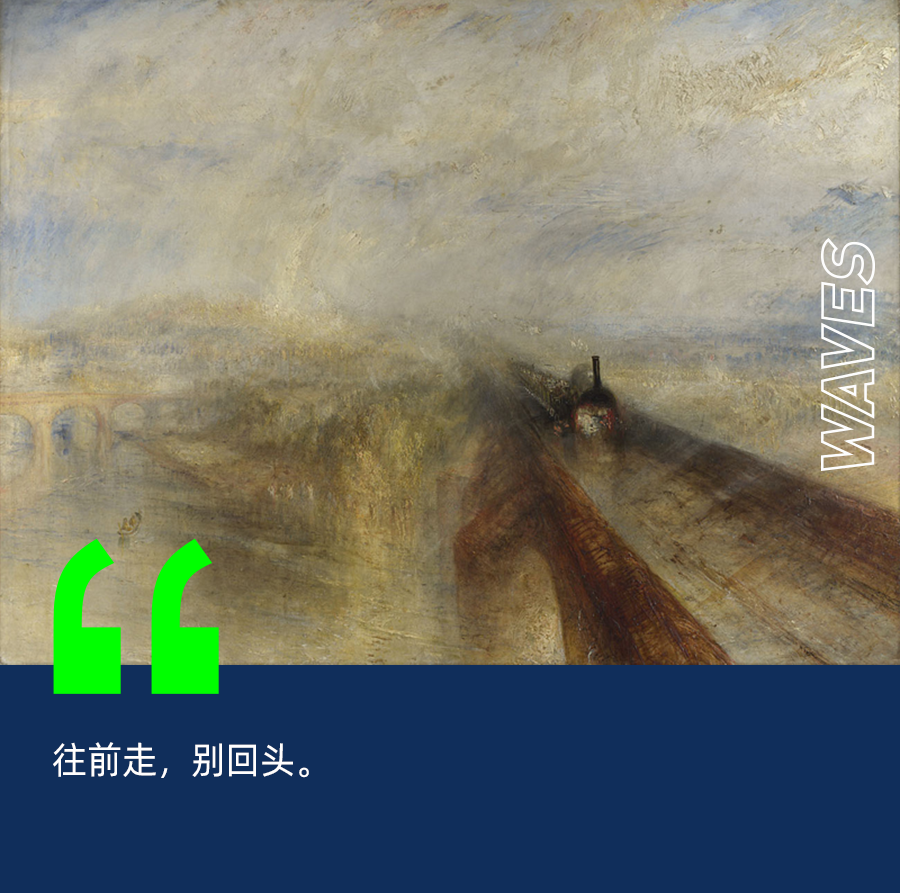
Keep moving forward. Don't look back.
Curated by | Waves Editorial Team

Over the past year, "Waves" published a total of 81 articles. For a business media account, that's pitifully few. But for our small team, it represents meaningful progress compared to the year before.
March 8 marks Waves' second anniversary. This time, we don't plan to talk about ourselves. Instead, we want to use this occasion to take stock of the past decade in China's venture capital industry.
The ten years from 2014 to today mark the decade since that archaic term was coined, and also the most vibrant decade for Chinese VC. Looking back now, Wang Xing's prophecy doesn't seem wrong at all.
Waves' slogan is: Where money flows, people rise and fall. Capital and people largely determine most beginnings and endings in the business world. Our retrospective will unfold along these two threads. Our thanks to everyone who has sat for a Waves interview, and to our dearest readers. In the year ahead, let's stay in touch.

10 Quotes
Important words from important people; clever words from clever people; foolish words from clever people
"Whatever the country needs, that's what Shenzhen Capital Group invests in." — February 28, 2022, at an annual work meeting, discussing the firm's positioning, by Ni Zewang, former chairman of Shenzhen Capital Group.
"Choose to be a friend of time. Think big, think long." — June 23, 2017, at his alma mater Renmin University's commencement address, by Hillhouse Capital founder Lei Zhang — words that would be repeated endlessly.
"The first meeting was when your husband [Li Bin] came to our home and had dinner with Richard and me. He spent 15 minutes explaining his vision for NIO. My husband spent 10 seconds saying yes." — December 17, 2017, at the NIO launch event, JD.com founder Richard Liu's wife Zhang Zetian said to Li Bin's wife Wang Yizhi.
"When we invest, we have four principles: serve China's rise, challenge the giants, invest in great products, believe in young people." — May 2021, in a media interview, by Tang Binsen, founder of Genki Forest and an investor himself, speaking with the swagger of a founder whose company had seen its valuation soar 2.5x in six months.
"Too many people focus on boundaries, not the core. Nothing in this world has simple boundaries, so I don't think we should limit ourselves."
— June 21, 2017, in a profile interview, Meituan founder Wang Xing on how he sees himself.
"The pendulum of the era has swung to RMB funds deeply rooted in domestic soil." — June 2, 2023, upon announcing the first close of over 5 billion RMB for a new comprehensive fund, by Liu Zhou, founding partner and chairman of Fortune Venture Capital.
"I carefully prepared a speech, and then three teachers came up and just joked around." — January 5, 2024, at the "2023 Fengma Niu Year-End Gala," by Cheng Qian, host of "Cheng Qian's Circle," sharing the stage with Feng Lun, Zhou Hongyi, and Wang Shi.
"If you still think we're in a down cycle of the economic cycle, that's terrifyingly wrong. It should be understood as the end of one era and the beginning of another. Cycles and eras are fundamentally different in nature." — February 2024, in a WeChat Moments repost of "Why We Can't Escape Economic Cycles," by former JD.com CEO Xu Lei.
"What does it mean to do the hard but right thing? When you can't figure it out, just choose the hardest path."
— April 3, 2021, one month before his death, in a CCTV interview for Meeting the Titans, by Zuo Hui, founder of Lianjia and Beike, explaining his most frequently quoted line.
"The work of venture capital isn't actually mysterious. We're essentially 'service staff' for startups." — August 2021, in a People's Daily interview on how VCs should see themselves, by Li Yannan, investment vice president at Hongshan Seed Fund.

10 Decisions That Changed Everything
Choices matter more than effort. Choices matter more than effort. Choices matter more than effort.
> Anta acquires Amer Sports Five years ago, Anta, together with FountainVest Partners, Tencent, and other consortium members, spent €5.6 billion to acquire Finnish heritage company Amer Sports — the largest cross-border acquisition in Chinese sporting goods history. Five years later, as Arc'teryx and Salomon swept China, Amer Sports filed for IPO with the SEC, seeking a NYSE listing.
In this enormously costly "gamble," the Amer Sports IPO chapter remains unresolved. But as a local Jinjiang-based enterprise, Anta had already won the moment it mustered the courage to acquire.
> Shou Zi Chew's career waltz Enlisted at 18, discharged two years later with the rank of captain — then degrees from UCL, Harvard, and other top global business schools — stints at Goldman Sachs and DST in investing — joined Xiaomi as CFO, becoming a Xiaomi partner — resigned to become ByteDance CFO, then TikTok CEO. Every "pivot" in Shou Zi Chew's career seems to have landed precisely on the beat of the era.
> ByteDance acquires Musical.ly November 2017: ByteDance spent $1 billion to snatch Musical.ly from across the ocean, outbidding Kuaishou in the process. What seemed at the time like an expensive and laborious acquisition now looks like an inevitable step in Douyin's ascent to the throne.
> Kathy Xu exits Manner Coffee The investment world has never lacked legends about "Sister Xu." Her most representative recent case is Manner Coffee. From the moment Han Yulong and his wife opened their first shop, Xu chose to go heavy — and stayed through to the point of ¥100 million per store and a $2.8 billion valuation, then decisively sold her stake. A home-run level return, with Sister Xu exiting gracefully amid everyone's astonishment.
> Yu Minhong incubates East Buy 2021: New Oriental suffered a stock price collapse, revenue cliff, store closures, and layoffs. 2022: East Buy and Dong Yuhui exploded on livestream commerce, pulling New Oriental back from the brink and opening a second growth curve.
> David Li takes control of Luckin Coffee In 2020, Muddy Waters published its short report, exposing the shocking Luckin Coffee accounting fraud. Charles Lu exited in disgrace, the company was delisted, and a prolonged battle for control ensued between founding and investor factions. January 2022: Centurium Capital, together with IDG and Ares SSG, completed the acquisition of the founding team's shares, with Centurium becoming the new controlling shareholder.
David Li's decisive move brought Luckin back from the dead: 2023 total net revenue of ¥24.903 billion, up 87.3% year-over-year. This may become a case study written into business school curricula.
> Hu Weiwei sells Mobike A journalism graduate from an ordinary university, earning ¥10,000 a month, chose to start a business to change her life — catching the biggest wind of the 2014-2024 decade, the sharing economy. In 2015, she founded bike-sharing company Mobike Technology, raising $1 billion in just two years. At Mobike's peak in 2018, she decided to sell the company to Meituan for $2.7 billion, cashing out ¥1.5 billion in one stroke. She was 36 that year.
> Wang Cen becomes a KOL In 2021, Wang Cen left Sequoia Capital. Leveraging short-video platform traffic, he quickly built his personal brand and launched knowledge-commerce products. Having shed his "King of Consumer Investing" title, Wang Cen became a bona fide KOL. Doubt Wang Cen, understand Wang Cen, become Wang Cen — increasingly, investors are following his path of transformation.
> Chen Rui joins Bilibili Once seeking spiritual comfort, Chen Rui opened Bilibili and became a die-hard fan. In 2011, the 33-year-old knocked on the door of a Hangzhou rental apartment and talked late into the night with Bilibili founder Xu Yi, who was still in his pajamas — then invested as an angel.
In 2014, after Cheetah Mobile's US IPO, Chen Rui retired from the scene, abandoning RMB options worth over ¥100 million, and joined Bilibili, continuously buying shares to become the controlling shareholder. At his peak, his net worth exceeded ¥35 billion.
> Hefei government invests in NIO In 2019, NIO was on death's door. A ¥7 billion equity investment from the Hefei government "pulled NIO out of the ICU." This case quickly made Hefei famous, dubbed "China's most daring city" and "China's most awesome venture capital institution."
Before NIO, Hefei had gambled big twice: once investing one-third of the city's fiscal revenue in BOE, which was struggling under financial crisis pressure; and in 2016, putting over ¥10 billion into semiconductor companies including ChangXin Memory Technologies.

10 Stories That Started Right but Ended Wrong
When a company or a person fades away without resolution
> Hu Tou Ju bankruptcy April 2023: In the headquarters of Hu Tou Ju Zhada Bakery, suppliers owed money took everything that could be converted to cash. This was just 600 days after the myth of "over ¥100 million valuation per store."
From raging fire to deep winter, Hu Tou Ju's collapse became the final straw that broke new consumer brands.
> Missfresh delisting For Missfresh, perhaps the story ended the moment the NASDAQ bell rang in 2021. A year later, Missfresh had lost 99% of its market value, received delisting notice, and shut down its instant delivery business — which accounted for 95% of revenue.
Catching the tail end of every funding window, raising nearly ¥5 billion in two years, securing money from virtually every source including local governments, and riding the final window for Chinese internet companies to list in the US — yet the ending was a karmic unraveling.
> Ant Group's unfinished IPO July 2020: Ant Group announced its IPO, with a total valuation of ¥2.1 trillion — the world's largest IPO ever. On the day the news broke, sustained cheers could be heard from Ant's Hangzhou Z Space offices. But just two months later, the dream was dashed.
> Online education under regulation In the first half of 2021 alone, total historical funding in the K12 track reached ¥141 billion. A year later, that figure was just ¥247.66 million.
Then the industry slammed to a halt. The once-scorching online education风口 became a business where shareholders couldn't receive dividends or pursue listings. Leading companies like TAL, Yuanfudao, and Zuoyebang had to spin off their core businesses.
> The WM Motor enigma July 4, 2017: LeEco founder Jia Yueting boarded a plane for the United States. Six years later, WM Motor founder Freeman Shen went overseas with no set return date.
Shen had personally orchestrated Geely's acquisition of Volvo — the best-credentialed founder among new car makers. WM Motor completed 12 funding rounds totaling over ¥41 billion, and for a time stood alongside NIO, XPeng, and Li Auto in the new EV wave.
But from crisis emergence to bankruptcy filing, a company needs only months. The fallen new car makers of 2023 all learned this lesson.
> The decline of Jiuqian's trillion-RMB empire The grassroots-born Wu Gang brought a ferocious "Jiuqian model" to the primary market — street-by-street scouting for Pre-IPO companies ready to list, building a scaled private equity factory. At its peak, Jiuqian had 500 employees and raised a new ¥500 million to ¥1 billion fund every three months on average. Jiuqian once aimed to become "China's Blackstone."
2013: A-share IPO was suspended, the VC/PE industry reshuffled, and Pre-IPO investing reached its end. This was the turning point for Jiuqian's decline. December 2022: Wu Gang was fined ¥1 million for interfering with public fund operations and banned from the securities market for five years.
> Luo Yonghao's "True Debt Repayment" Serial entrepreneur Luo Yonghao entered the already-red-ocean smartphone market in 2014 with Smartisan Technology, bearing the labels "idealist" and "standup-comedy CEO." The next year, Smartisan was valued at ¥2.6 billion, and Luo's net worth exceeded ¥700 million.
But three years later, Smartisan's sales slumped and the company owed ¥600 million.
What was harder to predict: Luo spent three years paying back all ¥600 million.
> Danke delisting From its 2015 founding to its late-2019 IPO filing, Danke Apartment completed 7 rounds totaling ¥5.8 billion in funding. But black swan events drove up vacancy rates, financing dried up, and with its founder unexpectedly placed under investigation, the company was ultimately forced to delist.
Danke was a failed specimen of internet-meets-rental — after which, not every industry could be "redone with internet."
> Wang Huiwen's abruptly ended AI dream February 13, 2023: The long-retired Meituan co-founder Wang Huiwen posted his "AI hero recruitment" on Jike, announcing he would "bring $50 million to the table" to found Light Year Beyond. Thereafter, Light Year Beyond quickly secured investment from Meituan's Wang Xing, Kuaishou's Su Hua, Tencent, Source Code Capital, Sequoia Capital, and 5Y Capital.
Two months later, Wang Huiwen was diagnosed with depression. Meituan announced the completion of a 100% acquisition of Light Year Beyond. The most dramatic entrepreneurial story of the "hundred model war" came to an abrupt halt.
> Fan Bao in the fog Late night, February 16, 2023: China Renaissance confirmed in an announcement that Fan Bao was unreachable. Six months later, the only new development was that Fan Bao "continues to cooperate with the investigation."
Fan Bao and his China Renaissance were among the biggest beneficiaries of the new economy wave over the past decade. As a founding figure of the primary market FA industry, Fan had also worked to expand FA's boundaries and develop investment operations.
The FA industry and primary market behind Fan Bao are also in困境.

10 Legendary Investments
Home-run returns, and unforgettable stories
> Gaorong bets on Pinduoduo The most thrilling part of Pinduoduo's funding story is Zhang Zhen's on-the-spot ¥60 million valuation at a hotpot dinner, and his conviction at the Series B.
As of early 2023, Gaorong's partial exits totaled approximately $1.9-2.8 billion, while its remaining 4.9% stake was worth about $5 billion. This means Gaorong's total return is conservatively estimated to exceed $7 billion, with potential to approach or exceed $10 billion. A textbook investment with all the right elements.
> Sequoia bets on Meituan As early as Xiaonei and Fanfou, Wang Xing narrowly missed connecting with Sequoia. It wasn't until his third attempt with Meituan in 2010 that Neil Shen recognized him. Sequoia then became not only Meituan's sole Series A investor, but also the largest institutional investor in Series B, C, and D. Sequoia participated deeply in Meituan's development, holding nearly 200 phone calls internally to facilitate the "epic" 2015 Meituan-Dianping merger. In Neil Shen's recollection, betting on Meituan wasn't a rational deduction — Meituan wasn't the first in group buying, nor the leader at the time — but the beauty of venture capital is that irrational intuition eventually became reality.
> Wang Qiong invests in Yiming Zhang SIG Asia's Wang Qiong investing in Yiming Zhang added another billion-dollar-on-a-napkin story to the world. Previously, that story belonged only to Bezos.
In a café near Jinqiu Jiayuan — so empty they hadn't even turned on the lights — the programmer Yiming Zhang, after four failed startups, shyly sketched the earliest product prototype for Toutiao on a napkin. Wang Qiong believed in him. In 2021, Toutiao and other businesses were merged into Douyin. Today, from Wang Qiong's initial $80,000 and ¥2 million pooled together with two others, ByteDance has evolved into a company once valued at over $400 billion.
> Richard Liu invests in Xiaomi From 9 PM to 9:30 AM, burning through three phone batteries over 12 hours — this was the record Richard Liu of 5Y Capital (then Morningside Capital) set before investing in Lei Jun's Xiaomi. In 2018, Xiaomi listed on the Hong Kong Stock Exchange. That phone call later earned 5Y tens of billions of dollars.
During those long 12 hours, Liu was really confirming two things: the person — when Lei Jun said he wouldn't die just because his name was Lei Jun, Liu recognized his humility; and the opportunity — phones weren't replaying the traditional phone story, but rather the rise of PCs in 1980s America, so this was destined to be a tens-of-billions business.
> Lian Meng invests in SheIn In 2015, with mobile internet wars raging, South China was hardly the best hunting ground for unicorns. But IDG Capital's Lian Meng found Anker Innovations and SheIn here — the latter creating an even greater legendary story.
In 2015, IDG led SheIn's ¥300 million Series B, a heavy bet that gave IDG enormous leverage. If market rumors of SheIn's impending US IPO prove true, this largest-scale IPO in recent years will bring IDG book returns at the tens-of-billions level.
Most legendary VC stories celebrate victors from风口 battles. This is an alternative story.
> Shan Weijian takes control of Yingde Though the process has been tortuous and not yet fully complete, this is already almost certainly one of the most legendary buyouts in Chinese VC over the past decade.
In 2017, struggling Yingde Gases was acquired by PAG at HK$6 per share, with privatization costs around ¥10 billion. PAG then implemented a series of new measures that turned around Yingde's operations, merged Baosteel Gases into Yingde, and renamed the combined entity Gas Power Technology. Last year, Hangzhou Capital proposed acquiring Gas Power. If this transaction closes, PAG's return is roughly estimated at ¥30 billion.
Shan Weijian repeatedly told us in an interview that "investment opportunities are unpredictable," but he stays prepared at all times. This time, we may witness an elephant dance.
> Xiao Feng invests in Ethereum April 2015: Vitalik Buterin came to Shanghai once again. The gaunt, brilliant young man and his creation Ethereum were still strapped for cash. Later he met Xiao Feng, who had developed strong interest in blockchain. The latter funded Vitalik $500,000 through "Wanxiang Blockchain Labs" and received corresponding ETH.
Measured in conventional terms (gold standard), this investment's book return is conservatively estimated at over 3,000x. For the traditionally finance-experienced Xiao Feng, there were many ways to expand this to 10,000x. But he chose to push for compliant blockchain industry development.
Like blockchain itself, this story has not been incorporated into mainstream VC narratives.
> Mai Gang invests in Pop Mart Early Pop Mart found no takers. For this angel round, Wang Ning and his team waited at least three months — before Mai Gang finally saw that email. Another widely circulated part: after the funding closed, Wang Ning and Mai Gang went to a bar near Wudaokou, and in a tipsy moment, Wang Ning compared their relationship to Jay Chou and Jacky Wu. Mai Gang was completely baffled.
According to public information, Mai Gang's ¥2 million angel round was gradually diluted in subsequent rounds, with partial exits. When Pop Mart listed on the Hong Kong Stock Exchange at the end of 2020, it stunned the market with an opening market cap of ¥100 billion HKD. At its peak valuation, Mai Gang's cumulative return may have approached ¥2 billion.
What's special about this story: in this trillion-market-cap, thousand-fold growth feast, virtually all major Chinese funds collectively missed the steepest part, while Mai Gang became the spokesperson for then-"unknown" early investors.
> Song Tao invests in miHoYo miHoYo is an even more extreme "Pop Mart story."
miHoYo's sole investor is Song Tao. His founded Skymobi was the first Chinese mobile internet company listed in the US, whose core business could be described as "the largest app store for feature phones."
In 2012, Skymobi obtained 15% of miHoYo for ¥1 million, holding it unchanged to this day. After 2016, as Honkai Impact 3rd, Genshin Impact, and other games launched and exploded, mainstream investors gradually realized they had missed the "money-printing machine." Based on widely circulated operating data, this investment's book gain may reach ¥50 billion, with estimated cash dividends exceeding ¥2 billion.
Though Skymobi was ultimately discarded by the smartphone era.
> Hillhouse takes control of Belle Though Belle's leveraged buyout was already a gamble, the ups and downs over seven years have pushed this investment to the point of "deciding both victory and survival."
Also in 2017, a Hillhouse-led consortium privatized Belle for HK$53.1 billion, after which Hillhouse personally took charge of sweeping digital transformation. Two years later, Topsports was spun off and listed, and capital began recycling. Recently, Belle filed again for the Hong Kong Stock Exchange, and this history-making buyout is approaching its revelation. If all goes well, Hillhouse's total return is conservatively estimated to exceed ¥30 billion.
Lei Zhang once said he "likes to fight." His Hillhouse was also like a rampaging, war-fueled machine constantly expanding in scale and complexity. Hillhouse's ultimate form — perhaps also the ultimate form of a fund within current rules — will likely be defined by this investment.

10 Bittersweet Moments
Highlights and turning points of the VC era; peaks and valleys in business idols' lives; and choices that affected far more people
> The night Meituan acquired Mobike April 3, 2018: Mobike held a late-night shareholder meeting to approve Meituan's acquisition. Meituan acquired Mobike for $2.7 billion (65% cash, 35% Meituan stock), assumed Mobike's debt, and retained the management team. A rational M&A that virtually all participants chose, and also the period at the end of the "sharing" wave — the biggest风口 of the past decade.
> Neil Shen tops the Midas List April 3, 2018: Forbes' "World's Best Venture Capitalists" 2018 list (The Midas List 2018) was announced, with Neil Shen ranking #1 — the first Chinese investor to top the list since its 2001 inception. The following year, Shen repeated at #1, with over one-fifth of the list being Chinese faces for the first time in history. This was perhaps the moment when Chinese VC practitioners stood closest to the summit.
> Kuaishou's trillion-market-cap celebration February 5, 2021: Kuaishou Technology listed on the Hong Kong Stock Exchange main board, opening 193% above its IPO price, with market cap breaking HK$1 trillion. Among holders of Class B shares, 4,551 employees instantly saw their holdings exceed HK$30 million. This was the final apex of the last狂欢 in the venture industry. The trillion-market-cap figure, in numbers, illustrated just how much value and wealth "mobile internet entrepreneurship + venture capital" could create.
> Colin Huang resigns March 17, 2021: Pinduoduo founder and chairman Colin Huang announced in his 2021 Letter to Shareholders that the board had approved his resignation as chairman. After Huang, internet new-money CEOs including Yiming Zhang and Su Hua successively announced their retreats — choices completely different from the previous generation of business titans. Multiple factors led to such choices. But the battles of these new heroes are far from over.
> Didi Chuxing app removed July 4, 2021: The Cyberspace Administration of China, in accordance with relevant provisions of the Cybersecurity Law of the People's Republic of China, notified app stores to remove the "Didi Chuxing" app, requiring Didi Chuxing Technology Co., Ltd. to strictly comply with legal requirements, refer to relevant national standards, earnestly rectify existing problems, and effectively safeguard users' personal information security.
One year later, the CAC, in accordance with the Cybersecurity Law, Data Security Law, Personal Information Protection Law, Administrative Penalty Law, and other laws and regulations, fined Didi Global Co., Ltd. RMB 8.026 billion, and fined Didi Global Chairman and CEO Cheng Wei and President Jean Liu each RMB 1 million.
> Li Xiang thanks David Zhang July 30, 2020: When Li Auto listed on NASDAQ, CEO Li Xiang mentioned three people in his special thanks, including Matrix Partners China's David Zhang among the investors — while Zhang was on-site looking for an iced cola. At Li Xiang's most difficult fundraising moment, Matrix had secured him a crucial lifeline.
> Kathy Xu asks for bread April 7, 2022: In a Shanghai Pudong Yucuiyuan neighborhood WeChat group, a message from "Kathy Xu": "Which neighbor can add me to the bread group?" This instantly spread through VC circles, later confirmed to be the famous investor herself. Investors have long been seen as the world's elite, but in special times, they too are ordinary individuals surviving in the grand era.
> Pinduoduo market cap surpasses Alibaba November 29, 2023: Pinduoduo rose over 3% intraday, surpassing Alibaba in market cap to become the largest US-listed Chinese stock by market value. Its Temu, since launching in the US in September 2022, quickly became the most popular app. Every era has its heroes. A new king of Chinese e-commerce was born.
> ByteDance dissolves strategic investment department January 19, 2022: ByteDance was revealed to have entirely cut its investment business. Previously, strategic investment was considered the most important means for internet companies to break through business ceilings and expand their territory. However, as 2021's "anti-monopoly" enforcement issued dozens of fines to the internet industry, regulatory signals grew clearer, and internet giants had to find new development paths. ByteDance was first to dissolve its strategic investment department, entering a new game with the resolve of cutting off one's arm.
> Sequoia's three regions go independent June 6, 2023: Sequoia Capital announced that its three regions (US/Europe, China, India/Southeast Asia) would become fully independent by March 31, 2024, operating under different brands. Once, Western venture capitalists seeking larger, more vibrant, more future-filled markets brought their well-known dollar fund brands to China, catalyzing the venture industry on this land.
Today, this is a bittersweet ending.
Image source | Rain, Steam, and Speed - The Great Western Railway (Joseph Mallord William Turner, 1838), The National Gallery, London