How Does an Infra Company Bring AI into the Physical World?
The integration of machine cognition and action.
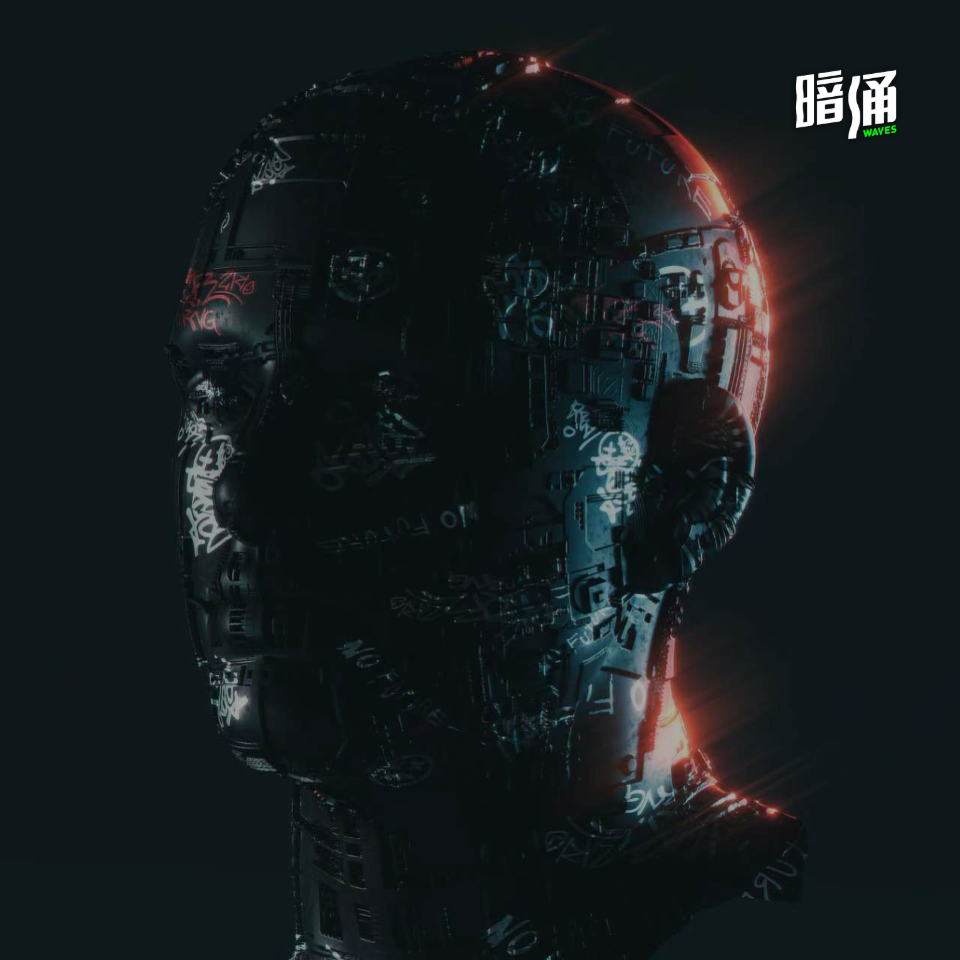
"The integration of machine cognition and action." Text by Muxin Xu

In 2025's AI industry, the new competitive frontier is shifting from foundation models to embodied intelligence — enabling AI not just to "think," but to "do." Yet in reality, a chasm still separates knowledge from action.
Recently, a Shanghai-based startup spun out of the Shanghai Artificial Intelligence Research Institute system, "Lingjing Zhiyuan" (Spirit Realm Intelligence Source), unveiled its first "embodied intelligent computing platform" — the "Dvorak Architecture," alongside the "Zhijing" T-series edge computing platform built on this architecture. These two platforms attempt to tackle the industry's core challenge of embodied intelligence "not being smart enough" from the ground up, at the level of computing architecture itself.
For its founder, Bo Sun, this represents an attempt to "let intelligence truly enter the physical world."
Part 01
Giving Robots a "Cerebrum" and "Cerebellum"
"Humans have a cerebrum and cerebellum — the cerebrum handles thinking, the cerebellum handles execution. We want machines to have a structure that can both think and act," Sun said.
The Dvorak Architecture adopts a "cerebrum-cerebellum" collaborative design: the cerebrum manages thinking and decision-making, the cerebellum handles control and execution, with a "neural pathway" system enabling real-time coordination between them. The Zhijing T-series computing platform, built on this architecture, covers the full spectrum from mid-range to high-end computing power. It uses domestic chips and is compatible with domestic operating systems, achieving full-stack autonomy and controllability. Currently, Lingjing's edge computing platform has been deployed across dexterous hands, collaborative robotic arms, quadruped robots, and wheeled and bipedal humanoid robots.
This "cerebrum-cerebellum fusion" allows robots to move from "cloud-based learning" to making instantaneous reasoning, judgment, and execution at the edge — essentially supplementing the robot's "intelligence." In fact, general-purpose robots currently suffer from an excess of muscle and a deficit of brains. At the world's first humanoid robot half-marathon, only 6 of 20 competing teams finished the race. At the World Humanoid Robot Games, the completion rate for the 100-meter obstacle course was below 30%, with scenes of robots collapsing immediately after the starting gun all too common.
So how can robots take that first step in a 100-meter sprint? Take "fetching a package" as an example. When the AI receives the command, moving from "knowing I need to fetch a package" to "how to fetch the package" depends on "large model-driven decision-making": the large model first breaks down the instruction — "walk out of the room → find the hallway shelf → identify the package belonging to 'me' → grasp the package → return to the room" — while handling unexpected situations along the way: if someone walks down the hallway, it autonomously plans a detour; if packages are densely stacked on the shelf, it judges whether to move outer packages first before retrieving the target; if the shipping label is blurry, it scans the barcode for further confirmation — these dynamic decisions are not pre-programmed, but the result of real-time large model inference.
Part 02
"Physical AI"
Much like the "engineering-oriented" character of Lingjing Zhiyuan's products, Sun's entrepreneurial path has consistently been shaped by a "hardware-software systems mindset."
In 2014, Sun founded his first company, co-founding Zhuhai Jingmi Shice — a company focused on domestic measurement and control systems. Starting from scratch, Jingmi Shice grew into a billion-yuan enterprise over ten years, with products exported globally. That was an era emphasizing "industrial automation"; Sun's R&D focus was on enabling machines to "measure precisely and control stably."
Exactly ten years later, Sun chose to start his second venture, establishing the "Intelligent Brain Innovation Center" at the Shanghai Artificial Intelligence Research Institute to incubate Lingjing Zhiyuan Technology, with its core business focused on the computing platform at the heart of embodied intelligence. This is in fact quite similar to intelligent equipment a decade ago — both sit on the eve of a "system-level intelligence bottleneck."
Comparing the two, Sun's two entrepreneurial journeys happen to align with China's two waves of "AI + industry" entrepreneurship —
After deep learning matured post-2012, the proliferation of GPUs and mobile/camera terminals, combined with strong demand from video surveillance, security, and manufacturing, gave rise to star companies like SenseTime and Megvii. This represented "embedding AI into hardware and perception terminals," emphasizing computer vision, speech recognition, and embedded measurement and control.
The more recent second wave of "AI + industry," catalyzed by ChatGPT, constructs general, large-scale "intelligence" in model form as a platform, then covers industries and consumers — placing greater emphasis on generality, generative capabilities, and platform-based business models.
Sun told Anyong Waves: compared to the first wave of AI industry with its fixed algorithms, lack of self-learning capability, and dependence on preset rules, "the current approach based on large models and more powerful computing enables self-learning and self-generalization at the edge, with environmental adaptability."
From there, he brought up the concept of "Physical AI." "AI must understand the physical world; understanding and action must be fused."
"Physical AI" is not just computation — it must also touch, grasp, move, and collaborate. It is the critical next step for AI to enter the real world. And the foundation for achieving "Physical AI" is a transformation in computing architecture.
Currently, "Physical AI" is becoming the new buzzword in embodied intelligence circles. Hitachi Group and XPeng are both making major investments in physical AI. NVIDIA's recently released Cosmos-Reason1-7B model is also aimed at physical AI applications and reasoning-capable vision-language models (VLM) for robotics. The tech giants are gearing up, all charging toward the same objective: to capture the future of Physical AI.
Currently, Lingjing Zhiyuan's team members come from fields including AI chips, control systems, and embedded architecture, with an average age of 32. The company has established partnerships with multiple domestic robot manufacturers, with a strategic focus on dexterous hands, various types of embodied robots, and industrial and medical applications in the broader embodied intelligence market.
Sun candidly admits that moving from intelligent measurement and control to embodied intelligence represents a natural continuation for him — from solving machines' physical control in the past, to now solving the integration of machine cognition and action. That is, from teaching machines "how to move," to solving "how to think" and "how to act."
From industrial automation to general intelligence, from measurement and control systems to a "unity of knowledge and action" computing foundation, Lingjing Zhiyuan's exploration may only be the starting point. But in this era where AI is redefining the boundaries of hardware and systems, it offers a glimpse of one possible answer — the next generation of intelligence must be able to both think and act.
Image source | unsplash

Recommended Reading

The flow of capital, the rise and fall of people