Is Leaving Big Tech to Build Hardware Really Worth That Much?
What exactly are investors buying into?
"Amid the frenzy, what exactly are investors buying into?"
By Muxin Xu
Edited by Zhiyan Chen

Li Renjie, an AI hardware investor, has gradually noticed a pattern. On his team at Yicun Capital's Songling Investment, nearly 70% of AI hardware founders come from major domestic hardware companies like Dreame, DJI, or Xiaomi. In other words, the AI hardware startup landscape is being reshaped by a cohort of "hardware veterans" with big-tech pedigrees.
The data reveals genuine capital enthusiasm behind this trend. In the first half of 2025, there were 114 financing events in embodied intelligence and AI hardware, with total funding exceeding 14.5 billion yuan. For all of 2024, there were only 92 events totaling 9.8 billion yuan. In May 2025 alone, capital flowing into AI hardware accounted for over half of all investment and financing activity. AI hardware has become a favored destination for executives leaving major tech companies. According to IT Juzi data, 13 former big-tech executives chose to start businesses in 2024, with 5 of them focusing on AI hardware.
Among these projects, the cases securing substantial funding are mostly closely tied to "big-tech光环."
Take Guangfan Technology, founded by Dong Hongguang, an early Xiaomi employee (hire #89), which completed two rounds totaling 130 million yuan in just three months, with a post-money valuation exceeding 500 million yuan. Its founding team is described by investors as a classic "high-P team," with members from Xiaomi, Huawei, ByteDance, Alibaba, Tencent, and other well-known companies, combining deep expertise in software, hardware, and application development. Another closely watched example is Looki, which completed three rounds — angel, angel+, and Pre-A — within six months, with total funding exceeding ten million dollars. Its founder, Sun Yang, previously led smart hardware at Meituan and served as senior R&D director at Momenta, and was also a founding member of Google Assistant.
These are the "big-tech departee founders" visible above the surface. But below the waterline, early-stage investors racing to capture these founders first told Anyong Waves: roughly 20 "high-P big-tech" professionals are preparing to leave, seek funding, and start companies. Meanwhile, many more similarly positioned talents are in frequent contact with VCs, waiting for the right moment to resign and launch their ventures. This trend has intensified over the past two years.
Yet questions follow. Former big-tech executives certainly bring光环 to the AI hardware track, but in many cases their products haven't truly taken shape while valuations have already been bid up by capital.
Behind VCs' evident "bet on the person" logic in AI hardware, are investors capturing future certainty — or, like with new consumer brands in 2020 and SaaS in 2021, manufacturing new bubbles? Especially in a sector with long chains and extended cycles, can high valuations based solely on big-tech履历 really hold up?
Part 01
High Premiums, Sentiment Valuations, Safety Cushions
As one of the most active early-stage institutions in AI hardware over the past two years, Alpha Startups partner Liu Gang's team has reviewed over a hundred AI hardware projects, including Guangfan Technology, Looki, Pixboom, and Xuanyuan Technology. When asked about this phenomenon, he admitted: "I didn't feel it last year, but the market is genuinely hot this year." He told Anyong Waves: "The valuation premium for high-P founders from big tech is generally 2-3x compared to the same period last year."
For example, a mid-to-high-P executive from a major hardware company raised a first round last year at a valuation under $10 million, securing about $1.5 million. This year, founders at similar levels are raising first rounds of nearly $3 million. This means that for comparable backgrounds and directions in hardware, valuations have effectively doubled in just one year.
Yunqi Capital is similarly active in AI hardware. As an angel investor in MiniMax, it identified hardware as the critical entry point for AI to connect with the physical world after ChatGPT broke through in 2023, and has since invested in multiple AI hardware projects. In Yunqi's database, among the numerous AI hardware projects they've encountered this year, high-P big-tech founders generally see first-round valuations falling between $15-50 million. Such founders not only have clear履历 but are also more skilled at constructing entrepreneurial narratives, often linking themselves to the broader imagined future of AI ecosystems and even embodied intelligence.
There are more extreme cases. Xiaomi's former VP Ma Ji's new project, according to widespread market rumors, may have a first-round valuation approaching $100 million. One investor told us that in last year's or the year before's environment, his valuation might only have reached $20-30 million. In other words, stripping away other factors and looking purely at outcomes, this type of spectacularly credentialed high-P founder is commanding premiums of up to 5x this year.
However, Meng Xing, former COO of Didi Autonomous Driving and now partner at 5Y Capital, also cautioned Anyong Waves: "Founders with big-tech backgrounds often start by floating a relatively high valuation to test the waters." If the market accepts it, the round gets done; if no one bites, the project may simply vanish from the market. Many entrepreneurs even use this as a psychological threshold: if they can't raise at this price, they'll choose not to resign or return to big tech.
Thus, external observers typically only see the deals that closed at the intended high valuations, not the failed attempts — creating a skewed perception that valuations are higher than they actually are.
Still, investors who've lived through countless cycles are accustomed to this exuberance.
Liu Gang said: "At the early stage of AI hardware, we've observed an interesting phenomenon: valuations under $100 million often aren't based on traditional financial models, but on expectations of future certainty. This 'sentiment valuation' actually reflects the market's collective judgment about the new paradigm of AI hardware reshaping the physical world." Guo Xiaofei, VP at Bluerun Ventures, noted: "At early stages there's often no product yet, so data-based valuation logic doesn't apply — which is why early-stage investing focuses more on the person element."
But not all investors are willing to simply pay for people. One early-stage tech investor told Anyong Waves: "Consumer electronics ultimately comes down to shipment volume. PMF judgment for early projects is crucial. From a secondary market valuation perspective, consumer electronics companies typically benchmark at 20-30x P/E, then apply PEG based on growth expectations. This means if you enter at high valuations during the product concept stage, the journey from concept to real volume often takes years, flattening returns and creating a mismatch between risk and reward for early investors."
For example, after Insta360's IPO, he calculated investment returns and found that while investors who got in at extremely early valuations did make money, those in the middle rounds that VCs favor actually saw mediocre returns, while many Pre-IPO investors achieved steep returns through secondary transactions. "This shows that in consumer electronics, missing the earliest stage doesn't necessarily mean missing the best opportunity — sometimes entering when PMF is clear and revenue and profits are visible yields better returns."
Precisely because hardware companies have steep growth curves requiring a long ramp-up period, Guo Xiaofei believes that "if you can raise more funding when the market is bullish, capital also serves as a safety cushion for hardware companies."
This "safety cushion" is particularly crucial for hardware companies. Hardware product mold development cycles are long, potentially requiring 18-24 months of adjustments, with each mold batch costing significant money. Once a product direction proves wrong, capital burn becomes substantial — quite different from application companies. The "safety cushion" must ensure that even if the first product fails, there remain two to three more chances to iterate. This not only increases team survival odds but also gives investors opportunity to observe founders' decisiveness in trade-offs and decision-making.
But the question remains: since early-stage valuations are largely "sentiment"-driven, why are investors still willing to pay higher prices? And what qualifies big-tech-born entrepreneurs to command higher ceilings?
Part 02
Betting on Certainty, Betting on the Future
When we posed the same question to multiple hardware-focused investors — what is the biggest advantage of high-P big-tech founders compared to other backgrounds? — the answers varied. But one point was repeatedly emphasized by all: the ability to mass-produce at scale.
Guo Xiaofei told Anyong Waves that what she values most is whether a founder has served as the "number one" in mass production.
"This means they've seen good products and know how to actually push products to market." Havivi, which Guo Xiaofei invested in, exemplifies this logic. Founder Li Yong had participated in Tmall Genie's journey from zero to 30 million units sold, and had run hardware operations at iQiyi Smart. This experience enabled his team to quickly identify the AI toy opportunity after GPT-3.5's release, and to handle supply chain and online-offline channel integration with ease. As a result, Havivi shipped 200,000 units within a year of launching its first product last August.
This is why product manager backgrounds are particularly common among hardware entrepreneurs today. Guo Xiaofei frankly stated that she especially focuses on founders who've done software products at smart hardware giants. In her view, domestic supply chains are mature enough that hardware itself easily becomes homogeneous; real differentiation often comes from software capabilities and product managers' insight into user needs — whether the new product they define can create value users haven't had before.
Big-tech hardware founders have indeed produced notable success stories. Take Bambu Lab: its founding team almost entirely came from DJI's core product lines. Tao Ye had led DJI's consumer drone division, Gao Xiufeng handled systems engineering, and Liu Huaiyu, Chen Zihan, and Wu Wei had each led projects in smart glasses, FPV drones, and motion control at DJI. Today, Bambu Lab is widely considered within the industry to have potential to become "the next DJI."
Accumulated experience, control of mass production rhythms, supply chain integration capabilities, and keen insight into market opportunities together constitute the ideal hardware founder in investors' eyes. This stands in sharp contrast to the "scientist entrepreneur" wave of a few years ago. Scientist entrepreneurs often excelled at exploration and validation but fell short on product definition, engineering execution, and team cohesion. High-P big-tech veterans, by comparison, better understand how to translate a need into a product consumers will accept. In consumer hardware, this capability clearly better aligns with industrial logic.
But there's an exception: Plaud, with global shipments nearing 700,000 units. Founder Xu Gao had no big-tech hardware experience whatsoever; he was a serial entrepreneur and former investment professional.
In many investors' view, Plaud's advantage was perfect vintage year. Plaud began shipping in summer 2023, broke crowdfunding records, and later topped Amazon's charts. At that time, hardware products weren't particularly hot domestically — most players were concentrated in AI applications, all at early stages — while Plaud, as a physical AI product, hit a pain point in overseas markets: the lack of real-time transcription devices. Thus, though not technologically complex, its strong product definition came at exactly the right time, making it a consumer hardware company with high investment ROI. However, for Dreame, DJI, and other big-tech high-Ps who command high valuations upon founding, investors' expectations are absolutely not merely "the next Plaud" — but the next Dreame and DJI.
For Meng Xing, having spent five years at Didi, he's intimately familiar with big-tech entrepreneurs. His ranking of their capabilities goes like this: most ideal are those with 0-to-1 startup experience, who tend to better understand how to build something from nothing. Second, lacking 0-to-1 experience, those who've experienced "big scenes" in senior roles also carry value, having at least witnessed complete business chains and high-level operations.
Relatively speaking, those who mainly managed mature businesses at big tech, in non-core roles, may face challenges in early entrepreneurship. They typically handled local details within large products and may not fully comprehend overall operational logic. The greater risk is that such experience sometimes creates the illusion of having seen the full picture, when in reality they're still confined to specific segments — this "pseudo-holistic perspective" can even become a burden to team decision-making.
Consequently, he asks big-tech entrepreneurs a more granular question: "How do you run meetings?"
Meng Xing told Anyong Waves that this question actually encompasses many smaller ones. "How do you run your 1-on-1s? Do weekly meetings cover high-level or more detailed matters? How do 1-on-1s resolve critical issues? What meeting mechanisms address critical issues? What's the frequency and granularity of meeting content?"
"These determine what kind of manager someone is," Meng Xing said. If someone's technical meetings happen biweekly, then basically those meetings are for reporting rather than problem-solving — "which proves this person doesn't actually get their hands dirty."
Meng Xing then categorizes entrepreneurs into four types —
Type A: The most excellent engineers or algorithm experts who also possess directional sense, but are forced into delegated management due to overwhelming responsibilities. Such people often have weak management inclination but are compelled by capability to assume it.
Type B: Managers whose technical execution falls short of subordinates', but who possess extraordinary intuition and technical vision to point the direction.
Type C: Judgment-oriented managers without clear vision or direct execution ability, but who can prioritize among different options and help teams choose correct paths.
Type D: Atmosphere-oriented managers with limited technical and directional capabilities, but who can foster good team atmosphere and enhance cohesion and execution efficiency.
In big-tech environments, Types C and D comprise higher proportions of managers, especially those who transitioned directly from technical to management roles. But at Meng Xing's current focus on early-stage investing, the capabilities of the first two types matter more.
From another angle, the valuation premium investors assign to big-tech high-Ps may not be entirely based on hardware's commercial value itself — they're also planting a foothold for themselves in a larger, broader world.
For instance, from hardware to embodied intelligence.
"When we pull our gaze from immediate hardware to the horizon, a clear evolutionary path emerges: from hardware to embodied intelligence. Traditional hardware is passive tools; AI-native hardware is active intelligent agents. Hardware is merely a beginning, the 'tentacle' through which AI perceives and influences the physical world, evolving along the path of 'single-point hardware → intelligent agent → embodied intelligence platform.' What we see is not merely product upgrades, but the birth of an entirely new computing paradigm — from Marc Andreessen's 'software eats the world' to the 'AI hardware reshapes the physical world' we will see in the future," Liu Gang analyzed for Anyong Waves.
The development space for embodied intelligence far exceeds single hardware products. According to research data, this market (Embodied AI) will reach $23 billion by 2030, with a 39% compound annual growth rate. More importantly, every successful AI hardware product could become a data collection endpoint, forming a data flywheel effect. This is the fundamental reason the market is willing to assign higher valuations to these projects — what's being invested in is not hardware, but future intelligent infrastructure.
Under this logic, hardware products are merely an entry point. What truly makes investors willing to pay premium prices is whether the founding team can leverage this to cut into the larger process of embodied intelligence, or rather AI reshaping the physical world.
Part 03
AI Hardware Still in Infancy
However, within the global AI entrepreneurship wave, consumer hardware financing enthusiasm seems to burn hottest only in China.
Data shows that from the start of 2025 to date, 24 AI startups in the US have completed funding rounds exceeding $100 million, but among these only EnCharge AI, which makes AI chips, has any hardware connection.
Multiple investors told Anyong Waves that the reason behind this lies in China's clearer capitalization reference points — people can see exits, making them more willing to pay.
"Software-hardware integrated products have clear references for capitalization, and Insta360's successful IPO has also let the market recognize that the ceiling for software-hardware integration can be sufficiently high," Liu Gang said. "Both capital markets and customers are willing to pay. In contrast, in China, whether B2C or B2B, people are still not very willing to pay for pure software. China has three unique advantages in AI hardware. First, manufacturing ecosystem advantage — supply chain ecosystems in places like Shenzhen provide the world's most complete manufacturing foundation for AI hardware. Second, market scale advantage — China is not only the largest manufacturing country but also the largest application market. Third, policy support advantage — the state has listed embodied AI as a strategic priority, providing certainty for long-term investment."
However, Liu Gang also cautioned that AI hardware remains far from true maturity: "We must also rationally view the challenges. Technically, multimodal models' ability to understand the physical world still needs improvement; in the market, consumer acceptance of AI hardware remains in a cultivation phase; in terms of timing, this track's maturation cycle is indeed longer than pure software." Today's AI hardware, he said, is like the iPhone in 2008 — moving from single points toward ecosystem possibilities.
One view holds that the marker of hardware's path to maturity is the emergence of a true blockbuster product. Guo Xiaofei sets the blockbuster threshold at "annual sales of at least 500,000 units." By this standard, Meta's Ray-Ban smart glasses, iFlytek's smart earbuds, and the "super blockbuster" Plaud have all reached this threshold. But new contenders remain insufficient.
"Many products on the market now we met the teams for last year or the year before, and have been waiting for product launches, but because innovative product R&D cycles are long, not too many have appeared that particularly excite us," Guo Xiaofei said.
Additionally, investors told us that AI hardware built on large model technology faces particular challenges: for instance, current large model capabilities cannot yet deliver human-like experiences in emotional value provision, and continuous token consumption keeps costs high while the business model also faces challenges. After all, software subscription models still have lower acceptance in domestic markets compared to overseas.
Even so, capital still prefers to flow toward hardware. The reasons lie not only in market consensus and capital sentiment, but more deeply, also relate to shifts in international capital patterns. In China's market, the traditional understanding that RMB and USD funds followed different investment logics is further converging — if USD funds once better understood software while RMB funds were core players in hardware and advanced manufacturing. Now, whether to invest well in AI hardware or to create truly mature AI hardware enterprises, understanding supply chains while simultaneously understanding users has become a required course for both investors and entrepreneurs.
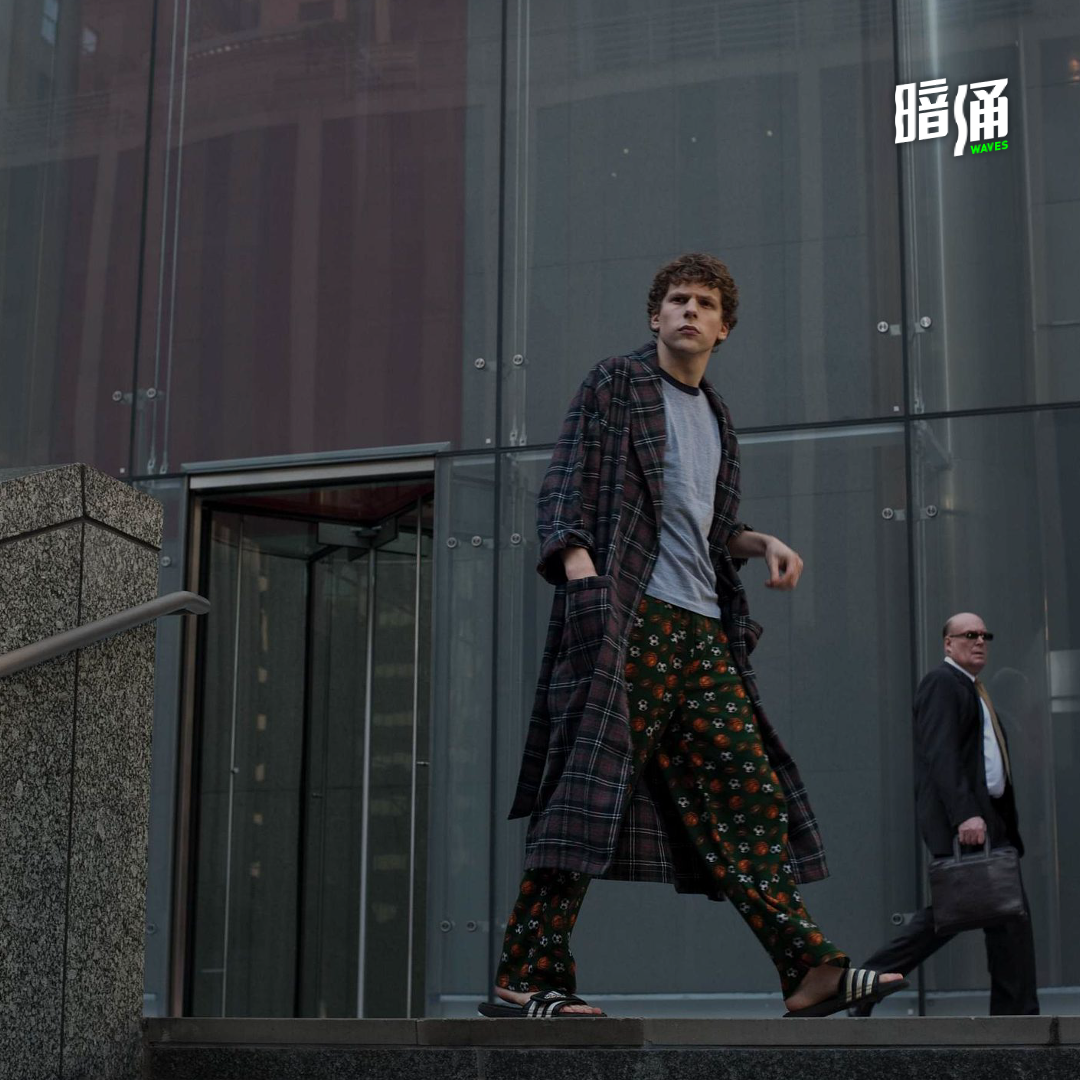
Image source: The Social Network still
Recommended Reading

Where the Money Flows, Where People Rise and Fall