Joy Capital's Erhai Liu: Venture Capital Amid Paradigm Shifts
The core of "paradigm shift" is recognizing the opportunities and challenges that exist within change.
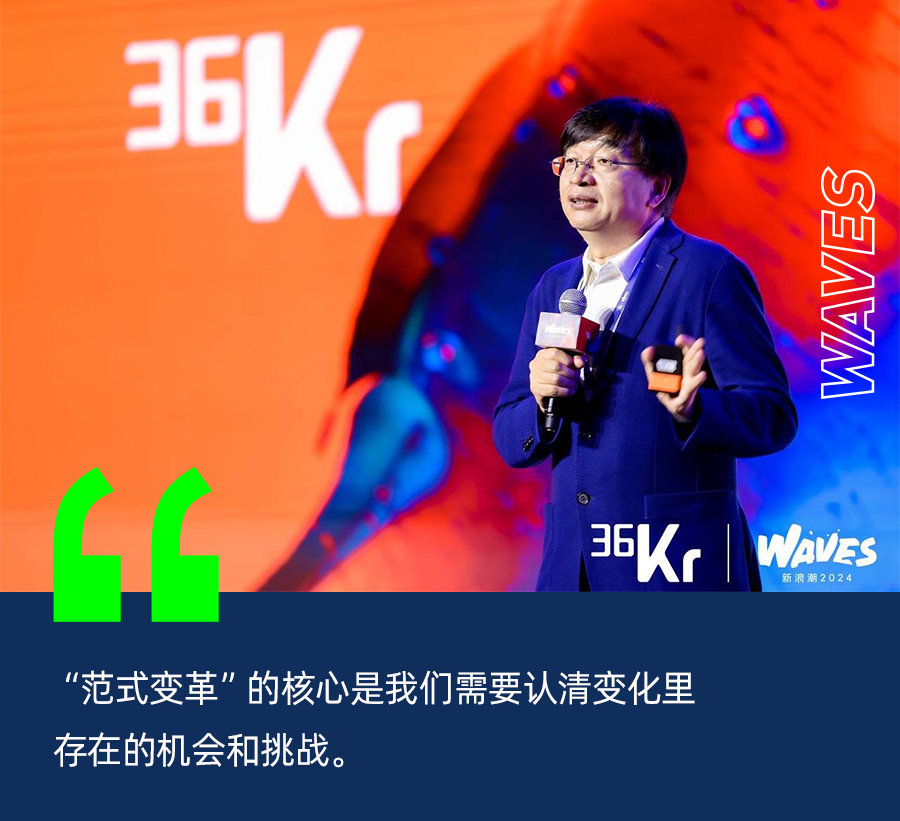
On June 14–15, 36Kr's WAVES 2024 conference took place at Cangku, Langyuan Station in Beijing. WAVES means exactly what it suggests — a snapshot of young people today who dare to dream and create. With the theme "Don't Look Back, Look Ahead," the gathering brought together not only heavyweights from China's venture capital and investment world, but also young scholars, scientists, entrepreneurs, and creators from diverse backgrounds to discuss the defining questions of our era. The conference focused on four pillars: Ideal and Reality, Technology and Humanities, Exploration and Depth, and Tradition and Transformation — each addressing hot topics on young people's minds. They say life is a wilderness, but in practice it feels more like the sea — sometimes calm and shimmering, other times roiled by towering waves. The Waver attendees weren't drifting with the current; they were powering through the surf on their own strength. As a business media company that grew up alongside the VC industry, 36Kr has always explored boundaries and glimpsed the future alongside that young blood. At this summit, we focused on venture capital but didn't stop there — we shared perspectives with people from different fields and talked about the future with people of different ages, co-creating a VC party across diverse scenarios and crafting a unique audio-visual feast for the business world. Erhai Liu, Founding and Managing Partner of Joy Capital, delivered a keynote speech titled Venture Capital in an Era of Paradigm Shifts.

The full speech follows:
I'm delighted to be here at the 36Kr WAVES conference. The topic I'd like to share is Venture Capital in an Era of Paradigm Shifts.
Today, the venture capital industry is undergoing profound changes, particularly at the level of underlying logic. The core of "paradigm shift" is recognizing what opportunities and challenges exist within these changes. We can understand the transformations reshaping venture capital through four dimensions: society (urbanization, Globalization 3.0, ultra-high-value-for-money consumption), macro (geopolitics, policy and regulation, capital markets, climate change consensus), technology/infrastructure/models (bilateral reconstruction, AIGC, AIoT and robotics, AR/VR), and industry (automotive and new energy, digital healthcare and wellness, food technology and consumption). Surrounding these four dimensions are cyclical or structural evolutions. Some speakers have declared that the primary market is dead — a bold prediction that nonetheless reflects certain realities. A major problem VC faces right now stems from inventory effects: some projects have been hit by policy and regulatory changes; some were made during the last high-valuation cycle and are now struggling as market conditions have shifted; and some companies face listing difficulties due to adjusted IPO rules.
Yet this evolution also contains many positive developments: from "internet platforms" to "AIGC"; from near-zero marginal costs to "heavy asset" industries like automotive and new energy; new infrastructure reshaping the global economy; and "born global" companies driving Globalization 3.0.
The best-performing, highest-market-cap stocks in the U.S. today basically fall into three groups: the platforms — Apple, Amazon, and Facebook; new energy vehicles represented by Tesla; and the AI resurgence represented by Microsoft and NVIDIA. Comparing this to past market leaders, we can see the shift from "platforms" to a broader range of themes.
Over the past decade or so, U.S. VCs — and to some extent Chinese VCs — focused primarily on opportunities where marginal costs approached zero. From platform economics to SaaS to AI, this has been the consistent thread. China is now showing a very different trajectory, especially in the diversification of investment themes: new energy, semiconductors, new materials, new consumption, and more. This shift is making Chinese investment far more varied.

AI Will Ultimately Become New Infrastructure
Mobile internet, mobile payments, AIoT and cloud computing, logistics, and smart manufacturing constitute a new generation of infrastructure that is restructuring economies worldwide. Infrastructure is universal, secure, reliable, and economical — once established, its impact is massive. Infrastructure is not the same as new technology. A cutting-edge technology may attract considerable media attention in its early days, but making a real economic impact requires going through necessary stages.
We believe AI will ultimately become new infrastructure. AI is currently growing rapidly as a new technology, but it has not yet generated significant economic aggregate value. Once it becomes infrastructure, it will enter the economic cycle and restructure the economy. This restructuring will take a "bilateral" form: product/service applications on one side, user operations on the other. There are many examples of this — Luckin Coffee, which we invested in at Series A, has become China's largest coffee chain. In 2023, the company reached 16,000 stores, surpassing Starbucks China, with annual revenue of RMB 24.9 billion, up 87% year-over-year. This growth was possible because Luckin excels at leveraging digital infrastructure, strengthening its supply chain while simultaneously managing its user base, reconstructing both sides into a new and distinct value system.
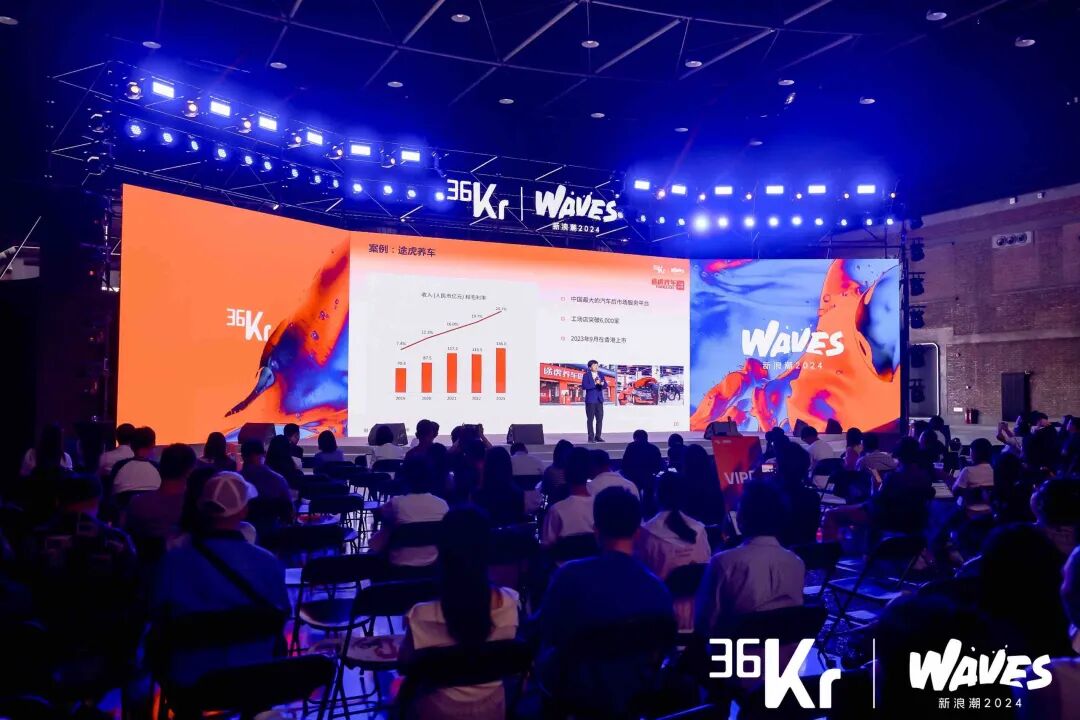
Tuhu Car Maintenance, which listed in Hong Kong last year, has become China's largest automotive aftermarket service platform. In 2023, it achieved RMB 13.6 billion in revenue and RMB 480 million in profit — its revenue equaling the combined total of the industry's second through fifth players. Tuhu also combines user operations with vertical supply chain integration and product-user matching, with data underlying everything. We're going to see more and more companies like this.

"Born Global" Driving Globalization 3.0
We're also seeing globalization unfold rapidly — where we once said "the world is flat," now it's about caring for local stakeholders. Where production was once outsourced, now we have new digital infrastructure. Where shareholder interests came first, now ESG is emphasized. Where we once had large multinational corporations, today we have companies that are "born global" — global from day one.
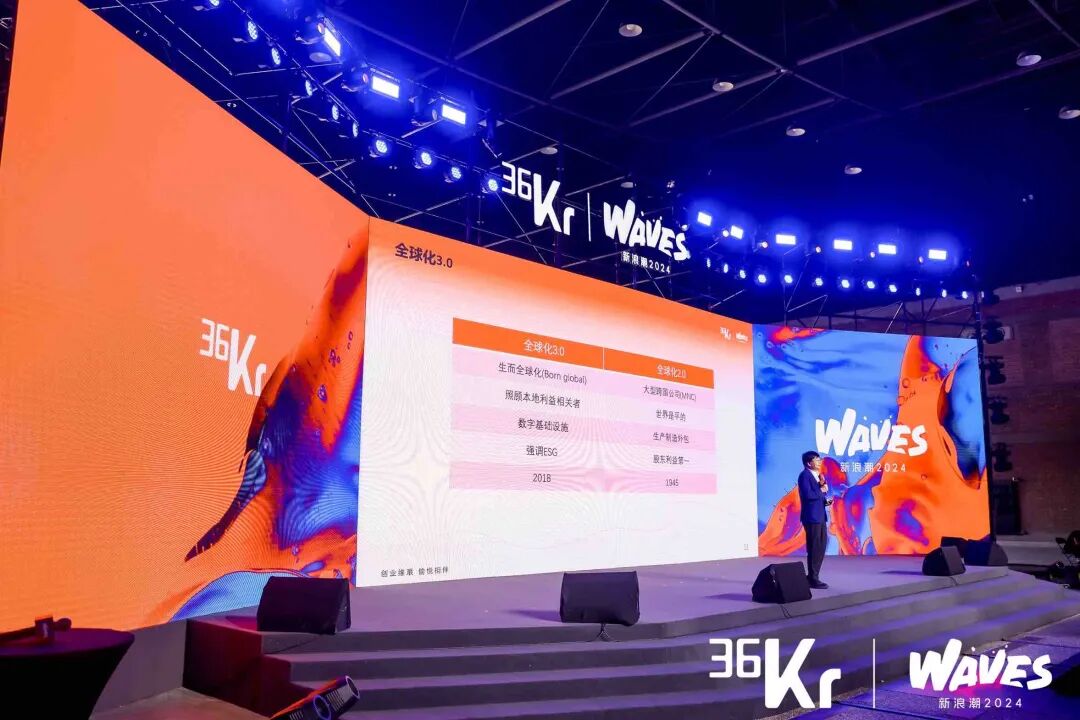
The foundation of "born global" is digital infrastructure. Digital infrastructure has made remote work and global collaboration routine, greatly enhancing business portability. Global social networks and advertising platforms — Google, Facebook, and TikTok, among others — enable companies to use digital marketing to reach users worldwide. Digitized and intelligentized maritime, air, and rail transport are more efficient and reliable. Data intelligence and continuous connectivity allow companies to discover and adapt to changing customer needs faster.
Second, supply chain, manufacturing, and talent are particularly important to "born global." China has strong competitive advantages in many emerging industries: automotive, new energy, IoT, e-commerce, logistics, payments, gaming, and community platforms. We've built complete, efficient product manufacturing and supply chains. Large numbers of high-quality R&D engineers provide a solid foundation for innovation.
The third foundation is consensus on climate change. This consensus has also driven rapid development in the new energy vehicle industry. In 2023, China's NEV penetration rate reached 31.6%, with autonomous/assisted driving becoming standard in mid- to high-end vehicles, in turn driving rapid growth in core components like LiDAR and dimmable glass. Battery efficiency keeps improving, and new battery types keep emerging. Additionally, re-electrification is unlocking new industrial opportunities. Hydrogen energy is forming a new industry. Changes on both the generation and consumption sides will further drive profound transformation in power systems across generation, grid, load, and storage.
Fourth is our community of entrepreneurs. Entrepreneurial culture is deeply rooted in Chinese culture — anyone in investing has felt this profoundly. Over the past two decades, China has produced a remarkable number of globally influential startups. International students provide rich talent reserves for being born global. And accumulated experience working at overseas multinationals has lowered the barriers to entrepreneurship abroad.
Let me share a few "born global" companies from our portfolio.
AQARA (Lumi) is a whole-home smart technology company that has built strong strategic partnerships with Apple, Google, Amazon, Samsung, and LG. Now over 50% of its revenue comes from overseas — showing that a fast-growing company can succeed not just domestically but quickly make its mark globally.
Meishi is the largest logistics company for China–Latin America trade, providing not only domestic warehousing, first-mile logistics, and trunk line services, but also continuously strengthening customs clearance, last-mile delivery, and local warehousing in Latin America — pushing Chinese manufacturing out into the world and providing comprehensive logistics solutions for cross-border expansion. We invested in this company three years ago and have watched it grow rapidly. Last year was the inaugural year for e-commerce in Latin America, and the entire sector is growing fast.
LEMMO is an electric bicycle company founded by Mobike's former chief designer. It's a German brand, but R&D is in China and manufacturing is in Poland. It currently sells in Europe and will expand globally. They didn't spend years building up in China before expanding overseas — they configured resources globally from day one.
Looking at history, we can reference how Japan resolved trade disputes in the last century, particularly through overseas direct investment and technology exports. These approaches offer very important lessons for China today. The current new energy vehicle dispute between China and Europe may need to be addressed through technology investment and transfer, caring for local stakeholders, and then cooperation. This is also an important basis for our "born global" thesis.
We look forward to China, after ten to twenty years of effort, producing a large crop of globally minded entrepreneurs like Akio Morita and Tadashi Yanai, just as Japan did. A wave of Chinese global brands like NIO and DJI is already emerging in large numbers, and we believe they will achieve rapid development in the "born global" tide.
Today I've shared with you venture capital in an era of paradigm shifts. The current problems mainly stem from inventory effects. VC should take today's capital market as its premise for investing — we can still survive and thrive, and in fact entry prices have come down. The paradigm shifts mainly include: from "internet platforms" to "AIGC"; from near-zero marginal costs to "heavy asset" industries like automotive and new energy; new infrastructure reshaping the global economy; and "born global" driving Globalization 3.0.
Thank you all.
Image source | WAVES 2024 event
Layout | Yao Nan