The Only Funding Round Mixue Bingcheng Ever Took: The Fortune of Being Chosen
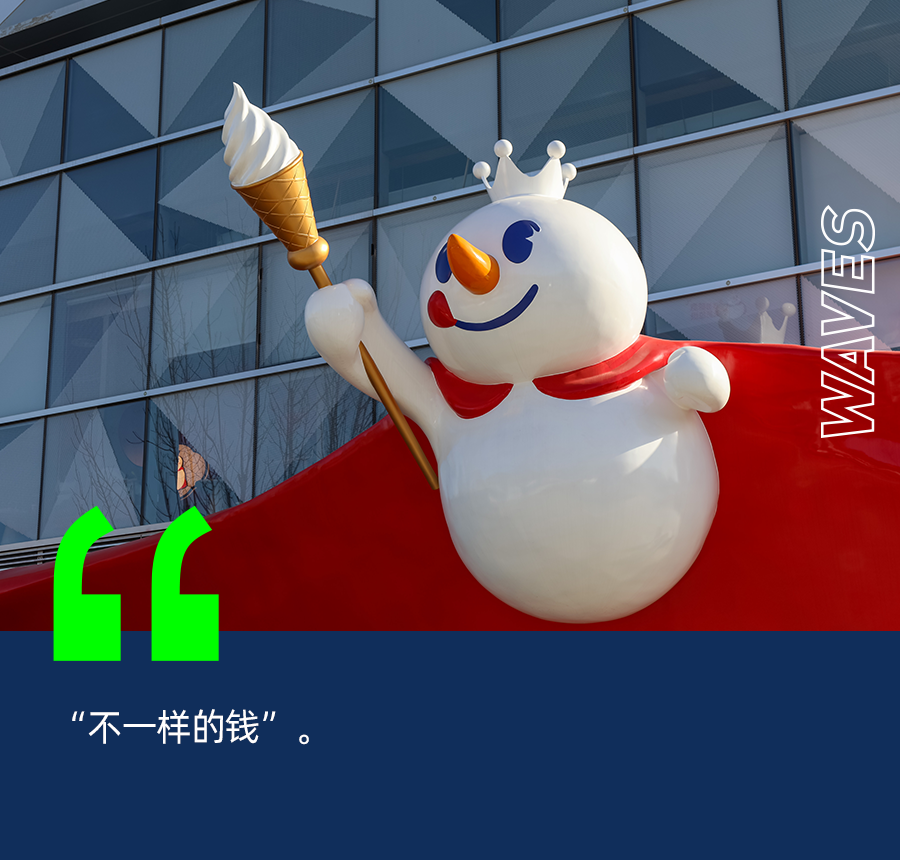
"Different Money"
By Jiaxiang Shi
Edited by Zhiyan Chen

Mixue Bingcheng's path to going public took four years. From its first filing with the Shenzhen Stock Exchange in 2022, to pivoting to Hong Kong more than a year later, then refiling at the start of this year — it finally listed in Hong Kong today, with its market cap crossing 100 billion yuan at the open.
Over its 28-year history, China's largest freshly-made tea chain had raised only one round of funding before its IPO: the roughly 2 billion yuan round in December 2020 from Hillhouse Capital, Meituan Longzhu, and CPE Source Capital, widely seen as a pre-IPO round. At the time, this was interpreted as a capital restructuring move ahead of listing.
Back then, Mixue Bingcheng was not the most dazzling name in the capital markets. The biggest star was Heytea, valued at 60 billion yuan. Mixue, with its 10,000 stores, was valued roughly on par with Chayan Yuese, which had only a few hundred locations.
This was still the "internet consumer" era. The dominant narrative held that "every category proven out by traditional retail deserves to be rebuilt with internet methodology." The wave of heavily capitalized new-style tea drinks was a product of this moment.
Take Nayuki, the pioneer of the premium route, which created the "one tea, one bakery" store format, stubbornly refused franchising, spent two months training each employee, and sold fruit teas for 30 yuan a cup. Or Heytea, which attracted a 100 million yuan co-lead from He Boquan and IDG as early as 2016, and even drew Coatue — a firm focused on TMT — at the peak of the frenzy, its valuation reaching an unprecedented 60 billion yuan.
But in the second half of 2021, the new consumer dream shattered. Many internet investment theses were disproven in the consumer arena. Brands that had excelled at traffic and marketing began learning from traditional industry giants how to keep their feet on the ground. Investors, coming to their senses, started systematically hunting for targets like Mixue Bingcheng — companies with solid net profits and stable growth.
They quickly hit a wall. Why would cash-rich "old world" businesses accept outside funding? Keep in mind, Mixue Bingcheng's 2021 net profit was 1.9 billion yuan — roughly equivalent to the size of its sole funding round. Or, with valuations already inflated to billions or astronomical levels, did the math still work? "The investable window was that short. If you didn't get in before the valuation explosion, it became hard to pull the trigger," one consumer investor summarized.
According to An Yong Waves, numerous consumer investors tried to seize that one opportunity to invest in Mixue Bingcheng, but nearly all returned empty-handed. One consumer investor, recounting his misses in the tea sector, mentioned Mixue Bingcheng first — then immediately added, "Of course, Mixue was impossible to get into."
This aligns with a long-standing view: a fundamentally sound consumer goods company genuinely doesn't need outside money. They generate stable cash flow on their own. This is the defining feature that sets consumer companies apart from internet and tech firms.
Yet Mixue Bingcheng still curated its capital circle before sprinting to the public markets: Hillhouse Capital, Meituan Longzhu, CPE Source Capital.
Clearly, in this brief financing story, the amount of capital or valuation was not the point. What Mixue Bingcheng genuinely needed were partners with specific knowledge, experience, and methodologies for the challenges of sustained growth ahead.
For instance, Meituan Longzhu's parent Meituan has natural channel connections with offline tea retail, while CPE Source Capital has years of accumulated expertise in consumer and chain industries.
But why did Mixue Bingcheng select Hillhouse from among the many generalist investment firms?
As is well known, Hillhouse had invested in and deeply participated in the transformations of companies like Blue Moon and Belle, and counts many investors with industrial rather than purely financial backgrounds. Figures like Gan Jiawei, Shen Haoyu, and — in recent headlines — Chen Wenyuan, formerly PepsiCo's Asia-Pacific CEO, who just joined Hillhouse. These are people with no shortage of real-world business experience.
There's also Hillhouse's repeatedly validated post-investment services. Unlike leading firms with a dollar-VC posture, Hillhouse has genuinely rolled up its sleeves for companies like Belle, Topsports, Miniso, and Bestore — building out digital processes and membership systems.
According to An Yong Waves, Mixue Bingcheng specifically requested that Hillhouse founding partner Li Liang serve as director, precisely because of Li's experience at Belle — after taking control of Belle in 2017, Hillhouse led the construction of a new retail platform, drove e-commerce and datafication, and connected Belle with data partnerships with Tencent New Retail, Horizon Robotics, and other Hillhouse portfolio companies.
The subsequent story exceeded expectations. One Hillhouse consumer investor who participated in early due diligence and investment decisions for Mixue Bingcheng — Zhang Yuan — even joined Mixue as CFO in early 2023. This was not the first such personnel movement between Hillhouse and its portfolio. Similar "talent flows" have occurred in cases like Gaoji Medicine, MiniMax, and Youzan.
Additionally, Mixue Bingcheng established partnerships with Hillhouse-invested new materials company Element Drive, digital supplier Qunhe Technology, and others. This can be seen as a real-world example of the "barbell theory" Hillhouse frequently cites — with technology innovation on one end and physical industry on the other, combining the two so that technological innovation serves实体 enterprises.
For Hillhouse, which went in hard on new consumer between 2018 and 2021, it didn't stop at landing "flavor of the month" names like Peet's, Heytea, Harmay, and Perfect Diary. It kept pushing into the unfamiliar territory of下沉 markets. This proactive identification and proactive approach was also key to its ability to invest in Mixue Bingcheng.
A person close to Hillhouse revealed that when consumer markets around 2019 were saturated with discussions of consumption upgrading, Pinduoduo's rise made Hillhouse realize the vastness of "下沉 markets" and that "a major value of the internet lies in price democratization."
They thus fanned out into third- and fourth-tier cities, discovering Mixue Bingcheng — then with just over 4,000 stores, plain store decor and product aesthetics, drawing little attention.
Precisely for this reason, only investors who don't see themselves as mere financial institutions could invest in a traditional consumer brand built on实业. Or rather, for companies and industries where "capital is no longer the most critical element," "having different money" ceases to be mere marketing speak and becomes a matter of survival.
Three years ago, as the consumer market frantically chased traffic, investors likely wouldn't have imagined that the player with the last laugh would be "Snow King" — squeezing profits from the supply chain, earning a few mao per cup, with barriers and scale expanding in tandem.
An entrepreneur of similar age once asked Zhang Hongfu how he managed to open thousands of stores — and why he only opened about a dozen in the first year. Zhang told them, "You're too lucky. It took us ten years to open our first store."
In a sense, the Mixue Bingcheng story stands in opposition to the entire venture capital market: not relying on funding to scale, not depending on traffic to drive sales. Its current glory precisely proves the essence of the consumer industry: the most极致 supply chain and products that satisfy consumers.
For "Snow King," which dreams of "opening 1 million stores," the IPO is merely a footnote along the journey. Its territory is about to expand from 11 overseas countries to the entire world.
Image source: IC Photo