Monolith Raises $488 Million in New Funding
Assets under management exceed 10 billion RMB.
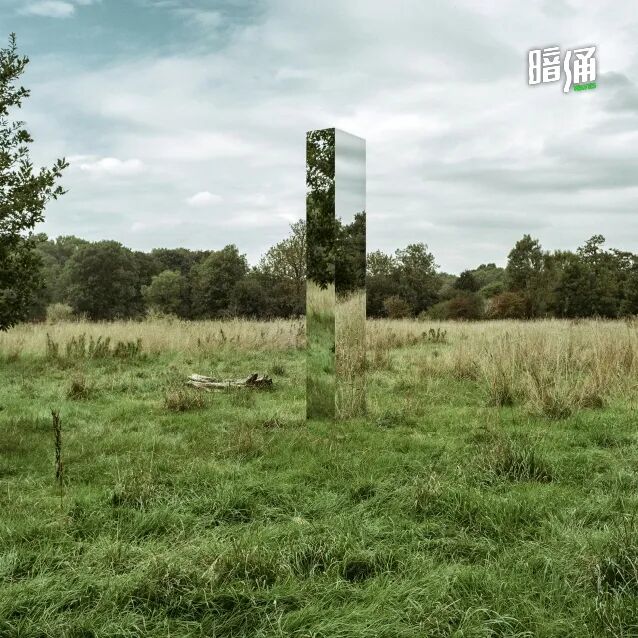
"AUM exceeds 10 billion RMB." Text by Muxin Xu
Edited by Zhiyan Chen

"An Yong Waves" has learned that Monolith recently held the final close on its USD VC Fund II and RMB VC Fund I, with a combined size of $488 million. Together with its current hedge fund assets, total AUM has surpassed 10 billion RMB.
Today also happens to be Monolith's fourth anniversary. As one of the most closely watched next-generation GPs, Xi Cao and his team reached a new milestone in just over 1,400 days.
According to sources, both the USD and RMB fundraises received subscription interest totaling roughly $630 million — about 160% of the initial target. Monolith ultimately chose a path of "disciplined expansion." Going forward, the two new funds will continue to focus on early-stage AI-related projects, covering AI applications, model infrastructure, and hardware/embodied intelligence.
"An Yong Waves" has learned from multiple market sources that Monolith's USD fund went from formal kickoff to final close in less than a month. That it could raise so smoothly in the current environment certainly has most to do with Monolith's own investment performance and capabilities. But regardless, for a primary market that has been frozen for so long — especially for USD fund fundraising — this is welcome news long awaited.
Part 01
A Victory of Strategy
Hot money is pouring into AI. That's obvious. But why has Monolith become an unavoidable choice for USD LPs right now?
The primary reason lies in the "stable deployment" and "precise targeting" that characterize its investment strategy.
Since launching its primary market investments in 2023, Monolith has added portfolio companies nearly every quarter, with concentrated bets along the AI main thread. From large language models (Moonshot AI), AI education (5IRE), intelligent robotics (StarCharge, Lexiang Technology), to compute chips (MetaX) — it has covered virtually every key node in the AI value chain. And Monolith has maintained a high hit rate on star projects: Moonshot AI completed multiple funding rounds within a single year, with its valuation leaping from the hundred-million RMB tier to several billion USD, becoming one of the representative companies of China's new generation of AI startups; MetaX Technology has successfully passed its IPO review, establishing itself as a leading domestic GPU player; StarCharge, Lexiang Technology, and 5IRE all completed multiple post-investment rounds within a year, with valuations rising rapidly.
On the other hand, in more under-the-radar RMB-denominated sectors like AI chips and consumer hardware, Monolith got in early — which also earned it considerable attention from RMB LPs at an early stage.
Two years ago, "An Yong Waves" interviewed Xi Cao. At the time, Moonshot AI was not yet the dazzling star it is today, but he mentioned that he had already connected with Zhilin Yang back when Yang was still at Tsinghua.
AI investing (especially at the application layer) is trending ever earlier. In an era where every investment manager carries a list of science competition winners, "how close to the front lines" and "how attractive to the best founders" have become the core criteria by which LPs judge AI hunters. Clearly, they prefer to entrust their capital to firms that are "already in the arena" and "shooting with precision."
Monolith's current investment team members mostly have hands-on backgrounds in AI, hardware, and product — able not only to understand technical logic but also to quickly assess commercial viability.
This is straightforward logic: rather than betting on an institution fond of grand narratives, better to choose an execution team that has already validated its strategy in operations.
Part 02
The Self-Discipline of a Dark Horse
That Monolith could be the first among next-generation GPs to complete a USD fund raise in 2025 is also intimately tied to its position among USD VC firms.
Recently, "An Yong Waves" has detected signs of USD LPs returning to the China market in its conversations with the market. From their perspective, investing in China-focused USD VC remains an effective way to participate in potential opportunities in Chinese AI, embodied intelligence, and consumer hardware. Given that USD LPs are not blindly increasing their China allocation, limited resources inevitably lead to extreme selectivity in GP choice. Which specific "dark horse" they pick will in turn shape the trajectory of next-generation GPs.
Neither a giant legacy fund nor a brand-new launch, Monolith can be seen as representative of the next generation of mid-sized boutique funds. Based on Monolith's GP backgrounds and recent investment performance, it qualifies as one of the few "dark horses" — even a preferred option for many LPs.
Recently, Preqin updated its 2025 ranking of top-performing global investment firms (vintage 2017–2022). The list ranks the entire private equity fund pool by net IRR within each vintage year, based on the latest data from the most recent five quarters (excluding single-deal funds). In the $250 million–$490 million AUM category, Monolith ranked fourth globally. Xi Cao also personally ranked 39th on Forbes' 2025 Midas List of top global venture capitalists, recognized for his early investments in Kuaishou and Unitree.
Monolith has consistently emphasized its investment philosophy as "the best companies amid the greatest change." Unlike the strategy of flagship large-scale funds, this is the classic approach of a sniper-style, mid-sized fund: core focus on "finding alpha," untethered from macro beta. From an LP perspective, this may be precisely the self-discipline a dark horse ought to have.
This philosophy also echoed the "disciplined expansion" of this fundraise. Monolith is actively avoiding the risk — seen in previous generations of China USD funds — of sacrificing returns for rapid expansion.
Part 03
Becoming a Dual-Currency Fund
What makes this fundraise especially notable is that it marks Monolith's first RMB fund raise.
In the past, Monolith's investment operations relied almost entirely on USD funds. The oversubscription of this RMB VC Fund I signals its crossing from "pure USD" to "dual-currency structure" — becoming another domestic firm to "go dual."
"An Yong Waves" has learned from relevant sources that market-driven capital comprised the majority of LPs in Monolith's debut RMB fund, ensuring strategic autonomy and flexibility.
Monolith established an RMB fund both to seize the golden window for domestic AI entrepreneurs and to cover a broader range of project types. After all, many early-stage projects in China today — particularly in hardware, robotics, and chips — are better suited to RMB fund participation at the initial financing stage.
From this perspective, the RMB fund serves as a necessary complement and division of labor: USD remains focused on globally oriented projects in models and applications, while RMB takes on more of the localized execution in hard tech and embodied intelligence.
In any case, as 2025 nears its close, the primary market is finally showing some new signals.
On one side, overseas capital's attention to Chinese AI assets is warming. On the other, structural adjustments in domestic RMB funds are underway — shifting from broad-based industry coverage to deep tech, from platform-style to boutique. Monolith happens to stand at the intersection of both rhythms.
Still, for a brand-new investment institution, true caliber usually only becomes apparent by the time it raises its third flagship fund. By then, many projects from the first two funds will have shown results, team collaboration will have matured, and whether the GP can independently navigate cycles will have an answer.
So while today, four-year-old Monolith has reached 10 billion RMB in scale, its journey has only just begun.
Image source: Unsplash
Recommended Reading

The flow of capital, the rise and fall of people