A Question That Goes Beyond OpenAI: Who Should Be the Captain of a Tech Company?
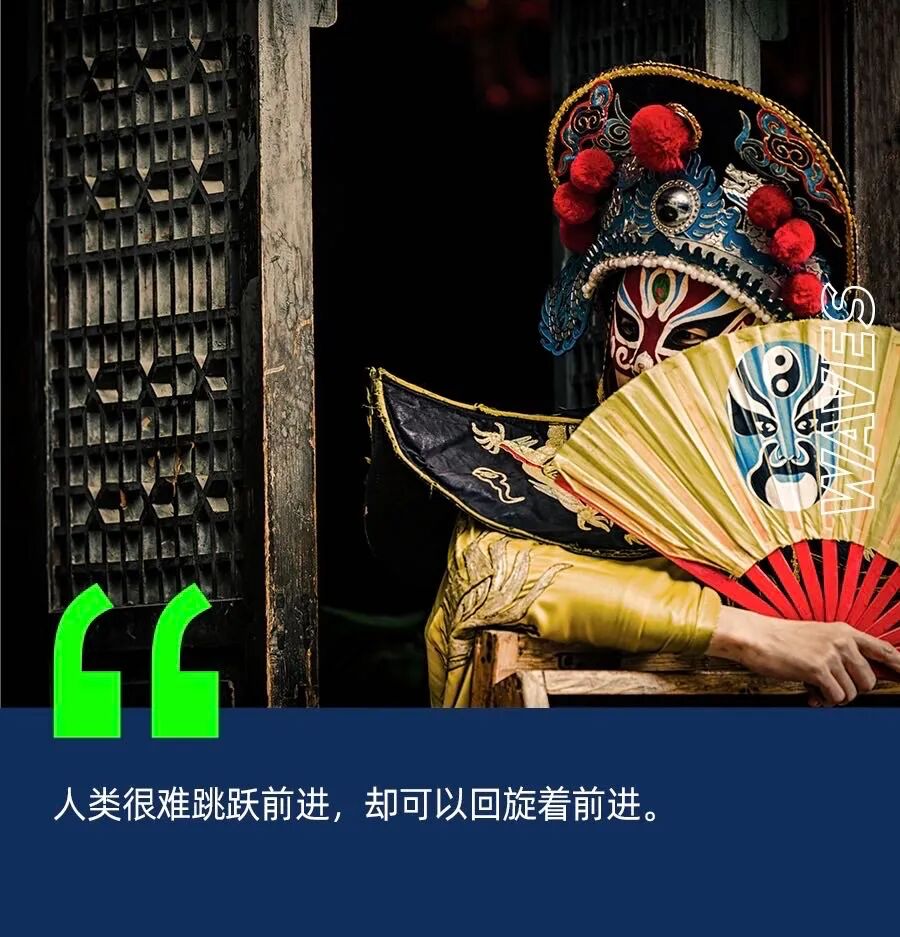
Humans struggle to leap forward, yet we can advance in spirals.
By Yi Zhang and Zhuxi Huang
Edited by Lili Yu

The upheaval at OpenAI's helm is shifting by the hour. The latest twist: Sam and Ilya appear to have shaken hands, sending the story into increasingly bizarre territory. Over the past 36 hours, this drama — which had all the trappings of a coup, a palace intrigue, a big-tech conspiracy — has reached a tentative, stage-managed "reunion." But one thread running through it demands attention: the clash over vision and strategy at a tech company.
The divide inside OpenAI boils down to a clean split. Sam and Greg want to move fast and loud — rapidly seizing territory through GPTs, the GPT Store, and other means to expand commercial dominance. Ilya and his camp would rather slow down, prioritizing AI safety.
By intent, vision, and organizational structure, OpenAI may be the most imaginatively ambitious company in the world right now. The questions it faces nearly transcend the boundaries of commercial civilization, demanding that humanity be examined as a single collective. These are not challenges ordinary tech companies face.
Yet strip away the layers, and one stubborn fact remains: even a company that worships at the altar of brute force, that believes in overwhelming scale, that dreams in the most untethered ways — even it could not escape the fundamental tension. Should OpenAI pursue relentless, rapid commercialization? Or should it prioritize technical purity, depth, and safety?
This can be reframed more sharply: who should actually steer a technology company?
When tech companies confront these strategic divides, the conflict typically points to two pivotal roles behind the curtain: the CEO and the Chief Scientist.
Chief Scientist is a distinctive title born of a new generation of high-tech companies. In our survey of hundreds of Chinese tech startups earlier this year, nearly 20% had established a "Chief Scientist" position. In some cases, the Chief Scientist was the very gravitational center around which the company formed.
The Sam-Ilya rift is, in a sense, a reflection of the tension between a CEO in the top seat and a Chief Scientist at a company like this. Similar to Sam's ouster, at many Chinese tech companies where technical strength dominates, the voice of the technical leader often drowns out the nominal "commercial lead" — and some firms have even neglected to properly establish that commercial lead at all.
This quiet contest between two roles may be the undertone of this feverish saga that few have noticed. And it is also where OpenAI's present most tightly intersects with Chinese tech companies.
The rift between Sam Altman and Ilya Sutskever had been visible for some time.
Altman is the aggressive one. His behavior fits the classic CEO mold: keep OpenAI ahead in the AI race, push hard on technology development and commercial deployment, and secure external funding. As recently as September, he was reportedly seeking $1 billion from SoftBank to develop a hardware device capable of running ChatGPT and similar tools.
Ilya, by contrast, saw this approach as a betrayal of OpenAI's original nonprofit mission. He resisted aggressive commercialization and is acutely sensitive to the dangers AI poses to humanity.
In fact, in early July, OpenAI announced the Superalignment project, co-led by Ilya Sutskever and former alignment team lead Jan Leike, committing 20% of total compute to this new initiative. The goal: solve the core technical challenges of superintelligence alignment within four years, ensuring human control over superintelligent systems — in other words, guaranteeing that future versions of GPT would not harm humanity.
Viewed as a contest between two individuals, Sam Altman's initial ouster clearly demonstrated the immeasurable influence of Chief Scientist Ilya Sutskever. Many speculated that Ilya, as one of six board members controlling OpenAI's nonprofit entity, drove the board to fire Altman, after which Greg Brockman and three senior researchers resigned.
In a sense, this defies imagination. A company's CEO is conventionally the number one, yet at a high-tech company, they can be pushed out by a CTO or Chief Scientist. You could attribute this to OpenAI's idealistic early equity design — Altman himself holds no equity in the company, a virtually unheard-of arrangement. But the outcome reveals something else: "Chief Scientist" was, in fact, the truer seat of power at this AI technology company.
Of course, Sam Altman's counteroffensive proved formidable. His subsequent moves displayed the core skills of an exceptional CEO: masterful marketing and media manipulation, exceptional network connectivity, and fluent communication with capital.
This kind of extraordinary conflict between scientist and CEO is not rare among Chinese tech startups.
At one well-known domestic chip company, a CEO who crossed over from another industry had top-tier fundraising and talent-recruitment abilities, yet still could not prevent the technical star he had hired from turning against him and even attempting to "replace" him.
We also understand that at a synthetic biology startup, the Chief Scientist and CEO eventually parted ways over divergent strategic choices during growth — the scientist left to found another synthetic biology company.
In a sense, the dominant position of a "Chief Scientist" at a tech company often depends on the technological imagination they represent, which is typically the company's core value. And in a company's early days, when the technical advantage is long enough, it tends to win out.
But as the company grows, as products reach broader audiences, the game becomes one of combination — or balance. This is when a CEO with stronger strategic vision, fundraising ability, and a better external communication interface becomes critical.
Of course, most tensions between CEOs and scientists remain grounded in practical questions of "how to monetize and commercialize the technology," rather than OpenAI-scale cases that can trigger existential dread about the fate of human civilization.
And the CEO-Chief Scientist conflict is not unresolvable. At the chip company mentioned above, after a period of struggle, the CEO and technical star achieved a happy ending — no one left, and the old order was restored.
Just before this article went to press, Ilya Sutskever expressed remorse on X, stating he would "do everything I can to reunite the company." In a further twist, 550 of OpenAI's 700-plus employees signed a letter to the board demanding that all current board members resign, a new lead independent director be appointed, and Sam and Greg be reinstated. Otherwise, they would resign to join the new subsidiary Sam was forming under Microsoft.
Most critically, Ilya — the very person who had driven Sam's dismissal — also signed.
Perhaps this is what makes humans endearing. They cannot leap forward, but they can step back, take two steps forward, and advance in spirals.
Image source: IC photo
Layout: Xuemei Guo