OpenAI Interim CEO: AI Harms Could Be Worse Than Nuclear War
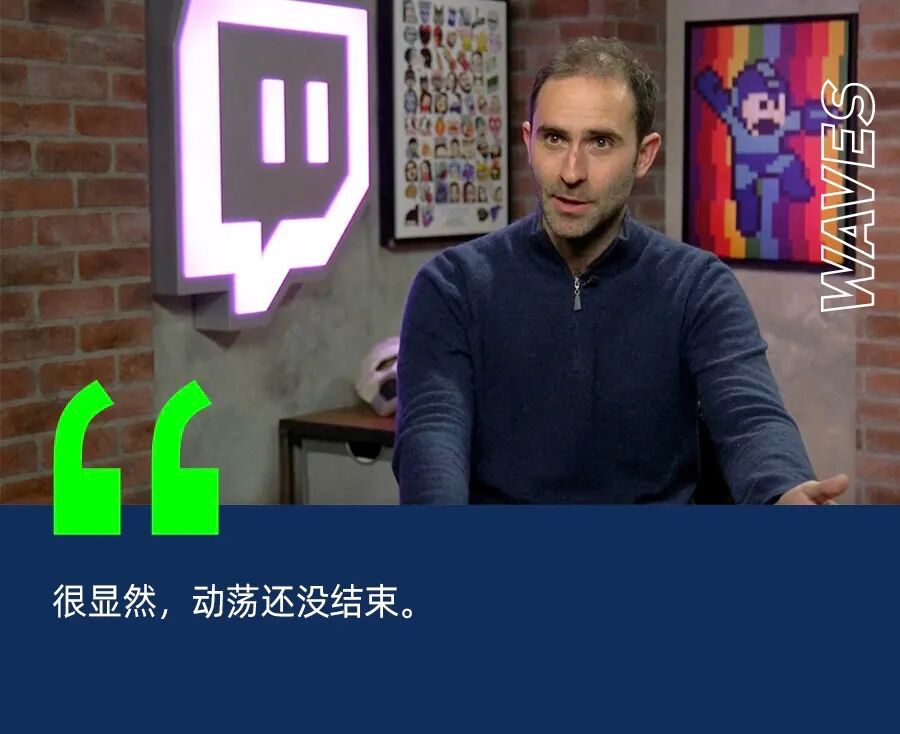
Clearly, the turbulence is far from over.
By Xuemei Guo

Though every word here could change with the next plot twist, we still want to devote some space to a pivotal figure in OpenAI's annual drama: Emmett Shear.
On November 20, OpenAI's board announced that it had hired Emmett Shear, former CEO of Twitch, the game streaming platform owned by Amazon, as its new interim CEO, replacing founder Sam Altman. Soon after, Shear responded on X about why he accepted the temporary appointment. He wrote: "Today I got a call inviting me to consider a once-in-a-lifetime opportunity: to become the interim CEO of OpenAI. After consulting with my family and thinking for a few hours, I accepted. I recently resigned as CEO of Twitch due to the birth of my now 9-month-old son. The time with him has been as meaningful as I imagined, and I was happy to leave that full-time job. I took this job because I believe OpenAI is one of the most important companies currently in existence. When the board shared the situation with me and asked me to take the role, I did not make the decision lightly. Ultimately, I felt that I had a duty to help if I could." Then, seemingly prepared, he addressed the ongoing OpenAI saga: "It's clear that the process and communications around Sam's removal have been handled very badly, which has seriously damaged our trust. I have a three-point plan for the next 30 days." The three-point plan mainly includes: hiring an independent investigator to conduct a thorough review of the entire process and produce a complete report; continuing to speak with as many employees, partners, investors, and customers as possible, taking notes and sharing key takeaways; and reforming the management and leadership team in light of recent departures to make it an effective force for delivering results to customers.
Some foreign media reported that Emmett was chosen because he had successfully founded Twitch, regarded as one of the most successful video platforms in the world. In 2014, Twitch was acquired by Amazon for nearly $1 billion. In February this year, he abruptly announced his resignation as Twitch CEO. Regarding his departure from the company he had spent 16 years with, Emmett's reason was: he wanted to be there when his first child was born. He also used a fairytale-like explanation: "If Twitch ever needs me, I'm always going to be there for it. But at 16 years old, I felt like Twitch was ready to move out of the house and go on an adventure on its own."
In fact, Emmett had previously served as a part-time partner at the venture capital firm Y Combinator (YC). Emmett's connection with YC stemmed from a startup he founded before Justin.tv. In 2005, after graduating from Yale, he and his friend Justin Kan founded a company called Kiko Calendar, but a year later, for various reasons, sold it on eBay. YC had funded the Kiko Calendar project and also provided assistance while Emmett was building Justin.tv. In 2011, Emmett joined YC in a part-time capacity, dedicated to advising startups with origins similar to his own. This aligns to some extent with views expressed by those close to Emmett. Foreign media reported that "Chase, a longtime Twitch spokesperson for StreamElements, described Emmett as 'the perfect person to run OpenAI because he is passionate about working for the benefit of the few.'"
Notably, Sam Altman joined YC around the same time as Emmett. So prior to this, Sam and Emmett had known each other for twelve years and had collaborated for many years.
Another widely cited reason for Emmett's temporary appointment is his demonstrated stance on slowing down AI development. In September this year, on the podcast My First Million, Emmett stated that while he recognized the positive impact of AI development on human society, the probability of AI causing harm was between 3% and 30%. "The downside is pretty bad. It's potentially worse than nuclear war." He mentioned this view multiple times during the program.
This perspective seems to align with the attitudes of some OpenAI board members. According to related media reports, OpenAI co-founder and Chief Scientist Ilya Sutskever also harbors concerns about AI. He has stated that AI could potentially kill humans one day, though this scenario would only become possible around 1,000 years in the future.
"The stability and success of OpenAI is too important to have turmoil like this disrupt them," Emmett said in his latest response.
But clearly, this turmoil is far from over.
Image source | IC photo
Layout | Xuemei Guo