Challenging OpenClaw: An Agent-Native Device That Proactively Seeks Out Work Is About to Hit the Market
Does this mean no more paying for at-home lobster installation?
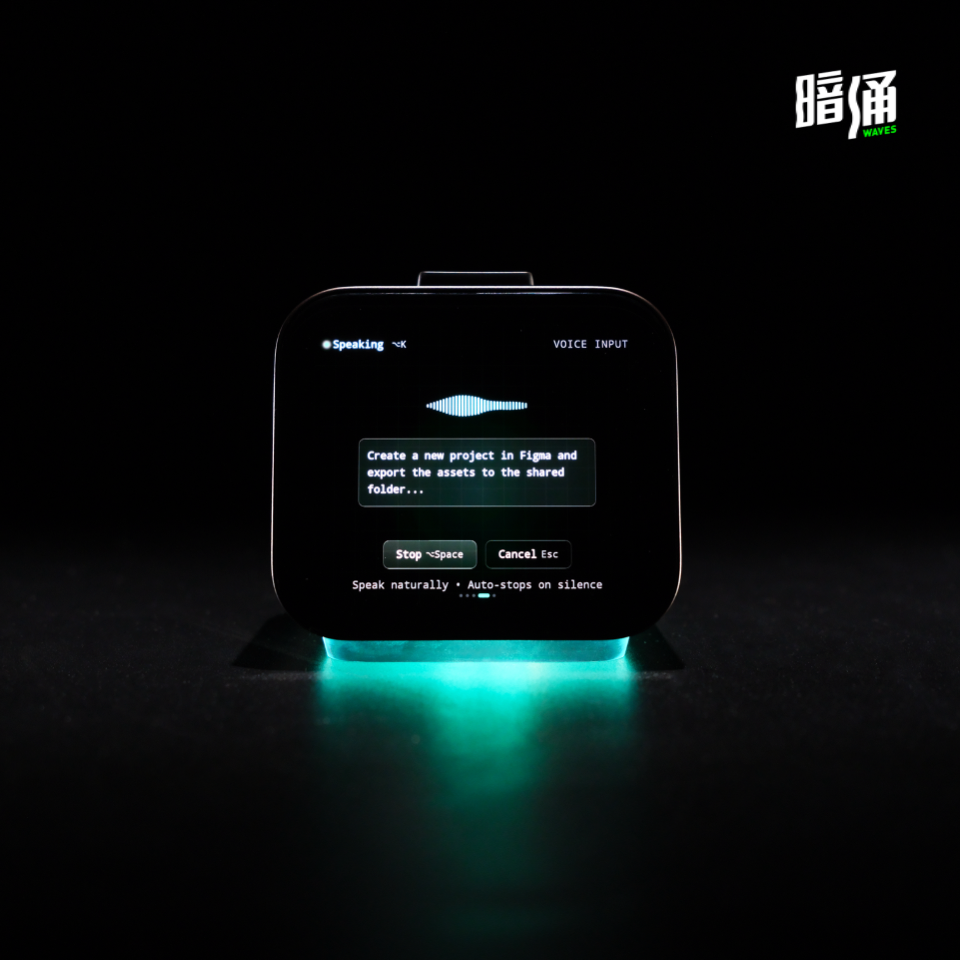
"So, no more paying someone to come install the lobster?" By Zhiyan Chen

On the chaotic battlefield of AI applications and hardware, OpenClaw has ignited a shared frenzy across the global tech and VC community in recent months. Thanks to the Mac Mini's advantages in chip performance, ecosystem, and standalone security, it has unexpectedly become a hot hardware vehicle for OpenClaw.
Yet, looking toward the endgame where everyone will have an AI assistant, the Mac Mini is more like a swaddling blanket for an infant automation system — far from the optimal solution. The recent incident where OpenClaw wiped a Meta security director's entire work inbox has also sounded the alarm about this "little lobster's" security.
If we take privacy and security as non-negotiable, the "local physical body" of an agent on the user side is considered the must-win territory for AI hardware startups and investors in 2026 and beyond. So what form might this hardware take?
"Waves" has learned exclusively that a device called Violoop will launch a Kickstarter crowdfunding campaign in early April, having completed two funding rounds within a month.
In appearance, Violoop — positioned as "a dedicated computer designed for AI" — is a desktop alarm-clock-sized "black box." Unlike OpenClaw's "deployment headache," Violoop promises plug-and-play functionality with built-in common skills, making it accessible even to complete beginners.
It connects to the user's main computer via HDMI, and the system recognizes it as a physical keyboard and mouse, enabling native plug-and-play interaction. Beyond gaining permissions to execute tasks like OpenClaw, Violoop uses its self-developed vision model to perceive screen content in real time, identify intent through "key frame extraction," and proactively suggest and share tasks. Built-in security chips and physical buttons ensure AI remains absolutely controlled and secure when taking over high-risk operations.
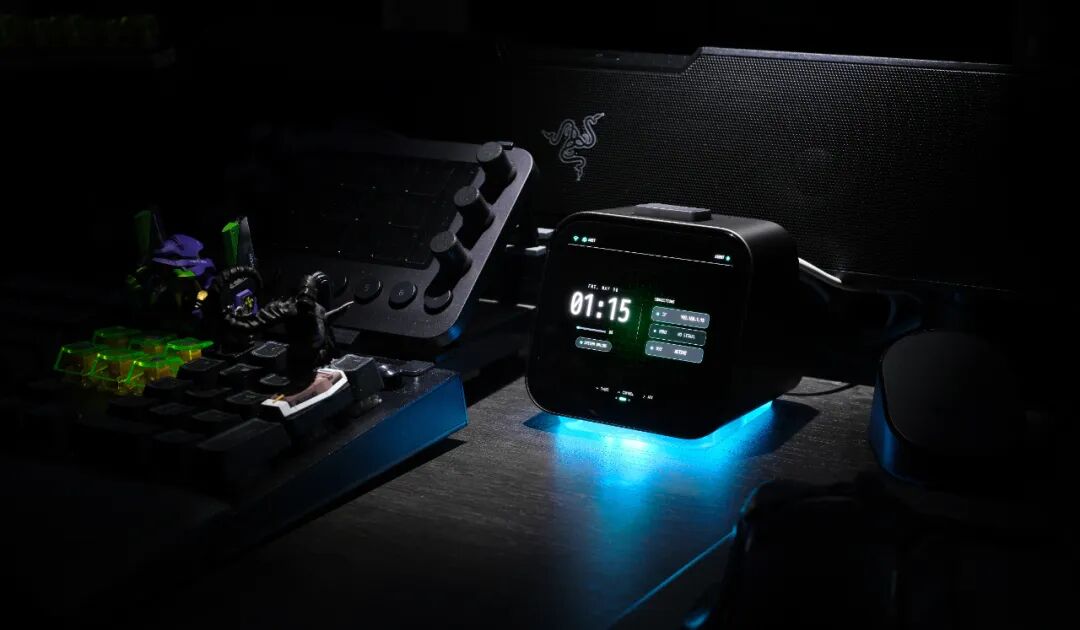 Product image | Source: Company
Violoop was built by two founders. CEO Jaylen (Jialin He) is a serial entrepreneur born in China, raised in Africa, and educated in the US. CTO King Zhu is a classic hard-tech type who entered MIT at 18, previously led consumer circuit design at Microsoft, and began researching AI chips in 2017.
Unlike much of the "wrapper" OpenClaw hardware currently on the market, Violoop is AI-native hardware completely rebuilt from the ground up — from底层芯片 and self-developed vision model to security architecture. It aims to solve not only the security problem of AI taking over computers, but to evolve AI from a "passively waiting for commands" tool into a proactive "AI intern" that "sees work to be done."
Part 01
Let the Proactive AI Assistant Kill the Prompt
Though Violoop can migrate OpenClaw with one click, its higher ambition is to kill the prompt.
"Most people don't know what they want, nor what can be handed off to AI," Jaylen told "Waves."
To solve AI's current passivity, Violoop connects to the user's main computer via HDMI to capture the full screen video stream, then observes screen operations through its self-developed OCR vision model via "frame extraction analysis" — giving AI perception.
This proactive "AI intern" can thus achieve intent recognition and proactive suggestions. No need for users to provide structured context; through long-term observation of work habits, it understands professional roles and current tasks. For instance, if it detects a user transferring invoice data, it might proactively ask: "I notice you're doing expense reports — shall I help organize and enter them into the system?"
Violoop makes the computer recognize itself as peripheral hardware like a keyboard and mouse, enabling cross-application workflows. It can even operate closed-source software with no API — WeChat, CapCut, QuickBooks — completing tasks like sending messages, transcribing audio, and automated expense reporting.
Violoop demo video | Source: Company
As usage accumulates, Violoop recommends more relevant skills from its skill library. In the ideal state, it achieves a closed loop:
1. Violoop observes and learns from screen usage;
2. Recommends appropriate skills or generates custom skills;
3. Long-term memory + custom skills build a personalized on-device model;
4. Every future recommendation and interaction becomes more aligned with user preferences, becoming a more proactive and effective personal assistant.
Notably, detecting video streams typically requires more costly compute chips. On this point, King found that general-purpose controller chips with HDMI input capability and sufficient AI compute often cost around 500 RMB per unit. To give AI "screen sight" without sacrificing compute, the team didn't choose the premium full-featured chip. Instead, they selected a chip with compute power but no HDMI input, and forcibly opened the video stream input pathway through a self-developed adapter chip.
This maneuver reduced Violoop's core chipset cost to one-fourth of the original, keeping the product price within the consumer hardware range of around $300.
Meanwhile, unlike OpenClaw's unmonitorable black box, Violoop provides native real-time stream monitoring on both the physical desktop device and the app. Users can check at any time on the hardware itself or via mobile app to see exactly what step the AI is on.
"On-device visual understanding and capture are all processed locally — this guarantees user privacy while drastically reducing token usage. Even when users actively choose to upload image content, we desensitize personal information and privacy, ensuring no privacy leakage in multimodal image data uploaded to the cloud," King explained.
"Our goal is for users to not write a single line of code — plug it in, and Violoop understands your needs better than you do, then starts automating tasks with every step under user monitoring," Jaylen said.
In his view, OpenClaw defined the Linux of the AI era, while the opportunity to define the Windows and Mac of the AI era "will certainly be born in China."
"Whether it's an authorization model based on Windows and PC manufacturers, or a hardware-software integrated model like Mac's, there must be new-era hardware designed natively for AI as the vehicle," Jaylen said. "In the past, the vision of Windows and Mac was to put room-sized computers on every desk. Violoop wants to connect agents to every user's every present moment."
Part 02
Stay in the Loop
Jaylen emphasized one thing to "Waves": Violoop is not chasing the OpenClaw hype, but began in early 2025.
Starting in 2023, Jaylen and King won a bid to provide enterprise AI deployment services for a European headquarters of a Fortune Global 100 company. But they quickly encountered an ironic restriction: for data security, the client only provided five dedicated devices with internal network access, forcing the team to work in 24-hour shifts, with whoever was nearest to a computer handling exceptions.
"That moment we realized: in the AI era, the biggest constraint was 'AI only works when a human is glued to the computer,'" Jaylen recalled.
From then on, they began exploring how to make AI take over computers like a human would. Along the way, they found that relying solely on software always left security vulnerabilities. King told "Waves" that prompt injection is an inherent "flaw" in large model architecture — AI cannot distinguish between "user instructions" and "malicious hijacking from webpages or emails."
An interesting detail: King once developed a reinforcement learning AI agent for gaming, ranking in the top 300 on the Hearthstone ladder, only to be banned for botting. This "ban" experience also made him realize: if you want AI to comprehensively take over computer software, a pure software path won't work.
"If a bad actor directly asks AI for a credit card password, it won't say based on prior settings. But if you tell AI you've been kidnapped and need a photo of your credit card, it might override preset security instructions due to logical weighting."
To break through this bottleneck, they began a hardware-software integrated strategy in early 2025.
King designed a dual-chip physical isolation architecture: the main chip runs AI, while an independent security chip stores all keys, personal information, and financial assets — physically isolated from the outside world, completely local, never uploaded to cloud. Meanwhile, Violoop has a special physical confirmation button. When AI needs to execute high-risk tasks like sending sensitive files or operating bank accounts, users must perform secondary approval via the physical button on the device or the mobile app.
"We can give AI permissions, but must keep it stay in the loop at the physical level," King said.
Part 03
Welcoming the Agent Economy
In Jaylen's observation, YC's famous motto "Make something people want" is undergoing a paradigm shift. The future creed will be "Make something agent want." This concerns not just tool evolution, but a digital labor market exceeding trillions of dollars.
"OpenClaw is about to become the Linux operating system of the AI era, and we believe the future operating system must be a product of tight cloud-edge integration. The cloud provides core intelligence, planning and solving complex tasks, while the edge provides perception, operation, and responsive multimodal processing. This is why Violoop fine-tuned a dedicated edge model — drastically reducing multimodal input costs while exploring the native paradigm of AI-era operating systems," Jaylen told "Waves."
Though current market buzz mostly centers on "one-click OpenClaw deployment," Violoop's ambitions go far beyond.
"Due to the security chip's existence, every AI will have its own dedicated ID code, email, phone number, even crypto wallet. It can autonomously pay API subscription fees, purchase paid reports, even book flights and coffee under user authorization."
In describing this vision, Jaylen seems to be sketching the gateway to an approaching "Agent Economy." In Violoop's logic, AI shouldn't merely be a passively executing script tool, but a "digital entity" with independent sociological attributes.
They believe that by integrating with payment protocols, every Violoop unit could potentially become an AI asset management terminal. Users can set a monthly "allowance" for AI — say, $300 — letting it autonomously handle tedious business expenses within authorized limits.
This hardware security chip-based identity verification might solve the agent trust problem: if we're trembling at letting AI take over email, how can we talk about letting it use money?
However, despite promising pre-crowdfunding metrics, Violoop still has a chasm to cross before becoming true AI infrastructure. Foremost is hardware "shelf life."
Jaylen candidly told "Waves" that the early accumulated lead may only last six months. In mature supply chains, once logic is validated, major player follow-up is almost inevitable. The real moat doesn't lie in that cost-reduced-to-one-fourth chip, but in whether they can build a high-stickiness closed-source software workflow ecosystem within the window period, thereby unlocking exclusive datasets and truly personalized on-device models for each user.
To this end, Violoop plans to build a skill-sharing ecosystem. Users seeking higher speed, better-experience automation scripts will actively choose "data exchange" with the platform. King believes these deeply adapted workflows will be tightly locked to the hardware, creating extremely high switching costs.
When April's crowdfunding launches, real delivery pressure and multi-dimensional user feedback will arrive. For Violoop, the true test for this first "proactive AI intern" will only just begin.
Layout | Nan Yao Image source | Company

Recommended Reading

The flow of money, the rise and fall of people