Put some people in the metaverse, send others to space
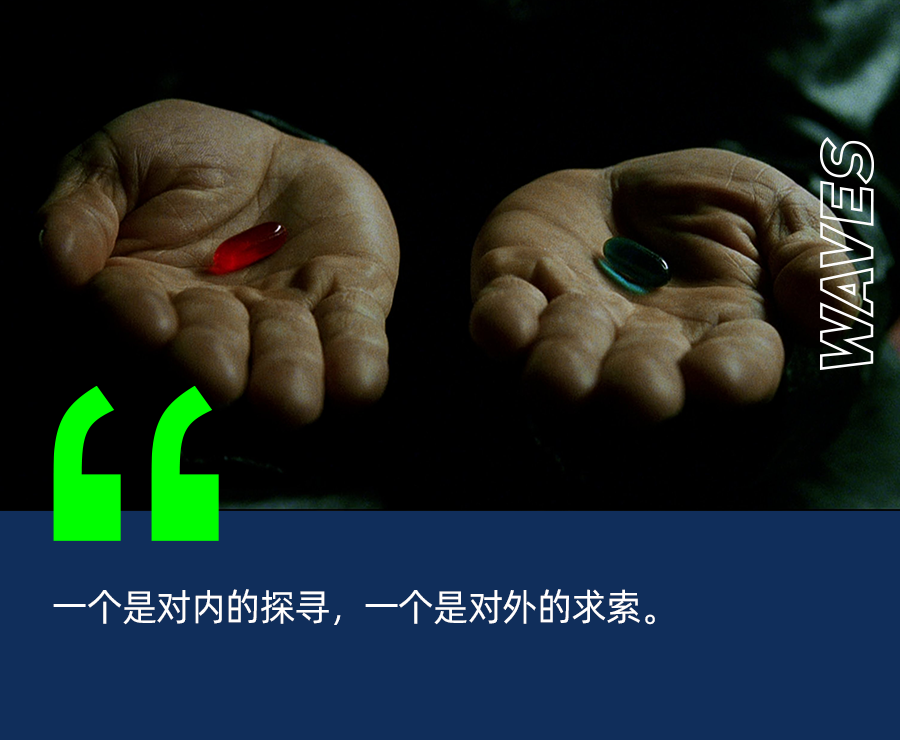
One is an inward journey of self-discovery; the other, an outward quest for what lies beyond.
By Muxin Xu, Qian Ren
Edited by Jing Liu

What is the ultimate meaning of investment?
Different starting points yield different answers. For the primary market, it's about facilitating efficient allocation of capital and assets. For the business world, it's about helping the most promising entrepreneurs accelerate their dreams. And for the world at large, to borrow the words of financial historian Sebastian Mallaby: a method, a way of thinking, and a philosophy that drives social progress — "a powerful engine for advancing society."
Today we want to discuss two seemingly unrelated topics in the primary market: commercial space and the metaverse. The reason for pairing them is that they represent two poles of the same thread, pointing toward what investment means for humanity: one is an outward quest, the other an inward exploration.
Liu Cixin once expressed that humanity faces two paths: one outward, toward the sea of stars; one inward, toward virtual reality. He even went so far as to declare, unreservedly: "The metaverse will lead humanity down a dead end." To some, this may sound excessive and remote. But as a science fiction writer, Liu's concern is that if humanity becomes too engrossed in virtual worlds rather than pursuing the true sea of stars, it would amount to a kind of degeneration.
On the commercial front, both commercial space and the metaverse have seen some developments: SpaceX is reportedly raising an autumn round, with some intermediaries quoting valuations as high as $160 billion; and the seemingly cooled metaverse actually reached five times last year's total funding this year, with Luo Yonghao's Thin Red Line also securing a substantial round.
Over the past six months, Anyong Waves has examined many concrete issues in investment and business — family offices, cross-border investment, S-funds, and more. Going forward, we hope to explore some abstract but necessary questions with our readers: What is the ultimate meaning of investment?
This topic may be too vast — so vast that the "correct answer" may not even matter. So let our discussion begin with a comparison between the metaverse and commercial space.

Commercial Space: Infinite Promise, But Still Early Days in China
Is SpaceX raising again?
Despite Elon Musk's denial, a document titled "SpaceX Financing Prospectus" has circulated widely in Chinese investment circles over the past month or two. One intermediary claims SpaceX is launching a global autumn round targeting nearly $1 billion, at a post-money valuation of $160 billion. As with every previous SpaceX valuation jump, this represents roughly a 28% increase from its summer round.
Strictly speaking, whether or not SpaceX is actually raising, Chinese investors face significant hurdles participating due to the sensitivity of the space industry. However, sources who have worked on such deals told Anyong Waves that it's not entirely impossible through layered structures — some in China's venture circle have previously invested as individuals. But because of the costs of structuring transactions and intermediary markups, SpaceX valuations circulating in China typically run slightly above official figures — the $160 billion quoted above, for instance, is roughly $10 billion higher than the expected official valuation.
In November, Anyong Waves sat in on an online roadshow. When the host, speaking in a southern Chinese-accented Mandarin, was asked whether the autumn round valuation was too high, he instantly raised his voice: "Every SpaceX round has been considered crazily overvalued, but Musk has proven countless times that his boasts come true!" Approximately 250 people were online simultaneously. Though their identities were difficult to verify, the live interactions suggested most possessed considerable wealth and basic business acumen.
Sources close to the transaction told us that older business owners in the Pearl River Delta region and various company bosses are particularly interested in SpaceX. Some made significant money on Tesla stock, some perhaps didn't, "but they're all Musk fans."
What may be even more compelling than Tesla is that SpaceX isn't just the biggest, brightest fruit in global commercial space — it's Musk's "next world-changing company." Barring surprises, SpaceX will spin off Starlink for IPO in three to four years. And the financing prospectus goes so far as to claim that "the future existence of Starlink and Starship will drive SpaceX's valuation to over $2 trillion."
Commercial space is indeed a field that captures the imagination. China's space program began in 1956. In April 1970, China's first carrier rocket, the Long March 1, successfully launched the Dong Fang Hong 1 satellite, making China the fifth country to independently develop and launch an artificial satellite. For decades, China's space program operated under a state-led system. It wasn't until 2015, when private enterprises and capital were encouraged to enter, that a wave of rocket manufacturing and launch companies emerged — LandSpace, Galactic Energy, i-Space, Deep Blue Aerospace, Orienspace — alongside satellite-related firms like Chang Guang Satellite, Spacety, and Aerospace Dynamics.
Broadly speaking, commercial space can be divided into five directions: launch vehicles, artificial satellites, manned spaceflight, deep space exploration, and space stations. On Tianyancha, space-related enterprises now number some 37,000, peaking in 2021 — that year saw over 3,800 newly registered companies.
Data provided by K2VC shows that over the past decade, 70% of global VC investment in commercial space has gone to rocket manufacturing and launch, even though the actual market for rockets is much smaller than for satellites. The logic isn't hard to grasp: rockets are the most critical infrastructure and vehicle for the space industry. Without sufficient rockets, all other space services remain castles in the air.
Wu Chao, director at Zhencheng Investment, began studying SpaceX's rise in 2015 and has since examined virtually every commercial space company in China. He told Anyong Waves that the biggest change in the industry over the past two years is the accumulation of more milestones — substantive progress in core applications at numerous companies. For instance, Galactic Energy's Ceres-1 successfully launched this year, achieving the first consecutive successful launches by a private rocket and the first commercial multi-satellite launch; Deep Blue Aerospace completed three consecutive liquid rocket recovery tests at ten-meter, hundred-meter, and kilometer scales — the first successful engineered liquid rocket recovery test by a space startup outside the United States, another milestone.
Yang Feng, founder of Spacety, believes that while the gap is currently large, Chinese commercial space companies differ from SpaceX in neither path nor technical capability. "In terms of path, SpaceX also started with light rockets, then moved to medium, then heavy, then crewed spacecraft, cargo spacecraft, communications satellites, remote sensing satellites. Given more time technically, Chinese commercial space has a chance to catch up." He acknowledges that China doesn't lack rockets — it lacks low-cost rockets. But what's most lacking are commercial small satellites that can be mass-produced cheaply and quickly, like Starlink and Starshield, while still providing efficient service.
Consider that the Falcon 9 was the first successfully recovered rocket in human space history. Over the past year, it set a world record for most satellites launched in a single mission — 143. According to Bloomberg, among these 143 satellites, the first 200kg satellite cost only $1 million, with subsequent satellites at just $5,000 per kilogram.
The rapid development of commercial space has also spawned emerging application fields, sparking demand for more scenarios: space burial and space tourism have achieved preliminary commercialization, while rocket intercontinental freight and space mining have entered the design and development phase. Looking further ahead, intercontinental transportation, Mars colonization, and space bases may become future directions for human space technology.
Zhu Sixing, partner at Shanchuang Capital, told Anyong Waves that rocket competition is ultimately a competition of costs, and SpaceX's success lies in continuously innovating to drive down space launch costs. One illustration: currently, launching a 100kg small satellite in China costs tens of millions of RMB, but SpaceX has brought this below $1 million. Musk has even vowed to reduce launch costs to $10 per kilogram within five years.
In the view of Han Yan, founding partner of Xin Capital, SpaceX's existence can to some extent push China's space industry toward marketization. He notes that state-owned companies have focused primarily on large satellites and major space projects for over 60 years, with many mission models but few satellite batches — mainly customized development lacking mass production experience. This creates opportunities for numerous startups to participate at different points in the chain. "Especially for the competition over low- and medium-Earth orbit space and frequency bands, which determines who can seize the initiative to obtain more orbital resources — from a cost and efficiency perspective, commercialization is the only viable path."
Stepping back from commercial considerations, space is of course a new arena for great power rivalry. As a strategic high ground and new frontier, space is regarded as a critical domain for national security and development.
Investment must also have a "patriotic" dimension. One investor told Anyong Waves that historically, each major space development cycle has been roughly three times a fund's exit cycle — meaning investors here aren't betting solely on financial returns, but on national competitiveness and national morale. This is destined to be an extraordinarily long-term endeavor.
For humanity, the reason the space world remains so captivating is that it represents true incremental physical space. When asked why he explores outer space and seeks to make humanity multi-planetary, Musk answered: When the day comes that the sun's expansion renders Earth uninhabitable, we can board spacecraft and fly to new homes. If humanity can inhabit other planets, it means we have met one of the conditions to pass through the great filter of the universe — we will become interstellar citizens, and human civilization will continue.
But this is undoubtedly a long road. Judging from private space progress alone, in 2021's 52 Chinese rocket launches, the only three failures all came from private rocket companies.
"From the current state of space development, becoming interstellar citizens is indeed a long journey," says Wu Chao of Zhencheng Investment. It's been 53 years since humans last set foot on another celestial body. But if we treat space as a business, as long as stable, successful rocket launches can be achieved, there's opportunity to begin commercialization and generate revenue. If rocket reusability can be achieved, there's a high probability of profitability.

The Metaverse: No Vintage Year, Only Waiting for the Biggest Player
Yet Musk, who firmly believes humanity's future lies on Mars, has been scathing about another possible future: the metaverse.
At the end of 2021, in an interview with The Babylon Bee, Musk called the "metaverse" nothing more than a marketing buzzword, insisting humanity couldn't retreat into it. His evidence: "Nobody wants a screen strapped to their face all day."
Musk was referring to VR/AR devices. At this point in time, widely perceived as the entry point to the metaverse, VR had already been around for six full years since its initial hype.
This moment also marked the end of the so-called "metaverse year." That year, Roblox went public as the first metaverse stock; Zuckerberg dramatically rebranded "Facebook" as "Meta"; and Microsoft, NVIDIA, Tencent, and other major domestic and international tech companies announced their entry into the metaverse. One simple statistic captures the exuberance of that year's metaverse track: In 2021, China's metaverse funding totaled 4.06 billion RMB — 2.5 times the sum of the previous decade's funding.
Behind the exuberance may lie a kind of fear. Baidu VP Ma Jie believes the metaverse will become a second space for humanity parallel to the real world, while gaming VC partner Matthew Ball has predicted the metaverse as the continuation of mobile internet — no ambitious person wants to risk missing "the next mobile internet."
In fact, "metaverse" functions like a container holding countless concepts. In the view of Wang Bingxing, investment director at Matrix Partners China, the metaverse investment landscape divides into four layers: the top layer is the application layer consumers can directly experience, including games, entertainment apps, virtual events, virtual human applications, and smart city systems; the middle layer is the systems layer, focused on 3D/AI content production and engines; below that is AR/VR hardware devices and their upstream core components, including chips, optics, imaging, algorithms, and modules. The bottom layer consists of the most fundamental technologies: computer graphics, computer vision, NLP, cloud computing, and related fields.
At the end of this primary market capital flow chart lies people's ultimate vision for the metaverse: a fully 3D, virtual-physical integrated universe that extends far beyond entertainment.
Every investor interviewed by Anyong Waves would invariably mention one film: Free Guy. In it, the protagonist simply puts on a lightweight pair of glasses, and medical packs, money, and weapons appear on the steps before him. Tao Fangbo, founder of Mindverse, explained to Anyong Waves that when most people refer to "metaverse," they mean a purely virtual world. In his vision, however, much of the future metaverse will remain integrated with the physical world, and many independent digital beings will coexist with humans.
This is markedly different from VR's initial hype in 2015. Wang Bingxing had intensively tracked VR projects in 2016 and 2017. "Those two years the industry had just emerged, with many bubbles. Without complete upstream and downstream hardware-software ecosystem support, the industry quickly declined. The hardest years were 2018 and 2019 — hardly any new companies emerged, and existing ones generally survived on B2B projects to maintain revenue and continued R&D investment. The upstream and downstream advanced while waiting for a B2C inflection point."
Founder profiles have also shifted. Deng Xiaoxiao of Yinxingu Capital told us: Previously, founders came predominantly from soft tech backgrounds like consumer, social, and media. This year, however, professionals from hard tech fields including aerospace, automotive, and 3C electronics have joined the metaverse track. Just recently, an augmented reality project with military background approached Yinxingu.
Startup development has also become more diverse: stages have shifted later, and projects now move from pure ideas to concrete user bases and product support. But objectively speaking, compared to commercial space, the metaverse remains a sector with lower barriers to entry, more bubbles, and greater chaos. As another Yinxingu investment manager, Zhong Weicheng, put it: Early this year, too many people slapped "metaverse" on their pitch decks to paint grand visions and scam money, causing genuinely valuable metaverse projects to be drowned in a market of uneven quality.
But as one of the few remaining investable sectors for dollar funds, the metaverse remains hot in this year's funding market: In just three quarters of 2022, domestic metaverse investment and financing totaled 22.84 billion RMB — more than five times last year's amount. The most attention-grabbing project may be Luo Yonghao's AR startup Thin Red Line, which announced a $50 million angel round just a month ago, aiming to build the next-generation personal computing platform after smartphones. This further illustrates how founders who previously worked on mobile hardware are now moving toward more futuristic AR hardware.
But alongside the landmark Meta layoffs, Wang Bingxing analyzes that in today's market context, rational sentiment absolutely dominates investor psychology — unlike the somewhat blind optimism when the sector first emerged. This may stem from more investors calmly considering their investment horizons, and whether the absolutely early-stage metaverse track can actually deliver financial returns.
The biggest difference from commercial space is that the metaverse has yet to see its Musk and SpaceX. Among investors contacted by Anyong Waves, there was unanimous agreement in comparing its development stage to the transition from internet to mobile internet. For investors, getting into this track is an end in itself — because no one knows when the "vintage year" will arrive, so they must maintain gradual attention, waiting for the biggest player to emerge.

The Real, The Remote
If we follow Liu Cixin's warning: "If humanity achieves a highly realistic VR world before advancing to a spacefaring civilization, it will be a disaster." Then commercial space and the metaverse are fundamentally opposed. If we take a longer view, Liu Cixin's concerns may be understandable.
In interviews, after analogizing the metaverse to Free Guy, investors and entrepreneurs would invariably add: "Not like Ready Player One." Compared to Free Guy's AR applications and virtual-physical integration, the world depicted in the latter is far more terrifying — there, people's dwellings are dystopian tower blocks, yet they don't need larger living spaces anyway, because everyone has VR glasses that let them immerse themselves in the massive virtual game "Oasis," and perhaps never need to wake up.
What investors left unsaid aligns with people's fear of "reality being abandoned." The question of "cruel truth versus beautiful illusion, which should humanity choose" was already debated in The Matrix — most people don't want to be "brains in vats."
Among investors contacted by Anyong Waves, most appeared at a loss when facing this question. Perhaps for them, it's simply too remote — "too ultimate," "too grand." This is reasonable enough: for most investors and GPs, the primary consideration is whether projects can exit smoothly within limited fund lifespans. Investors told us that LPs entrust them with money not because they see visions and futures two or three decades out, but because they invest in what can be realized within 5-10 years. Envisioning the metaverse is one thing; investing in it is quite another.
Yet fear and hope for the future are questions each of us has pondered.
To some extent, the metaverse differs in no essential way from any form of spiritual pleasure in human history. Compared to opium or gaming, the metaverse merely iterates the experience through more advanced technology. Perhaps only new opium replaces old opium. Ma Jie, creator of the metaverse product "Xirang," also points out: Based on web 1.0 and 2.0 experience, social and gaming will indeed be the most profitable parts of the metaverse era, which is why more companies are focusing their布局 there.
But virtual products aren't solely "opium." Mindverse, for instance,致力于 enabling more people to generate personalized digital beings that can accompany them and provide services — increasing efficiency while alleviating modern loneliness. In his interview with Anyong Waves, founder Tao Fangbo emphasized that the future isn't a binary either-or choice. As we actively embrace the possibility of exploring outer space, XR and other technologies will also support this exploration.
One illustration: In May, NASA launched the MarsXR Challenge,致力于 simulating scenarios humans might encounter in early Mars exploration within virtual environments, allowing researchers and astronauts to prepare for Mars landing in advance. But such integration seems to remain at the "hypothetical" stage. One basis for Hua Da Gene CEO Yin Ye's skepticism of the metaverse is: Only the physical world contains "true randomness," while current metaverse algorithms can only achieve "pseudo-randomness" — which would become an obstacle for scientific research conducted within it.
On the commercial level, the metaverse remains an early-stage track, so its combination with commercial space is still at the conceptual stage. Currently, what limits metaverse development is primarily on the technical side, and no killer app like "Oasis" has emerged to break down barriers between the various layers of the complex metaverse landscape.
But if we consider the ultimate meaning of investment, the metaverse and commercial space have already diverged. Yinxingu Capital is tracking both sectors simultaneously, with industry sharing sessions themed "inward to the metaverse, outward to commercial space." But the difference between them lies not only in spatial direction — their consumer demographics are worlds apart.
One objective fact is that investment can only ever serve a portion of humanity; investment stratification corresponds to user stratification. Money flowing to consumer healthcare develops cancer treatments costing 1.2 million per dose. Money flowing to play-to-earn gaming models allows people to earn a living "breaking bricks." Money flowing to commercial space enables some to do infrastructure work on Mars and supports space tourism for others.
The Wall Street Journal once called venture capital "humanity's last hope." Investment can sometimes become a powerful engine driving social progress: Without SpaceX raising at its terrifying pace of $2 billion per year, Starship, carrying humanity's dreams of Mars colonization, might never be realized.
But we sometimes worry about a capital-shaped future and its uncontrollability. After all, those enjoying pleasure in the metaverse and those flying toward outer space may be two different kinds of people.
Image source: Still from The Matrix
Layout by Yunxiao Guo