Qiming Venture Partners' Kan Chen: There's an Optimal Path for Chinese Innovative Drugs Going Global
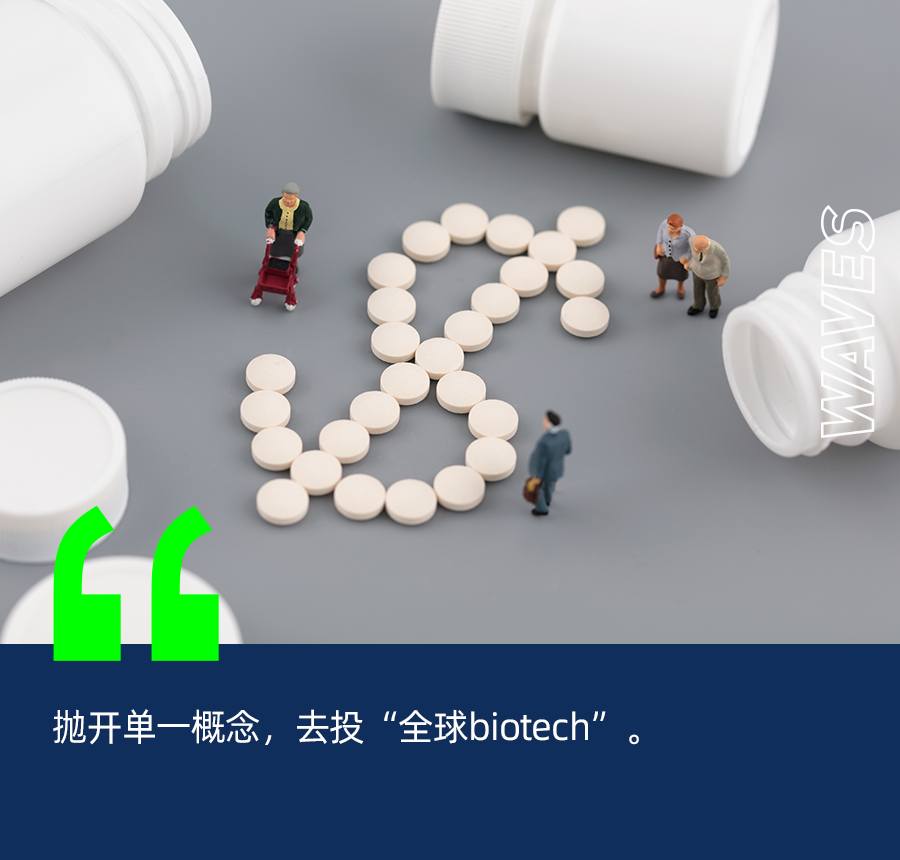
Move beyond single concepts and invest in "global biotech."
In "Dark Currents Waves" (An Yong Waves)'s "A Globalization Guide for Chinese Founders" published last month, one direction for Chinese companies going global deserves separate discussion: innovative drug exports. According to incomplete statistics, domestic companies completed nearly 70 innovative drug license-out transactions in 2023, with disclosed total deal value exceeding $40 billion. Notably, the number of domestic innovative drug license-out deals surpassed license-in deals for the first time in 2023 — a landmark event. In 2024, the globalization journey of domestic drugs and pharmaceutical companies will continue.
By Ren Qian

Less than two months into 2024, disclosed BD deal totals from just three companies — Insilico Medicine, Allorion Therapeutics, and MediLink Therapeutics — have already surpassed $3 billion. By both volume and scale, innovative drug exports from China have reached a multi-year peak. These companies share a common investor: Qiming Venture Partners.
Qiming Venture Partners' track record in healthcare is well-established: in recent years, even mega funds with deep pockets have rarely landed super deals in innovative drugs, yet Qiming Venture Partners can claim at least two. Even amid the industry-wide investment downturn in 2023, Qiming Venture Partners made 47 healthcare investments.
But one more intriguing data point: since 2022, Qiming Venture Partners portfolio companies have completed 19 cross-border BD transactions, with total value exceeding $8.5 billion.
On innovative drug globalization, Dr. Kan Chen, Partner at Qiming Venture Partners, clearly has authority to speak. Early in his career, he worked as a senior scientist in oncology drug R&D at Johnson & Johnson in the US. Before that, he led a team at Hengrui Medicine. His academic path ran from Fudan University undergraduate through postdoctoral training at Harvard Medical School. Late last year, "Dark Currents Waves" spoke with Chen, who shared some distinctive observations on innovative drug exports.
The following are excerpts from Chen Kan's views:
-
Now is the best time for Chinese healthcare companies to begin globalizing. The driving force: Chinese-developed compounds have reached global quality standards, and patent filings from China account for an increasingly large global share — the threshold has been crossed.
-
Chinese innovative drug R&D has progressed from crawling to walking to running, now approaching a leadership position. Meanwhile, major international pharmaceutical companies face LOE (Loss of Exclusivity), with numerous patents expiring — creating a gap of hundreds of billions of dollars or more. Filling this gap requires massive product in-licensing, which represents an exceptional opportunity for Chinese pharmaceutical companies.
-
The pharmaceutical sector is unlikely to see an Open AI-style sweep of an entire industry, because pharma is heavily regulated. Even if technology comparable to Open AI emerged, it would need 5-7 years to demonstrate safety and efficacy before achieving transformative growth.
-
The largest market for innovative drugs is the US. Increasingly, companies we invest in are no longer simply Chinese biotechs or American biotechs — they are global biotechs.
-
The optimal path: conduct early-stage R&D and proof-of-concept in China, then move to late-stage clinical trials in the US, ultimately obtaining FDA approval to directly enter the US market. The critical element is clinical trial design — capable of accommodating differences between Chinese and US clinical practice, with local teams to execute trials smoothly.
-
Qiming Venture Partners' logic for investing in innovative drugs has always been clear: identify products that definitively solve clinical problems and are globally competitive, deeply matching R&D capabilities with market needs. Whether at the industry or investment level, true value should come from a drug product's potential to benefit patients.
-
We've found that both in China and the US, many companies are "holding a hammer looking for nails" — possessing impressive technology but unable to find applicable scenarios. Even with advanced technology, such situations make investment decisions difficult.
-
The first wave of "low-hanging fruit" in innovative drugs has been picked. Over longer time horizons, more innovative Chinese technologies — such as first-in-class targets — may represent the next opportunity. These new targets developed leveraging China's clinical resources could eventually generate substantial global impact.
-
Technologies that truly achieve commercial returns often lag the most cutting-edge technology by three to five steps. Science advances continuously, but translation requires considerable time.
-
When I first entered the industry, I mostly invested in returnees — preferably older and more experienced. Now I prefer to find founders with strong educational backgrounds, some overseas work experience, and well-rounded capabilities. Many have grown up within domestic biotechs or traditional pharmaceutical companies, are homegrown, and tend to be relatively younger.
Image source: IC photo