Research Reports on Store Visits and Guandan Mania: A Brutal Tale of Contemporary Finance Circles
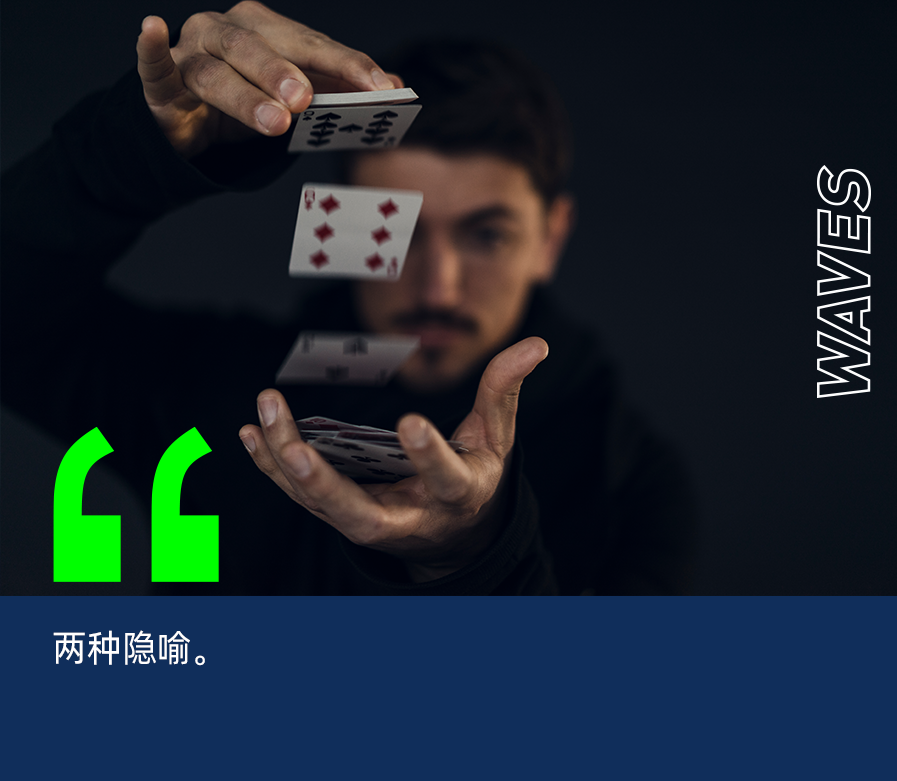
Two metaphors.
By Qian Ren
Edited by Jing Liu

Bar-hopping and guandan — two offline pastimes that have existed for years — are becoming the new buzzwords in business circles.
First came a 15-page PowerPoint from CITIC Securities titled An Incomplete Guide to Beijing's Speakeasies. It meticulously mapped out the distribution of Beijing's quiet bars, curated recommendations, warnings, and wine-selection strategies. Even more eye-catching was China Europe International Business School (CEIBS)'s Shanghai Bar-Hopping Guide, which thoughtfully categorized venues into Hidden Bars, Sober Bars, and tips for choosing spots and ordering drinks.
Despite their seemingly "unserious" nature, these guides adopted some conventions of institutional research reports — opening, for instance, with solemn introductions to industry conditions.
It seems like a case of the Baader-Meinhof phenomenon. Suddenly, investment bank-produced guides to dressing well, weight management, workplace wellness, sleep hygiene, and photography tips were flooding social media apps and WeChat Moments.
CITIC Securities was quick to clarify: "This document was not an official research report from our institute. It was written by an individual employee."
A former CITIC Securities staffer told An Yong Waves that the "talent pool" has long been a tradition at the firm — new investment banking hires must present on a topic to help colleagues get to know them. "It used to be about productivity hacks or recent industry observations. This year, people started going off-script."
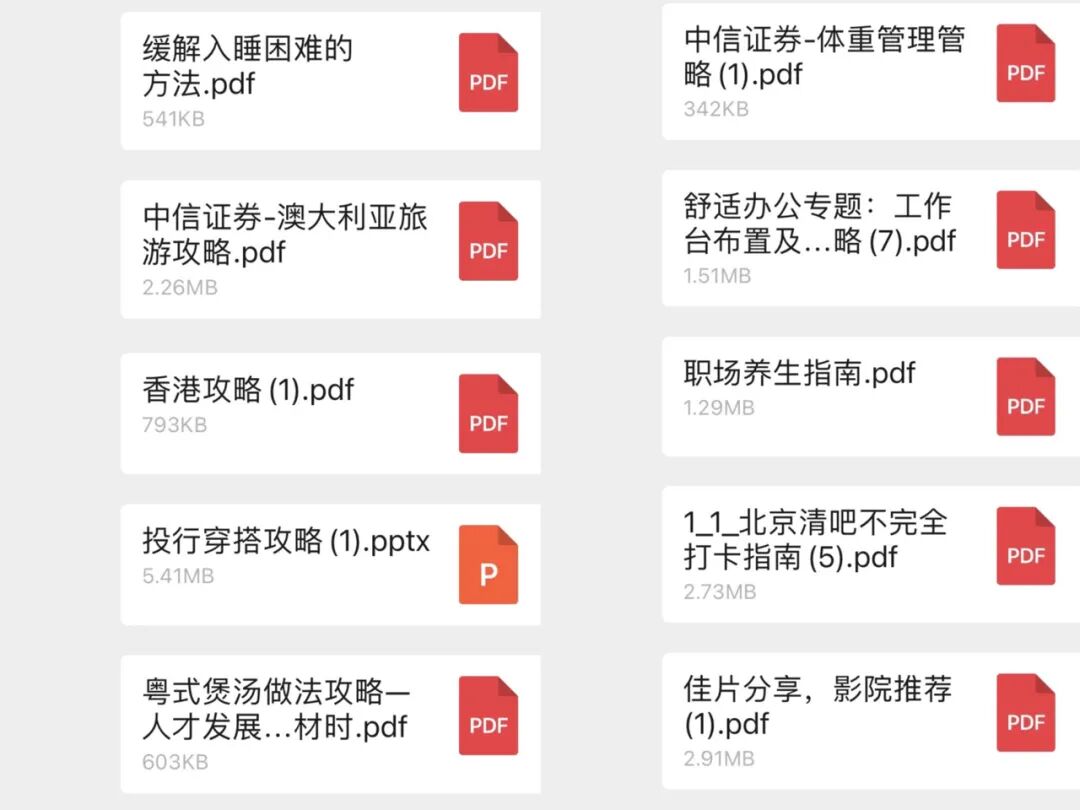 Screenshot of a PDF received on WeChat
Beyond simple misinformation, the public misreading of these documents stems from how perfectly they channel a prevailing mood across investment and finance: a self-deprecating flirtation with "lying flat."
Thirty-five securities firms recently disclosed their 2022 earnings. Eighteen saw net profits plunge over 50%. Of the four that posted losses, three had swung from profit to loss. The industry is facing unprecedented challenges — layoffs, downsizing, and cost-cutting have become its defining vocabulary. In recent weeks, foreign investment banks led by Goldman Sachs have successively dropped mandates for multiple Hong Kong IPOs, including Keep, which listed just yesterday.
The primary market tells a similar story. According to CVSource data, Chinese VC/PE deal count in the first half of 2023 fell 29.8% year-on-year to 3,978 transactions. Driving factors include continued market cooling, difficult exits, and cautious deployment. Amid the shift from dollar to RMB funds and from financial sponsors to strategic investors, state capital has grown more dominant while smaller firms find themselves increasingly squeezed.
The widely circulated guandan strategy guides carry even sharper contemporary resonance.
The game originated in northern Jiangsu. Simply put, guandan uses two decks — 108 cards total, comprising 104 standard playing cards plus four jokers — and pits four players in two teams against each other. Before play begins, participants determine the order of moves based on card rank, suit, and point value. By combining different card formations and coordinating with their partner, a team wins when both players empty their hands first. In 2017, China's General Administration of Sport designated it an official competitive mind sport.
Earlier this year, a rumored "PV guandan gathering" organized by Soochow Securities drew attention, Zheshang Securities held an employee guandan tournament, and various "compiled guandan textbooks" proliferated online. These instructional materials are remarkably thorough, covering strategy and card formations, control techniques, opponent analysis, and tactical planning.
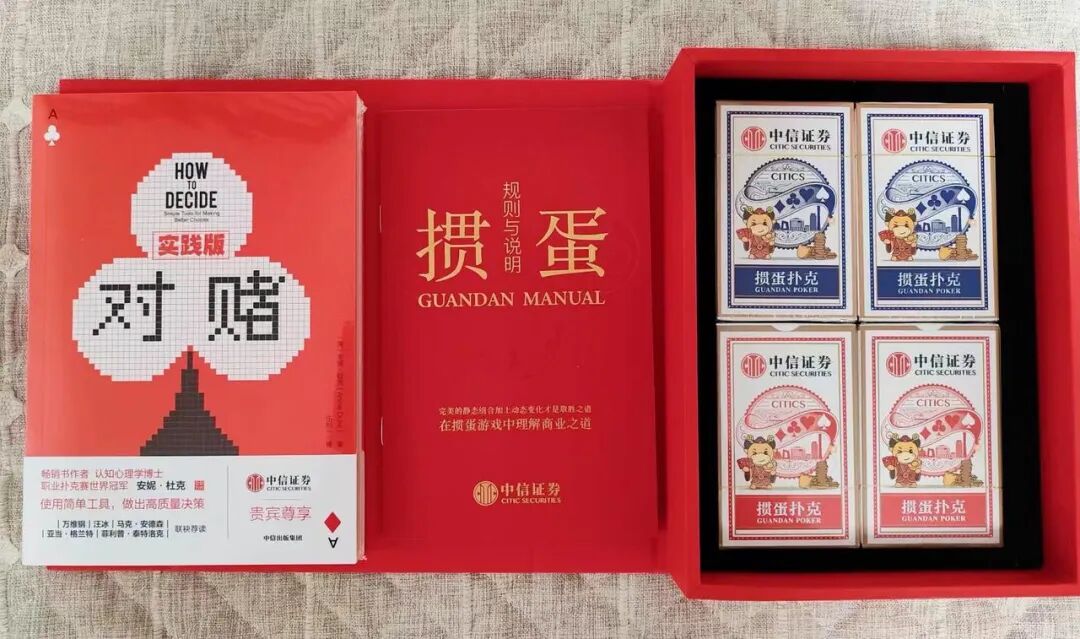 Guandan tutorial package
For years, Texas Hold'em has served as the social currency of finance, especially in the primary market. But as China's capital markets have grown increasingly localized, guandan is displacing it.
One investor publicly recounted his first business trip to Jiangsu: after ordering, his local host suggested "a few rounds of guandan." When he expected a plate of egg-filled flatbread to arrive, two decks of cards appeared instead.
The rise of guandan correlates with the geographic distribution of primary market capital. It points toward regions dense with limited partners — the Yangtze River Delta, for instance, where LP numbers are high, capital deployment active yet relatively fragmented. Investors see guandan as a low-cost way to infiltrate these circles.
According to ZERONE data, institutional LPs made 2,207 capital commitments in Q1 2023. By region, the top five were Zhejiang, Jiangsu, Guangdong, Shanghai, and Shandong — provinces that have consistently ranked among the top three for deployment activity throughout the year.
A Beijing-based partner at a dual-currency fund once told An Yong Waves that Jiangsu's appeal lies in its vibrant private enterprises, strong and sustained willingness to invest, plus superior geography, mature industrial foundations, and supportive policies. Viewed this way, it's hardly surprising that "guandan culture" has broken out of regional confines given its concentration among active LPs.
But perhaps more fundamentally, it's guandan and the particular culture of "game" it represents that finance professionals increasingly embrace.
At the WAVES conference in June, a 36Under36 investor recognized by 36Kr organized an afterparty in a group chat: "Let's play guandan." The group reportedly kept going until 1 a.m. A dual-currency fund investor who participated summarized for us: "Everyone's skill level was pretty mediocre — because [we're used to] letting the LPs win."
If Texas Hold'em is a lone hero's game, guandan demands reading the room and thinking holistically. Players must assess their relative hand strength to determine their position and role in each round, deploying resources to gain competitive advantage — essentially resolving the tension between control and tempo.
In other words, you must constantly gauge the table, ally with your partner, and flexibly adjust your cards. Unless your hand is truly terrible, you always have a fighting chance.
That's another metaphor.
Image source | VCG
Layout | Meng Du