Southeast Asia Investment Finally Has a Success Story
A Resolute Choice
By Qian Ren
Edited by Jing Liu

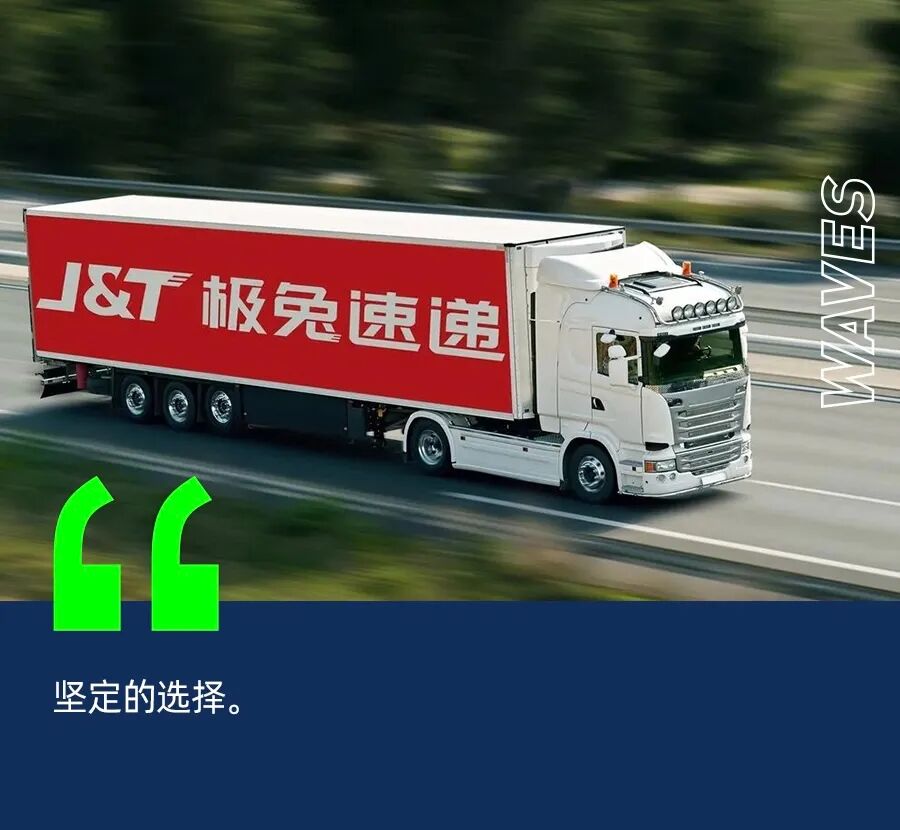
This was perhaps the most anticipated IPO of 2023. On the morning of October 27, J&T Express (极兔速递-W) officially listed on the Hong Kong Stock Exchange, with a market cap exceeding HK$105 billion. Setting aside the $200 million committed by its nine cornerstone investors — Aspex Management, Boyu Capital, Hongshan, SF Holding, Temasek, Tencent, Hillhouse Capital, and others — more than 20 brokerages participated in the fundraising and underwriting.
Founded in Indonesia in 2015, this courier company became Southeast Asia's market leader within four years. When it entered China in early 2020, it surpassed 20 million daily orders in just ten months — a milestone that took domestic competitors over a decade to reach. By parcel volume, J&T now ranks as China's sixth-largest express delivery company.
This was also a "feast" that investors could actually share in.
According to the prospectus, J&T completed eight funding rounds totaling $5.5 billion from its first round in 2017 through the present. The last six rounds came after J&T entered China, accounting for $5.29 billion. Beyond founder Jet Li's 11.54% stake as the largest shareholder, Tencent and Boyu hold 6.32% and 6.1% respectively, ATM Capital holds 5.49%, and Hillhouse Capital and Hongshan hold 2% and 1.62% respectively.
This means that at the current valuation, Tencent's and Boyu's stakes are each worth nearly $800 million. But compared to Boyu and Tencent, which entered in 2020 and 2021 respectively, ATM Capital — which invested when J&T was still fighting for market share in Indonesia back in 2017 — is the biggest winner.
ATM Capital was J&T's first institutional investor (and its only external shareholder before entering the Chinese market). Calculating from this cost basis, ATM's return on the J&T deal is at least $700 million — seven times the size of ATM's first fund.
Such returns were almost unimaginable amid the massive Southeast Asia investment wave and "going global" narrative of recent years.
Around 2015, numerous Chinese investment firms, inspired by Masayoshi Son's time machine theory, came to Southeast Asia seeking gold. They attempted to replicate proven Chinese business models in emerging markets, hunting for the next Tencent or Alibaba. They didn't just favor fully localized entrepreneurs — they had a particular fondness for Chinese founders.
But most of these firms ultimately returned empty-handed. A European endowment fund that had been investing in Southeast Asia since 2015, across five fund vintages, found: "Looking back at eight years of investment performance, the best-performing Southeast Asia fund had a DPI of just 0.7. By comparison, our worst-performing fund in China had a DPI above 1."
More direct evidence came from the bursting of Southeast Asian internet company bubbles in recent years — massive market cap erosion and large-scale layoffs.
After Sea, dubbed "Southeast Asia's little Tencent," laid off roughly 7,000 people in September 2022, its stock plummeted 30%. Its market cap has since shrunk nearly 90% from its post-IPO peak of $202.6 billion. Close behind was GoTo, Indonesia's largest tech company, which saw net losses exceed 50% in 2022 and cut 1,300 jobs. And Grab, once called "Southeast Asia's Uber" and one of the region's most valuable startups, has seen its market cap shrink by over $50 billion since last year.
But J&T appears to be an exception. While it's difficult to predict its stock trajectory post-IPO, for now it stands as one of the few companies likely to make money for primary market investors.
J&T's founder is Jet Li, formerly OPPO's Indonesia head. He initially built a local logistics network to support OPPO's distribution there. He then caught the wave of Southeast Asian e-commerce, as Shopee, Lazada and others waged subsidy wars, making J&T — which provided the logistics — the biggest beneficiary. Later, as SHEIN, Pinduoduo's Temu, and Alibaba's international businesses expanded into North America, the Middle East, Latin America, and Western Europe, they created opportunities for cross-border e-commerce companies, and J&T seized the moment to go truly global.
In fact, J&T received extremely limited capital market attention before 2020 — until it cracked open the Chinese market.
"At the time, it was an extremely controversial decision. People believed entering China was a near-certain death, with almost no chance of success," ATM Capital founder Qu Tian told An Yong Waves (暗涌Waves). China's express delivery market was fiercely competitive then, with the "Four Connects and One Reach" (四通一达) rapidly consolidating. But Qu strongly supported J&T's return to China.
J&T's total Southeast Asia parcel volume last year was 2.5 billion, roughly 6.88 million orders per day. But China was 12 billion parcels, roughly 33 million orders per day. "You have to go to the most competitive, most advanced market. If you survive in China, it proves your operational capability, technical capability, and team are formidable," Qu said. "I spent a long time preparing ATM Capital, studying the market, studying the playbook, and as a newly established small fund, I needed to hit a big case to get noticed. That's why we were so patient with our J&T investment."
Many VC/PE firms were willing to invest in Southeast Asia because they saw the region's "consumption upgrade" potential. Whoever broke through consumption upgrading would capture a massive market. But their willpower and resolve often proved insufficient.
Qu entered the internet industry in 2000 and began investing at Alibaba's strategic investment department in 2007, living through the entire transition from PC to mobile internet. It wasn't until 2017, when domestic fund competition was already fierce, that he considered launching an early-stage USD VC fund — and aimed to make it a top-tier one.
Becoming a top-tier fund requires two preconditions: entering early enough, and hitting a future super-unicorn at the early stage. IDG Capital and Hongshan are the best proof of both.
So he turned his gaze overseas. After deep research into overseas emerging markets, Qu found Southeast Asia to be highly promising. In 2017, he decided to put down roots in Indonesia and lock in on e-commerce. But he quickly realized that companies like Shopee and Lazada had already reached certain scale; e-commerce infrastructure like logistics and supply chain seemed to offer more room to maneuver.
His connection to J&T came about rather fortuitously. Chatting with the founder of a Southeast Asian courier company called Ninja Van, Qu asked: "Indonesia has Southeast Asia's largest e-commerce market. Why not dominate that single market?" Unexpectedly, the reply came: "There's a company called J&T in Indonesia. We can't beat them."
In October 2017, at a Chinese gathering in Indonesia, Qu finally met J&T's founding team through mutual contacts. "The founder's first impression on me was quite refined, cultured, and very humble. We hit it off immediately." After more than six months of earnest outreach, ATM Capital finally squeezed onto J&T's investor list, and continued to double down thereafter.
Qu didn't make many investments at Alibaba, but successfully led two major deals — UCWeb and Meituan. This gave him an insight: you don't necessarily improve your hit rate by shooting more. Fewer shots, but higher accuracy, and hitting only big opportunities — shooting less actually means shooting straighter. His Alibaba experience also gave him deeper understanding of e-commerce, and of the logistics that partner with it.
For Southeast Asia — ever-changing yet presenting more opportunities — it's perhaps difficult for investors to offer relatively long-term answers to some unresolved questions. On one hand, many major international funds had previously used relatively aggressive investment strategies to win in China — because the Chinese market was large enough — and顺势 applied those strategies to Southeast Asia. But these funds never truly rooted themselves in this market, and their timing was too early. Combined with global liquidity tightening, these major funds later became afraid to commit capital. On the other hand, Southeast Asia's originally active growth funds and early-stage funds have also grown cautious.
But Qu remains steadfastly bullish on Southeast Asia. Just as he firmly supported J&T through its major transformation, ATM Capital's ability to harvest this super-IPO from J&T is intimately tied to his resolute choices.
He believes Southeast Asia will inevitably produce companies on the scale of SF Express or ZTO Express, and the market is large enough. J&T's success rests on the premise of Chinese teams plus complete localization, then fighting back into the Chinese market to become a truly global company.
In fact, since entering Southeast Asia, ATM Capital's broad investment direction has remained unchanged: e-commerce and its supporting infrastructure (including logistics), consumer retail, fintech, and new energy. It is now paying attention to offline chain and new energy opportunities, with greater emphasis on international teams combining Chinese entrepreneurs with local talent.
Even though various challenges may still arise, Qu believes great companies need time to accumulate and develop. J&T has been around for over eight years since founding; hundred-billion-dollar companies need five to ten years of growth.
ATM Capital sees many companies in Southeast Asia with early J&T-like potential — high ceilings, strong teams, high globalization potential — such as cosmetics brand Y.O.U,母婴品牌 MAKUKU, and coffee chain TOMORO COFFEE. "In five to ten years, Southeast Asia will produce more than one global hundred-billion-dollar company," Qu said.
This article first appeared on 36Kr.
Image source | IC photo
Layout | Xuemei Guo