Starting Up in Egypt: The Joys and Sorrows of the Middle East's "Shadow World"
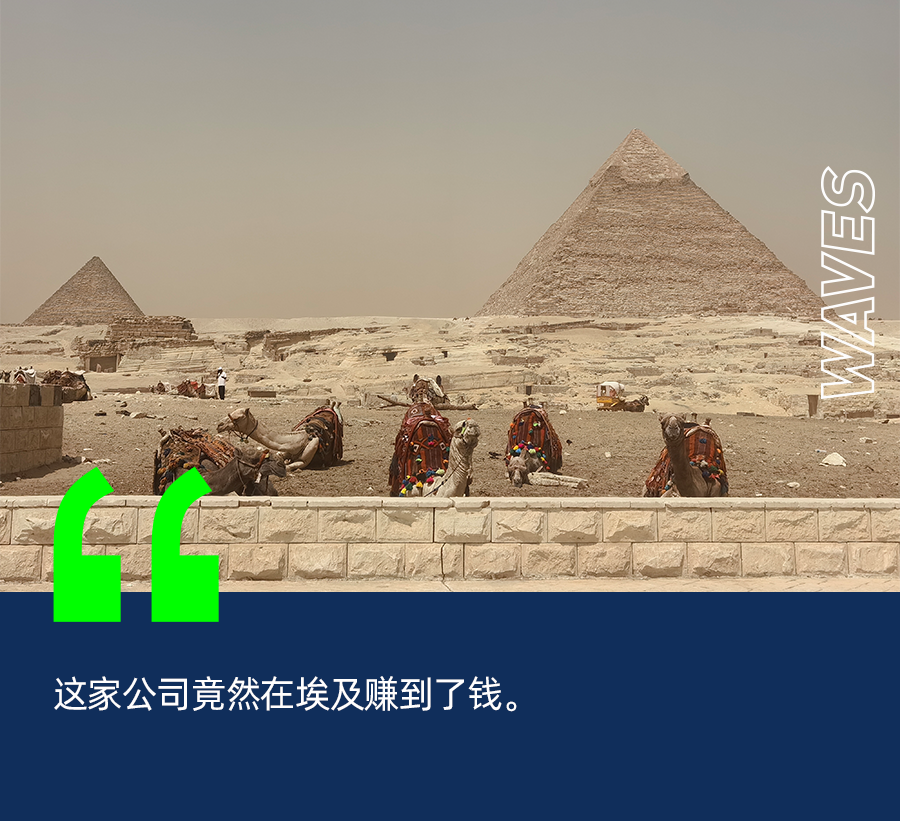
This company actually managed to make money in Egypt.
By Ren Qian
Edited by Chen Zhiyan


"Virtual Wars" in the Livestream Room
As night falls along the Nile, a country-versus-country PK battle unfolds in a MICO livestream room.
MICO is a livestreaming social platform popular across the Middle East. For a scheduled three-hour window, MICO weaponizes users' competitive instincts through a tipping model, mobilizing wealthy viewers to "fight for their nation" — the flag of whichever country tips more rises in the livestream, and drops the moment they fall behind. The session ran longer than planned because tipping grew so fierce. In the end, the country with the highest tips won, and their national anthem played to crown the victor of this "virtual war."
Image-conscious, crowd-loving Middle Eastern users have been known to tip millions of RMB in a single PK. Top streamers collect handsome rewards.
In MICO's livestream rooms, free-spending "Middle Eastern tycoons" are writing new wealth myths for hosts. And the architect behind it all is a Chinese company — Micoworld, MICO's parent.
Legend has it that in the early days, when Middle Eastern payment systems were still underdeveloped, a Saudi patron once hauled a bag of cash into his car at midnight, drove dozens of kilometers to buy recharge cards, all to help a Moroccan streamer claim the top spot on the leaderboard. The two later married.
Over the years, social companies have flocked to the Middle East for gold — Western firms like Facebook, Snapchat, and YouTube; Chinese players like Yalla, JOYY, and Cheetah Mobile. Micoworld may be the most unusual among them.
If going global is a game, Micoworld cleared the hardest map — the Middle East and North Africa (MENA). And unlike most companies expanding abroad, who typically target wealthy countries like the UAE or Saudi Arabia first, Micoworld established its Middle Eastern headquarters in Egypt — a nation of over 100 million people with a per capita GDP of just $4,300.
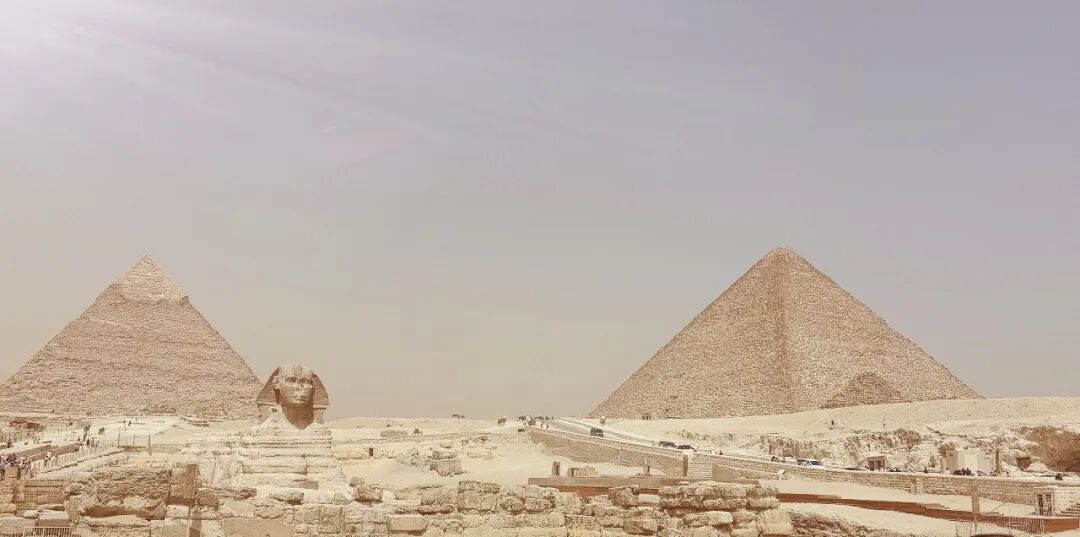
The Pyramids and the Sphinx
It's hard to connect this ancient, mysterious, underdeveloped country with the vocabulary of internet startups and venture capital. Like the land itself, beyond the Nile, pyramids, and sphinx that populate textbooks, you can barely glimpse its full picture. The same holds for this social entertainment company, founded in 2014 among the first wave of Chinese companies going global (starting in Southeast Asia), now operating more than a dozen global offices with over a thousand employees.
Yet somehow, Micoworld made money here. Since 2018, it has been profitably operating at scale for six years, with annual revenue in the billions of RMB. AnYong Waves learned exclusively that Micoworld's 2023 revenue from the Middle Eastern market exceeded 1 billion RMB. While specific figures for Egypt alone weren't disclosed, sources say the single market "achieved positive profitability long ago."
Chinese internet companies operating legitimately and profitably in Egypt are rare. An investor active in both China and the Middle East told AnYong Waves that he once saw a livestreaming company's app turn a profit in India and immediately sent his local team to conduct deep due diligence — only to discover that "without pushing boundaries, nobody pays." The implication: to make money in developing countries, you typically need to cut corners.
He also alluded to the fact that over the past three years, more Chinese companies have come prospecting in the Middle East, but the density never approached China's level. Many lacked long-term commitment, rushing in and scattering just as quickly.
So what is the real situation for Chinese entrepreneurs in Egypt? To reconstruct the true picture of Micoworld and the broader community of Chinese entrepreneurs far from home, AnYong Waves traveled west from Dubai and Riyadh to Cairo, interviewing multiple people living and working here — from Chinese company executives to small business owners running milk tea shops and restaurants. Compared to the wealth of the UAE or the boom of Saudi Arabia, Egypt feels like a shadow of this hot land — dim, yet with a real and distinctive other side.

Leaving Chinese Playbooks Behind
One day in late 2017, Micoworld CEO Sean burst into a conference room. In the cramped space, several other executives sat squeezed together on a beat-up sofa, brows furrowed. Ten minutes earlier, Sean had received word: a funding round they had waited half a year for would not close on schedule. This lifeline would determine whether the company had a future at all.
It was the height of the internet boom, when venture capital was at its zenith. Following the惯性 of Chinese internet models, Micoworld had burned cash ferociously — "at its worst, we were torching an Audi's worth a day." That meeting stretched past 2 a.m., everyone huddled together desperately crunching numbers, the sole topic being how to "get cash flow positive." They even calculated the price of a single bottle of mineral water.
A series of cost-cutting and revenue-generating measures followed swiftly. Six months later, in May 2018, Micoworld's monthly operating profit turned positive for the first time. In an open-plan office of less than 100 square meters, Sean and the remaining 70-plus employees finally held a celebration.
The crisis taught the team a lesson: return to business fundamentals, generate your own blood.
Under China's mobile internet wave, the playbook for emerging companies was raise funding, burn cash on user acquisition, grow DAU, winner takes all. It was fundamentally a story of capital accumulation. Yet this logic, treated as the only truth by Chinese internet veterans, didn't work here — reality dealt Micoworld a heavy blow. Sean and his team realized that Egypt (and the broader Middle East) wasn't a place where Chinese experience could be quickly replicated.
Egypt's economy had deteriorated since 2011. When current President Sisi took power in 2014, he focused on stabilizing domestic security and launched "Egypt Vision 2030." The political and economic situation began recovering after 2016, and the internet had only emerged in the last few years.
From social entertainment to e-commerce to ride-hailing, more internet companies arrived during this window — especially Chinese firms, the "kings of involution" across multiple business models. But earlier still, automakers and phone manufacturers had already put down roots.
Since 2003, over 20 Chinese auto brands had entered, shifting from complete vehicle exports to local assembly. Huawei came in 2004 to provide telecom services, building its first smartphone factory in Egypt in 2015. Xiaomi, OPPO, Transsion, realme, and other Chinese phone brands followed.
Ride-hailing platforms also fought fiercely in Egypt. Uber entered in 2014, acquiring its largest Middle Eastern competitor Careem — founded in Dubai — in 2019 to expand its regional footprint. In September 2021, Didi launched in Egypt, first in Alexandria (the second-largest city), then Cairo (the largest). Didi had also previously invested in Careem.
Beyond that, Egypt's e-commerce field has numerous players. Jumia, founded in Nigeria in 2012, entered Egypt early. In 2017, Amazon acquired Dubai-headquartered e-commerce platform Souq for $580 million, formally entering Egypt four years later. In 2019, Noon, born in the UAE, also launched in Egypt. Among Chinese companies, AliExpress and Shein have entered as well. But so far, none of these platforms has emerged as a dominant winner.
A Chinese company executive told us that Egypt sits at the crossroads of Asia, Africa, and Europe with free trade advantages. Companies from the Gulf states, Europe, America, China, and locally often establish themselves in Egypt first, then radiate across Africa. Meanwhile, a population of over 100 million with a young demographic structure (60% of Egyptians are under 30, with 40% concentrated between 10-29) provides fertile ground for e-commerce.
Though opportunities and competition exist across sectors, social entertainment may be the first to turn a profit.
Micoworld's Middle East head Lao Huang told AnYong Waves that e-commerce, logistics, and manufacturing are all heavy-asset industries, where a market's ceiling depends heavily on local infrastructure and industry maturity.
Take logistics: "last-mile delivery," taken for granted in China, simply doesn't work in Egypt because many residential buildings lack proper address numbering or have chaotic coding systems, severely hampering delivery efficiency. Social entertainment, by contrast, is classic light-asset operations with shorter payback cycles.
Similar to Gulf countries, Egyptians with scarce offline entertainment options are willing to spend lavishly on thrills and socializing. Some games (not Micoworld's) have seen individual "whales" (players who spend heavily) account for over 90% of all paid revenue on certain servers; livestreaming platforms have even more tycoons relentlessly chasing leaderboard positions.
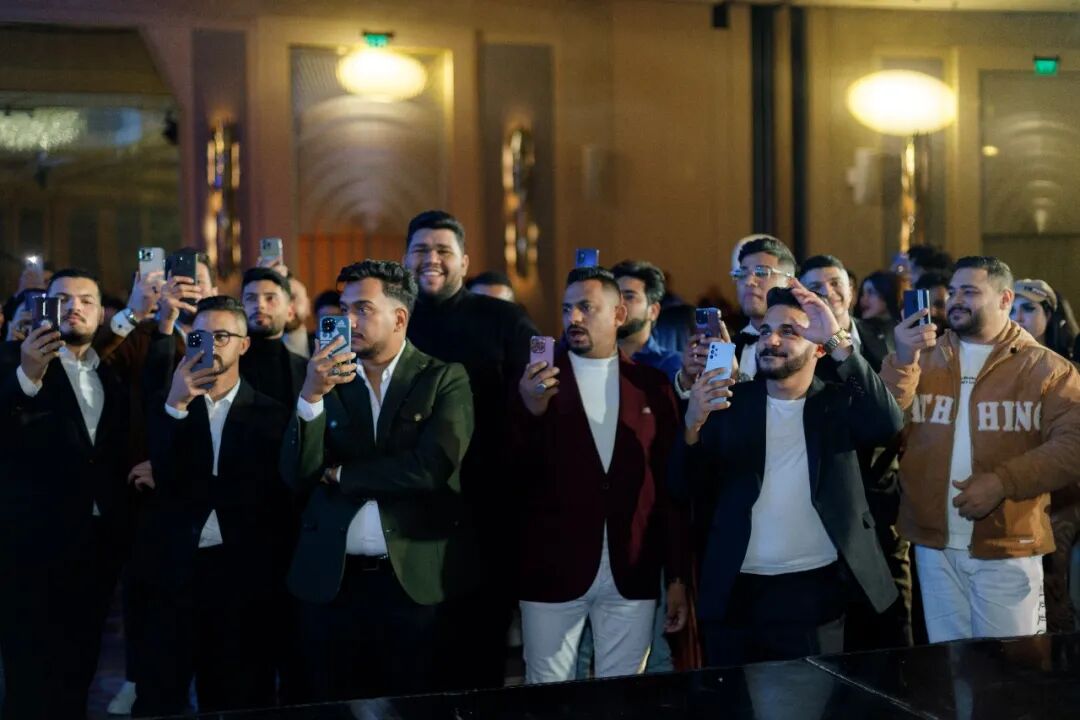
At a Micoworld event: "They don't care about money, but they care about relationships."
A Chinese restaurant owner in Cairo's Maadi district told us that his staff will spend entire days on the phone with friends, chatting while working even when there's nothing urgent. A milk tea shop owner has been troubled by this for a long time, but can only "slowly learn to accept this cultural difference."
Social products going to the Middle East find conditions "ideal for fish." According to DataReportal, five of the top 10 countries globally for social media usage are in MENA, with North Africans averaging nearly 10 social accounts each. Companies typically target GCC users (Saudi Arabia and UAE-led Gulf states) as their core market, placing PR teams in the UAE and operations in Egypt due to the high quality and low cost of Egyptian labor.
"Egypt's population exceeds 100 million, a large base with many 'small tycoons.' Their individual tips may not match GCC whales, but they win on volume," Lao Huang said.

The Hard Work
Though Egypt sits in Africa's northeast, it is thoroughly an Arab nation, vastly different in ethnicity and culture from Central or Southern Africa. Each Cairo dawn brings elderly voices reciting the Quran. Every office must have a dedicated prayer room. White-collar workers perform prayers several times daily without fail.
When ancient civilization collides with the new commercial world, any outsider must understand it, accept it, adapt to it. This is the prerequisite for making money.
On livestreaming platforms, Chinese users' favorite gift to spam is the "rocket," but in the Middle Eastern context, gifts become "luxury cars," "lions," and other locally preferred imagery, plus everyday familiar items like "hummus" and "Burj Khalifa."
Lao Huang told AnYong Waves that different populations occupy different temporal and spatial slices, with huge differentiation — "you can't solve this with a one-size-fits-all product."
For example, newly opened Saudi users are extremely privacy-conscious; on MICO, many women stream with veils showing only their eyes, some even blacking out their screens entirely. Egypt, as an ancient civilization that once produced culture very assertively, has外向 (outgoing) people eager to showcase talents in livestreams.
Egyptian users love free products, discounts, and promotions; Saudi and UAE users love to show off; VIP users have more demands, liking to exchange money for status. Micoworld's operations frequently field requests like: "If I tip XXX dollars to your platform, can you let me be the only one who can do XXX thing, not letting anyone else have the same treatment?"
A joke once circulated in globalization circles: a company made a game for the Middle East with only single-digit truly active users, yet they generated millions in monthly revenue. This trip to the Middle East confirmed it.
More details: Saudis generally have wider fingers than Chinese, so if in-product buttons are placed too close together, they easily misclick. Micoworld's Middle Eastern product versions have slightly wider button spacing than comparable Chinese products.
This extreme localization was achieved through "hard work."
Micoworld's early office conditions were poor. The GM (country manager) worked from a broken sofa; everyone lived, ate, and worked in one building. After seven moves, they finally relocated to Maadi Technology Park along the Nile — a relatively presentable compound under Egyptian military jurisdiction, developed specifically for telecom and tech companies.
Micoworld survived multiple existential moments. In late 2021, a Chinese company was banned by Egyptian authorities for certain reasons, sparking industry-wide panic and withdrawals. Micoworld not only stayed but held media meetings, and through candid government communication, secured Egypt's first government license for its sector.
Another time, the Middle East regional head fell ill with consecutive fevers. Management was so worried they prepared a charter flight to evacuate him. He refused: "If I abandon the team now, morale will collapse." Later, most Chinese employees voluntarily remained in Egypt, standing through the hardest days alongside local colleagues.
Chinese entrepreneurs should have a natural advantage in navigating complex societal diversity. So why is Micoworld's success a lone exception?
On one hand, this relates to Egypt's economic lifelines being controlled by the military. Egyptian military business operations began under Nasser and Sadat, later growing into Egypt's largest and most important commercial entity. Beyond the military, numerous industries are held by major business families — such as the Sawiris family (the nation's richest) and the Mansour Group (auto dealers).
The Nasser era established many welfare policies benefiting the lower classes, still in effect today. The most visible manifestation is Egyptian bread, eish. Government subsidies keep prices as low as 0.05 Egyptian pounds. Through decades of intense social upheaval, bread prices have miraculously remained stable, making eish a barometer of Egyptian livelihoods.
After Sisi took power, he launched "Egypt Vision 2030," undertaking financial reform, fiscal reform, massive infrastructure investment, and industrial investment, which to some degree stemmed economic collapse but has yet to address core fundamental problems.
At the micro level, another more critical factor is integrity.
A Middle Eastern local investor told AnYong Waves that a once-celebrated Egyptian company at Series C raised funding then absconded with the money, "delivering a major shock to investors watching Egypt." As Egypt's venture environment has deteriorated in recent years, more investors and unresolved cases have made the country increasingly unappealing — "population alone is hard to monetize."
Across Egypt's one million square kilometers, over 90% is desert. Cities are strewn with garbage piles, countless stray dogs bark everywhere, beggars and homeless people are visible throughout, and alongside highways stand endless blackened, unfinished buildings (over 60% of Cairenes live here). Walking down the street, smiling children may latch onto you, making money-counting gestures with their fingers while saying "one dollar."
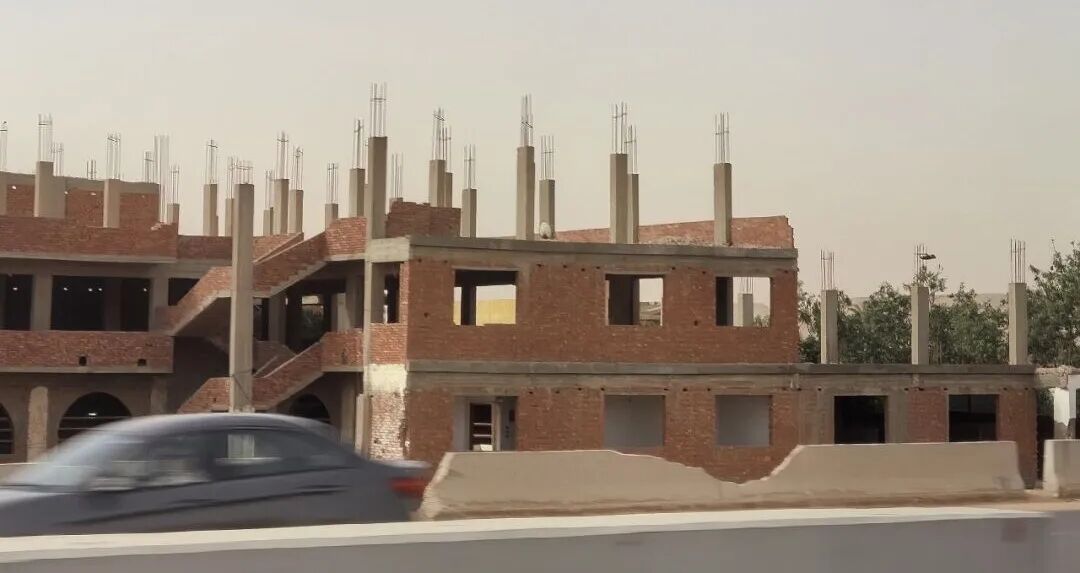
Unfinished buildings everywhere in Cairo A friend running a Northwestern Chinese restaurant in Cairo specifically warned AnYong Waves: if you want to jog along the Nile in the morning, it's best to ask traffic police to help you cross, because there are no sidewalks, no traffic lights, and cars and pedestrians don't yield to each other. Vehicles with scratch marks sometimes share the road with cows, horses, and camels. Because Muslims believe that even if accidents happen, they will be reborn as humans.

"Fragmented" Globalization
Whether or not you've set foot on this land, you may have been captivated by the pyramids and sphinx standing for millennia amid endless yellow sand.
In fact, decades ago under the first-generation leader Nasser, Egypt led the Middle East across virtually all dimensions, the leader of Arab nations.
Born in 1918, young Nasser accompanied his father through Egypt's miseries, developing hatred for the British and the monarchy. After entering military academy, he studied diligently, determined to change Egypt's rotten society. In 1952, he overthrew the Farouk dynasty, establishing the Republic of Egypt. Nasser ended over seventy years of British occupation through diplomacy. His greatest economic contribution was reclaiming sovereignty over the Suez Canal.
After stabilizing power, Nasser carried out two major land reforms, concentrating efforts on industrial development, building 830 key industrial projects between 1952-1966. A decade into his rule, Egypt became the premier industrial power in the Arab world. Until 1967, when Egypt's leadership position in the Arab world ceased to exist.
Due to history, Egyptians tend to believe in strong authority. All four contemporary Egyptian leaders have leaned toward authoritarian politics, and at the corporate governance level, many Egyptian local managers also believe in iron-fisted management.
This contrasts sharply with Chinese companies coming here — full of human warmth.
Thanks to free public education (from primary school through university), Egypt has abundant university graduates, but employment quantity and quality are mediocre. For example, a Cairo University Chinese language graduate that the AnYong Waves team met works as a tour guide. Egyptian wages are generally low: mid-level white-collar university graduates earn basically no more than 10,000 Egyptian pounds monthly (about 1,500 RMB), grassroots civil servants make 6,000-7,000 pounds, and restaurant servers only around 3,000 pounds.
Chinese companies coming to Egypt not only provide better employment opportunities but also raise salary benchmarks. A milk tea shop owner told us, "Currently my seven employees are all local. Hiring one Chinese person costs as much as seven Egyptians," but she still pays locals above market rate.
Lao Huang shared a story: Micoworld had an Egyptian employee named Josh who started in customer service, communicating with users by phone and chat. Beyond regular skills training, someone specifically guided him through handling various issues, explaining why they did things certain ways, including how the company wanted to develop, what strategies it set, and so on. He had never encountered this before. He began understanding what "user service consciousness" meant, what "results orientation" meant, and various work methods and logic.
Later he gradually took on work beyond customer service; now he's a team leader in event operations. "He makes beautiful spreadsheets, very skilled at project management — many Chinese employees can't match him."
"Micoworld doesn't advocate 996, we're anti-involution." What makes Lao Huang proud is that most of Micoworld's frontline teams have local employees in core management roles. They've cultivated a cohort of local talent who deeply understand local users and culture while possessing "Chinese traits" of diligence, efficiency, and collaboration — "this is our solid foundation for localization capability."
Micoworld has a bimonthly all-hands meeting where all employees attend, and anyone can freely "roast" the company — even the smallest detail that makes someone uncomfortable can be voiced openly. Micoworld encourages Chinese employees to build good personal relationships with Egyptian colleagues; when Egyptian colleagues hold weddings, Chinese colleagues show up to help.
This land requires outsiders to find their own way to survive, and to build a commercially wise enterprise, long-term strategy matters more than short-term profit. For Chinese companies that once worshipped boundless scale and behemoth size, this may be precisely another kind of commercial wisdom that this land offers.
Not competing in muscle with giants like TikTok with its billion daily active users and tens of billions in annual revenue, Micoworld has carved out positions in medium-sized tracks and markets, defining this as its "shrubbery" strategy — essentially a product matrix, finding pain points for different users in different regions and prescribing the right medicine.
After MICO stabilized profitability in 2018, Micoworld accelerated new product development, now forming a matrix including livestream social platform MICO, voice social platform YoHo, game social platform TopTop, and companion social platform SUGO.
"We don't want to be that towering tree swaying in the wind. We may be shorter, but taller than the grass on the ground, occupying a position in the middle layer," Lao Huang told AnYong Waves. "The tree that stands out from the forest gets broken by the wind."
The core element of the shrubbery approach is the company's ability to rapidly replicate capabilities — a distributed, cellular organizational structure, mutually empowered and coordinated through a central platform. Hence Micoworld's unique organizational design: extremely flat hierarchy, almost no CXOs, just "head of such-and-such region," with no particularly rigid rank distinctions.
Headquarters also doesn't really "manage" the front lines; each market's systems, strategies, and tactics appear varied and colorful. Later Sean summarized: "Our management of the front lines, you could say, focuses on only one thing — aligning thinking. We need to ensure that with each regional head, we reach agreement on underlying logic and top-level design."
Micoworld does content social, and partnership policies with ecosystem partners are core strategy — but these vary greatly across markets. For example, Indians are very detail-oriented, caring about input-output ratios. Give them a general rule and they'll ask why. You need to explain specific details, tier distributions, calculation logic — they enjoy the process of "calculating," it gives them satisfaction. But Middle Easterners prefer simplicity and directness, disliking spending energy studying rules; they need to be told directly about input-output situations.
Sean once said in an interview that global markets will shift from "unified" globalization to "fragmented" globalization. He described future going-global as a massive seismic zone: "On a seismic zone, don't think about building a skyscraper. Build clusters of mid-rise buildings, small houses — if one collapses in a quake, you still have many others."

Night along the Nile
Image source | AnYong Waves, photographed in Egypt
Layout | Yao Nan