The Hype Around *Black Myth: Wukong*, and the Barren Landscape of Game Investment
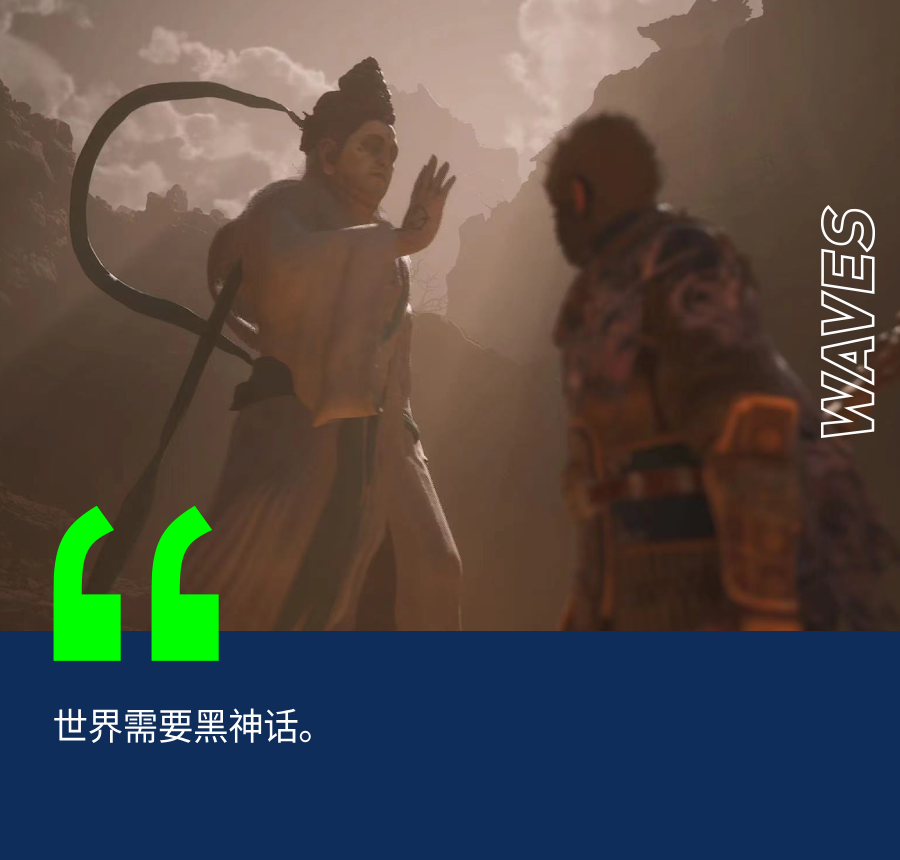
The world needs *Black Myth*.
By Jiaxiang Shi
Edited by Jing Liu

In February 2007, 25-year-old Feng Ji first made waves in the gaming world with a fiery manifesto against online games. In an article titled Who Murdered Our Games?, he posed the question: "Should we treat players like livestock?"
Writing in his unmistakably personal voice, he declared: "The goddamn online gaming industry has spawned a bunch of bastards like me, spending every day obsessing over five questions." Those five questions were: how to keep players addicted; how to squeeze more money out of them; how to make them form cliques; how to make them hate each other; and how to enable covert cash gambling and gold trading.
At this point, China's gaming industry was virtually monopolized by ZT Online-style pay-to-win MMOs. Inside Feng Ji's own company, debates had once been held, but they gradually devolved into a single question: "Should we be as exploitative as ZT Online?"
A year later, Feng Ji joined Tencent. During his six years there, he oversaw operations for Xunxian and served as lead designer on Asura. In many ways, Asura already bore the hallmarks of Feng's later work: its technical preparation took two to three times longer than typical products, and its development team was the largest and best-resourced, even achieving through a proprietary engine the technical capabilities of World of Warcraft and Diablo III. After Feng left Tencent, Asura became a pure pay-to-win MMO — but that's a story for another time.
In June 2014, Feng Ji founded Game Science. That same year, Tencent made mobile games its strategic priority.
For the next four years, Game Science searched far and wide for its path. To survive, Feng greenlit their first title, Hundred Generals — a mobile game whose gameplay cloned DotA Legend but with an original art style; this was followed by Art of War: Red Tides. These solved Game Science's short-term survival problems, with the latter also helping them secure 60 million RMB in angel funding from Hero Games.
Everything was on track. But the team suddenly felt that if they didn't make a single-player game now, "a person's creative prime only lasts a few years. If we don't make something good at this point, we might not get another chance in this lifetime..." co-founder Yang Qi said in an interview.
Feng later reflected that everything has its causes and conditions. Without their prior experience making mobile games, without the resources provided by a mature commercial ecosystem, without China's demographic dividend, there would be no opportunity today to create a product like Black Myth: Wukong.
This, then, is the prequel to Black Myth.
Six years of painstaking work. The sensation that Black Myth has created today exceeds most people's expectations. It has also revived a long-dormant question: does Chinese gaming still have a place in the investment industry?
"No," said Zhuang Minghao, an investor focused on the gaming sector, with absolute certainty. There won't be a venture capital boom in China in the short term; therefore, there won't be a gaming venture capital boom in the short term; so there's even less chance of any AAA gaming venture capital boom.
Latest update from the Waves editorial team — we have defeated Kang-Jin Loong

Almost Only Strategic Investment Left
Chinese gaming investment grew up alongside the mobile game boom. According to IT Juzi, China's gaming market saw its investment peak in 2014-2015, with over 400 investment events each year and total investment amounts around 10 billion RMB. But after 2016, it faded from the main stage of investment, with annual investment at one point dropping to just 5.3 billion RMB.
Zhuang Minghao told Waves that in 2016, acquisitions across the board blew up, early-stage project costs rose, and tech giants fully entered the mobile game market. "The opportunities for small bets with big payoffs, or the 'big dreams' — they just couldn't be sustained anymore." Two years later, the license approval freeze took effect, and the temperature kept dropping.
2020 marked a brief recovery. Pandemic-driven tailwinds and the launch of several core gaming titles (Call of Duty, Genshin Impact, Rise of Kingdoms) accelerated an explosion in strategic gaming investment, with investment amounts once again breaking 10 billion RMB.
But by this point, a look at who was still at the table revealed almost exclusively big tech strategic investors (such as Bilibili, G-bits, and miHoYo), with industry investment already accounting for 80% of the total.
Among them, Tencent — which had missed out on Genshin Impact — was becoming the most aggressive investor. It invested in over 30 gaming companies in 2020, and followed up with another 11 in the new year.
Tencent's investment in Black Myth: Wukong also occurred during this period. During negotiations, Tencent promised: no interference in business decisions, no seizure of project leadership, no pursuit of publishing and operations rights, and even stated it would "not deliberately seek commercial returns."
Nevertheless, Tencent — entering with labels of "copycat" and "piracy" attached — still drew public criticism. Feng Ji himself had to respond: "The path we've chosen is not an easy one, so all along, for those who share our values and are willing to help us realize our dreams — whether people, technology, or capital — we will engage seriously and accept conditionally, on the premise of maintaining our independence."
But as far as the eye could see, Tencent was already the ideal investor for game developers. Multiple gaming industry sources told Waves that Tencent "if they promise not to interfere, they won't interfere."
In June 2016, Tencent acquired 84.3% of Supercell — developer of Clash of Clans and Clash Royale — for $8.6 billion, the largest acquisition in gaming history. Yet Supercell maintained independent operations and never had to leave Finland. Earlier, Tencent had acquired Riot, developer of the decade-dominating League of Legends. An esports industry source once told us that while the League of Legends international team was theoretically a wholly-owned Tencent subsidiary, in practice the relationship ran the other way around.
Another typical case was Tencent's 2021 investment in Phantom Blade Zero, which had been seen as a fellow "light of Chinese AAA" alongside Black Myth: Wukong.
Phantom Blade Zero's creator was Liang Qiwei. In 2008, while studying architecture at Yale, he released the first installment of the single-player Rainblood series. However, after accepting investment from ZhenFund and NetEase in 2012 and 2013, he turned his attention to mobile platforms, choosing the more commercially oriented path between single-player and mobile games. He openly admitted to compromising on every commercialization suggestion, earning accusations of "selling out" from his devoted players.
But starting in 2018, Liang led a small team to develop a single-player game without revealing any information to the outside world — "a temporary refuge from the world of retention rates, payment conversion, and ARPU."
During the 2021 Spring Festival, as the early investment rounds from NetEase and ZhenFund reached maturity, Liang chose to buy back those equity stakes; upon learning of Phantom Blade Zero's development, Tencent proactively proposed an investment on the condition of not interfering with company operations, not binding product cooperation, and not affecting creative work on the title.
Sources familiar with the matter revealed that indie developer Liang Qiwei had "made money but suffered" during his mobile game phase; buying back equity was about regaining control and "also making room for Tencent to enter." Willingness to support single-player games that diverged from the pay-to-win mobile model was a key reason developers welcomed Tencent.
Tencent is also the controlling shareholder of Epic Games. After officially unveiling Unreal Engine 5 (UE5) for game production, Black Myth: Wukong was among its first users, and Phantom Blade Zero also made extensive use of UE5 during development.
In 2018, the viral article Tencent Has No Dreams argued that Tencent was losing its product capabilities and entrepreneurial spirit, becoming an investment company whose "strength was no longer product operations, but investment acumen." But viewed today, when direct forays into vertical sectors (like e-commerce) have repeatedly stumbled, using investment to connect platforms with traffic has proven to be a sound strategy.
Looking across the landscape, Tencent is already one of the few remaining investors in China's gaming market. Before this, some VC funds had invested in gaming, but most withdrew from the battlefield due to license approval controls, unclear exit paths, and other reasons.
Another noteworthy player is Hero Games (then called Hero Entertainment). In 2017, Game Science received 60 million RMB in angel funding from Hero Games. However, according to Hero Games' 2022 annual report, it sold its equity in Game Science — developer of Black Myth: Wukong — for 480 million RMB that year. Of this, 280 million RMB was completed in that year, with the remaining 200 million RMB scheduled for payment after April 1, 2025. Hero Games has since gradually shifted to self-developed titles.
On August 20, Hero Games CEO Wu Dan posted on WeChat Moments: "This year many people have asked me how I invested in Black Myth, how I invested in Wuthering Waves. I actually can't answer, because the methodology here is so simple there's nothing to say (saying one more word would be showing off). It's just: it's about the people... get the right people and that's enough."

AAA, A State of Mind
Premium-priced AAA games have never been a good business. Liang Qiwei once said that making single-player games, "to reach AAA quality with costs of several hundred million," if you want to break even and keep going, requires advanced internationalization — generating international revenue through brand influence, creating a sensation among console players, "only then can you sell several million, even ten million copies among core players, and only then can you break even."
For returns-driven institutions, merely breaking even holds little appeal.
According to Appmagic, in the first half of 2024, Honor of Kings topped global mobile game revenue at $961 million, while Genshin Impact pulled in $320 million.
Separately, a source close to WeChat mini-game Salted Fish King revealed that "'Salted Fish King' is the company's only seven-star project, and seven-star means monthly profits exceeding 60 million RMB."
A mini-game practitioner also told Waves that this game's biggest monetization driver is hatred and conflict between players — when new paying players reach #1, servers merge, pitting ten players of similar spending levels against each other in a new round of competition. "Later there were even big spenders actively asking why we hadn't merged servers yet?"
This is precisely what Feng Ji satirized when he entered the industry — game designers' focus was not on researching how to make games more fun and richer, but on conditioning players to factionalize, to curse and slaughter each other, and to engage in safer online cash activities (gambling, virtual item trading, etc.). "Compared to those outdated, traditional single-player elements, these new tricks have achieved obvious, even unprecedented success in economic terms."
But clearly, a premium-priced AAA title like Black Myth: Wukong simply cannot compete commercially with pay-to-win games.
Another factor is development cycle. Black Wind Mountain is the first chapter of Black Myth: Wukong. Here you encounter your first minor boss, the Wolf Marshal DaoLang — defeat him, and you can pick up a blade called Red Tides. In an interview, Feng Ji mentioned that to make the monkey walk anywhere, grip the blade, pull it from the ground, and put it in his ear — the key being the walking over, the pulling out — to make this action that most players won't even consciously notice smooth and natural, took the development team two to three months.
Meanwhile, a mini-game practitioner told Waves that their primary consideration was "how to stuff in less stuff so users can click and play instantly." They have already completely removed 3D elements from their game.
The aforementioned source told Waves that the industry needs games like Black Myth: Wukong to lead everyone forward. He joked, "If they don't try, we'll just keep reskinning, keep reskinning forever, like how current anime-style games are just reskins of Genshin Impact."
But he also sighed, "Make a commercial game, however high the revenue, no one will respect you; ten years later, no one will remember who you were."
Industry sources told Waves that many indie developers joined the industry after seeing the Black Myth: Wukong trailer, and the game's success or failure will directly affect their career choices.
After Asura's third chapter ended, "After the White Bone, No More Journey to the West" was the setback Feng Ji could not escape; six years later, "After the White Bone, Retracing the Journey to the West" appeared at the end of Black Myth: Wukong's first gameplay demo video, exciting and moving players; ten years later, Black Myth: Wukong officially launched, and as of the early hours of August 21, 4.5 million copies sold had already made history.
For Chinese AAA games, whose path forward remains rugged, Feng Ji's widely circulated words also aptly describe their journey: "Setting out on the pilgrimage matters more than reaching the Western Paradise."
References:
[1] Liang Qiwei's Choice II
[2] Now in My Prime: How Game Science Created Black Myth: Wukong
[3] Feng Ji and His Art of War: Red Tides
[4] Were the Past Three Years (2020-2022) a "Detour"? — The Chinese Gaming Industry from an Investment Perspective
Image Sources | Black Myth: Wukong in-game cutscenes
Layout | Nan Yao