The New Era of Going Global: Chinese Founders Conquering the World
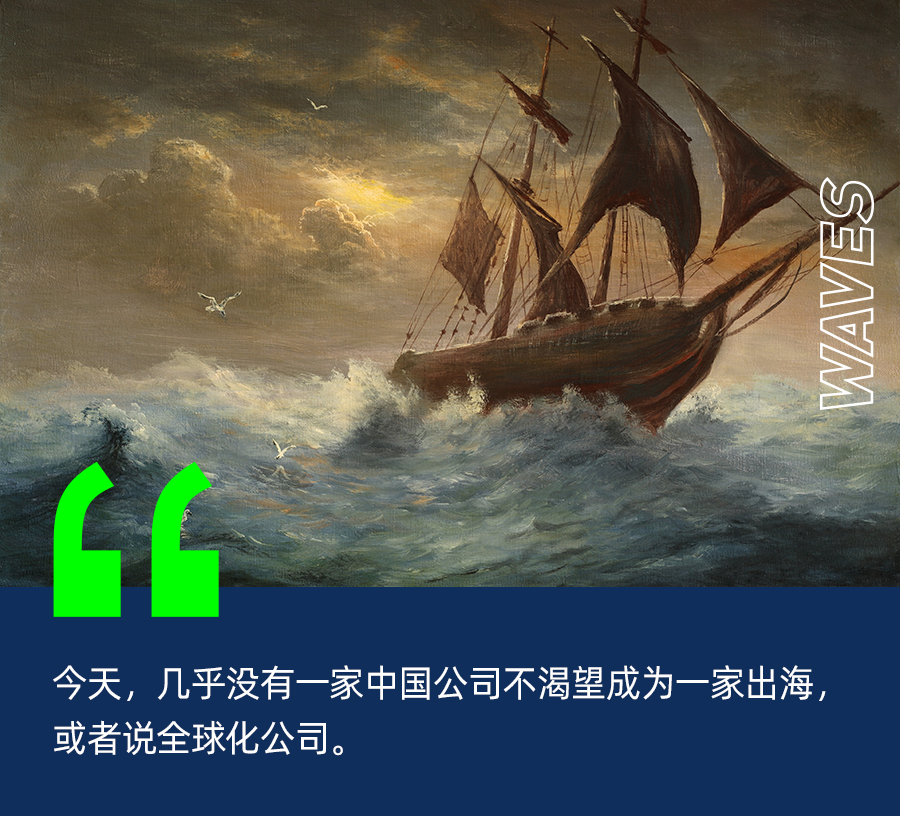
Today, virtually no Chinese company doesn't aspire to go global — or, put another way, to become a truly global company.
By Ren Qian
Edited by Chen Zhiyan, Jing Liu


The New Logic Reshaping Every Sector
At 7 a.m., Forrest Li burst into his office. Inside a three-story building in southern Singapore, the stocky CEO signed an agency agreement with trembling hands.
Half an hour earlier, he had received the long-awaited news: Garena, the gaming platform he helmed, had secured the Southeast Asian distribution rights for League of Legends. The phenomenon-level game would bring the company massive traffic and wealth.
It was May 2010. Li, a 32-year-old Singaporean Chinese who would later be seen as the architect of Southeast Asia's "Tencent plus Alibaba," was now rapidly ascending to the center of the global business stage.
Four years later, Garena became Singapore's first internet company valued at over $1 billion. In 2015, Li launched Shopee, a local e-commerce platform that became Southeast Asia's top player within five years. By October 2021, Sea Limited — the listed parent of both companies — saw its stock peak at $363, with a total market cap approaching $200 billion. For a time, this made Sea Asia's third-largest internet company, leaving Southeast Asia's herd of unicorns in the dust.
The title of "Singapore's richest person" was born. Based on Sea's stock price in August 2021, Li's net worth reached $21 billion.
Yet this tycoon's ancestral home was actually Tianjin, China — more than 4,000 kilometers from the Lion City. Until age 27, Li, a Shanghai Jiao Tong University graduate, had lived entirely in China.
But despite these roots, Sea remained largely outside the conversational orbit of most Chinese entrepreneurs and investors for a long time. "When he declared he would build 'Tencent plus Alibaba' in Southeast Asia, almost no one in China knew who he was, and few believed he could pull it off," a partner at a top-tier dual-currency fund once told An Yong Waves (暗涌Waves). Beyond a handful of institutions like Tencent, Keytone Ventures, and Hillhouse Capital that managed to get a piece of Sea, the vast majority of domestic investors didn't merely miss it — they didn't even know it existed.
For a long stretch, startups whose primary markets lay outside their home country weren't genuinely favored by mainstream domestic capital. Other successful platform companies founded by ethnic Chinese abroad — such as Larry Liu's Weee! and DoorDash, created by the "Chinese-American trio" — similarly showed few domestic investment institutions on their cap tables. Among companies going global from China, whether it was LightInTheBox, a pioneer in cross-border e-commerce founded in 2007; Cheetah Mobile, the free-tools representative that went abroad in 2012 to survive; or the wave of "copy from China" social, livestreaming, short-video, and fintech apps that emerged after 2015 — none were enough to make "going global" a core theme for investors.
One reason was simply "too difficult." In previous waves of global expansion, founders were often those who had lost out to or feared competition from domestic internet giants, opting instead to export Chinese playbooks overseas, or they inherited traditional foreign-trade logic, exploiting China's labor cost advantage to arbitrage foreign markets. The outcomes were typically ill-fated: either they remained small operations, or they retreated in defeat.
Another factor was a subtle bias of the mobile internet era: the conviction that the most elite entrepreneurs would invariably find opportunities, create value, and build influence in the "gold-paved" domestic market. As for Chinese people starting businesses abroad, investors saw neither sufficient peer "palanquin-bearers" to generate returns, nor any brand enhancement for their firms.
"Chinese founders in overseas markets struggle to achieve a strong sense of individual accomplishment." Roughly three to four years ago, more than one investor expressed similar observations to An Yong Waves.
The crack appeared in 2020.
People were stunned to discover: SHEIN, a shopping app no one had heard of, was consistently beating Wish, Walmart, and others in app store rankings, going toe-to-toe with Amazon; its revenue had grown over 100% year after year for multiple years, going from $600 million to surpassing $10 billion in just four years. Almost overnight, primary market analysts began studying SHEIN, a company founded in 2008, headquartered in Nanjing, and built by Xu Yangtian, a "post-80s grassroots entrepreneur from Shandong."
Meanwhile, Li's Shopee also broke into the top three globally for total shopping app downloads in 2020. A dollar-fund investor based in Singapore told An Yong Waves that at public events Li attended in recent years, people would scramble to get in, hoping to glean information from even fragmentary remarks; some even tried to track the three business jets Sea had purchased for its executives, seeking clues about next expansion moves.
In recent years, running into investors from Beijing and Shanghai at the hotel breakfast buffet in Shenzhen is no longer novel. At the height of the frenzy in 2020, a cross-border e-commerce industry conference was held in Bantian, an area known as Shenzhen's "cross-border headquarters." The enthusiasm far exceeded organizers' expectations — the crowd grew so dense that police had to be called to forcibly shut down the event.
Ma Xiaoyu, a managing director at Gaorong Capital, felt the shift more acutely. An investor who had focused on overseas opportunities since entering the industry in 2015, he had traveled to over a dozen countries, flying to different regions annually before the pandemic to scout markets and conduct due diligence. Once relatively solitary in this pursuit, he found "going global" and "internationalization" had become high-frequency terms among peers and entrepreneurs alike. "It seemed like most sectors could add an option: going global."
"Domestic investors who used to look at TMT, consumer, and SaaS have all started paying attention to going global." Lou Yang, an executive director at Lightsource Capital who has worked on FA deals in e-commerce, consumer, automotive mobility, and cross-border global expansion for nearly a decade, told An Yong Waves that global expansion investment had begun entering "the mainstream视野" in recent years. After cyclical opportunities like product export, supply chain export, and talent export, capital going global was becoming a more enduring theme. Guo Wei, founder of UpHonest Capital — known as a "Silicon Valley outpost" for domestic VCs — received several near-identical calls daily: investors from top-tier domestic funds inquiring about Chinese entrepreneur investment opportunities in North America.
In most of China's generalist funds, "going global" had always been a peripheral sector, or not even a sector at all. But by 2022, nearly every dollar-denominated VC had made it one of their most important directions. BAI Capital opened a European office this year to invest in Chinese entrepreneurs in European markets, with Annabelle Long personally leading the effort.
New funds were even purpose-built for global expansion. In early 2022, Skyline Ventures launched, billing itself as an investor that "only backs cross-border global expansion." Founder James Liang told An Yong Waves: "Cross-border is one of the few — arguably the only — relatively high-certainty tracks we can see right now."

Rising Through the Cracks
Everyone in investment circles can rattle off several reasons behind the current going-global boom: "domestic mobile internet红利 has vanished," "hot sectors like B2B, hard tech, and healthcare have high认知 barriers," "entertainment, education, and consumer have gone quiet one after another," "下沉 opportunities are dwindling," and so on. But simultaneously, everyone privately knows this investment wave's origin traces to two S's — Sky's SHEIN.
Investors rarely admit that one company's success made them bullish on an entire sector, but SHEIN's神话 was simply too seductive.
In 2020, as SHEIN began contemplating an IPO, it first appeared broadly on the Chinese radar. By then, SHEIN had already joined Huawei, Lenovo, Xiaomi, ByteDance, and DJI as China's most influential global brands. In April this year, An Yong Waves exclusively reported that SHEIN's current market valuation had reached $100 billion. Across the entire global textiles and apparel sector, only three companies commanded higher valuations: LVMH, Hermès, and Nike.
Just as SHEIN became the first Chinese consumer company to reach a $100 billion valuation, two major cross-border e-commerce players collapsed within six months: In June 2021, Globalegrow — "the first cross-border e-commerce stock on A-shares" — imploded, filing for bankruptcy reorganization as suppliers besieged its Shenzhen Nanshan headquarters; in February 2022, JollyChic, once an e-commerce platform that "crushed" Amazon's Middle East site and Noon, shut down its website — a former global expansion star that had once rivaled SHEIN, fallen in a single day.
Among China's numerous cross-border e-commerce companies, why did only SHEIN break through?
Abandoning the "small business" mindset and moving toward independent branded stores was SHEIN's most critical strategic move. For most of its peers, the "bulk listing model" was both starting point and end point. "Bulk listing," as the name suggests, meant uploading products to platforms in massive volumes. It easily generated scale effects, but also created enormous inventory costs. Research from one securities firm showed that cross-border e-commerce industry growth began slowing in 2016, inventory turnover times lengthened, and with product迭代 accelerating, inventory depreciated rapidly. In this environment, whoever stockpiled more goods lost more heavily.
Globalegrow, founded in 2007 and listed in 2014, had more abundant capital and time; its team could have strengthened supplier control and raised competitive barriers. Given apparel's sizing variations, someone once proposed to Globalegrow adding "one yuan per garment at receiving" to lock in large numbers of suppliers. But company leadership at the time felt their status and scale made such toil unnecessary.
Meanwhile, as Globalegrow basked in its listing glory, Xu Yangtian was grinding through suppliers one by one in Panyu, Guangzhou, even offering "whatever Taobao pays, we'll pay 10 yuan more per piece" to build stable, collaborative flexible supply chains. This laid the foundation for SHEIN to escape early bulk listing and launch its brand model.
"Globalegrow handed the supply chain opportunity to SHEIN on a silver platter," one industry insider once remarked with regret.
On the other hand, the overseas market—closely tied to foreign trade—may be China's longest-running yet most overlooked commercial domain. The underlying logic is straightforward: cheap labor combined with supply chain advantages. But to some extent, this very advantage makes it easy for companies to reap quick profits abroad while falling into an arbitrage mindset. This has become a key reason why cross-border entrepreneurs struggle to go further.
Before founding Skyline Ventures, James Liang visited cross-border garment and washing factories in Guangzhou. At 9 p.m., entire families were still at work, children doing homework right on the factory floor. One washing factory owner told Liang he pulled night shifts until 1 a.m. daily. "I felt these overseas entrepreneurs had incredible vitality—they just lacked sufficient ambition," Liang recalled.
When SHEIN was founded, Xu Yangtian, like many peers, set his sights on wedding dresses. The price gap between domestic and foreign bridal wear was a pleasant surprise for overseas consumers. Sellers swarmed in, and around 2008, industry heavyweights like LightInTheBox and Tidebuy emerged. A crude pricing method even became popular: simply converting RMB price tags to USD, yielding handsome profits.
In June 2013, LightInTheBox went public on U.S. markets. While the company basked in its status as "the first cross-border e-commerce IPO," Xu Yangtian quietly pivoted—abandoning the野蛮路子 of cross-border arbitrage, rejecting one-off transactions, and instead exporting brands overseas. LightInTheBox soon tasted the bitter fruit of stagnation. Wedding dresses, being non-essential and seasonal, had attracted customers solely through "cheap" pricing without building sufficient moats or user bases. Combined with pressure from AliExpress and Amazon, the company's transformation faltered, and its listing marked the beginning of losses.
A counter-example is Anker Innovations, the "pride of Chinese brands" with annual sales in the billions. Among Chinese companies doing overseas trade, Steven Yang—a Peking University graduate and former Google engineer—built a rare "brand" company with self-developed products. Bypassing the common OEM route, he continuously expanded Anker's brand portfolio. Yang once revealed that Procter & Gamble was his benchmark for brand expansion.
An investor at a top institution focusing on overseas markets told Anyong Waves: "In the past, when a Chinese person said they wanted to build a brand in Europe or America, it was hard to believe it would be a good, trustworthy brand—they could only compete on price. But now, a new generation of founders has strong awareness of building product matrices, with more complete thinking around culture, aesthetics, and even historical heritage."
Beyond broader vision and greater ambition, there's a deeper, often overlooked variable in the evolution from "LightInTheBox-style" foreign trade e-commerce 15 years ago to cross-border e-commerce represented by SHEIN: Chinese founders in the overseas expansion space, while building on "China advantages," have begun to understand "overseas markets" more deeply.
Truly understanding local markets is no easy feat. Steven Yang once said that overseas entrepreneurs must first have clear target demographics and build products tailored to them. "If you're lucky, a product might work globally—but that's usually difficult, not the norm."
Two months after LightInTheBox's 2013 listing, three American law firms filed a class-action lawsuit alleging misleading information in its IPO that artificially inflated market prices. Kunlun Tech, with over a decade of overseas operations across 70-plus countries, saw founder Zhou Yahui attempt to build an African Alipay in a smartphone penetration environment below 50%. Despite the extreme scarcity of such an endeavor, Kunlun Tech CEO Fang Han told Anyong Waves that it proved unexpectedly arduous locally, "requiring patience and time."
SHEIN, targeting Europe and America, applied clever tactics from its inception. In 2021, business observer Cai Yu noted in her analysis of SHEIN's success that the company did one thing right: "It seized a small crack in the evolution of commercial history—the consumption downgrade trend of the Western middle class."
Early SHEIN partner Li Peng once recalled a conversation with Xu Yangtian. Against the backdrop of the global financial crisis, based on insights into target market customers, SHEIN's model was set: providing cheaper clothing for economically battered Western middle classes.
Similarly, in his early entrepreneurial days, Forrest Li devoted the most time to studying Southeast Asian markets. He found weak internet infrastructure, extremely low residential broadband penetration, and internet cafes as the primary venue for gamers to access large titles. After mapping potential user behavior, Li built a formidable "internet cafe ground force," eventually creating a 70,000-node network across Southeast Asia that yielded dominant penetration—a key winning move for Garena.
"Forrest Li understood relying on local sellers and leveraging local talent. Shopee's localization success was also the biggest reason it could catch up from behind and surpass Lazada," said Tao Yangfeng, VP at 01VC, who has focused on cross-border early-stage investment for six years. He told Anyong Waves that unlike older-generation overseas companies whose deployed teams remained predominantly Chinese, the primary concern for new-generation Chinese founders is "how to use Chinese experience to build local teams"—"a very significant difference."
Zeng Yu, after nearly 20 years in Vietnam, operates over 400 tea shops there with $25 million in revenue. Before launching his TocoToco tea brand, the aspiring entrepreneur considered replicating China's opportunities in food, clothing, housing, and transportation locally—mobile apps, property speculation, even electric motorcycles. He eventually shifted his entry point to: highlighting Vietnamese characteristics, serving Vietnam's 100 million people, giving birth to TocoToco.
After struggling with teams dispatched from various parts of China, TocoToco now runs on a 99.9% Vietnamese local team, with Zeng Yu as the sole Chinese remaining. In job-hopping culture-obsessed Vietnam, many of TocoToco's operational practices have been carried by mobile Vietnamese employees to other local enterprises. This Chinese-founded tea brand has become Vietnam's "Whampoa Military Academy" for chain operations.
In 2015, ICAST, America's largest fishing tackle show, awarded its Best Product prize to a brand called "KastKing." The presenters were white-haired American men in their sixties from the American Sportfishing Association; the recipient on stage was a 27-year-old Chinese man—Cui Tianshi.
To this day, many KastKing users don't know it's a Chinese-founded overseas company. Hardcore fans have tattooed the logo on their bodies; others have taken wedding photos with the tackle, framing them in large frames at home. This is no small feat in America's saturated fishing tackle market. Cui told Anyong Waves that from day one in 2013, he decided to push localization to the extreme. He hired American locals for marketing, first establishing brand tone, then layering in e-commerce models and community operations where Chinese expertise shines.
"E-commerce is an amplifier—it magnifies the brand," Cui said. "I want KastKing to be accepted by American users through product function, price, and expression. It should carry a brand label, not a country label."

Finding the Chinese Founder
In January 2021, America witnessed an epic "retail investors versus short sellers" battle. Retail investors banded together to pump a $3 American physical game retailer, GameStop—on the brink of delisting—40-fold within a month, inflicting heavy losses on major Wall Street short institutions.
The incident catapulted Chinese internet broker Webull to sudden fame. At the time, numerous American brokers including Robinhood had suspended trading on key stocks in the battle midstream, directly driving many retail investors to Webull, which hadn't closed trading. Webull's seven-day average new user metric surged 1,548%, rapidly elevating it to America's second-largest internet broker.
Later, people were astonished to discover this was actually a company based in Changsha, China. Founder Wang Anquan, who had successively worked at Alibaba, Evergrowing Bank, and Xiaomi Finance, was also Chinese.
A dark horse that suddenly emerged electrified Wall Street; nearly all major international funds immediately mobilized to "find the Webull founder." But Webull was hardly a new face to Wall Street. Since its core business was overseas securities brokerage, Wang Anquan began planning its overseas expansion from its March 2016 founding, securing a securities brokerage license from FINRA in just 178 days and establishing presence at 44 Wall Street.
Webull's funding history somewhat reflects the long-term capital predicament facing Chinese overseas companies: on one hand, difficult fundraising in early stages due to unproven business models and domestic mainstream investors' ambivalence toward the overseas track; on the other, distance from international mainstream entrepreneur circles leading to neglect by international capital.
These Chinese founders became like "discarded pieces" between Chinese and foreign capital worlds, surviving in cramped crevices. "Unable to get close to international mainstream capital, yet also hard-pressed to gain genuine trust from more local capital early on—as if perpetually existing in a vacuum zone of the world," one investor observed.
Liu Chunhe, founder of China's largest social networking overseas company Hellobike, first came to Silicon Valley in 2014—it was also his first time leaving China. That same year, in his fifth year of entrepreneurship, he finally received his first institutional investment. The decision to focus solely on overseas markets subjected him to no shortage of skepticism and dismissive looks; people with little connection even mocked him as bizarre, crooked, a "country bumpkin" who'd never left China yet fantasized about global business.
Even companies with certain local Silicon Valley Chinese backgrounds faced such predicaments. In May 2017, Weee! founder Larry Liu broke three bones falling down a convenience store stairway in Shanghai. Moments before, he had just been rejected by a domestic investor.
In the preceding three months, he had met over 40 investors due to company funding issues, shuttling between America's coasts for money without success. Pinning final hopes on domestic investment institutions still yielded nothing. Weee!'s three founders had to abandon their Chinese group-buying leader model for fresh e-commerce, switching to a more easily understood one-stop platform, and pouring all their personal savings into the company to barely secure small transitional funding from investors.
In June 2015, when Southeast Asian e-commerce platform Shopee was born, an investor from Ontario Teachers' Pension Plan came to Forrest Li's Singapore office. After finalizing the investment, the investor still worried whether Li would lose the money. He asked: "You're sure you won't mess this up, right? This is Canadian teachers' hard-earned retirement money." Li replied: "Don't worry, we Asians won't let teachers down."
"In many cases, international capital remains wary of business models unique to China. On one hand, they're difficult to understand; on the other, they struggle to believe Chinese people can pull off such innovations in global markets, especially consumer-facing innovations," an investor analyzed to Anyong Waves. Additionally, from a cultural affinity perspective, Chinese entrepreneur groups do indeed experience emotional distance from Western investors.
In recent years, this dynamic has quietly shifted. Over nine years of entrepreneurship, "KastKing" had only received one strategic investment from Anker Innovations back in 2017. But when it opened its Series A round in 2021, the volume of capital that came knocking was unexpected — "all the mainstream Chinese VCs, plus several major foreign funds." Cui Tianshi met with four of them and chose just one.
Guo Wei, who has long been active in Silicon Valley, feels the change in international capital most directly. "Today, if investors here hear that a Chinese entrepreneur is building an American version of Pinduoduo or Ele.me, they get extremely excited." Moreover, the international capital holding this attitude is becoming increasingly diverse. UpHonest Capital invested in an early-stage fresh grocery e-commerce project, GrubMarket. Recently, capital from Russia and Israel has approached Guo Wei, hoping he would sell secondary shares and introduce them to the founder.
To systematically identify promising Chinese entrepreneurs, James Liang, representing a new institution, must answer this question: In the venture stage of the main cross-border sectors, how can resources and efficiency be sufficiently focused?
"First, we systematically study where the main opportunities lie in the cross-border domain, and what opportunities remain at the venture stage. From a time machine perspective, the pace of digital development varies enormously across global regions. We have a simple summary: 'Supply for developed markets, infrastructure for emerging markets.' Then, specifically on the product side — channel brands, product brands, which categories are worth pursuing — we conduct focused research, comparison, and discussion. Second, as a small institution, being both domain leader and decision maker gives us a local efficiency advantage," Liang said.
Even Ma Xiaoyu, who has been rooted in the cross-border sector for many years, candidly admits that this track is "too fragmented" to count as an industry — it's more like a choice that companies make. "For a Chinese VC to research every country market and every niche globally, then find Chinese entrepreneurs to invest in — the input-output logic doesn't hold," he told Anyong Waves. "To truly have edge, an investment institution still needs sufficient understanding of specific sectors themselves. If Chinese teams happen to have advantages in that direction, then combine bottom-up judgment."
Hedosophia, one of Europe's largest tech funds, had for years focused its gaze on Europe and America, but established a Beijing office two years ago. Duan Yili, its China partner, told us that Hedosophia's goal in China is very clear: to find Chinese entrepreneurs with global ambitions.
"When a new tech direction emerges, others look at how the domestic market is shaping up and which team is best — we proactively seek which team is most suited for international markets." Hedosophia's headquarters operates independently from its China investment committee, with the China team — who better understand Chinese founders — making decisions on local projects. Meanwhile, as a global fund, Hedosophia has localized teams across Southeast Asia, Europe, and Latin America, maximizing on-the-ground support for Chinese entrepreneurs with global visions.
To a large extent, the shift in international capital stems from success stories like Zoom, Weee!, Wish, and DoorDash, which have made money for early-stage investors and some mid-to-late-stage global funds. But more perceptive investors have observed a change in the "core" of Chinese entrepreneurs in global markets.
BAI Capital first seriously looked at cross-border expansion around 2015. The team initially defined a theme — "China-based global company" — meaning Chinese entrepreneurs exporting supply chain advantages and business model experience overseas. But in recent years, BAI Capital has revised this to "China-based international company," referring to entrepreneurs who go directly to local markets and compete internationally from day one.
The difference lies here: previously, the former was a vague, monolithic, homogenized concept — "as long as you step outside the country, you're global." Now, as reform enters deep waters and international situations shift, the latter demands precise strategic choices and positioning: where to go, whom to partner with, finding your product positioning, and your value in the global value chain — only then can you forge distant alliances and attack nearby, employ vertical and horizontal alliances.
In Hedosophia China partner Duan Yili's view, many previous cross-border enterprises didn't elevate globalization to highest priority at the strategic level — they treated it as doing international business on the side, after establishing domestic operations. "We crave Chinese entrepreneurs who can go define new business models internationally one step earlier."
Many years ago, an investor met Wang Xing of Meituan for six hours. They had only one topic: how to build a global company in the future. Even someone with Wang Xing's grand vision of "infinite games" — at that time, the domestic market was vast enough that even the most top-tier entrepreneurs had to prioritize local markets.
Fang Han, CEO of Kunlun Tech, sees it differently. First, internet talent gravitates toward oases, and oases are created by demographic dividends — China's demographic dividend is disappearing, and talent going overseas is the result of active choice. Second, in regions like Africa, the Middle East, and Latin America, global internet will continue to see informatization dividends, which remains a particularly significant opportunity for Chinese cross-border entrepreneurs.
In recent years, Long Yu, who has been watching cross-border expansion for years, has observed that as domestic competitive dynamics have shifted and various dividends have evaporated, going overseas has become an "extremely natural overflow." She believes China has two advantages that no country globally can challenge in the next decade: first, supply chain; second, engineers.
"The best founders used to be occupied with the domestic market. Now more and more entrepreneurs head overseas from day one. The new generation of Chinese founders is completely unintimidated by overseas markets, and increasingly adept at managing international employees."
If one must summarize the characteristics of this new generation of Chinese founders at this moment: they are founders who possess global thinking and plan global allocation from the very start of entrepreneurship. Unafraid of building local teams in overseas markets, yet closely connected to China's internet circle. More importantly, this group deeply understands "what Chinese people are best at overseas?" and, "how to be one step ahead of entrepreneurs worldwide?"
Huang Zhen left Alibaba in 2017 and founded iMile, a logistics company in the Middle East focused on solving last-mile delivery for e-commerce there. iMile's clients include Chinese cross-border e-commerce companies represented by SHEIN, plus half local customers. Once when she went to Mexico to expand the market, she wanted to recruit someone who had worked at Amazon locally. He was initially dismissive — until she demonstrated Chinese e-commerce software. He was stunned: "This technical application is 3-5 years ahead of us." Shortly after, he quickly joined iMile as a Mexico executive.
Entrepreneur Stan Shih once proposed the "smiley curve" concept: value along the industrial chain follows a U-shaped distribution — R&D and technology (left side), assembly and manufacturing (middle segment), brand and marketing (right side) — with both sides significantly higher than the middle.
If China's early cross-border enterprises clustered in the middle segment, then expanding toward both sides represents the present and future. DTC brands represented by SHEIN sit on one side; technology exporters like Agora on the other.
James Liang believes that companies exporting "shallow goods" — superficial products — have limited ceilings. The core competitiveness of shallow goods rests on labor and supply chain. But the export of "deep goods" — culture, lifestyle, even digital infrastructure — represented by SHEIN, TikTok, and Shopee, derives core competitiveness from China's digital advantages, backed by engineer dividends.
However, in Lou Yang's view, while Chinese founders can currently benefit from a series of cross-border advantages including China market know-how, engineers, and supply chain, on the financing side, Chinese capital going overseas remains in its embryonic stage — truly institutions familiar with cross-border investment are still a minority.
Now, the "time machine effect" of copying Chinese models to some overseas emerging market has already failed. Liu Xinhua, investment partner at Gaorong Capital and former chief growth officer at Kuaishou, proposes that "entrepreneurs need to shift more from an overseas expansion mindset to a globally native mindset — this is the important underlying logic shift in cross-border expansion over the past three years."
Sailing Against the Current
Over the past two decades, China's new commercial civilization focused more domestically — not only because it possessed the vastest market, but also because, at least in terms of outcomes, the competitive environment here, product iteration, and even consumers' sensitivity to innovation made this land the best place for entrepreneurs to temper themselves. In China, those destined to start businesses underwent far more intense training than in other regions — having to invent and improve new business models earlier, and draw inferences from one case to another amid extreme competition.
Precisely for this reason, 2015 saw the first truly proactive wave of overseas expansion by new economy entrepreneurs. Examples include UC News and News Dog, news aggregation tools that entered India and Southeast Asia; WeChat's expansion into Thailand; and Alibaba's massive investment in Lazada.
From this, one can easily discern the common thread: a great migration of China's emerging business models to less developed lands.
At that time, China was experiencing the final carnival of mobile internet entrepreneurship. That generation's greatest strength — business model innovation — encountered increasingly saturated market space and declining demographic dividends. Thus, just as Masayoshi Son's "time machine theory" proposed, finding new markets where Chinese models could land — bringing the future to the past — became the new option for that wave of cross-border entrepreneurs and investors.
Therefore, rather than calling the overseas expansion wave around 2015 an evolution in domestic entrepreneurs' vision, it was more like a great leap under arbitrage thinking. But in recent years, a new generation of Chinese founders has emerged. North America, Europe — regions we once considered "advanced" — have become targets this group aimed for from day one.
Musical.ly, born in Shanghai, tested the North American market from its founding. After being acquired by TikTok in 2017, it became a sharp sword for the latter's sweep across Europe and America. Aventon, founded in the US, was among the earliest to see the electrification trend in two-wheelers; its founder Zhang Jianwei was born in Yongkang, Zhejiang, and began developing E-bikes in 2017. Carl Pei, former co-founder of OnePlus, established the new consumer tech company NOTHING in London in 2020, aiming to integrate "China's best engineers and supply chain with Europe and America's best industrial design and brand marketing" to "continuously create iconic tech products."
Even more pleasantly surprising, beyond the business model innovation that Chinese people excel at, enterprises truly worthy of being called "technology exports" have gradually emerged.
For example, Agora, dubbed "the first technology export IPO." Its founder Tony Zhao was a former colleague of Zoom's Eric Yuan. From Agora's founding, Zhao established dual headquarters in Shanghai and Silicon Valley, targeting "world-class technology enterprise." Currently, its enterprise clients include: Castbox, America's largest third-party podcast platform; The Meet Group, America's largest dating social platform; LisPon, Japan's ACG audio community; and Hike, India's largest instant messaging app, among others.
Data shows that by 2018, China's digital economy already accounted for 34% of GDP. Some institutions project that in ten years, this share will exceed 50%. In NetEase founder William Ding's words: "At 30%, you can compete domestically; at 50%, you have to compete globally."
From this perspective, it's inevitable that a new generation of Chinese founders would venture abroad. Unlike their predecessors, these founders represent an overflow of China's commercial ecosystem — or rather, the capabilities of Chinese entrepreneurs. Today, virtually no Chinese company doesn't aspire to become a global one.
Since joining the WTO in 2001, China has deeply integrated into the process of economic globalization. It has become the center of global manufacturing, the center of engineer dividend, and the center of internet business model innovation. One can easily find expressions brimming with confidence among Chinese founders in the going-global space.
Wang Tao, founder of DJI — widely recognized as one of the most successful global Chinese companies — once said: "In our fathers' generation, China consistently lacked products that could move the world. 'Made in China' could never escape the predicament of winning markets through cost-performance advantage. The success of enterprises in this era should be built on different ideas and values." When 25-year-old Cui Tianshi decided to found KastKing, he proclaimed: "Chinese people should have their own world-class brand."
Such expressions are undoubtedly full of pride and courage, yet they are also more or less unconsciously colored by the spirit of the times. Israeli investigative journalist Nadav Eyal wrote a nonfiction work in 2018, The Revolt, exploring a "counter-globalization" current: the "consensus" established after World War II was gone forever, and in many places around the world, sentiment questioning globalization had emerged.
If you believe in "threat," you will naturally build walls and fortresses; if you believe in "ideals," you can stride forward onto a flat world. For today's new generation of Chinese founders, what consumers worldwide and the era itself expect is that they will continue to move beyond copy-and-transplant thinking, and build emerging enterprises that are inherently global.
Going global should never be defined as a track, an industry, or a region. Just as we would never label Steve Jobs or Elon Musk as a "US founder" — which market you enter, what you create, depends solely on a founder's ambition, vision, and capability.
In 1405, Ming Dynasty navigator Zheng He launched his era of maritime global exploration. Compared to Columbus, who set sail more than 80 years later, his voyages to the Western Oceans were equipped with over 200 more vessels and more than four times the displacement. Yet in the end, it was the once-backward West that came to control the oceans.
This past April, Guo Wei, who hadn't returned to China in a long time, was driving on Highway 101 — Silicon Valley's busiest thoroughfare — in the early evening. He happened to look up and see an enormous billboard where two companies had plastered dense job postings. The helmsmen of both were Chinese — no, they were entrepreneurs.
Image source | Visual China
Layout | Guo Yunxiao