Thirteen Years of a Small Firm: Always Struggling on the Brink
Just try to be an atom.
By Zhiyan Chen
Edited by Jing Liu

In late April, Tuhu Car Maintenance was added to both the Shanghai-Hong Kong and Shenzhen-Hong Kong Stock Connect programs. In Tuhu's IPO story, many remember Hongshan, Tencent, Joy Capital, and other firms — but few may know of Atom Ventures, an institution that had just entered its thirteenth year.
The A-side of this story: as Tuhu's first institutional investor, the company brought Atom returns of over 100x. But the B-side: from its 2013 investment to Tuhu's 2023 IPO, this Shanghai Yangpu-based firm accompanied Tuhu for a full decade.
The Tuhu-Atom story is the classic archetype of founder and VC. In Atom's second year, Feng Yiming met Chen Min, Tuhu's founder in his own second year of entrepreneurship. Former colleagues at the same company, they knew each other before either had made it. Both saw promise in an emerging business model. Feng moved decisively. He provided long-term support — once stepping in without hesitation when an investment tranche was delayed and the company had nothing in its accounts. Before the Series C, he proactively served as Tuhu's FA, bringing in several key subsequent investors. And when Tuhu matured, the two sides achieved what could be called a textbook case of "nurturing and giving back."
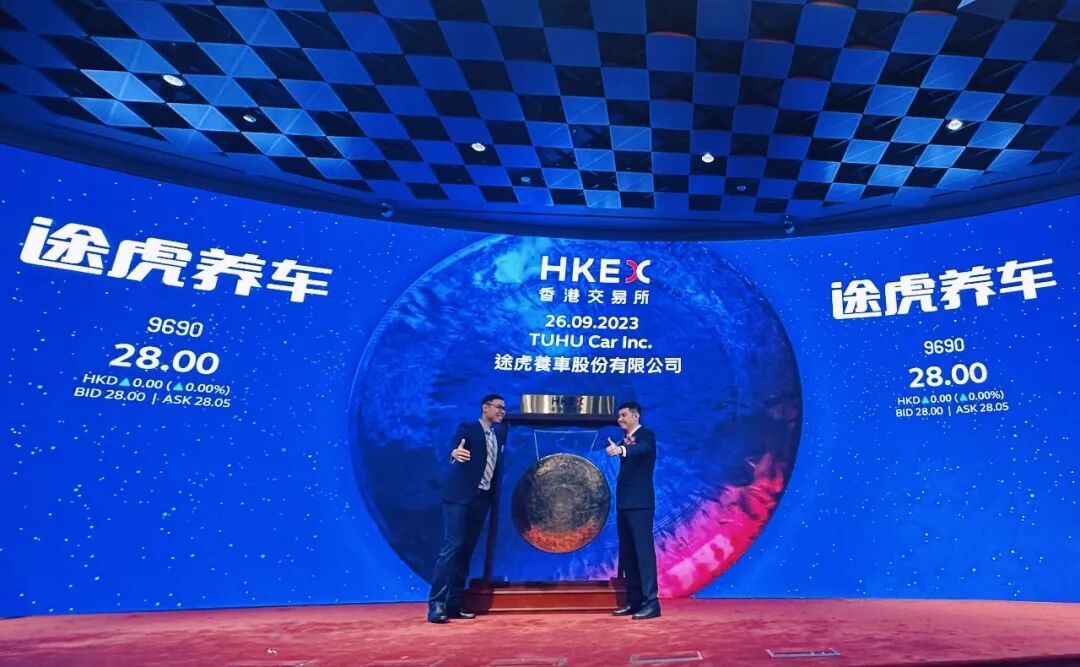
Tuhu's bell-ringing ceremony; Feng Yiming at far left
In a sense, this difficult and lengthy path is also the story of Atom Ventures founder Feng Yiming.
Before founding Atom, Feng's road had been smooth. In 2002, he joined Weitu Software, a Microsoft subsidiary, as a senior engineer. Four years later he joined Mustang Ventures, a US dollar fund, rising from investor to the firm's only Chinese partner in China within four years. By late 2011, after several successful personal investments, he founded Atom Ventures.
This was when the difficulties began.
In what many considered China's golden age of venture capital, Feng found himself exhausted within a few years — caught in the valuation bubbles and greater-fool games of the group-buying wars and the sharing economy frenzy. As an early-stage investor, he chased trends he couldn't properly evaluate, like ramen and river snail rice noodles, that seemed to demand action. At the most extreme, he met 21 projects in a single day, like a "fire captain" rushing from blaze to blaze. He experienced more than one deception and betrayal — one founder disappeared entirely before IPO, taking promised equity with him. Then came the fundraising winter that began in 2018 with no end in sight. Carrying guilt over laid-off colleagues and a stubborn refusal to quit, he sought a new investment direction with what he called "Atom's last bit of money."
To date, Atom manages RMB 700 million in AUM. Starting in 2019, Atom began focusing on "early, small, and hard" under the theme of domestic substitution — specifically, technology transfer in smart transportation and optoelectronics, serving as the first institutional investor for small hard-tech teams. Among these portfolio companies, Chenxin Technology, BIBO Auto, and Tongxing Intelligence have already received multiple rounds of follow-on funding from prominent institutions and state-backed funds. In 2022, a year of extraordinary hardship for all, Atom's smart transportation industrial fund closed with oversubscription against the trend.
Objectively speaking, over the past decade, Feng Yiming and Atom can hardly be called "mainstream players" in this industry. Even today, with a star project like Tuhu generating handsome returns, Feng still says he remains on the survival line.
In Atom Ventures' office in a corner of northern Shanghai, Feng Yiming told us his story. This story is more like the side of investors that the public never sees: having lived through the industry's four seasons, confident, then struggling, ultimately with something of a meaning-found-in-facing-death quality.
The following is Atom Ventures founding partner Feng Yiming's account, as told to An Yong Waves and edited —

I entered the industry in 2006. Within four years at a dollar fund, I became its only Chinese partner. By late 2011, preparing to launch Atom, I genuinely believed I was about to dominate this industry.
I'm not joking. I still remember seeing a project in 2010 with a RMB fund investor present. Out of courtesy I let him ask questions first. For an hour he asked about business registration, legal matters, social insurance — not a word about the actual business. He left without even knowing what the company did. It was the era of PE-for-all, when hordes of people did pre-IPO deals: compliant, profitable enough to list, no need to understand the business itself. I thought to myself: these people understand nothing. I'm incredible. Full of confidence.
2015 was the peak. The gaming company Atom invested in in 2012 (Note: Huorong Information) was acquired. RMB 950,000 became RMB 70 million in cash within two-plus years — a 73x cash return. I felt invincible. "Of course it's me."
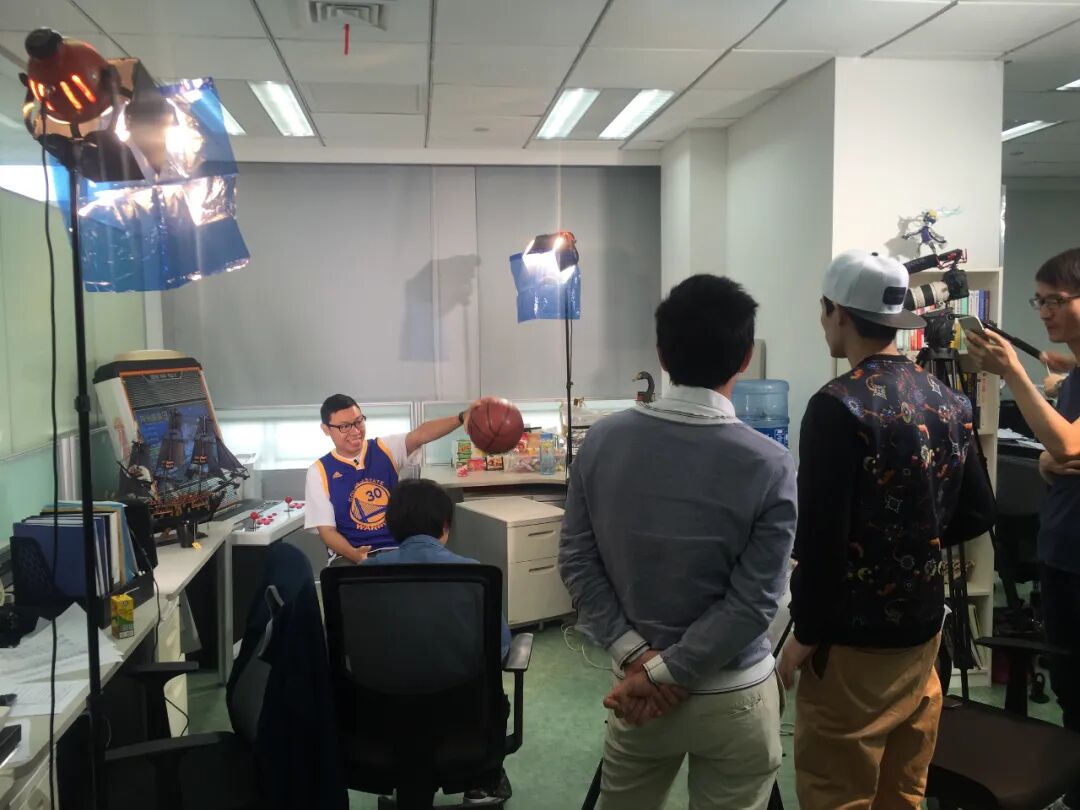
Feng Yiming being interviewed by media at Atom Ventures' first office
With money returned, I began "investing like crazy." 2015-2018: everything could be shared, everything could come to your door, everything could offer coupons — the most frenzied era of the internet. Investors then believed in infinite possibility, massive markets, abundant capital, that Chinese models could replicate worldwide. Only those who lived through it can understand that confidence — belonging to someone in the most surging industry at the most passionate moment.
Then reality began its "brutal beating" of me.
As market money increased, weekly meetings became a pattern: colleagues reporting which projects had how many term sheets, me having to greenlight term sheets just to keep up. Reflecting now, I was浮躁 [restless], hadn't thought clearly about what I should invest in, and was path-dependent. So O2O, entertainment, consumer, a few tech bets — I was constantly forced into decisions, like a fire captain at the company.
My logic then was to get early positioning in industries that might explode. But looking back, when market capital is abundant, the probability of success for individual projects actually decreases. Much capital piles into the same project types. Some investors may enter late, but with enough capital stacked, success rates can rise. So for a long time, judging a project's quality had nothing to do with business model — it was about the CEO and team's "sustainable financing ability."
Yes, "sustainable financing ability." I haven't said that in a long time.
Despite reality's beating, my pride remained high. Early-stage investing — as long as results aren't out, there's always hope, projects can always keep running. So from 2016 through 2019, despite painful investing, I kept investing until many projects were nearly dead.
Worse, Atom couldn't raise new money.

Honestly, Atom's 2019 transformation was forced — a transformation after getting beaten badly, after being unable to survive.
I still remember everyone asking the same question when I fundraised: What's your advantage?
Cite strong historical performance? "I'm not investing in your last fund." Say you invest in entertainment, consumer, with sharp industry insight? "Where's the differentiation?" Truthfully, I couldn't answer then.
Today I can tell anyone: in smart transportation and optoelectronics, Atom has partnerships with leading companies, exclusive channels, successful cases, deep expertise. But in 2019, I really couldn't answer.
Maybe that's how the world works. When you've hit a star project, you can talk beautifully, attribute all luck to skill, and no one asks you anything. But when you hit setbacks, everyone asks: "What's your differentiated advantage?"
Some institutions in this market have fundraising ability as core competency, but Atom was never that type. We couldn't talk up projects grandiosely. With my dollar fund background, I was confident in my investment fundamentals and project judgment — but even when market money was everywhere, we struggled to raise.

At the 2023 Munich Motor Show, photographed at Frankfurt's Goethe House Museum
By 2019 it was worse. The first half of Atom's fourth fund went to entertainment and consumer; when the second half was due, several LPs simply didn't pay. The secondary market had heated up, many turned to stocks. Secondaries have liquidity — enter and exit at will. The siphon effect drained primary market money directly. That period was excruciating: invested projects slowed, follow-on capital couldn't arrive. From today's perspective, that was my most desperate moment — feeling Atom was going to die.
Truly forced into a corner, I made staff cuts. In thirteen years, Atom has laid off exactly two colleagues. Truly unwilling.
In that situation one could make compromises — I knew managers who "partnered" with institutions for fundraising. So-called "partnership": give up carry, find pretexts to raise together. But I didn't want to sacrifice too much carry. Investing requires giving teams enough motivation — making money on hits creates virtuous cycles. Give everything away, and you're profiting from management fees while losing fund money?
Through 2022, Atom's management fees lost money for ten full years, subsidized from previous earnings and my own savings.
The "last straw" pushing Atom's 2019 transformation was how painfully consumer investing had become. Everyone was saying then: "All consumer products deserve to be re-done by the internet." Colleagues pitched consumer deals — toothbrushes, mouthwash, cleansing oil, ramen, yogurt. But I'm a straight-laced engineering guy without high lifestyle demands. I told them directly: I have no judgment on these deals you bring. Many consumer investors can spin elaborate theories, but look closely — same OEM, same livestreamer sales, packaging either guochao or anime — abstractly, all cast from the same mold. I couldn't evaluate them.
After a period of torment, I decided this couldn't continue. When the final RMB 90 million of Fund IV finally arrived, I locked myself in my office to figure out what Atom should actually do — not to betray the benefactors who'd supported Atom in hard times. At that moment, US-China friction was intensifying, critical supply chain links were breaking, and I saw opportunity in domestic substitution.

From mid-2019 to early 2020, there were numerous supply chain "discontinuation" incidents in automotive and medical due to US-China relations. I judged domestic substitution would be a massive trend in future global supply chains. Seeing this opportunity, I holed up in my office and wrote the first 40-plus-page PPT (this technical thinking document, still being updated).
The core question: how to actually do this? Early-stage tech investing has two difficulties — breadth: too many technology directions to cover; depth: even PhDs with 20-30 years in a niche may not fully understand it. Atom had its own challenge: we only had that last bit of money.
Finding domestic substitution tracks with sufficient market scale in China isn't hard; the hard part is who can actually execute. Two types of people: first, researchers in institutes who've been focused on this direction for years; second, core veterans from foreign companies who've seen how these "pigs fly" and might replicate it in China.
Another selection criterion: product companies yes, service companies ok, project companies no. I believe long-established companies in an industry struggle with domestic substitution. Most are project-based, giving them engineering capability but not R&D capability. We believe in newcomers.
What's the difference between projects and products? Customization. You see many Chinese system integration companies that keep doing projects without productizing or standardizing the core elements. Once in projects, clients demand endless customization, and employees end up serving clients rather than developing products.
Only products are scalable. The world's greatest companies are product companies.
Though we established certain "criteria," none were technology-related — because we genuinely didn't understand then.
But regardless, we started investing. Internal "red lines" then: nothing above RMB 30 million, since remaining capital was only RMB 90 million total; nothing outside Beijing, Shanghai, Shenzhen, Hangzhou, Suzhou — we had offices in Beijing and Shanghai, Shenzhen was a tech investment stronghold, Hangzhou and Suzhou required no accommodation, management fees truly couldn't cover travel.
I told colleagues then: if anyone wants to leave, I absolutely won't stop them — because if Atom's bet is wrong, I'm harming everyone. But if you stay, Atom will offer industry-leading carry, unchanged.
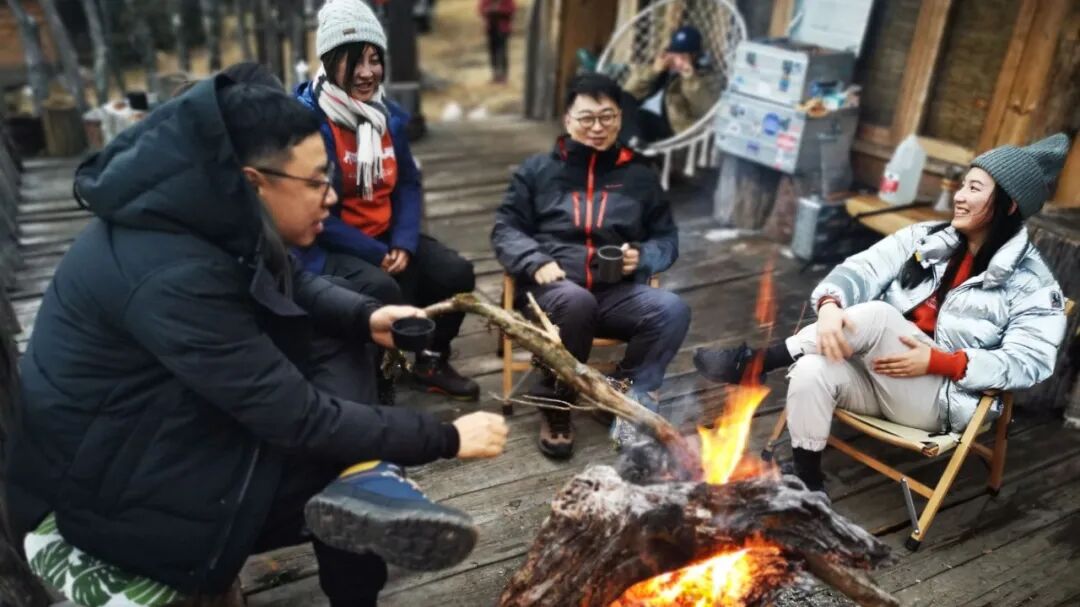
January 2021: Atom team high-altitude hiking in Anaguo, Yunnan
We chose smart transportation and optoelectronics. We began finding those "two types of people" — in research institutes, Tsinghua and Tongji had the strongest automotive programs, so we dug deep into their alumni networks. For returnees, who mostly rely on parks when starting up, colleagues ran through all 200-plus Shanghai industrial parks.
This differed from internet deal sourcing. Before, deals were everywhere — entertainment, consumer, which early project lacked an FA? Waiting for FAs to feed deals was normal, the easiest path. But tech investing had fewer deals and no truly knowledgeable FAs, so we dug ourselves — scanning buildings in key parks one company at a time, gritting through the grunt work.
Tech company valuations were rising then, forcing us to only do first rounds. So most of our investments then were first rounds without FAs, and most received follow-on funding, growing well with rapidly rising revenue and profit. First-round-only, underwater projects gradually became Atom's label.
This is what we did right these years. Of course, this is hindsight — at that 2019 moment, I could have played it safe chasing hot consumer companies, maybe getting quick follow-ons. But no way out, unsustainable, still dying. So then, we could only believe domestic substitution was right — not doing it meant no path to survival.

During Atom's transformation, I suffered my biggest setback as an investor.
In 2021, a founder I'd once helped betrayed me. We'd essentially assembled his startup for him, even connecting his team. Before IPO, not only were original promises unfulfilled, but he allegedly had people smear me and Atom. One day, scrolling Weibo, I lost it — my only time crying in the office. Too wronged; neither I nor my team deserved such vicious attacks.
Early-stage investing is genuinely difficult. We've invested in nearly 100 companies; many died. M&A or IPO is extraordinarily hard. But as an early-stage investor, I actually enjoy the state of being with early companies — discussing problems with founders, solving problems as a co-founder rather than an investor. For investors at our stage, company troubles are normal; their absence would be unreal.
But being stabbed in the back emotionally is very different from a project dying. Early investors accept failure consciously, but betrayal isn't included.
After this painful "farmer and snake" experience, I took long to recover. Now I think I'd still choose to believe. Though not everyone deserves your trust, you must believe there's light. Charlie Munger helped me greatly during this period: don't resent others' betrayal. "I'm not a victim, I'm a survivor."
Not: I'm successful, so I survive. But: I survive, so I have opportunity to become successful.
However others harm me, I survive and still have this platform to do what I want.
Actually, the decision to institutionalize Atom in 2012 came after several successful personal angel investments, plus dollar fund training — I genuinely had a "Sequoia dream." But now, social development logic has changed; rather than getting big, better to be yourself. Today I have only an "Atom dream" — giving our portfolio companies financial value, cognitive value, even emotional value; being a valuable institution in this market.
After so many years in VC, regardless, I never thought of giving up. There are two pains: loving something you're bad at, or being good at something you dislike. I'm somewhat fortunate — over a decade ago I found something I both love and am good at.
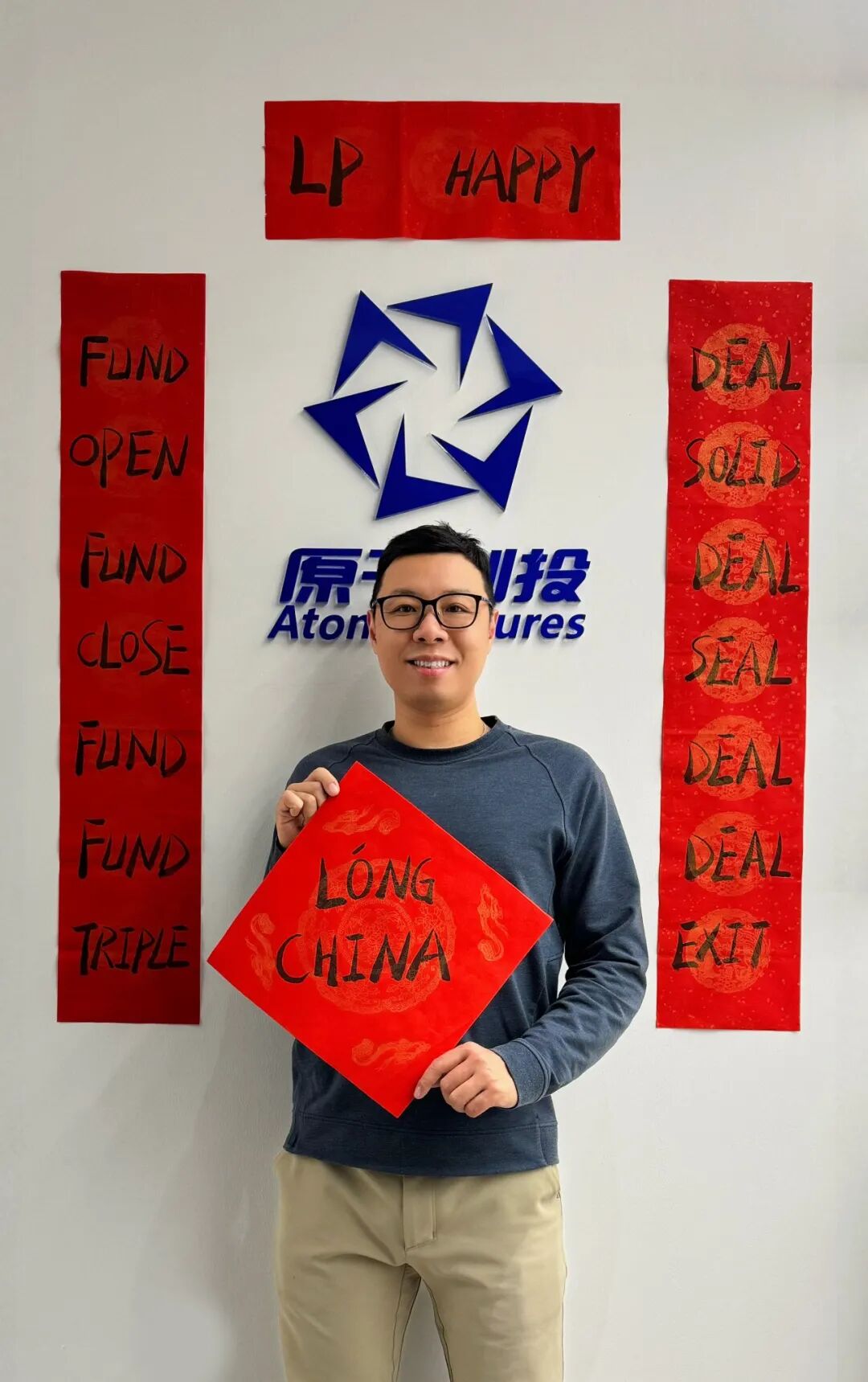
Spring Festival 2024: Feng Yiming wrote a couplet for Atom
I find empathy with founders comes naturally. As an engineer for so many years, I can quickly grasp their points, generating understanding and resonance. Also having seen so much joy and sorrow, I genuinely enjoy chatting with founders, never finding it tiring — I can feel the pain of entrepreneurship.
So the investing process brings me joy, sometimes more than results.

Recently chatting privately with friends and peers, everyone says times are tough, but I actually feel much better. That so-called "golden age" of 2015 was my most painful period. Later Atom found the right direction for sustained digging and investing; now life is more composed.
Our smart transportation industrial fund closed successfully with oversubscription in 2022, such a difficult year — LPs' and portfolio companies' support and effort, neither dispensable, made Atom's survival possible.
But I'm also reflecting: is tech investing today repeating 2015's bubble? I don't know. Precisely because I don't know, I said internally in 2022: Atom is ten years old, we're still entrepreneurs, still on the survival line.
Now year thirteen, still so.
Perhaps uncertainty is precisely this industry's charm.
Tuhu is our first portfolio company to list. Before IPO, I found Tuhu's 2012 pitch deck and messaged the CEO: "The 'brags' from back then, achieved in phases. I don't know what to say, so take this as a congratulations gift." He replied: "Entering history, still need effort."
Truthfully, we didn't initially treat Tuhu as Atom Fund II's best project. Fund II launched April 1, 2012; before Tuhu's IPO, DPI was already nearly 4. On Tuhu's listing day, a friend sent me a screenshot — someone had summarized "Atom's Tuhu return is 300x." Final returns aside, all past performance; people must look forward.
More than another milk tea brand, China lacks cutting-edge technology. I'm fortunate to have a team sharing this view — having ridden internet's ups and downs, not retreating when tech transformation seemed impossible, now with even deeper sector expertise than mine in niches. This combat capability is essential for Atom moving forward.
That 2020 PPT's short-term goal was "in five years, become a first-tier fund in tech." Going forward, if people mention five names of funds that truly invest early, small, and hard-tech, I hope Atom is among them. Speaking of Atom Ventures, I hope it's not only Feng Yiming.
Feng Yiming at Tokyo National Museum
Image sources: IC photo / Courtesy of interviewee