This Is So Elon Musk | Notes from the An Yong Editorial Team
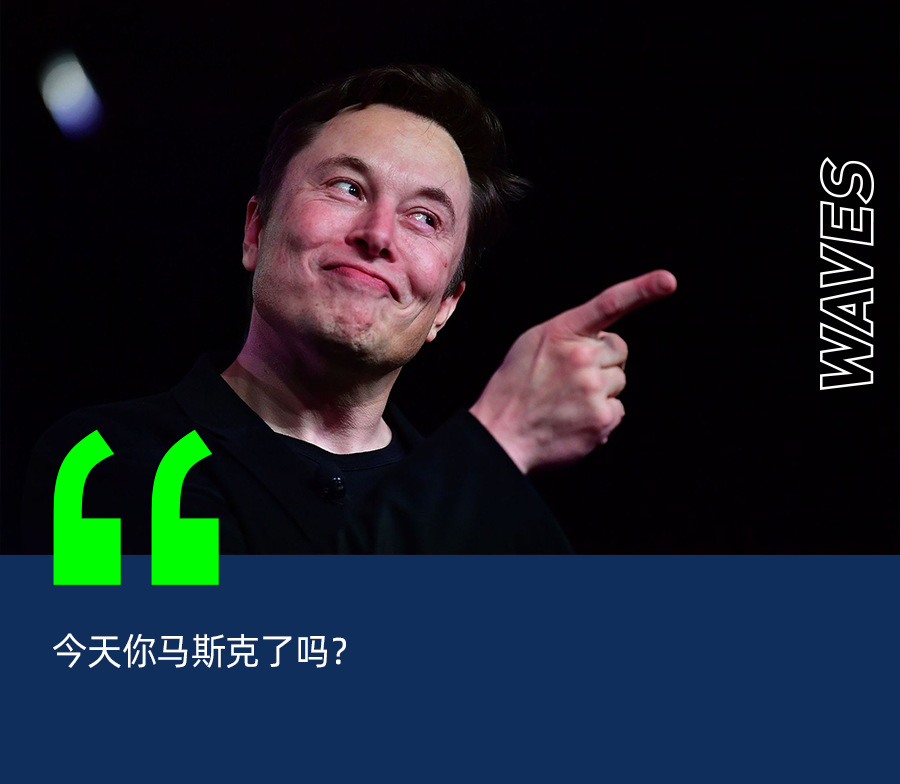
Have you Elon Musked today?
Produced by | The Flow Editorial Team

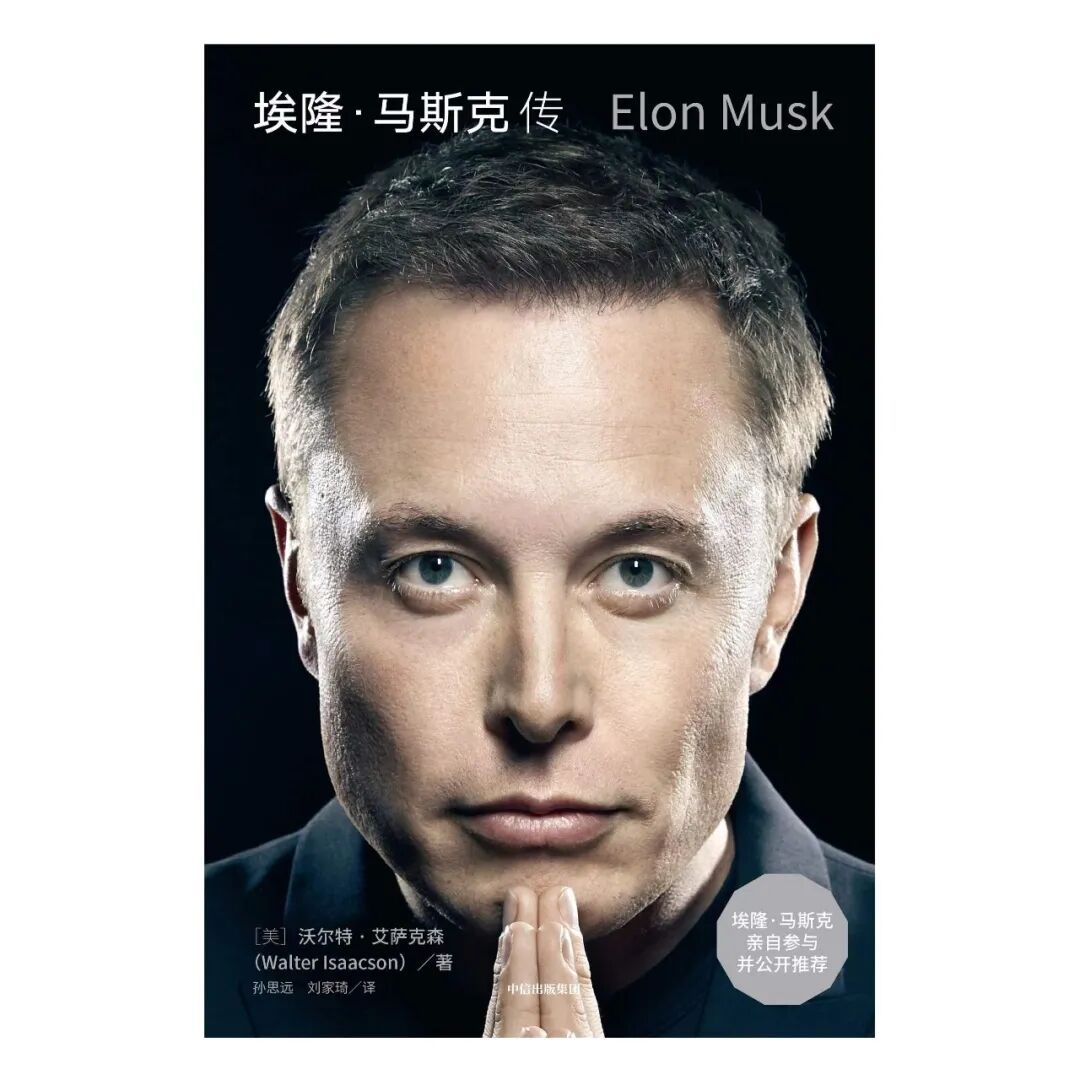
It's been a long time since the business world collectively devoured a book. You'd probably have to go back to 2011, with Steve Jobs and Principles. On September 12, Walter Isaacson's Elon Musk launched globally. After two years of "embedded access," Isaacson traced the trajectory of the past decade's most watched entrepreneur — through boardroom meetings, factory tours, and interviews with Musk himself, his family, friends, enemies, and colleagues — with granular, almost obsessive detail.
Why are investors so drawn to Musk's story?
Some answers are obvious: he's the undisputed leader of tech today, founder of Tesla, SpaceX, and Neuralink; the first person in human history to amass over $300 billion in wealth, possessing equal genius for creating and destroying fortunes; entangled in too many backroom sagas with Microsoft, Google, Meta, and OpenAI to count; and, of course, his own operatic life and theatrical self-presentation.
Many people like Musk's story because it's conflict-ridden and legendary enough to enjoy even if you don't like the man himself. But for businesspeople, reading Musk carries an extra, subtler charge. In this entrepreneur, you can see what venture capital hoped to chase at its inception — faith in technology, and the dream of changing the world.
This world never lacks for people going with the flow. Playing it safe brings comfort, but never real creation. At a moment when "certainty" trumps "non-consensus," reading Musk might remind people of what they once felt when choosing to start companies or invest.
As Isaacson writes at the close of Elon Musk: Sometimes, great innovators are risk-takers dancing on the edge, refusing to be domesticated. They may be reckless, awkward, even crisis-prone — but perhaps they're also crazy enough to think they can actually change the world.
This weekend, join The Flow's writers and analysts in finding a moment of inner madness through 36 details from Elon Musk.
Darkness Is Merely the Absence of Photons
The young Musk was fascinated by space and filled with "delusions" of changing Earth. Like all children, he once feared the boundless dark — but after learning that "darkness is merely the absence of photons," he never feared it again. "Elon's most painful experiences happened at school. For a long time, he was the youngest and smallest student in his class, and he struggled to grasp the unwritten rules of human interaction. Empathy wasn't innate to him; he had no desire to please others, no instinct for it. So the bullies fixed on him, swinging fists at his face."
@Du Meng: Darkness, in this sense, was the seventh "free personality" born in childhood; extreme pain, the groundwork for extreme eruption.
Childhood Adventures
Musk loved to explore. He'd lead his brother Kimbal and cousins Russ, Lyndon, and Peter Rive (some of whom would later join his ventures, as we'll see) on expeditions. His favorite activity: making gunpowder and rockets at home. He'd mix compounds himself, combining the basic ingredients of saltpeter, sulfur, and charcoal with strong acids and alkalis, packing them into canisters, then risking blown-off hands to test explosions outdoors. When the neighborhood got boring, he'd organize bike trips into the wild. Once, during a sand dune race, Kimbal Musk flew off his bike and crashed into barbed wire. Their most thrilling escapade: a trip to Johannesburg, undertaken behind their parents' backs.
@Du Meng: I was wild as a kid too, but not this wild. I'm still wild now — wilder than him, even. Better to say: the brave enjoy the world first.
@Huang Zhuxi: We all played with mud as kids. The difference? Demon child Musk played with mud that went boom.
"Flow"
To escape the damage of family upheaval, Musk threw himself into something else: computers. In 1980, he got his first computer, a Commodore VIC-20. It came with a free BASIC programming manual, which he treasured. At age 10, he taught himself in three days what took most people six months.
At 12, he coded a space game called "Blastar." Encouraged by his mother, he submitted it to a South African computer magazine called PC and Office Technology, earning his first $500.
@Du Meng: Young Musk had already mastered the proper use of "flow" in entrepreneurship.
@Xu Muxin: Which tells us something else — Musk's mother is herself a force of nature. The woman who posed nude with white hair for a magazine cover passed on her refusal to follow rules, her sheer life force, to her son.
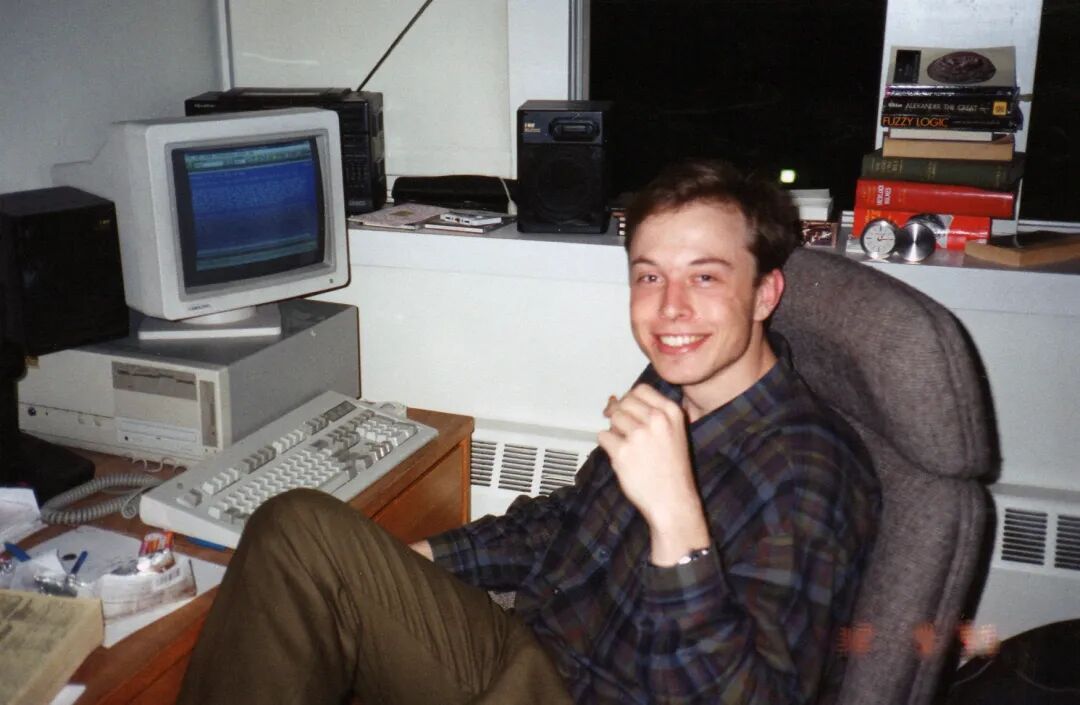
Elon Musk illustration
To Silicon Valley
At the University of Pennsylvania, Musk landed lucrative Wall Street internships, but finance bored him — he felt bankers and lawyers contributed nothing to society. He also disliked the students he met in business classes. So he came to Silicon Valley. It was the decade of tech's irrational exuberance: add ".com" to any idea, and Porsches came screaming down Sand Hill Road, venture capitalists waving checks, barely able to contain themselves.
By day, he worked at Pinnacle Research. By night, at a small Palo Alto company called Rocket Science, which made video games. One evening, Musk showed up in their building asking for a summer internship. They threw him a problem the entire company couldn't solve: how to "trick" a computer into multitasking by reading graphics from a CD-ROM while moving an icon on screen. Musk went to internet message boards, asking hackers how to use DOS to bypass BIOS and joystick readers. "None of the senior engineers could crack it," he said. "I solved it in two weeks."
@Guo Yunxiao: Genius turns left; madman turns right.
Hardcore
For their first meeting with potential investors, Musk and Kimbal had to take the bus up Sand Hill Road — their father's car had broken down. But as word of Zip2 spread, VCs were clamoring to meet them. They bought a massive server rack and put a tiny computer inside, so investors would think their servers were huge. They named it "The Bombe," after a Monty Python sketch. "Every time investors came, we'd show them this pagoda," Kimbal said. "Then we'd secretly laugh, because they'd look at it and think we were doing something really hardcore."
@Chen Zhiyan: The Musk brothers understood investors.
Fights Breaking Out Over Anything
Kimbal said: "I love, really love, deeply love my brother — but working with him is really hard." Their disagreements were so severe they'd regularly wrestle on the office floor. Sometimes over major strategy, sometimes petty slights, sometimes over the name "Zip2" (Kimbal and a marketing firm came up with it; Elon hated it). They had no private offices, only cubicles, so everyone had to watch. In their worst fight, they crashed to the ground, Elon about to pound Kimbal's face when Kimbal bit down hard on Elon's hand, tearing out a chunk of flesh. Elon had to go to the ER for stitches and a tetanus shot. Kimbal said: "When we clashed that hard, we completely forgot everyone around us." He later admitted Elon was right about "Zip2": "The name was terrible."
@Ren Qian: This would be unheard of in Chinese startups. It shows Musk was a demanding manager from the very start of his career, and he didn't care whether his conflicts affected others.
@Guo Yunxiao: But did it have to get physical... like this?
Selling the Company, Buying a Sports Car
After Zip2's acquisition, the Musk brothers gave their father $300,000 and their mother $1 million from the proceeds. Elon bought an 1,800-square-foot condo and a $1 million silver McLaren F1 — then the fastest production car in the world, and his most extravagant purchase to date. He let CNN film the delivery at his home. "Just three years ago, I was showering at the YMCA and sleeping on the office floor," he said, dancing in the street as the car came off the truck.
@Ren Qian: Musk never got lost in flaunting "first money." Zip2 remains the least worth mentioning of his ventures.
Satisfaction
As Musk slowly settled into the driver's seat of his million-dollar McLaren, he told the CNN reporter filming on-site: "For me, the real payoff is the satisfaction of having created a company." At that moment, a beautiful young woman wrapped her arms around him — his girlfriend. "Yeah, yeah, but this car too," she murmured. "This car, let's be honest." Musk looked slightly embarrassed, lowered his head, and began checking his phone. Her name was Justine Wilson, later Musk's first wife.
@Guo Yunxiao: If we're talking about Musk's satisfaction, the McLaren clearly wasn't "full" enough. Neither was Justine.
The Art of the Pickup
"So I convinced her to go out with me," he told her. "There's a fire in your soul, and I see myself in you." Musk's grand ambitions made a deep impression on Justine. She said: "Unlike other ambitious men, he never talked about making money. He felt that in this life he would either become unimaginably wealthy or lose everything—there was no third possibility. What truly attracted Elon were the problems he wanted to solve." Whether he was saying she should be with him or that he was going to build electric cars, his indomitable will was irresistible to Justine. She said: "Even when he was being completely outrageous, you would believe him, because he believed it himself."
@Huang Zhuxi: When a founder is talking about "making money," his startup is really just a business. Only when "making money" becomes the most unimportant little byproduct of the entrepreneurial process can it truly be called a startup in any meaningful sense. Musk's binary thinking is a necessary condition for being a born founder, and also the key to being "mesmerizing." (P.S. What inexperienced young woman could resist this kind of "pie in the sky"?)
@Ren Qian: What's even more devastating is that every "pie in the sky" he drew later came true.
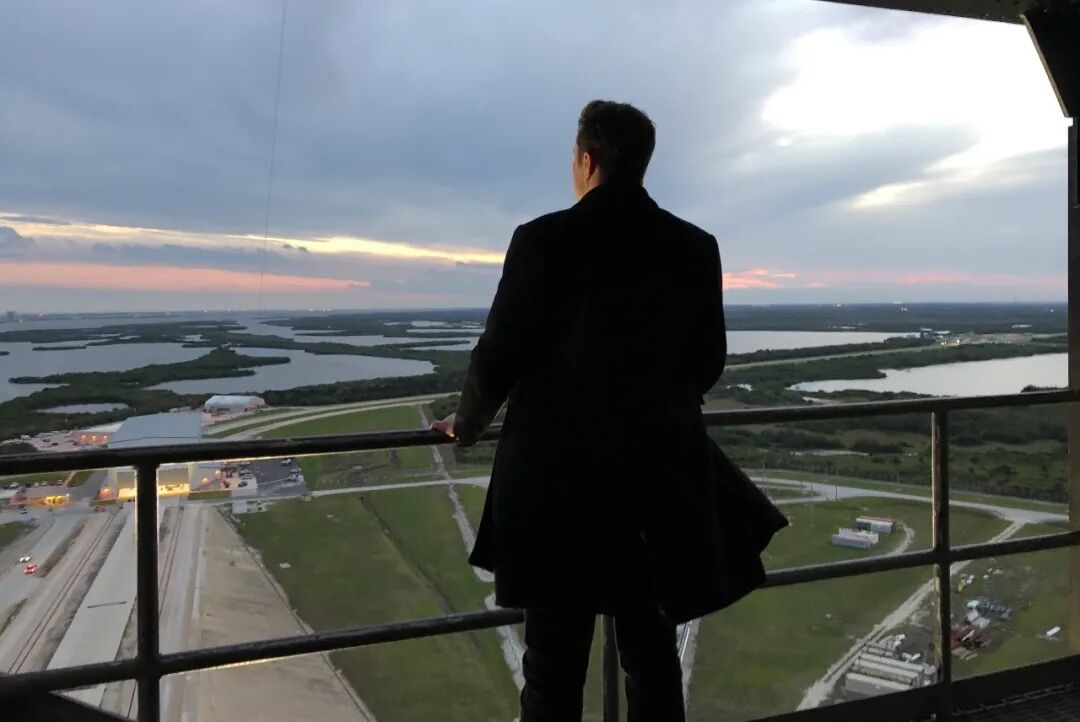
Elon Musk illustration
X
His vision for X.com was ambitious: it would be a one-stop shop for all financial needs—banking, online payments, checking, credit cards, investments, and loans. Transactions would be processed instantly, with no waiting for payment settlement. His thinking was that money was just an entry in a database, and he wanted to design a method for all transactions to be recorded in real time, securely—somewhat like what blockchain does today. Some of his friends wondered: if you name an online bank something that sounds like a porn site, will people feel safe depositing their money there? But Musk loved the name "X.com." Unlike "Zip2," which tried too hard to be clever, "X.com" was simple, memorable, and quick to type on a keyboard. It gave him what was then the coolest email address: e@x.com. "X" would become his letter of choice for naming people and things—from companies to children.
@Chen Zhiyan: X, the 24th letter in the English alphabet, is the letter that begins the fewest words. It represents the unknown, infinity, goals, and hope.
The Asshole Move
One of Musk's management strategies was to set a deadline that was nearly impossible to meet, then drive his colleagues to achieve it. That's what he did in the fall of 1999, announcing that X.com would launch to the public over Thanksgiving weekend—what one engineer called "the asshole move." In the weeks leading up to it, including Thanksgiving itself, Musk prowled the office every day, nervous and on edge, sleeping under his desk most nights and keeping everyone else's nerves frayed too. One engineer went home at 2 a.m. on Thanksgiving, only to get a call from Musk at 11 a.m. demanding he come back because another engineer had worked through the night and "was no longer able to push forward at full strength." Internally, there was endless complaining and constant conflict—but the result was success. The weekend the product launched, all the colleagues walked together to a nearby ATM. Musk inserted an X.com debit card, cash whirred out, and the whole team cheered.
@Ren Qian: So should Musk thank the team, or should the team thank Musk?
@Chen Zhiyan: Musk would definitely thank himself.
The "Acquisition" of a Wife
Musk flew in a day early with a prenup drafted by his lawyer. The two of them drove around the island trying to find a notary open on a Friday evening, but came up empty. She agreed to sign it upon their return (she eventually signed two weeks later), but the negotiation left them both on edge. She said: "I think the fact that we couldn't get the prenup signed before the wedding made him incredibly anxious." The result was predictable: another fight. Justine got out of the car to find her friend. Later that day, back at the villa, they started fighting again. "The villa was open-plan, so all of us could hear the arguing," Farooq said. "We didn't know whether to intervene or not." At one point, Musk walked straight out and told his mother the wedding was off. Maye responded with visible relief: "You're finally out of the woods." But then he changed his mind and went back to Justine.
@Guo Yunxiao: It's practically identical to the process of acquiring Twitter.
@Huang Zhuxi: Practically identical to the marriage dramas of Wang Xiaofei and Barbie Hsu, or Gary Chaw and Wu Suling. (What they all have in common: Cancer male celebrities.)
Arm Wrestling
After X.com merged with Confinity, the company that developed PayPal, co-founder Max Levchin and Musk disagreed over whether to use Microsoft's Windows or Unix as the company's primary operating system. Musk admired Bill Gates, liked Windows NT, and believed Microsoft would be a more reliable partner. Levchin and his team were shocked, considering Windows NT insecure, buggy, and uncool. They favored various Unix-like operating systems, including Solaris and open-source Linux.
One night, past midnight, Levchin was working alone in a conference room when Musk walked in, ready to continue the argument. "Eventually you'll see what I see," Musk said. "I know how this is going to play out."
"No, you're wrong," Levchin replied in his flat tone. "Microsoft's system won't work."
"How about this," Musk said. "Let's arm wrestle for it."
Levchin thought that however they resolved their software dispute, arm wrestling was the stupidest possible method—and Musk was nearly twice his size. But he was so exhausted from overtime work that he agreed to get it over quickly. Levchin threw his entire body into it, but lost almost immediately. "Look," he told Musk, "being bigger has absolutely nothing to do with making technical decisions."
Musk smiled and said: "Okay, I understand." But he got his way anyway, spending a year having his engineering team rewrite the Unix code Levchin had written for Confinity.
Levchin found himself unable to figure Musk out. Was he serious about arm wrestling to settle the score? He could be manically focused one moment and full of humor and playfulness the next—was he calculating or genuinely unhinged? "Everything he does has some level of irony to it," Levchin said. "If we're using gaming terminology, his irony ability goes up to 11 and never drops below 4." One of Musk's skills was luring others into his ironic frame of reference, where they could then share inside jokes. "He displays an enormous passion for irony, firing off sarcastic remarks like a flamethrower, conveying to those around him a vibe of: 'You get me, you're all exclusive members of the Elon club.'"
@Guo Yunxiao: The important thing isn't which operating system to use, but "in this house, I have the final say." (Hard to imagine partners arm wrestling at investment committee meetings.)
@Chen Zhiyan: Looking forward to a domestic entrepreneur/investor irony ability ranking.
In This House, I Have the Final Say
On the surface, the wedding ceremony by the hotel pool seemed joyful. Justine looked radiant in a sleeveless white dress with white floral headpieces; Musk looked dashing in a well-tailored tuxedo. Maye and Errol were both present, even posing for photos together. After dinner, everyone danced the conga, with Elon and Justine leading the first dance. He placed both hands on her waist; she wrapped her arms around his neck. They smiled and kissed. As they danced, he whispered in her ear: "In this house, I have the final say."
@Ren Qian: All the beauty was just setup for that whispered line—such intense oppression!
@Huang Zhuxi: "In this house, I have the final say." Truly the devil Musk. If this were filmed, the next shot should be a close-up of his slightly upturned corner of the mouth.
Making the Roadster's Door Bigger
One major design change Musk insisted on for the Roadster was enlarging the door. "To get into the car, you'd have to be a tiny mountaineer or a contortionist," he said. "It's ridiculous, it's absurd." At 188 cm tall, Musk found he had to wedge his large posterior into the seat first, fold himself almost into a fetal position, and then try to stuff his legs in. He asked: "If you're going on a date, how is a woman supposed to get in?" So he ordered the bottom of the door frame lowered by 3 inches, which required redesigning the chassis, meant Tesla couldn't reuse Lotus's crash test certification, and added $2 million to production costs. Like many of Musk's improvements, this one was correct but costly.
Musk also ordered the seats redesigned to be wider. Eberhard said: "My original thinking was to use the same seat structure as Lotus, otherwise we'd have to redo all the testing. But Elon thought the seats were too narrow, not suitable for his wife's hips or others'. But I have a small butt, so I kind of missed those narrow seats."
@Guo Xuemei: "Probably the worst seat I've ever sat in any car"—Musk also mercilessly evaluated the early version Model S seats with this line. Achieving "sitting freedom" may have been the top priority for an automaker, at least for "long-legged" Musk.
The "Hypocrite" Gates
They (Bill Gates and Elon Musk) planned to arrange a meeting. Gates had a team of schedulers and assistants, and said he would have his staff call Musk's coordinators.
"I don't have coordinators," Musk replied. He had made up his mind to get rid of personal assistants and schedulers because he wanted complete control over his own daily arrangements. Musk added: "Just have your assistant call me directly." Gates found it "very strange" that Musk had no schedule, and even stranger to have his assistant call Musk directly, so he called himself to arrange a time they could meet in Austin.
There was one controversial issue they couldn't avoid: Gates had once shorted Tesla stock, betting heavily that the price would fall. He was wrong. This argument reflected their fundamentally different mindsets. I asked Gates why he shorted Tesla stock. He explained that he had calculated the EV market would be oversupplied, causing prices to drop. I nodded, but he hadn't answered my question: why did he short Tesla stock? Gates looked at me as if I hadn't understood his explanation, then answered anyway, though he felt the answer was self-evident—he believed he could make money by shorting Tesla stock.
This way of thinking was incomprehensible to Musk. He believed driving global vehicle electrification was his mission, and had put all his money into this field, even when it didn't look like a safe investment. A few days after Gates's visit, Musk asked me: "How can someone say he cares deeply about addressing climate change, then try to reduce the overall investment in the company contributing most to it? That's so hypocritical! If a sustainable energy company fails, are you going to profit from that?"
Grimes (one of Musk's girlfriends) added her own interpretation of the incident: "I feel like it's just two boys trying to see whose dick is bigger."
@Chen Zhiyan: Well, boys will be boys until they die.
A Killer Sense of Humor
At the Gigafactory Texas, between meetings, Musk sat quietly scrolling through news on his phone. When he came across Lucid's dismal quarterly sales report, he laughed for several minutes, then immediately posted: "I had more kids in Q2 than they made cars!" He continued laughing heartily to himself. "I just love my own sense of humor, whether other people like it or not," he said. "I'm just killing myself here." @Chen Zhiyan: Lucid: Excuse me?
Making the Future Look Like the Future
After playing it safe with the Model Y's design, Musk didn't want to repeat that approach with the pickup truck. "Let's be bold and amaze people," he said. Whenever someone pointed to a more conventional vehicle design, Musk would push back and gesture instead toward the cars in the video game Halo, or the vehicles in the trailer for the then-upcoming game Cyberpunk 2077, or the cars in Ridley Scott's film Blade Runner. Musk's son Saxon, who has autism, posed an unusual question that struck a chord with everyone: "Why doesn't the future look like the future?" Musk repeatedly cited Saxon's question, as he did that Friday with the design team: "I want the future to actually look like it's from the future." @Guo Xuemei: For Musk, Tesla should be a creature of the future—though in reality, it only looks the part on the outside. @Chen Zhiyan: Video games, science fiction novels, and sci-fi films built Musk's aesthetic of the future. But these are all human creations throughout history. Imagination—truly fascinating.
The Gamble
Musk is fundamentally different from Peter Thiel, who always focused on controlling risk. Thiel and Hoffman had planned to write a book about their PayPal experience; the chapter about Musk was titled "The Man Who Doesn't Understand What 'Risk' Really Means." If you need to motivate people to do things that seem impossible, "risk addiction" can be an extraordinarily useful trait. "What's amazing about him is that he can successfully get everyone to walk through the desert." This wasn't merely a metaphor. Years later, Levchin played cards with Musk at a friend's bachelor apartment. They were playing a high-stakes game of Texas Hold'em. Though Musk was no expert, he sat down at the table. "There were many smart people and skilled players there, all very good at counting cards, calculating odds," Levchin said. "What Elon did was go all-in on every hand, lose everything, buy more chips, double down. Finally, after losing many hands in a row, he went all-in once more, won, and then said: 'Alright, that's it, I'm done.'" @Ren Qian: Musk won't easily take his chips off the table—he wants them to keep taking risks with him. @Chen Zhiyan: Can you imagine? Musk isn't even a poker pro.
Colonizing Mars
At a PayPal alumni gathering in Las Vegas, Musk sat in a cabana by the pool, thumbing through a battered Russian rocket engine manual. Former colleague Mark Ulrich asked what he planned to do next. "I'm going to colonize Mars," he replied. "My life's mission is to make humanity a multi-planetary civilization." Ulrich's reaction was predictable: "Dude, are you crazy?" @Xu Muxin: Note how absurd this scene is: a 30-year-old former entrepreneur, just fired from two tech startups, now announcing he's going to Mars. @Huang Zhuxi: Maybe if he lifted his shirt, he'd reveal no belly button—truly a Martian.
The Importance of Skin in the Game
Rocket technology prodigy Mueller agreed to join Musk's company, but insisted his two years' salary be held in escrow by a third party. Mueller wasn't an internet millionaire, so he didn't want to risk his boss stiffing him on wages if SpaceX failed. Musk agreed, but after that, he considered Mueller an employee, not a SpaceX co-founder. He'd fought over this same issue at PayPal, and later at Tesla too. In his view, if you weren't willing to put skin in the game—investing your own money and intellect in a company—you had no right to call yourself a founder. @Xu Muxin: Once, an opportunity to become a SpaceX co-founder was right before me, and I chose an employment contract instead. @Ren Qian: That's why Musk is a true original, and why what we're reading now is The Biography of Elon Musk.
The Ultimate Weapon Against Independent Women?
In relationships, Musk could be cold and ruthless, lonely and helpless, or passionately enthusiastic—the last state most evident when he fell in love. In July 2009, Talulah returned to Britain to film St Trinian's 2: The Legend of Fritton's Gold. She had shot the first installment of this girls' boarding school comedy two years earlier; now came the sequel. On her first day on set, at a manor near her childhood home in North London, she received 500 roses from Musk. "When he's angry, he's really angry; when he's happy, he's genuinely happy. He wears his emotions on his sleeve like a child," Talulah said. "Sometimes he can be very cold, but then he experiences things in this very pure way, with a depth of feeling that most people don't reach." @Huang Zhuxi: Falling in love like someone with schizophrenia. Are there still independent women who fall for this? @Xu Muxin: Independent women might actually fall for this. @Du Meng: Independent women might say he's not marriage material.
> "Little Horse, Are You Out of Money?"
The main purpose of Musk's trip to Russia was to buy two Dnepr launch vehicles—modified vintage ballistic missiles. But the more he negotiated, the more expensive they became. Finally he thought he'd closed the deal at $18 million for two rockets, only to be told no—that was $18 million each. He recalled: "What I conveyed was basically, are you guys insane?" Then the Russians said: Fine, we can raise it to $21 million. "They were just toying with him," Cantrell recalled. "They said: 'Oh, little boy, you don't have that much money?'" @Xu Muxin: Later this "little boy who didn't have that much money" spent $44 billion to buy Twitter.
> Cost Cutting and Efficiency
His obsession with costs, combined with his innate need for control, led him to an idea: manufacture as many components in-house as possible rather than buying from suppliers, which was standard practice in both the rocket and auto industries at the time. Mueller recalled that once SpaceX needed a valve; the supplier quoted $250,000. Musk said they were gouging and told Mueller they should build it themselves. They completed the job at minimal cost within months. Another supplier provided an actuator that rotated the upper-stage engine nozzle, quoting $120,000. Musk said it was no more complicated than a garage door opener, and demanded one of his engineers build it for $5,000 each. @Xu Muxin: The Musk Manual on Cost Cutting and Efficiency, Chapter One: If you can build it yourself, never buy it. For investors currently focused on manufacturing transformation, upgrading, and domestic substitution, this may offer some reference.
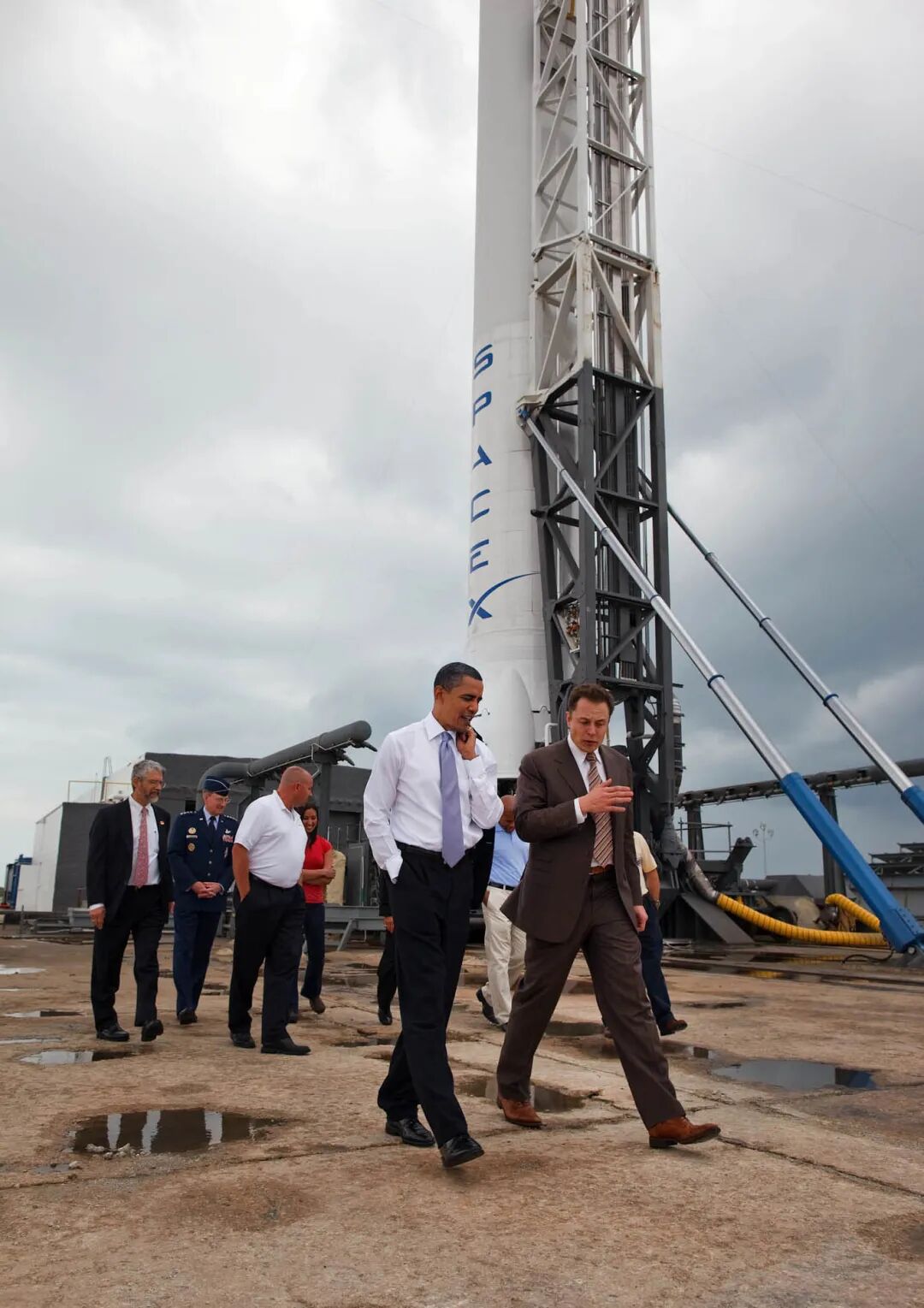
Elon Musk illustration
> Burn! Burn!
Shortly after liftoff, one of the three engines failed and the rocket exploded. After a moment of silence, he told the site manager to bring the van around so they could drive near the smoldering wreckage. "You can't do that!" the site manager said. "It's too dangerous!" Musk said: "We're going. If it's going to explode again, we can walk through the burning debris—when will we get another chance like this?" Everyone laughed nervously and followed along. It was like a scene from a Ridley Scott film: craters in the ground, burning bushes, charred metal fragments everywhere. Steve Jurvetson asked Musk if they could collect some debris as souvenirs. "Of course!" he said, gathering some himself. @Xu Muxin: "Those who can walk gracefully out of sorrow are artists."
> The Death of His Firstborn Son
Kimbal drove Elon, Justine, and Nevada (their eldest child) to the hospital. Though already declared brain-dead, Nevada was kept alive by machines for three more days. When they finally made the decision to turn off the ventilator, Elon felt his last heartbeat; Justine held the child in her arms and felt his final death rattle. Elon broke down sobbing uncontrollably. "He cried like a whimpering wolf," Maye said. "Cried just like a wolf." Elon said he couldn't bear to go home, so Kimbal arranged for them to stay at the Beverly Wilshire Hotel, where the manager gave them the presidential suite. Elon had Kimbal throw out Nevada's clothes and toys, which had been brought to the hotel. Only three weeks later did Musk compose himself enough to return home and look at his son's former room. Musk buried his grief deep inside. Navid Farooq, his friend from Queen's University, flew to Los Angeles to stay with him immediately after he moved back. Farooq said: "Justine and I tried to get him talking, to get him to discuss the child, but he wouldn't say anything." They just watched movies and played video games. Once, after a long silence, Farooq asked: "Are you okay? Can you get through this?" Musk still said nothing. "I'd known him a long time. I could read it in his face," Farooq said. "His face said four words: Not. A. Single. Word." @Guo Yunxiao: In true sorrow, even the artist cannot walk gracefully out.
> Why He Bought Twitter
At a small dinner in Palo Alto, Altman and Musk decided to launch a nonprofit AI research lab, which they named "OpenAI." Musk and Altman also discussed in detail an objective called "AI alignment"—which became a hot topic after OpenAI released a chatbot called ChatGPT in 2023. The goal was to align AI systems with human goals and values, much like the rules Isaac Asimov established in his novels to prevent robots from harming humans. Musk believed one way to ensure AI alignment was to tightly couple machines with humans. They should be extensions of individual will, not systems that might rebel and form their own intentions. Realizing that the success of an AI system depended on whether it could access vast amounts of real-world data for machine learning, he thought of Tesla as a "gold mine." Then he thought of another treasure trove: Twitter. As of 2023, Twitter was processing 500 million human posts per day. @Yu Lili: Beyond the rumored father-son reason, Musk's acquisition of Twitter finally has another, more normal justification.
> Don't you think this is fun?
Starting in December 2011, Musk grew increasingly comfortable with Twitter. Over the next ten years, he posted 19,000 tweets. "My tweets are sometimes like Niagara Falls, whoosh whoosh whoosh, coming too fast," he said. "Just browse through them, skip the random garbage." When I asked why he didn't exercise more restraint, he cheerfully admitted that he often "picked up a rock only to drop it on his own foot" and "dug his own hole to jump into" — but life needed to be interesting, needed to be exciting, and with that he quoted his favorite line from the 2000 film Gladiator: "Don't you think this is fun? Isn't this why you came here?" @Zhiyan Chen: Love this passage. If not for an interesting life, why bother coming at all? @Zhuxi Huang: Buy Twitter, and you get one-click delete rights over those 19,000 Niagara Falls tweets.
> Gaslighting
Talulah noticed that the little boy inside Musk manifested in another way — a darker way. Early in their relationship, he would stay up late telling her about his father. "I remember one night he started crying as he talked," she said. "It was truly a nightmare for him." During their conversations, Musk would sometimes slip into a trance-like state, recounting things his father had said. Talulah recalled: "When he told these stories, his consciousness had almost drifted away, he wasn't really in the room anymore." She was shocked to hear the wording Errol used to berate Elon, because it sounded not only cruel, but she had also heard Elon use the exact same words when he was angry. @Zhuxi Huang: Without question, Musk is a natural-born gaslighter, whether he's conscious of it or not. The perfect transformation from victim to perpetrator, covertly manipulating everyone around him, including Talulah.
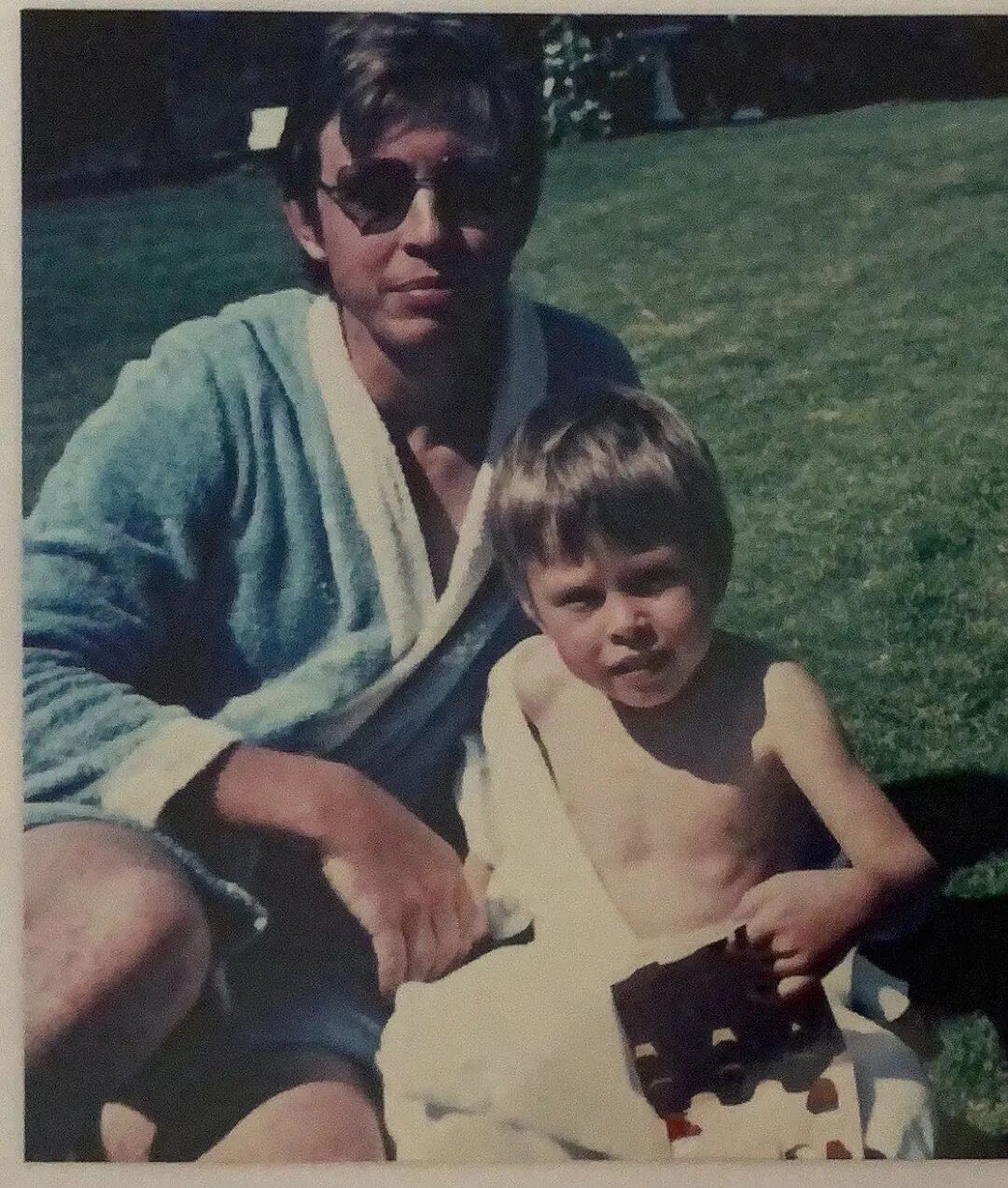
Illustration from Elon Musk
> Burnt Hair Perfume
Musk coped with stress in all sorts of bizarre ways, and coming up with crazy ideas was one of them. During a westbound flight, he grew excited about a recent idea: he wanted to sell a perfume that smelled like burnt human hair. After landing, he called Steve Davis, CEO of the Boring Company, who had previously successfully executed Musk's idea to sell toy flamethrowers. "Burnt hair perfume!" Musk said, already working on advertising copy. "Love the smell left behind after a flamethrower blast? We've bottled that fragrance for you!" Davis was always willing to indulge Musk's whims. He put in a request to a scent lab, offering a perfume contract to whoever first successfully formulated the odor. Later, when the Boring Company listed the perfume on its website, Musk tweeted: "Buy my perfume so I can afford to buy Twitter." Within a week, the perfume sold 30,000 bottles at $100 each. @Zhiyan Chen: Crazy Musk + Twitter acquisition pressure + Boring Company CEO indulging him = 1 new "perfume" + $3 million in revenue. What kind of divine combination is this?
> Kissing in Front of the Divorce Judge
So in 2012, Talulah filed for divorce, and moved into a Santa Monica apartment while their lawyers drafted the settlement. But when they appeared in court four months later to sign the papers, the story took a dramatic turn. "I saw Elon standing before the judge, and he asked, 'What are we even doing?' And then we started kissing," Talulah said. "I think the judge must have thought we were insane." Musk begged her to come home and see the children: "They keep asking where you are." So she went back. @Muxin Xu: The divorce judge didn't do anything to anyone. @Zhuxi Huang: End of story.
> "The Biggest Bullshitter in the World"
Musk launched a poll: "Reinstate former President Trump? Yes or no?" Setting aside whether Trump's account should be unbanned, and whether that decision should be put to an online vote — they at least had to confront an engineering problem: the poll needed to tally millions of votes in real time and display them live in users' feeds, which could crash Twitter's already understaffed servers. But Musk loved the risk. He wanted to see how fast this Twitter car could go, what would happen if he floored the accelerator, how close to the sun he could fly. James and Roth said they were terrified, but Musk looked triumphant.
When the poll closed the next day, over 15 million users had participated. The result was close: 51.8% yes, 48.2% no. Musk announced: "The people have spoken. Trump will be reinstated. Vox populi, vox Dei."
I immediately asked Musk afterward whether he'd had any premonition of the result. He said no. I pressed further: if the no votes had prevailed, would he have kept Trump banned? He answered affirmatively: "I'm not a Trump fan. He's too destructive. The biggest bullshitter in the world." @Zhiyan Chen: As of 7:45 p.m. Beijing time on September 14, 2023, Elon Musk had posted 30,691 times on X (formerly Twitter), while Donald Trump had posted 59,120. Pretty rigorous.
> French Farce
A deeply bizarre and awkward situation, implausible enough to sound like a modern-day French farce. While Zilis was hospitalized in Austin for pregnancy complications, a surrogate was also staying at the same hospital, carrying a baby girl secretly conceived via IVF by Musk and Grimes. Because the surrogate had developed complications during pregnancy, Grimes was at her bedside — unaware that Zilis was in a nearby room, also pregnant with Musk's child. So it was hardly surprising that Musk chose to spend that Thanksgiving weekend flying out west to work on some "simpler" problems in rocket engineering. @Muxin Xu: Let me get this straight — so at that hospital, there were three mothers of Musk's children, a pair of Musk's twins, and a pair of his IVF daughters. But Musk went to work on simple rocket problems. @Zhiyan Chen: I don't understand, but I'm deeply shook.
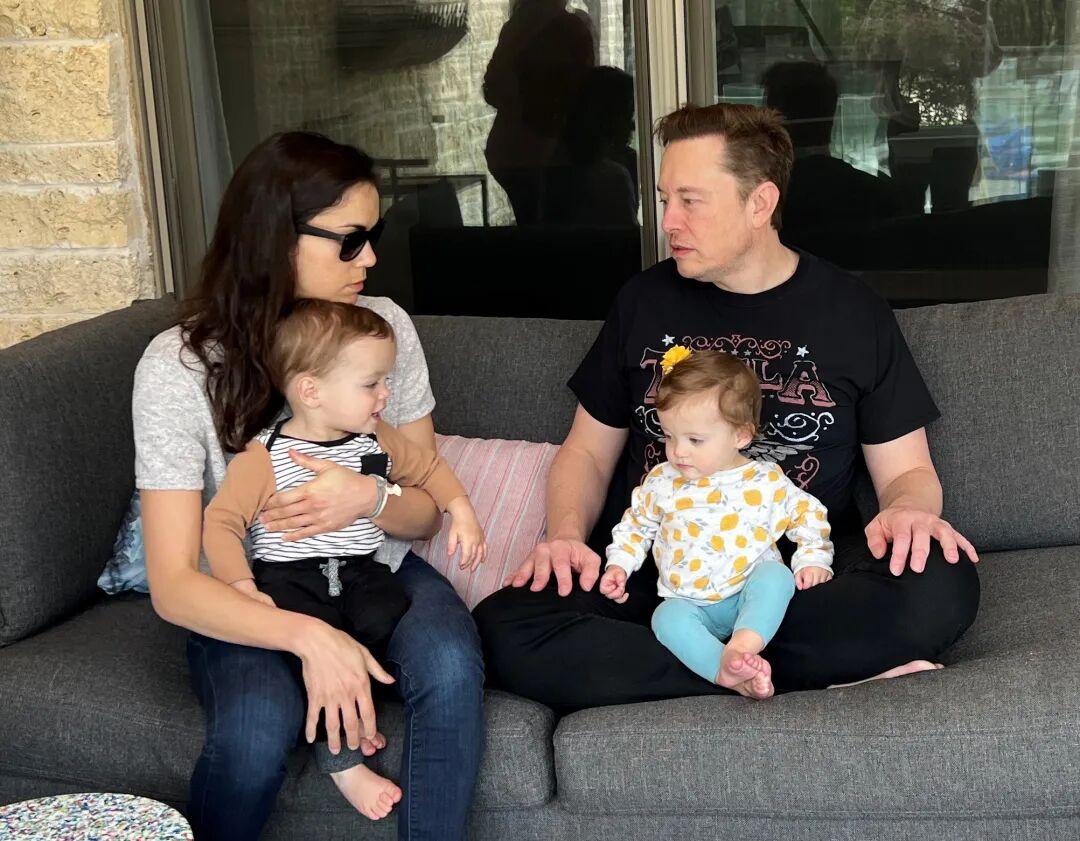
Illustration from Elon Musk
> This "Damned Good Man"
Musk asked whether any other miraculous goals might be possible. Balenholz proposed sensory stimulation — in other words, making the deaf hear and the blind see. "The simplest approach would be stimulating the cochlea to solve deafness," Balenholz said. "But visual stimulation is more interesting. For high-fidelity vision, you'd need to interface with a large number of neural channels."
"Then the pie-in-the-sky we could sell people would be incredible, right?" Musk added. "Want to see infrared? Want to see ultraviolet? Want to see radio waves and radar signals? Yeah, that kind of vision enhancement would be so cool." He suddenly burst out laughing. "I watched Life of Brian again." He was referring to a Monty Python film, and quoted a scene from it: a beggar complains that Jesus cured his leprosy, making it much harder to beg. "Here I was, hobbling along, begging my way, and he comes along and cures me! One minute I'm a leper with a trade, next minute my trade's gone. Not so much as a 'by your leave'! 'You're cured, brother.' This damned good man." @Qian Ren: Musk's arrogance is on full display here. Maybe humans are content to live like "beggars" and don't need anyone's salvation?
"X Æ A-12"
Musk and Grimes had planned to have a girl, but while preparing for Burning Man 2019, they learned that the implanted embryo was actually a boy. By then they had already chosen a girl's name for the fetus — Exa, short for exaflops, a supercomputing term referring to the ability to perform 100 quintillion calculations per second. It wasn't until the day of their son's birth that they were still struggling to come up with a boy's name.
They finally settled on something that looked like an auto-generated druid password: "X Æ A-12." Grimes explained that X stood for "the unknown variable"; Æ was the Latin and Old English ligature, pronounced "ash," the Elvish spelling of Ai (love and artificial intelligence); A-12 had to be written as A-Xii on the birth certificate because California doesn't allow numbers in names — Musk had proposed A-12, referring to a spy plane called "Archangel" that was exceptionally good-looking. @Muxin Xu: If this were in China, they wouldn't even be able to register for a 12306 train ticket. @Yunxiao Guo: My assessment: not as good as An Yong Waves.
"I Just Love Humanity, Man"
In 2013, Musk held his birthday party in Napa Valley. In front of the gathered guests, Musk and Page engaged in a fierce debate.
Musk argued that unless we built firewalls, AI could replace humanity, reduce our species to ants and weeds, even drive us to extinction.
Page countered: if one day machine intelligence, even machine consciousness, surpassed human beings, so what? It would simply be the next stage of evolution.
Musk responded that human consciousness was a precious flickering candle in the universe, and we shouldn't let it be extinguished. Page dismissed this as sentimental nonsense — if consciousness could be replicated in machines, why didn't it deserve equal value? Perhaps one day we could even upload our own consciousness into machines. Page accused Musk of being a "speciest," favoring the survival of his own species. "Well, yes, I'm pro-human," Musk shot back. "I just love humanity, man." @Muxin Xu: The Musk who loves humanity defied US lockdown orders to force Tesla back to work during COVID, saying the virus wasn't that scary — more people died in car crashes than from COVID. Seems like humanity in the abstract is lovable; actual people, not so much. @Lili Yu: Who would have thought that behind all the madness was love for a flickering candle in the universe?
Elon Musk (CITIC Press)
Bonus
@Jing Liu: Haven't had a chance to read it yet, but I heard that until publication, Musk never read the full manuscript! Envious.
(Some portions of this article were compiled and excerpted from CITIC Press's Elon Musk)
Image source | Visual China
Layout | Yunxiao Guo