A "Craftsman" VC's Eight Years Underwater | Entering the Game
Raised 1 billion RMB against the market headwinds.
"Raising 1 billion yuan against the tide." "Entering the Game" is a recurring column by Waves. It stems from our observation that once-effective operating models are facing new challenges, and the industry rules inherited from West to East have been dismantled. People are urgently seeking a new map and new order for innovation and capital. And "entering the game" is the most precious posture of all.
"Entering the Game" was born amid transformation. To summarize the column's subject in one sentence: we hope to find new players and new strategies better adapted to a changing environment. Below is the fourteenth article in this column.
By Muxin Xu
Edited by Zhiyan Chen

For the first time in a while, there's good news on the RMB fundraising front. A below-the-radar market-oriented RMB fund has raised over 1 billion yuan within a year.
Waves has learned that Jingshuihu Ventures completed the first close of a new 500 million yuan blind pool fund. Combined with its previously established S fund, FOF fund, and another S fund currently in formation, Jingshuihu Ventures has raised over 1 billion yuan in total in less than 12 months. The firm has also successfully brought in new LPs including Yuanhe Chenkun, Xiamen Capital, Guolian Xinchuang, Sucheng Ventures, and Yuanshuo Capital.
In today's RMB fund market, this counts as a considerable fundraising scale. What's more noteworthy about this low-profile investment firm is that government guidance fund capital is kept below 30%, and in its past funds, "none of the guidance-oriented capital was tied to mandatory upfront investment-return quotas or capital call requirements."
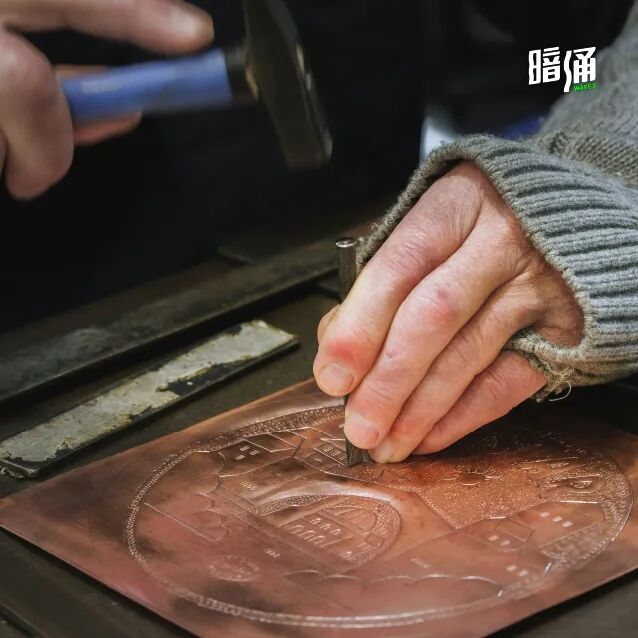
At Jingshuihu Ventures' office on Shanghai's Bund, we met its founding managing partner, Yi Zhang. Unlike the typical "leadership aura" or "rugged entrepreneurial spirit" of most RMB fund heads, Zhang gives the impression of an "investment craftsman."
In conversation, he spoke more about how, in an era where chasing beta has become consensus, he remains committed to finding alpha. We also saw many of this underwater VC's more pragmatic practices: facing the IPO logjam, Jingshuihu Ventures successfully brought in Yuanhe to co-establish an S fund to maximize DPI; to keep its investment discipline from distorting, the firm chooses to restrain fund size, even preferring to return capital to LPs rather than chase expensive late-stage projects just to deploy capital during the investment period, and so on.
At a time when AI, embodied intelligence, and hardware investment are white-hot, dissecting one RMB fund's survival philosophy may offer another lens on this market. It emerged eight years ago at the tail end of a market boom, growing quietly and solidly in a hidden corner.
Part 01
Bottom-Up Deduction to Find Alpha
The most typical case of Jingshuihu Ventures' style is its investment in Wotech Energy.
In 2016, China's energy storage market was practically a desert. Mainstream VCs were still fixated on the afterglow of O2O and the final dividends of mobile internet. At the time, Wotech Energy was merely a fledgling startup with some work areas still lacking proper lighting, generating annual revenue of just over 10 million yuan.
But Zhang saw a variable the market had ignored: the frantic capacity expansion of power battery manufacturers.
"At the time, I saw many power battery and cell manufacturers raising huge sums in the secondary market to expand production, tens or hundreds of billions at a time." Zhang, with years of overseas M&A experience, keenly grasped the transmission logic of the industrial chain — explosive capacity growth would inevitably lead to dramatic cost declines for cells. And the core pain point of energy storage was precisely cost. This meant that once cell costs dropped, the penetration logic for solar-plus-storage would work.
Based on this "top-down" deduction, the fund Zhang managed at the time decisively made a heavy bet on Wotech Energy, wagering on the overseas residential energy storage track. After founding Jingshuihu, the firm continued to add to its position in subsequent rounds.
Zhang's judgment proved correct. A few years later, the energy storage sector exploded. Wotech Energy grew into a unicorn with annual revenue in the billions, maintaining robust profitability and cash flow. And the returns from this single investment for Jingshuihu Ventures supported the performance foundation of two consecutive funds.
"After we invested, the energy storage sector became scorching hot from 2021 to 2023, so we chose not to touch it anymore," Zhang told Waves. "Because that was beta money, not the alpha we aim to earn."
A similar case is the investment in Polymaker, a 3D printing materials developer.
As early as 2016, Zhang began following the 3D printing track. But he didn't rush to pull the trigger, instead maintaining a two-year period of calm observation.
"At the time, market application demand still felt relatively chaotic," Zhang recalled. Back then, 3D printing was more of a hobbyist's toy, lacking scenarios for large-scale industrial application.
It wasn't until late 2018 that Zhang observed a critical signal: global industrial giants like BASF and Philips began making high-profile entries into 3D printing, setting up large booths at industry exhibitions. To him, this meant 3D printing was transforming from "toy" to "tool," and the inflection point for industrial-grade applications had arrived.
Zhang quickly pulled the trigger, making a heavy first bet on Polymaker and securing nearly 10% of the company. Jingshuihu Ventures then made consecutive follow-on investments between 2021 and 2023. During these years, Polymaker's revenue grew several dozen-fold, and even with heavy R&D investment, profitability continued to improve rapidly. "Whether in product R&D capability, market share, or brand value, Polymaker is already a global leader in FDM materials for 3D printing, which has brought us investors substantial returns," Zhang said.
In fact, many of Jingshuihu's portfolio companies developed this way, gradually growing into segment leaders after investment. These projects represent Jingshuihu Ventures' consistent investment strategy: at an early stage of company development, make heavy lead investments based on independent judgment, secure board seats, continue to add after initial validation, and provide substantial post-investment support to win alpha.
This post-investment support, for example, includes several portfolio companies currently at critical pre-IPO junctures, for which Zhang has been busy facilitating pre-IPO financing connections, investment banking resources, cornerstone investor resources, and mapping out domestic and overseas listing paths and strategies.
The primary market excels at manufacturing hype cycles — from new energy and semiconductors to today's AI, consumer hardware, and embodied intelligence. But Zhang says: "If no VC has ever looked at a project, it probably won't work; but if all the major institutions are fighting over it, I probably won't join the crowd either."
Jingshuihu Ventures' approach: enter the night before consensus forms, stay calm or even exit when the sector hits its hype peak. This is the classic sniper-style investment firm approach, with conviction in "non-consensus" at its core.
In 2022, the robotics sector experienced a valuation correction, and many former star projects fell into the predicament of "revenue without profit." The domestic market's cutthroat competition made many investors hesitate. At this point, Jingshuihu Ventures chose to invest against the tide in a batch of robotics companies. But Zhang's selection criteria, seen today, had a certain prescience: they needed natural overseas expansion genes.
"From results, we do favor companies with an overseas bent — early on they were basically active in overseas markets," Zhang explained. "Domestic competition is too intense. Once you fall into the quagmire of price wars and resource competition, all technical logic becomes invalid."
One portfolio company, Mushiny Intelligence, a logistics robotics firm, isn't a traditional AGV but has won orders overseas from well-known brands and manufacturers including Coca-Cola, Yamaha, Monde Nissin, and Ledvance. Over the past few years, the company has successfully covered over 50 countries and regions globally, serving more than 200 customers worldwide, with overseas business contributing over 80% of revenue. In just the past 12 months, its order volume has increased sixfold, with one innovative new product alone landing orders worth several hundred million yuan.
Zhang says what he values isn't pure hardware manufacturing but "algorithm + AI-driven" capability. Whether in industrial technology or smart energy, the team seeks companies with underlying algorithmic models that can combine with specific scenarios to deliver hardware products.
"We first look at industry ceiling, then at real market demand, then at product scalability, and team is the foundation for all vision to materialize." This four-step investment process even resembles the M&A work Zhang did years ago — don't buy into stories, only look at whether a company can make the micro-level math work.
Currently, Jingshuihu Ventures has defined its investment direction as: unlisted company equity in smart energy, industrial technology, and algorithmic technology (artificial intelligence), with investment regions focused on Beijing, the Yangtze River Delta, and the Pearl River Delta.
Part 02
The Inertia of Restraint and the Compound Interest of Trust
Jingshuihu Ventures has consistently been predominantly institutional LP-driven, with institutional LPs accounting for over 70%, including Wuxi Venture Capital, Xicheng Investment, Yuanhe Chenkun, Xiamen Capital, Huikai Zhenghe, Wuxi Huishan High-Tech Zone Fund of Funds, Yixing State-owned Assets Control Group, Qingdao Langwei, and others. The reinvestment rate for each fund can reach around 70%.
Zhang attributes this high reinvestment rate to "shared understanding of tech venture investing" — after all, there are many GPs to choose from in the market, but finding those who speak the "same language" requires long-term observation.
To explain this trust, turn the clock back to when Jingshuihu Ventures was founded — 2017.
The RMB fund market was then at the tail end of the previous boom, with the mass entrepreneurship and innovation wave not yet fully subsided.
"My experience over the past decade was mainly in overseas investment and M&A," Zhang recalled. In that phase he was like an in-house investment banking role for industry, responsible for M&A transactions, participating in restructuring, operations, then selling. The brutality of M&A transactions is that there's no "sector dividend" to hide behind — every case is a genuine low-buy-high-sell, and every link must be precisely calculated.
After coincidentally serving as executive partner managing two RMB funds and achieving solid performance, Zhang, at LPs' suggestion, focused on RMB VC investing and founded Jingshuihu Ventures. But his prior M&A experience brought that "buy the whole company" perspective to the VC industry; he habitually examines companies at the micro level.
As mentioned earlier, Zhang believes neither in "fish that escaped the net" hidden deep underwater and unknown to anyone, nor in "pigs on the wind" that are over-packaged and star-studded. What he seeks are "non-consensus" opportunities where micro-level logic holds but hasn't yet been submerged by macro consensus.
On the other hand, the "investment craftsman" character also shows in fundraising.
Jingshuihu Ventures' blind pool fund size has been deliberately kept at around 500 million yuan each period. In Zhang's view, this isn't because they can't raise more, but a precisely calculated "optimal range."
"This size is the optimal range for early-to-mid-stage alpha investing," Zhang explained. "Once scale gets too large, our investment strategy becomes hard to sustain, discipline distorts, and we're forced to invest in beta. Too small, and we can only sprinkle peppercorn-style follow-on investments, which also doesn't fit our logic."
Under this logic, Zhang even made a rare move in the industry. During one fund's operation, because he couldn't find enough targets meeting his stringent criteria within the investment period, Zhang didn't choose to "invest for investing's sake" and force in several late-stage projects to fill the quota. Instead, he chose to directly return approximately 20% of the remaining capital to LPs.
Another profound influence from his M&A background is sensitivity to liquidity.
In Zhang's dictionary, VC is not a feast that never ends, but a capital cycle with clear time boundaries. "Exit means distribution, no recycling of investments," Zhang believes. "Capital has time cost; liquidity is the lifeline of VC."
Meanwhile, investing in early alpha requires very high freedom of action for GPs. For this reason, Jingshuihu Ventures spent considerable time learning to understand and磨合 with state-owned LPs, gradually building a comfortable sense of trust and boundaries with them — yet in actual investment actions, corporate landing would naturally be accomplished.
For example, it invested in and introduced 7 companies to Wuxi, with combined landing economic value of several billion yuan. In Zhang's view, this wasn't to satisfy assessment requirements but a natural result following industrial logic — companies need cost reduction and efficiency gains, localities need industrial upgrading, funds need returns; this is a triple-win "natural outcome."
According to Waves, in Jingshuihu Ventures' LP structure, old LPs' reinvestment rate exceeds 70%. Behind this lies a simple and powerful logic: you made LPs money, and you let them get it in time.
Among Jingshuihu Ventures' early LPs, many were friends Zhang accumulated during his early investing days starting in 2015. "That fund reached DPI of over 1 in about three to four years."
Part 03
Persistent, Flexible, and Win-Win
In 2023, Jingshuihu Ventures partnered with Yuanhe Chenkun to establish an S fund, not only completing the continuation of some assets from an older fund but also achieving expansion within a year.
This is not commonly seen in the industry.
The outcome was excellent, but the decision to do S actually originated from the IPO logjam that gives the entire primary market headaches. Zhang told Waves: "Our original intention for doing S was to solve liquidity, to create DPI for old LPs."
Around 2023, the first fund managed by Jingshuihu Ventures entered its fifth-year exit period, and a batch of projects in the fund entered the IPO process. But it encountered a series of policy tightenings. "In the tightest three to four months, every review meeting we hit, we'd withdraw," Zhang recalled. He began exploring secondary share transfers, and exited several investments at high multiples, but this exit method was fragmented and extremely energy-consuming. And the problem with transferring old shares is that GPs also lose the possibility of participating in companies' long-term development thereafter. So at a fund-of-funds industry friend's suggestion, Zhang began trying S funds.
"When we first contacted Yuanhe Chenkun, we were still a bit reluctant to sell," but after conducting detailed due diligence on the underlying assets of Jingshuihu Ventures' entire fund period, Yuanhe Chenkun ultimately selected three from several continuation target companies to establish the S fund.
This transaction ultimately reached a win-win outcome: old LPs received several-fold cash returns from early investment value growth (with overall DPI also significantly improved); new LPs (the S fund) bought quality assets with stronger certainty still on a growth trend at reasonable prices; company founders were relieved of our fund's buyback expiration pressure; Jingshuihu as GP retained board seats, continuing post-investment support for favored sectors and companies.
"If we simply broke it up and sold, we'd be off the ride or lose influence." In his view, S funds are not merely an exit tool, but a vehicle connecting old and new LPs, validating GP long-term logic while also demonstrating liquidity management capability. Through this kind of crisp and responsible "exit means distribution," it both strengthens old LP confidence and is an important factor for new LPs' due diligence and consideration.
"In today's primary market, trust is the most expensive luxury."
At the end of the interview, Zhang — who has walked through a full cycle in the primary market — shared his view on cycles, which is also another illustration of his investment philosophy:
"Cycles are the most important factor determining success or failure, but we have no ability to fight cycles. So, don't try to predict macroeconomic direction, don't bet on short-term policy changes. Stay clear-headed, cautious, cut from the micro level, and always focus on each individual project itself."
Image source | Unsplash

Recommended Reading

The flow of money, the rise and fall of people