Can You Still Remember the Last Time a Purchase Actually Satisfied You? | WAVES RADIO
Fengqiao Capital's Chang Xin in conversation with Luxe.Co's Yu Yan.
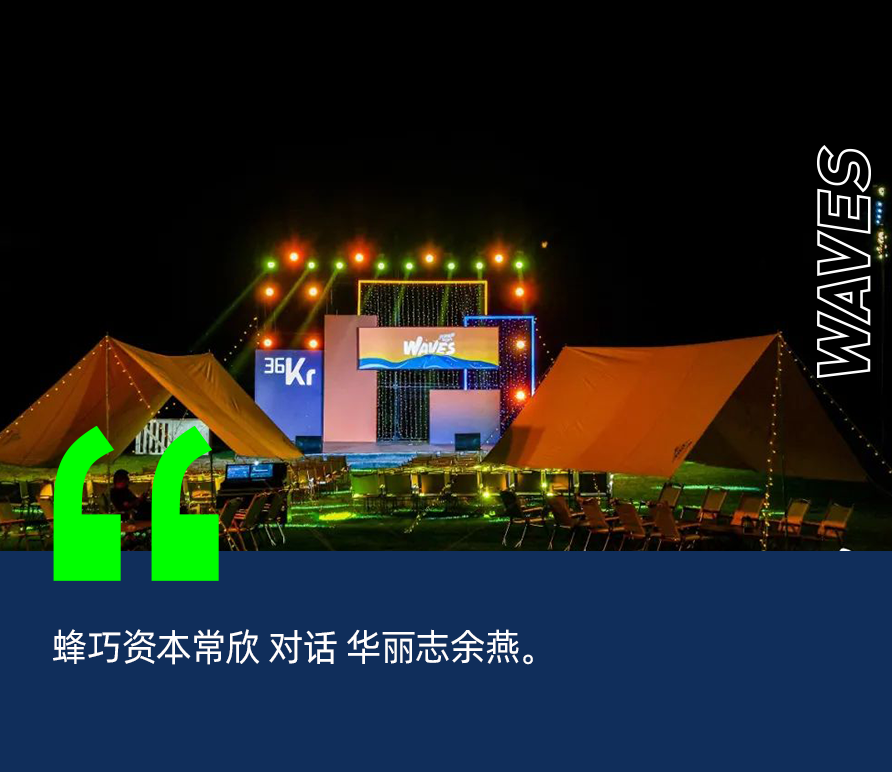
"WAVES RADIO" is a talk podcast under WAVES, an event IP co-produced by 36Kr and Dark Currents (暗涌). Here, we record casual conversations among young founders and investors at the WAVES conference — about business, art, culture, and how they see the world and live with themselves.

Shownotes:
Do you have a neighbor like this? Their doorway is perpetually stacked with packages, and only when there's literally no room left do they finally haul everything inside at once. They've bought plenty, yet can't be bothered to unbox their purchases right away — perhaps the joy of consumption exists only in that split second of clicking "order."
Every era has its gap between impulse and reality. In ours, some forces amplify impulse — Hey Tea's Fendi collaboration, the "old money" aesthetic of Quiet Luxury becoming fashion's new darling. Others suppress it — choosing not to marry or have children has become one path for young people, while "lying flat" and "giving up" are attitudes worth printing on phone cases.
In this episode, we're joined by Chang Xin, founding partner of Firstmeet Capital (蜂巧资本), and Yu Yan, founder & CEO of Luxe.CO (华丽志) and Orange Bay University (橙湾教育). From commercial and cultural perspectives, we explore the connection between desire and consumption, and those very human impulses.
Full audio:

Timeline:
- 00:01:52|Guest introductions
- 00:02:19|Bonding over fashion and consumption
- 00:05:30|Recent impulse triggers: daughter and wellness
- 00:10:27|An era of fading consumer desire?
- 00:14:17|The diminishing returns of material consumption
- 00:17:25|Are women consumers more prone to impulse buying?
- 00:22:56|Shifting consumption philosophies across generations
- 00:29:29|Consumption as connection to the world through purchase
- 00:33:38|Japan: a low-desire nation with steady consumption
- 00:37:12|Europe: green, sustainable, and eco-friendly as startup priorities
- 00:42:00|Consumer goods, fertility rates, and national character
- 00:46:40|Major luxury consumers are all agricultural powers
- 00:51:25|The power of brands
- 00:58:50|Quiet Luxury and the democratization of jewelry
- 01:04:49|More rational consumption as a form of upgrade
Reference:
- Guest: Chang Xin|Founding Partner, Firstmeet Capital
- Yu Yan|Founder & CEO, Luxe.CO and Orange Bay University
- Host: Xu Muxin|Writer, Dark Currents WAVES
- Editor: Dark Currents Editorial Team
- BGM: "Dream Lover" (梦中人)
Edited transcript below:
Host: Hello everyone, I'm a writer with Dark Currents WAVES. Today's topic is "Human Impulses." Let's have our two guests introduce themselves.
Chang Xin: Hello everyone, I'm Chang Xin, founding partner of Firstmeet Capital. We're a boutique VC focused on early-stage new consumer investments. Delighted to be here.
Yu Yan: Hello everyone, I'm Yu Yan, founder and CEO of Luxe.CO, a fashion business and finance media platform, and Orange Bay University, a fashion business education program. Delighted to be here.
Host: How did you two meet?
Chang Xin: It was through Liu Xiaolu, founder of Neiwai. After connecting, we discovered that many of our portfolio companies had already engaged with Luxe.CO early on. In terms of brand sensibility, our tastes are quite aligned in some ways.
Yu Yan: Xiaolu and I were both angel or seed investments from ZhenFund, so we'd known each other since around 2014 or 2015. I witnessed Neiwai's growth, and Xiaolu told me she'd met an especially kindred investor — Chang Xin from Firstmeet Capital. She's very young, but her maturity and composure far exceed her age. As she said, we developed many intersections. For example, Pidan, which she invested in, participated in Luxe.CO's fashion entrepreneurship competition and won first prize. Indeed, we were both relatively early in paying attention to fashion consumer brands, or consumer brands with certain aesthetic qualities. Luxe.CO approached it through media and competitions for dissemination and education, while Firstmeet approached it through investment — earlier than most in focusing on this赛道.
Chang Xin: Among our fund's better-known investments, Pop Mart for instance — looking back, Sister Yan may have known Pop Mart founder Wang Ning even earlier than us. We were already considered fairly early investors in the circle, yet Sister Yan was even earlier.
Yu Yan: That was 2014, our first fashion entrepreneurship roadshow. When we invited Wang Ning, he hadn't yet found the designer toy direction. I remember he brought many plush toys, and some investors in attendance were rather perplexed — was this really investable? But he grew increasingly mature and excellent, and at key moments of that gradual maturation, he encountered Tu Zheng and Chang Xin from Firstmeet Capital.
Host: What was your first impression of Sister Yan, Chang Xin?
Chang Xin: Before meeting her, given that Luxe.CO as a fashion media outlet covered so many domestic and international luxury and fashion brands and companies, I imagined Sister Yan as someone who appeared very fancy. But upon meeting, I instead sensed a certain distance between her and fashion.
Yu Yan: Very down-to-earth.
Chang Xin: Yes, and in retrospect that makes perfect sense.
Host: As female consumers and deep practitioners in the consumer industry, have you felt any strong impulses toward something or some product recently?
Chang Xin: My life changed after having my daughter earlier this year. Maternal and infant products opened a whole new world for me, reigniting my shopping enthusiasm to some degree. Out of professional habit, I do extensive research before buying almost every category — from major baby gear to the complementary feeding accessories I've been studying recently. I've discovered many outstanding but niche products, and gained genuine joy from purchasing. I felt that excitement for a good product once again. The夸张 part is, my daughter is only three months old, and I've already代购 her outdoor clothing for when she's two or three. If I reflect honestly, this purchasing behavior isn't really for my daughter anymore — it's entirely to satisfy myself.
Yu Yan: I probably belong to the non-consuming tribe. Because I research too many luxury and fashion brands, I maintain a certain distance from them. At my age, I'm increasingly focused on health. For instance, my most proficient purchase category is various cushions, lumbar supports, yoga mats — auxiliary products for basic stretching. I have an emotional attachment to them because they help me better navigate the rest of my life. As my knowledge of health and wellness continues to grow, I've become more attentive to my own health. I'd count myself among the wellness camp, though still relatively rough around the edges due to entrepreneurship. The old refrain remains: achieving work-life balance.
Chang Xin: I feel like Sister Yan's daily diet and lifestyle are quite health-conscious.
Yu Yan: Let me share a story. The Prada founder and CEO said: "Since childhood, my mother told me to drink hot water first thing in the morning." I thought, wonderful — that's exactly my habit too. I know many simple wellness principles don't require spending much money.
Host: Sister Yan, did your impulse and desire for consumption drop sharply after starting your business?
Yu Yan: No, I think it actually increased somewhat. I used to work in finance and accounting, and many people ask why I chose fashion and luxury entrepreneurship when I don't particularly focus on these areas personally. But Luxe.CO and our real-time information platform "Hua Li Tong" (华丽通) broadcast daily business developments of over 3,000 brands globally, including China. If I had personal preferences toward certain brands, it might bias our exploration of other categories. For example, I don't really wear makeup, yet Luxe.CO covers many cosmetics brands. I don't drive, yet Luxe.CO increasingly covers international luxury cars and domestic new energy vehicle brands. These brands constitute various elements in the lives of younger generations. Because I don't have strong personal preferences, I can maintain a relatively objective, neutral stance — approaching this field from an industry perspective, guided by data.
Host: Though our conversation's theme is "human impulse," after these years of pandemic impact, many people's psychology and lifestyle habits have undergone earth-shaking changes. In your view, are we in an era where it's difficult to ignite impulsive desire?
Chang Xin: Indeed, the three pandemic years brought changes to everyone's life and psychology to varying degrees. We felt many different experiences and situations. But if we interpret "impulse" broadly — as "what do I want to do to make myself feel better" — I don't believe we're in an era where it's hard to ignite "impulse." It's undeniable that if we discuss purely "material consumption impulse," people have become more cautious and rational. The essence of "impulse" is people's passion for and exploration of life. Today's impulses are undergoing diversification, and this evolution follows natural patterns.
Host: Is this something you sensed during fieldwork as an investor?
Chang Xin: We've observed that lifestyles and consumption patterns are becoming more diversified. In at least the past decade, impulse centered on "buy buy buy" was relatively mainstream, creating what appeared to be a thriving or even excessive material consumption landscape. From an investor's observation, we saw many consumer companies with awkward positioning or unclear underlying logic that nonetheless achieved decent growth early on — largely because consumers were experimenting and growing. Today, consumers have gradually become more "realistic." They understand themselves better and are more careful with their spending. Meanwhile, "impulse" extends beyond shopping — life states have become more diverse, interests more niche. Simply put, people have begun exploring life itself. This is a manifestation of social progress.
Yu Yan: I think it's just that consumer hotspots keep shifting. People will definitely rethink some of their previously extravagant spending. But fashion and luxury — the categories Luxe.CO covers — aren't influencer-driven products. They have a certain timelessness, or at least the ability to sustain desire over the long term, so they're not that sensitive to economic cycles. Let me share some data with you: a niche fragrance brand recently entered China for the first time, and its first store did several hundred thousand RMB in sales in a single day. From that number, you'd never guess there's an economic slowdown or diminishing consumer desire. Every subcategory in fashion has high, mid, and low tiers, different styles, different positioning — at every stage, some style or product will hit a particular consumer segment.
Yu Yan: Consumers today have accumulated so much more knowledge through the internet. People analyze and find what they want, less influenced by outside forces. So brands increasingly focus on conveying their brand stories and discovering their own highlights through text, images, events, video, and other formats. "HuaLiTong" originally monitored over 50 pieces of Chinese brand news daily; now it's approaching 100. So many brands are spending budget on opening stores, hosting events, marketing, finding ambassadors — all these moves reflect that this market still has enormous room for growth. Brands make decisions based on data.
Chang Xin: China has moved past the era of material scarcity. The happiness derived from material consumption is diminishing. A founder once told me that during a period of user home visits, he found all the delivery packages piled at people's doors, unopened. My neighbor across the hall comes home every day, but I've noticed her packages stack up outside her door — she won't bring them inside, just collects them once a week to open all at once. I've felt this myself. Most of the joy of shopping for me now comes at the moment of placing the order. The process of receiving and unboxing brings far less happiness than it did a few years ago. But is that happiness disappearing overall? I don't think so — it's probably shifting. This is an inevitable process as society develops to a certain stage.
Yu Yan: Assuming those packages are from online shopping — online consumption has a strong impulse quality, not much planning. The average order value tends to be lower; consumers buy without much feeling. This may be why Luxe.CO-covered luxury brands particularly emphasize that the most important battlefield remains offline. Luxury brands want consumers to walk into stores, experience slowly, decide slowly. Once they decide, consumers feel gratified by that decision, which drives repurchase. Luxury brands don't want consumers to buy a pile of things on impulse, then return them or never even open the packaging — that shows no strong desire for the product, just impulse triggered by some stimulus or discount. Of course, luxury is a relatively niche category. What luxury brands particularly care about is consumers' purchase motivation and whether genuine repurchase will follow.
Moderator: In films and shows like Sex and the City and Confessions of a Shopaholic, female consumers are often stereotyped as "irrational shopaholics, emotional consumers." From a business perspective, how do you two view emotional consumption? And does the real-world profile of female consumers differ?
Chang Xin: Films and shows present an extreme version of female consumption. I think it's related to social environment — compared to men, women are simply born with far more channels to experience beauty. The other day I was chatting with a former colleague. I had quite a few of my daughter's barely-worn clothes to give her for her soon-to-be-born son. I said she could buy some nice clothes after her son's full month. She laughed and told me her son didn't need pretty clothes — anything wearable was fine. This is an innate difference. Women grow up particularly attentive to beauty in clothing, films, literature — or having that attentiveness imposed on them by the outside world. Later comes extensive training and reinforcement. Naturally, women exceed men in pursuit of beautiful things. This is a good thing; experiencing beauty is happiness. But it may bring another problem: we become very, even excessively, concerned with our own beauty. Under this premise, women logically become the primary target consumers that merchants and brands chase — whether the goods and services offered are appropriate or excessive. But I think men also enjoy consumption; they just focus on different things. For example, I don't enter the kitchen at home — my husband cooks. Recently our nanny discovered we have over 20 varieties of soy sauce. Because my husband loves cooking, his interest is scouring various public accounts and very niche channels for regional cuisines, seasonings, organic soy sauce, artisanal soy sauce, every flavor of soy sauce filling the kitchen. Just as men can't understand women's lipsticks, I can't tell these soy sauces apart. So I think the essence of consumption is the same for men and women; gender-based consumption differences are a result of how men and women are socially influenced from childhood.
Yu Yan: Chang Xin's example alone shows how enormous consumption potential is. The new generation of young people differs greatly from our generation. Their life granularity is extremely fine, reflected in every niche domain. Younger generations can find their own preferences; their self-awareness of likes and growth goals is very clear, relatively more individualized. In my era, people rarely followed crowds to idolize celebrities. What shocked me recently was Mayday concert scalper tickets hitting over 10,000 yuan. Perhaps people now have dual natures — a conformist side and an individualized side. Whether conformist or individualized, both conceal an opportunity for consumption: more segmented, more personalized, more aesthetically sophisticated, more discerning. Whether soy sauce varieties or lipstick shades, some understand them, some don't. Not understanding doesn't mean they don't exist — they may not only exist but thrive. Everyone has their blind spots. We may increasingly struggle to understand consumption preferences outside our own domain, but we must clearly know they exist, and they're flourishing.
Moderator: Today's guests have clear generational differences — Sister Yan is post-70s, Sister Xin is post-85s, I'm post-95s. We actually represent about 80% of China's population structure, because roughly 80% of China's 1.4 billion total population consists of four generations: Gen Z, Gen Y, Gen X, and Baby Boomers. They're also the main creators of social wealth. From your observations, what differences or changes do these four generations show in life pursuits, especially in consumption?
Chang Xin: My parents' generation are standard Baby Boomers. Their lives were simple — most people's goal was probably saving money, working to improve family quality of life. I remember over a decade ago traveling in Northern Europe; a youth hostel front desk asked me: What do your parents do? What are their interests? I froze for a while and said "making money." He was shocked — couldn't understand how making money could be an interest. Their generation lived in an era with very positive feedback, so their lives were less prone to confusion than later generations. Their pursuits were very consistent and simple, and stage-by-stage goals were achievable. My parents are retired now. They've developed some consumption interests in old age — travel, square dancing, qipao shows, hulusi instrument playing, etc. To some degree, these are things their youth lacked. Our generation is just beginning to think about how to live — a generation with multiple lifestyles appearing in our minds, constantly thinking of pastoral idylls, not working, early retirement, etc. I think this is good, a sign of social progress: beginning to explore the spiritual dimension amid material abundance. But typically, spiritual pursuits require more thought and wisdom than material pursuits. I suspect the generation after us may be somewhat more "painful," because they're born into an era of particular material and information abundance, with less sense of scarcity. Once material needs are met, people pursue spiritual needs. Finding suitable spiritual needs is quite difficult — this cannot be inherited, because you can't see or learn it from previous eras; it must be created.
Moderator: Sister Xin mentioned that your parents' generation may be less confused because they received more positive feedback. We post-95s grew up in a relatively materially abundant era. Do you think our generation's low desire, desire to lie flat, desire for early retirement — is this precisely because material abundance is greater, or because we haven't received enough positive feedback like our parents' generation?
Chang Xin: I think both reasons apply, but it's not limited to these two. Everyone's discussing pastoral idylls and lying-flat lifestyles now. But I think we need to consider: when people discuss pastoral idylls and lying flat, what exactly do they mean? Are they talking about current confusion and exhaustion? I believe most young people aren't suited to pastoral idyll life, or haven't reached the self-consistency to truly settle into it. Regarding what freedom means — freedom from or freedom to — this is a large topic worth discussing.
Yu Yan: This is a huge topic, and hard to summarize a generation with a few phenomena. Every era has its difficulties. For example, our era was definitely materially scarce, with relatively fewer choices. I only learned about entrepreneurship in middle age — facing not just the single path of being chosen by big companies. I actually started my business quite late. Conversely, young people's greatest advantage now is having N+1 choices. I used to hear about many Chinese students studying in Ukraine because Ukrainian schools were cheap and good. Having many choices can also become a negative — meaning possible lack of appreciation, or losing direction. It's hard to say whether an era of few choices or many choices is better. Every era has opportunities and challenges. I believe that in every era, only those who truly work hard, constantly read, constantly think, constantly explore life can live more fully and meaningfully. Consumption itself is connecting with the world through purchasing. One of our parents' favorite consumption behaviors was visiting wet markets — children often劝说 them not to, that online shopping has more choices and is faster. Actually, they're connecting with society through this behavior; otherwise they'd stay home and be cut off. Whether young people shop online or offline, basic social needs are driving them. So consumption's value is sometimes not just satisfying material desire, but also satisfying certain spiritual needs — interacting with the world in various forms. Life is short; eventually everyone discovers that in this brief life, rather than being anxious, it's better to truly do some down-to-earth things where you can feel meaning and existence value.
Moderator: On Douban there are groups for lying flat, low desire, and non-consumption. Some young people now pursue homebody culture, simplified three meals, with almost no interest in buying cars, houses, or marriage. The Low Desire Life Society once described Japan's widespread reality — falling into low desire society, population decline, hyper-aging, losing ambition, losing desire, etc. — which may to some degree mirror contemporary Chinese young people. From different generational perspectives, how do you two view our generation of young people? Why has this generation made such choices?
Chang Xin: Japan's low desire society and China's current situation have some differences. Japan's economy reached a very high peak, then had its "lost two decades" to now stabilizing. People experienced a complete economic cycle. Low desire may result from several situations: born with it, once had it, or what you want to have is impossibly distant from your current state. Which of these three do you think applies to China's young people now?
Moderator: I think I'm the last one — what I want is too far from reality.
Chang Xin: For example, what do you want?
Moderator: There's a gap with reality, and it's probably not an individual problem but a generational one — housing prices and living costs that are hard to cover.
Chang Xin: Right, from that perspective there are indeed some similarities — buying a home is a problem young people face globally. But in other countries people may not buy property as early; in China young people hope to own real estate sooner. That's a difference in mindset.
Yu Yan: I often hear people reference this book, but I haven't actually read it. From my observation, luxury consumption in Japan has been steadily rising in recent years. I think this is precisely because Japan is a society where economic development has been underway longer — individuals have more distinctive choices. But it's hard to generalize. The best way to understand a market's true condition is through data. If you interview a particular individual, their emotional expression will skew your judgment.
I believe sociological research has its own value, but for consumer industry research it can sometimes be misleading — for example, generalizing from sample surveys, or chasing novelty-driven conclusions. In reality, there's nothing new under the sun. An investor in a chocolate brand once told me that Japan consumes the most chocolate of any country in the world, with China ranking second. Because Japan also has a gift-giving culture, people love all kinds of figurines and collectibles, and chocolate is one of the best collectible gift options. This differs somewhat from Chinese perceptions of chocolate. But the Japanese never promote their chocolate as the most expensive. Without talking to brands, we end up with broad, sweeping conclusions — or conclusions drawn by scholars who think they have universal answers.
Luxe.CO observes luxury and consumer markets brand by brand, because I believe brands are the most vital carriers of consumption in the world. By observing these brands, I know that anything at any moment depends on the individual, the brand, and the company — impossible to generalize.
Economic upswings and downswings do have some effect. But why have luxury brands bounced back after so many blows throughout history? It shows that consumption closest to human nature has the most permanence, that there's some unchanging factor within it. What people usually like to discuss is change — how is this year different from last, how is this era different from the last. I'm more interested in observing what doesn't change.
Moderator: Sister Yan, you're about to head to France again for an event. Please tell us about France and the European consumer market it represents.
Yu Yan: I was only there for a week last time; next time I'll go for two or three weeks — hard to generalize. From my observation I noticed two phenomena: first, the return of tourists. While many Chinese tourists haven't returned yet, the cafés in Paris where people can sit in the sun are packed full — many of them traditional American tourists. Second, attention to sustainability themes. This time I was invited to the world's largest sustainability conference. I was quite shocked to see so many positive, forward-looking young Europeans there. For European youth, environmental protection and sustainability are simply their way of life. Over eighty percent of young European entrepreneurs choose directions in green and environmental fields — contributing to protecting the planet is their aspiration.
Whether buying a sustainable garment, or participating in ocean waste recycling, engaging in such public welfare activities is how they find meaning in life. You'll find that young people everywhere are constantly pursuing meaning in life and work — it's just that different countries at different stages have their own particular hot topics.
I don't believe local luxury consumption there is driven much by local young people. Although Europe's economy has never been that great, this doesn't represent "low desire."
Moderator: Has Beehive Capital been looking at any overseas consumer market projects in recent years?
Chang Xin: We have invested, but not extensively. In 2015 I spent some time on overseas investment, targeting the Korean market at that time. Though there was no language barrier, because consumption is fundamentally about human hearts, if you're not a native it's hard to judge future trends — it always felt like scratching an itch through a boot.
We do have some overseas consumer deployment, but not a lot. We only invested in two projects last year: one is an OWS (Open Wearable Stereo) headphone brand, which uses a different acoustic solution from in-ear TWS headphones and bone conduction headphones; the other is a company focused on outdoor smart cleaning robots.
Moderator: Managing Partner Tu Zheng once shared an observation with us — only in European and American markets does demand for pool cleaning robots emerge, so you can only find such projects in those markets; other markets are hard to replicate.
Chang Xin: That's right, it's a relatively mature market in Europe and America, and there are already two listed companies. We invested in one with a strong team and product.
Moderator: Sister Xin, are you still looking at the Japanese and Korean markets?
Chang Xin: I looked at them in the past, but not anymore.
Moderator: Compared to Europe and America, Japan and Korea are in the same East Asian cultural sphere. Does consumer brand expansion have more potential there? Conversely, wouldn't new consumer brands expanding to Europe, America, the Middle East and other regions be more prone to cultural mismatch?
Chang Xin: Consumer goods in Japan and Korea are already very mature. When I was investing in Korea in 2015, the contrast was stark. Korean society already had abundant, sufficient consumer goods at every level. I think Japan is an even less promising market than Korea, so for Chinese brands to do consumer goods in these two countries is actually quite difficult — unless it's an entirely new category. For example, Pop Mart, which we invested in, sells fairly well in Japan and Korea.
Using our existing categories to compete with them head-on is quite difficult. From an overseas expansion efficiency perspective, I think the US is still the largest consumer market, with China ranking second. For a typical startup spending the same time and effort, the US market remains the first choice. Take Southeast Asia, which was previously hyped up, or various European national markets — the problem everyone encounters is that the countries are too small and fragmented. Although Southeast Asia as a whole is a large region, when you go deep into localization you need a team in every country, spending time and effort in each. So from a time investment cost perspective, it's not that worthwhile.
Moderator: Data shows that Japan hit a record low fertility rate of 1.26 in 2022, while South Korea's fertility rate of 0.78 in 2022 continued a years-long declining trend. Faced with persistently declining fertility rates, do you think consumption desire in Japan and Korea is also trending downward?
Chang Xin: Marriage and childbearing is a very complex, multifaceted issue. Even in the Nordic countries with the highest happiness indexes, fertility rates aren't high. If I recall correctly, countries with the highest fertility rates, like Nigeria, are above 5 or 6. I think China's declining fertility rate may be a sign of becoming a more civilized society — childbearing truly returns to its intrinsic meaning, becoming an active choice. So this is somewhat different from high or low desire.
Korea's fertility rate declines year after year for many reasons: high childcare costs, low workplace status for women, severe patriarchal thinking, and so on — combined factors leading to Korea's low fertility rate. Looking at the personalities of China, Japan, and Korea, I think China sits in the middle. Japan is an especially restrained country, while Korea is actually a country with particularly strong desire, also a very passionate people. They love singing and dancing, they love spicy food, they have lots of pickup culture. In consumption they pay great attention to new products. Overall, Korea has the strongest desire when it comes to consumption.
Moderator: Is there a connection between the fertility rates and consumption impulses of China, Japan, and Korea? What kind of connection?
Yu Yan: I learned a lot from what Chang Xin just said. I've never been to Korea and don't understand the situation there. But I think it's somewhat inappropriate to group these three countries together for comparison, because China is vast and resource-rich, while Japan and Korea are both resource-scarce countries that needed to vigorously develop export-oriented economies — including Korea's entertainment exports today.
I've noticed an interesting phenomenon: luxury brand powerhouses like France and Italy are both major agricultural countries, and China is likewise a major agricultural country. Because agriculture brings abundant products, food, clothing, and daily necessities can all be self-sufficient. The best cuisine is still in China — vegetables of every season, river and seafood of every kind, mountain delicacies and sea treasures. From the matter of eating alone, the Chinese people have cultivated a love of life. Consumption is intimately connected to life; loving life leads to consumption. Consumption isn't merely a social phenomenon — it comes from heartfelt love of life, naturally paying attention to every detail of one's life, thereby generating consumer demand.
I have no worries whatsoever, and I very much agree with what Chang Xin said earlier — declining fertility rates are a sign of society moving toward civilization. I lived through the era when China had only 800 million people. The economy wasn't as developed then, but I felt that people had more space, less crowding, bluer skies.
People have all kinds of choices. An entrepreneur I recently met is on her fourth child — that's also a contribution. People have various choices regarding marriage and childbearing; this is a sign of social inclusiveness and progress. We needn't simply feel anxious because of some data point or trend line.
Moderator: Listening to Sister Yan talk about luxury twice now, I suddenly realize luxury might be your home turf. Do you two normally consume much luxury?
Chang Xin: I've only bought one. Once a good friend was traveling abroad and asked what I wanted. I said, "Buy me the same as you." So she brought me back a wallet. A couple years ago when I was researching the secondhand luxury industry, I needed to do a test, so I sold that wallet.
Moderator: Was the price beyond imagination?
Chang Xin: The price really proved quite recession-resistant — it barely depreciated. I witnessed the "power" of luxury.
Moderator: According to your definition of luxury, what price point qualifies?
Chang Xin: Any product from a luxury brand.
Moderator: Does Sister Yan consume much luxury?
Yu Yan: My situation is basically the same as Chang Xin's. This relates to each person's consumption philosophy. Luxury isn't for everyone — it's only for some people: those who like this category of products, and those who have accumulated sufficient social wealth to afford it.
China and the US are the world's two largest luxury consumer markets. When social wealth accumulates to a certain degree, it will inevitably flow toward luxury. The stage of social development and understanding of luxury are also major factors — for example, whether luxury brands have entered the market of the consumer's city.
The reason I study luxury is that it offers tremendous inspiration for the entire consumer goods industry, and it's what best withstands the test of time. Many luxury brands have survived several centuries — no easy feat, requiring many special qualities. I recently finished a book, Buying Tiffany, studying a nearly 190-year-old brand — how it survived long cycles, then sold for $15.8 billion to LVMH Group.
Brand power is luxury's most formidable strength. Anything with a brand attached — like the Fendi and Hey Tea collaboration — I believe if it weren't Fendi, if it were a generic affordable luxury brand instead, the marketing effect would be greatly diminished. Hey Tea has its own consumer base, and people have a longing for luxury; curiosity generates all kinds of associative power. We're all emphasizing brand premium now, but without understanding luxury brands, one's understanding of brand may still be at a superficial, tentative stage.
Moderator: The Fendi and Hey Tea collaboration really struck a chord with you, Sister Yan. A few days ago I ordered Hey Tea, and it arrived in a bag printed with the Fendi logo. I actually felt a little pang throwing it in the trash afterward. Not long ago, the Fendi-Hey Tea collaboration made waves across social platforms, drawing mixed reviews. What do you both think about luxury brands coming down to earth?
Chang Xin: I'm not really in a position to evaluate it. Was it good marketing from Fendi's perspective? Hard to say. Young people are definitely a demographic luxury brands are paying close attention to right now. Of the four generations we just discussed, I don't think Gen Z has become the core customer base for major luxury brands yet. But this group has one crucial characteristic: they're the most eager to communicate and self-express across all social platforms. So luxury brands tend to treat them as a special segment. Every brand wants to stay young — that's a universal human desire. Collaborating with younger brands is something almost all of them will try.
Yu Yan: For luxury brands, two things matter. First, maintaining their positioning — ideally, selling at ever-higher prices. Second, acquiring new customers. What made this stick with me was something a China head of a luxury brand told me. He called every VIP client on his Taiwan list and sent event invitations. Far fewer showed up, because many of those longtime clients had passed away. If they don't go after younger customers now, who will be buying as the population ages? It's a very practical concern. So you can understand why luxury brands feel anxious, yet also remain composed. Even if a collaboration like this draws mixed reviews, one or two marketing campaigns won't shake a luxury brand's standing. No one's going to walk past a Fendi store and think it's beneath them because they once partnered with Hey Tea. There's plenty of chatter on social media, but when people actually step into stores, those who were going to buy still buy, and those who weren't still don't.
Moderator: China has long been a "renowned" luxury consumer market with continuous growth. But Bain's recent 2022 China Luxury Market Report showed a 10% year-over-year decline in sales — after five straight years of growth. How do you view luxury's performance in China right now?
Chang Xin: 2022 was an unusual period when offline consumption took a significant hit. For many years, China's spending power was famous worldwide. Young Chinese consumers bought things that people in other countries might not purchase until their thirties or forties, which led to desires being satisfied prematurely. Chinese consumers have their own particularities — most young people have already bought what they needed to buy. That's a small part of the decline. If you slowly release the joy and satisfaction that shopping brings, that process is essentially an ongoing conversation with the world.
Yu Yan: This is hard to capture in a sentence or two. Markets constantly evolve; they don't climb in a straight line forever. They shift and adjust, and brands adapt. Some brands may fall by the wayside and exit China, but we've also seen others double down and press their advantage. When the market rebounds, they're positioned to capture larger share. In the first half of this year, executives from major global luxury brands basically all came to China to "pay their respects." Their actions show how pivotal China is to the global luxury market. Two reasons: first, China's long-term economic trajectory remains positive. Second, as a major agricultural country with abundant resources and magnificent landscapes, China has a population with strong aspirations toward beautiful things. Recently a friend told me something quite interesting: one of his VIP clients gathered all the branded clothing they'd bought over the past decade or so, hired models, and staged a fashion show. I think Chinese society has sufficient cultural breadth to embrace this kind of passion.
Moderator: Sister Yan, your new book Buying Tiffany — what kind of work is it?
Yu Yan: This new book focuses mainly on jewelry. In the 1970s, jewelry was very niche. If we say luxury is niche consumption, then high jewelry was even more so — perhaps only socialites would commission custom pieces. Gradually jewelry became more accessible to the masses, but in that process it lost some of its opulence and gained more minimalist design. For example, a simple gold thread with a few small diamonds. You rarely saw clean, understated jewelry brands like YIN in the past, but they too satisfy people's pursuit of beauty. In recent years, luxury brands have trended toward mass accessibility — more people want to enjoy beautiful things. This gets at why people consume luxury: because they trust luxury brands' quality and design. Jewelry design is extremely difficult to do well, so the barrier to entry is high. Leather goods, shoes, and other categories share this characteristic. Buying Tiffany traces a jewelry brand's journey across nearly two centuries, reflecting both entrepreneurs' hardships and efforts, and how market demand for luxury has evolved alongside economic development and wealth accumulation. It also covers capital markets — from initially avoiding the luxury industry entirely, to capital gradually entering for investment, M&A, and consolidation starting in the 1980s, slowly producing top-tier brands with increasingly valuable IP. The book aims to help readers understand how this industry evolved within its social and economic context, and the role capital played in that evolution.
Moderator: Recently in the show Succession, there's a scene where a nouveau riche son-in-law wears a Moncler vest to a meeting and gets mocked by his old-money relatives. The show popularized the concept of "quiet luxury" in an entertaining way. Since then, Xiaohongshu has posts teaching you how to dress "old money style." What business insights do you see here?
Chang Xin: This example reminds me of our portfolio company Duomu Liangjin. It positions itself as a Chinese luxury brand, drawing on Tang and Song dynasty culture as its foundation. So far, its customers have basically been mature luxury consumers. What we've observed with Duomu Liangjin is that its customers are remarkably confident — they trust their own aesthetic judgment, which is why they're willing to spend high prices on a Chinese luxury brand. We're patient and optimistic about Chinese companies with this positioning. Why shouldn't China have its own luxury brands? If it doesn't, then let's start now.
Moderator: In cultural terms, this is essentially worship of symbolic meaning. Working backward from that, what impact does it have on business?
Yu Yan: The market is getting larger and more diverse. Some people pursue quiet fashion, quiet luxury; others go for big logos. Many think Louis Vuitton monogram bags are already commonplace on Paris streets, but I still regularly encounter elegant women — people of all ages, really — carrying classic monogram LV bags. You can never sum it up in one sentence, what's been discarded by the times. If something is genuinely good — the Hermès Birkin still holds extremely high status, for instance. Every brand's classics find their place, while new products keep emerging because young people's tastes constantly shift. There will always be new products catering to current young demand. It's a wavy, meandering trajectory, hard to capture with the fashionable buzzwords people love.
Moderator: Though everyone's talking about consumption downgrading — the recent Zibo barbecue craze, for example. How do you view consumption upgrading versus downgrading?
Chang Xin: I haven't paid much attention to the Zibo barbecue phenomenon. But I never really bought into the concepts of "consumption upgrading" and "consumption downgrading" that investment circles used to throw around. I believe there are truths to consumption that everyone is still discovering — brands are, investors are. How people live in this era is also an important reference. I read a report recently about young people in Beijing taking up boating in parks — an affordable, clever way to spend time. But that certainly doesn't mean young people aren't spending. They're spending in plenty of other places.
Moderator: Any advice or suggestions for young consumers?
Yu Yan: None. I think they understand consumption better than I do. I especially champion diversity and pluralism. Only with rich variety — high and low, some choosing to buy and some choosing not to — does a healthy consumer society emerge, and opportunities will always arise from that. We see that the US consumer market is more developed than ours, with a longer history, yet new clothing and jewelry brands still keep emerging. The prerequisite, of course, is being in a market with wealth accumulation and finding your own entrepreneurial opportunity. With entrepreneurs come investors. From now to the near future to the more distant future, I'm full of confidence in consumption markets driven by aesthetics and the pursuit of a beautiful life.
Moderator: Today we discussed human impulse in very rational, objective terms. Thank you both for sharing.
Image source | Visual China
Layout | Du Meng