When the investors of Ning Wang, Xingxing Wang, and Junjie Zhang sat down together
What makes a "newly made person" new?
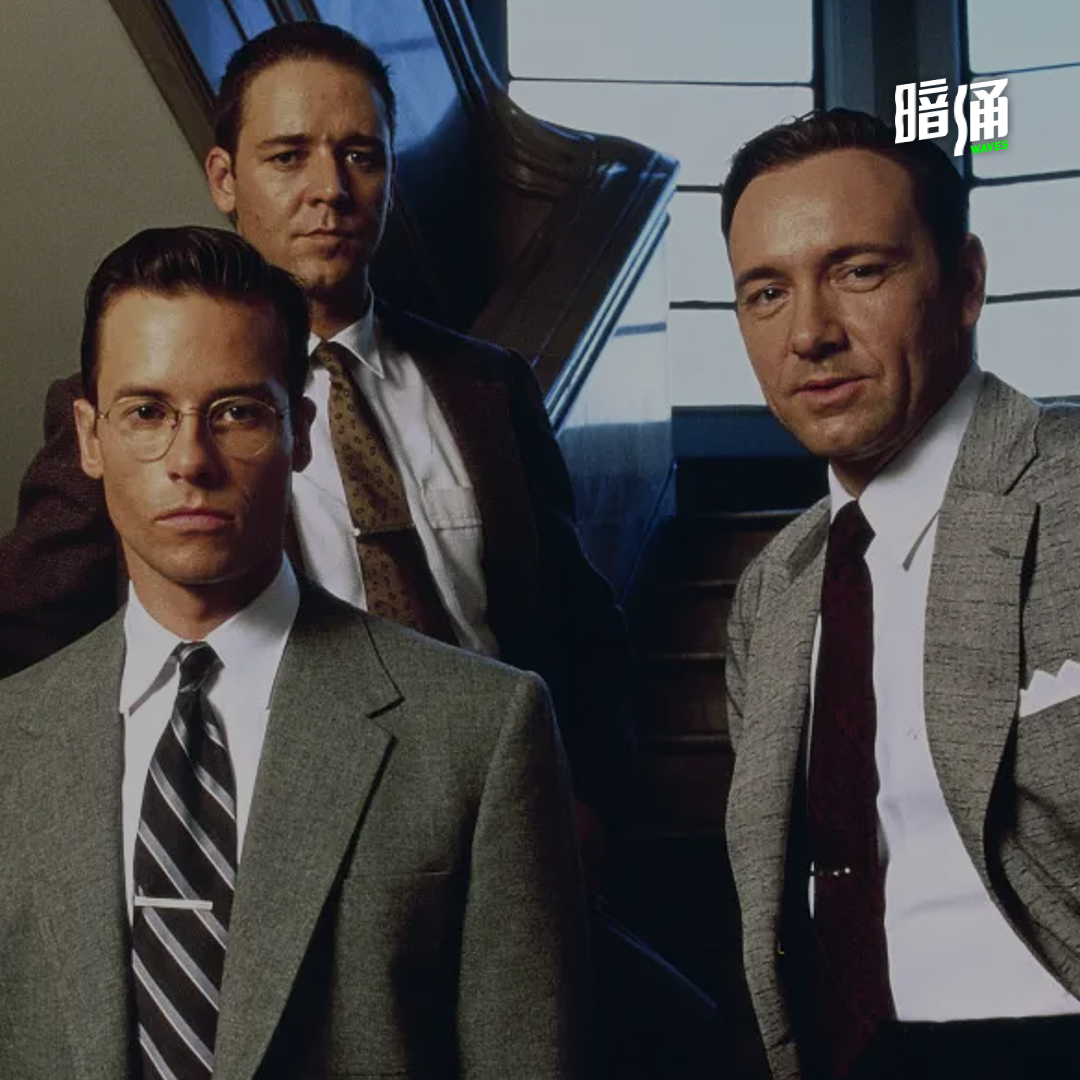
"The Newly Made Person — What's New?"

Man is the measure of all things.
In some ways, the work of journalists and investors is similar: both involve finding people, observing people, studying people, and drawing conclusions. The difference is that investors must go one step further — they have to put their money where their judgment is.
So at WAVES 2025, we invited three investors: He Yu, managing partner at Black Ant Capital; Xi Cao, founding partner at Monolith; and Boyu Hu, partner at XVC, to join Waves for a conversation about "people."
We're exploring this topic now because a new cycle of entrepreneurship is beginning — call it AI or tech, whatever you like — which means more founders we've never met will gradually be identified and come to be known.
That's one reason we invited these three investors. He Yu backed Wang Ning of Pop Mart, Xi Cao backed Xingxing Wang of Unitree, and Boyu Hu backed Zhang Junjie of Chagee — all entrepreneurs who only rose to broader prominence in recent years. And at the time of investment, each of them was just another ambitious young person among the masses. These three investment stories beautifully illustrate what makes this industry so compelling: the flow of human potential.
During the conversation, they also shared some details about working with these star founders. For instance: Wang Ning had precise cost calculations down to a single panel in a store; Xingxing Wang's decision to build humanoid robots came down to "orders came in"; and Zhang Junjie spent his first meeting with Boyu Hu recounting his extraordinary childhood in full.
Beyond founders, they also discussed themselves and the comings and goings of people in the investment industry.
WAVES is a new summit IP launched by 36Kr, now in its third year. This conversation was moderated by Jing Liu, editor-in-chief of Waves.
Part 1: Reading Founders
Jing Liu: The title of this roundtable is "The Newly Made Person," so today we're talking about people.
All three of you have more than one iconic investment. I took the liberty of selecting one founder for each of you: He Yu — Wang Ning of Pop Mart; Xi Cao — Xingxing Wang of Unitree; Boyu — Zhang Junjie of Chagee. How would you evaluate this person? And was this impression formed at first meeting, or did it take longer?
He Yu: One phrase comes to mind: the fusion of art and commerce. But this impression wasn't formed at first meeting — it took nearly two years from when I met him to when I invested, slowly sensing and understanding this.
Art, because he has good aesthetic taste and a genuine love for art. But his creative ability to build commerce is also quite strong. So it's the fusion of art and commerce. For example, he went abroad early on to research designer toy exhibitions and discovered an enormous fan base. So when he first entered the designer toy space, he could already envision what a toy convention would mean for building an IP platform. A convention could gather all the top designers, let them feel Pop Mart's industry influence. And this convention would be different from others: consumers wouldn't just come to look, they'd come to buy products, making it commercially viable and profitable. These ideas showed real imaginative and creative power.
On the other hand, I think more importantly, he's a very commercial person, very rational. He cares deeply about the commercial soundness of every innovation and experiment. For example, he told me about a panel in a store — one material might look beautiful, but another material achieves a similar effect at a completely different cost.
This is rare: combining aesthetic preference and inspiration with being rigorous and grounded.
Jing Liu: Both sensibility and rationality.
He Yu: Right. Consumer industries especially need this kind of person — a left brain and right brain partnership. It's somewhat different from tech.
Xi Cao: One word for Xingxing: pure. You could feel this at first meeting.
In 2019, Xingxing carried his quadruped robot to over ten firms, trying to raise $2 million — not easy. But I felt he was a classic outlier. Looking at his background, nothing seemed particularly glamorous, but dig deeper and you'd find he'd been working on robots since college, and shortly after graduation was already a KOL in the robotics field.
How to break down "pure"? It's just pure (laughs), focused, deeply passionate about this direction. He's also a pragmatic founder, not particularly eloquent, but ask him anything about robots and he can go deep on technical details he's following and thinking about.
In early 2024, I asked him: Xingxing, why are you building humanoid robots? I'd asked other founders this before and hadn't heard good answers. Xingxing's answer was very pragmatic. He said: because orders came in.
From both tech and commercial angles, on one hand he has very big, very distant ideals; on the other, returning to business itself, he practically breaks down commercial questions — what to do at what time point. These qualities add up to pure.
Boyu Hu: For Chagee's founder, the word is: transformative growth.
Zhang Junjie has many qualities — smart, leadership. But what sets him apart from most founders I've met is how fast he grows. Thinking back on each meeting, he really was different every time.
First meeting was 2020 at XVC's Beijing office. He was still a very marginal entrepreneur: small company, stores mainly in Yunnan, Guangxi, Guizhou, one or two hundred locations. First meeting lasted about two hours, most of it spent on his own story. I was a bit impatient (laughs) because I'm a rational investor, always wanting to talk business — that long personal history at the beginning felt off-topic.
Still, his story was fascinating. His background was so unusual it felt almost unreal — hearing about barely attending school. After the 1980s, we'd long had nine-year compulsory education, could someone really be so unfortunate, so tragic, so without schooling opportunity? And naming himself, getting household registration — so much hardship.
This was a contrast. When we finally got to business, I found he genuinely had deep thinking: about milk tea products, about competitors — Hey Tea, SexyTea, Good Me — and about organization.
Recently during the IPO process, I sat in on one of his roadshows. Completely different approach: nothing about himself, straight into the vision for the tea industry. This contrast made me feel this person is constantly transforming.
When we invested in 2020, they had maybe 20 people and were going through major management turnover; less than six months later, organizational progress was enormous: headquarters moved to Chengdu, talent pipeline built, visible upgrades in organization, brand, product, supply chain, systems.
In short, every three to five months there was major change, continuous surprises.
Jing Liu: Junjie's story is almost too legendary — social media is full of wild tales about him, practically CEO fiction. My follow-up: when Boyu first met him and he told all these legendary stories, did you doubt his motives?
Boyu Hu: Mainly shocked, with some skepticism — it was so rare. In fact, we did background checks before investing. Most founders exaggerate their experiences, talk about how amazing they are. This person was the opposite, talking about how humble and lowly he was. But we still did due diligence (laughs), and couldn't find anything different from what he'd said.
Jing Liu: These three founders are all outliers. Their success makes for great stories, but at the time, the decision couldn't have been easy. What was your actual thought process in that moment of recognizing them from the crowd?
He Yu: We focus on underlying qualities: does this person have good strategic thinking, are they willing to challenge themselves, do they have self-awareness. We don't differentiate or prefer surface-level traits. **Because some people are naturally introverted, but many introverts make excellent CEOs and founders; others are naturally extroverted. Some like to speak in logic, others don't like logic, prefer analogies or common sense. These aren't our criteria.
For us, the harder part is new knowledge — when what they're saying is right but we don't yet understand it. Maybe a new business model, something new. Like Pop Mart — at the start we didn't really get it. The hard part is not passing on things you don't understand, taking time to learn and comprehend.
Xi Cao: VC, especially early-stage investing, is like seeing lightning — you just see it, you just know it. The hard part is after seeing the lightning, going back to your IC and partners and explaining what that lightning looked like.
Unitree was still very early-stage then. Probably the most direct way is to deeply engage with the person, visit their company, see the team dynamic. Because outliers are so rare, so scarce, having that "click moment" on the front lines, then going back to explain it — that's probably the hardest part.
When you meet a founder, what you receive is multimodal information — the human eye processes at least tens of megabytes per second, but when you translate to text or audio, speech might be six bytes per second. That's a difference of millions of times.
Information loss exists in every investment firm. This is precisely why this industry doesn't scale easily.
Boyu Hu: Investing in Chagee, I really can't think of anything we agonized over (laughs). Cases that make us agonize, we generally don't invest first — we observe. Sometimes months, sometimes years. But Chagee really wasn't agonizing. From meeting to investing was maybe a few days. In between we nonstop flew to Kunming and Nanning, talked to many consumers and franchisees.
On the person, we didn't really agonize either, because we have our own logic for reading people: focus on whether the founder is good at making correct decisions, whether they're good at building high-performance organizations. We've found these two qualities are common traits of excellent founders.
Looking at these two points, we found Zhang Junjie had good information gathering ability, scientific decision-making habits. Though the organization was still small, it was very methodical — right people in right places: how to structure organization, how to manage people, how to execute, all quite clear. Most core executives were already there. So quite surprising — this unassuming milk tea chain headquartered in Kunming actually had such an excellent team.
Jing Liu: These three investments were all, in a sense, bets on "non-consensus people." Here's a possibly provocative question: can you share someone non-consensus you've recently met? We can put it on record today and check back in three years to see if this person has been validated.
He Yu: Recently met a quite introverted person, communication was difficult, but I sensed he had strong views and conviction. I quite like people who speak in common sense, because I feel people who speak in theory easily drift from common sense.
But investing requires seeking truth. What is the real world like — can the entrepreneur see the real world, and build their product, business model, and organization based on real-world needs. These people's words are actually quite simple, sounding ordinary but making sense. Won't name names (laughs).
Jing Liu: Can you provide something relatively searchable?
He Yu: Chain restaurant (laughs), that's a broad enough range.
Xi Cao: Does consensus or non-consensus matter? (laughs) It's all judgment of the founder at the time of meeting. Whether it's consensus or non-consensus, you don't know at the time. You don't invest because of consensus or non-consensus either.
We recently invested in a kid born in 2002, doing overseas consumer hardware. First time I talked to him, what he was working on wasn't what he really wanted to do. Most people would find it uninteresting — indeed quite simple, not much technical depth, market not that big. But this kid was special. He'd been doing robotics competitions since middle school, winning awards, leading over ten people. He's not even 23 yet, but has an unusual calmness, a bit odd, but emotionally exceptionally stable.
His composure doesn't match his age at all. I asked why he's so emotionally stable. He said from middle school he'd been leading over ten people, traveling everywhere for competitions, and his team members were all kids too. He said he's the leader, he can't have emotions. When he said "can't have emotions," I felt there was a lot behind that — this person has huge room to grow. But what he'll become, I don't know.
I asked why he wanted to start a company. He said they later won awards, got to compete in the US, but the competition cost 300,000 RMB, quite a lot. He was at a middle school in Henan, asked if the school could cover it — school said no. Asked parents, parents could contribute 80,000, not enough. He said that was very sad, because he wanted to take his brothers to a bigger stage. So he felt he had to start a company, make money, be able to take this group to do bigger things. Simple,朴素的 motivation, quite interesting.
Boyu Hu: I'll mention two or three counter-consensus founders. First is Lao Ye (Ye Hongxin) of Laifen. He didn't attend university.
Second is highly educated — this person is Ren Zhe, graduated from a good university. Before entrepreneurship he was at a consulting firm. A few years into entrepreneurship he did social, a social product for middle-aged and elderly people called "Yidui" — probably not your target audience — but he also has a product for young people called "Tietie."
Third is a VC person who became a founder, which we also invested in. He previously did investing at 360, before that came across a company called Nubank in Brazil, found the model amazing, started doing the same business in Indonesia a few years ago. We invested in him — a VC-turned founder. Nubank's founder was also VC-turned, he was Xi Cao's former colleague, Sequoia's South America head. He'd wanted to set up a South America office, later gave up, and that guy resolutely left to found Nubank.
Jing Liu: I deeply feel Boyu Hu's art of speaking as an investor — evading my question, talking about projects everyone already knows.
Boyu Hu: Besides Laifen, the other two you probably don't know.
Part 2
Reading Each Other
Jing Liu: Now let's talk about ourselves. The three of you are peers, fellow GPs. What do you see in each other? Last night I separately asked each of you for evaluations of the other two, done back-to-back. Starting with Boyu's evaluation of the other two.
Boyu's evaluation of Xi Cao: naturally familiar, founders are all familiar with him and like him. Of He Yu: "economical with words," but has ideas, just doesn't say them. Is this accurate?
He Yu: Not accurate (laughs).
Jing Liu: What's inaccurate?
He Yu: Not that much to say, not unwilling to say (laughs). People who talk less seem mysterious, but it's not intentional.
Jing Liu: Xi Cao, what do you think?
Xi Cao: Accurate, I guess. If everyone thinks it's accurate, it's accurate.
Boyu Hu: Let me explain. What surprised me about Xi Cao is — he looks a bit dopey, but every founder I know likes him. The founders I know are definitely a subset of those he knows, but they all like him. He's the popular favorite among founders, so I used "naturally familiar." This must be innate talent.
He Yu — his performance just now, still not saying, just not saying. And he claims to "really not say," because his name is "He Yu" [literally "why foolish"], his fund's name is Black Ant.
Jing Liu: Both humble words.
He Yu: Like your XVC, a very cool VC name. Consumer is very traditional. So I feel "Black Ant" is quite fitting, quite aligned with our firm's positioning.
Jing Liu: I do agree with Boyu's evaluation of Xi Cao. This magic of making everyone like you — is it cultivated or innate?
Xi Cao: Mainly the hairstyle (laughs). Our line of work requires dealing with many people. I think first, when you meet any founder, you genuinely care, genuinely wonder — why did this founder become this way. If you truly care, others will feel your goodwill.
Another point — years ago I watched a CCTV program "Oriental Horizon," very old show, with a segment called "Life Space." The producer was Chen Mang, who gave it the slogan "Telling ordinary people's own stories." What's interesting is, whoever they filmed, it always felt good, flowing naturally.
He had a book with a particularly good insight: there are three perspectives for viewing the world — looking up, looking level, looking down. You should look level at anyone, neither up nor down. I think he summarized it beautifully. Meeting any founder should be the same. In this state, people communicate better, and you yourself get better information.
Jing Liu: Understood. Now He Yu's evaluation of the other two: of Boyu Hu, wise, depth of thinking. Of Xi Cao: curiosity, empathy, and their common trait: shining.
He Yu: I've known Xi Cao quite a while. I think his empathy is very strong — you can present any viewpoint and he quickly, openly understands what you're saying. This is a very obvious trait. And for himself, he's also very open, able to quickly absorb new things.
I don't interact much with Boyu, but I often read his articles — very well written. He's like one of those MBTI profiles, the wise person archetype. He indeed thinks deeply, able to summarize patterns and characteristics across time dimensions, and form them into tools.
Jing Liu: Xi Cao's evaluation of He Yu: focused, concentrated; of Boyu: independent and unconventional. The evaluation of He Yu is quite understandable — we just interviewed him, and that article kept returning to the story of He Yu and Black Ant's consistent focus. Xi Cao, say a few words about Boyu being independent and unconventional.
Xi Cao: XVC in the VC industry doesn't chase market hot topics as much, insists on its own investment philosophy, invests in non-consensus. Isn't that independent and unconventional?
Jing Liu: Boyu should agree.
Boyu Hu: Can't refute (laughs). But I did have a moment thinking — what are my own characteristics? I think maybe "simple." I have much evidence.
For example, the name XVC is very simple, just one letter, "X." Monolith — complex, right? Isn't that a vivid contrast? On screen it says "Founding Partner of XVC Capital," but when messaging with Jing Liu just now — we don't use this title, my title is just "Partner." I don't like "Founding Partner." Every time someone calls me founding partner I correct them, because industry habit is like this, but I always correct, simplifying it.
Founders have many different traits, but we just focus on whether they're good at making correct decisions, whether they're good at building efficient organizations — just these two points. This is also pursuing simplicity.
Jing Liu: I do have a curiosity: why in funds is the top person usually called founding partner or managing partner, even founding managing partner, but not "founder"?
Xi Cao: I think this is "clinging to form." Does it matter? Just leave it, no need to spend so much thought on this. Some write "CEO." I don't think this matters.
Part 3
Reading Self
Jing Liu: You've all been investing for over a decade, running your own funds for several years. If one day due to force majeure you could no longer do VC, what would you do?
He Yu: Another added question (laughs). I think I might start a furniture brand. Because I quite like furniture, chairs and tables are things I like — there's design, there's craftsmanship to explore. That's what I'd say now, but probably only when it actually happens would I know my true choice (laughs).
Xi Cao: I especially love playing soccer, if I don't play for two weeks I'll dream about it. So if I couldn't do VC, maybe just happily play soccer, though it's too late to make the World Cup (laughs).
A few days ago at a friend's company soccer game, I scored a goal I was quite happy about. Since starting my fund, my Moments basically became a marketing account — long since posted anything personal. That day I scored, I even got someone to pull the surveillance footage, found the video and posted it. Because I genuinely love it.
Yesterday someone asked if I feel pressure or tired from entrepreneurship. I thought about it, asked if he plays soccer. He said yes. I asked if he feels pressure playing soccer. Actually it's excitement. The tiredness after soccer isn't real fatigue — it's a satisfying exhaustion, something like that.
Jing Liu: So whether doing VC or playing soccer, you like competitive sports?
Xi Cao: If I couldn't do VC, I might also want to make documentaries, but I don't have the talent.
Boyu Hu: I think I'd still start a company. Actually I don't feel I'm investing now — I'm also building a company. Entrepreneurs always want to change something, always want to change something, that's who they are. For example, others call me founding partner, I want to change that — call me partner (laughs).
Jing Liu: Do you want to build something very big, or something you like?
Boyu Hu: Not necessarily. Must pursue creating value, definitely pursue bigger value. But purely for life, building a small business is also nice — open a milk tea shop, a karaoke place, not bad.
Jing Liu: Final question — over all these years of investing, in what ways has your understanding of people and human nature been reshaped?
He Yu: My understanding of this keeps iterating and elevating. When we talk about human nature, it's really traits shared by most people — human nature isn't good or bad. If only very few people possess a trait, then it might be absolutely good or absolutely bad. For us, acknowledge it exists objectively, then respect it. So for a consumer entrepreneur, this is quite important — understanding human nature, respecting human nature, because respecting human nature is respecting users. For entrepreneurs it's the same — understanding human nature is respecting your team. Knowing how to respect your team means knowing how to lead your team. So I think understanding and objectively respecting human nature is very important.
On another hand, human nature iterates very slowly. As individuals, a person's life is just decades, but striving to change yourself even a little bit probably takes years as a unit of time. From this angle, life is indeed a practice — everyone works hard their whole life for tiny bits of change, and perhaps that's a little meaning of life.
Returning to consumer investing, this also confirms something I said before. Someone asked me, what in consumer never changes? My answer was human nature. Because human nature iterates slowly. When a person progresses to a certain point, grows old, and starts over again, cycling back. But this is also good — you can continue building on it.
Xi Cao: Changes in views of human nature — I don't think there's some dramatic moment. It's a gradual process of deepening understanding, deepening knowledge, self-reflection, iterative self-review.
I quite like reading history. The VC industry is essentially watching vivid contemporary business history — this is a happy thing. In this process you'll see all kinds of business competition, all possible deception and scheming — this process itself is iterating your model.
A few years ago during COVID, I spent maybe a month reading Chinese and world history on Wikipedia. The advantage of Wikipedia is many names have links behind them — besides the famous kings and generals everyone mentions, every person who left their name in history was no simple figure in their time. Each person's experiences behind them have so much to extract, quite interesting.
I started my fund in 2021. After entrepreneurship, I gained more angles for empathy and understanding with founders — entrepreneurship is dealing with a more real world. For example, at my previous firm, sometimes for a project we didn't invest in, two weeks or a month later I'd hear through others that though we didn't invest, the founder had a good impression of me. I didn't understand why at the time. Because some hard tech founders I met, I didn't understand that well myself, certainly hadn't asked particularly sharp questions.
But later when I started my own fund, we also had to raise money, and you have to tell your pitch 100 times, each time with full passion. Every segment like it's the first time, every punchline like it's the first time — during that period I developed deep respect for teachers and comedians.
Then I suddenly realized why those founders had good impressions of me. In this process, when someone asks a question outside the usual template, even if not business-related, you think — finally, something different to talk about today. Entrepreneurship gave me more understanding and empathy for founders, for so-called human nature.
Boyu Hu: I've done VC for over ten years, with another ten-plus years of entrepreneurship before that — over twenty years. Human nature is complex, with all kinds of desires, greed, jealousy, but I think these are unimportant. What truly matters are two enemies to combat: boredom and loneliness. These are two particularly difficult demons. Nothing else matters.
For me, whether entrepreneurship or investment, they're essentially methods to combat these two things — essentially being with quality people, people with shared values, doing things with lasting meaning. I think this is entrepreneurship and investment.
Image source | Still from L.A. Confidential

Recommended Reading



The flow of money, the rise and fall of people