When ZhenFund's youngest partner faced life's greatest joy and sharpest pain all at once
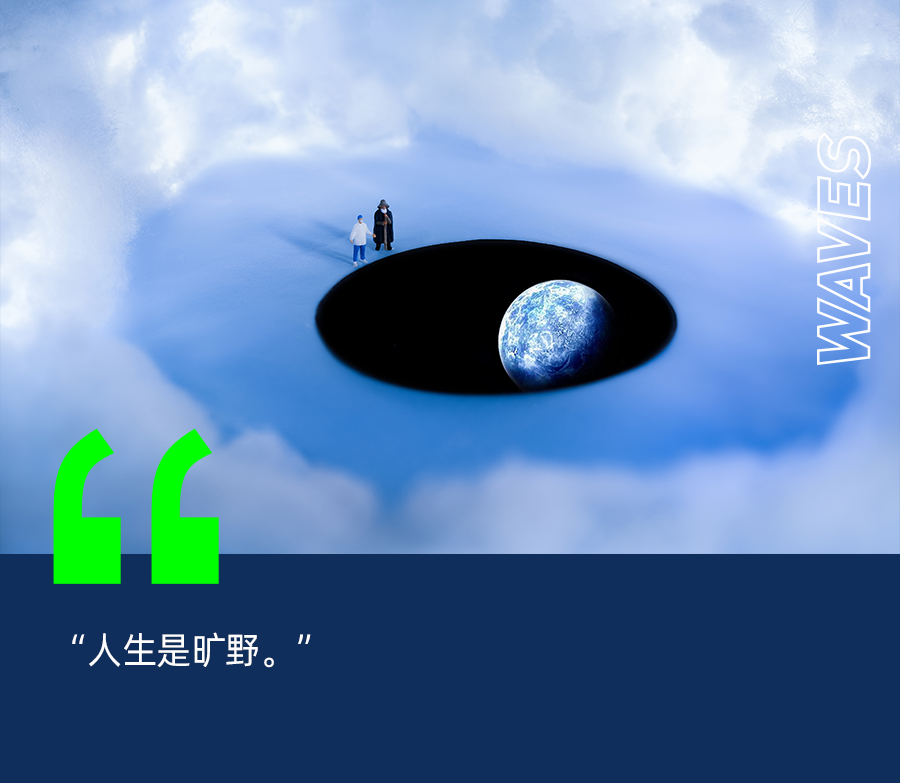
"Life is a wilderness."
By Muxin Xu
Edited by Jing Liu

When everyone raised their glasses to her, Yin Le froze.
It was early 2022. The ZhenFund investor had thought this was just another ordinary dinner, until two more senior partners, Anna Fang and Yusen Dai, suddenly raised their glasses and said "congratulations." Only then did she realize: from this moment on, she would become one of the new partners at the table — and the youngest partner in ZhenFund's history.
Not entirely unexpected, though. By conventional standards, Yin Le had a career path most people would envy. In 2015, after completing a summer internship at ZhenFund, she graduated from Stanford and officially joined as an investor. She was "promoted six times in seven years," becoming the only person at ZhenFund to have climbed every rung from intern to partner.
But in that moment, Yin Le's emotions were complicated. Months earlier, during a routine physical exam, the 30-year-old had been diagnosed with early-stage breast cancer — a disease commonly found in women over 50. And not long after, following four rounds of chemotherapy, she would also end a marriage.
For most people, such dramatic moments are rare, let alone clustered so closely together in everyday life. But Yin Le told Anyong Waves that this was "a very intense way of exposing internal problems to the surface." "It's like you were always underwater, but suddenly someone yanked you up — you have no choice but to open your mouth and breathe, or you'll die."
This was an emotional metaphor, yet when Yin Le said it to us, she was remarkably calm. Perhaps because time had passed, or perhaps because she had always been this kind of person: from Changsha to Stanford, every step Yin Le took was based on rational judgment and intense goal-orientation. Some said she had "eyes only for the target."
On February 10, Hesai Technology listed on Nasdaq. Billed as "the first LiDAR stock," Hesai was a company Yin Le had invested in six years prior, and her first IPO. Anyong Waves spoke with Yin Le after this listing.
On International Women's Day 2023, Anyong Waves decided to tell Yin Le's story. This is not just the story of a young investor, but also about how a person confronts life's polar extremes — and ultimately overcomes them.
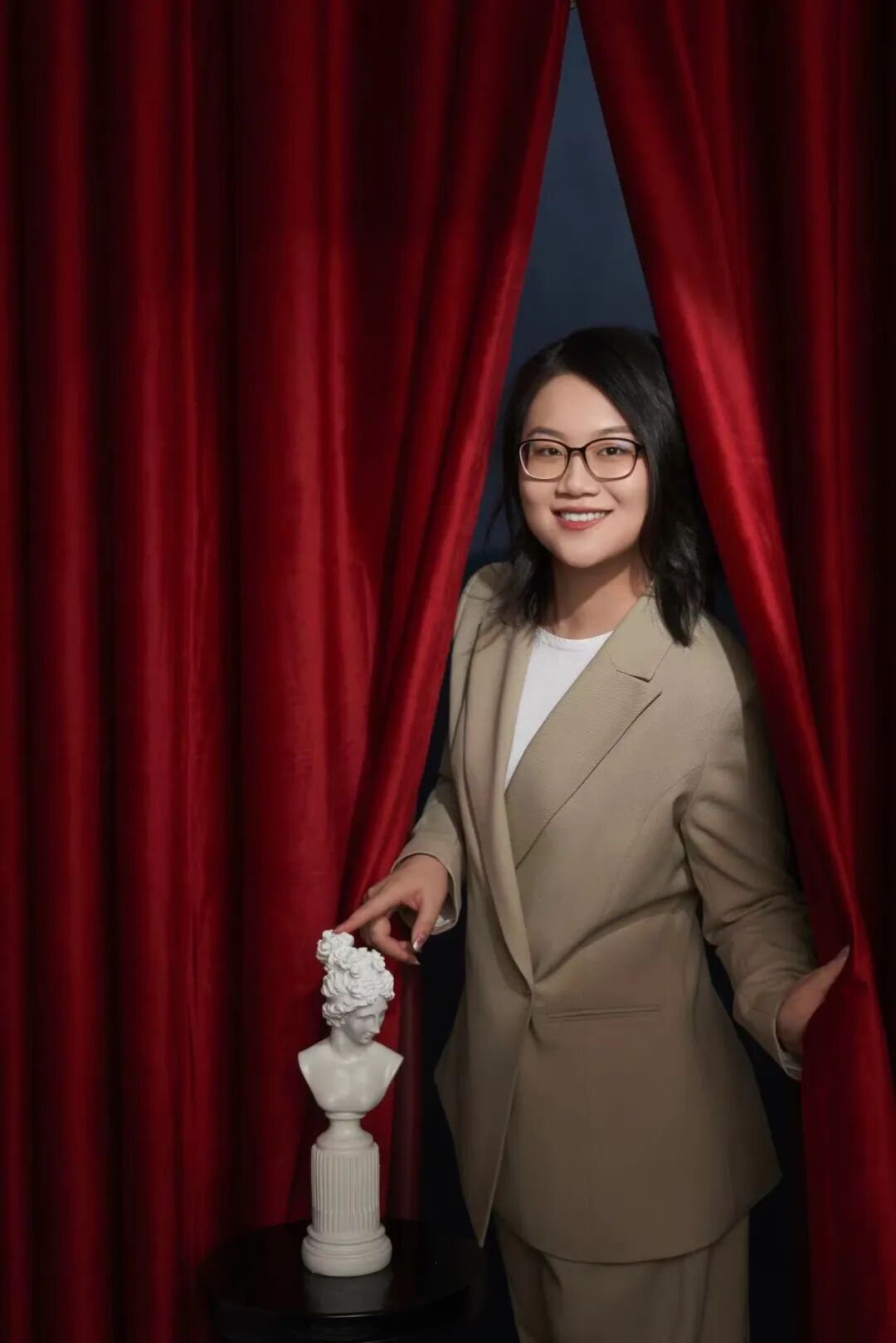
Yin Le, Partner at ZhenFund

The Person Who Swings Five Hundred Times a Day
For the 24 years before joining ZhenFund, Yin Le was someone with unwavering goals: deciding in high school to study abroad, resolving during her time in the US to return to China for work, pursuing a master's degree at Stanford, and so on.
Joining ZhenFund was the only exception. In 2014, at a Stanford campus event hosted by the Chinese Entrepreneurs Organization, Yin Le first met Bob Xu. ZhenFund was, in fact, the first VC she had ever heard of. Before this, her understanding of finance was limited to her internship at PwC — a programmatic job of working with numbers every day that left her exhausted. But Xu, who made "investing in people" his and ZhenFund's defining characteristic, made the work seem interesting.
Yin Le's "goal-orientation" kicked in again. After the event, she happened to find a partner's lost wallet and drove late at night to return it to their hotel. Upon meeting Bob Xu and Anna Fang, she volunteered herself, securing a summer internship opportunity. At the time, ZhenFund was newly established with barely a dozen people.
This was perhaps the most emotionally charged era for entrepreneurs. In 2014, Zhongguancun's Startup Street was packed daily with founders carrying dreams, lingering for hours for a chance to speak with angel investors. ZhenFund received hundreds of emails daily. Though Yin Le was just an intern, she had a unique advantage: she was the first to screen all of them.
Though there were reply templates, Yin Le would ask additional questions and even offer suggestions. When she came across promising founding teams, she would schedule meetings with investors. This went far beyond an intern's expected duties.
She also proposed the concept of "Zhen Camp" — essentially a mini startup business school. While studying in the US, Yin Le noticed that startup CEOs and investors came to Silicon Valley to speak almost every week. She believed that if ZhenFund did the opposite — bringing Silicon Valley's (potential) entrepreneurs together in China through Zhen Camp — they could not only visit Chinese startups in person and encourage entrepreneurship, but also discover projects worth following up on.
After graduation, Yin Le, who had received a return offer, took over Zhen Camp. Over seven years, she ran it from the fourth cohort through the recently launched thirteenth, and led three cohorts of Zhen Planet.
As a fledgling investor at ZhenFund, Yin Le caught what was perhaps the hottest moment in venture capital. In 2015, China's hottest sectors were O2O, P2P, smart hardware, and mobile internet. Every sector had countless entrepreneurs and investors trying to bet on the winning possibility. But Bob Xu gave Yin Le a piece of advice: since her energy was limited and she couldn't cover everything, she might as well focus on a smaller territory first — Stanford entrepreneurs, whom she knew intimately.
This was the first major challenge Yin Le faced as a professional investor. Stanford and Silicon Valley entrepreneurs mostly focused on autonomous driving, robotics, LiDAR, or chips — fields that seemed too esoteric and unpopular at the time, when ZhenFund was concentrating on consumer and e-commerce investments. For a period, when Yin Le brought these hardware projects to investment committee meetings, she noticed people looked somewhat bewildered when she presented.
In fact, Yin Le herself felt out of her depth. As someone who had majored in East Asian Studies, how could she build conversational rapport with tech founders?
"This was a difficult thing," Yin Le told Anyong Waves. But some people see difficulties more easily, while others tend to see opportunities. Yin Le clearly belonged to the latter.
She immediately added: her internship experience at Suning's US research center had subtly given her a feel for technology, and evaluating a project's general feasibility was the foundational methodology for investing in hard tech. But for a ZhenFund-style early-stage investor, what mattered more was judging people — and that lay in the intuitive realm where no methodology could be codified.
Black Lake Technology was a project that emerged from the fifth Zhen Camp cohort that Yin Le ran. In founder Zhou Yuxiang's view, it was precisely because Yin Le lacked the academic backgrounds of other tech investors — finance, computer science — yet had earned this opportunity at ZhenFund, that made her "exceptionally grateful and extraordinarily driven." Zhou had known Yin Le for eight years and remembered that "she never rested," almost always evaluating projects. Their conversations often began at midnight. He described Yin Le's conversational style as "aggressive" — covering as many topics as possible within limited time.
Anna Fang, ZhenFund's founding partner and CEO, recalled that period of busyness and intensity. Once in a taxi, she told Yin Le: they couldn't miss a single Stanford project, because missing one meant "we are dead." Yuan Liu, a partner at ZhenFund, offered another example: at the time, Yin Le traveled to Silicon Valley every quarter, sometimes flying economy between China and the US eight times a year. Looking back, Yin Le still shudders at the memory.
"I didn't dare stop." Recalling those years, Yin Le didn't hide that she was a "super hard worker" — though this was an image many women were reluctant to project. "No hobbies, no leisure or entertainment. Basically always in a state of straining forward."
Angel investing is a profession that emphasizes accident, chance, or what might be called mythological quality. As Yuan Liu put it, "a profession full of dramatic serendipities." Yet in Yin Le's top projects, most appeared "almost routine and mundane."
For example, Hesai Technology, a leading LiDAR company, and Lingming Photon, a domestic leader in 3D-stacked dToF chips — "people I met while studying at Stanford." Her angel investment in Xingsheng Youxuan came simply because "when I went home to Hunan, I saw the supermarket downstairs doing community group buying, so I asked the owner and connected with the founder." Black Lake Technology and YouiBot, which helped transform manufacturing — "people I met through running Zhen Camp and Zhen Planet."
But in fact, behind these investments that later proved successful, there was always something beyond mere chance.
In 2016, when Hesai decided to pivot to LiDAR, Sun Kai thought of Yin Le. She invited Sun to a dinner with Stanford entrepreneurs where Bob Xu was also present. The two hit it off, and afterward Xu told her: no matter how expensive, they had to invest in this project.
At the time, Hesai had already exceeded ZhenFund's typical stage, but Yin Le still fought to participate by buying secondary shares. While her investments typically valued companies in the single-digit millions of dollars, Hesai's $140 million valuation was an unimaginable astronomical figure. "My hands were shaking when I signed the term sheet," Yin Le said.
Xingsheng Youxuan was even more dramatic. In its angel round, Kathy Xu and Allen Zhu were both personally involved. Watching Kathy Xu chat with the founder until 4 a.m. and sign a term sheet, Yin Le decided to visit for the fourth time, finally securing ZhenFund a follow-on opportunity at Series A. All this happened within 12 hours — too fast to bring to investment committee — so Yin Le decisively used her "silver bullet" (direct investment authority bypassing IC).
Yin Le was indeed not someone skilled at crafting dramatic narratives. But what mattered more was that her prolonged efforts largely offset the "chance" element itself.
In evaluating Yin Le, Yuan Liu recalled something a peer once said: "It's like golf — most people like to observe and judge every shot's distance and quality, but what really matters is whether your swing motion is standard every single time — regardless of the outcome."
Yin Le was that practitioner who "swings five hundred times every day."

The Intersection
Some state that had persisted for 30 years came to an abrupt halt.
During a routine physical exam, screening results confirmed Yin Le's early-stage breast cancer. She has now forgotten her immediate reaction upon learning the results. But Yin Le's work mindset had become muscle memory — she began approaching the disease with a "research" mentality: constantly buying books, treatment guidelines, Western medical texts. Yin Le had done countless due diligences and read countless industry reports; this time, the project was her own body.
Beyond family history, early-stage breast cancer is often triggered by severe endocrine disruption. Yin Le believed this was the physical manifestation of negative emotions. She even speculated that if her mental strength hadn't been sufficient, the symptoms might have manifested as depression instead.
Yin Le had been someone whose eyes only looked firmly ahead, whose steps only moved forward. Breast cancer was like a hand of fate, forcibly pressing her head down and making her begin to review her life. She started to realize that whether it was ZhenFund's youngest partner, tech investor, or elite school graduate — these were all labels she had desperately stuck onto herself.
In eighth grade, because her final exam ranking fell outside the top 200 in her grade, Yin Le — who had been a top student since childhood — couldn't accept it. So she began using lunch breaks to study at school, finish homework, and ask teachers questions.
While studying in America, though Illinois Wesleyan University was already an excellent school, Yin Le needed "something better" — a world-famous university — so she eventually came to Stanford, even though East Asian Studies wasn't her most interested major.
Though she kept getting promoted, in fact for the two years before her diagnosis, Yin Le had already felt she was in a mildly depressed state. She described it as "finding everything meaningless," "very boring, yet having to do it, forcing myself to do it." Only looking back after getting sick did Yin Le discover that her life's "underlying logic was just sticking labels on myself, unable to uncover my true internal needs, just constantly adding tasks to myself — always needing to be better, stronger, more impressive. I never let myself truly be happy."
Our worldview is often binary: if you're not getting stronger, you must be getting worse; if you're not on the right path, you must be on the wrong one.
But at some point during her illness, Yin Le suddenly realized that life wasn't just a single track.
"Life is a wilderness." During our interview, Yin Le mentioned this phrase several times. She began peeling off her labels one by one. At this moment requiring courage, the phrase gave her tremendous strength. Yin Le said: "People easily limit themselves, but in the wilderness, it doesn't matter if you walk here or there."
Feng Linrun, CEO of LinkZill — a company Yin Le had invested in — noticed that someone like Yin Le, who never took vacation, actually traveled alone to Meili Snow Mountain. Yuan Liu followed Yin Le's Douban and saw her reading many books and watching films related to spirituality — for instance, Soul, which she watched three times. This was a healing film trying to tell you that life's meaning (sparkles) isn't just one goal. The protagonist Joe once believed only jazz could fulfill his entire life's meaning, but after accidentally falling into the world between life and death, he suddenly discovered meaning everywhere: "A fish kept trying to find the ocean, thinking what lay before it was only water."
In Zhou Yuxiang's view, 2021 was the dividing line between Yin Le's before and after. For the previous six years, as a hard tech investor, she was still searching for big themes and trends, driven by them to evaluate projects. But after 2021, she seemed to have established her own underlying logic, settling into a calmer way of viewing investing and the world, along with more grounded judgment.
Her investment in Black Lake Technology was proof of this grounded judgment. Yin Le had invested in Zhou Yuxiang's first entrepreneurial project years earlier, and when he failed and started Black Lake Technology, Yin Le still followed at the angel round. In her view, someone willing to give up a high-salary position to start over, sleeping in factories for two months to understand frontline workers' needs — such an obstinate person deserved to be believed in a second time.
During our interview, perhaps because we discussed many pivotal life choices, or perhaps because the topics involved health, promotion, divorce, and so on, Yin Le's conversation would inadvertently carry a flavor of fate. But on this topic, Yin Le — who had been smiling warmly throughout — suddenly said flatly: "But I don't believe in fate."
Many entrepreneurs have expressed to Anyong Waves that Yin Le has a special warmth. A former intern who worked with her tried to summarize this quality: he found that when other investors visited projects, founders might enter a defensive state and wouldn't discuss anything beyond work. But when talking with Yin Le, they tended to share more, revealing information that let Yin Le understand them from more angles. Feng Linrun described Yin Le this way: "Extreme sincerity is invincible."
On February 9, Hesai rang the bell at Nasdaq. Though this was her first milestone project, Yin Le hadn't originally planned to go — it was Anna Fang, Yusen Dai, and Yuan Liu at the partner meeting who pushed her onto the next day's flight.
When she came on stage to applaud, everyone was cheering at the numbers scrolling on screen. Hesai surged as much as 25% on its first trading day, closing at a market cap of $2.6 billion.
At this moment, Yin Le should have instinctively laughed out loud. But when she saw the confetti falling, she felt like crying. With this strange combination of expressions, Yin Le completed her first IPO as an investor.
This is the wonder of life's moments: when ecstasy and sting arrive simultaneously.
Image source | Visual China
Layout | Meng Du


Recent WeChat Official Account Updates
🌟 Star "Anyong Waves"
Get information first